
22 min 19 sec
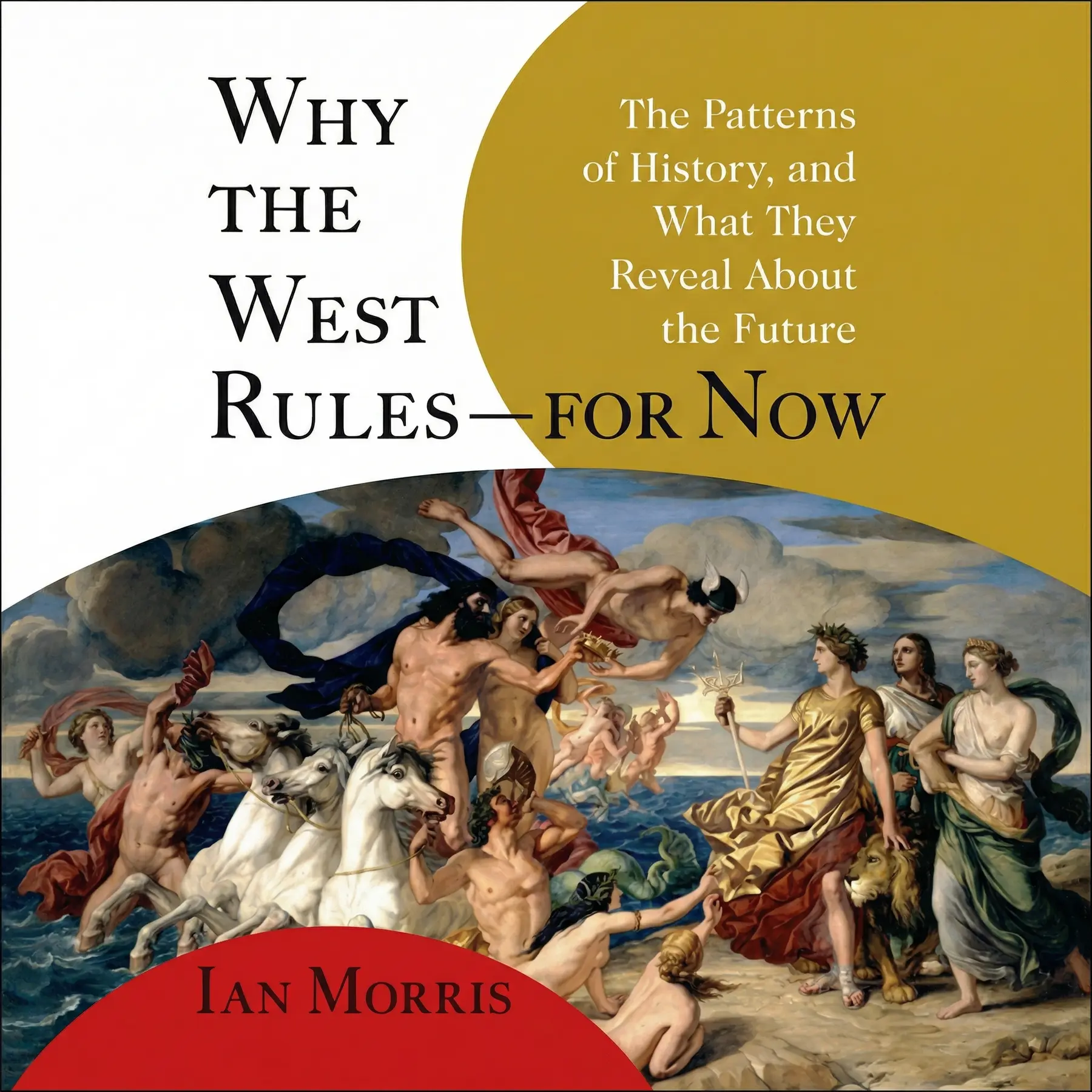
Why The West Rules – For Now: The Patterns of History, and What They Reveal About the Future
By Ian Morris
Ian Morris explores the historical forces that led to Western dominance. By analyzing social development over millennia, he explains why geography, not culture or biology, has shaped the trajectory of global power.
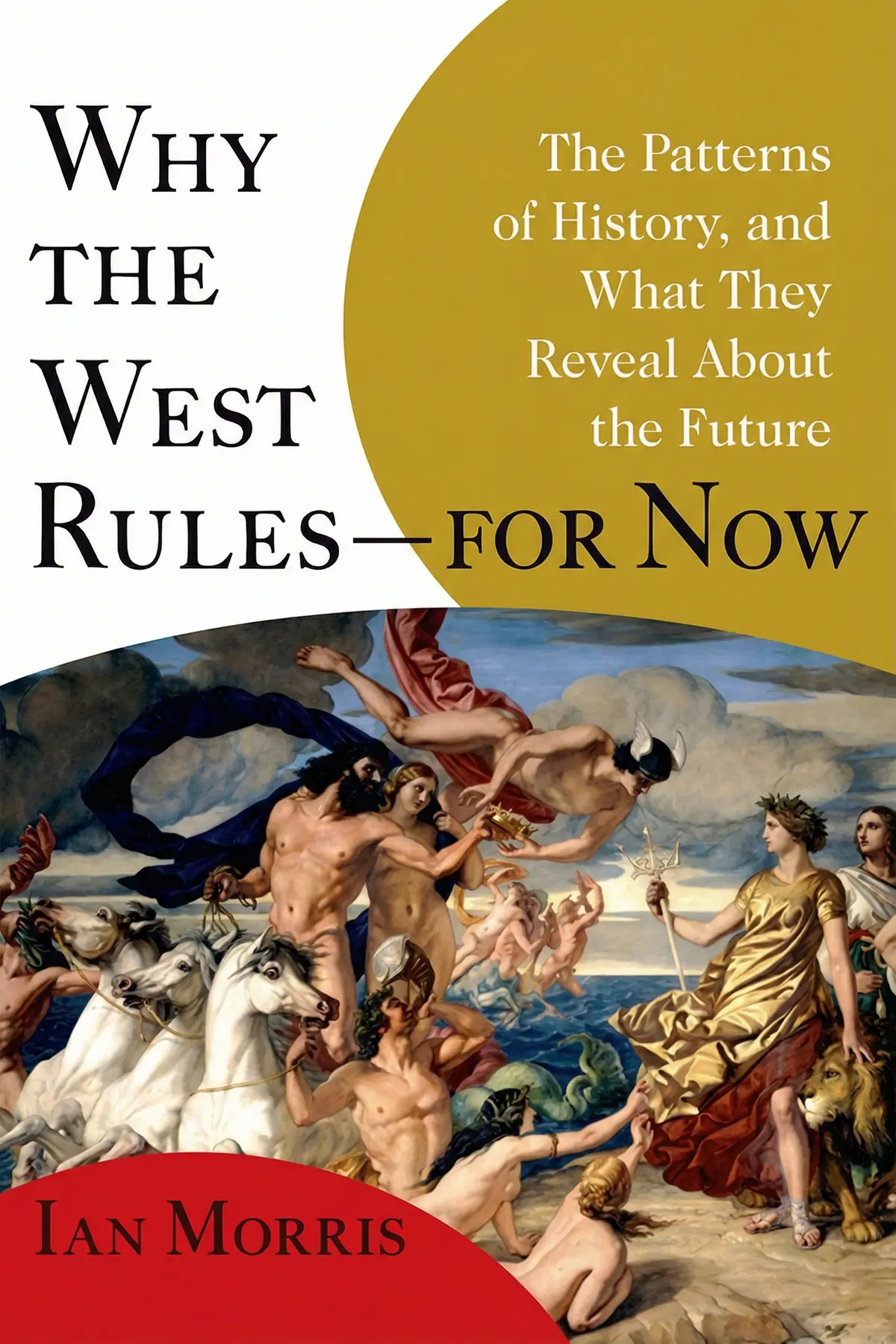
Table of Content
1. Introduction
2 min 04 sec
When we look at the world today, the influence of the West is everywhere. From the financial markets of New York and London to the technological hubs of Silicon Valley, Western structures of politics, economics, and culture seem to set the global standard. This dominance is often traced back to the middle of the eighteenth century, when the Industrial Revolution ignited a period of unprecedented growth in England. For many, it feels as though this is simply the natural order of things—that the West has always been destined for leadership. But if we pull back the lens and look at the vast sweep of human history, a different and much more dynamic picture begins to emerge.
To truly understand why the West currently holds the reins of power, we have to travel back much further than a few hundred years. We need to go back thousands of years to the very dawn of civilization. We have to look at the parallel journeys of two great regional cores: the West, which find its earliest roots in the Fertile Crescent of the Middle East, and the East, centered in the river valleys of China. Throughout history, these two regions have engaged in a long-term race, sometimes with one leading and sometimes the other. There were periods when the East was significantly more advanced than anything seen in Europe, and periods where the West surged ahead.
This exploration is not just about cataloging the past; it is about finding the throughline—the underlying patterns that drive the rise and fall of entire civilizations. We are going to look at the factors that actually matter: geography, the way populations grow, and the way societies organize themselves to extract energy from their environment. We will debunk the idea that Western rule was a preordained certainty or a lucky accident. Instead, we will see it as the result of a complex interplay between human biology and the physical world. By the end of this journey, we will not only understand the roots of current Western dominance, but we will also see the signs of a coming shift. The story of global power is far from over, and the patterns of the past provide the most reliable map for where we are headed in the future.
2. Debunking Myths of Superiority
2 min 16 sec
Many theories attempt to explain Western success through biology or culture, but a closer look at human evolution and archaeology reveals these ideas are fundamentally flawed.
3. The Metric of Social Development
2 min 29 sec
To compare different civilizations fairly, we need a scientific way to measure how well they solve problems and organize their resources.
4. The Geographic Advantage
2 min 12 sec
History’s early lead wasn’t about who was smarter, but rather who lived in a landscape that provided the best tools for farming.
5. The Collapse and the Narrowing Gap
2 min 13 sec
Great empires are not invincible; internal crises and external shocks can level the playing field between rising and falling civilizations.
6. The Parallel Lives of Rome and Han
2 min 15 sec
Two massive empires rose on opposite sides of the world, facing similar challenges and ultimately meeting similar ends.
7. The East Takes the Lead
2 min 07 sec
While the West struggled with fragmentation and internal division, the East unified and entered a spectacular golden age of innovation.
8. The Ocean as a New Frontier
2 min 17 sec
The Atlantic Ocean, once a barrier, became a highway that allowed the West to bypass the East’s technological advantage.
9. The Looming Shift of the Twenty-First Century
2 min 20 sec
History shows that the lead in social development is never permanent, and current data suggests we are approaching another major transition.
10. Conclusion
2 min 06 sec
As we look back over the vast timeline of human history, one thing becomes strikingly clear: the story of global power is not a story of who is better, but a story of who is where. We have seen that the West’s current position at the top of the global hierarchy is not the result of some inherent biological or cultural superiority. Instead, it was sparked by a geographic head start after the Ice Age and later propelled by the unique opportunities offered by the Atlantic Ocean and the fossil fuel revolution.
History moves in cycles of expansion, peak, and collapse. We saw it with the Bronze Age empires, we saw it with Rome and the Han dynasty, and we are seeing the beginning of a new shift today. The social development index shows us that the East is rapidly closing the gap that opened during the Industrial Revolution. This is not something to be feared or seen as an anomaly; it is the natural progression of historical patterns that have been in motion for millennia.
What does this mean for us today? It means we must abandon the idea that our current world order is static. The ‘rules’ of the game are changing as technology makes geography less of a barrier and more of a shared platform. The most important takeaway is that social development is a collective human achievement. The tools we use to capture energy, organize our cities, and share information are what define our era.
As the East rises, the challenge for the West is to adapt to a world where it is no longer the sole superpower. And for the world as a whole, the challenge is to manage this transition without falling into the traps of the past—war, environmental collapse, or social disintegration. The patterns of history are revealed not so we can predict the future with absolute certainty, but so we can understand the forces at play and make better choices as we move into the next phase of the human story. The West rules for now, but the future belongs to whoever can best navigate the shifting tides of social development in an increasingly small and interconnected world.
About this book
What is this book about?
For the last two centuries, the dominance of the West has been a defining feature of global life. We often take this reality for granted, yet many of our explanations for it are rooted in myth or incomplete data. Why The West Rules – For Now offers a rigorous, scientific look at the deep patterns of history to answer one of the biggest questions of our time: Why did Europe and America come to lead the world, rather than China or India? The book moves beyond simple anecdotes and instead utilizes a complex social development index to track progress from the end of the last Ice Age to the present day. Ian Morris argues that the keys to power are not found in superior genes or unique cultural brilliance, but in the physical environment and the way human societies interact with it. By examining the rise and fall of great empires like Rome and the Han dynasty, and the transformative power of the Industrial Revolution, the narrative provides a framework for understanding not just where we have been, but where the tides of history are pulling us next. It is a promise of a clearer vision regarding the inevitable shifts in global leadership.
Book Information
About the Author
Ian Morris
Ian Morris is the Jean and Rebecca Willard Professor of Classics and a fellow of the Stanford Archaeology Center. A prolific scholar, he has authored and edited numerous academic works, with notable titles including The Greeks and The Dynamics of Ancient Empires. Beyond his academic contributions, Morris is a recognized public intellectual and a frequent guest on television programs, where he shares his expertise on history and archaeology with a broad audience.
Ratings & Reviews
Ratings at a glance
What people think
Listeners find that this work provides a useful lens for exploring the history of humanity and respect its thoroughly researched approach filled with abundant data and evidence. The narrative is approachable and lacks scholarly pretense, offering an accessible experience for non-experts, with one listener characterizing it as a spirited journey through the whole of human history. It is lauded for its lucidity and stimulating ideas, with one review specifically noting its broad, long-term historical view. While some listeners are convinced by the logic presented, others dispute the central thesis, and the book's overall pace gets conflicting feedback.
Top reviews
Naomi
Wow. This is hands down one of the most ambitious attempts to quantify the trajectory of human civilization I’ve ever come across. Morris moves beyond mere storytelling to implement a rigorous 'social development index' based on energy capture, urbanization, and information technology. It is fascinating to see how he traces these metrics from the end of the last Ice Age all the way to our modern era. The way he describes cities as products of captured solar energy really changed how I view infrastructure and progress. While the book is a massive 750-page doorstopper, the writing remains surprisingly light and accessible, avoiding the dry 'academese' that usually plagues such grand histories. He manages to balance archaeological data with a narrative that feels urgent and relevant. If you want to understand the deep-seated patterns that led to Western dominance, this is the essential starting point.
Show morePrae
Picked this up because I loved Guns, Germs, and Steel, but Morris actually goes much deeper into the 'why' of development. He isn't just looking at biology; he’s looking at how societies capture energy and turn it into power. The book is incredibly well-researched, with a bibliography that could keep you busy for a lifetime, yet it reads like a lively jaunt through time. I loved the small anecdotes, like the stories of empresses plucking out eyes to secure power, which kept the narrative from feeling too clinical. Morris argues that the West’s lead was never a sure thing, but rather a result of physical locations and resources. It’s a refreshing departure from theories that rely on racial or cultural superiority. Truly a masterpiece of big-picture history that makes you rethink the very foundations of modern global power.
Show moreGame
This book creates a brilliant framework for analyzing human history without getting bogged down in dense, academic jargon. Morris has a gift for making complex archaeological data feel like a page-turning narrative, often interjecting humor and pop culture references. The long view of history he takes—starting 15,000 years ago—is exactly what’s needed to understand our current geopolitical climate. I was particularly struck by his explanation of why the Industrial Revolution happened in Britain rather than China, focusing on the Atlantic's role as a 'hard' geographical factor. It’s rare to find a book that is this scholarly yet remains so eminently readable. Every chapter felt like it was unlocking a new part of the puzzle. If you enjoy Jared Diamond or Yuval Noah Harari, you absolutely need to add this to your collection.
Show moreSaengdao
To be fair, I didn't think a book about long-term social development could be this witty and engaging. The inclusion of science fiction references alongside deep archaeological analysis makes the text feel grounded and modern. Morris avoids the trap of Eurocentrism by showing just how many millennia the East was actually in the lead. The 'Morris Theorem' provides a hilarious but realistic lens through which to view human progress. I walked away from this book with a much deeper understanding of how resources and location dictate the fate of nations. It's a massive volume, but it's packed with facts that will make you the smartest person in the room at your next dinner party. For any history buff or curious layman, this is a five-star achievement that deserves a spot on your shelf.
Show moreNoppadol
Finally got around to this behemoth after it sat on my shelf for months. The way Morris utilizes his four-factor analytical tool provides a surprisingly concrete framework for comparing East and West across millennia. I especially appreciated his take on the 'Morris Theorem'—the idea that lazy, greedy, and frightened people are the primary drivers of innovation. It adds a touch of cynical humor to an otherwise dense subject. The chapters on the rise and fall of Chinese dynasties were a bit of a forced march, but the payoff in the final chapters is worth the effort. He doesn't just look backward; he uses his data to speculate on whether we will hit a 'singularity' or a total collapse. It’s a thought-provoking read that bridges the gap between archaeology and futurology, even if the middle section drags a bit.
Show moreSophia
As someone who has always been skeptical of the 'Great Man Theory of History,' I found Morris’s perspective incredibly refreshing and well-argued. He treats history as a series of inevitable pressures and responses rather than the result of a few lucky geniuses. The book is remarkably engaging for a work written by a Stanford professor; he clearly knows how to write for a general audience without dumbing down the science. His focus on 'energy capture' as the primary metric of success is a stroke of genius that clarifies a lot of confusing historical shifts. I did feel that he focused a bit too much on a West-China binary, largely ignoring the contributions of the Islamic world and India during the Middle Ages. However, as a framework for understanding global shifts, it’s hard to beat. A very strong and informative read.
Show moreTeng
Ever wonder why the West rules the world today despite China being more advanced for most of human history? Morris tackles this head-on with a massive amount of evidence and a very convincing central argument. Personally, I found his breakdown of the four benchmarks of social development—energy, urbanization, IT, and war—to be the most helpful part of the book. It gives you a way to compare two completely different civilizations on an even playing field. The book does have its dry spots, and some of the graphs are a bit confusing if you aren't looking closely at the axes. But the insights into how 'lazy, greedy, and frightened' humans actually built the modern world are worth the price of admission. It’s a dense but rewarding journey through the rise and fall of empires.
Show moreIsabelle
After hearing so much buzz about this, I was pleasantly surprised by how much I actually enjoyed the writing style. Morris manages to stay conversational even when discussing the nuances of prehistoric pottery or Roman economics. He effectively debunks the idea that Western rule was a historical accident or a result of superior culture, instead pointing toward the cold, hard facts of geography. My only real gripe is that the book's subtitle promises more about the future than it actually delivers. The final chapters feel a bit speculative and rushed compared to the meticulously researched history that precedes them. Still, the journey through the past is so well-executed that it’s easy to forgive a slightly noncommittal conclusion. It is a fantastic piece of synthesis that brings together multiple disciplines into a coherent whole.
Show moreBam
Look, this is a real commitment that requires a serious time investment from any reader. There are sections, particularly concerning the early medieval periods, where the pacing slows down to a crawl. I felt like Morris was occasionally repeating his core thesis about geography just to fill the page count. While his 'social development index' is clever, it sometimes feels like he’s trying to quantify things that are inherently unquantifiable, like the 'capacity for war.' That said, his rejection of the 'Great Man' approach is well-argued, even if I think he underestimates how much individual decisions can change the course of a century. It’s a solid 3-star read for me because of the sheer effort involved in finishing it. It’s a valuable resource, but you might find yourself skimming through the endless lists of dynastic successions.
Show moreTakeshi
Not what I expected. While the scope is undeniably massive, Morris’s argument that geography is the ultimate destiny feels like a reductive oversimplification of human agency. He dismisses the 'Great Man Theory' so aggressively that he almost ignores the cultural nuances that make different civilizations unique. To be fair, his 'social development index' is a neat tool, but assigning arbitrary numbers to complex societies felt forced and often ignored the 'wild cards' of history. I found the 1,200-year period where the West lagged behind the East to be the most interesting part, yet he treats it as a mere blip. The tone can be a bit condescending at times, especially when he uses terms like 'ape-man' to simplify evolution. It’s a slog to get through, and frankly, I’m not convinced that geography explains everything from the industrial revolution to modern social structures.
Show moreReaders also enjoyed
Alexander the Great
Philip Freeman
A History of Iran: Empire of the Mind
Michael Axworthy
A History of the World in 6 Glasses
Tom Standage

A Long Way Gone: Memoirs of a Boy Soldier
Ishmael Beah
A Splendid Exchange: How Trade Shaped the World
William J. Bernstein
AUDIO SUMMARY AVAILABLE
Listen to Why The West Rules – For Now in 15 minutes
Get the key ideas from Why The West Rules – For Now by Ian Morris, plus 5,000+ more titles in English and Thai.
- 5,000+ titles
- Listen as much as you want
- 7-day free trial
- Cancel anytime







