
16 min 36 sec
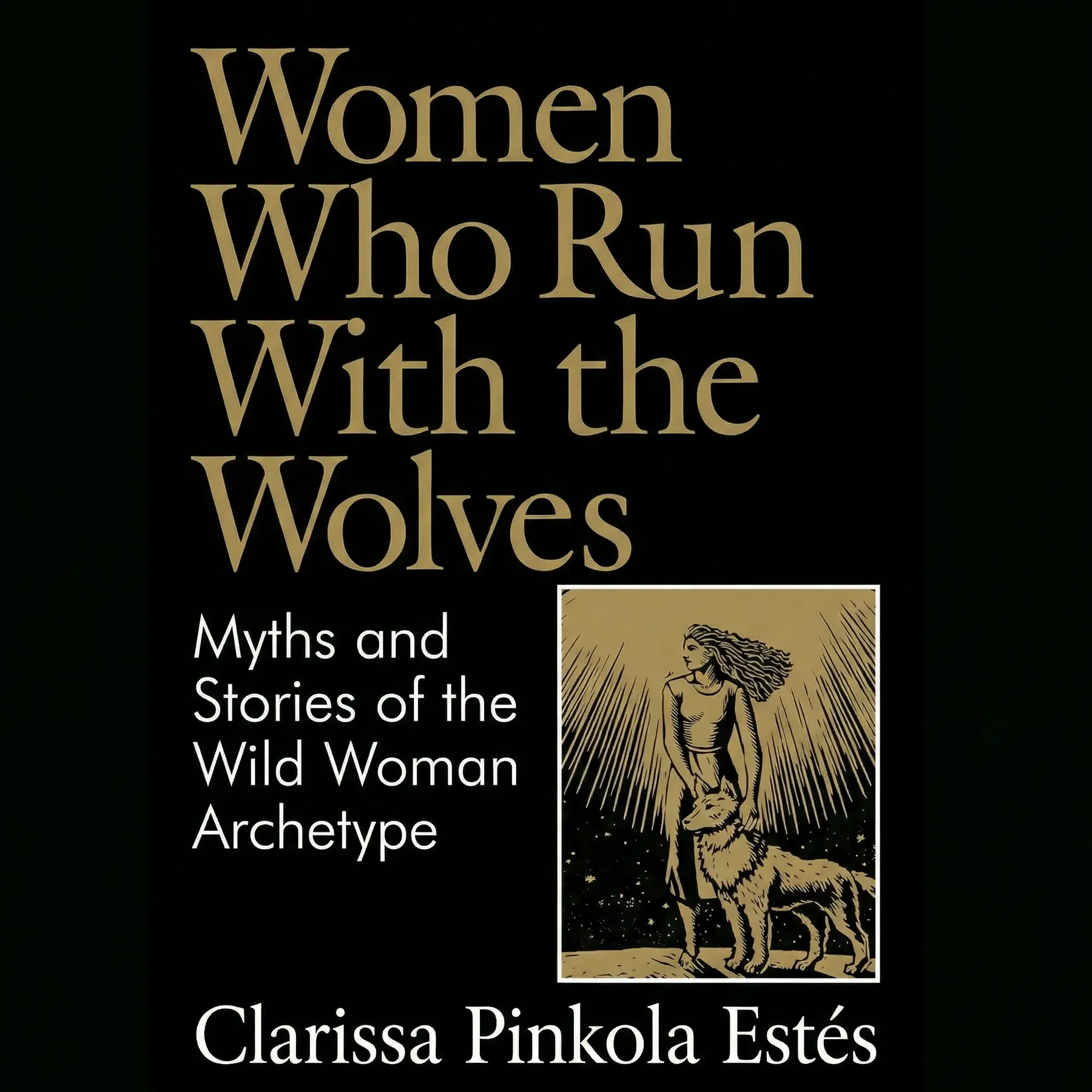
Women Who Run with the Wolves: Myths and Stories of the Wild Woman Archetype
Explore the untamed feminine spirit through an analysis of ancient myths and Jungian archetypes. This summary guides women in reclaiming their intuitive power, creativity, and ancestral wisdom by reconnecting with the wild.
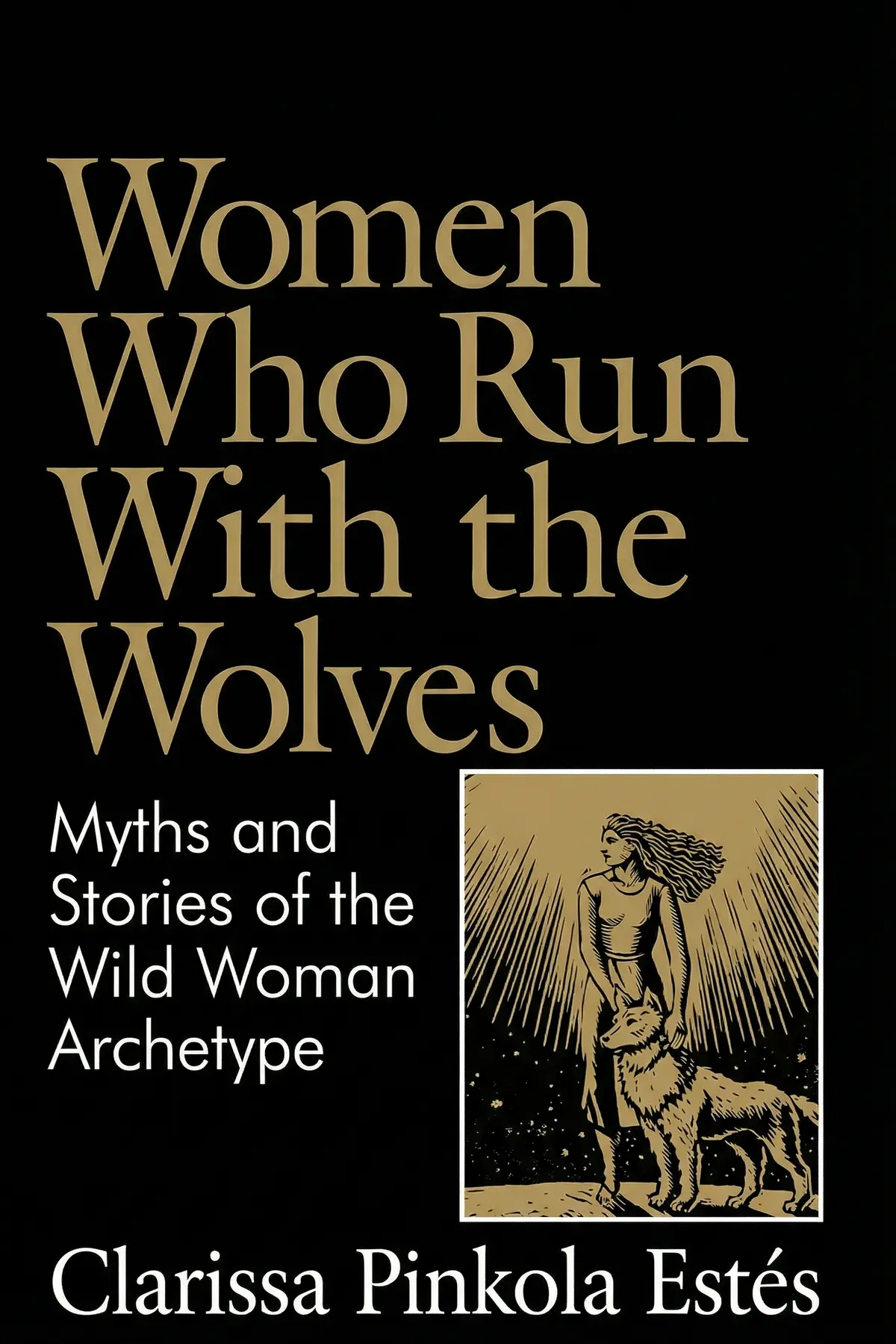
Table of Content
1. Introduction
1 min 43 sec
Have you ever felt a sudden, inexplicable tug toward the unknown, a flicker of raw energy that feels both ancient and entirely your own? In the world of Jungian psychoanalysis, these aren’t just random impulses. They are the stirrings of archetypes—universal patterns and symbols that live within our shared human consciousness, shaping how we perceive ourselves and the world around us. For women, there is one particular archetype that holds the key to authenticity, vitality, and deep-seated wisdom. It is the Wild Woman.
Clarissa Pinkola Estés invites us to look past the domesticated versions of femininity that society often demands. She suggests that beneath the layers of expectation and cultural conditioning, there is a fierce, instinctive nature that remains indestructible. This essence is the source of a woman’s creativity, her sharp intuition, and her spiritual endurance. However, for many, this connection has been weakened by a history of systemic suppression. When a woman loses touch with her wild self, she may feel unanchored, tired, or perpetually out of sync with her own life.
In this exploration, we are going to walk through the landscapes of myth and fairy tale to find our way back. We will use these stories not just as entertainment, but as psychological maps. We will meet the figures who guard our souls, confront the predators that hide in our shadows, and learn to recognize the ‘swan’ within us even when we feel like outcasts. This is more than a study of folklore; it is a journey toward psychic wholeness. By the end of this path, the goal is to see that the Wild Woman isn’t something you have to create—she is already there, waiting for you to sing her back to life.
2. The Wild Woman Archetype
2 min 40 sec
Discover the universal feminine force that persists across cultures and history, and learn why reconnecting with this primal energy is essential for a woman’s psychological health and vitality.
3. La Loba and the Indestructible Soul
2 min 40 sec
Follow the trail of the Bone Woman into the desert to understand how our deepest essence remains intact even after periods of neglect or emotional hardship.
4. Confronting the Internal Predator
2 min 39 sec
Examine the dark side of the psyche through the tale of Bluebeard, and learn how to use curiosity and awareness to disarm the forces that threaten your growth.
5. The Journey of Intuition and the Wise Hag
2 min 34 sec
Explore the initiation of Vasalisa to understand why moving past our ‘too-good’ tendencies is necessary to develop true discernment and spiritual maturity.
6. Exile as a Path to the True Self
2 min 43 sec
Learn how the pain of being an outcast can actually be a sign that you belong to a different, more vibrant reality, as seen through the story of the Ugly Duckling.
7. Conclusion
1 min 37 sec
As we close this exploration of the Wild Woman, it is worth reflecting on the throughline that connects all these ancient stories. From the bone-gathering La Loba to the resilient Ugly Duckling, the message is clear: your true nature is vibrant, instinctive, and utterly indestructible. The myths we have discussed aren’t just relics of the past; they are living mirrors of our own psychological processes. They remind us that the journey toward wholeness often requires us to descend into the desert of our own souls, to confront the predators that lurk in our shadows, and to nurture the small, quiet voice of our intuition until it becomes a roar.
Reclaiming the Wild Woman is not about becoming someone else; it is about returning to the person you were always meant to be. It is an invitation to stop apologizing for your intensity, your creativity, and your deep-seated needs. When you begin to live in alignment with your instincts, you will find that your energy returns, your focus sharpens, and your relationships become more authentic. You stop being a victim of circumstance and start being the author of your own story.
So, what is the next step on this path? Perhaps it starts with a simple act of solitude—a moment to listen to the ‘doll’ in your pocket. Or perhaps it’s the courage to walk away from a ‘Bluebeard’ situation in your life. Whatever it may be, trust that the Wild Woman is there, guarding your bones and waiting for your song. The world needs the wildness that only you can bring. It is time to stop running from your power and start running with the wolves. Your pack is waiting, and the spring is finally here.
About this book
What is this book about?
This summary dives into the legendary work by Clarissa Pinkola Estés, exploring the 'Wild Woman' archetype—a fundamental force within the female psyche that has been suppressed by centuries of social and patriarchal pressure. By revisiting timeless folk tales from around the world, the text illustrates how the modern woman can heal her spirit and return to her true nature. The journey begins by identifying the signs of a severed connection to one’s instincts, such as chronic fatigue and creative blocks. It then moves through specific stories like La Loba and Vasalisa the Wise to provide a roadmap for psychic resurrection. Listeners will learn how to identify internal 'predators' that stifle growth and how to transform the pain of isolation into the strength of belonging. Ultimately, the book promises a return to a life of vitality, where intuition serves as a compass and the 'wild' self is celebrated rather than feared.
Book Information
About the Author
Clarissa Pinkola Estés
Clarissa Pinkola Estés is a distinguished American author, Jungian psychoanalyst, and post-trauma specialist. Her profound understanding of the human psyche and her mastery of storytelling have made her a leading voice in depth psychology. Her seminal work, Women Who Run with the Wolves, has become a global phenomenon, selling more than two million copies and remaining a cornerstone text for those seeking to understand the intersection of myth, soul, and feminine empowerment.
Ratings & Reviews
Ratings at a glance
What people think
Listeners consider this a compelling and essential read for women, overflowing with wisdom and life lessons that trigger profound spiritual revelations. The narrative uses extraordinary mythological tales to captivate the audience, and one listener highlights its effectiveness in helping them confront their inner self. Conversely, the caliber of the writing draws varied reactions, with some admiring it while others deem it dreadful. Furthermore, the font size is quite tiny, hindering readability, and listeners have experienced issues with pages coming loose from the binding.
Top reviews
Phimwan
This book is a visceral experience that feels like a spiritual homecoming for the soul. I was captivated by the idea that stories are medicine, a concept Estés weaves through every chapter with poetic precision. While the writing style is quite ornate and perhaps a bit overblown for some, I found the rhythmic repetition to be soothing rather than annoying. It feels like a long, deep conversation with a wise grandmother who knows all your secrets and shames. The insights into the Wild Woman archetype helped me confront parts of my inner self I had long suppressed. Even if you aren't a fan of Jungian psychology, the folklore analysis alone is worth the price of admission. It is a heavy read, both physically and emotionally, but it offers a profound sense of empowerment. Just be careful with the paperback version; several pages started loosening after my first read-through.
Show moreChon
Wow, I didn't expect a psychology book to feel this much like an ancient oracle whispering in my ear. The chapter on Vasalisa the Wise changed how I view my own intuition and internal 'doll' forever. Estés has this unique way of peeling back the layers of a simple folk tale to reveal the jagged, beautiful truths underneath. My only real gripe is the physical production of this edition because the print size is absolutely microscopic. I found myself squinting through the Bluebeard analysis, which is a shame given how vital the content is for healing. The binding also feels a bit cheap for such a massive 500-page tome, as the spine cracked almost immediately. Still, the wisdom contained within is a rare gift for any woman seeking to understand her own psychic landscape.
Show moreKofi
The chapter on the 'Life-Death-Life' cycle is something I will return to for the rest of my life. Estés captures the essence of the feminine experience in a way that feels both primal and sophisticated. Her analysis of the Skeleton Woman myth was a highlight, offering a perspective on love and endurance that I’ve never seen in traditional self-help. Not gonna lie, the book is quite self-important in its tone, and the author clearly thinks very highly of her own insights. But when those insights are this deep, maybe a little ego is earned from the reader. It is an exhilarating journey for anyone willing to go 'out in the woods' of their own mind. I recommend keeping a highlighter nearby because there are gems on every single page.
Show moreKet
Finally got around to reading this celebrated 'oracle,' and it truly felt like a homecoming. There is so much wisdom packed into these pages about how we let our internal fires go cold over time. The specific breakdown of The Little Match Girl was heartbreakingly accurate and provided a soul-deep insight into my own patterns of self-sacrifice. It is an engaging read, though you have to be in the right headspace for the rhythmic, almost chanting style of the prose. I felt empowered to stop hiding my feelings and start listening to that four-footed shadow that follows us all. It is a must-read for any woman feeling dried out or silenced by the demands of modern life. Just buy a magnifying glass for the small print!
Show moreHang
After hearing about this 'feminist bible' for years, I finally dove into the complex world of the wolf. Frankly, the prose is exceptionally dense, often bordering on 'purple prose' with its endless stream of adjectives and metaphors. She mentions the 'rio abajo rio' so many times it starts to lose its impact. However, if you look past the stylistic flourishes, the actual analysis of tales like The Ugly Duckling is nothing short of brilliant. It provides a roadmap for feminine individuation that feels remarkably grounded despite the mythological trappings. I didn't agree with every essentialist claim she made about all women being robust, but the core message of reclaiming one's instinctual nature resonated deeply. It is definitely a book to be chewed slowly, not swallowed whole, especially since the small print makes it hard to skim.
Show moreWilliam
Ever wonder why certain fairy tales stick in your mind since childhood? This book explains the 'why' by treating these old stories as maps for the human spirit and the journey of the self. The repetition of the phrase 'the river below the river' was a bit grating at first, but I eventually understood it as a sort of meditative mantra. Estés isn't just writing a book; she is performing a sort of exorcism on the starved soul many of us carry. I particularly loved the section on the Red Shoes—it was a wake-up call about what happens when we lose our creative fire to addiction or normalcy. It is not a perfect read, and the editing could have been much tighter to avoid the 500-page bloat. But the emotional payoff is undeniably high for those who persist.
Show moreYuwadee
As someone who works in the mental health field, I can see why this book became a runaway best-seller. It bridges the gap between scholarly Jungian analysis and accessible popular psychology, even if the bridge is a bit shaky at times. The truth is, the binding on my copy is terrible and pages are literally falling out as I type this. Despite the physical flaws and the tiny font, the content remains a significant contribution to feminine individuation theory. The way she links the Wild Woman to our instinctual health is a powerful metaphor for clinical practice. It is a bit flowery, sure, but the underlying psychological truths are solid and well worth the effort. It helps patients confront the inner predator in a way that feels safe and mythological.
Show moreLaddawan
Truth is, this book is a bit of a mixed bag, like a Luna Lovegood monologue that oscillates between brilliance and nonsense. There are moments of profound insight where she describes the starved soul that hit me like a physical blow to the chest. Then, there are fifty pages of repetitive animal metaphors that make me want to toss the book across the room in frustration. The small print is a legitimate struggle, and I had to use a bookmark just to keep my place in the dense paragraphs. However, I can't deny that it sparked a massive shift in my perspective on my own creativity and relationships. It is a flawed masterpiece that offers life-changing lessons if you have the patience to dig for them.
Show morePornthip
Picked this up hoping for a rigorous exploration of feminine archetypes, but I found it somewhat frustrating and repetitive. The author makes these massive, sweeping assertions about the female psyche without much evidence beyond her own clinical experience. To be fair, some of the imagery is hauntingly beautiful, but the circular logic—comparing women to wolves simply because they are both wild—gets tedious after three hundred pages. I felt like the book was trying to force me into a specific 'robust' box that didn't quite fit my personality or lifestyle. It is a classic for a reason, I suppose, but it lacks the intellectual bite and structural editing I was looking for. If you like poetic, vibes-based psychology, you will likely love it; if you want data, look elsewhere.
Show moreNam
Look, I really wanted to like this, but it felt like being trapped in a room with a very pretentious person who won't stop talking. The writing is incredibly overblown, puffed up with so many unnecessary metaphors that the actual meaning gets lost in the fog. It's pseudo-intellectual at best, making 'wildness' seem like a club that only certain types of artistic women can join. If you don't have thick thighs or a tragic childhood, Estés doesn't seem to have much to say to you. I found the animal comparisons to be reductive rather than empowering for modern women. It is a bloated, repetitive mess that desperately needed a more aggressive editor to trim the fat and fix the tiny, unreadable font.
Show moreReaders also enjoyed
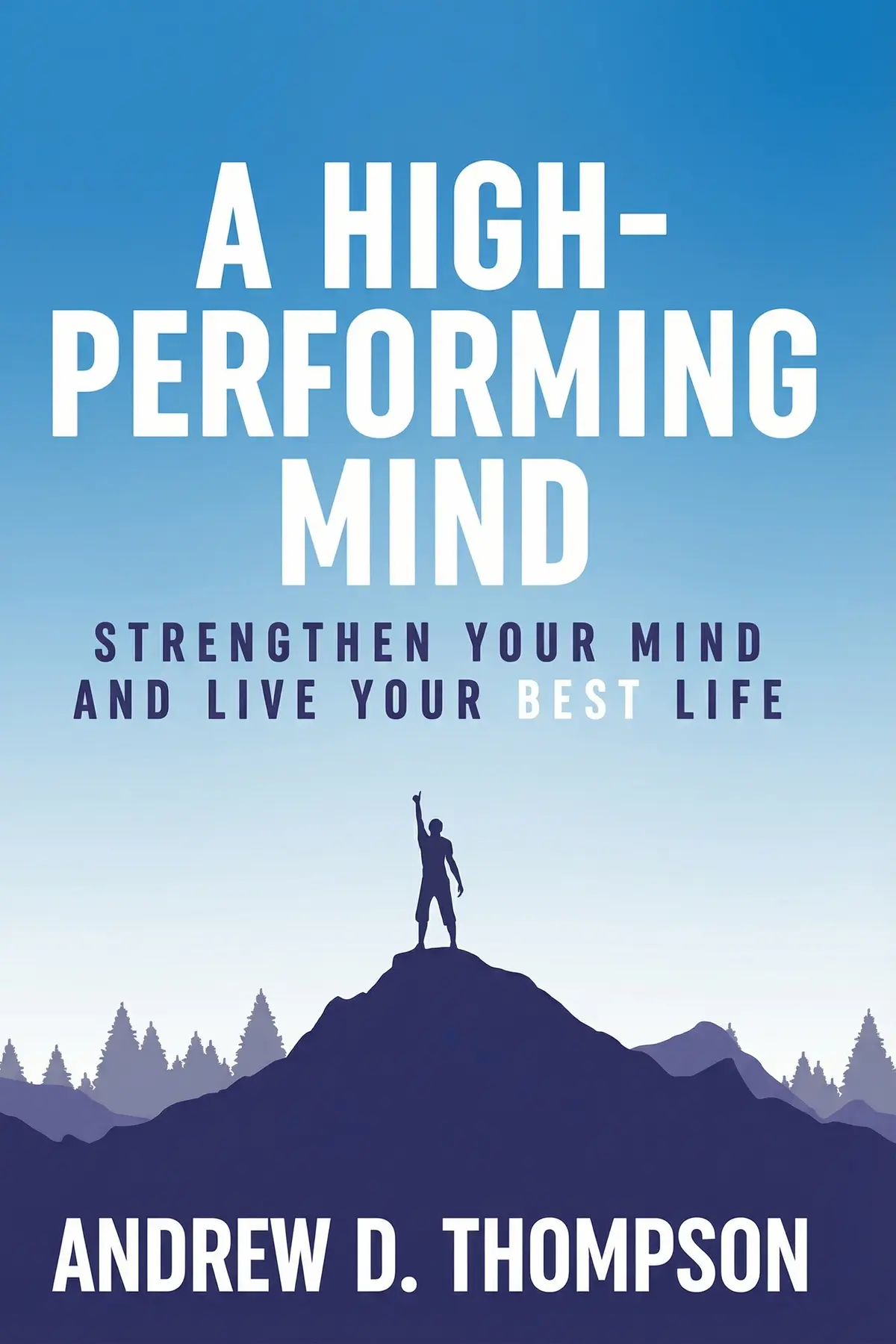
A High-Performing Mind: Strengthen Your Mind and Live Your Best Life
Andrew D. Thompson
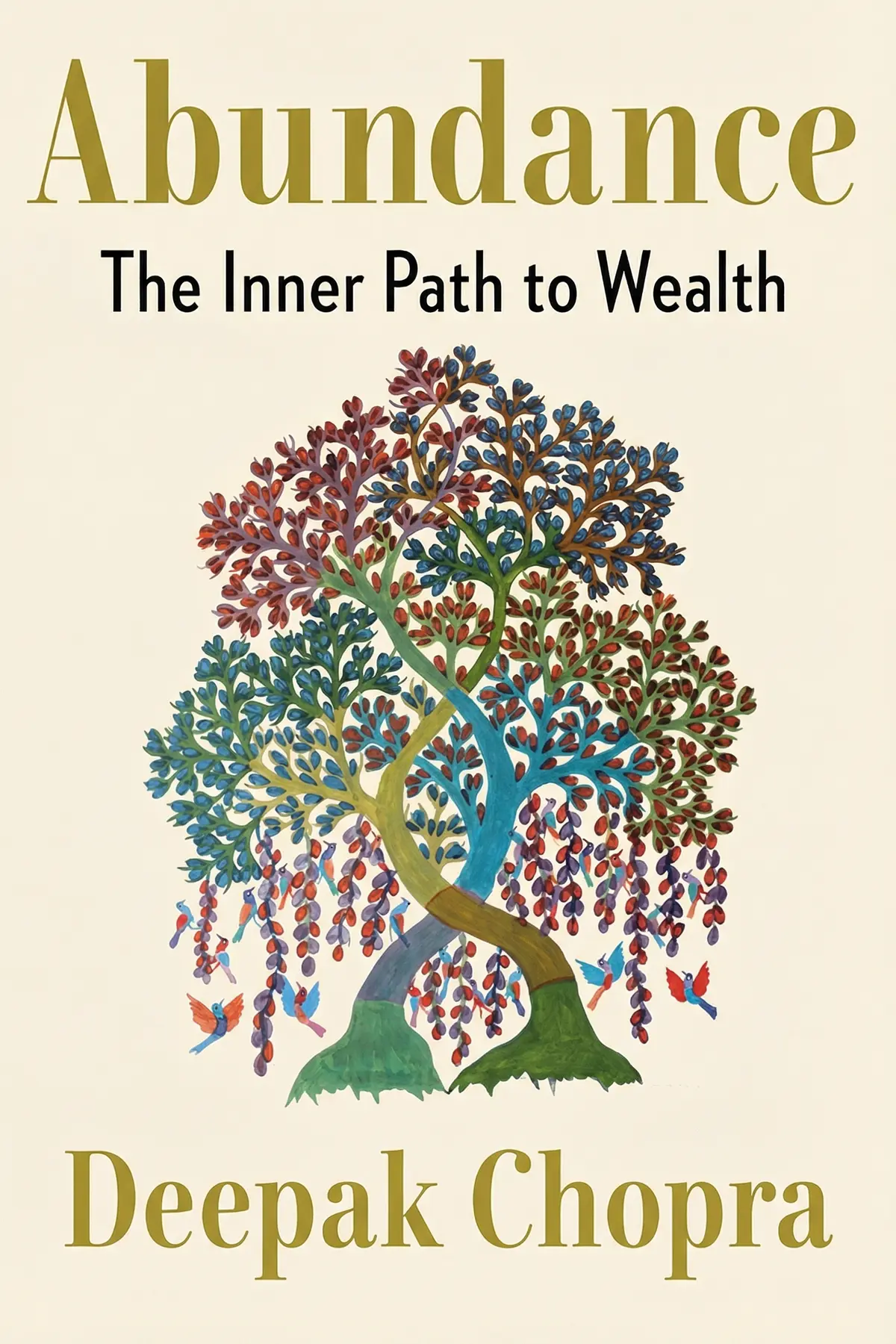
Abundance: The Inner Path to Wealth
Deepak Chopra

59 Seconds: Change Your Life in Under a Minute
Richard Wiseman
AUDIO SUMMARY AVAILABLE
Listen to Women Who Run with the Wolves in 15 minutes
Get the key ideas from Women Who Run with the Wolves by Clarissa Pinkola Estés, plus 5,000+ more titles in English and Thai.
- 5,000+ titles
- Listen as much as you want
- 7-day free trial
- Cancel anytime







