
A Life Decoded: My Genome: My Life
J. Craig Venter
Discover how the intersection of neuroscience and creativity can reshape your health. This summary explores the biological power of the arts to reduce stress, heal trauma, and enhance physical well-being.
1 min 48 sec
When we think of art, we often picture quiet museums, high-end galleries, or perhaps a specialized therapy session for someone in deep distress. We tend to view the arts as something extracurricular—a nice addition to life, but perhaps not essential for our survival or daily function. However, a profound shift is happening in the world of science that challenges this narrow view. We are beginning to understand that our relationship with aesthetics is not just a matter of taste; it is a fundamental part of our biology. Every color we see, every sound we hear, and every texture we touch sends a cascade of signals through our nervous system, physically altering the landscape of our brains.
This journey into the science of the arts reveals that we are all hardwired to respond to beauty, rhythm, and expression. It is a field known as neuroaesthetics, and it suggests that we have the power to consciously curate our environments and our activities to foster better health. Whether it is the way a specific melody can pull us out of a dark mood or the way a simple creative task can lower our heart rate, the impact of the arts is measurable and significant.
In the following sections, we will explore how shifting your perspective to an aesthetic mindset can change your life. We will look at the ways creative engagement treats stress, helps us process trauma, and even aids in the recovery from physical illness. By the end, you will see that you do not need to be a professional artist to benefit from these truths. The simple act of being aware of the world’s sensory richness can be the key to a more flourishing and resilient existence.
2 min 24 sec
Explore why your brain is constantly being reshaped by the colors, sounds, and textures of your daily environment, even when you aren’t paying attention.
2 min 13 sec
Learn how engaging in simple creative acts can physically lower your stress levels, regardless of your artistic talent or experience.
2 min 09 sec
Discover how the specific geometry of a mandala or the trigger of a familiar scent can help pull the mind out of repetitive, anxious patterns.
2 min 06 sec
Find out how neuroplasticity and aesthetic environments are being used in modern medicine to manage pain and speed up recovery.
2 min 03 sec
Understand how the specific combination of music and movement can stimulate the brain’s motor centers to treat neurodegenerative conditions.
2 min 13 sec
Discover how a daily commitment to artistic curiosity and enriched environments can lead to a more meaningful and resilient existence.
1 min 23 sec
In conclusion, the intersection of art and neuroscience offers us a new way to understand our own well-being. We have seen that we are biologically wired to be moved and transformed by our environment. From the way simple colors can shift our internal chemistry to the way rhythm can help repair damaged motor pathways, the evidence is clear: the arts are a powerful tool for health and transformation. By adopting an aesthetic mindset, we stop being passive victims of our surroundings and start being the architects of our own sensory experiences.
This journey has shown us that artistic talent is irrelevant to the biological benefits of creation. Whether you are using a mandala to calm an anxious mind or dancing to keep your brain sharp, the value is in the participation. You are encouraged to look at your life through a more creative lens. Start noticing how your environment affects your mood. Find a small, daily practice that allows you to express yourself without judgment. By making these small shifts, you can harness the power of neuroaesthetics to reduce stress, heal from trauma, and live a life that is not only healthier but also more vibrant and deeply meaningful. Art is not just something you look at; it is something that changes who you are from the inside out.
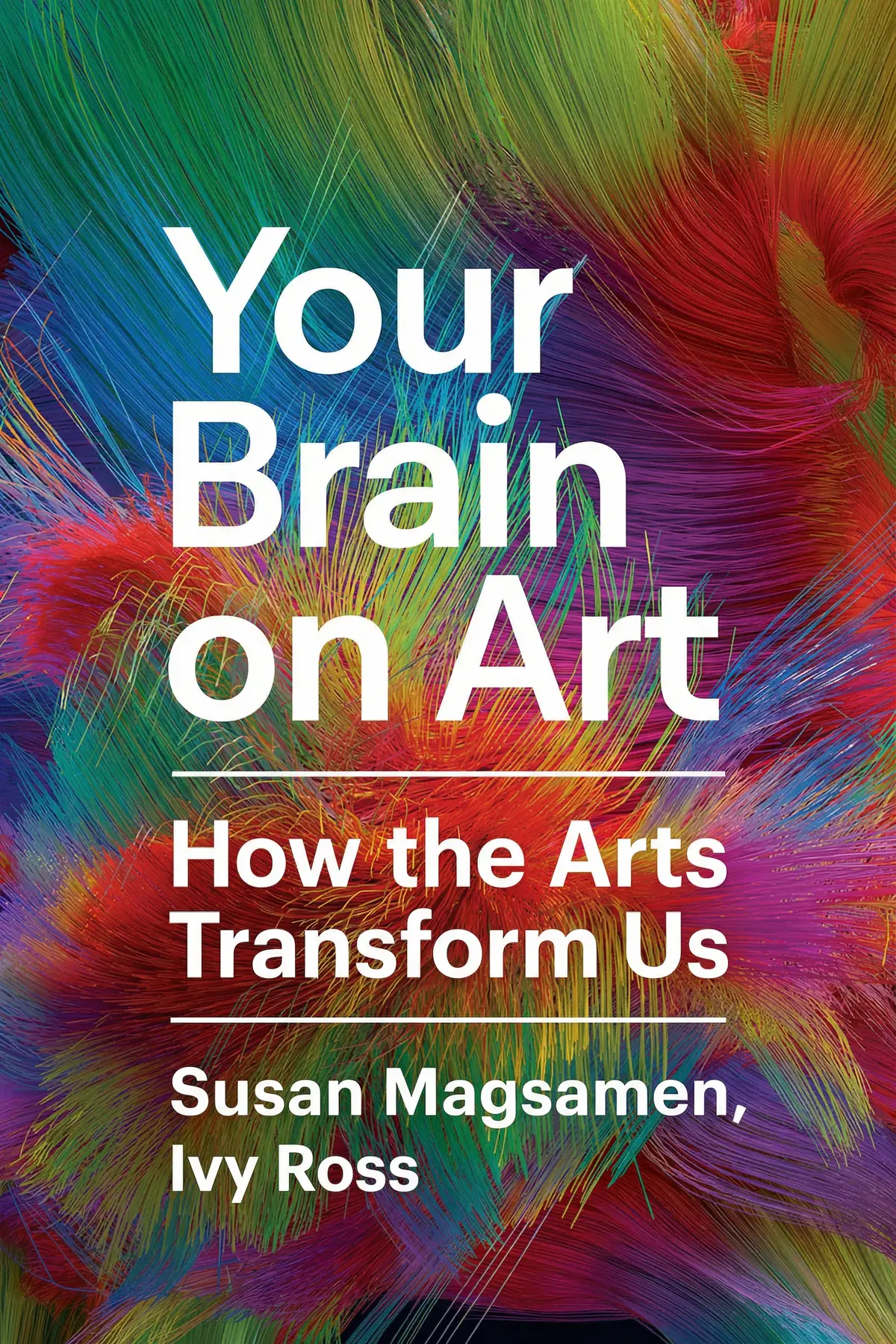
This exploration into the field of neuroaesthetics reveals that art is far more than a hobby or a decorative luxury; it is a biological necessity. By understanding how our brains and bodies respond to sensory input, we can use everything from music and painting to architecture and dance to rewire our neural pathways. The book provides a bridge between scientific research and creative practice, offering a roadmap for personal transformation. You will learn how an aesthetic mindset—a heightened awareness of your surroundings—can influence your physiological state. From lowering cortisol levels through simple creative acts to using rhythm to manage neurodegenerative diseases, the promise is clear: engaging with the arts leads to a more flourishing, resilient life. Whether you are a professional artist or someone who hasn't picked up a paintbrush since childhood, these insights show how to harness the transformative power of the arts to improve your mental and physical health.
Susan Magsamen is a neurology professor at the Johns Hopkins University School of Medicine. She also leads the International Arts + Mind Lab, a center focused on the field of neuroaesthetics. Ivy Ross is the vice president of design for hardware products at Google and a celebrated artist whose work has been featured by major global brands. Her expertise in design has earned her numerous honors, including a place on Fast Company’s list of the most creative individuals in business.
Listeners find this work both captivating and extensively researched, with one noting how it provides scientific credence to the material. Furthermore, they appreciate the evidence showing that art is demonstrably good for health and well-being, as one listener emphasizes the book's life-altering journey through neuroaesthetics. It also taps into creative potential while explaining how art affects brain processes, making it a vital resource for artists and teachers. Listeners also celebrate the physical quality of the book, with one specifically mentioning the lovely tactile pages.
After hearing the authors discuss their research on a podcast, I knew I needed to hold the physical copy of this work. The book itself is a sensory experience; the tactile quality of the pages feels intentional given the subject matter of neuroaesthetics. It is an illuminating deep dive into how our biological systems respond to beauty and creativity. While some sections feel a bit breathless, the core message—that art is a physiological necessity rather than a luxury—is backed by fascinating data on synaptic plasticity. I was particularly moved by the idea that just forty-five minutes of creative engagement can drastically lower cortisol levels. It’s rare to find a book that bridges the gap between hard science and the soul so effectively. This is essential reading for anyone who feels that the modern world has stifled their innate urge to create.
Show morePicked this up because I’ve always felt that my creative hobbies were more than just a pastime, and this book finally gave me the language to explain why. It’s a masterful exploration of how neuroaesthetics can actually transform our neural pathways and improve our overall longevity. I was especially captivated by the story of Judy Tuwaletstiwa and the practice of whitewashing murals to let go of self-criticism; it changed how I view my own failed projects. The authors argue that we are conscious of only about 5 percent of our mental activity, which makes the sensory signals we absorb even more critical. Even if you aren't a professional artist, this book proves that your brain is constantly being rewired by the world around you. Truly life-altering if you're willing to embrace the slightly enthusiastic tone.
Show moreAs someone who has struggled with the long-term effects of childhood trauma, I found this book to be an incredible comfort. It feels like a natural companion to The Body Keeps the Score, but focuses more on the proactive, creative steps we can take toward healing. The way Susan Magsamen and Ivy Ross describe the arts as a perfect path to amplify health is both poetic and grounded in modern research. Look, some people might find the writing a bit too guru-ish, but for me, that earnestness was exactly what I needed. I loved learning about how our different senses—maybe even fifty-three of them!—interact with our environment to create saliency. It’s a wealth of information that has encouraged me to prioritize my painting again. A new favorite for my shelf.
Show moreHonestly, I inhaled this in a single weekend. It’s a beautifully presented book that manages to make the science of the brain feel deeply personal and relevant to everyday life. I never realized that touch could register in the brain in just 50 milliseconds, or how much our environment dictates our mental health through sub-perceptual signals. The authors make a compelling case for why we should all be more intentional about the sensory signals we allow into our lives. While some of the advice—like keeping herbs in the kitchen or singing in the car—seems a bit obvious, the explanation of the biological reactions behind those actions is what makes it special. It’s a great gift for any creative soul or anyone interested in the intersection of health and culture.
Show moreLook, I’m a sucker for a beautiful hardback, but the content here is what really shines. This book is a fascinating, if occasionally breathless, exploration of the human experience. I found the sections on the anatomy of the arts to be deeply researched, and I appreciate how it brings scientific credence to the idea that art is good for our well-being. The text moves at a fast pace, peppered with inspiring case studies and brief digressions into how we perceive the world. To be fair, I could have done without the overly optimistic, triumphant tone that pops up every few pages. It’s a bit much. However, the core message about rewiring our synapses through aesthetic experience is powerful. It’s a beautiful, tactile volume that encourages you to stop treating art as a hobby and start treating it as medicine.
Show moreWow. This was quite a journey. It’s not often that a nonfiction book about neurology feels this accessible, yet the authors managed to make complex concepts like synaptic pruning and salience easy to grasp for the layperson. Truth is, I started looking at my daily environment differently as soon as I put it down. The discussion on how our brains are wired for curiosity as a survival mechanism really resonated with me. I did feel that the conclusion was a little bit twee, suggesting we just sing in the shower to fix our lives, but the middle sections on trauma and recovery were profound. It’s a beautiful book to hold and read, though I wish the authors had explored the potential harms of art rather than focusing strictly on the positive.
Show moreThe chapter on Amplifying Learning was worth the price of the book alone. Finally got around to reading this, and I’m struck by the connection between music and the parts of the brain responsible for meaning-making. Listening to the authors explain how poetry can help us interpret reality through the same neural circuits as music was a lightbulb moment for me. I appreciated the sections on salience and how our brains filter inputs to form lasting memories. My only real gripe is that the book feels a bit like it’s sponsored by major tech companies at times, particularly when it pushes digital solutions for neurodivergent individuals. Still, for a creative person looking to understand the why behind their drive, this provides some very satisfying answers and brings scientific credence to our craft.
Show moreEver wonder why a specific song makes you cry or why looking at a certain painting feels like a physical release? This book attempts to answer those questions by weaving together neurobiology and the arts. Personally, I found the chapters on healing the body to be the most compelling, especially the research regarding how we process sensory signals below our conscious awareness. However, I have to admit the definition of art used here is frustratingly elastic. When everything from gardening to drinking a cup of tea is categorized as an aesthetic experience, the argument starts to lose its teeth. It begins to feel a bit like a self-help book wrapped in a lab coat. Still, the presentation is gorgeous, and the scientific citations provide enough weight to keep it from floating away into pure woo territory.
Show moreHighly disappointing for those of us in the education field. In my experience, the authors present information that has been common knowledge in the arts for decades as if it’s some revolutionary discovery. The lack of specific citations for many of the groundbreaking studies they mention makes the whole thing feel academically flimsy. I was especially annoyed by the overly broad scope—if everything is art, then nothing is. They lean heavily on personal stories that, while charming, don't substitute for the rigorous scientific practice I was promised. It’s a shame because the physical book is lovely to handle, with beautiful tactile pages, but the content lacks the depth required to be a definitive text on neuroaesthetics. It feels more like a marketing brochure for wellness than a serious study.
Show moreNot what I expected at all. Frankly, I went in looking for a rigorous scientific examination of how the brain processes aesthetics, but what I got was a collection of anecdotes and new-age posturing. The authors spend an exhausting amount of time on David Byrne stories, treating them like peer-reviewed data points. Then, the book takes a bizarre turn by suggesting that people with ADHD or ASD should just use immersive video games or AI glasses as a solution. It felt like a betrayal of the earlier chapters on embodied art. To top it off, the writing tone is so relentlessly chirpy that it becomes grating. If you want a serious neurobiology book, look elsewhere; if you want a glossy, high-level manual that ignores the colonial history of art, this might be for you.
Show moreJ. Craig Venter
Carl Zimmer
Bill Bryson
Jeff Hawkins
Leanne Maskell
AUDIO SUMMARY AVAILABLE
Get the key ideas from Your Brain on Art by Susan Magsamen, plus 5,000+ more titles in English and Thai.







