
22 min 04 sec
You’re About to Make a Terrible Mistake!: How Biases Distort Decision-Making – and What You Can Do To Fight Them
Explore the hidden psychological traps that sabotage business strategy. This summary reveals why even the smartest leaders make catastrophic errors and how to build a systematic process to ensure better, more rational decision-making.
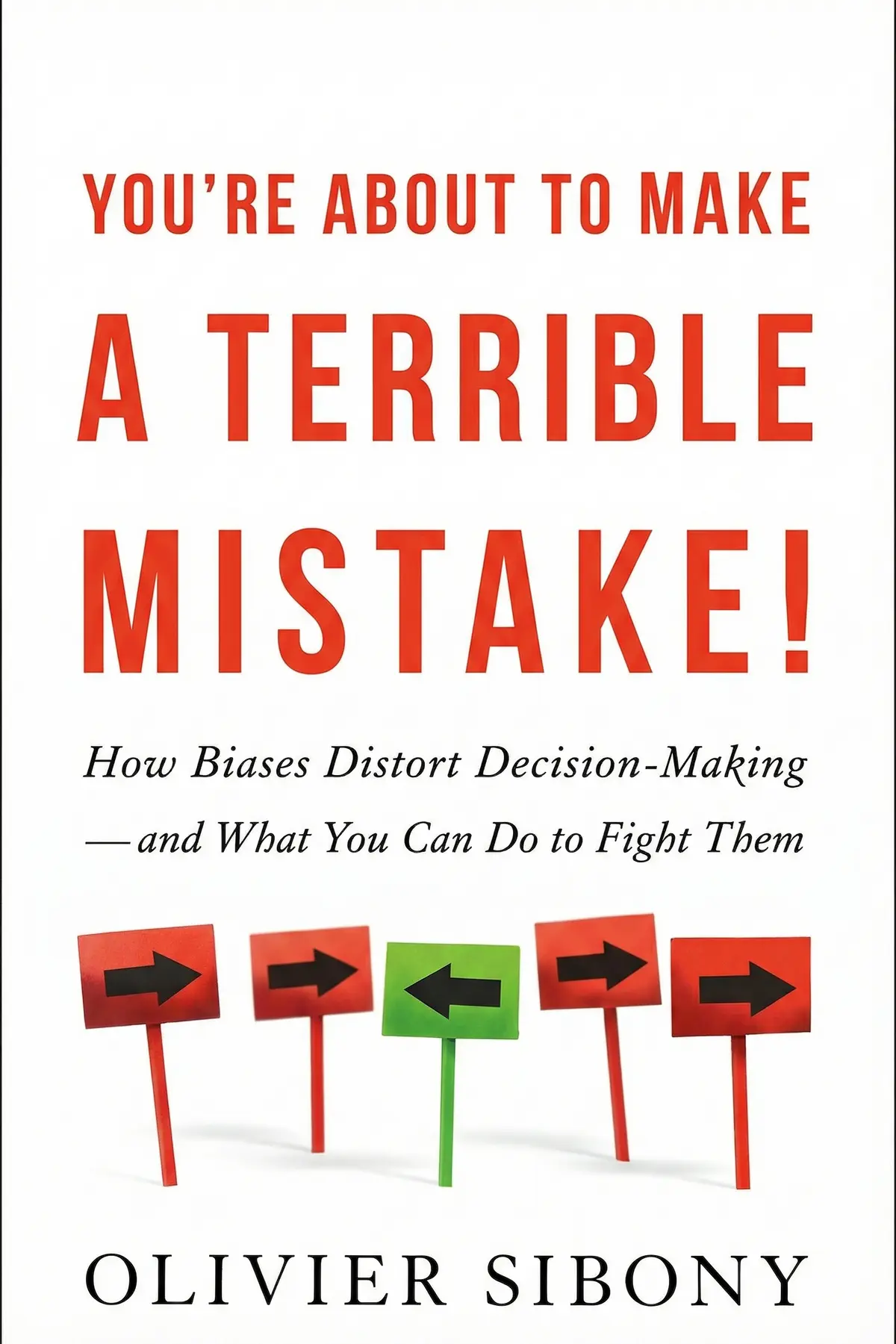
Table of Content
1. Introduction
1 min 36 sec
We have all been there. You are sitting in a boardroom or at your home office, and a new opportunity presents itself. It feels right. Your gut is telling you that this is the one—the project that will define your career or the acquisition that will double your company’s value. In the business world, we often lionize the leader who acts on instinct, the visionary who ‘just knows’ when a deal is worth chasing. But what if that internal compass is actually pointing you toward a cliff?
In You’re About to Make a Terrible Mistake!, Olivier Sibony challenges the cult of intuition. He argues that when it comes to high-stakes strategy, our natural thought processes are riddled with invisible traps. We aren’t as rational as we think we are. In fact, the very mental shortcuts that help us navigate daily life are the same ones that lead to catastrophic corporate failures.
This isn’t just a book about what goes wrong; it is a blueprint for how to get it right. The throughline here is a move away from the ‘heroic’ model of leadership toward a more disciplined, architectural approach. You will learn that while you cannot eliminate your own biases, you can design a system that catches them before they do damage. We are going to explore why smart people fall for scams, why mimicking Steve Jobs is a recipe for disaster, and why the secret to great decisions isn’t a better brain, but a better process. By the end of this journey, you will have the tools to look at your next big decision not through the foggy lens of ‘gut feeling,’ but through a clear, systematic framework that prioritizes facts over stories.
2. The Persistence of Bias and the Decision Architect
2 min 41 sec
Discover why individual intelligence isn’t enough to stop cognitive errors and how shifting your role from decision-maker to architect can protect your organization from invisible mental traps.
3. The Seductive Power of Confirmation Bias
2 min 48 sec
Unpack the historical oil-sniffing scams that cost governments millions and learn how the stories we want to believe prevent us from seeing the evidence right in front of us.
4. Deconstructing the Hero Myth and the Attribution Error
2 min 55 sec
Stop searching for the next ‘Steve Jobs’ and understand why attributing a company’s success to a single visionary is a dangerous distortion of reality.
5. The Limits of Intuition in Complex Environments
2 min 41 sec
Learn why ‘trusting your gut’ is a recipe for disaster in strategic planning and how to distinguish between high-validity and low-validity environments.
6. The High Price of Overconfidence
2 min 39 sec
Explore the infamous Blockbuster-Netflix rivalry to see how overestimating our own precision can lead to the total collapse of an industry giant.
7. Why Process Trumps Analysis
2 min 28 sec
Uncover the surprising research that shows how you make a decision is six times more important than the financial models you use to justify it.
8. The Necessity of Constructive Dissent
2 min 27 sec
Learn why the most dangerous meetings are the ones where everyone agrees and how to foster cognitive diversity to uncover the truth.
9. Conclusion
1 min 49 sec
As we wrap up our exploration of You’re About to Make a Terrible Mistake!, the central lesson is clear: your greatest enemy in business isn’t the competition, the market, or the economy—it is your own mind. We are wired to seek out stories that confirm our beliefs, to overstate our own abilities, and to trust a ‘gut feeling’ that has no place in the world of complex strategy.
However, recognizing these biases is only the first step. You cannot think your way out of being human. The real breakthrough comes when you stop trying to fix your brain and start fixing your environment. By moving from a ‘heroic decision-maker’ to a ‘decision architect,’ you create the organizational structures that protect you from yourself.
Think back to the ‘collaboration plus process’ model. It reminds us that the way we talk, the way we argue, and the way we structure our meetings is significantly more impactful than any financial model we could ever build. Success in strategy is about rigor, not intuition. It is about inviting the ‘food critic’ into the kitchen rather than just listening to our grandmothers.
Your actionable takeaway is this: before your next major strategic meeting, don’t just ask for a report. Instead, define the specific criteria for success before the discussion even begins. Establish a framework—a checklist of risks to be addressed and perspectives to be heard. If you find yourself in a room where everyone is nodding in agreement, stop. Assign a dissenter. Ask for the ‘failure story.’ By intentionally designing a process that challenges your assumptions, you move away from the edge of that ‘terrible mistake’ and toward a future of consistent, rational, and profitable choices.
About this book
What is this book about?
Have you ever wondered why brilliant executives at multi-billion dollar companies make choices that seem obviously flawed in hindsight? This summary of You’re About to Make a Terrible Mistake! dives into the cognitive biases that cloud our judgment. It moves beyond the idea that we can simply 'think harder' to avoid mistakes, instead arguing that our brains are hardwired for error. The book promises a shift in perspective: from being a solo decision-maker to becoming a decision architect. By understanding how confirmation bias, overconfidence, and the attribution error work, you will learn to build organizational guardrails. You will discover why intuition is a dangerous tool for strategy and how a rigorous, collaborative process—similar to those used at NASA—is the only way to consistently produce successful outcomes.
Book Information
About the Author
Olivier Sibony
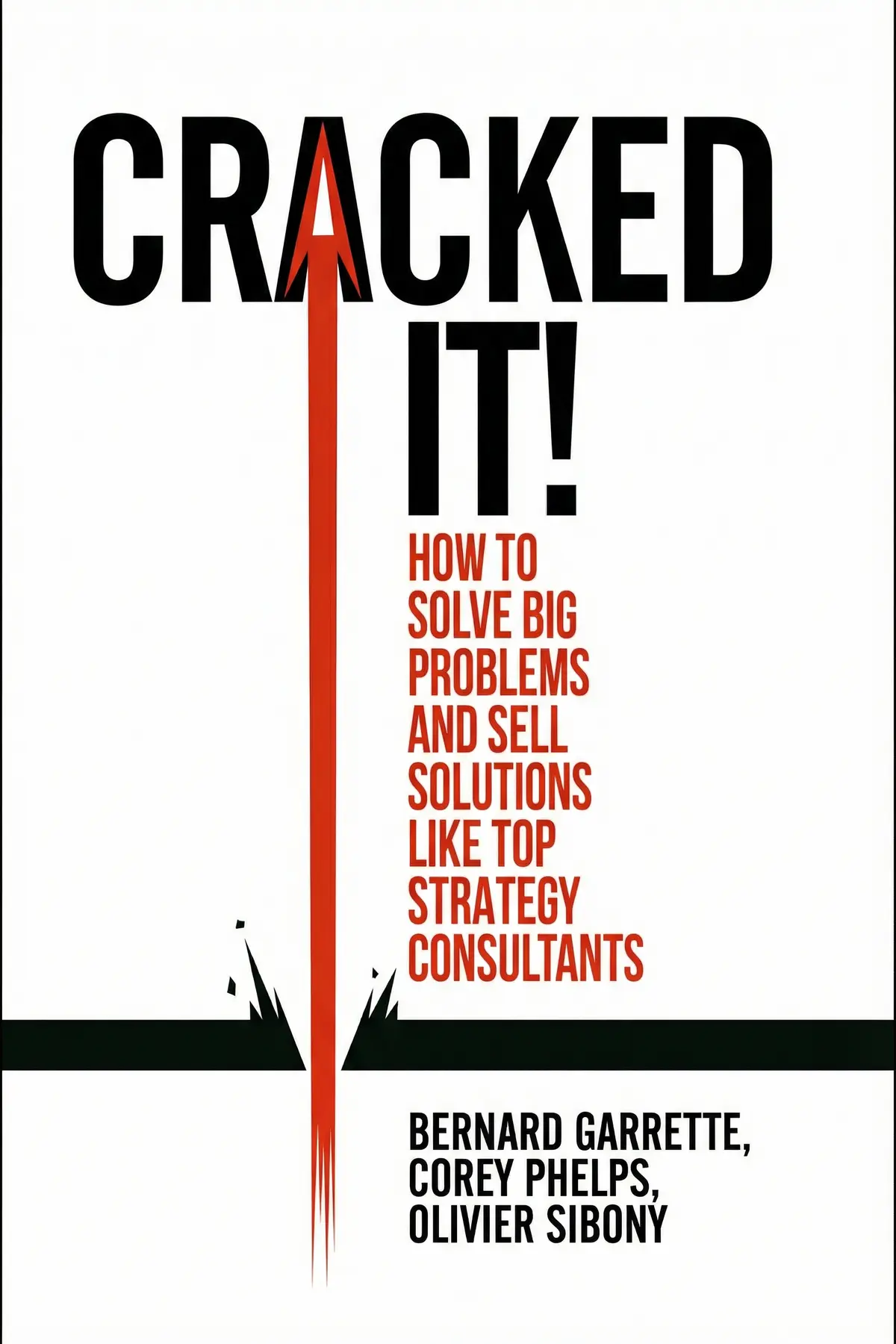
Olivier Sibony is a professor at HEC Paris and an associate fellow at Oxford University's Saïd Business School. His research is primarily focused on reducing the impact of cognitive biases in strategic decision-making. A recognized expert in the field, he has collaborated with Nobel laureate Daniel Kahneman, notably co-authoring the influential article Before You Make That Big Decision. Additionally, Sibony is the co-author of Cracked It! How to Solve Big Problems and Sell Solutions Like Top Strategy Consultants.
Noise: A Flaw in Human Judgment
Daniel Kahneman
Ratings & Reviews
Ratings at a glance
What people think
Listeners find this book to be a productive and systematic resource for implementing behavioral science within strategic business frameworks. They value the author’s talent for turning intricate research into a functional "decision architecture," and one listener highlights that the "topic in 30 seconds" summaries are particularly beneficial for reinforcing the material. Additionally, many listeners appreciate the thorough set of 40 actionable techniques designed to address cognitive biases during group collaborations. While perspectives differ regarding the book’s uniqueness for those already well-versed in the subject, they also note that the abundance of practical examples ensures the concepts are remarkably clear. The text is further commended for its high information density and the way it expertly merges academic studies with hands-on leadership experience.
Top reviews
Udom
The 'topic in 30 seconds' summaries at the end of each chapter are a total game-changer for someone with a busy schedule. This book doesn't just list our flaws; it provides a literal toolkit of 40 techniques to actually do something about them. I particularly enjoyed the sections on 'pre-mortems' and the 'vanishing options test,' which we’ve already started experimenting with in our weekly meetings. Sibony’s background as a strategy professor shines through in how he organizes the information—it's incredibly logical and builds momentum as you read. Some might find the business-heavy focus a bit narrow, but for me, that specificity made the advice feel more tangible. It’s rare to find a book that balances academic rigor with such clear, actionable professional advice. This is definitely staying on my desk as a frequent reference.
Show moreSun
Ever wonder why smart people in expensive suits make such disastrously bad calls? Sibony pulls back the curtain on the corporate decision-making process to reveal a mess of ego and cognitive shortcuts. He argues convincingly that our intuition is often our own worst enemy when the stakes are high. By framing the solution as 'behavioral strategy,' he gives leaders a way to fight bias without needing to become psychologists. The example of the 'petrol-sniffing airplane' was particularly memorable and perfectly illustrated how logic can fail even the experts. My only gripe is that it can feel a bit repetitive if you read it cover-to-cover in one sitting. Still, the depth of research is impressive and the checklists are worth the price of admission alone. It’s a sharp, necessary look at how we think.
Show moreEarn
Look, if you manage people or run a department, this should be mandatory reading for your entire team. We often assume that bad decisions come from bad intentions or lack of data, but Sibony proves it's usually just bad process. The book is incredibly well-organized and serves as a masterclass in applying behavioral science to the workplace. I found the section on 'cognitive diversity' particularly enlightening in today’s environment. It’s not just about having different people in the room; it’s about creating a culture where they actually feel safe to speak up. The tone is professional yet accessible, making it easy to share specific chapters with colleagues. While it lacks the narrative flair of a Malcolm Gladwell book, it more than makes up for it with sheer utility. This is a must-read for any serious professional.
Show morePop
Finally got around to reading this, and the 'decision architecture' framework is exactly what my organization needed. It’s one thing to know that anchoring bias exists, but it’s another thing entirely to know how to 're-anchor' a negotiation. The 40 techniques are worth keeping on a laminated sheet during any major project planning phase. Sibony’s prose is clear and he has a knack for explaining abstract concepts through vivid, real-world examples. I loved the emphasis on learning from both failures and successes—it's a nuanced view that most management books miss. The information density is high, so I had to take my time with it, but the effort was well worth it. This is a powerful, practical guide that turns psychological theory into a competitive advantage. Highly recommended for anyone in a leadership position.
Show moreGun
After years of trying to 'fix' my own brain, Sibony’s core message hit me like a ton of bricks: you simply can’t. We are all hardwired for bias, and no amount of self-awareness is going to magically erase the heuristics that lead us astray. The shift here from individual improvement to 'decision architecture' in a group setting is the book's greatest strength. I loved the focus on how organizations can build systems that naturally filter out bad logic before a project goes off the rails. While the McKinsey-style corporate examples might feel a bit distant if you aren’t in a boardroom, the logic remains impeccable. It's a refreshing, if slightly humbling, reminder that we need each other to stay rational. The writing is punchy and direct. It avoids the typical academic fluff found in similar titles. It’s easily one of the most practical guides I’ve found on the subject.
Show morePracha
Picked this up on a whim and was pleasantly surprised by how Sibony distills complex strategy into something usable. Most books on cognitive bias stop at telling you that you're biased, which isn't actually very helpful in the real world. This book goes the extra mile by explaining how to design a process that accounts for those flaws. The 'decision architecture' concept is brilliant and feels like the missing link between theory and practice. I especially liked the bit about using 'devil’s advocates' and 'red teams' to stress-test ideas before they are approved. It’s a dense read, packed with information, yet it never feels like a slog because the pacing is so deliberate. If you’re tired of the same old management platitudes, give this one a shot. It’s a thoughtful, evidence-based approach to leadership.
Show moreJames
To be fair, the first few chapters felt like a retread of every other behavioral economics book I’ve purchased since 2010. I almost put it down because I didn't think I needed another lecture on anchoring or confirmation bias. However, once I reached the section on the 40 specific techniques, I was hooked. Sibony moves past the 'what' and 'why' to give us a very comprehensive 'how' that is missing from many academic texts. The way he clusters these biases into situational threats is much more intuitive than just learning a list of definitions. It’s not a perfect book—some of the analogies feel a bit recycled—but the practical application of 'nudge' theory to corporate strategy is excellent. It’s a solid four-star read for anyone who actually has to make decisions for a living.
Show morePiyanart
Is this a solid introduction to behavioral strategy? Absolutely. However, if you have already spent time with the works of Kahneman, Thaler, or Ariely, you might experience a bit of déjà vu. The truth is that much of the foundational research presented here is well-trodden ground in the world of behavioral economics. Sibony does a fantastic job of synthesizing these ideas, but I was searching for more novel theories. I did appreciate the 'topic in 30 seconds' summaries, which made the high information density much easier to digest. It’s a very easy read with simplified explanations that don't talk down to the reader. It is worth picking up if you want a consolidated refresher, but don't expect a revolution in thought. I’d recommend it primarily to those new to the genre or managers looking for a quick reference guide.
Show moreOm
In my experience, books written by consultants tend to be a bit dry, but Sibony manages to keep things engaging with some truly fascinating case studies. He does a great job of meshing academic research with the messy reality of business. I appreciated the honesty regarding the fact that individuals can’t really self-correct their biases. It’s a bit of a bitter pill to swallow, but it makes the later chapters on organizational design much more impactful. My main complaint is that the book leans so heavily on the work of Kahneman that it sometimes feels like a very long appendix to 'Thinking, Fast and Slow.' If you haven't read that one, this will be a five-star experience. If you have, it’s more of a useful supplemental guide on how to apply those theories in a boardroom.
Show moreHannah
Frankly, I found the heavy emphasis on C-suite problems quite alienating for the average reader. While I understand that Sibony comes from a McKinsey background, the examples were almost exclusively about multi-million dollar investments and corporate mergers. I was hoping for more advice on personal decision-making, but the author is adamant that you can't really fix your own biases solo. This makes the first half of the book somewhat depressing and the second half largely irrelevant if you don't manage a large team. To be fair, the writing style is clear and the organization is top-notch. It just wasn't the book I thought it was going to be. If you aren't a senior manager or a strategy consultant, you might find yourself skimming large sections. It’s a well-constructed manual for a very specific type of person.
Show moreReaders also enjoyed
A Liberated Mind: How to Pivot Toward What Matters
Steven C. Hayes
7 Powers: The Foundations of Business Strategy
Hamilton Helmer
Age of Propaganda: The Everyday Use and Abuse of Persuasion
Anthony Pratkanis
A Bigger Prize: How We Can Do Better Than the Competition
Margaret Heffernan
AUDIO SUMMARY AVAILABLE
Listen to You’re About to Make a Terrible Mistake! in 15 minutes
Get the key ideas from You’re About to Make a Terrible Mistake! by Olivier Sibony, plus 5,000+ more titles in English and Thai.
- 5,000+ titles
- Listen as much as you want
- 7-day free trial
- Cancel anytime







