
19 min 49 sec
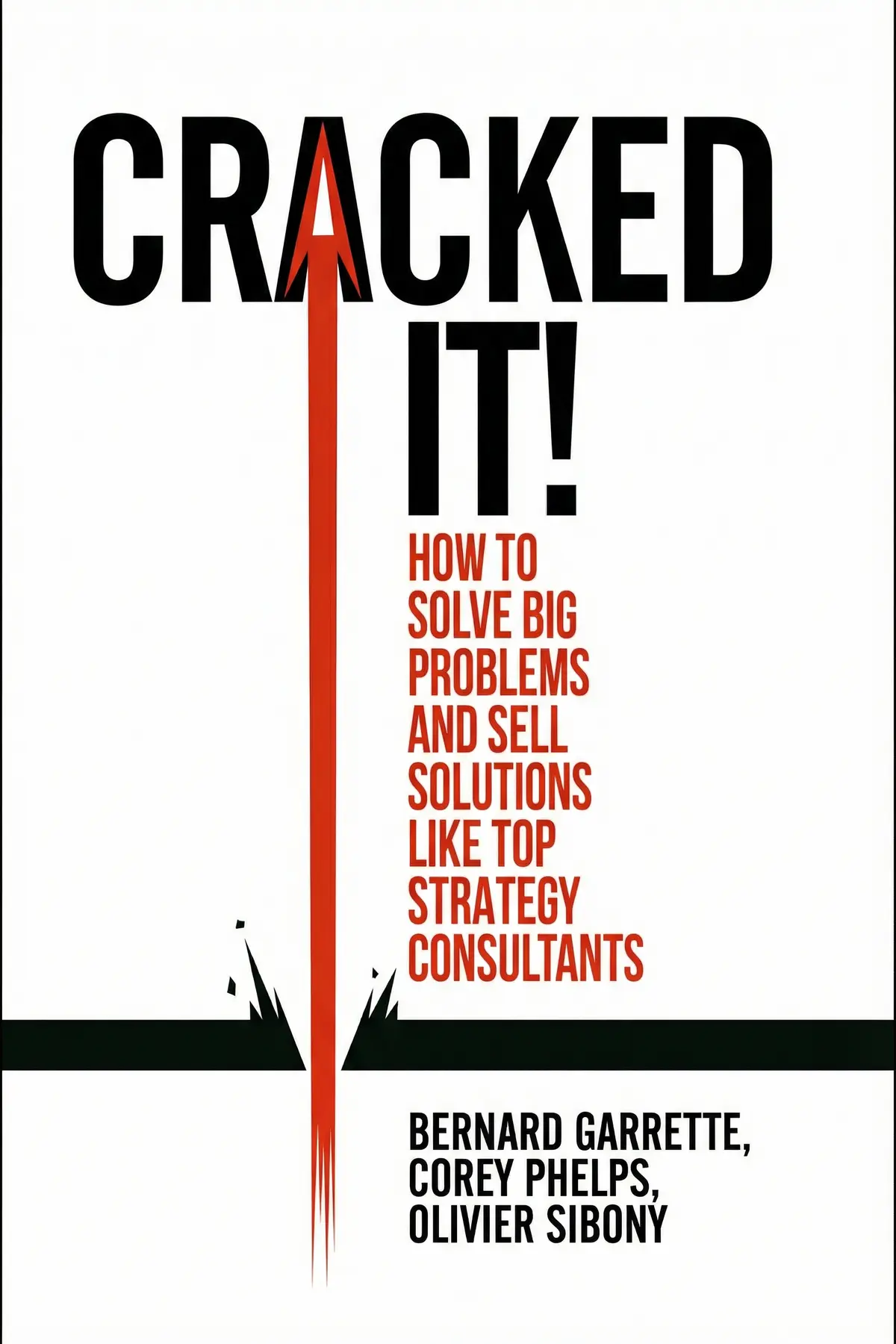
Noise: A Flaw in Human Judgment
This deep dive into human error reveals how random variability in judgment undermines accuracy across fields like law and medicine, offering strategies to improve decision-making through better mental hygiene and structural audits.
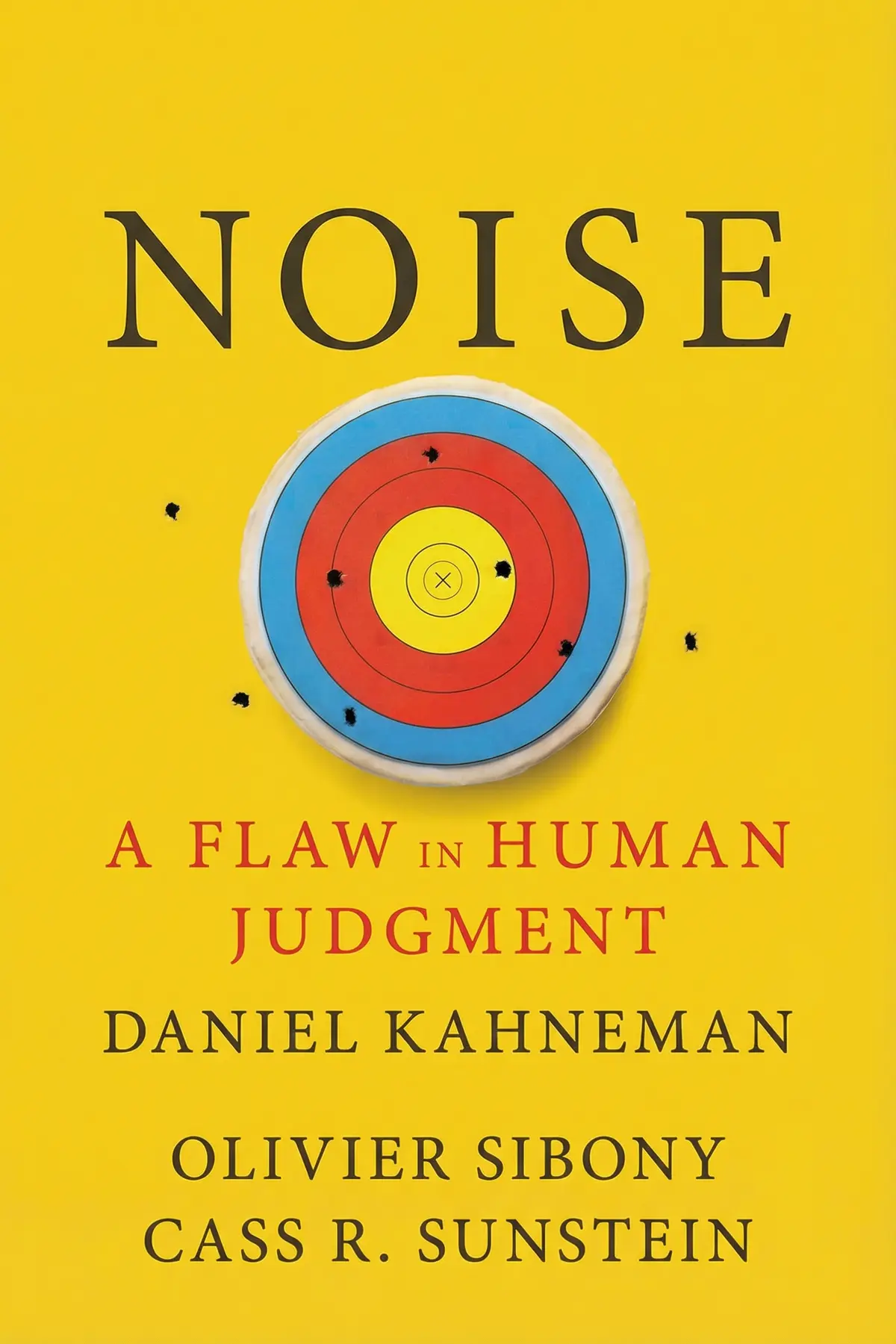
Table of Content
1. Introduction
1 min 42 sec
Think for a moment about a simple, everyday task. If you were asked to estimate the length of a minute without looking at a clock, how close do you think you’d get? If you tried it five times in a row, you probably wouldn’t hit sixty seconds exactly every time. One attempt might be fifty-eight seconds, another sixty-three, and another fifty-five. These fluctuations aren’t necessarily biased in one direction; they are just inconsistent. This is the essence of noise: random, unwanted variability that creeps into our choices and evaluations.
While a few seconds of error in a private experiment doesn’t matter much, the stakes change dramatically when we move into the professional world. In every field where humans are required to make a call—whether it’s a doctor diagnosing a patient, a judge sentencing a defendant, or a manager hiring a new employee—this hidden inconsistency is at play. It creates a lottery where the outcome depends less on the facts of the case and more on who happens to be making the decision at that exact moment.
In this summary, we are going to look at why this phenomenon is so pervasive and why it’s so much harder to spot than bias. We’ll explore the psychological reasons our brains prefer stories over statistics and how that preference leaves us blind to our own inconsistency. More importantly, we’ll discuss how we can fight back. By understanding the different types of noise and adopting a disciplined approach to decision hygiene, we can begin to clean up our thinking. The goal is to move toward a world where judgment is more reliable, more fair, and less susceptible to the random fluctuations that currently haunt our most important institutions. Let’s begin our journey into the invisible mechanics of human error.
2. The Distinction Between Noise and Bias
2 min 04 sec
We often blame errors on prejudice or systematic skew, but a different kind of mistake is lurking in the shadows of our decisions.
3. The Impact of Occasion Noise
1 min 58 sec
Your decisions can be influenced by the weather, the time of day, or even the outcome of a recent sports game without you ever realizing it.
4. The Failure of Human Prediction
2 min 06 sec
Experts often believe their intuition is their greatest asset, but when it comes to the future, simple formulas often perform much better.
5. Why Our Brains Are Blind to Noise
2 min 00 sec
We are hardwired to find causes and patterns, which makes the random nature of noise almost impossible for us to see in our daily lives.
6. The Power of Averaging Judgments
2 min 05 sec
One of the most effective ways to eliminate error is a technique that doesn’t require any special technology, just a crowd of people.
7. The Necessity of the Noise Audit
1 min 47 sec
Before you can fix a problem, you have to measure it, and most organizations are shocked by what they find when they actually look at the data.
8. Implementing Decision Hygiene
2 min 03 sec
Reducing error isn’t about one big change; it’s about a series of disciplined practices that prevent noise from entering the process.
9. The Trade-off Between Discretion and Rules
2 min 17 sec
Standardizing decisions can feel like it robs experts of their agency, but it’s often the only way to ensure fairness and accuracy.
10. Conclusion
1 min 47 sec
As we have seen, noise is an invisible but omnipresent flaw in the way we make decisions. While bias is often the focus of our efforts to improve fairness and accuracy, noise is an equally significant source of error that causes massive waste, injustice, and personal tragedy. From the courtroom to the boardroom, the random variability of our judgments creates a world where the outcomes of our lives can be determined by the weather or a judge’s mood. We are naturally blind to this inconsistency because our brains are hardwired to see patterns and stories, even where none exist.
But we are not helpless. By adopting the tools of decision hygiene, we can begin to mitigate the impact of noise. This starts with recognizing that our intuition is often less reliable than we think. We can conduct noise audits to measure the scope of the problem in our organizations, and we can use the power of averaging and independent judgments to find the truth hidden within our varied perspectives. Moving toward the ‘outside view’ and breaking complex problems into smaller, manageable parts allows us to strip away the random fluctuations of our internal states.
The throughline of this exploration is clear: human judgment is a fragile instrument, but it is one that we can calibrate. The path forward requires a commitment to humility—the recognition that we are noisier than we imagine—and a willingness to trade some of our individual discretion for collective reliability. If we can do this, we can create institutions that are not only more efficient but also more just. As you move forward, try to look at your own choices through the lens of a noise audit. Ask yourself: if I made this choice again tomorrow, or if a different person were in my shoes, would the result be the same? By asking that question, you’ve already taken the first step toward clearer, cleaner thinking.
About this book
What is this book about?
Have you ever wondered why two different judges can give wildly different sentences for the exact same crime, or why a doctor might change a diagnosis based on the time of day? This summary explores the hidden phenomenon of noise—the random, unwanted variability in human judgment that creates systemic unfairness and costly mistakes. While we often focus on bias, noise is an equally destructive but far more invisible force that permeates every institution, from insurance companies to courtrooms. Through this exploration, you will learn the psychological roots of why our brains are so susceptible to inconsistency and why we struggle to recognize it. The text provides a roadmap for identifying this variability within organizations and offers a set of practical tools called decision hygiene. By shifting from intuitive, story-based thinking to more structured, statistical approaches, we can improve the reliability of our choices. The promise here is not just better business outcomes, but a more just and predictable world where our important decisions are no longer left to the whims of chance or the weather.
Book Information
About the Author
Daniel Kahneman
Daniel Kahneman was a Nobel Prize-winning economist and psychologist known for his work on the psychology of judgment and decision-making. He was the author of the influential book Thinking, Fast and Slow and served as a professor emeritus at Princeton University. Cass R. Sunstein is a renowned legal scholar at Harvard University and a former administrator in the Obama White House. He is the coauthor of Nudge. Olivier Sibony is a professor at HEC Paris and a former senior partner at McKinsey & Company who specializes in the quality of strategic decision-making.
Nudge: Improving Decisions about Health, Wealth and Happiness
Richard H. Thaler
Thinking, Fast and Slow
Daniel Kahneman
Ratings & Reviews
Ratings at a glance
What people think
Listeners find the content educational and thought-provoking, specifically commending the thorough exploration of noise in psychological assessment and choices. Feedback regarding the quality of writing is varied, with some listeners praising the prose while others characterize the editing as subpar. Evaluations of the text’s density and clarity are also inconsistent; some business professionals feel the insights justify the commitment, yet others conclude the book is not worth the time.
Top reviews
Nam
Ever wonder why two doctors can look at the same X-ray and see two different things? This book dives deep into that discrepancy, labeling it 'noise' and explaining why it’s just as dangerous as the biases we usually talk about. I found the sections on 'occasion noise'—like how a judge’s mood changes after a local football game—absolutely terrifying but necessary to understand. While some reviewers find the statistical talk a bit wordy, I appreciated the rigor they brought to a field that often feels too soft. The distinction between bias and noise is a mental model I’ll be using for years. It’s a dense, academic journey, but the reward is a much sharper lens for viewing the world’s inconsistencies. Definitely worth the effort for those who appreciate behavioral economics.
Show moreHiroshi
Picked this up because I’m a fan of behavioral economics, and I wasn't disappointed by the data-driven approach. The 'Clouds Make Nerds Look Good' section was a personal favorite—it’s hilarious but also deeply troubling to realize how much sunshine affects university admissions. The writing is much more technical than 'Freakonomics,' which I actually preferred because it felt more authoritative. Truth be told, it’s a bit of a commitment to get through the Gaussian mean squared error bits, but they provide the backbone for the entire argument. If you want to understand why systems fail even when everyone has good intentions, this is the manual you need. It’s a masterclass in identifying the invisible errors in our collective thinking. A must-read for anyone in a decision-making role.
Show moreTern
Finally got around to this and I have to say, it’s a vital piece of work for anyone who makes high-stakes decisions. The authors provide a meticulous breakdown of why our 'gut feelings' are usually just sources of error. I loved the emphasis on how noise and bias are different animals—you can have an unbiased system that is still incredibly noisy and therefore unfair. The practical guides for conducting a 'noise audit' are something I plan to bring to my own organization next quarter. It’s certainly a dense read, and some parts feel a bit like a textbook, but the depth of insight into judicial and medical errors is unparalleled. If you want to improve your judgment, you have to learn to silence the noise. Five stars for the depth of research.
Show moreWoravit
The chapter on decision hygiene really changed how I view our team meetings at work. While the writing can feel a bit dry compared to Kahneman’s earlier work, the core argument about unwanted variability is undeniable. We often focus so much on bias that we ignore how much randomness creeps into our daily choices. Frankly, the authors could have trimmed about a hundred pages without losing the meat of the message. However, the insights into how weather or even a sports team's loss can swing a judicial sentence are eye-opening. It makes you realize that our systems are far less consistent than we like to pretend. It's a heavy read, but the practical audits suggested are worth the effort for any serious manager looking to refine their organizational judgment.
Show moreFilm
After hearing so much buzz about this, I was worried it wouldn't live up to the hype. While it’s not as revolutionary as 'Nudge,' it provides an excellent overview of how human judgment is fundamentally flawed in ways we rarely measure. The authors do a great job of explaining why we shouldn't trust 'intuitive' experts who can't replicate their own decisions even when given the same data twice. I was particularly struck by the 'gambler's fallacy' examples involving asylum judges. It’s a sobering look at how much randomness dictates our lives. My only gripe is that the tone can get a bit pedantic, almost like a sophomore psych lecture that's gone on too long. Still, the practical tips for structuring interviews to reduce noise are pure gold for anyone in HR.
Show moreTanyaporn
Truth be told, the biggest takeaway for me was the idea of 'decision hygiene.' Just like washing your hands, you do it to prevent problems you might never even see, and that’s a powerful metaphor for management. This isn't a book you breeze through on a flight; it requires actual focus to digest the statistical concepts and the various types of system noise. I appreciated the deep dive into insurance premiums and how 'system noise' creates massive financial leaks for companies. While the authors are a bit overconfident in their solution of using rules and formulas, they make a compelling case that humans are far too inconsistent. It’s a bit poorly edited in spots, but the core insights into medical and judicial judgment are well worth the effort.
Show moreElena
This book is essentially a brilliant 100-page idea stretched out to over 400 pages. Kahneman and his co-authors are clearly brilliant, and the concept that variability in judgment is a major systemic problem is vital. However, the sheer amount of repetition makes it difficult to stay engaged through the middle sections. I liked the comparison between a 'noise audit' and 'decision hygiene,' but did we really need dozens of examples that all make the same basic point? It’s informative and insightful if you have the patience to dig, but the editing is noticeably loose. If you’re a business reader, you might find yourself skimming after the first few chapters once the main thesis settles in. It's good, but it simply doesn't reach the heights of the authors' previous individual works.
Show moreTantipat
Look, if you can get past the academic jargon and the repetitive structure, there is a very important message here. The problem is that the delivery is so incredibly wordy that the message often gets lost in the, well, noise. I enjoyed the parts about how physicians prescribe more antibiotics at the end of the day—that’s a terrifyingly practical example of what the authors are talking about. But do we really need 400 pages to say that humans are inconsistent? It feels like the prestige of the authors prevented the editor from doing their job properly. It's a decent addition to the behavioral economics shelf, but it lacks the 'wow' factor I expected from Kahneman. It’s fine, just prepare for a slow burn through the statistics.
Show moreMonthon
Not what I expected from such a powerhouse trio of thinkers. I went into this expecting a sharp follow-up to 'Thinking Fast and Slow,' but instead, I found a repetitive slog that felt more like a bloated consulting pitch. The authors spend an eternity defining 'noise' as randomness—a concept most of us already understand—and then just hit you over the head with it repeatedly. To be fair, some of the research summaries on medical diagnostic errors are fascinating, yet the writing lacks the punch of their previous books. It frankly feels like they had enough material for a long-form article but were forced to hit a page count for the publisher. Save your time and read Tetlock instead if you want real depth on forecasting and expert political judgment.
Show moreGame
As someone who loved 'Thinking Fast and Slow,' I found 'Noise' to be a massive disappointment. It feels like the authors are trying to invent a new category for consulting fees rather than offering groundbreaking psychological research. The idea that randomness exists in human judgment isn't exactly a revelation. Most of the book feels like a bad game of telephone where they summarize other people's research without adding much new flavor. Honestly, I found the suggestion to replace human judgment with algorithms a bit tone-deaf to the sociological problems those algorithms often create. The prose is dry, the examples are recycled from better books, and the overall experience was just... noisy. I’d recommend checking out 'Invisible Women' for better insights into data-driven failures.
Show moreReaders also enjoyed
59 Seconds: Change Your Life in Under a Minute
Richard Wiseman
A Liberated Mind: How to Pivot Toward What Matters
Steven C. Hayes
Acting with Power: Why We Are More Powerful Than We Believe
Deborah Gruenfeld
Age of Propaganda: The Everyday Use and Abuse of Persuasion
Anthony Pratkanis
AUDIO SUMMARY AVAILABLE
Listen to Noise in 15 minutes
Get the key ideas from Noise by Daniel Kahneman, plus 5,000+ more titles in English and Thai.
- 5,000+ titles
- Listen as much as you want
- 7-day free trial
- Cancel anytime







