
20 min 17 sec
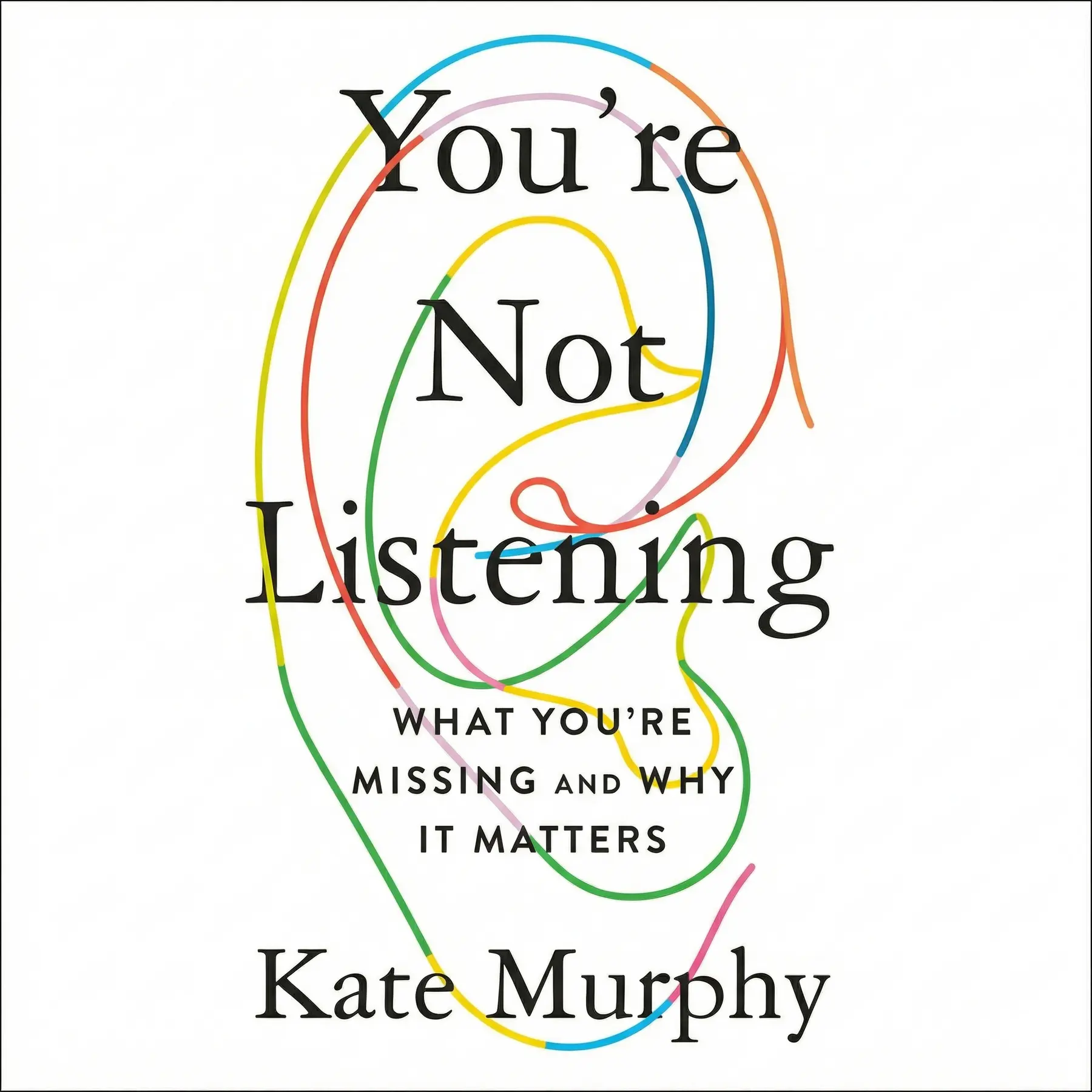
You’re Not Listening: What You're Missing and Why It Matters
By Kate Murphy
Explore the vital yet fading art of listening. Journalist Kate Murphy reveals how true connection, professional success, and personal growth depend on our ability to focus on others in a distracted world.
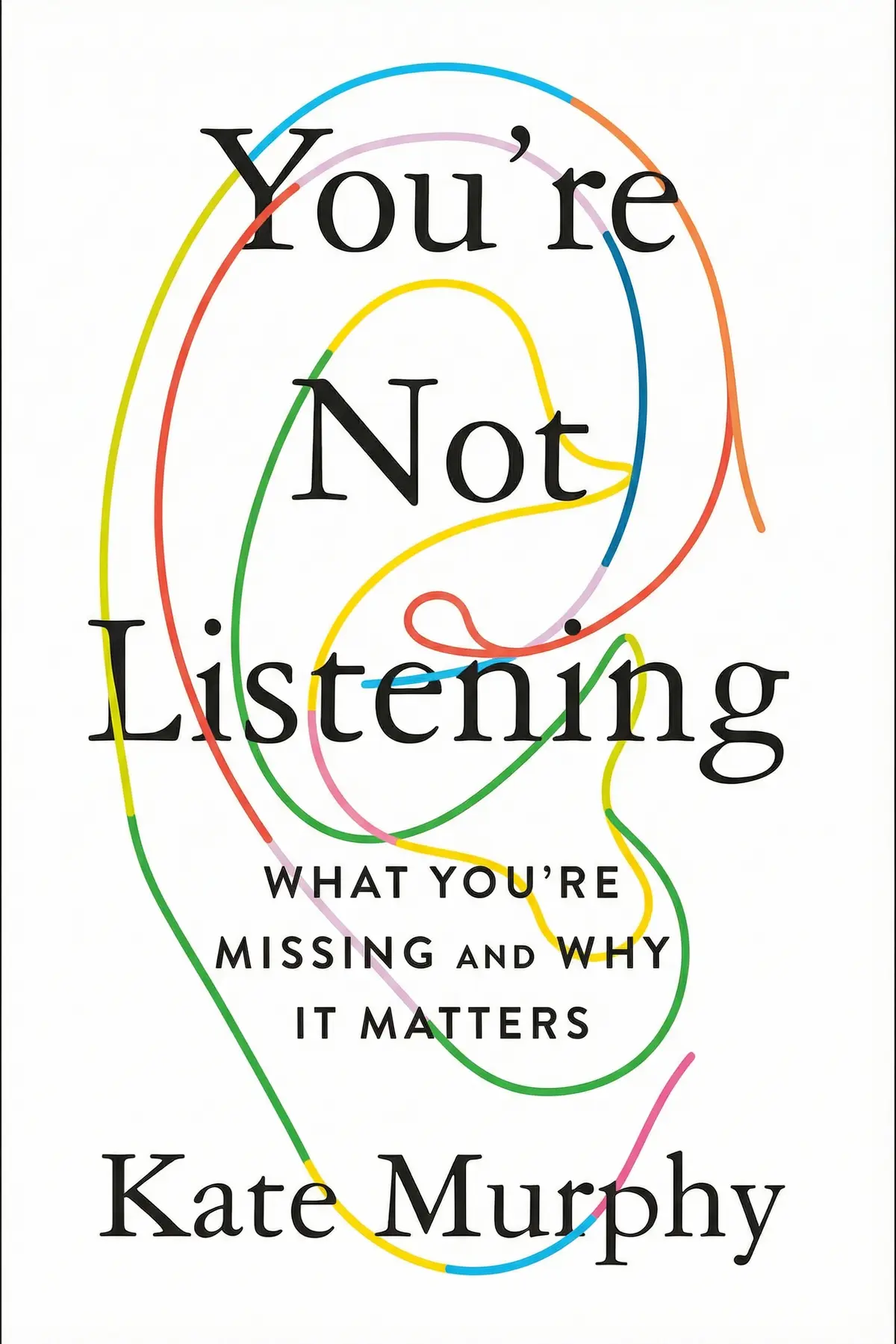
Table of Content
1. Introduction
1 min 56 sec
Think back to the last time you felt truly heard. It’s a distinct, almost physical sensation when someone stops what they’re doing, puts down their phone, and looks at you with genuine interest. In that moment, your words aren’t just vibrations in the air; they are being received, processed, and valued. It creates an immediate bridge between two people, fostering a sense of belonging and intimacy that is hard to replicate. Yet, if you’re like most people, those moments feel increasingly rare. We live in a world that is louder than ever, where everyone is shouting to be heard, but very few are actually leaning in to listen.
This trend isn’t just a social nuisance; it’s a fundamental shift in how we relate to one another. We’ve become a society of broadcasters. From social media updates to the pressure to ‘personal brand’ ourselves, the emphasis is almost entirely on output. We are taught how to speak, how to present, and how to persuade, but almost never how to receive. As a result, our connections are becoming thinner, and our sense of isolation is growing. We are more ‘connected’ via technology than any generation in history, yet many of us feel profoundly lonely.
The central throughline of this exploration is that listening is not a passive act of silence. It is an active, demanding, and deeply rewarding skill that requires practice and intent. By looking at how professional listeners—from FBI negotiators to focus group moderators—navigate the world, we can learn to reclaim this lost art. This isn’t just about being polite at dinner parties; it’s about expanding your own mind, improving your relationships, and discovering that every single person you meet has something fascinating to teach you if you only know how to listen for it. Over the next few minutes, we’re going to break down why we’ve stopped listening, the biological and psychological barriers that stand in our way, and the practical steps you can take to become the person everyone wants to talk to.
2. The Decline of Attention in the Broadcast Era
2 min 33 sec
Discover how modern life has fundamentally altered our ability to focus on others and why we are currently facing a widespread epidemic of loneliness despite constant digital connectivity.
3. The Power of Professional Curiosity
2 min 28 sec
Learn how the world’s most effective listeners, from focus group experts to interrogators, use genuine curiosity to uncover truths that data alone can never reveal.
4. Breaking the Closeness-Communication Bias
2 min 19 sec
Explore why we often listen the least to the people we love the most and how to rediscover the ‘stranger’ within your closest relationships.
5. The Biology of Disagreement and Negative Capability
2 min 24 sec
Understand why your brain perceives a different opinion as a physical threat and how to develop the ‘cognitive complexity’ needed to handle conflicting views.
6. Support Responses vs. Shift Responses
2 min 14 sec
Learn the simple linguistic shift that can transform your conversations from competitive monologues into deep, supportive dialogues.
7. The Art of Silence and the Improv Mindset
2 min 23 sec
Discover why embracing uncomfortable pauses and quieting your inner monologue are the secrets to staying present and effective in any conversation.
8. Listening as an Active Energy Resource
2 min 21 sec
Recognize that true listening is a finite resource that requires physical and mental stamina, and learn when to step back to preserve the quality of your connections.
9. Conclusion
1 min 39 sec
As we’ve explored, the act of listening is perhaps the most underrated and essential human skill we possess. It is the foundation of empathy, the key to professional insight, and the only real antidote to the isolation of our digital age. We’ve seen how our attention is being fragmented by technology and how our biological instincts often work against us when we face disagreement. We’ve learned that our closest relationships are often the ones most in need of a fresh, curious ear, and that the difference between a ‘shift’ and a ‘support’ response can change the entire trajectory of a conversation.
But ultimately, the most important takeaway is that listening is a choice. It is a decision to be present in a world that is constantly trying to pull you away. It is an act of generosity that costs nothing but gives everything. By quieting your inner monologue, embracing silence, and asking questions that come from a place of genuine wonder, you don’t just learn about others—you learn about yourself. You discover your own biases, you expand your cognitive complexity, and you build a richer, more nuanced life.
So, here is your challenge for today: find someone close to you—a partner, a child, or a long-time friend—and decide to really listen to them. Don’t assume you know what they’re going to say. Don’t plan your response while they are talking. Don’t try to fix their problems. Just be there. Listen to the tone of their voice, watch their eyes, and ask one or two supportive questions that invite them to share more. You might be surprised to find that the person you thought you knew so well still has the power to amaze you. In a world where everyone is shouting, being the one who truly listens is the most revolutionary thing you can do.
About this book
What is this book about?
In an era defined by digital noise and constant self-promotion, the fundamental skill of listening is becoming increasingly rare. This summary explores why our attention spans are shrinking and how the pressure to broadcast our own lives has left us feeling more isolated than ever before. It offers a deep dive into the mechanics of human connection, drawing on insights from hostage negotiators, focus group experts, and social psychologists to show that listening is far more than just staying quiet. The book promises to transform your relationships and your worldview by teaching you how to rediscover curiosity. You will learn the difference between merely waiting for your turn to speak and truly engaging with another person's perspective. By the end, you’ll understand how to ask better questions, navigate difficult conversations with those you disagree with, and even find value in the silences we often try to avoid. It is a call to slow down and rediscover the hidden depths in the people around us.
Book Information
About the Author
Kate Murphy
Kate Murphy is a journalist from Houston, Texas. She has become a talented listener through her many interviews and articles for publications including the New York Times, the Economist, and Texas Monthly, as well as Agence France-Presse.
Ratings & Reviews
Ratings at a glance
What people think
Listeners find the book to be thoroughly researched and well-crafted, with one listener highlighting its modern content. It aids people in becoming more effective listeners via curiosity and empathy, and listeners value the way it boosts conversational sensitivity and improves connections. They appreciate how readable and useful it is, with one mentioning that it is required reading for a college class.
Top reviews
Ratchanee
This book should be required reading for anyone who wants to actually connect with the people in their life. Kate Murphy explores why we’ve lost the art of listening, moving way beyond basic tips like nodding your head or paraphrasing. The focus on empathy and genuine curiosity really resonated with me. I’ve already started applying the idea of 'supportive listening' in my marriage, and the shift in our conversations is palpable. While some might say the advice is common sense, the reality is that most of us are too distracted by our devices to actually practice it. It’s a well-researched, deeply human look at how we can bridge the gap between just hearing words and truly understanding someone’s inner world. Truly a life-changing perspective if you’re willing to put in the work.
Show moreSupatra
Ever wonder why so many of our interactions feel like we're just waiting for our own turn to speak? Murphy tackles this head-on with a blend of scientific research and engaging storytelling. I loved the sections on how our brains process sound and why silence is such a powerful tool in communication. Some readers might find her critiques of social media a bit harsh, but I think she’s spot on about how technology has eroded our patience for the slow, messy process of human connection. The book is incredibly readable and doesn’t feel like a dry academic text at all. It’s more of a wake-up call. If you’ve ever felt lonely in a room full of people, this will explain exactly why that’s happening and how to fix it through curiosity.
Show moreZoe
I’m going to do something I almost never do: start this book over from page one immediately after finishing it. There is just so much to absorb here regarding the psychology of connection. Murphy argues that listening is a skill we’ve neglected, and her evidence is both convicting and inspiring. I found myself highlighting entire pages, especially the parts about how we often 'listen' only to confirm our own biases. It’s helped me become more aware of my own conversational habits, specifically how I tend to interrupt when I’m excited. The anecdotes about different professions—from CIA interrogators to focus group moderators—were fascinating and illustrated her points perfectly. This is an essential guide for navigating a world that has become increasingly loud and disconnected.
Show moreNikolai
As someone who works in a client-facing role, I thought I was already a pro at this, but Murphy proved me wrong. The book delves into the nuances of body language and the 'pauses' in speech that we often miss. I appreciated the emphasis on how listening actually shapes our brains and our relationships. My only minor gripe is that the author leans a bit heavily into the 'phones are ruining everything' trope, which can feel a little repetitive after a while. However, her core message about the necessity of empathy is so vital that I can overlook the occasional old-school grumpiness. It’s a thoughtful, practical read that has made me much more sensitive to the cues people give off during everyday chats. Definitely worth your time.
Show moreKanokporn
The chapter on how different cultures handle silence was worth the price of admission alone. I had never really considered how my discomfort with a few seconds of quiet could be hindering my ability to truly hear what others are saying. Kate Murphy does a great job of mixing anecdotes with hard data, making the case that listening is a physical and emotional necessity. I did notice the name-dropping that some other reviewers mentioned, which felt a bit unnecessary at times. Still, the underlying message is powerful. It’s not just about being polite; it’s about being present. Since finishing this, I’ve been making a conscious effort to put my phone away during meals and actually focus on the person across from me. It makes a huge difference.
Show moreJames
Frankly, Kate Murphy writes with the sharp, engaging pace you'd expect from a seasoned journalist. She makes a convincing case that we are living in a 'listening crisis.' While some of the tips—like not interrupting or asking follow-up questions—might seem like basic manners, her explanation of the 'why' behind them adds a lot of depth. I found the section on 'supportive' versus 'shift' responses to be particularly enlightening. It’s a concept that is easy to understand but surprisingly difficult to master in practice. The book is well-organized and keeps you moving, though I wish she’d spent a little more time on how to listen to people we fundamentally disagree with. Overall, it’s a very solid, helpful guide for improving your interpersonal skills.
Show moreOrathai
Picked this up on a whim after a friend wouldn't stop raving about it. I wasn't sure if a whole book about listening could hold my attention, but Murphy’s storytelling is top-notch. She has a way of making research about the inner ear or psychological studies feel relevant to your Tuesday morning coffee run. There’s a certain warmth to the writing, even when she’s being critical of modern habits. I do think she oversimplifies some complex social issues by suggesting that 'listening more' is a universal cure-all, but the personal benefits are undeniable. It has certainly made me a more curious conversationalist. I’m finding that by asking better questions, I’m discovering things about my friends I never knew, despite years of knowing them.
Show morePichaya
It’s rare to find a non-fiction title that balances rigorous research with such readable, human anecdotes. Murphy takes us through various environments—from the workplace to the family dinner table—to show where we’re failing to connect. I particularly enjoyed the discussion on how we often 'fake' listening through superficial gestures without actually processing the information. It’s a convicting read, for sure. My only criticism is that the tone occasionally feels a bit condescending toward younger generations and their tech use. That said, the practical takeaways are too good to ignore. It’s helped me slow down and appreciate the value of a deep, uninterrupted conversation in an age where everything is fragmented into soundbites and notifications. Great for a book club discussion.
Show morePannipa
Not what I expected, though there’s definitely some value to be found if you can get past the tone. To be fair, Murphy raises some excellent points about the role of empathy in communication, but the 'everything was better in the old days' vibe was a bit much for me. I felt like she was constantly wagging her finger at me for owning a smartphone. Some of the advice feels very commonsensical—like, yes, I know I shouldn't look at my laptop while someone is talking to me. Does that really require a whole chapter? However, the actual interviews with professionals who listen for a living were quite interesting and provided some unique insights that I hadn't considered before. It's a decent read, but maybe could have been a long essay instead.
Show moreNarong
Look, I really wanted to love this, but it felt a bit like a long-form article stretched into a book. While I agree with the central premise—that we’re all getting worse at paying attention—the execution felt a bit repetitive. She spends a lot of time mourning the loss of a 'golden age' of conversation that I’m not entirely sure ever existed. Plus, the name-dropping of various experts and high-profile individuals felt a little self-indulgent after a while. On the positive side, the research on how our brains synchronize during a good conversation was genuinely fascinating. I also appreciated the specific tips on how to handle difficult dialogues. It’s a fine book for a casual reader, but if you’re looking for deep, intellectual rigor, you might find it a bit superficial.
Show moreReaders also enjoyed
AUDIO SUMMARY AVAILABLE
Listen to You’re Not Listening in 15 minutes
Get the key ideas from You’re Not Listening by Kate Murphy, plus 5,000+ more titles in English and Thai.
- 5,000+ titles
- Listen as much as you want
- 7-day free trial
- Cancel anytime







