
A Spy Among Friends: Philby and the Great Betrayal
Ben Macintyre
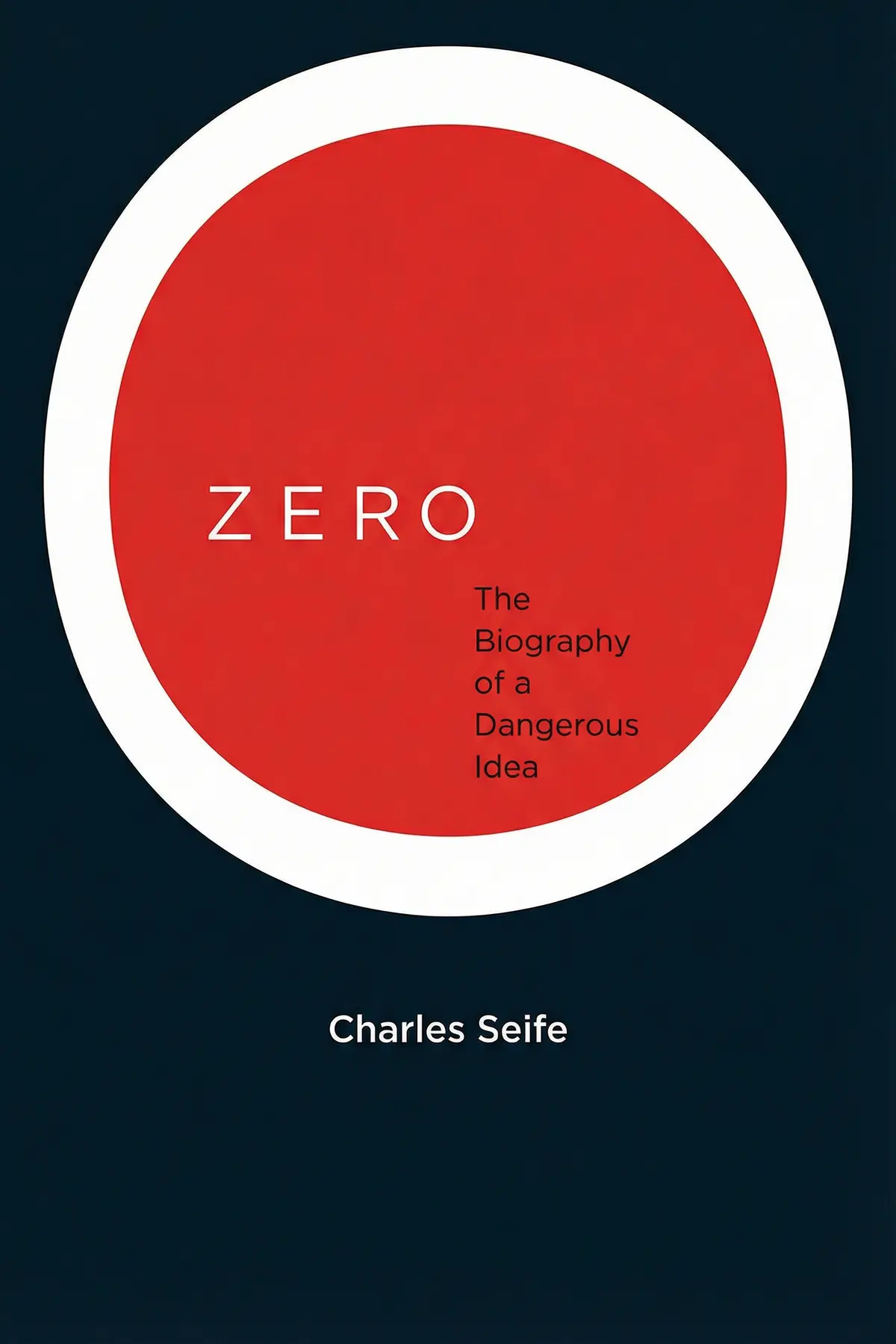
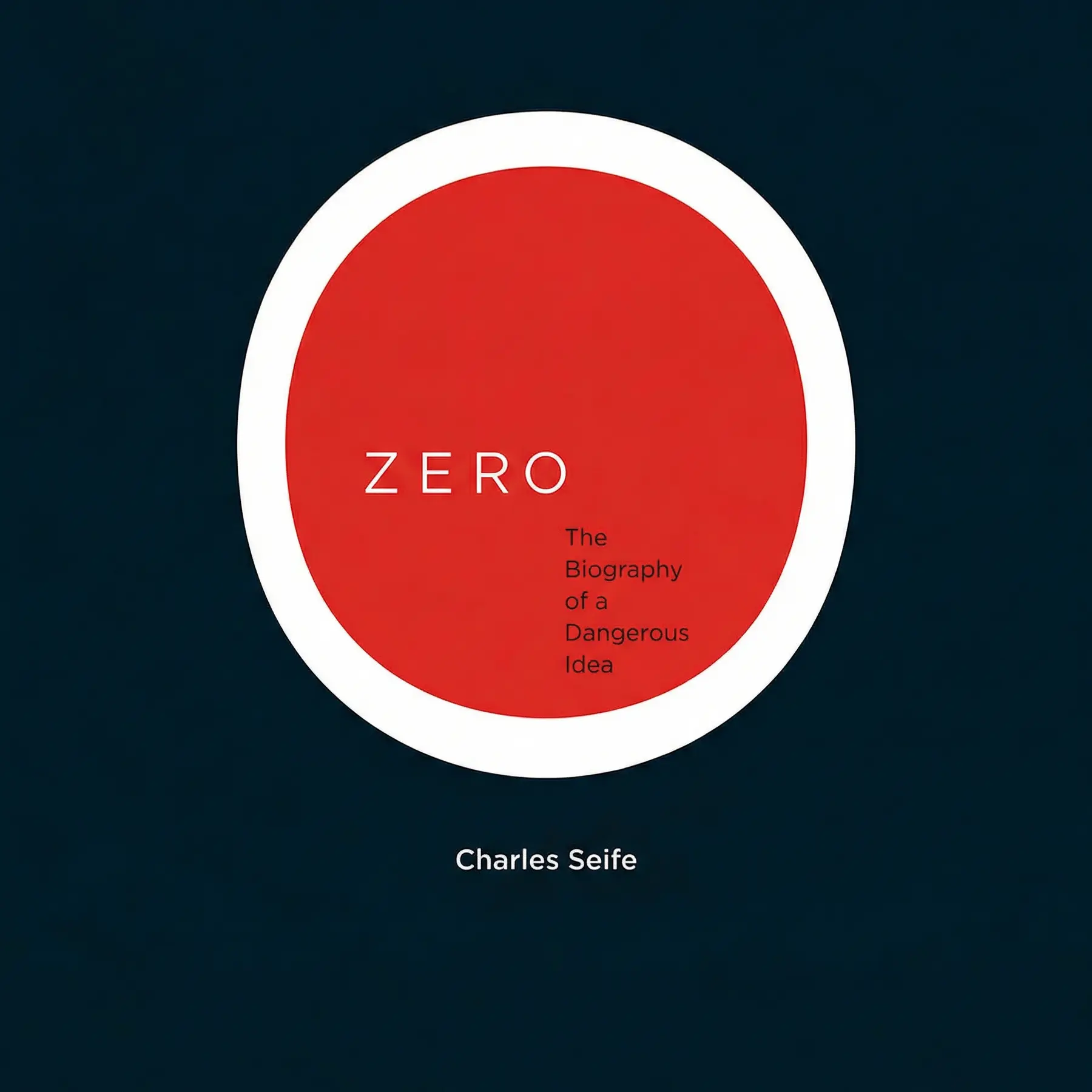
Zero explores the turbulent history of the most controversial number in existence, tracing its journey from a forbidden Babylonian placeholder to the mathematical foundation of modern physics and cosmology.
1 min 36 sec
Imagine a concept so powerful that it was once considered a threat to the very fabric of reality. We often take it for granted, seeing it as just another digit on our keyboards or a simple placeholder in our bank accounts. But zero is far more than just a symbol for nothing. It is a mathematical anomaly, a philosophical paradox, and a scientific gateway that has, at various points in history, been banned, feared, and hailed as a miracle.
In this exploration of Charles Seife’s work, we are going to look at the life story of this dangerous idea. Zero behaves like no other number. Think about it: when you add it to a sum, the result remains unchanged. When you multiply by it, everything else vanishes into its void. And if you attempt to divide by it, the rules of logic begin to crumble. Because of these bizarre properties, the journey of zero through human history was anything but smooth. It wasn’t just a matter of someone finally ‘noticing’ nothing; it was a hard-fought battle against the greatest minds of antiquity who believed that accepting zero would invite chaos into a perfect, finite universe.
As we move through this history, you’ll see how zero is inextricably linked to its twin, infinity. You’ll see how it moved from the counting houses of Babylonia to the temples of India, and how it eventually shattered the rigid structures of Western thought to give us the tools for modern science. This is the story of how ‘nothing’ became the most important ‘something’ in the human quest for understanding.
2 min 49 sec
Early humans had no need for a number that represented nothing until complex commerce forced them to find a way to distinguish between different magnitudes.
2 min 51 sec
While other cultures saw a tool, the ancient Greeks saw a philosophical nightmare that threatened to undo their vision of a perfect, finite universe.
3 min 00 sec
In India, the cultural and spiritual landscape was perfectly suited to welcome zero, transforming it from a placeholder into a revolutionary mathematical force.
2 min 55 sec
The acceptance of zero allowed mathematicians to solve the problem of change and motion, leading to the creation of calculus and the dawn of modern engineering.
2 min 37 sec
Deep mathematical explorations revealed that zero and infinity are not just opposites, but are fundamentally linked in a structure known as the Riemann sphere.
3 min 10 sec
Beyond the abstract world of equations, zero manifests in our physical reality through absolute zero, black holes, and the origins of time itself.
1 min 32 sec
The story of zero is the story of humanity’s evolving relationship with the unknown. We have moved from a place of primal practicality, where zero wasn’t needed, to a period of philosophical fear, where it was actively suppressed, and finally to a modern era where it is the cornerstone of our technological and scientific achievement.
Charles Seife shows us that zero is more than just a number; it is a lens through which we can see the limits of our own logic. Every time we have embraced zero, our understanding of the world has expanded. It allowed us to move from the concrete world of counting sheep to the abstract world of algebra. It gave us calculus, which built the modern world, and it gave us the tools to explore the furthest reaches of the cosmos and the deepest secrets of the atom.
But as we’ve seen, zero always brings its twin, infinity, along for the ride. Together, they represent the boundaries of our knowledge. When zero appears in our equations—whether in the center of a black hole or at the beginning of time—it signals that we have reached a frontier where our current maps no longer work.
As you go about your day, remember that every time you see a zero, you are looking at a hard-won victory for the human mind. It is a reminder that ‘nothing’ is often the most powerful thing of all. By accepting the void, we didn’t just find a way to write down empty spaces; we found the key to understanding the infinite complexity of the universe itself.
This summary dives into the biography of zero, a number that was once feared as a heretical threat to the order of the universe. It follows the concept from its origins in ancient Babylonia to its rejection by the logic-obsessed Greeks, and its eventual embrace by Indian and Arabic mathematicians who saw the beauty in the void. Through this exploration, readers will discover how zero paved the way for the invention of calculus, the understanding of black holes, and the development of quantum physics. The book promises to change how you view nothingness, revealing that zero is not just a digit, but a powerful tool that allows us to grasp the infinite and the very origins of our existence.
Charles Seife is a journalist and author who teaches at New York University. He studied mathematics at Princeton and Yale, and his other books include Proofiness, Alpha & Omega, and Decoding the Universe.
Listeners find this book an absorbing read that navigates mathematical principles while effectively blending history, ensuring it appeals to any interested individual. Additionally, the prose is skillfully composed and simple to follow, even for those without a math background, as the story offers an excellent trek through the evolution and chronology of zero. Still, the tempo earns varied opinions, with one listener mentioning that the final chapters seem disjointed and off-topic.
Who knew a book about the history of a number could be this hilarious? Seife manages to take a concept as abstract as 'nothing' and turn it into a high-stakes drama spanning centuries. The anecdote about Pythagoras refusing to cross a field of beans because they looked like genitals—and getting killed for it—had me laughing out loud in public. Beyond the humor, the way the book connects the Greek fear of the void to modern black holes is genuinely impressive. To be fair, some of the math gets a little dense during the Gauss section, but the narrative voice usually pulls you back before you drown in the equations. It’s a slim volume, yet it feels incredibly expansive in its scope. If you’ve ever felt like math was just a series of dry rules, this will change your perspective entirely.
Show moreFinally got around to reading this classic of popular science, and it absolutely lives up to the hype. Seife has a way of making the most complex ideas feel accessible, even to someone like me who hasn't touched a calculus book in a decade. The story of how zero traveled from India to the Middle East and eventually to Europe is told with the energy of an adventure novel. I especially loved the section on the 'Golden Ratio' and how zero's acceptance paved the way for the Renaissance and modern cosmology. Look, I know a book about a number sounds dry, but this is genuinely one of the most engaging non-fiction titles I’ve read. It bridges the gap between science and history effortlessly. It makes you realize that zero isn't just a number—it’s a window into the nature of reality itself.
Show moreThe chapter on how the Greeks feared the void was absolutely captivating. Seife explains Aristotle's rejection of 'nothingness' so well that you actually begin to understand why they found zero to be such a dangerous, illogical concept. In my experience, most math books fail to capture the human element, but this one leans into it. You see the struggle of mathematicians like Fibonacci who were essentially fighting against a culture that didn't want their discoveries. The way zero is described as 'infinity’s twin' is a stroke of genius that helped me finally wrap my head around some of the more difficult paradoxes in physics. It’s a fascinating read that successfully turns a mathematical placeholder into a historical protagonist. I’ve already recommended it to several friends who usually hate science books.
Show moreZero and infinity are two sides of the same terrifying coin, and Seife does a brilliant job illustrating why humanity spent centuries running away from both. This book isn't just about counting; it's about the very foundations of how we perceive the universe. Not gonna lie, I was skeptical about how much there was to say about a single digit, but the history is surprisingly rich. From the Babylonian abacus to the 'Year 0' problem in our calendars, every chapter offers a new revelation. My only real gripe is that the font in the paperback edition is tiny, which made the more technical physics sections a bit of a strain to get through. Regardless, the prose is elegant and the subject matter is genuinely mind-bending. It’s a must-read for anyone who likes their history with a side of existential dread.
Show moreEver wonder why our calendar feels slightly off or why subtracting dates is such a headache? Seife’s explanation of the missing 'Year 0' between 1 BC and 1 AD is one of those 'aha!' moments that makes this book essential. Personally, I found the early chapters on the Babylonians and the development of the abacus to be the strongest. The writing is clear, the research is thorough, and the tone is just the right amount of conversational. My only issue is that the final chapters on relativity and the Big Bang felt a little disconnected from the historical journey established earlier in the book. It’s almost as if the author tried to force zero into being the center of every scientific breakthrough ever made. Despite that minor overreach, it’s a fascinating journey that I’d recommend to anyone curious about the logic of our world.
Show moreLooking back at my middle school math classes, I wish my teachers had handed me this book instead of a dry textbook. Seife breathes life into numbers in a way that feels organic and vital. He successfully melds history with logic, showing how the rejection of zero held back Western science for nearly two thousand years. The audiobook version is also excellent, making the more abstract philosophical concepts easier to digest on a long commute. I did feel that the connection to black holes and the 'end state' of the universe was a bit of a stretch toward the end, but it didn't ruin the experience for me. It’s a wonderful example of how high the walls between disciplines can be, and how much better off we are when we knock them down. Truly an eye-opening read for the non-mathematician.
Show moreSeife manages to weave a fascinating tapestry of history and logic, though the thread starts to unravel slightly toward the end. The first two-thirds of the book are a masterclass in science communication, especially the parts covering the transition from Roman numerals to the Hindu-Arabic system. It’s shocking to realize how much we take for granted today. However, the last few chapters feel a bit tangential, as if the author was trying to hit a word count by including every possible mention of zero in modern physics. To be fair, the section on the 'ultraviolet catastrophe' was interesting, but it felt distant from the historical narrative. Regardless of the slight pacing issues, the book is well-crafted and provides a great journey through a concept we often ignore. It’s definitely a worthwhile addition to any science lover's shelf.
Show moreAs someone who enjoys the intersection of theology and mathematics, I found this narrative to be a bit of a mixed bag. The exploration of how Eastern cultures embraced zero while the West viewed it as a demonic void was fascinating. However, I noticed a bit of academic snobbery regarding the author's treatment of early European philosophers. He portrays the Greeks and the Church as backwards for their resistance, which felt a bit reductive given the context of the time. Frankly, the pacing in the second half is also a bit erratic, jumping from historical biography to a textbook-style explanation of the Doppler effect without much warning. It’s a good book, but it lacks the internal cohesion found in similar titles like 'Euclid’s Window.' Still, the way it explains the relationship between zero and infinity—the 'twins'—is well worth the cover price.
Show moreThe truth is, Charles Seife is a gifted writer, but this specific volume feels like it needed a firmer hand in the editing room. I was captivated by the early history, particularly the sections on how the clergy in Europe feared zero as a symbol of atheistic nothingness. It’s a powerful narrative about how dogma can stifle intellectual progress for centuries. However, the technical sections in the middle are incredibly uneven. He assumes the reader knows quite a bit about some things while over-explaining others, which leads to a lot of 'WTF?' moments on the margins. Gotta say, the link between vanishing points in art and the mathematical concept of zero was brilliant, though. It’s a solid 3-star book that could have been a 5-star masterpiece with a more consistent pitch.
Show moreI really wanted to like this, but the author's inability to decide on a target audience made the reading experience quite jarring. One moment he’s explaining basic arithmetic, and the next he’s diving into complex Gaussian geometry that left me scratching my head. The book seems to struggle with its own identity—is it a historical biography or a physics primer? I was particularly confused by the long digression into the Doppler effect, which felt like it belonged in a different book entirely. To be fair, there are some great tidbits here, especially the parts about Fibonacci introducing Arab numerals to a hostile Europe. But overall, it felt cursory and rushed in the final chapters. It’s an okayish read if you’re already a math buff, but I wouldn't recommend it for a casual reader looking for a smooth narrative.
Show moreBen Macintyre



James Shapiro
Charles C. Mann
Pankaj Mishra
AUDIO SUMMARY AVAILABLE
Get the key ideas from Zero by Charles Seife, plus 5,000+ more titles in English and Thai.







