
15 min 50 sec
Go Wild: Eat Fat, Run Free, Be Social, and Follow Evolution’s Other Rules for Total Health and Well-Being
Go Wild explores how returning to our evolutionary roots—through movement, whole foods, and social connection—can reverse the chronic health issues of modern life and unlock our natural human potential.
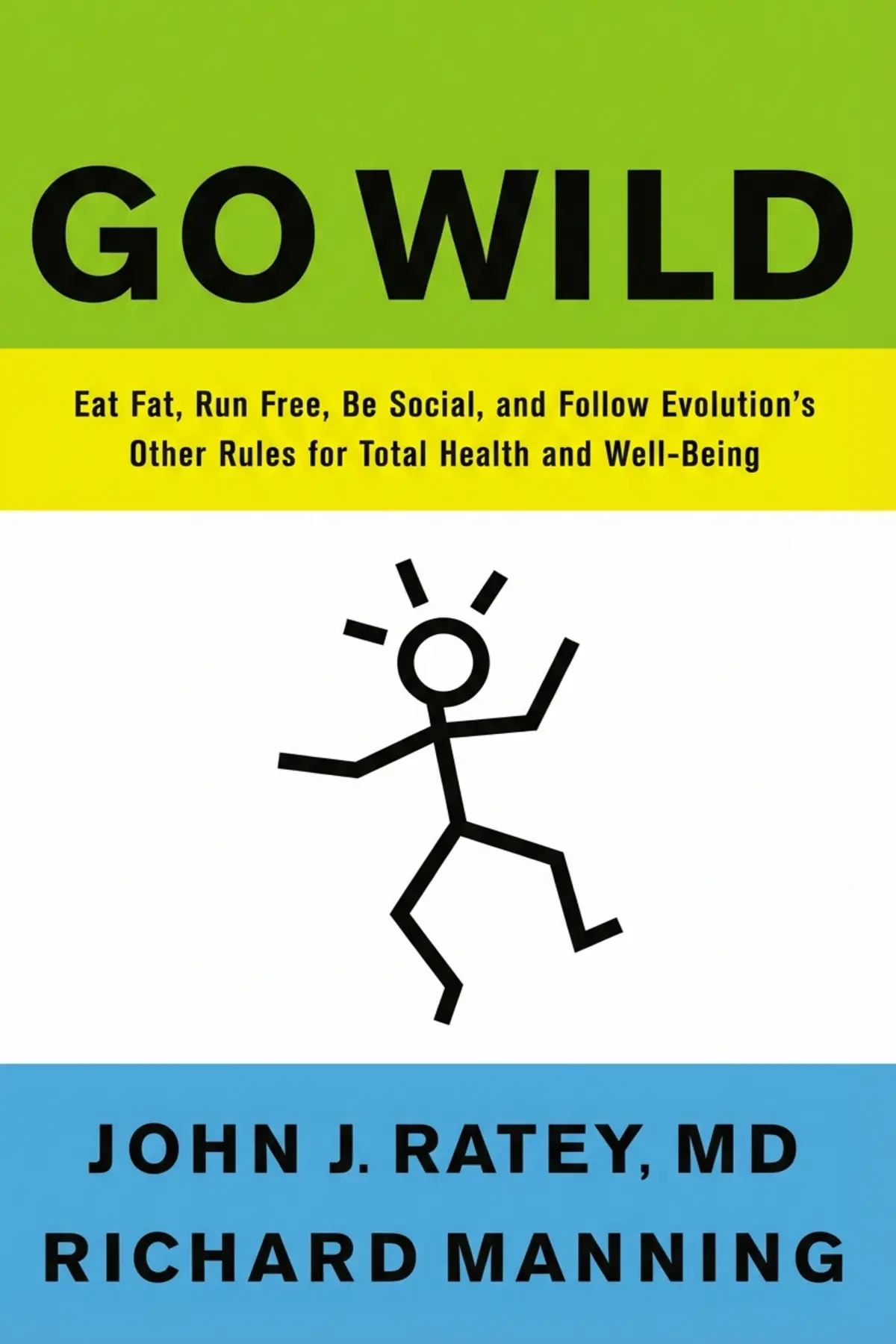
Table of Content
1. Introduction
2 min 01 sec
Picture yourself for a moment, not in your current environment, but standing on the edge of a vast, untouched plain. The air is crisp, your senses are sharp, and your body feels coiled like a spring, ready for whatever the day demands. Most of us don’t experience that feeling in our daily lives. Instead, we find ourselves navigating fluorescent-lit offices, sitting for hours in front of glowing rectangles, and feeling a strange, nagging restlessness that no amount of scrolling seems to satisfy. This feeling isn’t a mistake; it is a signal. It is your biology calling out for the world it was actually designed for.
In Go Wild, we explore the fundamental truth that although our world has changed at lightning speed over the last few centuries, our genetic makeup has remained virtually identical to that of our hunter-gatherer ancestors. We are essentially prehistoric beings living in a digital cage. This disconnect is the primary driver of what experts call ‘diseases of civilization’—the chronic physical and mental health struggles that seem to plague modern society. But the solution isn’t necessarily to abandon technology and move to a cave. Rather, it is about understanding the ‘wild’ rules that govern our bodies and finding ways to integrate them into our current lives.
Over the course of this summary, we will look at how we were built to move, how we were meant to eat, and how we were designed to interact with one another. We will see that by looking backward at our evolutionary history, we can find a clearer path forward toward a life of vitality, purpose, and genuine health. It is time to stop viewing ourselves as broken machines and start seeing ourselves as amazing biological organisms that just need the right environment to thrive. Let’s dive into how we can rediscover our wild side in a modern world.
2. The Biological Mismatch
2 min 11 sec
Discover why our modern, sedentary habits are fundamentally at odds with millions of years of human evolution and health.
3. Movement as Brain Power
1 min 52 sec
Explore the fascinating link between physical agility and cognitive intelligence, proving that our brains were built for complex movement.
4. Reclaiming the Rhythms of Rest
1 min 56 sec
Learn how the light and social conditions of our ancestors can provide the key to overcoming modern sleep struggles.
5. The Trap of Modern Nutrition
1 min 57 sec
Uncover the hidden dangers of our processed, grain-heavy diets and the essential role of healthy fats for our well-being.
6. Nature as a Mental Anchor
2 min 01 sec
See how reconnecting with nature and practicing mindfulness can fundamentally rewire our brains for empathy and calm.
7. The Strength and Shadow of the Tribe
2 min 06 sec
Understand the powerful role of oxytocin in building our social lives and the potential pitfalls of our ingrained tribal instincts.
8. Conclusion
1 min 46 sec
In the end, the message of Go Wild is not that we should reject progress or yearn for a romanticized, primitive past. Rather, it is a call to recognize the non-negotiable needs of our biology. We are the descendants of survivors—people who moved, ate, slept, and connected in ways that optimized their health and ensured the continuation of our species. The ‘diseases of civilization’ that we face today are not inevitable; they are the symptoms of a life lived out of sync with our nature.
The path back to vitality is simpler than we often realize. It begins by choosing the stairs over the elevator, the park over the gym, and the kitchen over the drive-thru. It involves turning off the screens to look at the stars and reaching out to a friend instead of sending a text. These small actions are more than just lifestyle choices; they are acts of biological rebellion. They are ways of telling your body and your brain that you are still wild, still active, and still connected to the magnificent natural world that created you.
As you move forward, try to incorporate one ‘wild’ habit into your routine this week. Perhaps you take a run on a muddy trail, allowing your feet and mind to adapt to the uneven ground. Or maybe you host a meal for friends, focusing on whole foods and real conversation. By honoring the evolutionary rules that got us here, you can unlock a level of health and happiness that modern society often promises but rarely delivers. It is time to step out of the cage and reclaim the vibrant, energetic life you were born to live. Go wild, and see how your body and mind respond to the world they were always meant to inhabit.
About this book
What is this book about?
Have you ever felt like modern life is a poor fit for your body and mind? Go Wild investigates the profound disconnect between our current high-tech, low-activity lifestyles and the evolutionary heritage that shaped our DNA over millions of years. This summary details how our ancestors survived by being physically agile, socially integrated, and nutritionally diverse—traits that are often suppressed in our sedentary, screen-heavy world. By examining the intersection of neuroscience, anthropology, and nutrition, the book promises a roadmap for reclaiming your health. It moves beyond simple fitness advice to explain why our brains thrive on complex outdoor movement, why our hormones demand tribal connection, and why the industrial food system is at the root of many modern ailments. You will learn how small, intentional shifts toward 'wilder' habits—like prioritizing natural light, eating healthy fats, and seeking real-world community—can lead to improved mental clarity, physical resilience, and a deeper sense of well-being. This is an invitation to stop fighting your biology and start living in harmony with it.
Book Information
About the Author
John J. Ratey
John J. Ratey, MD, is a clinical associate professor of psychiatry at Harvard Medical School and the coauthor of the best-selling book Spark. Richard Manning is an author and award-winning journalist whose works include One Round River and Against the Grain.
Ratings & Reviews
Ratings at a glance
What people think
Listeners find this work eye-opening, providing a wealth of excellent tips and a transformative outlook. Furthermore, the book is backed by research and remains easy to follow, making for an engaging and pleasant experience. They value the health benefits discussed, noting it can significantly boost well-being, and one listener mentions how it inspired them to go out and explore the wilderness.
Top reviews
Moon
After hearing Ratey speak on a podcast, I knew I had to grab this. It’s essentially a field guide for the human animal in a world that’s forgotten what it means to be one. Ratey and Manning argue that our "modern OS" is crashing because we’ve abandoned the movement, diet, and community habits our ancestors thrived on. The insights into how biophilia—our innate love for nature—affects hospital recovery times were genuinely eye-opening. While some might find the low-carb push a bit aggressive, the underlying science regarding insulin and inflammation is hard to ignore. It’s a well-researched call to action that goes beyond just "eat paleo." I've already started my 30-minute daily sun sessions for Vitamin D, and I feel sharper than I have in years. This isn't just a book; it's a blueprint for a healthier existence.
Show moreVilaiporn
Picked this up because I loved Spark, and Ratey didn't disappoint. This book takes the concept of exercise and brain health even further by looking at our entire environment. The "don't be a koala" warning is something that stays with you—the idea that our brains could literally shrink if we stop challenging ourselves and moving is terrifying. It’s a life-changing perspective on why we feel so stressed and disconnected. I’ve started incorporating more "wild" elements into my routine, like barefoot movement and cutting out refined sugar water, and the results are undeniable. It’s more than a diet book; it’s a manual for reclaiming your mental and physical well-being from a system that wants you sedentary and over-medicated. Truly a fascinating and motivating read for anyone looking to optimize their life.
Show moreTeng
Not what I expected, but exactly what I needed to hear. Go Wild isn't about moving into a cave; it's about integrating ancestral wisdom into a modern framework to fix our broken health. The way they describe the "insulin cascade" as a slow-motion wrecking ball for the body makes so much sense. I’ve struggled with brain fog for years, and after following their advice on fat-based fuel and morning sunlight, the clouds have finally lifted. They also touch on some fascinating psychology, like the role of oxytocin in building "tribes" today. It’s a compelling, fast-paced read that makes the science of human performance accessible to anyone willing to listen. I’ve recommended this to my entire running club. It really changes how you view your daily habits.
Show moreTaw
Finally got around to reading this, and the koala bear anecdote is going to haunt me forever. The idea that specialized diets and sedentary lives lead to smaller brains is the ultimate motivation to keep moving! This book is well-researched and surprisingly easy to understand, breaking down complex topics like neurogenesis and telomeres into practical advice. It really connects the dots between why we eat, how we move, and how we feel. Since finishing, I've traded my treadmill sessions for outdoor hikes and cut way back on the "sugar water." If you want to improve your well-being considerably without just popping another pill, start here. It’s easily one of the most enlightening books I've read this year, and it has genuinely changed my daily perspective on health.
Show moreRafael
Ever wonder why we're so miserable despite having every convenience at our fingertips? This book suggests it's because we're essentially wild animals trapped in a "privacy box" of our own making. I loved the connection between our anatomy—like those long Achilles tendons—and our evolutionary need to run long distances. It really makes you rethink that expensive treadmill and look toward the nearest trail instead. My only gripe is the tone; at times, it feels a bit like an enthusiastic grad student's term paper, heavy on the "suggests" and "mays" without enough hard citations to back up the more radical claims. Still, the message about forging tribe-like bonds and prioritizing 8.5 hours of sleep is incredibly valuable in our hyper-connected, sleep-deprived era. It’s a refreshing perspective on modern health.
Show moreSiriporn
The chapter on sleep was a total game-changer for me, especially the part about how tribal societies often sleep in groups. It finally gives me a scientific excuse for letting my dogs sleep on the bed! Ratey and Manning do an excellent job of explaining how our current lifestyle leads to "self-inflicted injuries" like Type II diabetes and hypertension. These aren't just diseases; they're the result of a mismatch between our DNA and our desk jobs. I do think they go a bit overboard with the trail running—not everyone’s knees are built for ultra-marathons—but the broader point about moving in nature is solid. It’s an enlightening read that encourages you to step away from the blue light and back into the sun. I’m definitely more mindful of my surroundings now.
Show morePui
As someone who spends way too much time staring at a screen, this felt like a cold splash of water. The core argument is simple: we are generalists built for a world that no longer exists, and our bodies are paying the price. I found the discussion on "Awareness" particularly poignant—using mindfulness not just as a relaxation tool, but as a survival instinct. However, I did find some of the medical dismissiveness a bit troubling. Referring to certain PTSD therapies as mere "yakking" feels disrespectful to the complexities of trauma. That being said, the book is incredibly motivating. It pushed me to explore local trails and prioritize real-world social interactions over digital ones. It’s well-researched enough to be convincing, even if it feels a bit repetitive in the middle chapters.
Show moreThitima
To be fair, there’s a lot of good advice here, but the delivery is incredibly didactic. The authors treat low-carb eating like a religious commandment, dismissing the fact that many people actually feel like garbage if they cut out all grains and fruit juices. It’s that typical "one-size-fits-all" approach that makes me wary of self-help books. I did appreciate the sections on mindfulness and the importance of community, though. The discussion on how we handle stress—stuck in a constant loop of cortisol because we can't "sprint away" from debt—was spot on. It’s a decent collection of food for thought, but take the nutritional advice with a grain of salt. While it’s interesting, it feels a bit rushed and lacks the depth I expected from a Harvard professor.
Show moreMats
Truth is, I wanted more from this than I got. While I agree that processed sugar is a poison and we all need more sleep, the book wades through a deluge of topics without ever feeling fully grounded in data. One minute we’re talking about monogamous voles, and the next we’re diving into the dangers of Pitocin during birth. It feels a bit sloppy, jumping from anecdote to anecdote to support their "primal" narrative. I’m a vegetarian, and their insistence that we are strictly "designed to be meat eaters" felt a bit narrow-minded and outdated. Still, it’s a readable overview of the Paleo lifestyle if you can overlook the lack of citations and the occasional preachy tone. It’s okay as a starting point, but I wouldn't call it definitive.
Show moreJack
Romantic primitivism at its most frustrating. The authors attempt to cloak dubious science in a veneer of "evolutionary necessity," but the result is a jumbled mess of anecdotes and barefoot-running enthusiasm. Frankly, claiming that agriculture "spoiled" our lives is an oversimplification that ignores how much our bodies have adapted over the last 10,000 years. They lean heavily on the idea that grain is a toxin while ignoring long-lived populations who thrive on rice and legumes. It’s disappointing because there are nuggets of wisdom here regarding mindfulness and sleep, but they’re buried under a mountain of one-size-fits-all Paleo dogmatism. If you're a stickler for rigorous scholarship and endnotes, you're going to find yourself sighing a lot. It reads more like a manifesto for CrossFit enthusiasts than a serious scientific inquiry into human health.
Show moreReaders also enjoyed
AUDIO SUMMARY AVAILABLE
Listen to Go Wild in 15 minutes
Get the key ideas from Go Wild by John J. Ratey, plus 5,000+ more titles in English and Thai.
- 5,000+ titles
- Listen as much as you want
- 7-day free trial
- Cancel anytime







