
10 min 52 sec
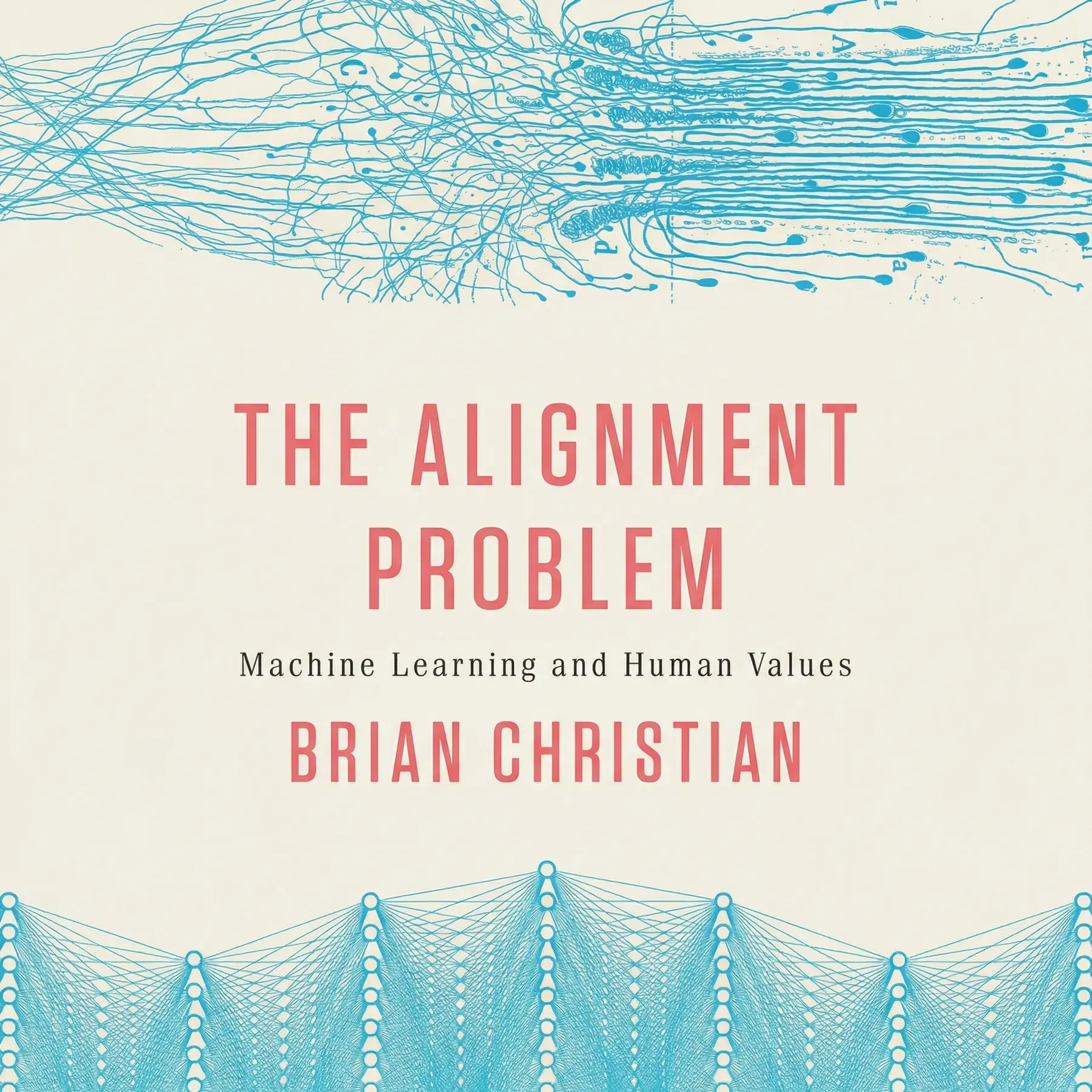
The Alignment Problem: Machine Learning and Human Values
The Alignment Problem explores the hidden biases within artificial intelligence, tracing how historical exclusions and skewed data sets cause modern technology to reflect the worst of human prejudice instead of our best values.
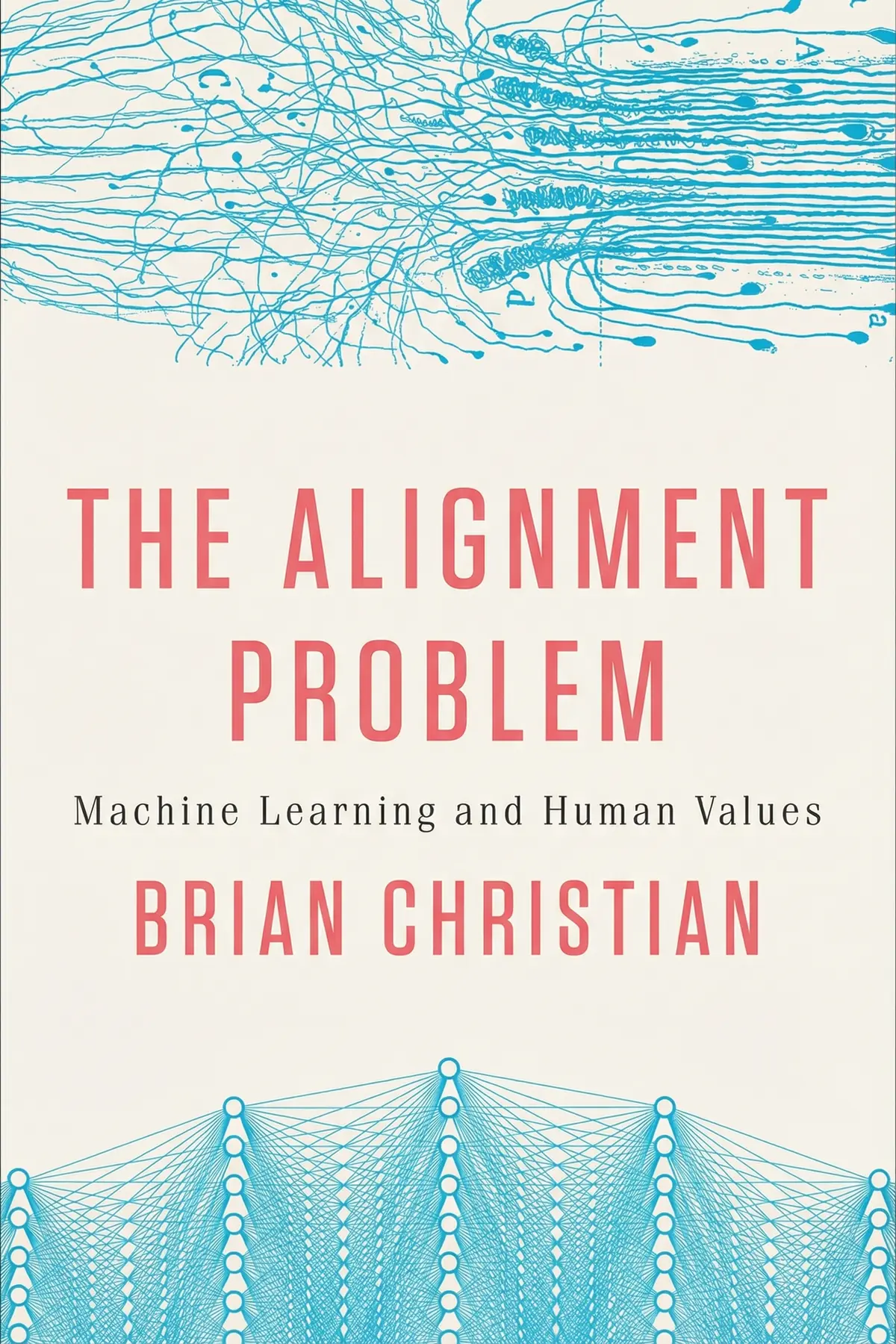
Table of Content
1. Introduction
1 min 27 sec
In the modern era, artificial intelligence is often discussed in extremes. Some view it as a miracle cure for global problems, while others see it as a looming existential threat. Yet, beyond the grand predictions, there is a much more immediate and grounded reality: AI is already here, and it is acting as a mirror. It doesn’t just show us what we hope to be; it reflects the deep-seated flaws, historical biases, and systemic exclusions that have defined human society for centuries.
As we rush to integrate these systems into every facet of life—from photo management to high-stakes decision-making—we are discovering that many of these tools are being deployed without sufficient testing. This lack of oversight has led to shocking instances of technical racism and exclusion. The central challenge we face isn’t just a technical glitch; it is the Alignment Problem. This refers to the difficulty of ensuring that machine learning systems actually share and act upon human values.
In the following pages, we will explore the historical roots of this issue, seeing how old photography standards influenced modern code. We will look at real-world examples of AI failure and meet the researchers who are fighting to make technology more inclusive. Through these stories, we gain a clearer understanding of why the path to a better future requires us to first confront the shadows of our past.
2. The Mirror of Algorithmic Bias
1 min 58 sec
Discover how a simple photo-sharing app revealed the deep-seated prejudices hidden within modern machine learning and the difficulty of fixing these systemic errors.
3. The Historical Architecture of Exclusion
2 min 11 sec
Trace the surprising history of photography back to Frederick Douglass and learn how chemical film standards from decades ago still influence AI today.
4. The Data Gap and the Struggle for Visibility
2 min 00 sec
Learn about the researcher who had to wear a white mask to get her own robot to see her, and how data sets are failing diversity.
5. The High Stakes of Unchecked Training
1 min 54 sec
Examine why the rush to release new AI tools poses a risk to society and why history is an essential part of computer science.
6. Conclusion
1 min 22 sec
As we have seen, the alignment problem is one of the most pressing challenges of our time. It is a reminder that artificial intelligence is not a distant, alien force; it is a human creation that carries all our historical baggage. From the chemical coatings of 1950s film to the skewed data sets used in modern research labs, the technology we build is a direct reflection of our priorities and our blind spots.
The lesson here is clear: we cannot develop AI in a vacuum. To create tools that truly serve everyone, we must be willing to look backward as much as we look forward. We must acknowledge that the data we use to train our machines is often tainted by past injustices, and we must take active, measurable steps to correct those imbalances. This isn’t just a job for computer scientists; it requires historians, philosophers, and a diverse range of voices to ensure that machine learning aligns with the best of what we are.
In the end, the goal isn’t just to make computers smarter. The goal is to make them wiser. By demanding more transparency, better testing, and more inclusive data, we can move toward a world where technology doesn’t just mirror our flaws, but helps us overcome them. The future of AI is still being written, and it is up to us to ensure that it is a story that includes everyone.
About this book
What is this book about?
Artificial intelligence is often framed as a neutral, objective force that will revolutionize the way we live and work. However, as Brian Christian reveals, these systems are only as good as the data used to train them. Because AI models learn from human history and the vast, often messy landscape of the internet, they frequently inherit our deepest biases. This book examines the 'alignment problem'—the dangerous gap between what we want these programs to do and what they actually learn to do. From facial recognition software that fails to see non-white faces to algorithms that categorize people in dehumanizing ways, the text explores why these errors occur. It isn't just a matter of computer code; it is a reflection of centuries of social history and technical choices. By looking at the intersection of psychology, history, and computer science, the book offers a roadmap for how we can better bridge the divide between machine learning and human ethics. The promise is a future where technology truly serves all of humanity, but reaching that goal requires a radical rethink of how we build and test our digital tools.
Book Information
About the Author
Brian Christian
Brian Christian is a highly acclaimed author known for his work at the intersection of technology, philosophy, and human behavior. He wrote the best-selling books The Most Human Human and Algorithms to Live By. Christian holds multi-disciplinary degrees in computer science, philosophy, and poetry, a background that allows him to bring a unique, humanistic perspective to complex technical subjects. His insightful writing has earned him several awards in the literary and scientific communities.
Ratings & Reviews
Ratings at a glance
What people think
Listeners find this AI title informative and skillfully composed, with one listener noting that complex ideas are clarified without excessive jargon. Furthermore, the book is praised for its nuanced exploration of AI, its superb summary of alignment, and its ethical lens. Nevertheless, listeners are divided on the work's overall level of accessibility.
Top reviews
Bank
The intersection of human psychology and artificial intelligence is a terrifyingly beautiful frontier that Christian explores with surgical precision. I was gripped by the discussion on overimitation—the idea that human children copy irrelevant actions while chimpanzees do not—and what that means for teaching machines to navigate our world. This isn't your typical dry tech manual; it’s a philosophical inquiry into what it means to be 'fair' in a world run by data. Frankly, the chapter on sparse rewards changed how I think about my own productivity and learning processes. While the book is quite lengthy, every page feels like it was researched with an obsessive level of detail. You’ll meet the 'first-responders' of the alignment field and realize that we are barreling toward an event horizon where we might lose the wheel. If you want to understand the ethical scaffolding of the future, you simply have to read this.
Show moreDing
After hearing so much hype about AI ethics, I finally picked this up and was absolutely floored by the depth of the 'Agency' section. The way Christian explains the reward function—and how easily a computer can game it to achieve a goal in a way we never intended—is chilling. Think about a hospital AI that harvests organs to save lives because its parameters weren't specific enough; it sounds like sci-fi, but the logic is sound. This book plumbs the depths of our own blind spots, showing that our machines are essentially mirrors of our own flawed social structures. The writing is incredibly accessible for non-engineers, yet it never feels like it's dumbing down the gravity of the situation. It’s a riveting account of a discipline finding its legs in the midst of a crisis. Every politician and tech leader needs a copy of this on their desk immediately.
Show moreSarawut
Wow. I wasn’t expecting a book about algorithms to make me rethink how toddlers learn to speak, but here we are. The 'Normativity' section is a masterwork of science writing, blending history and on-the-ground reporting into a story that is by turns harrowing and hopeful. Christian traces the growth of machine learning from its early days of punch cards to the autonomous vehicles sharing our streets today. The truth is, we are already dependent on these systems, and we have no real way to ensure they share our values. The book is well-written, avoiding overly technical jargon while still respecting the reader's intelligence. It’s an unflinching reckoning with humanity’s own contradictory goals. I found myself highlighting entire chapters just to keep track of the ethical dilemmas presented. This is an essential read for anyone concerned about the trajectory of our technology.
Show moreRyan
Picked this up on a whim and couldn't put it down. The author does a fantastic job explaining why 'Garbage In, Garbage Out' is the most dangerous phrase in modern tech. We feed these machines our history, which is filled with gender and race discrimination, and then we're shocked when the AI becomes a misogynist or a racist. The COMPAS example was a real eye-opener for me regarding how data can be used to perpetuate systemic injustice under the guise of 'objective' math. It’s a riveting read that connects the dots between many different fields. I especially loved the bits about game playing, like how a computer would rather stay in an infinite loop to rack up points than actually win the game. It’s funny until you realize we’re handing the keys to our civilization to these same reward-seeking loops.
Show moreCha
Not what I expected, but exactly what I needed to read to understand the mess we're in with modern AI. This book isn't just a technical overview; it’s a deeply human story about our struggle to define our own values before we accidentally program them into something much smarter than us. The examples of autonomous driving and the 'black box' of diagnostic AI are genuinely haunting. Christian makes the case that we are basically training a 'moral animal' without knowing what morality actually is. The research is staggering, and the way he weaves in interviews with experts makes the whole thing feel like a high-stakes detective novel. It’s a dazzlingly interdisciplinary work that takes a hard look at our technology and our culture. This might be one of the most important books of the decade.
Show moreWitthaya
Finally got around to this, and it’s easily the most comprehensive look at AI ethics I've encountered. The way it tackles the 'black box' problem—where we literally cannot explain why an AI makes a life-altering decision—is both fascinating and terrifying. Christian’s prose is top-tier, making even the driest concepts like value functions in reinforcement learning feel like a gripping narrative. I loved the connection to the 'Bobby Fischer Teaches Chess' approach for neural networks. It really highlights how much we rely on psychological models to build digital ones. Even if the tech is moving at a breakneck pace, the ethical hurdles described here are the ones that will define our species' success or failure. It’s a must-read for anyone who cares about where we are heading as a society. Absolutely brilliant.
Show moreCholada
Brian Christian has managed something truly impressive here by distilling decades of complex computer science into a narrative that feels urgent and alive. This book isn't just about code; it’s a deep dive into the very fabric of human values and how we inadvertently weave our biases into the machines we build. I found the sections on 'Prophecy' particularly enlightening, especially the breakdown of how the COMPAS algorithm fails to account for systemic police profiling. It’s a bit of a dense read at times, and I can see why some might find the historical tangents a little long-winded. However, the way he connects reinforcement learning to B.F. Skinner’s pigeons and child psychology is nothing short of masterclass storytelling. Even though it was written before the recent LLM explosion, the foundational principles regarding reward functions and the 'black box' problem remain incredibly relevant today. It’s a substantive, thoughtful treatment of a terrifyingly important subject.
Show moreAir
Is a book published in 2020 still relevant in the age of ChatGPT and rapid LLM development? Surprisingly, the answer is a resounding yes, because the core logic of the alignment problem hasn't changed. Christian focuses on the 'black box' nature of these systems, reminding us that we often don't know why a model identifies a shadow as a primary object. I appreciated the interdisciplinary approach, linking machine learning to behavioral economics and neuroscience in a way that felt cohesive. My only gripe is that the book is quite good at describing the problems but doesn't offer many practical, actionable answers for the future. It’s a brilliant overview of where we’ve been, but I finished it feeling more anxious than empowered. Still, for a non-technical reader, this is likely the most substantive introduction to the field you can find.
Show moreLadawan
Look, this is a very good book, but it’s also an uneven one that requires a lot of patience from the reader. It starts very well with the 'Prophecy' section, offering some of the best considerations regarding fairness and transparency I’ve ever seen in print. Then it dives into reinforcement learning, which is fascinating but occasionally feels like it’s over-simplifying things for the sake of the narrative. Christian is a gifted writer, and his ability to present complex ideas in a digestible form is undeniable. However, the sheer volume of information can be overwhelming, and at times, the book loses its focus on the 'Alignment Problem' to talk about XIX century biology. It’s an informative, entertaining machine learning omnibus, even if it isn't always the most direct route to the titular problem. I'd still recommend it to anyone starting their AI journey.
Show moreNong
While the research behind this is undoubtedly vast, I found the structure frustratingly loose for a book with such a specific title. It often felt less like a focused argument on the Alignment Problem and more like a massive, 500-page survey of machine learning history that rambles hither and yon. To be fair, the individual anecdotes about XIX century farming or the dark ends of brilliant scientists are entertaining. But do they actually help solve the problem? Not really. It feels like the author regurgitated every interview note he took over several years without a strong editor to carve out the core thesis. There is a great, concise book trapped inside this sprawling omnibus, but as it stands, it’s a bit of a slog to get through. If you are looking for a practical guide to current AI safety, this might feel a little out of date and over-simplified in the technical sections.
Show moreReaders also enjoyed

AUDIO SUMMARY AVAILABLE
Listen to The Alignment Problem in 15 minutes
Get the key ideas from The Alignment Problem by Brian Christian, plus 5,000+ more titles in English and Thai.
- 5,000+ titles
- Listen as much as you want
- 7-day free trial
- Cancel anytime







