
18 min 16 sec
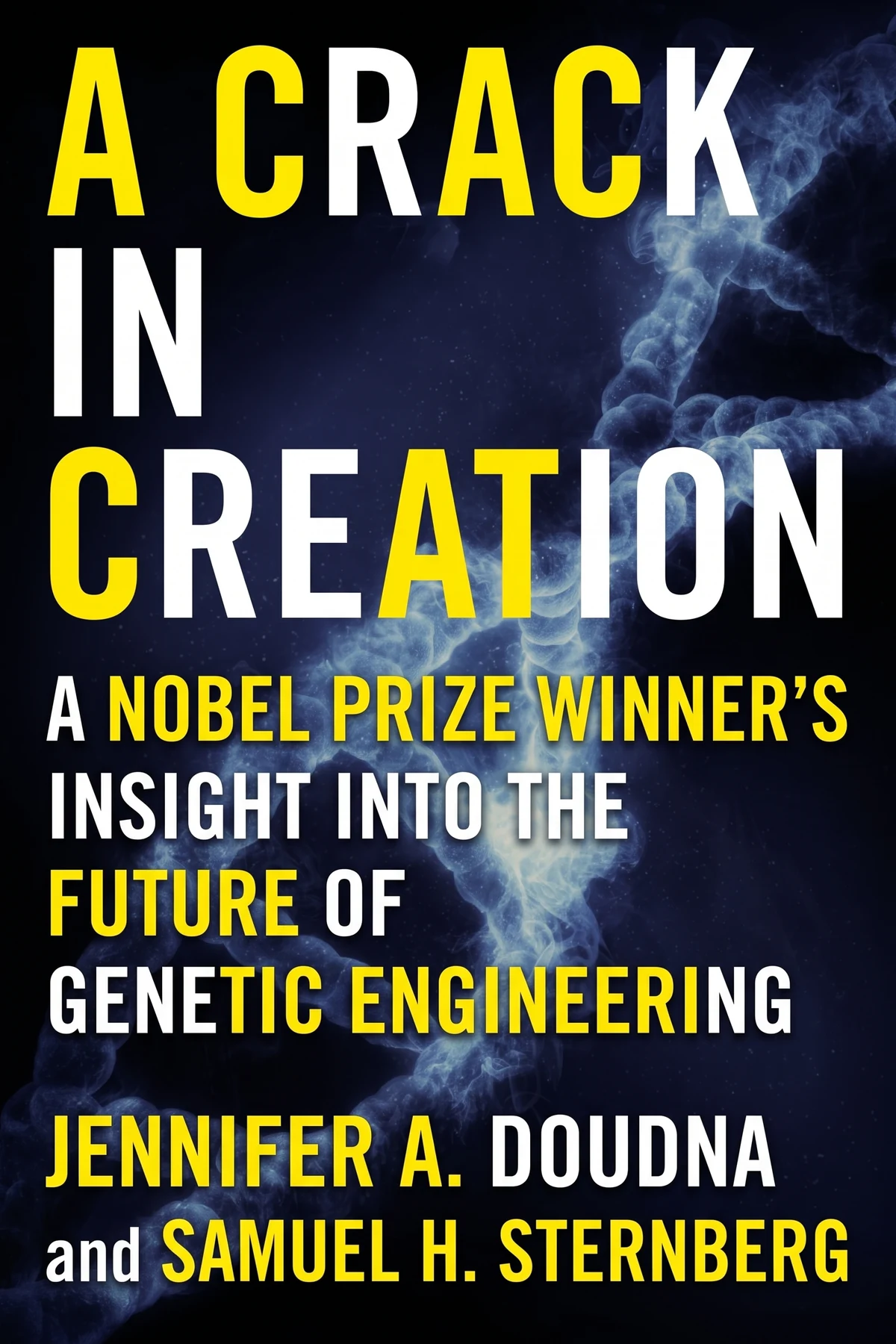
Alien Earths: The New Science of Planet Hunting in the Cosmos
Explore the cutting-edge search for life beyond our solar system. This summary reveals the scientific breakthroughs, planetary conditions, and cosmic mysteries involved in finding another habitable world among the stars.
Table of Content
1. Introduction
1 min 31 sec
Have you ever found yourself standing beneath a clear, dark sky, feeling the sheer weight of the stars above you? In those moments of quiet awe, a single question usually rises to the surface: Is there anyone else out there? We often imagine alien life through the lens of science fiction—strange creatures on worlds with two suns or civilizations far more advanced than our own. But today, that wonder is shifting from the realm of imagination into the rigorous world of hard science. We are living in a pivotal era where we no longer have to just guess about the existence of other worlds; we are actually finding them.
In this exploration of the search for cosmic life, we will journey through the latest breakthroughs in astronomy and astrobiology. We’ll look at how we’ve moved from merely spotting distant dots of light to actually analyzing the air of planets trillions of miles away. This isn’t just a story about technology, though. it’s a story about what it means to be alive and what a planet needs to provide a home for that life. Through the lens of the latest space missions and the fundamental laws of chemistry and physics, we’ll see how scientists are piecing together a map of the universe that might finally lead us to a neighbor. Along the way, we’ll establish a throughline that connects the tiny microbes in Earth’s most extreme environments to the massive, swirling nebulas where stars are born. By the end of this journey, your perspective on our place in the cosmos—and the potential for life elsewhere—will be fundamentally transformed.
2. A New Window Into the Early Universe
2 min 11 sec
Discover how the latest advancements in space observation allow us to see the chemical makeup of distant worlds and peer back into the very infancy of the cosmos.
3. The Mystery of the Silent Cosmos
2 min 11 sec
Explore the puzzling contradiction between the high probability of extraterrestrial life and the lack of evidence for advanced civilizations in our galaxy.
4. The Perfect Recipe for Habitability
2 min 10 sec
Learn the four essential ingredients that transform a cold, rocky sphere into a thriving, living world capable of supporting complex organisms.
5. Challenging Our Definition of Life
2 min 03 sec
Examine how scientists define life and why we must look beyond our own carbon-based biology to recognize extraterrestrial inhabitants.
6. A Rainbow of Biological Signatures
2 min 00 sec
Life on other planets might not be green. Explore how different light and environments create a diverse spectrum of possible biosignatures.
7. Persistence Against the Odds
2 min 16 sec
Follow the stories of the scientists who defied skepticism and bias to prove that the universe is teeming with diverse planetary systems.
8. The Hunt for Earth’s Twin
2 min 12 sec
Journey through the landmark Kepler mission and learn how it shifted our focus from finding any planet to finding one that could truly be home.
9. Conclusion
1 min 42 sec
As we conclude this journey through the cosmos, we find ourselves back where we started—on our own small, blue planet. But hopefully, your perspective has shifted. The search for ‘Alien Earths’ is about much more than finding a new home or meeting another species; it’s a profound exercise in understanding what makes our own world so special. We have seen that life requires a precise and delicate dance of chemistry, geology, and astronomy. From the recycling of carbon through our crust to the protective shield of our atmosphere, Earth is a rare masterpiece of habitability.
Our exploration of the stars serves as a mirror. When we see the scorched surface of Venus or the dry, dusty plains of Mars, we are reminded of how fortunate we are. The throughline of this quest is clear: the more we look for life elsewhere, the more we realize the importance of protecting the life we have here. We are currently the only known crew on this ‘spaceship’ called Earth, and while we map out potential destinations in the stars and dream of future interstellar travel, we must ensure our current vessel remains sea-worthy.
The search continues. With every new telescope launched and every extremophile discovered in a deep-sea vent, the gap between us and the rest of the universe gets a little smaller. We are no longer just passive observers of the night sky; we are active explorers, decoding the language of light and building a future where the question ‘Are we alone?’ might finally have a definitive answer. Until then, the most important thing we can do is stay curious, keep looking up, and cherish the incredible, vibrant, and unique world we already call home.
About this book
What is this book about?
For millennia, humanity has looked at the stars and asked a single, profound question: Are we alone? This exploration dives into the modern scientific quest to answer that query. By examining the latest advancements in telescope technology and the fundamental requirements for life, it maps out how we identify planets that might harbor biological activity. From the high-tech sensors of the James Webb Space Telescope to the conceptual hurdles of the Fermi Paradox, the narrative guides listeners through the essential ingredients of a living world—liquid water, a protective atmosphere, and active geology. It also addresses the personal and professional challenges faced by the researchers who push the boundaries of what we know about the universe, promising a deeper understanding of our own planet's fragility and the vast potential for life across the cosmos.
Book Information
About the Author
Lisa Kaltenegger
Lisa Kaltenegger is an astrophysicist and astrobiologist, known for her pioneering work in modeling habitable exoplanets and detecting extraterrestrial life. She’s the founding director of the Carl Sagan Institute at Cornell University and has contributed significantly to NASA’s TESS Mission. Kaltenegger has received numerous awards and honors for her contributions to science and innovation.
Ratings & Reviews
Ratings at a glance
What people think
Listeners find this book provides fresh insights into planet hunting and is accessible, with one review noting it explains complex concepts without talking down to readers. They describe it as a fascinating and enlightening experience, with one listener remarking that it opens up a whole new world. The prose and the author's character get varied feedback; one listener observes it's at an 8th-grade level, while another finds it poorly written.
Top reviews
Aurora
As someone who grew up watching Cosmos, this felt like a spiritual successor to Carl Sagan’s legacy. Lisa Kaltenegger manages to capture that same sense of wonder about our place in the cosmos while grounding it in modern astrophysical research. I particularly loved the "raisin bread" analogy for the expansion of the universe—it’s such a simple way to visualize something so incredibly complex. While the book is definitely aimed at a general audience and avoids dense mathematical formulas, her passion for the hunt for exoplanets is infectious. She weaves in her personal journey as a woman in a male-dominated field, which adds a layer of human depth I wasn't expecting. It’s a beautifully written invitation to look up at the stars and wonder who might be looking back. Truth is, we need more scientists who can communicate like this.
Show moreAroha
Finally got around to reading this, and I’m honestly blown away by how Kaltenegger makes such complex physics feel like a conversation over coffee. She explains how Earth has evolved over billions of years and how we can use that “light fingerprint” to find similar planets orbiting distant stars. It’s eye-opening to realize how much we’ve discovered just in the last decade. I loved the personal anecdotes about her path to becoming the director of the Carl Sagan Institute. It’s inspiring to see a female scientist at the top of her game sharing her knowledge so freely. The lack of visual diagrams was a bit of a bummer, but her descriptions are vivid enough that you can almost see the rocky surfaces and gas giants she describes. This book is a must-read for anyone who looks at the night sky and feels that spark of curiosity.
Show moreAlice
Wow. This book literally opens up a whole new world—or several billion of them, actually. Lisa Kaltenegger has a gift for making you feel the excitement of discovery. I loved the parts where she talks about how she overcame obstacles as a woman in science to lead her own institute. It’s not just a book about stars; it’s about the human spirit and our drive to explore the unknown. It’s incredibly easy to read and I finished it in two sittings. If you want to know how we might finally find Alien Earths, this is the place to start. Every page made me smile.
Show moreSupachai
Ever wonder what it’s actually like to hunt for another Earth? Dr. Kaltenegger gives us a front-row seat at the Carl Sagan Institute to see how the toolkit for finding life is actually built. I appreciated how she used pop culture references from sci-fi movies to explain what we might actually find out there. It makes the “stuffy” world of astronomy feel alive and relevant. To be fair, some sections do feel a bit repetitive, and I found myself skimming a few pages where she explained the same concept for the third time. However, the chapter on time and how looking at the stars is essentially looking into the past was genuinely mind-blowing. It’s a great introductory text for anyone curious about the big mystery of the universe without getting bogged down in jargon.
Show moreGor
After hearing the author on a podcast, I had to pick this up. The way she breaks down the scientific method—how we find something and then immediately try to prove ourselves wrong—is the best explanation of “how science works” I’ve read in years. It’s not just about the discoveries; it’s about the rigor. The book covers everything from the Big Bang to the potential for life on the moons of Jupiter and Saturn. My only gripe is that it leans a bit too heavily into the elementary side of things at times. Do we really need the raisin bread analogy again? Still, for a curious layperson, it’s an incredible resource. She makes you feel the immense scale of the 200 billion stars in our galaxy and the statistical certainty that we aren't alone.
Show moreJirapat
Picked this up on a whim and was pleasantly surprised by how much I learned about the history of our own planet. Kaltenegger uses Earth’s own evolution to show us what to look for elsewhere, which is a brilliant framing device. The chapters on how our atmosphere has changed were particularly enlightening. It’s written in a very comprehensible way, avoiding the stuffy tone you usually get from academic types. I did wish there were more photos or illustrations to accompany the descriptions of the telescopes and the alien landscapes she imagines. Sometimes the comparisons are a bit too simple, but the passion behind the words makes up for it. It really sparks your imagination and makes you think about time and space in a completely different way.
Show moreLucia
The chapter on spacetime alone is worth the price of admission. Even though I thought I understood the concept of looking back in time when we look at stars, the way Kaltenegger frames it with her specific examples gave me a total aha moment. This is a lighthearted trek through the universe that focuses on whether planets are rocky or gas giants. She names several specific stars and their planetary systems, making the vastness of space feel a bit more like a neighborhood. Personally, I enjoyed the mix of memoir and science, though I can see why some might find the autobiographical parts a distraction. It’s a great introduction to a field that is changing every single day.
Show moreWin
The information provided is definitely fascinating, but the writing style is a bit of a mixed bag for me. On one hand, Kaltenegger is clearly brilliant and her enthusiasm for exoplanets shines through every page. On the other hand, it’s written at what feels like an 8th-grade level. I wanted more about the actual technology and less about the “vibe” of being a scientist. The focus on tardigrades and the history of Earth's atmosphere was cool, but it felt like it took forever to get to the alien earths promised in the title. Frankly, I think this is a perfect gift for a high schooler interested in STEM, but it might leave seasoned science readers wanting a bit more meat on the bone. It's a solid read that opens up a new world but doesn't quite explore it deeply enough.
Show moreMethinee
I've been a fan of popular science for years, so I was eager to see what the Carl Sagan Institute was up to. There is no denying that Kaltenegger is a talented storyteller. She makes the search for alien life feel like a grand adventure. However, if you’ve read Cosmos or any recent books on astrobiology, you might find a lot of this material redundant. The book spends a significant amount of time on basic geology and biology before getting to the actual exoplanet data. Not gonna lie, I found the mind-numbing repetition of some themes a bit frustrating. Why mention the same space probes three different times in slightly different contexts? That said, her writing is lighthearted and devoid of annoying mathematical formulas, making it very accessible. It's a good read, just not a seminal work.
Show moreWan
Not what I expected from a leading astrophysicist. I was really hoping for a deep dive into the latest data from the James Webb Space Telescope, but the JWST barely gets a mention beyond the surface level. The prose feels geared toward a middle-school audience rather than an educated layman looking for a seminal work on exoplanets. Phrases like “I would want a spaceship to protect me” feel almost patronizingly simple. Look, I understand the need for accessibility, but the constant repetition of basic concepts like “life is varied” became a chore to get through. If you already have a shelf full of Brian Greene or Paul Davies, you’re going to find this extremely light on new information. It’s more of a memoir-lite than a rigorous scientific exploration.
Show moreReaders also enjoyed

A Life Decoded: My Genome: My Life
J. Craig Venter
A Planet of Viruses
Carl Zimmer
A Short History of Nearly Everything
Bill Bryson
A Thousand Brains: A New Theory of Intelligence
Jeff Hawkins

AUDIO SUMMARY AVAILABLE
Listen to Alien Earths in 15 minutes
Get the key ideas from Alien Earths by Lisa Kaltenegger, plus 5,000+ more titles in English and Thai.
- 5,000+ titles
- Listen as much as you want
- 7-day free trial
- Cancel anytime







