
22 min 13 sec
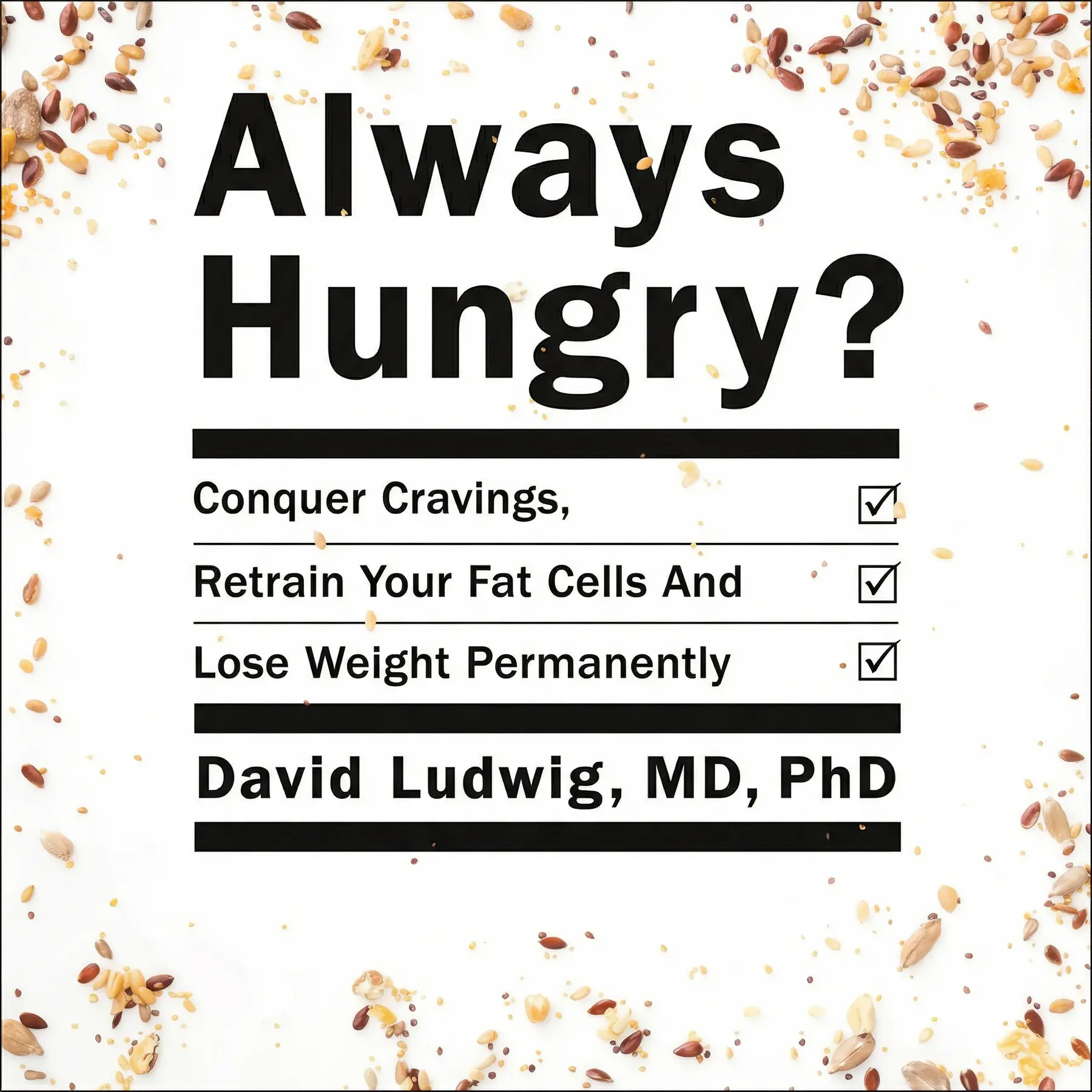
Always Hungry?: Conquer Cravings, Retrain Your Fat Cells And Lose Weight Permanently
By David Ludwig
Always Hungry? explores why traditional calorie-counting diets fail. Dr. David Ludwig reveals how targeted nutrition can retrain fat cells, stabilize insulin levels, and lead to permanent weight loss without the struggle of constant hunger.
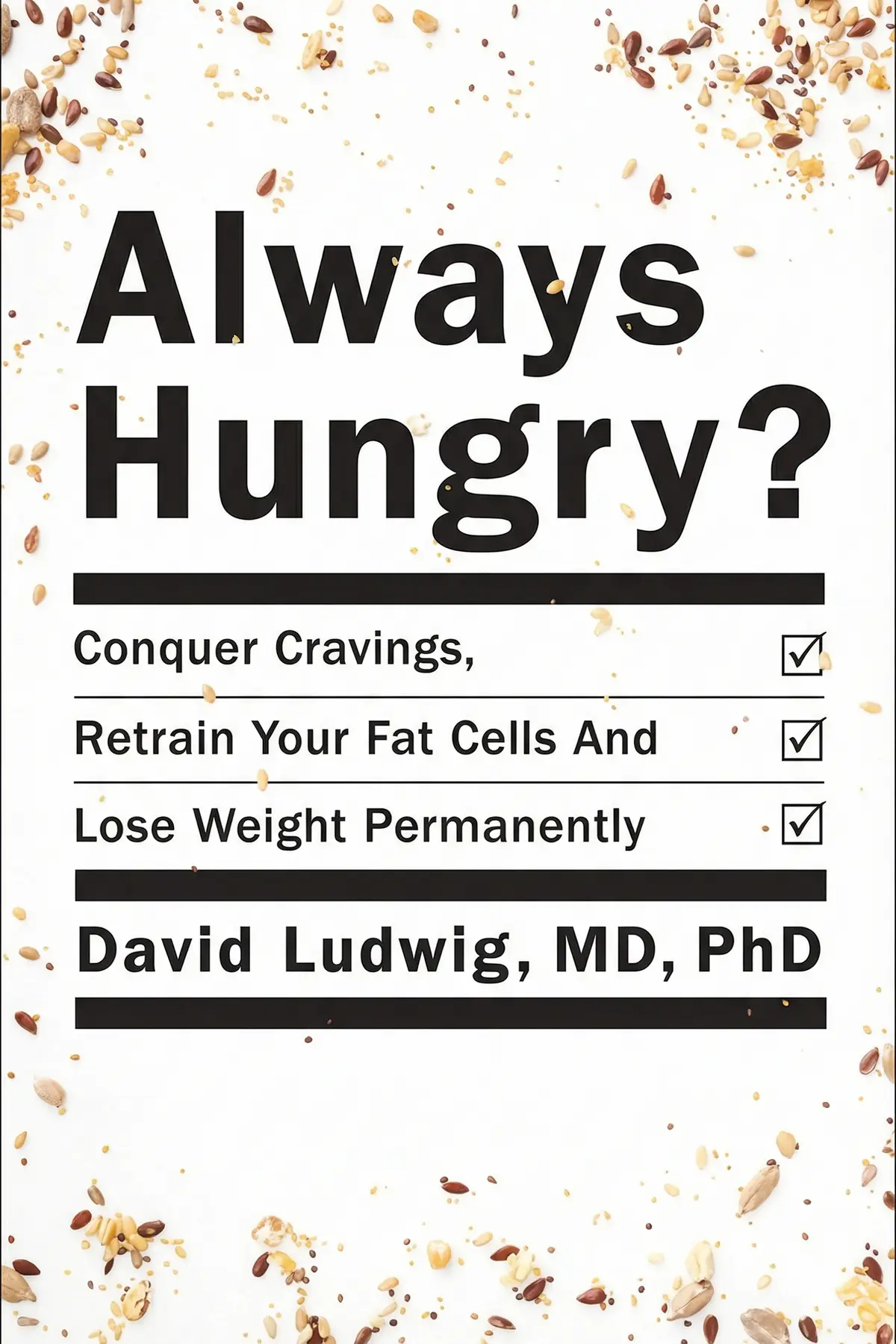
Table of Content
1. Introduction
1 min 48 sec
If you have ever tried a traditional diet, you are likely familiar with the predictable cycle of initial success followed by inevitable frustration. You spend weeks measuring portions, counting every single calorie, and perhaps spending hours on a treadmill, only to find yourself feeling exhausted, irritable, and constantly battling a gnawing sense of hunger. Eventually, the weight creeps back, and the cycle begins anew. It is a disheartening experience that leaves many people blaming their own lack of willpower. But what if the problem wasn’t your discipline? What if the very foundation of how we approach weight loss is biologically flawed?
In Always Hungry?, we explore the ground-breaking perspective of Dr. David Ludwig, who argues that the “calories in, calories out” model is an oversimplification that ignores how our bodies actually function. The core of the issue isn’t that we are eating too much; it’s that our fat cells are being programmed to hoard calories, leaving the rest of our organs starving for energy. This creates a state of internal famine that triggers intense cravings and slows down our metabolism, making weight loss nearly impossible to sustain.
This summary will guide you through a different way of thinking about food and health. We will look at how high-insulin levels, triggered by processed starches and sugars, drive our fat cells into overdrive. We will discuss the hidden dangers of chronic inflammation and why eating fat can actually be the key to getting lean. Most importantly, you will learn about a three-phase plan to retrain your metabolism, conquer your cravings, and finally achieve a healthy weight without the misery of starvation. It’s time to stop counting calories and start focusing on the biological signals that govern your body.
2. The Failure of the Calorie-Balance Model
2 min 17 sec
Discover why the traditional focus on eating less and moving more is biologically incomplete and how it may actually hinder your weight loss efforts.
3. Insulin and the Fat Storage Trap
1 min 56 sec
Explore the role of insulin as the body’s master regulator of energy and how processed carbohydrates turn this hormone against your health goals.
4. The Link Between Obesity and Chronic Inflammation
1 min 54 sec
Learn how overextended fat cells trigger a dangerous immune response that can lead to long-term health complications like diabetes and cancer.
5. Fueling Your Body with the Right Nutrients
2 min 06 sec
Shift your focus from restriction to nourishment by prioritizing high-quality fats, proteins, and the power of plant-based fiber.
6. Establishing a Healthy Relationship with Food and Environment
2 min 07 sec
Success in weight loss requires more than just a menu; it requires a shift in your mindset and a supportive home environment.
7. Phase One: The Two-Week Metabolic Reset
2 min 01 sec
Initiate your transformation by significantly lowering your insulin levels through a high-fat, low-carbohydrate jumpstart.
8. Phase Two: Retraining Your Cells for Metabolic Flexibility
1 min 54 sec
Slowly reintroduce healthy carbohydrates to build metabolic resilience and find the unique balance that works for your body.
9. Phase Three: Sustainable Mindful Living
2 min 08 sec
Transition into a lifelong way of eating that balances enjoyment with health, focusing on mindfulness and stress management.
10. The Power of High-Quality Fats
2 min 02 sec
Understand why fat is your greatest ally in the fight against hunger and how it helps switch your body into fat-burning mode.
11. Conclusion
2 min 00 sec
The journey through Always Hungry? brings us to a fundamental realization: our bodies are not simple calculators, but complex biological systems that respond to the quality of the information we give them through our food. The prevailing wisdom that weight loss is simply a matter of restricting calories has failed millions of people because it ignores the hormonal reality of insulin and its control over our fat cells. When we prioritize refined carbohydrates, we inadvertently program our bodies to store energy away, leaving our organs in a state of internal starvation that triggers a cycle of hunger, metabolic slowdown, and weight gain.
By following the three-phase approach outlined by Dr. David Ludwig, you have the opportunity to break this cycle and reclaim your health. By starting with a metabolic reset that lowers insulin, gradually retraining your cells with healthy carbohydrates, and ultimately moving into a lifestyle of mindful, nutrient-dense eating, you can work with your biology instead of fighting it. The key is to move away from the fear of fat and the obsession with calories, and instead focus on nourishing your body with high-quality proteins, healthy fats, and plenty of plant-based fiber.
As you move forward, remember that this is not about perfection, but about progress and self-awareness. Trust the signals your body gives you, prepare your environment for success, and handle setbacks with kindness and curiosity. Weight loss shouldn’t be a battle of willpower against hunger; it should be the natural result of a well-nourished, balanced body. By retraining your fat cells and lowering chronic inflammation, you are not just losing weight—you are building a foundation for lifelong vitality and wellness. It’s time to stop the struggle, eat the foods your body truly needs, and find a sustainable path to being healthy and satisfied.
About this book
What is this book about?
The weight-loss industry has long insisted that shedding pounds is a simple matter of willpower and math: eat fewer calories and burn more off through exercise. Yet, as obesity rates continue to climb, it is clear that this formula is missing a crucial biological component. Always Hungry? presents a science-backed alternative that shifts the focus from quantity to quality. Dr. David Ludwig explains that the type of food we eat dictates how our hormones behave, specifically insulin, which acts as the master controller of fat storage. This book promises a path to health that does not involve starvation or grueling gym sessions. Instead, it offers a three-phase program designed to lower inflammation, reset the metabolism, and satisfy the body’s nutritional needs. By prioritizing healthy fats and proteins while reducing refined carbohydrates, readers can learn to work with their biology rather than against it. The ultimate goal is to move away from the cycle of craving and crashing, achieving a state where the body naturally maintains a healthy weight because it is finally getting the nutrients it requires to function optimally.
Book Information
About the Author
David Ludwig
Dr. David Ludwig is a highly respected endocrinologist and researcher based at Boston Children’s Hospital. In addition to his clinical work, he serves as a professor of nutrition at the Harvard T.H. Chan School of Public Health. His extensive background in metabolic health and pediatric medicine has made him a leading voice in the study of how diet affects hormonal balance and long-term wellness.
Ratings & Reviews
Ratings at a glance
What people think
Listeners find the work extensively researched and supported by credible science, offering useful tactics for bettering health and diet. The program helps listeners drop roughly five pounds of stubborn fat, and they enjoy the recipes, highlighting their ease of preparation. Listeners note a decrease in cravings for sugar and carbohydrates while finding the program's scientific basis easy to grasp. While some listeners think the plan is direct, others feel it isn't easy to execute.
Top reviews
Dao
Ever wonder why you're still hungry right after eating a big bowl of pasta? This book explains exactly why that happens. Dr. Ludwig’s research on the 'insulin-carbohydrate' model is fascinating and, frankly, it just makes sense. By focusing on high-quality fats and proteins, you're essentially turning off the hunger alarm in your brain. I’ve lost 30 pounds following this approach since the beginning of the year. The best part? I don't count a single calorie. I just eat until I'm full and focus on the food quality. The recipes for things like the shepherd’s pie and various nut-based snacks are actually delicious. This isn't a temporary diet; it’s a permanent shift in how I view food. If you are tired of the constant cycle of restriction and bingeing, you need to read this book immediately. It works.
Show moreTern
Wow, I didn't expect a book written by a Harvard MD to be this practical and accessible. The program is laid out with such detail that it’s almost impossible to fail if you just follow the steps. I loved the inclusion of downloadable grocery lists and the focus on 'mindful' eating rather than just 'less' eating. For the first time in my life, I feel at home in my body. My skin looks better, my arthritis pain has decreased, and my energy is through the roof. The science is solid, providing a real explanation for why the low-fat craze of the 90s failed so many people. It takes the shame out of weight gain by explaining the hormonal drivers behind it. It’s an empowering, well-researched guide that offers a clear path toward health. Highly recommended for anyone struggling with their weight.
Show moreCarlos
The truth is, this isn't just a diet; it's a metabolic reset that actually takes the psychological battle out of eating. I’ve spent years tracking every morsel on a Fitbit and still feeling like I was failing. Ludwig’s plan focuses on taming the insulin response, which in turn calms the whole body down. I stopped having those desperate cravings for bread and sugar within just a few days. The first three weeks are structured so perfectly that you don't even have to think—you just cook and eat. Yes, it’s a lot of work in the kitchen. Yes, you have to shop more often for fresh produce. But feeling this good is worth every second of prep. It’s a profound shift to go from 'always hungry' to feeling fueled and focused. This book is a must-read for anyone who wants to understand how their body actually works.
Show moreManika
As someone who has struggled with the 'eat less, move more' mantra for decades, this perspective on hormonal fat storage was eye-opening. Dr. Ludwig argues that we aren't overeating because we lack willpower; we are overeating because our fat cells are programmed to hoard calories. This shifts the blame from the individual to the biological signals being sent by insulin. The logic is sound and backed by his own extensive research at Boston Children’s Hospital. I followed the plan and lost about five pounds of stubborn fat that wouldn't budge before. Gotta say, the recipes are surprisingly tasty and easy to prepare once you get the hang of the shopping lists. My only gripe is the occasional dismissal of the National Weight Control Registry data. Overall, it’s a refreshing take that prioritizes satiety over deprivation. It makes weight loss feel like a biological shift rather than a daily battle of wills.
Show moreKom
After hearing so many conflicting things about carbohydrates, I appreciated how Ludwig breaks down the 'fast' vs 'slow' carb distinction. This isn't just another keto book; it’s a more nuanced approach to how our bodies process different fuels. The 'Always Hungry?' philosophy suggests that if we fix the underlying metabolic issue, the weight will take care of itself. Personally, I found the three-phase approach very logical. Phase one jump-starts the system, and then you slowly reintroduce whole grains. I felt incredibly sustained throughout the day and didn't experience the usual mid-afternoon energy crashes. The prep work is definitely significant, and you'll be doing a lot of dishes, but the results in terms of mental clarity were worth it. It’s a comprehensive plan for anyone willing to put in the kitchen time to heal their metabolism.
Show moreTang
Finally got around to reading a diet book that doesn't make me feel like I'm starving myself every single hour. The truth is, I’ve always been skeptical of high-fat diets, but the science here is hard to argue with. Ludwig explains how refined carbs spike insulin, which then locks calories away in fat cells, leaving the rest of the body hungry. Once I switched to the full-fat dairy and healthy oils he recommends, my constant hunger actually subsided. It was a strange feeling to be satisfied after a meal! I lost a few inches off my waist in the first month without ever feeling deprived. To be fair, the book can get a bit repetitive with the science, and some of the specialty ingredients are hard to find in a regular grocery store. Still, it’s a life-changing approach for those of us with metabolic issues.
Show moreScarlett
Picked this up because I was curious about the science of insulin, but it felt a bit redundant if you have already read Atkins or Paleo books. To be fair, Ludwig is a great writer and explains complex biological processes in a way that is very easy to digest. He focuses on the quality of food over the quantity, which is a message I can get behind. However, the 'revolutionary' tag feels like a bit of a stretch. The advice is essentially: eat real food and avoid sugar. We’ve heard this before. The recipes included are decent, and I did appreciate the focus on sleep and stress as factors in weight gain. It’s a solid 3-star read for a nutrition newbie, but seasoned health nuts won't find anything particularly ground-breaking here. It’s just another voice in the very crowded low-carb choir.
Show moreNoppadol
In my experience, this program is a bit of a mixed bag. The first phase is incredibly restrictive, cutting out all grains and starchy vegetables—even the poor potato is treated like the devil's intern! I did notice that my cravings for sweets vanished after the first week, which was a huge win. That said, the sheer volume of fat you’re expected to eat felt overwhelming. Drowning everything in olive oil and nuts isn't exactly my idea of a 'Mediterranean' diet, despite how the author labels it. My energy levels were stable, but the weight loss was minimal. It’s a well-researched book with some valid points about how processed carbs trigger hunger, but the actual diet feels unsustainable for the long haul. I think I'll stick to a more balanced version of CICO instead of following this rigid metabolic reset.
Show moreSuwit
How much free time does Dr. Ludwig think the average person actually has? While the science regarding insulin and 'fat fertilizers' is somewhat interesting, the implementation is a total nightmare. I spent my entire weekend prepping specialized sauces and shopping for expensive oils like avocado and flax. Not gonna lie, the meal plan is incredibly rigorous and unforgiving for anyone with a real job or a social life. It leans heavily into a 'conspiracy theory' vibe, suggesting the government and food industry have collaborated to keep us fat. That feels more like a marketing tactic than medical advice. Despite following the phases for a month, I lost zero pounds. I just ended up stressed out and missing fruit. It might work if you have a private chef and a massive budget, but for the rest of us, it’s just too much work for very little payoff.
Show moreWeera
This book is basically just another low-carb manifesto wearing a white lab coat. Frankly, it feels like Dr. Ludwig is just repackaging keto propaganda and calling it revolutionary science. He spends half the time bashing 'calories in/calories out' as if the laws of thermodynamics suddenly stopped applying to humans. Five thousand calories of broccoli is still five thousand calories! The reliance on mice studies to support such massive claims is honestly embarrassing for a Harvard researcher. It also completely ignores the reality of exercise, practically demonizing movement because it might make you crave a potato. Look, if you want to lose weight, you still need to burn more than you eat. Pushing a high-sodium, high-fat diet while telling people to avoid fruit and grains is just irresponsible. It’s a cherry-picked mess of nutritional 'dark age' theories that ignore any modern research showing balanced diets work just as well.
Show moreReaders also enjoyed


AUDIO SUMMARY AVAILABLE
Listen to Always Hungry? in 15 minutes
Get the key ideas from Always Hungry? by David Ludwig, plus 5,000+ more titles in English and Thai.
- 5,000+ titles
- Listen as much as you want
- 7-day free trial
- Cancel anytime







