
27 min 04 sec
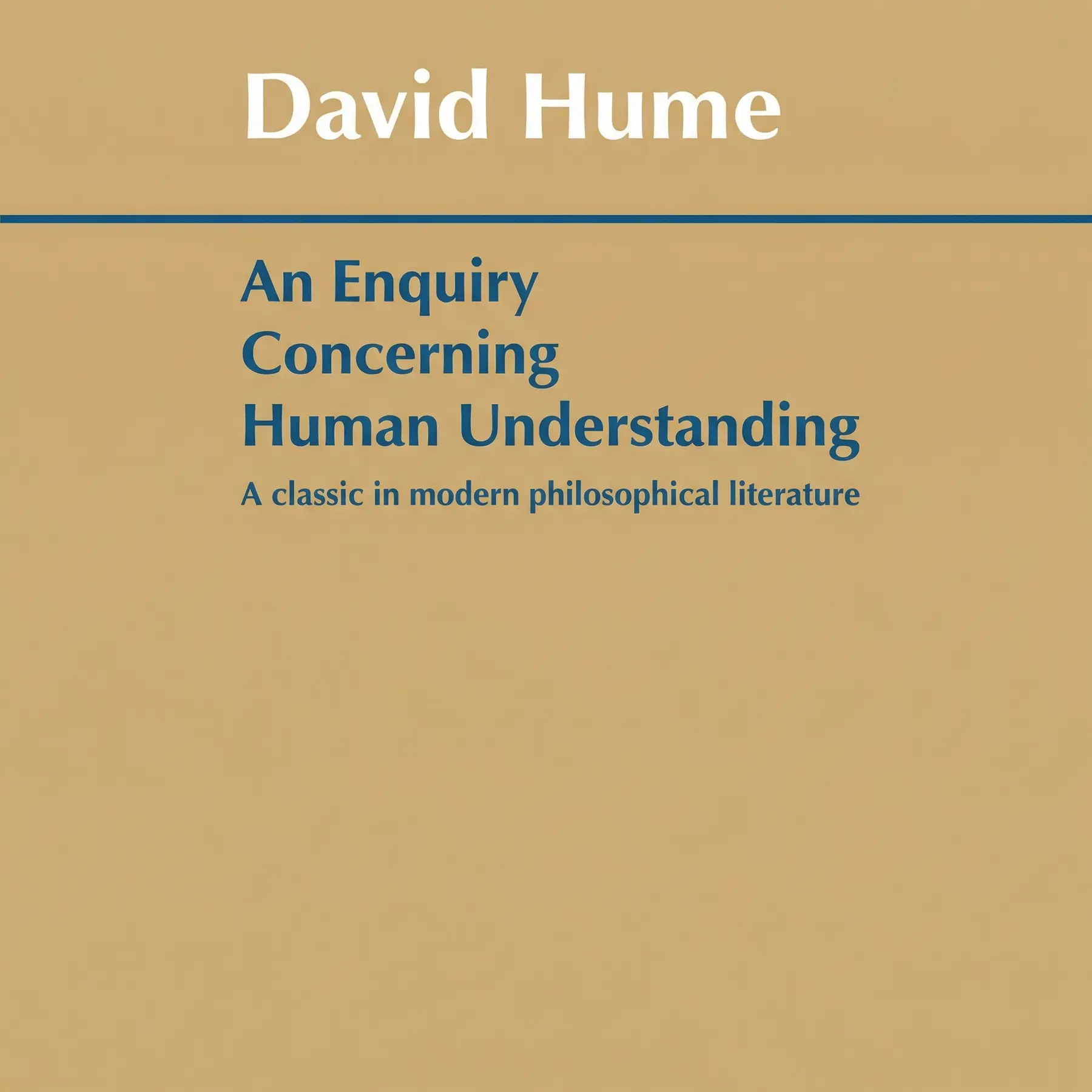
An Enquiry Concerning Human Understanding: with Hume's Abstract of A Treatise of Human Nature and A Letter from a Gentleman to His Friend in Edinburgh
By David Hume
An Enquiry Concerning Human Understanding examines the boundaries of the human mind, challenging our assumptions about cause, effect, and the reliability of reason while advocating for a life guided by experience.
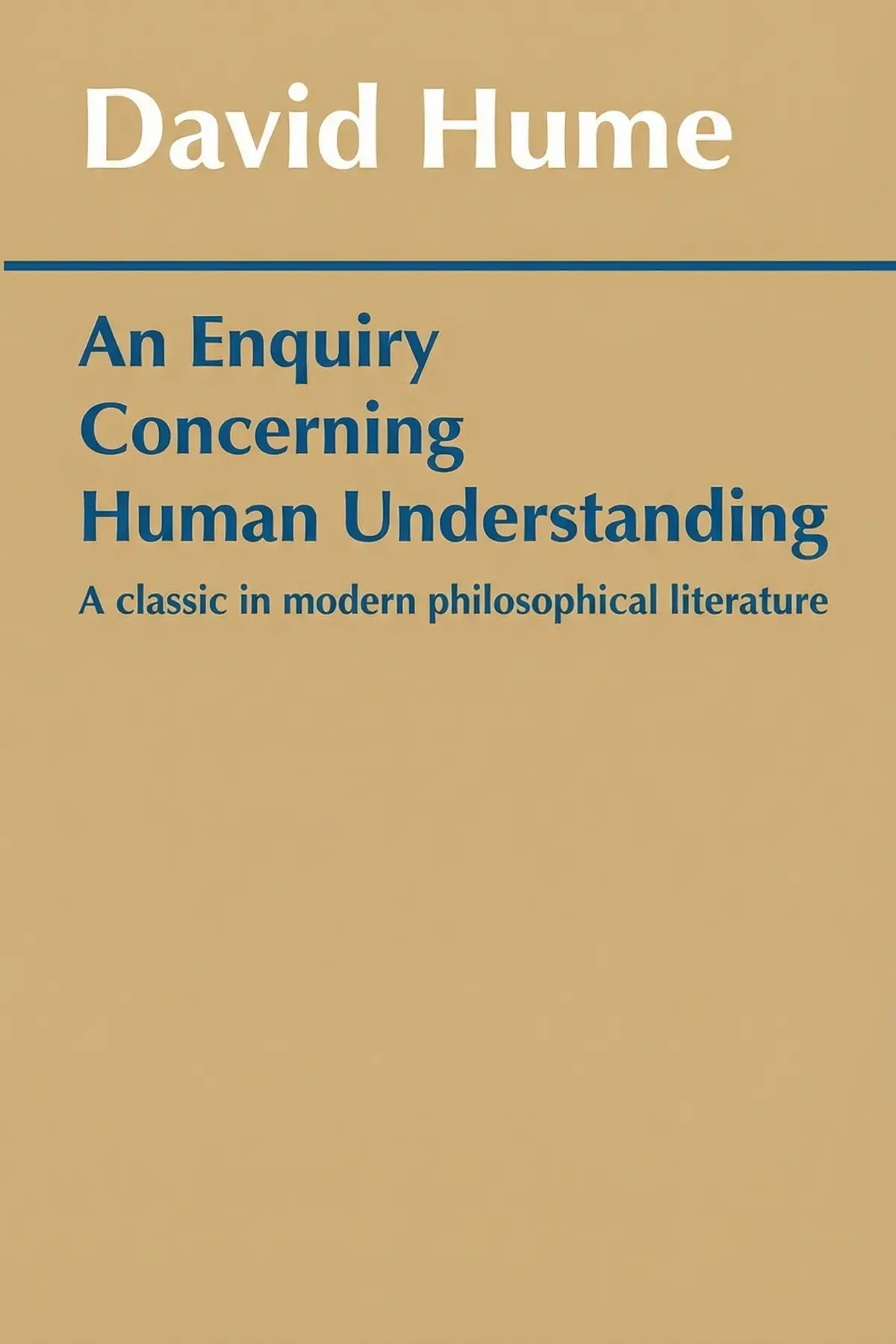
Table of Content
1. Introduction
2 min 17 sec
We often think of ourselves as the masters of logic. We look back at history and see a steady climb from ancient myths and superstitions toward the bright light of scientific reason. In the modern world, we believe that we have finally unlocked the secrets of the universe by using our superior intellects to grasp the underlying laws of nature. But what if that sense of certainty is just a very convincing illusion? What if our most deeply held beliefs—things like the conviction that the sun will rise tomorrow or that a flame will always burn us—have no actual basis in logic at all?
This is the unsettling and revolutionary challenge posed by David Hume in his classic work, *An Enquiry Concerning Human Understanding*. Writing at the height of the Enlightenment, Hume wasn’t trying to tear down science or progress. Instead, he wanted to understand the actual machinery of the human mind. He wanted to know exactly where our ideas come from and how much weight they can actually carry. What he discovered was that human reason is far more limited than we like to admit.
Hume takes us on a journey that strips away the pretenses of traditional philosophy. He argues that we are not the purely rational beings we claim to be. Instead, we are creatures of habit and instinct, navigating a world that we don’t understand nearly as well as we think. By following his thread of skeptical inquiry, we find ourselves at a remarkable destination: a worldview that prioritizes experience over speculation and replaces arrogant certainty with a grounded, practical humility.
In the pages ahead, we are going to explore why your brain is more like a high-speed camera than a logical computer. We will look at why a game of billiards reveals a fundamental gap in our perception of the world. We’ll examine why it is never truly rational to believe in a miracle, and why the fact that the sun has risen every day of your life doesn’t actually prove it will do so again tomorrow. Ultimately, we’ll see how Hume’s philosophy doesn’t just offer a different way of thinking, but a different way of living—one that accepts our animal nature and uses a healthy dose of doubt to build a more stable and honest life. It’s time to see the world through the eyes of a true skeptic and discover the surprising power of admitting how little we actually know.
2. The Origin of Thought in Sensory Experience
2 min 48 sec
Discover why every complex thought you have ever had is actually just a recycled version of something you have felt or seen in the physical world.
3. The Imagination as a Creative Architect
2 min 16 sec
Learn how your mind builds fantastic worlds and mythical creatures by simply rearranging the basic building blocks of your past experiences.
4. The Illusion of Necessary Connection
2 min 46 sec
Explore the shocking truth that we never actually see cause and effect in action; we only see one thing happen after another.
5. The Logical Failure of Induction
2 min 23 sec
Uncover the ‘problem of induction’ and why your belief that the sun will rise tomorrow is an act of faith, not a logical certainty.
6. Custom as the True Guide of Human Life
2 min 20 sec
Find out why habit, not logic, is the secret engine that keeps society running and prevents us from falling into total paralysis.
7. The Deep Connection Between Humans and Animals
2 min 22 sec
See how Hume bridges the gap between our high-minded intellect and the animal kingdom by revealing our shared reliance on instinct.
8. Reconciling Liberty and Necessity
2 min 41 sec
Dive into the age-old debate of free will versus fate, and see how Hume uses his theory of cause and effect to find a surprising middle ground.
9. The Logical Case Against Miracles
2 min 26 sec
Learn why the weight of human experience will always outweigh the testimony of a miracle, no matter how convincing the storyteller might be.
10. The Power of Mitigated Skepticism
2 min 28 sec
Discover how a healthy dose of doubt can actually lead to a more peaceful, tolerant, and intellectually honest way of living.
11. Conclusion
2 min 17 sec
As we reach the end of David Hume’s exploration of the human mind, we are left with a vision of ourselves that is both smaller and more grounded than the one we started with. Hume has shown us that our pride in our ‘reason’ is often misplaced. We are not the logical masters of the universe; we are biological creatures who navigate life using the rough-and-ready tools of habit, custom, and sensory experience. We cannot prove the sun will rise, we cannot see the hidden forces of nature, and we cannot find a rational foundation for our most basic assumptions.
But rather than being a cause for despair, Hume’s philosophy is a call to a more honest and practical way of being. He teaches us that while the ‘secret springs’ of the universe may always remain hidden from us, we have everything we need to live well right here in the realm of experience. By accepting our limitations, we can free ourselves from the traps of dogmatic certainty and religious superstition. We can build a world based on observation and probability rather than empty speculation and blind faith.
The throughline of Hume’s work is the power of intellectual humility. In a world where people are often divided by their absolute convictions, Hume offers a path toward moderation. He invites us to be skeptics in the library but participants in the world. He shows us that it is possible to doubt the logical foundations of reality while still fully enjoying the warmth of a fire, the company of friends, and the pursuit of scientific progress.
So, as you step back into your daily life, take a piece of Hume’s modest skepticism with you. When you encounter a bold claim or a heated argument, ask yourself: what is the evidence for this? Is this idea rooted in experience, or is it just a flight of imagination? And most importantly, remember that you don’t need absolute certainty to live a meaningful life. In fact, it is often in the space between our doubts and our experiences that we find the most room to grow. By embracing the limits of your understanding, you don’t lose the world; you finally learn how to inhabit it with open eyes and a humble heart.
About this book
What is this book about?
David Hume’s landmark work is a deep dive into the mechanics of human thought and the source of our beliefs. Written during the Enlightenment, it asks a fundamental question: how much of what we claim to know is actually based on logic, and how much is simply habit? Hume deconstructs the traditional view of the rational human, suggesting that our understanding of the world—from the rising of the sun to the laws of physics—is built on sensory experience rather than abstract reasoning. The book promises a radical shift in perspective. It challenges readers to reconsider their most basic assumptions about reality, including the nature of causation and the validity of testimony regarding miracles. By the end, Hume offers a path toward a more humble, practical form of skepticism. He argues that while we can never achieve absolute certainty about the hidden workings of the universe, we can lead better, more grounded lives by acknowledging the limits of our own minds and relying on the useful instincts that have allowed our species to survive.
Book Information
About the Author
David Hume
David Hume was a Scottish philosopher, historian, economist, and diplomat who is widely regarded as one of the most influential thinkers of the Enlightenment and the entire Western tradition. Known for his radical philosophical empiricism, he is often cited as the greatest philosopher to write in the English language. His work famously influenced Immanuel Kant, who credited Hume with waking him from his dogmatic slumber, forever changing the course of modern philosophy.
Ratings & Reviews
Ratings at a glance
What people think
Listeners find this text to be both accessible and a good value, with one mentioning it is a must-read for students of philosophy. The content is praised for its insightfulness, as one listener points out that the primary arguments are explained very clearly.
Top reviews
Pong
Finally got around to reading this for my introductory epistemology course, and I was genuinely surprised by how modern the perspective feels. Hume is a master at explaining the most complex points with a level of insight that most philosophers simply cannot match. He argues convincingly that knowledge can only occur through experience, effectively shifting the entire conversation away from abstract metaphysics and toward something more akin to science. As a student of philosophy, this is an absolute must-read because it lays the groundwork for so much of what follows in the Western tradition. The way he pieces together the argument that our knowledge is essentially relative is nothing short of brilliant. This edition is also quite affordable, making it accessible for those who are just starting their journey into these big questions. I cannot recommend it enough for anyone who values clear, uncompromising thought.
Show moreTern
As someone who appreciates a good deconstruction, Hume’s ability to poke holes in the rationalism of his era is masterclass level. This was a re-read for me, and I found it much more coherent than my first pass years ago in college. Back then, it felt all over the place, but now I see the beautiful structure underlying his skepticism. He isn't just being difficult; he is asking very good questions about what we can actually know for certain. His prose is full of long, elegant sentences that are a pleasure to read if you take the time to savor them. He remains a favorite of mine because he avoids the deep, unnecessary complexity that plagues so many modern philosophical texts. It is a work of pure insight that manages to stay grounded in the human experience while challenging our most basic assumptions. Truly a classic for a reason.
Show moreKwan
Picked this up because it was well-priced and I needed a copy for reference, but I ended up reading it cover to cover in two days. Hume has this incredible knack for taking massive, intimidating philosophical concepts and making them feel almost like common sense. I love how he defines 'impressions' as our more lively perceptions and 'ideas' as the faint images of those impressions in thinking. It’s such a simple distinction, yet it carries so much weight in his overall argument against the existence of innate ideas. He really shifts the focus toward what we can actually observe and away from the 'pitch of presumption' that characterized earlier metaphysics. Even the potentially dry parts about the association of ideas were made interesting by his sharp wit and clear examples. This is easily one of the most accessible and rewarding philosophy books I have ever owned. It should be required reading for anyone who thinks they understand how the world works.
Show moreMint
This book is a breath of fresh air compared to some of the denser Continental philosophers I have slogged through lately. Hume has a way of stripping back the layers of pretentious metaphysical jargon to get at the core of how we actually process the world. While some might find his skepticism a bit extreme, his clarity on the distinction between impressions and ideas is genuinely insightful for any modern reader. To be fair, his 18th-century prose can occasionally feel a bit flowery and takes a moment to adjust to, but the logical progression is remarkably easy to follow. I found his dismantling of a priori reasoning to be especially sharp and well-articulated. It is a fantastic starting point for anyone interested in British Empiricism without the headache of more obscure texts. Even when I disagreed with his more cynical conclusions, the sheer elegance of his sentences kept me engaged throughout the entire volume.
Show moreMilk
The chapter on miracles alone makes this entire volume worth the purchase price for any curious reader. Hume’s writing style is a paragon of clarity, even if his long sentences require a bit more focus than a modern thriller. I particularly enjoyed the way he deconstructs the limits of human reason and questions the very foundation of how we understand cause and effect. It is a fascinating look at the intellectual shift happening around the time of the Enlightenment. While I don't agree with every conclusion he draws—especially his more radical skeptical claims—the thinking process itself is worth examining. He manages to be provocative without being unnecessarily obscure, which is a rare feat for a philosopher of his stature. It is a solid, insightful piece of work that forces you to justify your own assumptions about the reality of the world around you.
Show moreRyan
After hearing so much about the death of metaphysics, I wanted to see the smoking gun for myself in Hume’s writing. He does not disappoint in his role as the radical empiricist, consistently arguing that conclusions cannot be drawn without the assistance of observation. The book covers everything from the association of ideas to the nature of belief with a very methodical approach. I found the section on the 'liberty and necessity' of the human will to be one of the most compelling parts of the entire Enquiry. To be fair, there are moments where the 18th-century style becomes a bit repetitive, and he hammers his points home perhaps a bit too hard. Still, for a work that is centuries old, it remains incredibly relevant to how we view science and evidence today. It is a concise and comprehensible read that changed how I think about my own past experiences.
Show moreNattapong
Why does Hume seem so obsessed with tearing everything down without offering a solid replacement for what he destroys? Picked this up for a class and found myself frustrated by how much he enjoys poking holes in the rationalism of his day. It feels less like a constructive philosophical project and more like a targeted demolition of everything that came before him. Truth is, his rejection of causation as anything more than habit is a tough pill to swallow, even if his arguments are technically sound. The text is certainly readable and the price was right for a student budget, but the tone often feels dismissive and oddly bitter toward those who seek a more harmonious whole. I wanted more answers and fewer reasons to doubt my own senses. It is a necessary read for historical context, but I wouldn't call it an enjoyable one.
Show moreAraya
Look, the 18th-century prose can be a bit of a hurdle at first with those long, winding sentences that seem to go on forever. I appreciated the insight into empiricism and the rejection of a priori knowledge, but I found the middle sections to be quite a slog. Hume is definitely a good writer, but he can come across as incredibly smug when he is dismissing other schools of thought. He covers miracles and religion with a sharp tongue that might alienate some readers, even if his logic is hard to fault. Personally, I think he covers some topics much better than others; his work on causation is brilliant, but his limits on reason felt a bit redundant after a while. It’s a nice edition and well-priced, so it's good to have on the shelf, but it wasn't exactly a page-turner for me. I’d recommend it mostly for those who are specifically interested in the history of skepticism.
Show morePhu
It is quite interesting to see how Hume connects the shifting political landscape of his time to his theories on human understanding. He views the records of history as a collection of experiments for the philosopher, which is a very unique and grounded perspective. However, I can't help but feel that his uncompromising empiricism leaves the world feeling a bit flat and devoid of any deeper meaning. The truth is, while he is excellent at explaining how we think, he isn't very good at explaining why we should care about the things we can't prove. I found myself wishing for a bit more of Leibniz’s optimism while reading this, as Hume’s world is one of mere habits and probabilities. It is a readable and important text, but it’s definitely not my favorite approach to the big questions of existence. It makes sense given the time it was written, but it feels a bit cold in its execution.
Show moreDuang
Not what I expected, and frankly, I find his total dismissal of anything beyond basic sense experience to be incredibly narrow-minded. Philosophy is dead if we follow Hume to his ultimate conclusions, as he leaves no room for wonder or the pursuit of a higher truth. There are eerie similarities with thinkers like Pascal here, specifically in the idea that reason is shut out from the deep things of the world. However, unlike Pascal, Hume seems to delight in this limitation rather than seeing it as a tragedy. His rejection of miracles is especially aggressive and felt more like a personal grievance than a dispassionate inquiry into human understanding. The writing is undeniably elegant, but the content feels hollow and spiritually bankrupt to me. If you enjoy seeing the potential for human knowledge reduced to mere observation of habits, you might like this, but I found it deeply unsatisfying.
Show moreFeatured in
Readers also enjoyed
A Little History of Philosophy
Nigel Warburton
A Theory of Justice
John Rawls
A Guide to the Good Life: The Ancient Art of Stoic Joy
William B. Irvine
Anarchism: A Very Short Introduction
Colin Ward
Anarchy, State, and Utopia
Robert Nozick
AUDIO SUMMARY AVAILABLE
Listen to An Enquiry Concerning Human Understanding in 15 minutes
Get the key ideas from An Enquiry Concerning Human Understanding by David Hume, plus 5,000+ more titles in English and Thai.
- 5,000+ titles
- Listen as much as you want
- 7-day free trial
- Cancel anytime







