
21 Lessons for the 21st Century
Yuval Noah Harari
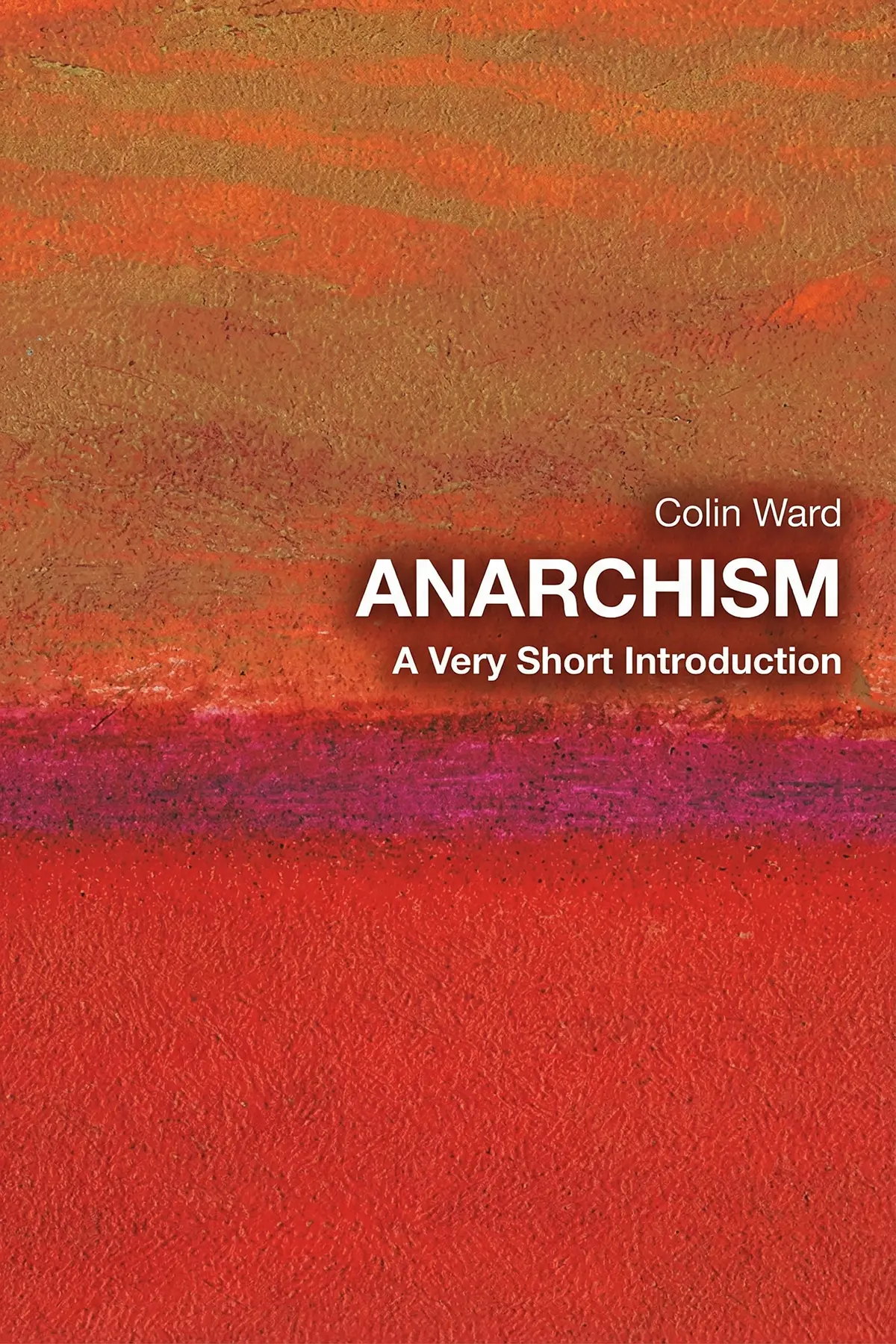
Explore the true meaning of anarchism as a philosophy of mutual aid and cooperation. This summary reveals how anarchist principles have shaped social movements, prison reform, and modern environmental sustainability.
1 min 43 sec
In our modern vocabulary, the term anarchy is almost exclusively used as a synonym for disorder. We see it in news headlines describing riots, failing states, or social breakdown. But if we peel back the layers of popular misconception, we find that anarchism is actually a sophisticated and deeply optimistic political philosophy. Far from being a call for chaos, it is a vision of a society so organized and so cooperative that it no longer requires the heavy hand of a central government or the threat of police force to function. At its heart, anarchism is about the belief that human beings are naturally capable of managing their own lives and communities through mutual aid and voluntary agreement.
This summary will take you through the evolution of these ideas, showing that they aren’t just high-minded theories but practical tools that have been used to change the world. We will look at how the movement grew out of the disillusionment of the French Revolution, when people realized that simply replacing one set of masters with another—monarchs with bureaucrats—was not true liberation. We will explore the throughline of this philosophy: the rejection of all hierarchies, whether they come from the state, religious institutions, or the workplace.
As we navigate through the history and application of these principles, you will see how they offer a unique lens for looking at our current global challenges. Whether we are talking about the massive failures of the modern prison system or the looming shadow of ecological collapse, anarchist thought provides a framework for solutions that prioritize human dignity and local autonomy over profit and power. By the end of this journey, you’ll understand why these ideas, which flourished on the streets of Barcelona and in the writings of 19th-century scientists, are more relevant today than ever before. We are not just looking at a political history; we are looking at a manual for a different way of living together.
2 min 38 sec
Discover how the movement transformed from a Greek concept into a modern political framework that seeks to dismantle every form of external control.
2 min 44 sec
Explore the fascinating paradoxes of property and the moments in history where millions of people lived successfully under anarchist principles.
2 min 40 sec
Understand how the insights of imprisoned philosophers led to a radical rethinking of crime, punishment, and the ‘universities of crime.’
2 min 27 sec
See how anarchist activism broke the chains of social conformity, from the clothes we wear to the way we define our personal relationships.
2 min 45 sec
Discover how the principles of localized production and ‘Deep Green’ living offer a sustainable alternative to the failures of global capitalism.
1 min 33 sec
In concluding our look at the philosophy and history of anarchism, it is clear that the movement is much more than a historical curiosity or a fringe political stance. It is a fundamental challenge to the way we perceive authority and human nature. We have seen how anarchists have consistently pointed out that the state is often the source of social ills rather than the cure, and how the removal of hierarchical structures can actually lead to more order, not less. From the streets of Revolutionary Spain to the modern urban gardens of today’s cities, the evidence shows that when people are given the freedom and the responsibility to manage their own affairs, they are remarkably capable of doing so with fairness and efficiency.
We must remember that many of the rights and social norms we cherish today—from our freedom of expression to our evolving views on family and justice—were once the radical dreams of anarchists who were willing to live differently. While a global anarchist revolution may not be imminent, the ‘anarchist way’ of organizing provides a vital toolkit for our future. As we navigate the complex challenges of the 21st century, the principles of mutual aid, voluntary association, and local autonomy offer a compelling alternative to the rigid systems that are currently failing us. The final lesson is simple but profound: we do not need to wait for a leader to tell us how to build a better world. We can start by cooperating with those around us, rejecting unnecessary hierarchies, and taking direct responsibility for our communities and our planet.
When most people hear the word anarchy, they envision fire, chaos, and the total breakdown of order. However, as this summary reveals, the actual philosophy of anarchism is centered on the exact opposite: the creation of a stable, just society through voluntary cooperation and the removal of oppressive hierarchies. By examining the historical roots of the movement and its most influential thinkers, we uncover a world where individuals manage their own affairs without the need for a central state or coercive power. This exploration promises to change your perspective on how society can function. You will see how anarchist ideas have already successfully influenced areas as diverse as urban planning, women’s rights, and criminal justice. From the large-scale social experiments during the Spanish Civil War to the quiet revolutions in our daily social norms, you will discover why these centuries-old ideas remain a vital lifeline for addressing the modern crises of inequality and climate change.
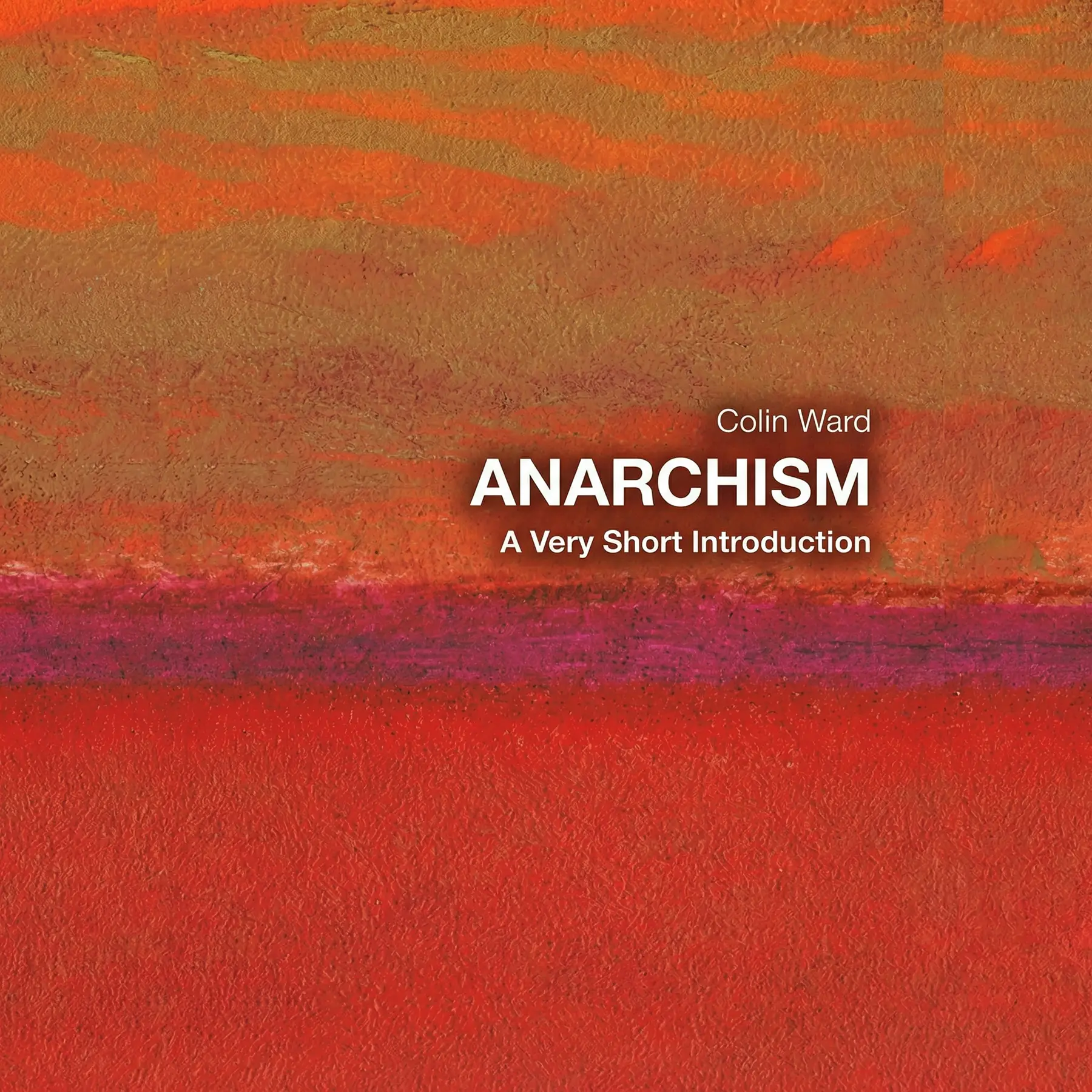
Colin Ward was a prominent British anarchist and a highly productive writer who dedicated his career to exploring politics, ecology, and the complexities of urban life. His extensive body of work includes influential titles such as Anarchy in Action, Cotters and Squatters, and Talking Green, reflecting his deep commitment to practical anarchist solutions in everyday society.
Listeners find the book accessible and skillfully crafted. Opinions on the caliber of information and the prose are varied, with some describing it as informative while others feel differently. The encyclopedic elements and the historical overview of anarchism similarly provoke mixed reactions, although one listener pointed out that it delivers a solid history of the movement.
Finally got around to reading Colin Ward's take on a much-maligned philosophy, and it was a genuine revelation for me. Rather than focusing on the 'bomb-throwing' stereotypes that the media loves, Ward explores the 'seeds beneath the snow'—the ways people already cooperate without the state. The chapter on 'Freedom in Education' was particularly eye-opening, illustrating how state-run schools often prioritize conformism over actual learning. It’s written in a very accessible style that doesn't require a PhD in political science to understand. Ward manages to connect 19th-century thinkers like Kropotkin to modern concerns like climate change and the green movement with remarkable ease. It’s a hopeful book that asks you to imagine a world where mutual aid is the default setting. Truly paradigm-shifting stuff that I'll be thinking about for a long time.
Show moreImagine a society where safety and cooperation are built into our consciousness rather than being enforced by rigid bureaucratic rules. Ward makes a powerful case for the 'dream' of anarchism by reframing it away from chaos and toward mutual aid and community-led initiatives. The section on the 'Kudumbasree' movement in India was a wonderful, practical example of these theories in action in the modern world. I loved how he challenged the sanctity of the nation-state, reminding us that for most of human history, we lived without these rigid borders. It’s an inspiring read that focuses on the potential for 'quiet revolutions' in our daily lives. This isn't just a history book; it's a manual for thinking differently about the world we live in. If you've ever felt trapped by the culture of employment or state conformism, this book is for you.
Show moreWard has a way of stripping away the 'bomb-throwing maniac' stereotype to reveal the deeply humane and rational heart of anarchist thought. This book is a fantastic, accessible guide that makes a strong case for why anarchist principles are more relevant now than ever before. I particularly appreciated the discussion on how the state's monopoly on education and welfare can be successfully challenged by community-led initiatives. It leaves you feeling hopeful about the possibility of non-hierarchical futures, especially in the face of environmental collapse. Even if you disagree with the premise that the state is the enemy, Ward's arguments about federalism and the 'Europe of Regions' are incredibly thought-provoking. This is a must-read for anyone who believes that human ingenuity is best expressed through voluntary cooperation rather than coercion. It’s easily one of the best titles in the VSI series.
Show moreThe chapter on the penal system alone makes this worth the purchase for anyone interested in social reform and justice. Ward provides a solid history of the movement while keeping the tone conversational and engaging. I particularly liked the distinction he draws between the 'libertarian' traditions of 19th-century America and the modern market-capitalist appropriation of the word. Some sections, particularly those focusing on British private schools for the working class, felt a bit niche for a global audience, yet they still served his broader point about local autonomy. Truth is, the book functions best as a collection of vignettes rather than a linear history. It’s a great primer that introduces names like Godwin and Bakunin without becoming a dry, dusty encyclopedia. Definitely a solid 4-star read for those who want a fresh perspective on how society can function.
Show morePicked this up expecting a dry history, but I was pleasantly surprised by how Ward connects 19th-century thought to current environmentalism. The book highlights how anarchism isn't just about 'breaking things down' for no purpose; it's about building up local autonomy and standing your ground against external authority. Ward does a great job of explaining how the 'anarchist dream' is actually quite practical in the context of climate change and sustainability. The distinction he makes between anarchism and the selfish individualist philosophy of Ayn Rand is a crucial point that many newcomers often miss. While he does jump around a lot between different topics, his enthusiasm for the subject is infectious. It’s a very accessible entry point for anyone who wants to understand why this philosophy refuses to die. Definitely worth a few hours of your time.
Show moreAs someone who came in with zero knowledge, I found this to be an easy-to-read, albeit slightly disjointed, introduction to the subject. Ward is clearly passionate about the 'gentlemanly' side of British anarchism, which makes for a pleasant reading experience. However, the jumping between historical figures like Proudhon and modern vignettes on urban food production felt a bit erratic at times. Personally, I would have preferred a more chronological approach to the history of the movement. The book is essentially a primer; it gives you the names you need to know, like Bakunin and Godwin, but it doesn't go very deep into their specific arguments. It's a decent enough starting point if you're curious, but it lacks the weight of a definitive text. Good for a quick overview, but expect to be left with more questions than answers.
Show moreDoes the state protect us, or does it merely protect the privileges of the powerful? Ward asks this fundamental question with great clarity, even if he doesn't always provide the most satisfying answers. It’s a decent primer on the big four—Godwin, Proudhon, Bakunin, and Kropotkin—but the 'Quiet Revolutions' chapter felt like it was meandering through too many obscure examples. Not gonna lie, I expected something a bit more structured from an Oxford publication. However, the writing is clear and devoid of the heavy jargon that usually plagues political texts, which makes it very approachable for a casual reader. It functions more like an encyclopedia of anarchist-adjacent ideas than a deep theoretical study. If you're looking for a quick, informative train ride read, this will do the trick, but you'll likely want something meatier afterward.
Show moreThis entry in the VSI series feels more like a promotional brochure than a rigorous academic analysis of a complex political theory. Colin Ward, though a legend in British anarchist circles, spends far too much time claiming every positive social interaction in history as an example of 'anarchism.' He fails to provide a concrete, working definition of the ideology, which is frustrating for a book intended to be an introduction. Instead, we get a chummy, somewhat rambling collection of the author's pet issues. While the prose is accessible and the history of European federalism is interesting, the lack of intellectual rigor makes it a miss for me. To be fair, if you want a light pamphlet that paints anarchism as a gentle, neighborly impulse, you might enjoy this, but scholars should look elsewhere for a deep dive into Bakunin or Proudhon.
Show moreLook, the writing style is pleasant enough, but the content is curiously thin on actual political science and rigorous theory. Ward ignores the complexities of implementation, preferring to focus on small-scale experiments and historical 'what-ifs.' He spends far too much time on Victorian-era British schools, which feels a bit out of place for a 'Very Short Introduction' intended for a general audience. It felt like a missed opportunity to engage with modern anarchist critiques of globalism or digital surveillance. The book has its merits, especially in the 'Green Aspirations' chapter, but it's too much of a personal manifesto. In my experience, these OUP books are better when they provide a balanced overview rather than a chummy defense of the author's own specific branch of thought. It was okay, but I wouldn't call it a definitive resource.
Show moreWhy does this book spend so much time avoiding a concrete definition of its central topic? I found this volume to be a major disappointment, especially considering the high standards usually maintained by the Oxford Very Short Introduction series. Ward seems to believe that whenever something good happens in history, it must be because of anarchism, but whenever things go wrong, it's just 'statism' at work. This kind of circular logic is infuriating and does a disservice to the serious philosophical tradition he is supposed to be explaining. The text feels more like a collection of disjointed essays on his favorite topics—like environmentalism and prison reform—than a cohesive overview of political theory. It’s far too uncritical and lacks the academic distance needed for a proper introduction. If you want to learn about anarchism, you are much better off reading Kropotkin directly.
Show moreYuval Noah Harari

Jacinda Ardern

Pankaj Mishra

James Comey

Anthony Pratkanis


Barack Obama

Masaji Ishikawa
AUDIO SUMMARY AVAILABLE
Get the key ideas from Anarchism by Colin Ward, plus 5,000+ more titles in English and Thai.







