
22 min 12 sec
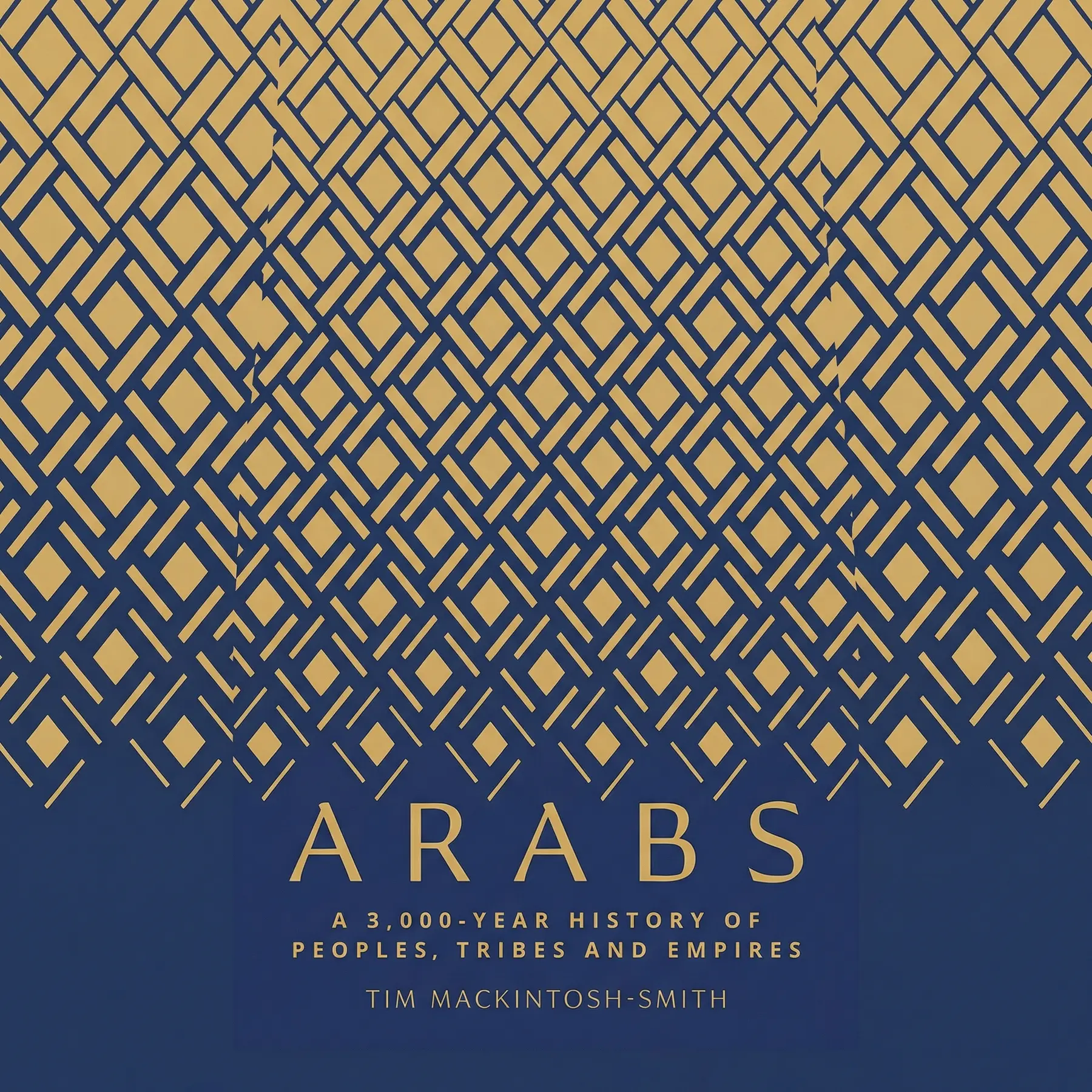
Arabs: A 3,000 Year History of Peoples, Tribes and Empires
Explore three millennia of Arab history, tracing the journey of a people from nomadic tribes and merchant caravans to the architects of a vast global empire and modern cultural powerhouses.
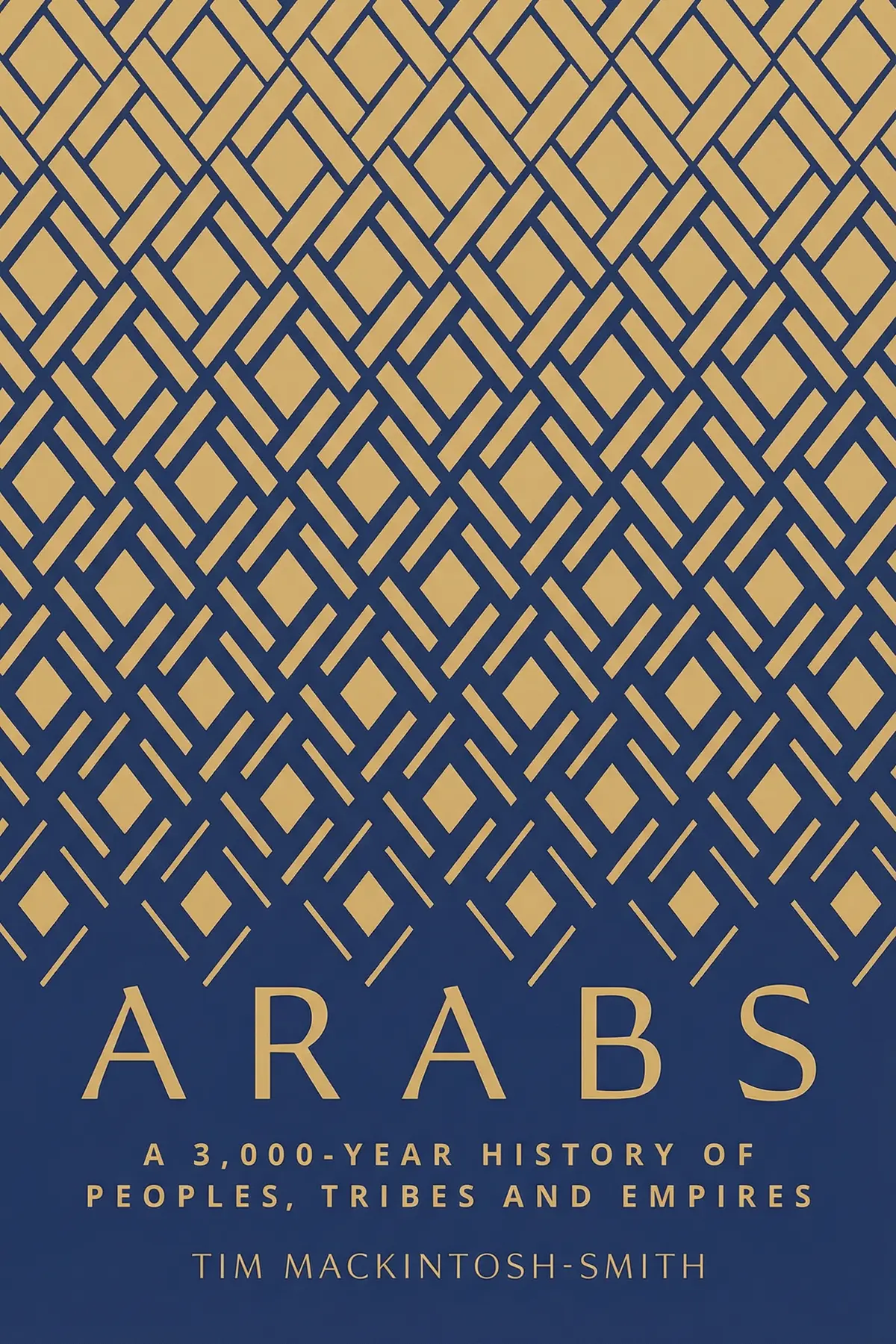
Table of Content
1. Introduction
1 min 42 sec
When we think of the word “Arab” today, we often think of a vast, interconnected world spanning two continents, bound by a shared language and a faith that influences billions. But where did this identity truly begin? To understand the modern Arab world, we have to look back three millennia, to a time before the great empires and long before the rise of Islam. The story of the Arabs is not a single, straight line of progress; rather, it is a grand cycle of unity and fragmentation, of brilliant intellectual light and dark periods of invasion.
Throughout this journey, we will see how a group of nomadic tribesmen from one of the harshest environments on Earth managed to build a civilization that would eventually redefine the boundaries of science, philosophy, and trade. We’ll explore the dramatic rise of the Islamic caliphates, the refined and sometimes scandalous lives of the Umayyad and Abbasid dynasties, and the catastrophic moments, like the Mongol invasion, that forever changed the trajectory of the region.
More importantly, we will look at the “glue” that has held this disparate group together for thousands of years. It isn’t always politics—in fact, political unity has been the exception rather than the rule. Instead, the throughline of this history is the Arabic language itself, a medium of poetry and revelation that created a shared mental landscape long before the first borders were ever drawn. As we navigate this 3,000-year history, notice how the themes of the past—the tension between the desert and the city, the struggle against outside powers, and the search for a unified voice—continue to resonate in the headlines of the twenty-first century. This is a story of high drama, massive personalities, and the enduring power of a culture that has weathered the rise and fall of countless empires.
2. The Cradle of Identity in a Divided Landscape
3 min 18 sec
Uncover how the harsh geography of the Arabian Peninsula and the scarcity of water forced early Arabs to develop two distinct ways of life that still influence the region.
3. The Catalyst of Unity and the Rise of Islam
3 min 18 sec
Explore the pivotal moment when a shared language and a new religious vision transformed scattered tribes into a world-shaking power.
4. The Struggle for the Soul of the Caliphate
3 min 02 sec
Witness the internal conflicts and the tragic schism that permanently divided the Islamic world even as its borders expanded to new horizons.
5. Baghdad and the Arab Golden Age of Reason
3 min 09 sec
Step into the intellectual heart of the medieval world, where Arab scholars led a revolution in science, mathematics, and philosophy.
6. The Maritime Frontier and the Printing Gap
3 min 00 sec
Follow the Arab explorers and merchants as they took to the seas, spreading their culture to distant shores while facing new challenges from Europe.
7. Nationalism, Oil, and the Search for a Modern Future
3 min 08 sec
Examine the turbulent 20th century, from the broken promises of colonialism to the rise of pan-Arabism and the complexities of the Arab Spring.
8. Conclusion
1 min 35 sec
The 3,000-year history of the Arabs is a testament to the enduring power of culture over politics. While empires have risen and fallen, and while borders have been drawn and redrawn by outside powers, the essential identity of the Arab people has remained remarkably resilient. This identity wasn’t built on a single government or even a single ethnic lineage, but on the bedrock of a shared language and the ethical values that were first forged in the desert. We have seen how water shaped their origins, how the word ignited their golden age, and how the challenges of the modern era have tested their resolve.
As we look at the Arab world today, it’s easy to focus on the headlines of conflict and fragmentation. But as this journey shows, those are only part of a much larger cycle. The history of the Arabs teaches us that unity is often found in the most unexpected places—in a verse of poetry, a shared scientific discovery, or the collective call for dignity. For those of us looking in from the outside, the lesson is one of complexity; for those within the Arab world, the lesson is one of continuity. The past 3,000 years provide a deep reservoir of wisdom and inspiration that can be used to navigate the uncertainties of the future. The throughline of this story—the search for a unified voice in a fractured world—is a universal human struggle, and the Arab experience remains one of its most dramatic and important chapters. By understanding where this journey began, we can better appreciate where it might go next, moving toward a future built on the rich, multi-layered foundations of its incredible past.
About this book
What is this book about?
This comprehensive summary explores the sweeping 3,000-year history of the Arab people, moving far beyond simple stereotypes to uncover a narrative of profound complexity. It traces the origins of the Arabs in the harsh landscapes of the Arabian Peninsula, where the scarcity of water and the power of poetic language first forged a distinct identity. The story follows their explosive emergence onto the world stage following the rise of Islam, leading to the creation of empires that stretched from the borders of China to the shores of the Atlantic. You will discover how Arab scholars preserved and expanded human knowledge during the Middle Ages, laying the foundations for modern science and mathematics. The narrative also examines the later periods of fragmentation, the impact of European colonialism, and the ongoing struggle for political self-determination in the modern era. By the end, you will understand how a shared language and culture continue to bind a diverse region together, even as political unity remains elusive. This is a story of resilience, innovation, and the enduring power of the written and spoken word.
Book Information
About the Author
Tim Mackintosh-Smith
Tim Mackintosh-Smith has lived for 30 years in Sana’a, the capital of Yemen. He’s written several books about the Arab world, both vivid histories and travelogues alike. In 2011, Newsweek magazine named him one of the twelve finest travel writers of the past 100 years.
Ratings & Reviews
Ratings at a glance
What people think
Listeners describe the writing as beautiful and value the attention given to the Arabic language, while one listener highlights how the work conveys the inherent grace of Arab cultures. Views on the history are divided; some commend the deeply researched and frank examination of the Arab world’s story, though others take issue with it.
Top reviews
Somkid
This volume is a breathtaking exploration of how language constructs a civilization, rather than just serving it. Mackintosh-Smith avoids the dry, detached tone of Oxford-based historians by writing from his home in war-torn Sana’a, which adds a visceral weight to every page. He brilliantly argues that the 'high' Arabic of the Qur'an is a linguistic miracle that binds Arab identity together more than any borders ever could. While the prose is occasionally dense and requires a dictionary nearby, the sheer depth of research is staggering. You get a sense that history isn't just a list of dates but a living, breathing thing that influences the missiles falling outside the author's window. It’s an essential, albeit demanding, read for anyone who thinks they know the Middle East and its beautiful, complex inner workings.
Show moreZoe
Rarely does a history book manage to be so poetic while remaining so ruthlessly analytical about its subject matter. Mackintosh-Smith frames the entire Arab experience through the evolution of their language, presenting 'high Arabic' as the glue that holds a fractured people together. The dichotomy he draws between the 'Beddu' nomads and the settled 'Hadar' people explains so much about the modern cycle of coups and instability. Frankly, his insights into how the Arab world essentially skipped the printing revolution and jumped straight to social media were quite chilling. You can tell he truly loves the culture, yet he isn't afraid to ask why disunity remains such a persistent theme throughout the millennia. My only gripe is that the political sections toward the end felt a bit rushed compared to the lush detail of the early centuries.
Show moreWipada
Ever wonder why Arab unity remains such a persistent myth despite the common language and religion shared across the region? This book provides some of the most satisfying, if complex, answers I’ve ever come across in my studies. Mackintosh-Smith argues that the very language that unites them also creates a barrier between the elite and the common man. He paints a vivid picture of the pre-Islamic world, showing that the Arabs were never truly isolated from the empires surrounding them. The research into the Nabateans and the early kingdoms of Yemen is worth the price of the book alone. Some might find his prose a bit flowery, but I found it to be incredibly evocative and fitting for the subject. It’s a dense, challenging, and ultimately rewarding look at a 3,000-year saga that is still being written today.
Show moreKevin
Finally got around to reading this, and I’m struck by how Mackintosh-Smith manages to make ancient history feel so relevant to today. He compares the shift from manuscripts directly to social media as a leap from 'pre-truth' to 'post-truth,' which is a brilliant observation. The way he traces the concept of the 'Arab' from 853 BC to the present day is both comprehensive and deeply moving. It’s clear that living in Yemen has given him a perspective that an academic sitting in a library in Oxford simply couldn't have. His writing is 'suavely hypnotic,' much like the high Arabic he describes throughout the book. Even when he is being critical of Arab disunity or the failures of modern regimes, you can feel his underlying respect for the culture. This is a rare kind of book.
Show moreTantipat
Picked this up because I wanted a perspective that wasn't filtered through a standard Western lens, and boy, did this deliver. The author’s thirty years of living in Yemen shines through in every observation, making the historical analysis feel like a conversation with a wise, if slightly weary, friend. I was particularly fascinated by the first few hundred pages covering the pre-Islamic era, a period often ignored by other historians. It is refreshing to see the Arabs presented as a complex group of tribes and kingdoms long before the seventh century. To be fair, the author’s vocabulary is quite advanced, and I found myself looking up words every few paragraphs. However, the beauty of his writing style is undeniable, especially when he discusses the poetic soul of the desert. It is a monumental achievement.
Show moreJoseph
Reading this felt like walking through the winding streets of a medieval city while missiles hum overhead in the distance. Mackintosh-Smith doesn't just chronicle the rise and fall of caliphates; he investigates the very definition of what it means to be 'Arab.' His focus on the 'Logos'—the word as a divine incarnation—offers a profound way to understand why the Qur’an is so central to the culture. The way he connects the lack of a linguistic 'Renaissance' to the current sociopolitical state of the region is absolutely genius. Look, this isn't a quick read by any means, and you’ll likely need to take notes to keep the tribal lineages straight. But for those willing to put in the effort, the reward is a deep, emotional understanding of a people who are often misunderstood by the West.
Show moreJom
After hearing so much praise for Mackintosh-Smith’s work, I finally dove into this massive tome, and I wasn't disappointed by the scope. The author is a masterful storyteller who uses the etymology of Arabic words to peel back layers of history like an onion. I particularly liked his exploration of the 'stolen revolutions' and the tragic failure of the Arab Spring to produce lasting change. He explains how the 'mass Stockholm Syndrome' keeps many populations in thrall to authoritarian leaders who weaponize national pride. To be fair, there were sections where I felt the author's presence was a bit too heavy, distracting from the objective history. His views on Zionism are also very apparent, which might color the experience for some readers seeking a more neutral perspective. Nevertheless, the linguistic insights make it a necessary addition.
Show moreKwan
Wow, this was a massive undertaking, but I feel like I finally have a grasp on the complexities of Arab identity. The author’s focus on the 'ghazw'—the traditional raid—as a foundational element of the Arab psyche was eye-opening for me. He explains how this tribal mentality still influences modern politics and the way power is seized and maintained in the region. The chapters on the Umayyads and Abbasids were particularly strong, showing how the empire struggled to balance its Arab roots with its growing diversity. I did find some of the linguistic stuff a bit over my head, with its talk of hundreds of words for camels and honey, but it didn't stop me from enjoying the overall narrative. It’s a beautifully written book that manages to be both a celebration and a mourning of a great civilization.
Show moreViroj
To be fair, the writing here is stunning, but the author’s personal biases regarding modern geopolitics sometimes overshadow the historical narrative. He writes with an incredible command of the language, yet his frequent comparisons between the seventh century and the current war in Yemen can be a bit jarring. While his focus on the Arabic language as the core of identity is a unique hook, it might alienate readers looking for a traditional military history. I appreciated the deep dive into the 'ghazw' or raiding culture, as it explains the DNA of modern regional conflicts. However, I found his stance on the 'dark symbiosis' with Israel to be a bit one-sided. If you can move past the author's intrusive voice, the scholarship itself is actually quite remarkable and very well-researched.
Show moreWittaya
Not what I expected based on the blurbs, as this feels more like a long, personal essay than a definitive history. The author spends far too much time on linguistic nuances that might only interest someone who already speaks fluent Arabic. While the prose is undeniably beautiful at times, the constant references to his life in Sana’a started to feel like a distraction. I wanted more clear timelines and political analysis, but instead, I got a lot of speculation about pre-historic tribal movements. Not gonna lie, I struggled to finish the middle sections because the narrative flow is constantly interrupted by the author's own philosophical musings. It’s an honest effort, and the research is clearly there, but the execution felt a bit too self-indulgent for my taste. If you want a straightforward history, this might not be the book for you.
Show moreReaders also enjoyed
A Splendid Exchange: How Trade Shaped the World
William J. Bernstein

A Spy Among Friends: Philby and the Great Betrayal
Ben Macintyre


1491: New Revelations of the Americas Before Columbus
Charles C. Mann

A Year in the Life of William Shakespeare: 1599
James Shapiro

1929: Inside the Greatest Crash in Wall Street History--and How It
Andrew Ross Sorkin
AUDIO SUMMARY AVAILABLE
Listen to Arabs in 15 minutes
Get the key ideas from Arabs by Tim Mackintosh-Smith, plus 5,000+ more titles in English and Thai.
- 5,000+ titles
- Listen as much as you want
- 7-day free trial
- Cancel anytime







