
16 min 15 sec
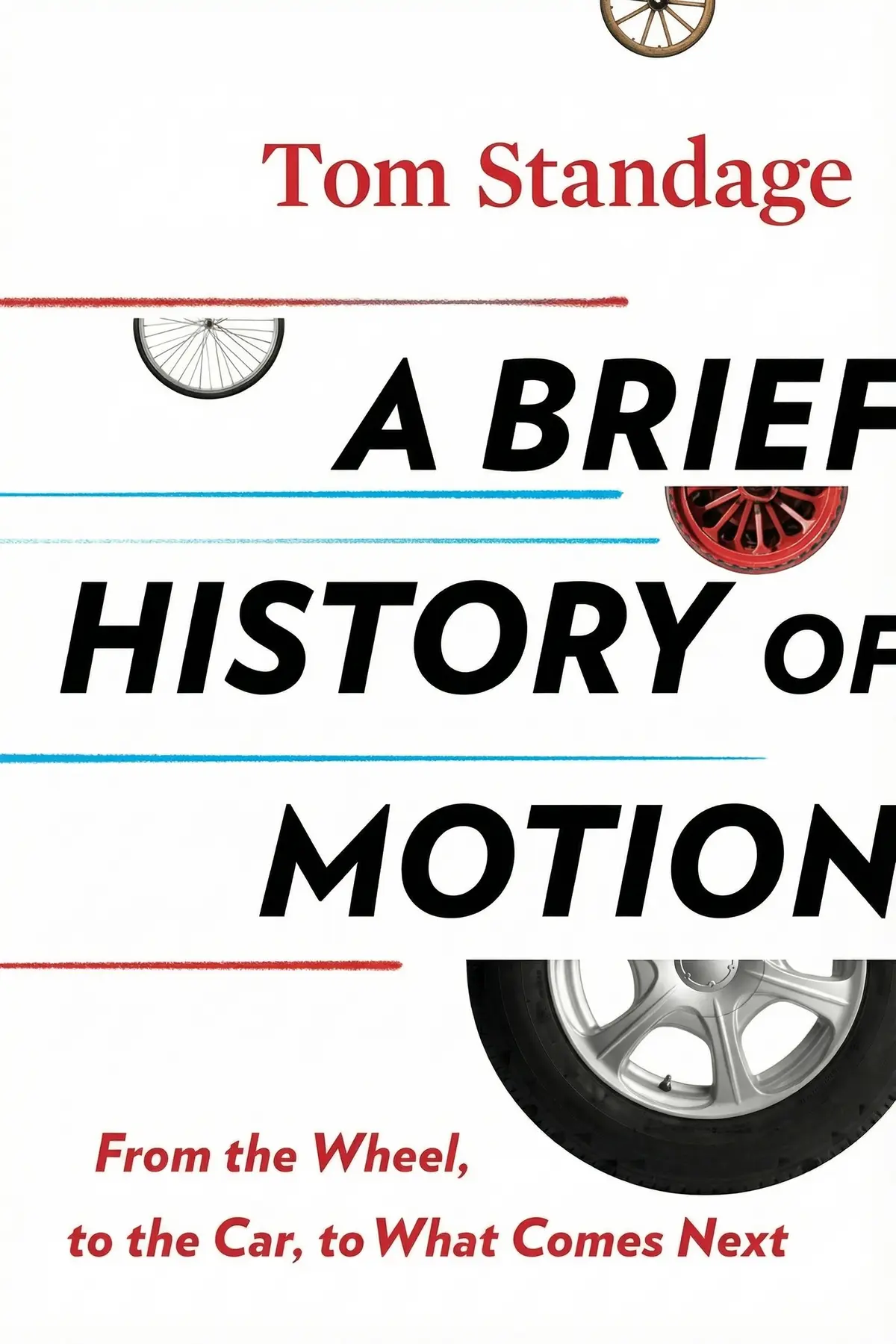
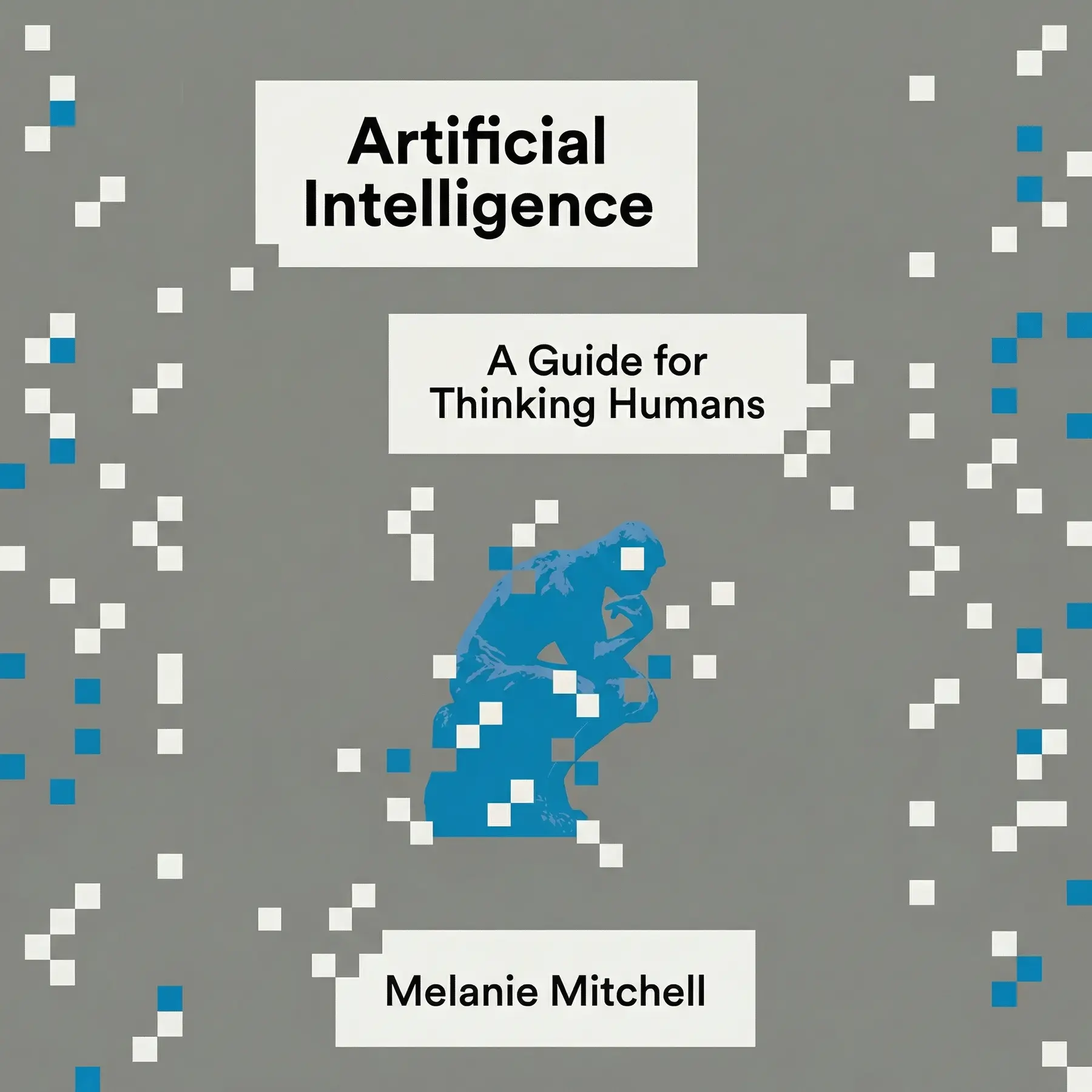
Artificial Intelligence: A Guide for Thinking Humans
A clear-eyed investigation into the history, mechanics, and limitations of modern machine intelligence, contrasting the impressive feats of AI with the fundamental differences that separate computer logic from human cognition.
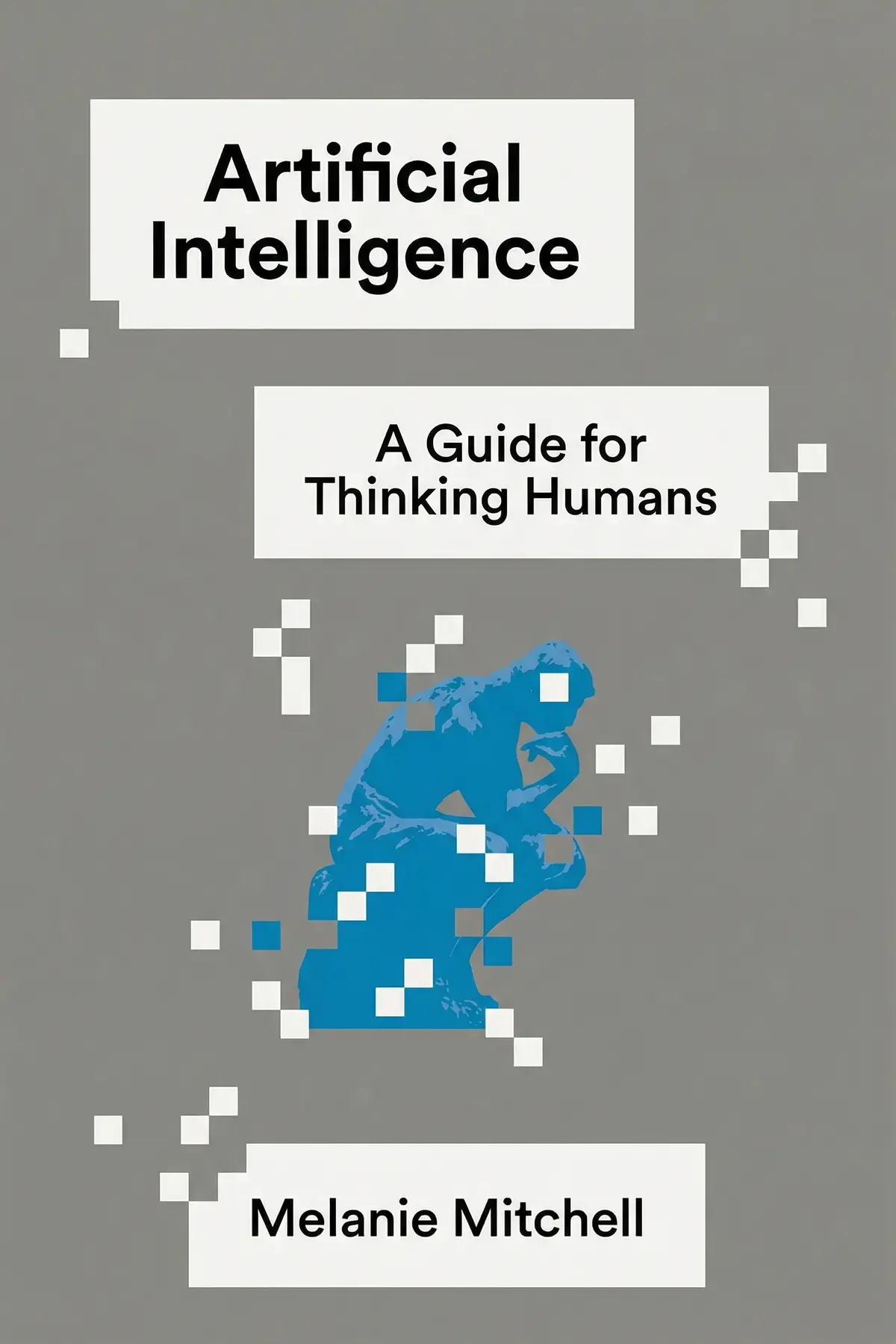
Table of Content
1. Introduction
1 min 53 sec
We find ourselves at a remarkable crossroads in human history. Every time you pick up your smartphone, ask a voice assistant for a weather update, or benefit from a more accurate medical diagnosis, you are interacting with a force that was once the stuff of pure science fiction. This force is artificial intelligence, or AI. It is no longer a niche academic interest; it has become an invisible layer woven into the very fabric of our daily lives. From the cars we drive to the ways we consume information, AI is reshaping the landscape of modern existence.
But as these technologies become more integrated, they also become more mysterious. We find ourselves asking profound questions about the nature of thought itself. If a computer can write a poem, diagnose a disease, or drive a car, does that mean it is actually thinking? Is it truly intelligent in the same way we are, or is something else entirely happening under the hood? Melanie Mitchell’s work, Artificial Intelligence: A Guide for Thinking Humans, seeks to answer these questions by stripping away the jargon and the hype.
This isn’t just a technical manual. It is a deep reflection on what it means to be human in an age of clever machines. Throughout this summary, we will explore the history of this field, the surprising ways it mirrors and departs from human biology, and the ethical dilemmas that come when we delegate our decisions to algorithms. We will look at why AI is simultaneously more powerful than we ever imagined and more fragile than it appears. The throughline here is a search for clarity: understanding what AI is, what it isn’t, and how we can steer its future to enhance our lives without losing what makes us unique. Let’s begin this journey by looking at where it all started.
2. The Decades of Cycles in Machine Intelligence
3 min 00 sec
Discover how the field of machine learning evolved through periods of massive optimism and sudden setbacks, from early brain-inspired models to the modern deep learning revolution.
3. The Mechanics of Large Language Models
2 min 19 sec
Step behind the curtain of modern chatbots to understand how they use mathematical patterns and massive datasets to generate human-like text.
4. The Paradox of Intelligence vs. Performance
2 min 27 sec
Explore why AI can pass the bar exam but still fails at simple tasks that a one-year-old child could easily master.
5. Navigating the Rewards and Risks of a Digital World
2 min 33 sec
Examine the dual-edged nature of AI, from its life-saving potential in medicine to the dangerous spread of bias and disinformation.
6. The Threat of Machine Stupidity
2 min 23 sec
Shift your perspective on AI safety by realizing that the greatest danger isn’t a super-intelligent takeover, but rather the failure of systems that aren’t smart enough.
7. Conclusion
1 min 40 sec
As we conclude this exploration into Artificial Intelligence by Melanie Mitchell, we are left with a more nuanced view of the machines that increasingly surround us. We have moved from the early dreams of the 1950s to the staggering, data-driven power of the modern era. We have seen that while AI can perform feats that seem like magic—from solving complex medical puzzles to generating beautiful prose—it remains fundamentally different from human intelligence. It lacks the common sense, the adaptability, and the deep contextual understanding that even a small child possesses.
The throughline of our journey has been the realization that AI is a mirror of us. It reflects our knowledge and our creativity, but it also reflects our biases and our flaws. The rewards of this technology are vast, promising a world of greater efficiency and scientific breakthrough. Yet, the risks are just as significant, demanding that we address issues of bias, disinformation, and the inherent brittleness of these systems.
The most important takeaway is that the future of AI is not a predetermined path. It is a story still being written. By understanding the true nature of machine intelligence—moving past the hype to see both its power and its limitations—we are better equipped to guide its development. We must remain the ‘thinking humans’ in the equation, ensuring that as our tools become more capable, they continue to serve the goals of human flourishing and societal well-being. Thank you for joining us on this deep dive into the mind of the machine.
About this book
What is this book about?
This exploration provides a comprehensive look at the evolution and current state of machine learning. It moves past the hype to examine how AI really works, from its early conceptual roots in the 1950s to the massive neural networks that define today’s digital landscape. The promise of this book is to give readers a clear-eyed understanding of the gap between human cognition and computer algorithms. By looking at the successes and the surprising failures of AI, the text explores whether we are moving toward a world of super-intelligent entities or if we are simply dealing with incredibly powerful, yet fundamentally narrow, tools. It investigates the ethical crossroads we face, touching on bias, the future of work, and the nature of creativity. Ultimately, it serves as a guide for anyone trying to navigate a world where technology is increasingly capable of mimicking human thought processes. It offers a balanced perspective on what machines can truly achieve, where they still fall short, and how we must manage their integration into our society.
Book Information
About the Author
Melanie Mitchell
Melanie Mitchell serves as a Professor at the Santa Fe Institute. She has established herself as a significant voice in the intersecting worlds of cognitive science, complex systems, and artificial intelligence. Her academic work focuses heavily on how machines might one day achieve conceptual abstraction and the ability to make analogies. Beyond her research, she is known for her writing, including her earlier work titled Complexity: A Guided Tour.
Ratings & Reviews
Ratings at a glance
What people think
Listeners find this book offers an extensive yet accessible survey of intricate AI themes. They value the way it provides a deep dive into the technology while clarifying the technical processes that make artificial intelligence function. The writing is frequently commended for its clarity, with one listener mentioning that it demystifies the industry hype using everyday language. Listeners also admire the quality of the prose, with one describing it as beautifully composed for both beginners and professionals. Finally, the substance of the work is highly regarded, as one review highlights how it maintains a very balanced perspective on the topic.
Top reviews
Gor
Ever wonder why your "smart" assistant still can’t follow a basic conversation? Melanie Mitchell breaks down that barrier between recognition and actual understanding in a way that feels both intellectual and deeply accessible. I was particularly struck by the discussion on "suitcase words"—those terms like "intelligence" or "thinking" that carry so much human baggage they confuse our perception of what machines are actually doing. The book is thick and looks like a dry textbook, but the prose is surprisingly light. She handles complex topics like ImageNet and the morality of algorithmic loan applications with a balanced hand. No Sarah Connor-style hysteria here! Just a clear, calm look at where we are and how far we have to go. It’s a mandatory read for anyone who wants to stop being fooled by AI influencers and start understanding the actual science.
Show moreElla
Look, I’m no computer scientist, but Mitchell makes me feel like I could hold my own in a conversation about neural networks. She has this incredible gift for taking the "magic" out of the technology and replacing it with clear, conceptual logic. I loved the anecdote about her getting lost in the Google Maps building—it humanized the whole experience right from the start. The way she explains how AI lacks the unwritten knowledge (Cyc) that humans take for granted was a real "aha" moment for me. It’s rare to find a science book that you actually want to pick up during your commute. She avoids the usual eye-glazing equations while still giving you the "nuts and bolts" of the discipline. This should be required reading for every journalist and politician trying to regulate this space. An absolute tour de force.
Show morePot
As someone who works in data, I appreciated how Mitchell didn't shy away from the messy reality of labeled data sets and the labor required to make AI "smart." She gives a fantastic overview of the status of speech recognition and why it still fails at basic tasks like distinguishing background noise. The book is incredibly thorough. I loved the deep dive into EMI’s music algorithms and the questions of creativity. It's rare to see a practitioner who can write this beautifully for both laypeople and experts alike. She presents the history of the field—from Perceptrons to deep learning—without making it feel like a dry lecture. Personally, I think her perspective on how we trust human cognitive perception but distrust AI is one of the most intriguing parts of the book. Highly recommended for anyone in the tech space.
Show moreSangduan
After hearing all the doom and gloom about AI taking over the world, this was the reality check I needed. Mitchell finds a middle way between the enthusiasts and those who are terrified of a robotic uprising. She manages to explain the history of AI and the way current systems like AlphaGo work without any of the usual hyperbole. I was fascinated by the section on Cyc and the "unwritten knowledge" that makes human conversation so complex. The book is a bit fat, but it's rare that I keep wanting to go back to a science book when I'm not "scheduled" to be reading it. She makes the magic behind making AI work comprehensible and grounded. Whether you're a skeptic or a believer, this book provides the balanced view we desperately need right now.
Show moreHana
This book is probably the most sober take on machine learning I've encountered in years. Mitchell manages to strip away the glossy marketing layers that companies like IBM or Google often use to sell their products as "magic." Frankly, it’s refreshing to see a practitioner admit that AI isn't nearly as close to human-level understanding as the headlines suggest. The explanation of how self-driving cars can be fooled by a simple sticker on a stop sign was genuinely sobering. However, the 2019 publication date does mean some of the cutting-edge discussions feel a bit like ancient history now. We've moved so fast in just five years! If you want to understand the foundational "hype" and the actual mechanics like backpropagation without getting lost in a sea of equations, this is the gold standard. It’s beautifully written for both laypeople and those with a bit of a tech background.
Show morePop
The chapter on adversarial attacks really changed how I think about the safety of our digital future. It is terrifying that an AI can see a speed limit sign as a stop sign just because of a few invisible pixels or a strategically placed sticker. Mitchell is a professor who clearly knows her stuff, but she writes with the clarity of a seasoned journalist. I appreciated the balanced view she took on the moral questions, like how AI handles prison sentences or credit scores. My only gripe is that the technical explanation of Word2Vec and vector spaces felt a bit rushed compared to the earlier chapters. It’s a minor flaw in an otherwise excellent guide. She manages to be realistic without being a Luddite, which is a very difficult needle to thread in this industry.
Show moreFang
Gotta say, the way this book dismantles the "I-am-become-God" euphoria prevalent in Silicon Valley is incredibly refreshing. Mitchell isn't here to sell you a utopia; she's here to show you the gears and wires. I found her discussion of Douglas Hofstadter and the terror of making humanity feel "mundane" to be particularly poignant. The book provides a thorough high-level overview of complex topics like WordNet and the limitations of Siri. While some of the specific status updates on technology are a bit dated, the underlying philosophy about what makes human intelligence unique is timeless. The Pelican-style cover might look intimidating, but don't let that fool you. This is an engaging, readable, and deeply necessary reality check for the age of automation. A very solid four-star read for the curious mind.
Show moreOak
Not what I expected from a book with such a dry, academic-looking blue cover! Instead of a boring textbook, I found a lively and engaging exploration of what it actually means to "think." Mitchell is excellent at breaking through the hype in laymen's terms, especially when she discusses why self-driving cars aren't ready for prime time. Her explanation of how AI systems lack a "concept" of what they see—recognizing an image without understanding it—was a huge eye-opener for me. To be fair, I did find the parts about Word2Vec a bit difficult to follow on the first pass. But overall, the book offers a very thoughtful consideration of the subject. It’s a great way to understand the "how" behind the magic without needing a PhD in computer science.
Show moreZanya
Finally got around to reading Mitchell's guide, and while it's a solid primer on the history of neural networks, the age is starting to show. In the world of AI, 2019 might as well be the 1950s. The sections on speech recognition and basic image captioning feel a bit elementary compared to what we're seeing today. To be fair, her breakdown of how researchers assign "blame" to weights via backpropagation was helpful, even if it took me three tries to wrap my head around it. The book is quite long and gets bogged down in historical anecdotes that don't always feel relevant to the current "Generative AI" explosion. It’s an ok-ish read if you have zero inkling of the topic, but seasoned techies might find themselves skimming. Useful as a history lesson, but don't look here for a forecast of the future.
Show moreDek
Truth is, I found the middle sections on word vectors and backpropagation a bit like wading through thick mud. I appreciate Mitchell trying to explain the "nuts and bolts," but as a total layman, I felt a bit lost in the weights and layers. The book is definitely approachable in its coverage, but it still requires a fair bit of mental heavy lifting. I also felt that the "future" sections haven't aged particularly well given how fast GPT and other models have changed the landscape. It’s an interesting read for the historical context, but I was hoping for something a bit more punchy and less academic in tone. If you're comfortable with basic math and logic, you'll likely get more out of this than I did. It’s a decent primer, just a bit dry in the middle.
Show moreReaders also enjoyed
AUDIO SUMMARY AVAILABLE
Listen to Artificial Intelligence in 15 minutes
Get the key ideas from Artificial Intelligence by Melanie Mitchell, plus 5,000+ more titles in English and Thai.
- 5,000+ titles
- Listen as much as you want
- 7-day free trial
- Cancel anytime







