
22 min 30 sec
Austerity: When It Works and When It Doesn't
Austerity explores the impact of fiscal consolidation, revealing why cutting government spending is often more effective than raising taxes for stabilizing debt and fostering economic growth in developed nations.
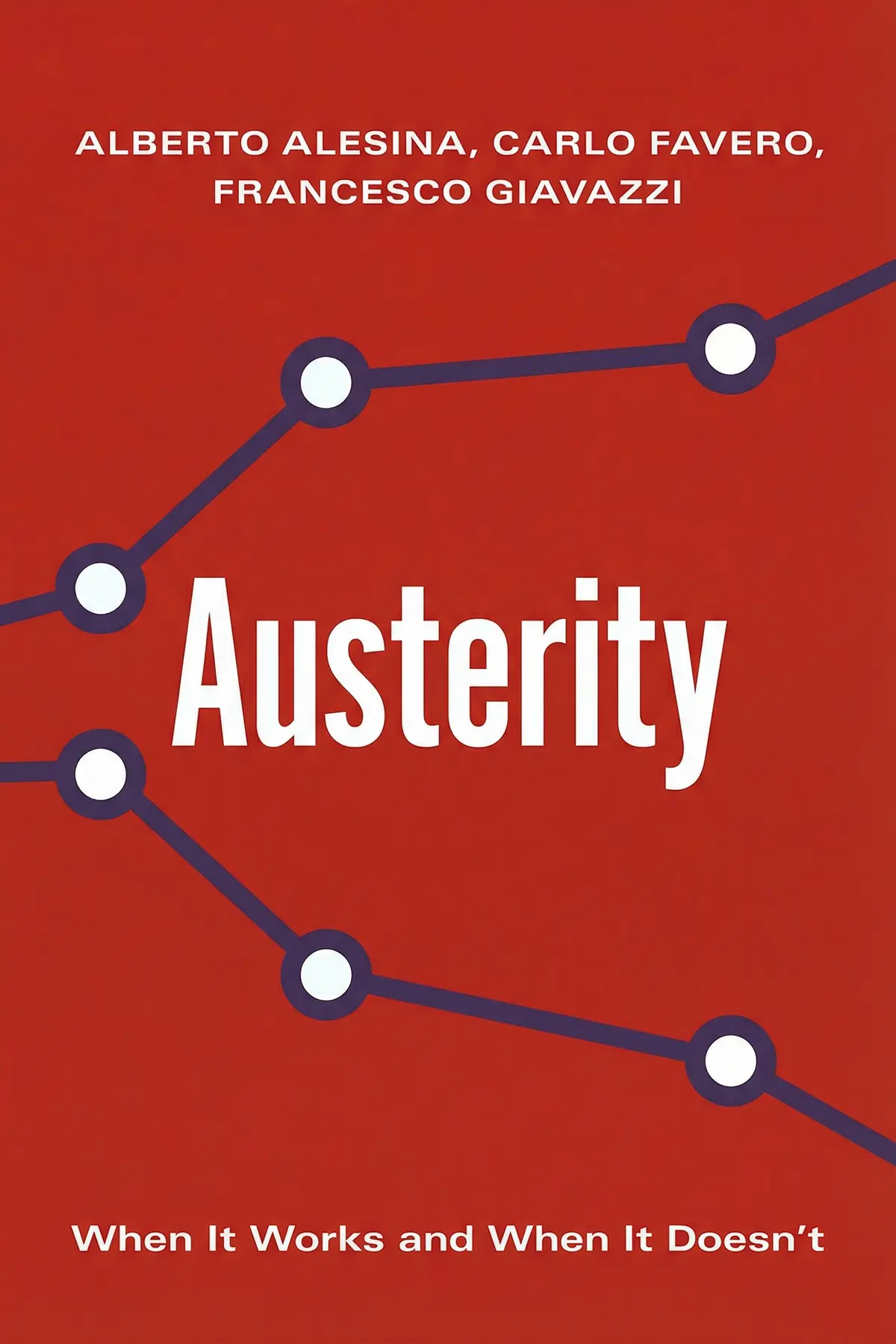
Table of Content
1. Introduction
2 min 00 sec
Whenever the economy takes a tumble or government debt reaches eye-watering heights, one word starts dominating the headlines: austerity. For many, this word conjures up images of protests, crumbling infrastructure, and a general sense of decline. It is often treated as a necessary evil at best and a catastrophic mistake at worst. But is our collective understanding of austerity based on reality or just political rhetoric? In their comprehensive study, economists Alberto Alesina, Carlo Favero, and Francesco Giavazzi set out to answer this question by looking past the slogans and diving deep into the actual numbers.
They analyzed decades of economic history across sixteen advanced economies to see what happens when a government decides to tighten its belt. Their goal was to find a way to reduce a deficit without destroying the country’s growth prospects. What they discovered is that the ‘how’ of austerity matters far more than the ‘how much.’ There isn’t just one type of austerity; there are two distinct paths a government can take, and they lead to very different destinations. One path relies on taking more money from citizens through taxes, while the other focuses on the government spending less of its own money.
Throughout this summary, we are going to trace the throughline of their research. We will see why some austerity measures actually trigger economic booms, while others trap nations in years of stagnation. We will also explore the psychological side of economics—how the expectations of regular people and the confidence of international investors can make or break a fiscal plan. By the end, you’ll see that the debate over austerity isn’t just about spreadsheets; it’s about the fundamental incentives that drive our modern world. Here is the data-driven truth about when austerity works and when it doesn’t.
2. The Nature of Fiscal Consolidation
2 min 37 sec
Explore why governments find themselves in the position of needing austerity and the two primary levers they can pull to balance their budgets.
3. The Psychological Dimension of Debt Reduction
2 min 50 sec
Understand why traditional economic models often miss the mark by ignoring how people’s expectations about the future change their behavior today.
4. A New Way to Measure Policy Success
2 min 20 sec
Discover the ‘narrative approach’ that researchers used to separate the actual impact of austerity from the noise of general economic trends.
5. When Cutting Costs Boosts the Economy
2 min 52 sec
Learn about the phenomenon of ‘expansionary austerity’ and how reducing government spending can actually lead to growth.
6. The Dangers of Tax-Heavy Austerity
2 min 44 sec
Examine the evidence showing that trying to fix a deficit through tax hikes almost always leads to a deeper, more painful recession.
7. Modern Lessons from the Post-2008 World
2 min 43 sec
Contrast the austerity experiences of the United Kingdom and Greece to see how the mix of policies determines the final outcome.
8. The Myth of Electoral Suicide
2 min 52 sec
Challenge the common belief that austerity is a guaranteed way for a politician to lose their job.
9. Conclusion
1 min 32 sec
The debate over austerity has long been polarized between those who see it as a moral necessity and those who see it as economic cruelty. But as we have seen through the research of Alesina, Favero, and Giavazzi, the truth is found in the data, not the ideology. The most vital lesson is that the ‘how’ of austerity is the single most important factor. If a government attempts to fix its finances by raising taxes, it is almost certainly heading for a recession. Tax hikes crush incentives, kill investment, and signal a lack of confidence in the future.
However, the expenditure-based approach offers a genuine alternative. By focusing on cutting government spending, a nation can often trigger a positive psychological shift. This ‘expansionary’ effect can stabilize the debt while allowing the private sector to lead a recovery. It is a path that requires more political courage and more careful planning, but the rewards are a more resilient economy and a more stable fiscal foundation. The throughline is clear: reducing a deficit doesn’t have to mean ending growth. By choosing the right tools and fostering a climate of confidence, a country can tighten its belt today to ensure a much wealthier and more stable tomorrow. The next time you hear a debate about the national debt, remember that the best way forward isn’t to ask for more from the taxpayers, but to expect more efficiency from the government.
About this book
What is this book about?
When a nation faces a massive deficit, the standard response is austerity. But not all austerity measures are created equal. This book examines decades of economic data from sixteen developed countries to determine which policies actually work and which ones cause more harm than good. The authors challenge the traditional view that all budget cuts are inherently damaging. By distinguishing between tax-based and expenditure-based policies, they provide a roadmap for how governments can reduce debt without triggering a deep recession. The promise of this work is a data-driven understanding of how expectations, investor confidence, and the right policy mix can lead to a stable economic future.
Book Information
About the Author
Alberto Alesina
Alberto Alesina was a renowned economist who served as the Nathaniel Ropes Professor of Political Economy at Harvard University, specializing in the study of austerity. He is joined by Carlo Favero and Francesco Giavazzi, both of whom are esteemed academics based at Bocconi University in Milan.
Ratings & Reviews
Ratings at a glance
What people think
Listeners value the thorough, evidence-based analysis of fiscal strategy, although viewpoints differ concerning the authors' core beliefs about the positive aspects of austerity measures. Numerous listeners consider the evidence-driven findings persuasive, highlighting how the authors utilize past records to show that budget reductions focused on spending typically outperform tax-centric strategies. Furthermore, they appreciate the presence of vast data collections, and one listener observes that the work offers "solid insights" for evaluating reactions to crises. They also remark that despite the work being a heavy scholarly investigation, it provides an exhaustive exploration of fiscal issues. Finally, they describe it as "the best and most in-depth book" on the topic.
Top reviews
Sarawut
Ever wonder why some countries bounce back from a crisis while others stay stagnant for a decade? This book provides the most thorough and meticulous treatment of that question I have ever encountered in the literature. Alesina and his colleagues have done the heavy lifting by analyzing decades of fiscal policy across various nations to see what actually works. Their finding that expenditure-based austerity is far less damaging to growth than tax-based plans is a total game-changer for political economy. Look, it’s not exactly a light beach read, but the insights regarding business confidence and private investment are essential for anyone interested in macroeconomics. It’s the kind of work that forces you to rethink everything you thought you knew about the Great Recession and the role of government spending.
Show moreMoon
Not what I expected from a book on macroeconomics, as it manages to be both incredibly rigorous and deeply relevant to today's political landscape. Alesina and his team take on some of the biggest names in the field, like Blanchard and Krugman, and they do it with cold, hard facts. The way they debunk the idea that austerity is always a 'death spiral' by showing successful examples of expenditure cuts is absolutely masterful. To be fair, you need a decent grasp of economic principles to follow some of the more technical arguments about multipliers and zero bounds. However, the core message is clear: if you want to fix a deficit without killing the economy, you have to look at the spending side. This is easily the most important book on fiscal policy written in the last decade, and it deserves a spot on every policymaker’s shelf.
Show moreUbolwan
Picked this up after seeing it cited in several economic journals, and it lived up to the hype as a rigorous piece of scholarship. The authors make a compelling case that not all austerity is created equal, drawing a sharp line between spending cuts and tax hikes. To be fair, it’s quite a dense read that might alienate a casual reader looking for a quick summary of fiscal policy. However, the sheer volume of historical data from the US and EU makes their conclusions about expenditure-based plans hard to ignore. They really dive into how private investment responds to these different strategies, showing that markets value spending discipline more than revenue grabs. While the prose is dry, the depth of the empirical research is truly unmatched in this field.
Show moreMay
The chapter on the UK’s experience during the Cameron era was particularly enlightening and challenged a lot of my preconceived notions about austerity. For years, we’ve heard that the IMF was right to criticize these moves, but the authors show that the predicted recession never actually materialized. Not gonna lie, I was skeptical of the idea that cutting spending could actually lead to growth, but the evidence presented here is quite persuasive. They argue that when governments show fiscal restraint, it signals to businesses that future taxes won’t skyrocket, which encourages long-term investment. My only real gripe is that the writing style is very academic and lacks the punchy, accessible tone of authors like Paul Krugman. Still, if you want the real data behind the headlines, this is the book you need to read.
Show moreTod
Finally got around to finishing this massive study, and the amount of labor that went into compiling these fiscal episodes is staggering. The authors don't just throw out theories; they provide the actual databases for readers to scrutinize, which adds a layer of transparency missing from most economic texts. Personally, I found the distinction between tax-based and expenditure-based plans to be the most useful part of their analysis for current policy debates. It’s clear that tax hikes have a much more immediate and lasting negative impact on a country's GDP than most politicians want to admit. While the theory of rational expectations they use to explain consumer behavior felt a bit shaky to me, the empirical results are hard to argue with. It's a dense, challenging book that demands your full attention but rewards you with real, data-backed insights.
Show moreWeera
After hearing so much buzz about this book in the context of recent global inflation, I decided to see if the arguments still held up. The authors provide a very thorough treatment of how governments should respond to debt, but I wonder how much the post-COVID landscape changes their calculus. For instance, the rise of Modern Monetary Theory has shifted the conversation in ways this 2019 book couldn't have fully anticipated. The truth is that while the historical data is interesting, the world feels very different now than it did when these case studies were being compiled. I still think the core finding—that spending cuts are less harmful than tax increases—is probably correct, but the book feels a bit like a relic of a previous era. It’s worth reading for the methodology alone.
Show moreOrathai
Reading this book in the wake of recent political shifts in Argentina really highlights how relevant Alesina's research has become. The book is definitely not for the average reader, as it’s essentially a 300-page research paper, but the clarity of its findings is refreshing. They show that when you cut the fat from government budgets, the private sector eventually steps in to fill the gap through increased investment. I wish the authors had spent a little more time on the social implications and the human reality of these cuts, but as a purely economic study, it’s top-tier. It definitely helped me understand why certain 'tough' policies are necessary for long-term stability even when they are unpopular. If you want a data-driven look at fiscal responsibility, this is it.
Show morePreeda
As someone who spends a lot of time looking at fiscal trends, I appreciated the data-driven approach, but the book is a bit of a slog. It functions more like a series of expanded journal articles than a cohesive narrative, which makes it difficult to get through in one sitting. The truth is that while the empirical work is top-notch, the authors sometimes gloss over the political realities that make spending cuts so difficult to implement. I found the sections on the UK’s post-2010 recovery interesting, though I wish they had addressed the long-term impacts on public services more directly. It’s a solid resource for researchers, but the average reader might find the heavy reliance on equations and technical jargon to be a bit much. A valuable but very dry contribution to the field.
Show morePing
This book attempts to revive the 'expansionary austerity' idea, but I remain somewhat skeptical of the authors' interpretation of certain historical examples. They lean heavily on the idea that cutting government programs magically boosts business confidence, a theory that Paul Krugman has famously ridiculed. In my experience, these mathematical models often fail to account for the unique cultural and political contexts that allow certain countries to survive fiscal contraction. The datasets are massive and the academic rigor is undeniable, yet the results feel like they lean into a specific ideological camp. If you are looking for a balanced view of fiscal policy, this is a dense but necessary read, even if it feels a bit one-sided. I appreciated the depth of the research, but the 'confidence fairy' argument still feels like a reach for me personally.
Show moreSamira
Wow, I really wanted to like this, but I found the underlying philosophy to be incredibly frustrating and poorly defended. The authors treat the inherent goodness of reducing deficits as a self-evident truth without ever addressing the human cost of these policies. Frankly, it feels like an attempt to dress up a political agenda in the clinical language of data and regressions. They talk about the 'confidence fairy' as if it’s an absolute law of nature, ignoring how these cuts decimate social safety nets for the most vulnerable. While the effort put into the datasets is impressive, the conclusions feel like they were reached before the research even began. It’s an academic echo chamber that fails to engage with the real-world misery that often follows these 'expansionary' measures.
Show moreReaders also enjoyed
Abolish Rent: How Tenants Can End the Housing Crisis
Tracy Rosenthal
Abortion: Our Bodies, Their Lies, and the Truths We Use to
Jessica Valenti

21 Lessons for the 21st Century
Yuval Noah Harari

Age of Anger: A History of the Present
Pankaj Mishra

A Different Kind of Power: A Memoir
Jacinda Ardern
Age of Propaganda: The Everyday Use and Abuse of Persuasion
Anthony Pratkanis
1929: Inside the Greatest Crash in Wall Street History--and How It
Andrew Ross Sorkin
AUDIO SUMMARY AVAILABLE
Listen to Austerity in 15 minutes
Get the key ideas from Austerity by Alberto Alesina, plus 5,000+ more titles in English and Thai.
- 5,000+ titles
- Listen as much as you want
- 7-day free trial
- Cancel anytime







