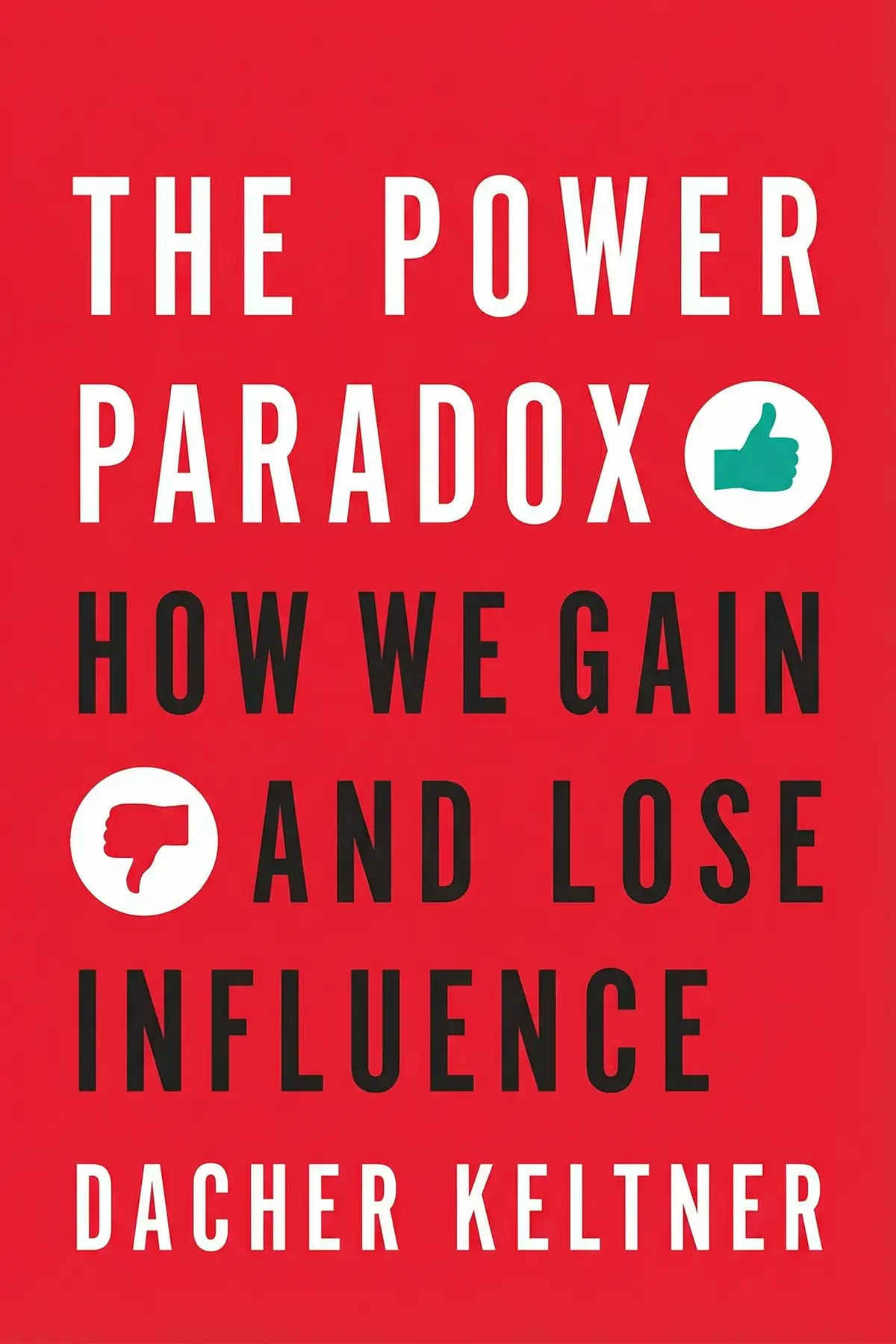
The Power Paradox: How We Gain and Lose Influence
Dacher Keltner
Explore the revolutionary science behind wonder. This summary reveals how experiencing awe can fundamentally transform your mental health, boost your creativity, and deepen your connection to the world and the people around you.

1 min 28 sec
Think back to the last time you stood before something so vast or so beautiful that it left you speechless. Maybe it was the rhythmic crashing of ocean waves against a rocky shore, the intricate patterns of a cathedral ceiling, or the quiet majesty of a forest at dawn. In those moments, your breath probably hitched, your heart rate might have slowed, and for a few seconds, your personal worries seemed to vanish. This is the experience of awe—an emotion that scientists are beginning to realize is far more than just a pleasant sensation. It is a fundamental part of what makes us human and a powerful catalyst for personal transformation.
When we encounter something that challenges our understanding of the world or dwarfs our sense of self, we undergo a profound mental and physical shift. Dacher Keltner’s research suggests that this isn’t just about admiring scenery; it’s about a necessary recalibration of our place in the universe. By stepping outside of our narrow, individual concerns, we open ourselves up to a version of life that is more holistic, connected, and meaningful. In the following sections, we will explore the new science behind this ‘everyday wonder.’ We’ll look at how it heals our bodies, expands our minds, and even bridges the gaps between us and those who seem different from us. By the end, you’ll see that awe isn’t a rare luxury—it’s a resource you can tap into every single day to improve your well-being and find a deeper sense of purpose.
1 min 57 sec
Discover why wonder is more than a feeling—it is a biological necessity that can physically heal your body and calm your nervous system.
1 min 54 sec
Uncover how the feeling of being ‘positively small’ can actually widen your gates of perception and spark your most creative ideas.
1 min 56 sec
Learn how the shared experience of wonder can break down deep-seated prejudices and foster a more compassionate, connected society.
1 min 57 sec
Explore why wonder is the ultimate antidote to the monotony of daily life, grounding you in the beauty of the here and now.
1 min 53 sec
Discover practical ways to find awe in your immediate surroundings, from the architecture of your neighborhood to the rhythm of your favorite song.
1 min 21 sec
In a world that often demands our constant attention and pushes us toward individual achievement, awe offers a much-needed path back to our shared humanity. As we’ve explored, this emotion is far more than a simple ‘nice to have.’ It is a biological necessity that helps regulate our bodies, a cognitive spark that ignites our creativity, and a social glue that binds us to one another. By shrinking our egos and expanding our perspective, awe allows us to see the grand adventure of life that exists beyond our daily to-do lists.
As you move forward, carry this understanding with you. You are never too young, too old, or too busy to be inspired. The next time you feel a sense of wonder, don’t just brush it off as a fleeting moment. Stop, breathe it in, and let it settle. Whether you find it in the quiet dignity of a person’s kindness, the vastness of nature, or the rhythm of a song, savor that feeling. It is your body and mind’s way of reminding you that you are part of something magnificent. By inviting more awe into your life, you aren’t just improving your own well-being—you are becoming a more empathetic, creative, and present version of yourself. There is a world of wonder waiting for you; all you have to do is look.
Have you ever wondered why looking at a star-filled sky or listening to a moving piece of music makes you feel so profoundly different? In this exploration of human emotion, we dive into the science of wonder and its life-changing effects. The book suggests that awe isn't just a fleeting feeling but a vital tool for human flourishing. It examines how this unique emotion helps us transcend our individual egos to see ourselves as part of a much larger, interconnected system. By following the research, we learn how cultivating more 'awe moments' can lead to tangible benefits, including reduced physical inflammation, lower stress levels, and a significant boost in cognitive flexibility. From the majesty of nature to the 'moral beauty' of human kindness, the narrative provides a roadmap for finding wonder in the everyday. It promises to show you how to shift your perspective from the mundane to the miraculous, ultimately helping you lead a more purposeful and empathetic life.
Dacher Keltner is a distinguished professor of psychology at the University of California, Berkeley. A leading expert in the science of human emotion, his research primarily investigates social hierarchies, power dynamics, and the biological roots of compassion. Keltner is the author of several acclaimed books, including Born to be Good and The Power Paradox, which further explore how our emotions and social structures shape the human experience.
Dacher Keltner

Listeners find this work inspiring, with one listener mentioning how it aids in understanding emotions, and they appreciate its engaging stories and scientific look at the feeling of awe. The prose receives favorable feedback, with one listener calling it brilliantly written. They value the book's mystery and beauty, with one review noting its investigation into different facets of awe. The pacing feels deeply human, with one listener highlighting its compassionate tone. The author's writing style draws mixed reactions from listeners.
Wow, what a refreshing perspective on the human experience that goes beyond the usual self-help tropes about chasing happiness. Keltner argues that the key to a good life isn’t about individual success, but about dissolving the ego through moments of wonder. I found the 'systems lens' to be the most profound part of the entire narrative, helping me see the world as a web of relations rather than just a collection of separate objects. The chapter on music and visual design resonated deeply, providing a vocabulary for feelings I’ve had my whole life but could never quite name. His tone is remarkably compassionate, and you can tell he genuinely cares about the well-being of his readers. Some might find the language a bit too mystical for a science book, but for me, it perfectly matched the subject matter. It’s a beautiful, brilliant exploration of the mysteries that make life worth living.
Show moreKeltner writes with a compassionate humanity that is often missing from modern psychology texts, making this a standout read for the year. He successfully bridges the gap between hard science and the transcendent beauty of the natural world. I especially loved the sections on 'collective effervescence' and how shared movements, like dance or sports, bond us together. It’s an inspiring call to action to move beyond our own small egos and recognize ourselves as part of a much larger whole. The research into how awe physically changes our bodies—lowering inflammation and enhancing creativity—is absolutely captivating. It’s rare to find a book that feels both academically rigorous and soul-stirringly poetic at the same time. I’ve already started incorporating 'awe walks' into my daily routine, and the difference in my stress levels is noticeable. This is truly a class of its own in the world of psychology literature.
Show moreFinally got around to reading this after seeing it everywhere on 'Best of' lists, and it truly lived up to the hype for me. This isn't just another happiness book; it’s a deep dive into the 'eight wonders' that make our existence meaningful. The way Keltner describes the 'dissolving of the ego' in the presence of something vast really resonated with my own experiences in nature. It’s a beautifully written piece of work that balances the mystery of the unknown with the clarity of psychological research. I found the sections on 'moral beauty' to be particularly moving, reminding me that there is so much goodness in the world if we just look for it. The pacing reflects a certain humanity and patience that is quite rare in the fast-paced world of non-fiction publishing. It’s a mandatory read for anyone looking to reconnect with the world and find joy in the everyday.
Show moreAfter hearing Keltner on a few podcasts, I decided to dive into the full text to see if the 'science of awe' held up over several hundred pages. The framework he provides, especially the 'eight wonders of life,' offers a really useful structure for recognizing those moments that take our breath away. I was particularly struck by the concept of moral beauty—the idea that seeing someone else act with extreme kindness can trigger the same neurological response as standing before a mountain range. Truth be told, the writing does get a bit flowery at times, and the author leans heavily on his own experiences. However, the underlying message about our 'collective nature' is incredibly powerful in our current era of isolation. It serves as a gentle reminder to look up from our phones and witness the vastness around us. It's not a perfect scientific manual, but it’s a deeply human exploration of why we feel what we feel.
Show moreEver wonder why a sunset or a piece of music can make you feel so small yet so connected? Keltner tackles these big questions with a mix of scientific curiosity and personal vulnerability that I found quite engaging. The book is fast-paced and manages to make complex psychological theories accessible to a general audience. I particularly enjoyed the exploration of 'epiphanies' and how big ideas can shift our entire worldview in an instant. While I agree with some other reviewers that it could have delivered its message in fewer pages, the stories are mostly informative and help ground the abstract concepts. My only real gripe is the occasionally overwrought language, which can feel a bit much if you’re reading for pure data. Still, the takeaway about the 'systems-view' of life is worth the price of admission. It’s a solid, thought-provoking read that will definitely change how you perceive your daily surroundings.
Show morePicked this up to help me better understand my own emotional landscape, and I wasn't disappointed by the core insights. The idea that awe is an evolutionary adaptation that helps us cooperate is a fascinating lens through which to view human history. I listened to the Audible version, and while the narrator is great, the word 'awe' is repeated so often it starts to sound like a drone. That said, the content itself is captivating, especially the chapters on nature and spirituality. Keltner does a great job of showing how wonder is available to everyone, regardless of their socioeconomic status or background. It’s a very inclusive and hopeful book that highlights the best parts of our species. It loses a star for being a bit repetitive in the middle, but the overall impact is still very positive. I’d recommend it to anyone feeling a bit burned out by the negativity of the modern world.
Show moreThe core premise here is absolutely solid, but the pacing felt a bit uneven for a book that aims to be a definitive guide. I appreciated the breakdown of the eight categories, especially the insight that people with less wealth often experience more daily wonder. That paradox is fascinating and deserves even more exploration than it got here. Frankly, the middle section where the author goes into granular detail about specific stories felt a bit self-indulgent and slowed the momentum significantly. It’s almost as if the book couldn't decide if it wanted to be a memoir or a psychological study. While the writing is clearly 'brilliantly written' in parts, it sometimes veers into a smarminess that made me want to push back. I’d recommend it for the framework alone, but don’t be afraid to skim the parts where the anecdotes start to feel redundant.
Show moreTruth is, the ratio of storytelling to hard data felt a bit skewed for my taste in this one. I came for the 'New Science' promised in the title, but I found myself wading through a lot of philosophy and personal vignettes instead. To be fair, the final chapters are much stronger than the beginning, and I’m glad I forced myself to finish it. The discussion on how we encounter life and death provided some much-needed gravity to the more 'saccharine' parts of the book. It’s a bit like a Brene Brown book—if you like that style of emotive, anecdotal science, you’ll probably love this. If you’re looking for peer-reviewed studies and cold hard facts, you might find yourself rolling your eyes at the 'flowery' descriptions of mystical encounters. It’s an okay read, but it lacks the punch I was hoping for given the author’s credentials.
Show moreLook, I really wanted to love this, but the execution felt like a podcast episode stretched into a marathon. While the initial definition of awe as something 'vast that transcends understanding' is brilliant, the book quickly descends into a repetitive loop. By the middle of the second chapter, the word 'awe' starts to lose all meaning because it’s hammered into every single sentence. It’s a bit frustrating when a Harvard professor relies so heavily on personal anecdotes and poetic descriptions rather than providing the rigorous data I was expecting. To be fair, some of the stories about collective effervescence are touching, but they often feel melodramatic and over-designed. If you’ve listened to any of his recent interviews, you’ve basically already consumed the best parts of this book. It’s thin on new insights and thick on verbosity, making it a slog for anyone who prefers science over sentimentality.
Show moreThis book felt like being trapped in a room with a lecturer who loves his own voice way too much. The self-congratulatory tone is pervasive, and it honestly made me question the validity of the entire 'Science of Emotion' business. It’s the kind of writing where every minor observation is treated like a life-altering epiphany discovered by an elite academic. The repetition is staggering; I lost count of how many times the same concepts were recycled under different chapter headings. Not gonna lie, I found the 'moral beauty' section particularly irritating because it felt so performative and melodramatic. There’s a distinct lack of objectivity here, with the author avoiding any real discussion on how awe can be manipulated for negative ends, like in dogmatic religions. If you enjoy being talked down to in flowery prose, you might like this. Otherwise, stick to a ten-minute summary and save your time.
Show more

Richard Wiseman


Steven C. Hayes

Deborah Gruenfeld

Anthony Pratkanis
AUDIO SUMMARY AVAILABLE
Get the key ideas from Awe by Dacher Keltner, plus 5,000+ more titles in English and Thai.