

15 min 18 sec
Barking Up the Wrong Tree: The Surprising Science Behind Why Everything You Know About Success Is (Mostly) Wrong
By Eric Barker
Discover the counterintuitive science of success. This guide challenges common myths about grades, grit, and networking, revealing why rule-breaking and radical self-awareness are often the real keys to reaching the top.
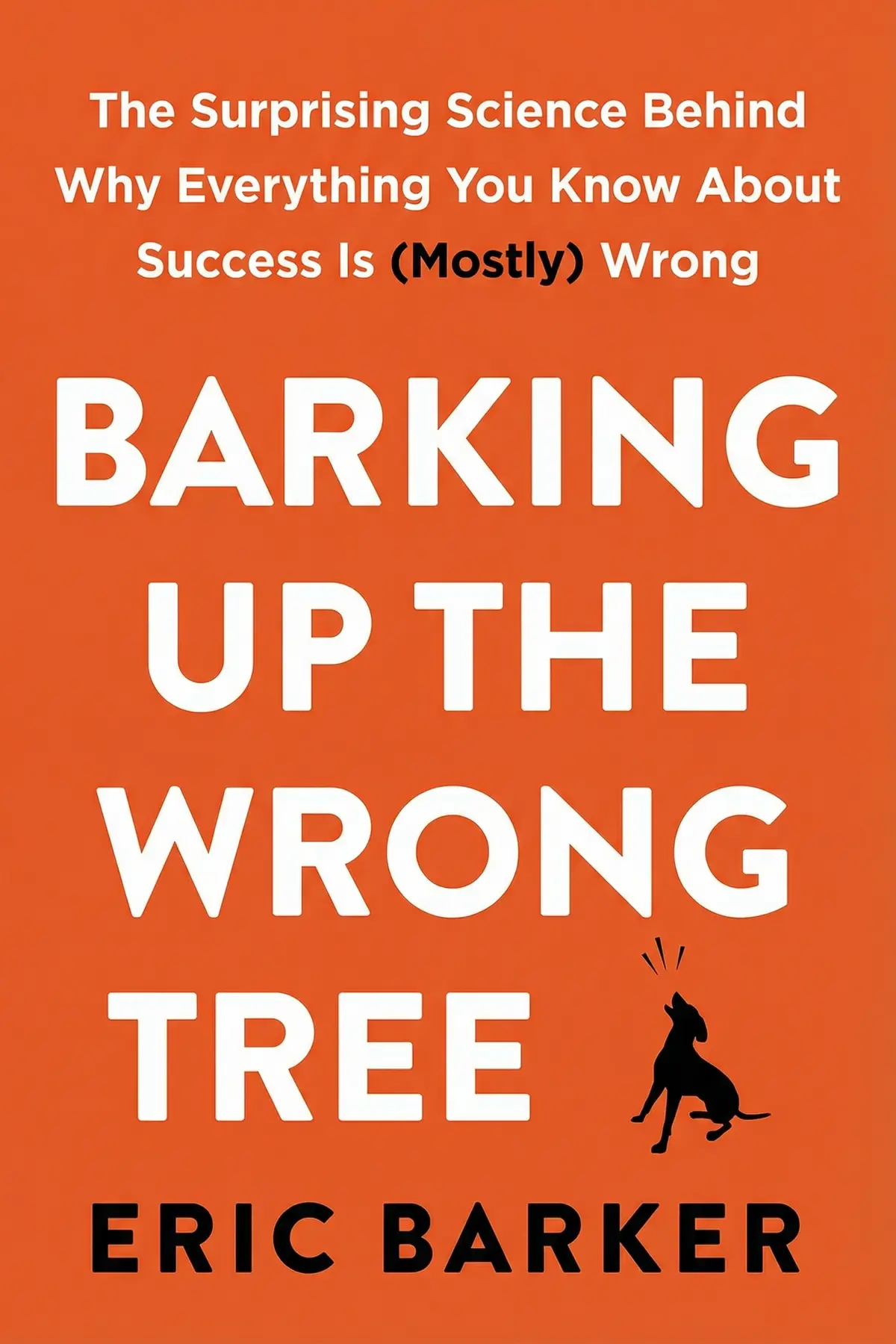
Table of Content
1. Introduction
1 min 26 sec
From the moment we enter the classroom, we are given a roadmap for success that seems straightforward: listen to your teachers, get the best grades possible, and move onto a prestigious university. We are led to believe that this linear path is the only way to ensure a prosperous adult life. But as many of us discover once we leave the academic bubble, the real world rarely operates by a set of clear-cut rules. In fact, many of the traits that help you thrive in a structured environment like high school are the very things that might hold you back in the chaotic, competitive landscape of the professional world.
True success is often less about how well you follow the script and more about how effectively you can deviate from it. It requires a fundamental shift in perspective. Instead of focusing solely on traditional metrics like IQ or grade point averages, we need to look at the power of passion, the necessity of grit, and the complicated reality of social dynamics. Is it better to be a nice person who helps everyone, or a ‘taker’ who looks out for number one? Is confidence always a virtue, or can it become a liability? By looking at the hard data and real-life examples of those who have reached the pinnacle of their fields, we can begin to see a new picture of achievement. This journey isn’t just about working harder; it’s about understanding the specific mechanics of success and learning how to align your natural inclinations with the demands of your goals. Let’s look at why everything you thought you knew about getting ahead might be mostly wrong.
2. The Limitation of Rule-Following
2 min 13 sec
Find out why high school valedictorians rarely change the world and how being an ‘unruly creative’ might actually give you a massive financial advantage.
3. The Dual Nature of Kindness
2 min 10 sec
Explore the counterintuitive research that shows why the kindest people often end up at both the very top and the very bottom of the career ladder.
4. The Power of the Stories We Tell
1 min 51 sec
Learn how internal optimism and a sense of purpose can provide the grit necessary to overcome even the most extreme life challenges.
5. Social Success vs. Deep Expertise
2 min 06 sec
Discover why extroverts tend to make more money through networking, while introverts are statistically more likely to become world-class experts.
6. The High Stakes of Confidence
1 min 59 sec
Uncover the surprising ways confidence can boost your career and the dark psychological traps that open up when power goes to your head.
7. The Necessity of Relentless Effort
1 min 54 sec
Why intelligence has a ‘ceiling’ and how the most successful managers use a 60-hour work week and mentorship to blow past the competition.
8. Conclusion
1 min 39 sec
Success is often painted as a mysterious quality reserved for the lucky or the naturally gifted, but as we’ve seen, it is actually the result of a few specific, manageable variables. It’s about recognizing that the rules of the classroom don’t apply to the board room and that your ‘weaknesses’ might actually be your greatest competitive advantages if you find the right environment for them. Whether it’s choosing the path of the expert introvert or the connected extrovert, or finding the balance between being a helpful ‘giver’ and a strategic high-achiever, the key is self-awareness.
You have more control over your trajectory than you might think. By managing your internal narrative to build grit, outworking the competition through sheer productivity, and maintaining the confidence to take risks without losing your empathy, you can navigate even the most competitive fields. The most important thing is to stop waiting for a roadmap and start building your own.
As a practical first step, try focusing on the happiness of those around you. Research suggests that happiness is contagious; having happy friends makes you fifteen percent more likely to be happy yourself. Try doing a completely selfless favor for someone in your professional or personal circle this week, with no expectation of a return. This small act of being a ‘giver’ doesn’t just help them—it strengthens your social fabric and boosts your own well-being. Over time, that investment in others creates a supportive environment that makes your own success more sustainable. Remember, the path to the top is rarely a straight line, but if you work hard, stay optimistic, and play the game on your own terms, there is no limit to what you can achieve.
About this book
What is this book about?
We are often raised on a steady diet of conventional wisdom: work hard in school, follow the rules, be a team player, and maintain a high level of confidence. But if this path is so reliable, why do many rule-followers find themselves stuck in the middle while others soar to unexpected heights? This exploration looks at the surprising data behind what actually drives achievement in the modern world. It questions everything from the value of being a straight-A student to the actual financial benefits of being a 'nice guy.' By examining a wide range of case studies—from brain surgeons and military elites to successful college dropouts—the narrative promises to reveal the hidden mechanics of peak performance. You will learn how to leverage your unique traits, even the ones society might consider weaknesses, and how to navigate the complex trade-offs between professional drive and personal well-being. This is a deep dive into the evidence-based strategies that allow individuals to navigate a messy, unpredictable world and come out on top by playing the game differently.
Book Information
About the Author
Eric Barker
Eric Barker is a former screenwriter for Walt Disney and Twentieth Century Fox. His popular blog, Barking Up the Wrong Tree, offers scientific insights that help readers succeed. Barker’s work has been published in the New York Times, Wired, the Wall Street Journal and TIME magazine, for which he writes a regular column.
Ratings & Reviews
Ratings at a glance
What people think
Listeners find this book both captivating and enjoyable, noting that its approachable tone makes it a title worth revisiting. They appreciate the extensive research and stimulating material, with one listener highlighting how it uses research to cut past pop psychology. Featuring intriguing anecdotes about real-life individuals, the work offers valuable actionable guidance, and one review specifically commends the focus on essential skills.
Top reviews
Chee
Barking Up the Wrong Tree is essentially a masterclass in debunking the "standard" paths to success that we are force-fed since kindergarten. Barker takes a sledgehammer to the idea that being a valedictorian or a perfect rule-follower is the only way to reach the top. I found the section on "unfiltered" leaders particularly enlightening, especially the historical examples like Winston Churchill. It’s refreshing to see an author back up his claims with actual data instead of just fluffy anecdotes or survivor bias. The writing style is incredibly punchy and conversational, making it feel more like a chat with a smart friend than a dry lecture. While some of the productivity tips might feel familiar if you're a self-help junkie, the way he synthesizes different fields is unique. It’s the kind of book you’ll want to revisit whenever you start feeling like a failure for not fitting into a specific corporate mold.
Show moreAroha
Finally, a productivity book that doesn't just tell you to wake up at 4 AM and hustle until you collapse. Barker’s exploration of "grit" versus knowing when to quit was probably my favorite part of the entire journey. He uses these incredible stories about Navy SEAL training and video games to show why persistence isn't always the smart move. Truth is, we often treat "quitting" as a dirty word, but this book argues it’s an essential strategic tool for success. The research is dense but presented in such a way that it never feels overwhelming or boring. I loved the emphasis on self-compassion over self-esteem, which is a nuance you don't often see in this genre. It’s a rare book that manages to be both scientifically rigorous and genuinely heart-warming.
Show moreMarco
Wow, this is one of the few "self-help" books that actually lives up to the hype by using evidence to dismantle popular myths. The concluding chapter on "Alignment" tied everything together perfectly, reminding me that success isn't about being perfect in every category. It’s about finding the right "pond" where your specific quirks and "intensifiers" are actually considered assets rather than liabilities. Barker’s conversational writing style makes even the more academic sections on psychopathy and social signals feel like an entertaining story. I especially appreciated the section on self-compassion, as it’s a much more sustainable approach than the constant ego-stroking of traditional self-esteem. It's a rare book that makes you feel both smarter and more at peace with your own flaws.
Show moreJong
As someone who has always felt a bit like an "unfiltered" outlier in the corporate world, this book felt like a validation of my entire career path. Eric Barker brilliantly explains why some people thrive in rigid structures while others need the chaos of entrepreneurship to truly shine. The story about Toyota helping the NYC Food Bank by donating "efficiency" instead of just money was an incredible illustration of leveraging unique strengths. Personally, I think the biggest takeaway is that context is everything; you aren't broken, you might just be in the wrong pond. The book is incredibly engaging and manages to summarize dozens of complex psychological concepts without losing its soul. It’s a must-read for anyone who feels like they’re working hard but still barking up the wrong tree.
Show moreSakura
Have you ever suspected that the "nice guys finish last" trope is actually a bit more complicated than people make it out to be? Eric Barker dives deep into this paradox, using everything from pirate ships to prison gangs to explain how cooperation and reputation function in the real world. To be fair, a lot of the chapters feel like a "best of" compilation of other popular psychology books, but Barker’s storytelling keeps the momentum going. He has a knack for taking complex research by Kahneman or Ariely and making it accessible for a general audience. I did feel that some of the humor was a bit forced at times, but the core insights are solid. It really makes you question whether your current environment is actually leveraging your natural strengths or just stifling them. Definitely worth a read for the perspective shift alone.
Show moreSiriporn
Picked this up on a whim after seeing a blog post by the author, and I was pleasantly surprised by how much I actually learned. The statistics regarding valedictorians and their average life outcomes were quite a wake-up call for a former "straight-A" student like me. Barker explains how the school system rewards conformity while the real world often favors the "hopeful monsters" who don't fit in. My only real gripe is that the book covers so much ground that it can feel a bit scattered by the final chapter. One minute you're learning about Genghis Khan, and the next you're reading about Harvard Business School. However, the "Rule of Three" for networking and the tips for work-life balance are incredibly practical. It’s a great resource for anyone who feels like they’re playing by the rules but still losing the game.
Show moreUdom
After hearing about the "pirate" chapter for months, I finally sat down to see if the hype was real. Barker’s analysis of how pirates used brand image to avoid actual combat was a brilliant way to illustrate modern business strategy. The book is packed with these kinds of lateral-thinking examples that keep you turning the pages. I also found the section on applying game mechanics to boring daily tasks surprisingly useful for my own productivity. In my experience, most books in this niche are either too dry or too "rah-rah," but this strikes a perfect middle ground. It does get a little repetitive toward the end, and some stories felt a bit long-winded, but the takeaways are worth it. It’s a fantastic guide for anyone trying to navigate the messy reality of a modern career.
Show morePhimwan
The chapter on whether "nice guys" actually finish last was worth the price of the book alone. Barker manages to balance the idealistic view of "givers" with the cold reality of Machiavellian tactics in a way that feels honest. He doesn't just give you a one-size-fits-all answer; he shows you the trade-offs of each approach. Gotta say, I appreciated how he addressed the darker side of success, including the potential for becoming a jerk when you focus too much on a single goal. The writing is fast-paced and peppered with enough humor to keep things light despite the heavy research. It’s a very practical manual for understanding the hidden social rules we usually have to learn the hard way.
Show moreYongyut
Look, if you’ve already read "Quiet" by Susan Cain or anything by Malcolm Gladwell, you might experience some serious déjà vu here. The book often feels like a well-organized crib sheet of the last twenty years of behavioral economics and pop psychology. While the writing is snappy and the anecdotes are fun, I didn’t find much that felt truly revolutionary. Barker is a great synthesizer, but at times it feels like he’s just jumping from one famous study to another without enough original connective tissue. That said, for someone new to the genre, this would be an absolute goldmine of information. It’s a solid introduction to success science, even if it lacks the depth of the original sources it quotes. The chapter on networking was okay, but again, it felt like common sense wrapped in fancy packaging.
Show moreLogan
Not what I expected based on the glowing blurbs, unfortunately. While the introduction about filtered and unfiltered students was fascinating, the rest of the book felt like a disorganized collection of blog posts. Barker seems to hop from one anecdote to another without ever really closing his points or offering a cohesive framework. I found myself recognizing almost every study he mentioned from other, better books like "Deep Work" or "Give and Take." Frankly, it felt a bit like a "Greatest Hits" album where I already owned all the original records. If you haven't read anything in the productivity space, you might enjoy the breezy tone, but seasoned readers will find it redundant. The humor also felt a bit gimmicky and distracted from the actual science he was trying to present.
Show moreFeatured in

Readers also enjoyed


Abundance: The Inner Path to Wealth
Deepak Chopra

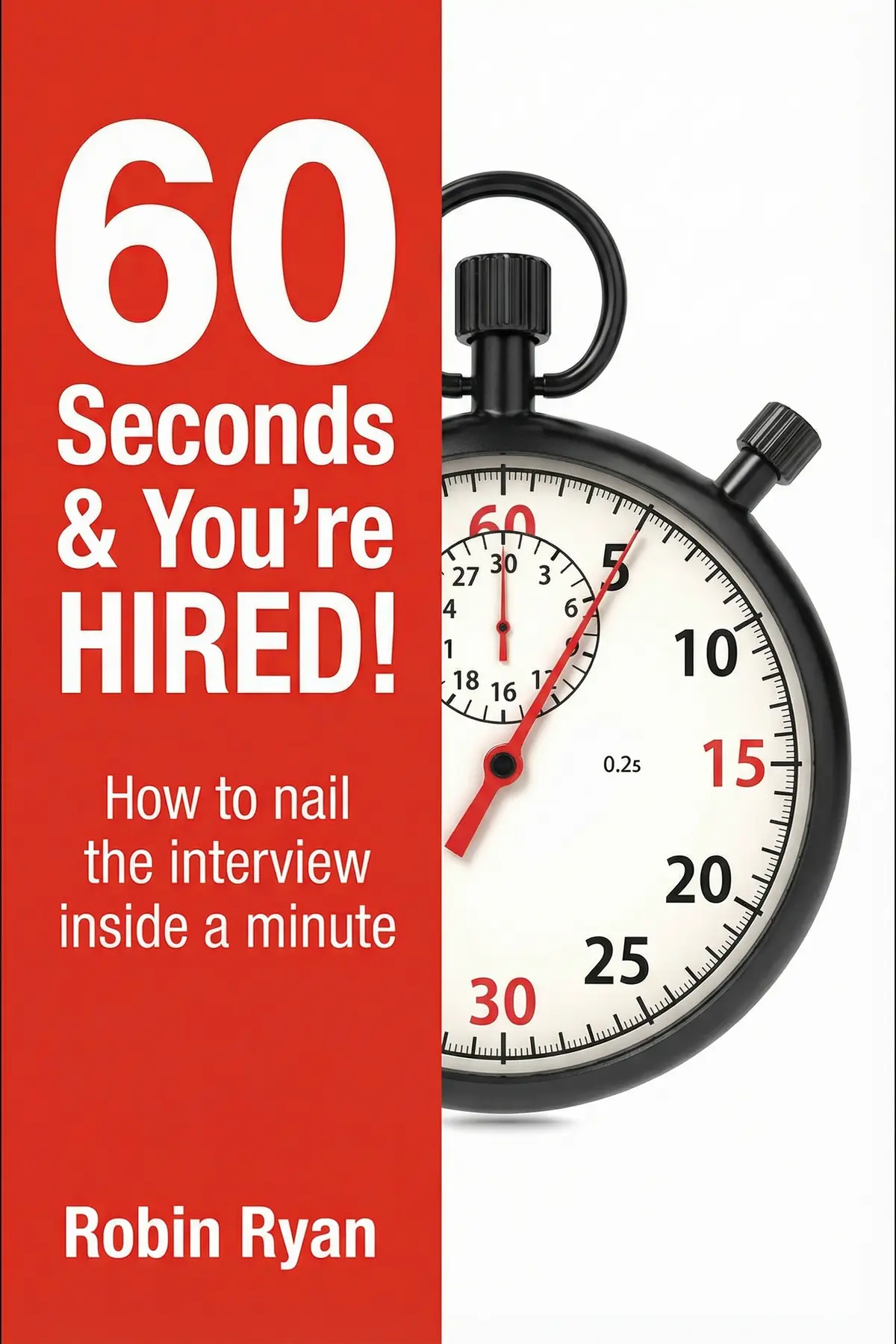
60 Seconds & You’re Hired!
Robin Ryan

59 Seconds: Change Your Life in Under a Minute
Richard Wiseman

AUDIO SUMMARY AVAILABLE
Listen to Barking Up the Wrong Tree in 15 minutes
Get the key ideas from Barking Up the Wrong Tree by Eric Barker, plus 5,000+ more titles in English and Thai.
- 5,000+ titles
- Listen as much as you want
- 7-day free trial
- Cancel anytime







