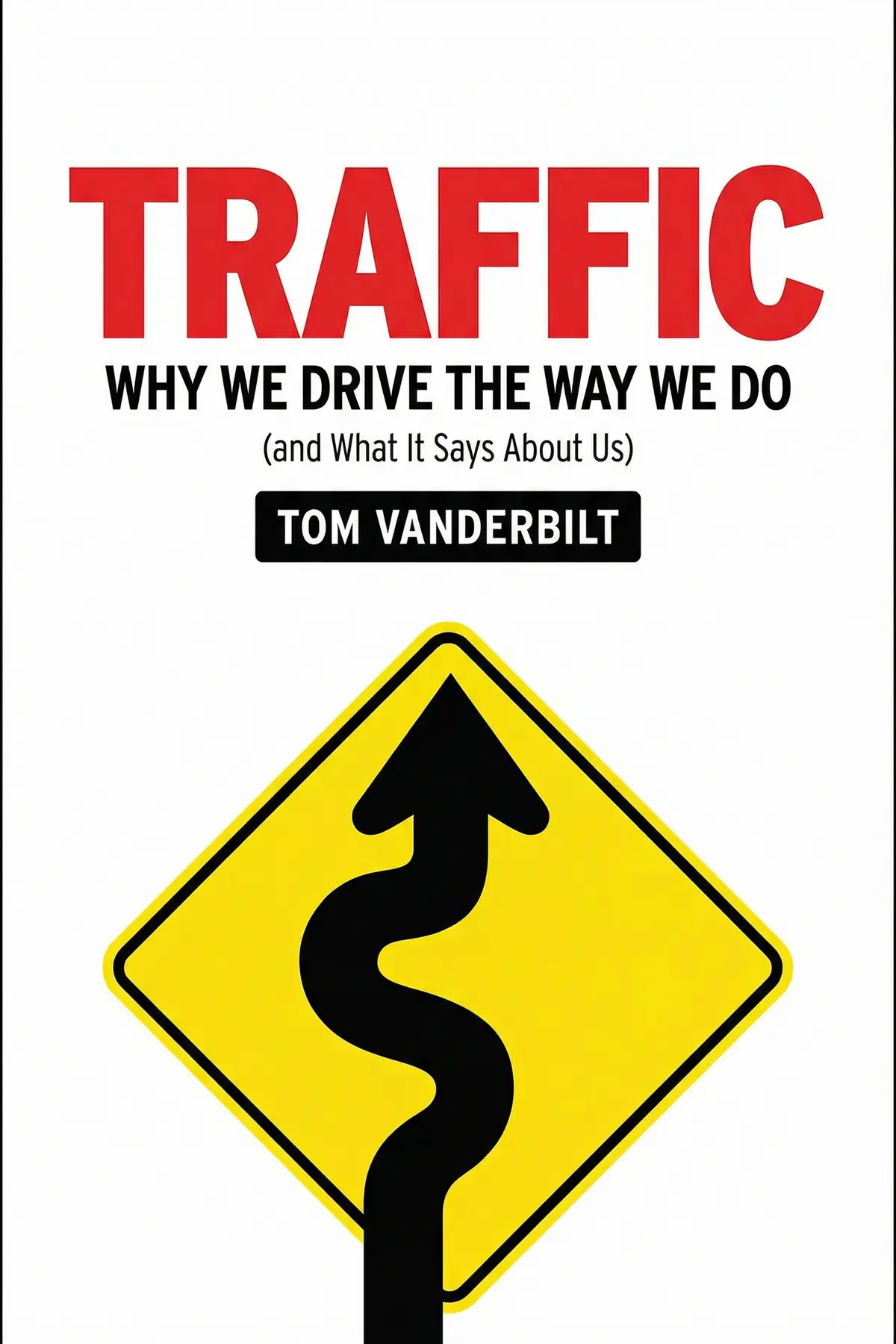
Traffic: Why We Drive the Way We Do (and What It
Tom Vanderbilt
Explore the profound rewards of starting over as an adult. This summary reveals how embracing the discomfort of being a novice can sharpen your mind and bring unexpected joy to your later years.
2 min 04 sec
Think back to the very beginning of your life. When you arrived in this world, you were essentially a bundle of potential with almost no practical abilities. You couldn’t walk, you couldn’t speak, and you certainly couldn’t feed yourself. Those early years were a relentless, high-stakes marathon of learning. You spent every waking hour observing, mimicking, failing, and eventually mastering the fundamental skills of being human. Then came school, where you spent over a decade refining your intellect and discovering your specific talents. But then, for most people, something strange happens. Once we reach adulthood and establish our identities, the learning often stops—or at least, the kind of learning that requires us to be bad at something again.
We become comfortable in our expertise. We stick to what we know, and we avoid the vulnerability that comes with being a novice. But what if we’re missing out on one of the most transformative experiences available to the human brain? Journalist Tom Vanderbilt found himself at this exact crossroads. After years of a successful career, he realized he had become a teacher to his young daughter, guiding her through the basics of life, yet he hadn’t tackled a brand-new skill himself in a very long time. This realization sparked a journey to reclaim the ‘beginner’s mind.’
In this exploration, we’re going to look at the immense value of starting fresh. We will dive into the science of why our brains crave new challenges and how the process of learning—not just the end result—can reshape our mental health and our outlook on life. From the technical mechanics of singing to the neurological shifts required to juggle, we’ll see why being a beginner is not a sign of weakness, but a powerful engine for personal growth. We’ll learn why children are such efficient learners and how we can steal their secrets, even as adults. By the time we’re done, you’ll see that the path to a more engaged life isn’t found in what you already know, but in the things you have yet to try.
2 min 32 sec
Adulthood often traps us in a cycle of facts and data, but true mental vitality comes from a different kind of knowledge altogether.
2 min 21 sec
Many people believe they are born without musical ability, but the truth behind singing is far more mechanical—and manageable—than they realize.
2 min 14 sec
Learning in isolation can be a lonely uphill battle, but there is a specific biological boost that comes from practicing in a crowd.
2 min 23 sec
The transition from knowing the rules to actually performing them is where most people quit, but understanding this stage is the key to persistence.
2 min 18 sec
To master a complex task, the brain must stop thinking about it. Discover how automaticity turns a struggle into a flow state.
2 min 28 sec
We often fail at artistic pursuits not because of a lack of talent, but because our brains are lying to us about what we see.
2 min 34 sec
Age is often seen as a barrier to new experiences, but stories of late-blooming beginners prove that the mind is ready whenever we are.
1 min 46 sec
In the end, the journey of being a beginner is about much more than just picking up a few new hobbies. It’s a fundamental shift in how you engage with your own existence. We spend so much of our adult lives trying to project an image of competence and mastery, but there is a hidden cost to that armor. When we refuse to be beginners, our world begins to shrink. We stop taking risks, we stop being curious, and we stop exercising the very parts of our brains that keep us feeling young and vital.
By embracing the ‘beginner’s mind,’ you are giving yourself permission to fail, which is ironically the only way to truly succeed at anything new. You are tapping into the neuroplasticity that allows your brain to stay sharp well into your later years. You are finding new ways to connect with other people through the shared experience of learning. And perhaps most importantly, you are reclaiming the sense of wonder that made childhood so vibrant.
As you move forward from here, I encourage you to find one thing that you’ve always wanted to try but felt ‘too old’ or ‘too uncoordinated’ to start. Don’t worry about being good at it. In fact, revel in being bad at it. Learn to enjoy the frustration of the ‘advanced beginner’ stage and the strange feeling of your brain building new pathways. Whether it’s a language, a craft, or a sport, remember that the goal isn’t the finish line—it’s the process of the start. As you pursue these new interests, you’ll find that you aren’t just learning a skill; you’re learning how to live a richer, more expansive life. The world is full of things you don’t know yet, and that is a beautiful thing. Go ahead—be a beginner again.
For many of us, the process of learning seems to have a clear expiration date. We spend our childhoods as sponges, soaking up everything from language to motor skills, but as we settle into careers and routines, we often stop being beginners. We become experts in our narrow fields and avoid the embarrassment of trying things we aren't already good at. This book challenges that stagnation, suggesting that the drive to acquire new skills should be a lifelong pursuit rather than a finite phase of youth. Through personal experiments in everything from surfing to singing, the narrative explores the neuroscience and psychology behind adult learning. It promises to show you how to rediscover the 'beginner’s mind,' proving that your brain remains far more adaptable than you might think. By the end, you will understand how to navigate the frustration of the early stages of a new hobby and why the social and cognitive benefits of being a novice are essential for a fulfilling, vibrant life at any age.
Tom Vanderbilt is a prolific author whose work has been featured in prestigious publications such as The New York Times Magazine, Popular Science, Smithsonian, and the London Review of Books. He is well-known for his best-selling non-fiction titles, including Traffic: Why We Drive the Way We Do (and What It Says About Us), You May Also Like: Taste in an Age of Endless Choice, and Survival City: Adventures Among the Ruins of Atomic America.
Tom Vanderbilt
Listeners find the book thought-provoking, and one listener highlights its perspective on developing a growth mindset. They describe it as a captivating and great read. However, several listeners mention that the work is overly long.
Vanderbilt manages to capture the awkward, clumsy beauty of childhood learning and projects it onto the adult experience in a way that is incredibly heartwarming. The segments where he learns chess alongside his daughter were my absolute favorite because they highlight the unique bond that forms when a parent becomes a fellow student. Honestly, the book is a masterclass in curiosity, reminding us that we don't have to be experts to have a meaningful life. I was particularly captivated by the descriptions of open-water swimming in Greece—the writing is so vivid you can almost smell the salt air. While some might find the detailed breakdowns of his progress a bit much, I found the vulnerability of his failures to be the most authentic part. It’s a beautiful reminder that the journey is the destination and that failure is just another way of growing.
Show moreThis book arrived at exactly the right moment in my life when I was feeling terrified of starting a new job. Vanderbilt’s descriptions of his repetitive struggles with drawing and jewelry making were strangely comforting to read during my own steep learning curve. The way he frames failure as a necessary data point rather than a character flaw is a total game-changer for anyone dealing with performance anxiety. I loved the balance between heartfelt introspection and well-researched science, even if the author's lifestyle is a bit more 'jet-set' than my own. Look, if you need a nudge to finally sign up for that pottery class or start learning a new language, this is the book that will give you the confidence to do it. It’s an inspiring, lovely read that I've already recommended to three different friends this week.
Show morePicked this up because I wanted to understand why I feel so much pressure to be an expert at everything I do. Vanderbilt’s exploration of the 'beginner's mind' helped me realize that our time is too precious to spend only on pursuits with clear, productive outcomes. The chapter on juggling was especially enlightening, not because I want to juggle, but because it perfectly illustrated the science of how we process physical tasks. It’s a captivating read that challenges the assumption that adulthood must be synonymous with mastery and stagnation. While he definitely has more resources than the average person, the emotional core of the book—the relationship with his daughter and his own self-doubt—is something anyone can relate to. I finished it feeling like I had permission to be a clumsy novice again, and that is a truly valuable gift.
Show moreAs someone who has always felt stuck in a professional rut, this book felt like a breath of fresh air for my brain. Vanderbilt’s exploration of why adults should embrace being bad at things is genuinely thought-provoking and offers a refreshing perspective on the growth mindset. I loved the chapters on juggling and singing, though I'll admit some of the technical descriptions of neuroscience felt a bit dry after a while. The truth is, the book makes a compelling case for 'the beginner’s mind' even if the author’s ability to fly to Costa Rica for surf camp isn't exactly relatable for the average reader. Still, I found myself inspired to pick up my old guitar again after years of it gathering dust. It's a bit long-winded in the middle sections, but the overall message about finding joy in the process rather than the outcome is something every adult needs to hear.
Show moreFinally got around to reading this after seeing it on several bestseller lists, and I have to say the optimism is quite contagious. Vanderbilt writes with a clear, engaging style that makes even the technical aspects of chess theory feel accessible to a total novice like me. To be fair, the book is definitely a bit of a 'privilege-fest,' but if you can look past the private tutors, there are some great nuggets of wisdom here about the neuroscience of neuroplasticity. I particularly enjoyed his reflections on how parenting forced him out of his mid-career comfort zone and back into the role of a student. It’s a bit overstuffed with personal anecdotes, but the central premise—that learning is its own reward—is handled with a lot of grace. A solid choice for anyone looking to shake up their routine and find a bit of wonder.
Show moreLook, the idea of failing repeatedly in public sounds like a nightmare, but Vanderbilt makes it sound like a grand adventure. This is a fun book about the journey from being a total beginner to becoming someone who is just 'okay' at something, which is a goal we don't celebrate enough. I was fascinated by the section on how singing affects the brain and the community aspects of joining a choir as an adult. Got to say, the book is a bit lengthy and could have used a sharper editor to trim down some of the more indulgent memoir segments. Nevertheless, the infectious enthusiasm for learning is what kept me turning the pages until the very end. It’s not a perfect book, but it’s a very motivating one for anyone feeling stuck in their ways and looking for a new spark.
Show moreThe core message is fantastic, but the execution left me feeling a little conflicted by the end of the final chapter. I love the idea of adult novices, yet the book is so heavily focused on the author’s personal memoir that the actual 'how-to' advice gets lost in the shuffle. Frankly, it’s hard to stay focused when he spends pages detailing his surfing lessons at Rockaway Beach while ignoring the practical logistics of a normal working schedule. The neuroscience bits are the strongest part of the text, offering real insight into how our gray matter adapts to new challenges like drawing or jewelry making. However, the pacing is quite slow and the book could have easily been fifty pages shorter without losing any of its intellectual weight. It's a decent read for a rainy weekend, but don't expect a life-changing epiphany that applies to your daily commute.
Show moreEver wonder why we stop trying new things the moment we hit thirty? Vanderbilt dives deep into this question, using his own experiences with juggling and singing to illustrate the mental barriers we build as we age. In my experience, the book works best when it focuses on the psychological benefits of being a 'non-expert' and the freedom that comes with low expectations. That said, the narrative structure is a bit scattered and some chapters definitely drag on far longer than necessary. You get the sense that he’s trying to justify a very expensive series of vacations under the guise of 'research,' which leaves a sour taste if you’re reading this while working a 9-to-5. It’s an interesting enough look at the growth mindset, but it lacks the grounded, practical accessibility I was hoping for when I first picked it up.
Show moreI really wanted to like this book, but it ended up being a tedious slog through one man’s expensive mid-life hobbies. While the science of how we learn as we age is fascinating, those sections are buried under mountains of self-indulgent anecdotes about private coaching sessions. Not gonna lie, I felt a bit alienated by the sheer level of privilege on display here; most of us can't just hire a professional chess tutor or a voice coach for our casual interests. It’s too long and repetitive, making the same point about 'willingness to fail' over and over again until the original charm wears thin. If you want a concise guide to learning, look elsewhere, because this feels more like a travelogue for the elite than a helpful manual for the masses. I struggled to finish it because it felt more like an excuse for a vacation than a serious study.
Show moreTo be fair, the research presented in the first few chapters is quite strong, but the rest of the book is frankly dull. I found myself skimming through the endless descriptions of his surfing trips and singing lessons, waiting for a point that never really landed. Most of the book is just the author detailing his efforts to learn a collection of skills that most people will never have the time or money to pursue. It felt like a collection of magazine articles that were stretched out to fill a book-length format, resulting in a very repetitive reading experience. The central insight—learning by being willing to fail—is something most people already know, so it didn't feel particularly revelatory or helpful. It was a chore to get through the second half, and the elitist tone made it hard to stay engaged.
Show moreAUDIO SUMMARY AVAILABLE
Get the key ideas from Beginners by Tom Vanderbilt, plus 5,000+ more titles in English and Thai.