
14 min 06 sec
Traffic: Why We Drive the Way We Do (and What It Says About Us)
Traffic examines the hidden psychology and surprising behaviors behind our daily commute. It reveals why being behind the wheel changes our personalities and why more roads often lead to more congestion.
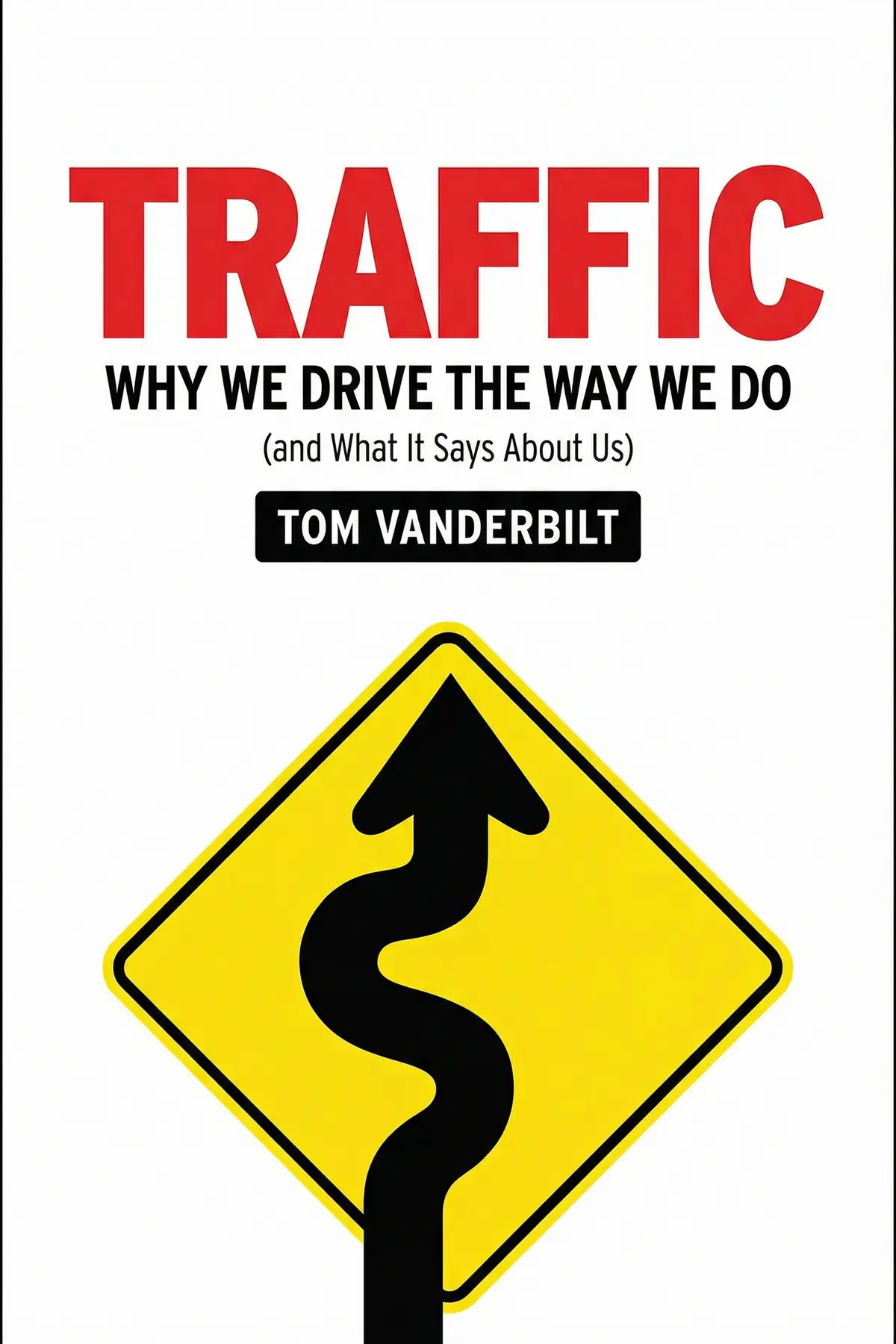
Table of Content
1. Introduction
1 min 19 sec
Think about the last time you saw a version of yourself that you didn’t quite recognize. Perhaps you were running late, or someone cut you off without signaling, and suddenly, your usual, composed self vanished. In its place was a shouting, horn-honking stranger. Why does the simple act of sitting in a driver’s seat transform us so completely? It’s a phenomenon we see every day, yet we rarely stop to ask what it says about our nature and our society.
In this exploration of our lives on the road, we are going to look beneath the surface of the asphalt to understand the hidden forces that dictate our behavior behind the wheel. We’ll investigate why our brains struggle with the concept of fairness in a traffic jam, and why the solutions we think will fix traffic—like building more lanes—often end up making the problem worse.
Through the lens of psychology and social science, we will uncover the ‘throughline’ of this journey: driving is not just a mechanical task of moving a vehicle from point A to point B. Instead, it is a complex social interaction where human nature, technology, and environment collide. By the end of this summary, you’ll see your commute not as a mindless chore, but as a fascinating study in human behavior, and you’ll walk away with a clearer understanding of how to navigate the roads with more sanity and safety.
2. The Transformation of the Driver into a Roadside Persona
1 min 57 sec
Discover why the privacy of our cars leads to a breakdown in human communication and why we treat other drivers like machines rather than people.
3. The Psychology of Fairness and the Illusion of Lane-Hopping
1 min 57 sec
Explore the mental gymnastics we perform in traffic jams and why our perception of progress is often a mathematical lie.
4. The Accountability Vacuum and the Myth of the Above-Average Driver
1 min 57 sec
Why the lack of feedback on the road makes us believe we are better drivers than we actually are, and how that overconfidence creates danger.
5. The Duality of Automatic Driving and the Trap of Distraction
1 min 55 sec
Uncover the mystery of ‘highway hypnosis’ and why our ability to drive without thinking is both a miracle and a menace.
6. The Counterintuitive Reality of Road Expansion and Latent Demand
1 min 52 sec
Why adding more lanes to a highway is like loosening your belt to cure obesity—it only invites more growth.
7. The Paradox of Safety: Why Clearer Roads Can Be More Dangerous
1 min 54 sec
Discover how the feeling of safety can lead to reckless driving and why ‘dangerous’ roads often have fewer accidents.
8. Conclusion
1 min 15 sec
As we pull into the driveway of this exploration, it’s clear that the world of traffic is much more than a collection of vehicles and pavement. It is a mirror held up to our human nature—reflecting our need for fairness, our struggles with anonymity, and our tendency to become overconfident when tasks become routine.
We’ve learned that the anger we feel on the road is often a reaction to a breakdown in human communication, and that the ‘safe’ roads we crave might actually be the ones putting us at the greatest risk. We’ve seen that the logic of expanding highways is often flawed, as it only invites more of the very congestion we seek to escape.
The next time you find yourself gripping the steering wheel in frustration, remember the ‘throughline’ we’ve discussed: driving is a social act. By recognizing the psychological traps—like the above-average bias or the illusion of lane-hopping—you can reclaim your composure. The most effective way to improve the road isn’t through more lanes or faster cars, but through a more mindful and humble approach from the person behind the wheel. Drive not just with your hands and feet, but with an awareness of the human beings sharing the journey with you. That shift in perspective is the ultimate key to a safer, smoother, and more human experience on the road.
About this book
What is this book about?
Have you ever wondered why perfectly calm people turn into aggressive strangers once they start driving? Traffic explores the complex interplay of human psychology, urban design, and social behavior on the open road. It delves into the reasons why we perceive time differently in a traffic jam, how our brains manage the thousands of subskills required to navigate a vehicle, and the counterintuitive truth about road safety. This exploration promises to change how you see your daily commute. By understanding concepts like latent demand and risk compensation, you will see that the frustrations of the road are rarely about the cars themselves, but about the human beings inside them. The book provides a fascinating look at the 'cyborg state' of driving and offers insights into how we can create more efficient, safer, and less stressful transportation systems. It is an essential guide for anyone who has ever felt the sting of road rage or the boredom of a gridlocked highway.
Book Information
About the Author
Tom Vanderbilt
Tom Vanderbilt is a journalist, writer and blogger who contributes regularly to publications like The Wall Street Journal, Slate and the London Review of Books. He is also the author of Survival City: Adventures Among the Ruins of Atomic America and The Sneaker Book.
Ratings & Reviews
Ratings at a glance
What people think
Listeners find the book to be consistently engaging and skillfully written, offering solid information bolstered by enlightening research and footnotes. They value the way it applies psychological concepts to routine driving, helping them improve behind the wheel, while one listener points out how it clarifies the way human thoughts and emotions influence traffic patterns. Listeners feel the work is well worth the cost, with one review emphasizing its thorough analysis of the intricate nature of traffic.
Top reviews
Cholada
Tom Vanderbilt has managed to turn the mundane act of driving into a gripping psychological study. Before reading this, I viewed traffic as a purely mechanical problem, but now I see it as a complex language of human behavior. The way he explains our 'underdeveloped sense' of how to actually use our vehicles was a total wake-up call for me. I particularly loved the illuminating footnotes and the deep dive into why we get so visibly mad at an audience of no one. This isn't just a book about cars; it’s a book about how humans think and feel in high-stakes environments. It is a behemoth of information, but the way it applies psychology principles to everyday experiences is brilliant. I’ve already recommended it to three people in my office who complain about their commute.
Show moreHang
Wow, I will never look at a parking lot or a traffic sign the same way again. This book is a masterclass in making the invisible visible. Vanderbilt takes something we do every day without thinking—driving—and reveals the staggering complexity behind every decision we make. Not gonna lie, the section on how many decisions we make per minute was enough to scare me out of ever touching my phone in the car again. I appreciated the international scope, from New York to the Netherlands, showing how culture influences safety as much as engineering does. It’s a comprehensive examination that feels totally original. If you’re a nerd for 'why we do the things we do' books, this is a five-star classic that is absolutely worth the investment.
Show morePla
Truth is, we all think we’re above-average drivers, but Vanderbilt exposes the hilarious and dangerous illusions we live in every time we turn the key. I found the 'theatrical storytelling' aspect of road rage particularly relatable—I definitely play the 'wronged victim' more than I’d like to admit! The book is well-written and engaging throughout, provided you don't mind flipping to the back to check out the illuminating footnotes. It’s rare to find a book that combines anthropology, engineering, and psychology so seamlessly. It’s a timely study that explains how our emotions impact the flow of the world around us. Even though it was written in 2008, the core lessons about human nature and traffic still feel incredibly relevant today. A must-read for anyone who owns a license.
Show moreSaengdao
Ever wonder why you feel like an avenging hero during your morning commute? Tom Vanderbilt dives deep into the theater of the road, explaining how our cars become bubbles of moral drama. I was fascinated by the concept of 'traffic archaeology' and how ancient human instincts still dictate our behavior at four-way stops. The book is comprehensive and certainly well-researched, though I'll admit the sheer volume of data occasionally made my eyes go sideways. It's not a light, breezy read by any means. However, for anyone who wants to understand the psychology behind late merging or why building more roads just makes things worse, this is essential. It genuinely made me a more conscious driver, even if some of the statistics felt a bit dry toward the middle chapters. Definitely worth the price for the insight alone.
Show moreViroj
This is a massive tome that requires some serious stamina to finish, but the payoff is worth it. Vanderbilt leaves no stone unturned, exploring everything from the safety of compact cars to the evolutionary roots of the 'courtesy wave.' I found the chapter on roundabouts versus gridded cities especially enlightening, as it challenged my pre-existing views on urban planning. My only real gripe is that it reads almost like an academic journal at times, which might turn off readers looking for a casual weekend book. There are over a hundred pages of citations, which proves the research is top-notch but also makes the physical book quite heavy! Look, it’s a bit dense, but if you enjoy data-driven nonfiction that changes how you see the world, you should pick this up. It’s highly informative.
Show moreMonthon
After hearing about this book on a podcast, I picked it up hoping it would explain why my commute is so soul-crushing. It did that and a lot more. The truth is, most of us have a total lack of objectivity when it comes to our own driving skills. Vanderbilt uses physics and sociology to tear apart social myths, like the idea that small cars are always 'tin cans of death.' The writing style is engaging, though I agree with other reviewers that a summary page at the end of each chapter would have helped organize the massive amount of information. It’s a bit of a marathon read, but the sections on the fatal flaws of traffic engineering were eye-opening. It definitely changed the way I navigate lane drops on the highway.
Show moreHannah
The blurb for this book is a total bait-and-switch. I expected a lighthearted exploration of road rage and weird driving quirks, but what I got was an academic-style bombardment of statistics and government reports. To be fair, some of the content is genuinely interesting—like the stuff about how we 'construct moral dramas' in our heads—but the delivery is often flat. It feels like the author is trying too hard to be an expert on everything without having a background in actual data interpretation. The book is way too long for the points it's trying to make; as the saying goes, the covers are simply too far apart. It’s okay for a one-time read, but don’t expect to be entertained the whole way through.
Show moreNam
As someone who nerdishly enjoys urban planning, this was right up my alley—at first. I loved the technical details about traffic light timing and the psychology of the 'late merger' on the interstate. However, the author eventually gets bogged down in so many isolated studies that the main thread gets lost. One minute we're talking about cavemen and the next we're looking at New Zealand driving stats, and it doesn't always click together. Some of the conclusions, like the courtesy wave being an evolutionary carryover, felt a bit unconvincing and poorly supported. It's a good book to keep on your shelf for reference, but reading it cover-to-cover was a bit of a slog. It lacks a clear summary to help the information stick.
Show moreGame
I really wanted to like this book because I spend so much time behind the wheel, but it turned out to be an endless ramble. Vanderbilt is clearly a knowledgeable guy, but he desperately needed an editor to boil these facts down into a coherent summary. Instead of a narrative, you get a directionless stroll through random studies from New Zealand to New Jersey without any clear conclusion. Frankly, the author’s habit of telling me what I have or haven't experienced—like claiming I’ve surely encountered a traffic light stuck on red—was comically presumptuous. I’ve been driving for fifteen years across twelve states and that has never happened once. It felt like a New York worldview being forced onto everyone else. It’s basically an overstuffed magazine article that never quite reaches its destination.
Show moreJob
Frankly, I found this to be a disappointing, dry, and disengaging experience. The blurb makes it sound like a fun look at driving habits, but it’s actually just a list of research studies linked together by a very thin narrative. Vanderbilt smugly grabs any piece of data that fits his pre-existing narrative while ignoring anything that doesn't. If you’ve ever taken a class in research methods, the way he compares vastly different populations as if they are identical will drive you crazy. It lacks humor and fails to tie all the disparate facts together at a higher level, unlike the writing of someone like Stephen Jay Gould. I felt bombarded by stats that I won't remember in a week. I ended up getting off at the first exit and looking for something more rewarding to read.
Show moreReaders also enjoyed

59 Seconds: Change Your Life in Under a Minute
Richard Wiseman
A Liberated Mind: How to Pivot Toward What Matters
Steven C. Hayes

Acting with Power: Why We Are More Powerful Than We Believe
Deborah Gruenfeld
Age of Propaganda: The Everyday Use and Abuse of Persuasion
Anthony Pratkanis
AUDIO SUMMARY AVAILABLE
Listen to Traffic in 15 minutes
Get the key ideas from Traffic by Tom Vanderbilt, plus 5,000+ more titles in English and Thai.
- 5,000+ titles
- Listen as much as you want
- 7-day free trial
- Cancel anytime







