
A Life Decoded: My Genome: My Life
J. Craig Venter
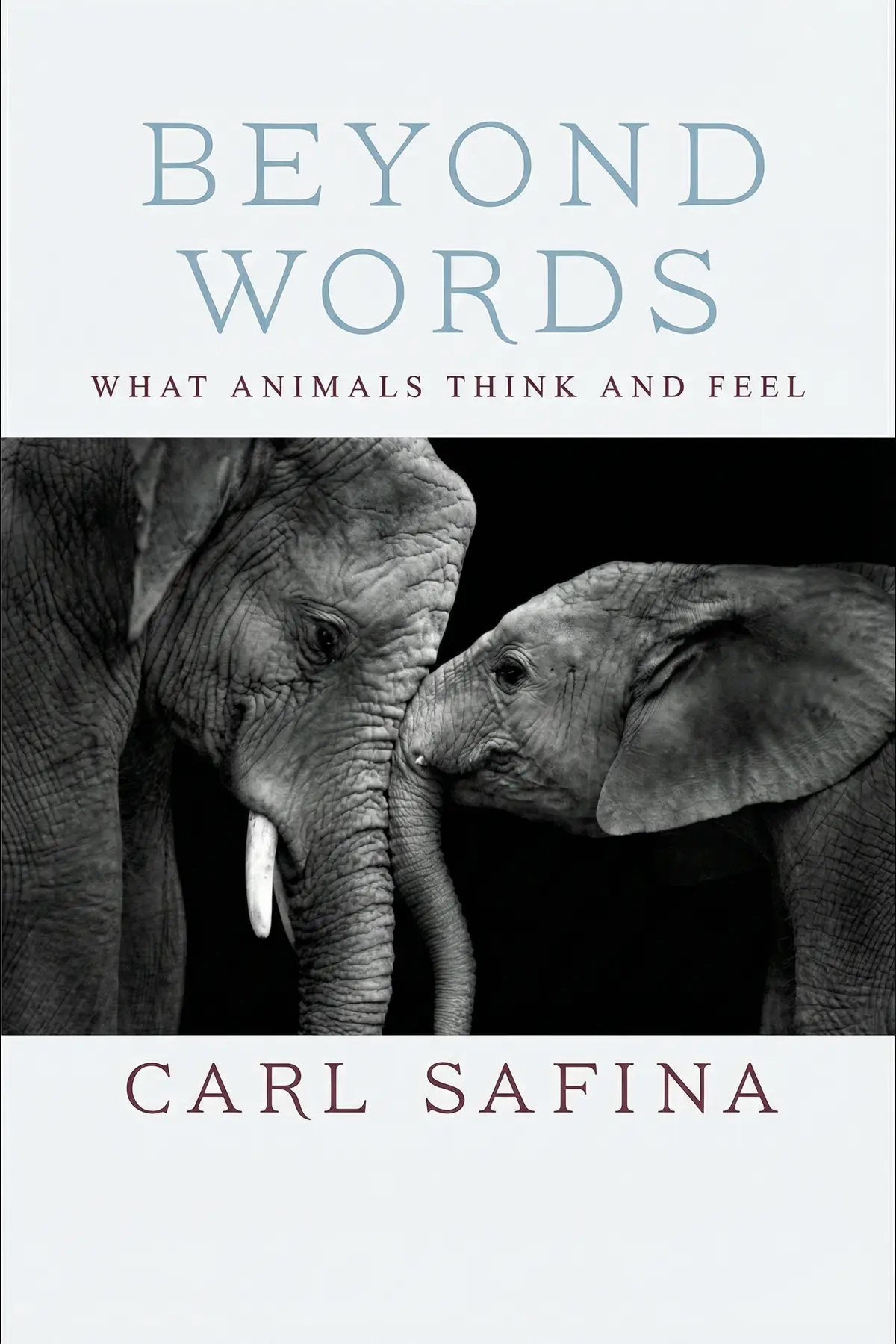
Beyond Words explores the intricate inner lives of animals, revealing that they possess complex emotions, advanced intelligence, and sophisticated social structures that mirror our own in profound and unexpected ways.
1 min 38 sec
Every time we look into the eyes of a dog or watch a documentary about wild creatures, we feel a flicker of connection. We wonder: what are they thinking? Do they feel the same love or fear that we do? For a long time, the world of science was hesitant to answer those questions. There was a fear that by attributing human-like feelings to animals, we were simply projecting our own experiences onto them. But what if the truth is even more fascinating? What if animals have minds that are entirely their own, yet share the same fundamental emotional architecture that defines the human experience?
In this exploration of the natural world, we are going to move past the old-fashioned view of animals as biological machines driven purely by instinct. We will dive into the lives of some of the most intelligent beings on our planet—elephants, wolves, and orcas—to see how they navigate their social worlds. We will discover that their lives are filled with intricate relationships, cultural traditions, and a deep capacity for empathy.
By the end of this journey, the goal is to shift your perspective. It’s about moving away from seeing ourselves as the center of the universe and instead recognizing that we are part of a vast, interconnected web of thinking, feeling beings. We’ll look at the latest research and field observations that prove animals are far more like us than we ever dared to imagine, while also celebrating the unique ways they experience reality. Prepare to see the animal kingdom not as a collection of specimens, but as a community of individuals with stories, memories, and lives that matter.
2 min 25 sec
Discover why our tendency to see ourselves as the pinnacle of evolution often blinds us to the unique mental lives and sensory experiences of other species.
2 min 21 sec
Traditional scientific experiments frequently underestimate animal cognition because they strip away the natural context where that intelligence is actually used.
2 min 21 sec
Learn how the journey from wild wolf to domestic dog was driven more by the animals’ own choices than by human intervention.
2 min 24 sec
Explore the chemical and structural similarities between human and animal brains that suggest our feelings are rooted in a common evolutionary past.
2 min 27 sec
Step into the sophisticated society of elephants, where survival depends on collective memory and the leadership of experienced elders.
2 min 16 sec
Examine how human behavior, from hunting to poaching, has fundamentally altered the psychology and habits of wild animals.
2 min 00 sec
Uncover the true nature of wolf packs, where success comes not from brute force but from cooperation, leadership, and even kindness.
2 min 21 sec
Meet specific animals whose unique traits and decisions changed the course of their communities, proving that personality is not just a human trait.
2 min 18 sec
Dive into the deep-sea world of orcas, where families are bound by maternal lines and distinct cultural traditions.
2 min 31 sec
Explore the incredible ways animals exchange information, from low-frequency vibrations to learning the syntax of human language.
1 min 48 sec
As we conclude this journey into the minds of our fellow creatures, the evidence is overwhelming: the line between ‘us’ and ‘them’ is much thinner than we were taught to believe. We have seen that elephants mourn their dead and lead with wisdom, that wolves prioritize family and cooperation over brute force, and that orcas carry deep cultural traditions through the generations. These are not just biological reflexes; they are the hallmarks of sentient beings who experience the world with intensity and purpose.
The most important takeaway is that we should stop comparing animal intelligence to our own as if it were a competition. An elephant doesn’t need to write a poem to be ‘smart’; it needs to remember the path to a hidden spring across a parched savanna. A wolf doesn’t need to build a city to be ‘social’; it needs to coordinate a hunt with its siblings in total silence. Each species has mastered the art of being exactly who they need to be in the world they inhabit.
Moving forward, try to look at the animals in your own life—even the birds in your backyard or the dog on your couch—with a new sense of curiosity. Instead of asking if they can think like you, ask yourself what they are perceiving that you might be missing. When we acknowledge the ‘personhood’ of animals, we don’t lose anything as humans. Instead, we gain a much larger, more vibrant family. We realize that we are not alone in our capacity for joy, sorrow, and love. The natural world is not just a place we live; it is a community of minds, and it is finally time we started treating them with the respect and wonder they deserve.
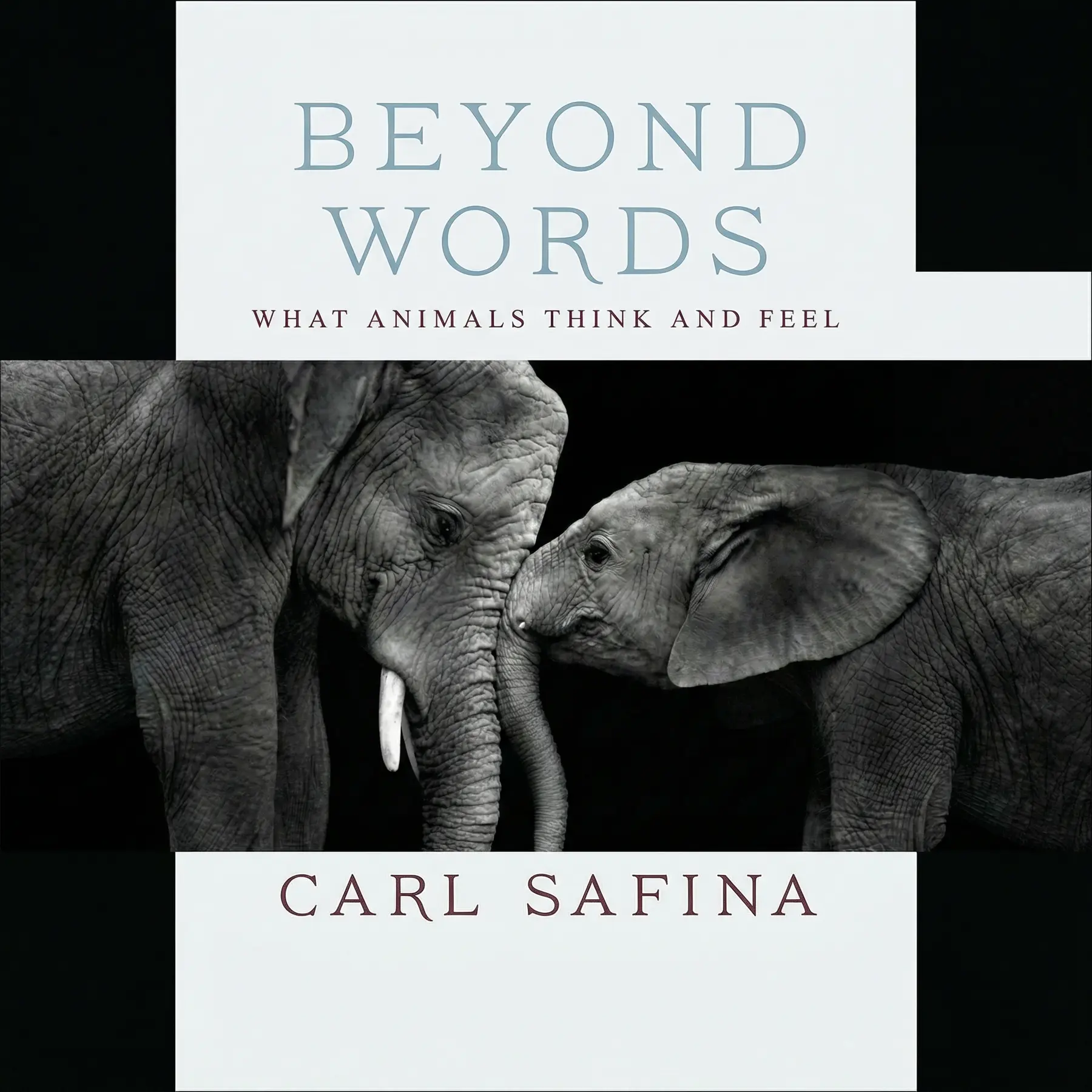
For centuries, humans have viewed themselves as the only creatures capable of complex thought and deep emotion. Beyond Words challenges this anthropocentric worldview by taking listeners on a journey into the minds of elephants, wolves, and killer whales. Carl Safina bridges the gap between scientific observation and empathetic understanding, showing that animals are not just driven by instinct but by love, grief, joy, and a sense of community. This book provides a detailed look at how different species communicate, solve problems, and maintain social bonds. It argues that recognizing the personhood of animals is not just a scientific necessity but a moral imperative. By understanding how animals perceive the world through their unique senses and social structures, we gain a deeper appreciation for the diversity of life and our own place within the natural world.
Carl Safina is a renowned scientist and author who holds the endowed chair for nature and humanity at Stony Brook University. He also contributes his expertise to the Alan Alda Center for Communication Science as a staff member. His work has been featured in prestigious publications such as National Geographic and the New York Times. Additionally, Safina shares his passion for the natural world as the host of a popular series on PBS.
Listeners find this work to be a captivating experience, featuring graceful writing that combines scientific data with sharp eyewitness accounts. The book provides fresh perspectives on how creatures behave, and one listener highlights how the narrative encourages people to recognize animals as distinct personalities. Listeners characterize the content as both reflective and moving, with one review pointing out that it fundamentally alters the audience's outlook. They value the engaging anecdotes and the deep portrayal of animals' inner emotional worlds found throughout the text.
Picked this up on a whim after seeing it at a used bookstore, and it absolutely devoured my week. Safina doesn't just categorize species; he introduces you to individuals like Ella the elephant and the legendary wolf Number Six. It is a stunning, emotionally charged exploration of the 'someone-ness' of animals. The way he describes the matriarchal structures of orcas and the deep grief elephants feel is nothing short of transcendent. Truth is, we often view the natural world as a backdrop for human drama, but this book shifts the lens entirely. Safina’s prose is eloquent and urgent, reminding us that we aren't the only ones who live epic, complicated lives. I found myself tabbing dozens of pages just to sit with his observations on empathy and consciousness. It is a rare work that manages to be both a scientific wake-up call and a poetic masterpiece.
Show moreWow, I wasn't prepared for how much this would change my perspective on the wild. This book is structured like an internal trilogy, diving deep into the societies of elephants, wolves, and killer whales. Safina presents a compelling case for animal intelligence that goes far beyond the typical benchmarks we set for them. He highlights how these creatures recognize each other as individuals with distinct personalities—some are shy, some are bullies, and some are natural-born leaders. The research is presented with such keen observation that you can practically see the dust of the Amboseli plains. Gotta say, the section on how orcas never attack humans despite their power was utterly fascinating. It challenges the nonsensical assumptions we’ve relied on to justify our treatment of nature. This isn't just a book about animals; it’s a moral plea for stewardship and respect.
Show moreThe section on the Yellowstone wolves is worth the price of admission alone. Safina captures the drama of the 'Prefect Wolf' and the complex social dynamics of the packs with such vividness that it feels like reading a historical biography. He argues that we have a common bond with these creatures that goes deeper than biology. His exploration of self-domestication and the similarities between human and wolf males was a 'mind-blown' moment for me. The writing is thought-provoking and stays with you long after you close the cover. While he occasionally gets a bit long-winded in his reflections, his passion for conservation is infectious. He asks uncomfortable questions about human behavior that we really need to answer. If we lose natural beauty, we lose ourselves. This book is a hauntingly beautiful reminder of what is at stake in the modern world.
Show moreEver wonder if the creatures we share this planet with are actually 'someone' rather than 'something'? Carl Safina answers this with a resounding yes. Through meticulous field observations, he shows how elephants cover their dead and how dolphins use seduction to help friends. These aren't just 'animal instincts'—they are choices made by individuals. I loved the focus on the names of the animals; it makes their stories feel personal and urgent. The prose is beautiful, almost poetic in places, and it avoids the dry jargon that usually plagues non-fiction. 'Beyond Words' really changed my mind about the cognitive limits of species I previously overlooked. It is much more difficult to be indifferent to the natural world once you realize the depth of grief and joy happening just outside our cities. Truly a heartbreaking and hopeful read at the same time.
Show moreLook, the writing style here is definitely a choice, but for me, it worked perfectly. Safina has 'bars,' as they say—there are lines in here about the ugliness of a man-made world that really hit home. The way he follows the fission of a wolf pack or the navigational genius of an elephant matriarch is riveting. He dares to bridge the gap between human and non-human experience in a way that feels both scientific and deeply spiritual. I was especially moved by the plight of the killer whales in the Pacific Northwest and how our noise pollution and fishing habits are devastating their families. It’s a compelling read that offers new insights into how we are similar to, and different from, our fellow inhabitants of Earth. If you care about the planet, you need to read this book. It’s a masterpiece of observation and heart.
Show moreFew books manage to balance field research with such poetic, urgent calls for conservation. Safina’s exploration of 'neoteny' and the shared history of humans and wolves was a highlight for me. He shows us that man must begin to work with nature in a moral and ethical manner, rather than just viewing it as a resource. The book is dense with concepts and information, making it a read to be savored slowly. I particularly enjoyed the shorter sections on falcons and chimpanzees, which reinforced the idea that intelligence comes in many forms. While the author's voice is very present—sometimes to the point of distraction—his dedication to the subject is undeniable. He shows us that if we can no longer afford natural beauty, we will be overcome by ugliness. This is essential reading for anyone interested in the emotional lives of animals.
Show moreCan a book about biology read like a long conversation with an eccentric, brilliant friend? That is exactly the vibe here. Safina’s writing style is definitely a choice—it’s conversational, peppered with one-word sentences, and occasional circular reflections that feel almost like a YouTube vlog in print form. While some might find the 'personality' embedded in the pages a bit much, I found it refreshed the genre. He moves away from the sterile, lab-based experiments of books like 'The Genius of Dogs' and instead takes us into the field. The chapters on the Yellowstone wolf packs were particularly gripping, showing the sheer brutality and tenderness of their social hierarchies. Personally, I could have done without some of the more repetitive philosophical asides, but the insights into animal cultures are too valuable to miss. It really makes you rethink your place in the world.
Show moreAfter hearing about Safina for years, I finally dove into this 'internal trilogy' of animal intelligence. It is a wonderful tour that asks us to afford animals the respect they deserve as thinking, feeling beings. I appreciated how he takes laboratory scientists to task for their reticence to acknowledge the obvious: animals have inner lives. His handling of the mirror mark test was especially fiery, and while he was clearly angry, his point about the limitations of human-centric testing landed well. The book is a bit dense with concepts, and the section on wolves felt slightly long-winded compared to the elephants, but the wisdom found in these lines is undeniable. It’s a great catch-up for anyone who hasn't read much on animal behavior since Jane Goodall. Only four stars because the pacing can be uneven, but the content is top-tier.
Show moreCarl Safina doesn't just present data; he delivers a gut-punch of empathy for our non-human kin. The truth is, I usually prefer a more concise approach to non-fiction, and this book could probably be 30% shorter without losing its core message. However, the conversational style eventually won me over. It felt like being on a trek through the bush with a world-class ecologist who isn't afraid to get a little 'off-the-wall' with his reflections. The distinction he makes between humans and animals—noting that self-loathing is uniquely ours—is a profound takeaway. While he’s not a neuroscientist, his background as a marine biologist gives him a unique authority when discussing the social structures of killer whales. It’s a thought-provoking read that will make you look at your own dog with a completely new perspective. Definitely worth the effort to push through the slower parts.
Show moreTo be fair, I expected a rigorous scientific treatise, but what I got felt more like a personal diary of observations. The book is very light on hard data and heavy on speculation about what animals 'must' be feeling based on a single anecdote. For instance, Safina shares a story about a friend's experience and then leaps to a massive conclusion about an entire species' emotional capacity. If you’re looking for a professional, concise approach to cognitive science, this isn't it. The author also narrated the audiobook himself, and frankly, he reads way too fast for the dense philosophical concepts he's trying to tackle. I also found his constant 'pet peeves' regarding the mirror self-recognition test to be quite distracting. It felt like he was more interested in venting his frustrations with other scientists than providing an objective explanation of animal minds. A bit of a letdown.
Show moreJ. Craig Venter
Carl Zimmer
Bill Bryson
Jeff Hawkins
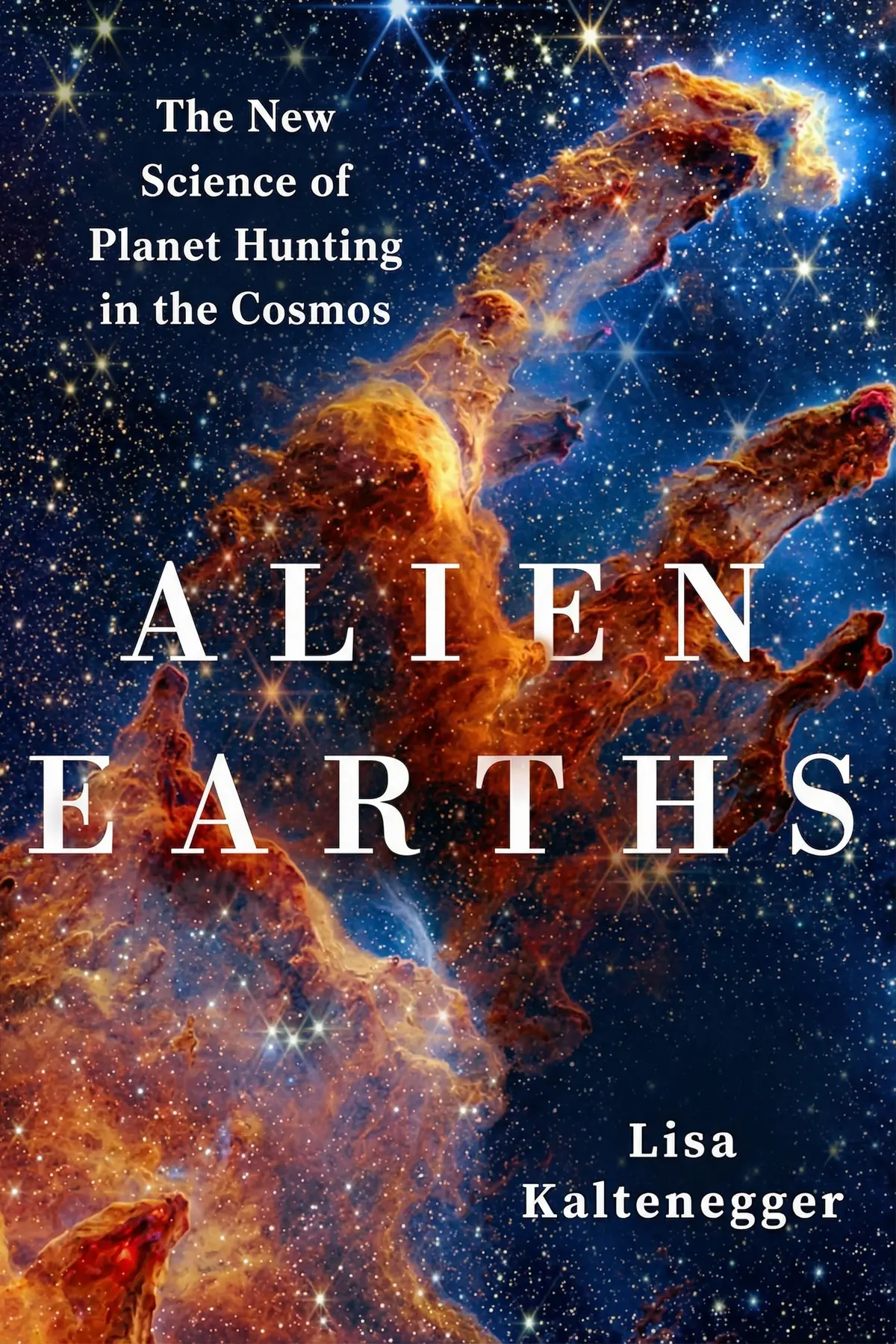
Lisa Kaltenegger

AUDIO SUMMARY AVAILABLE
Get the key ideas from Beyond Words by Carl Safina, plus 5,000+ more titles in English and Thai.







