
20 min 17 sec
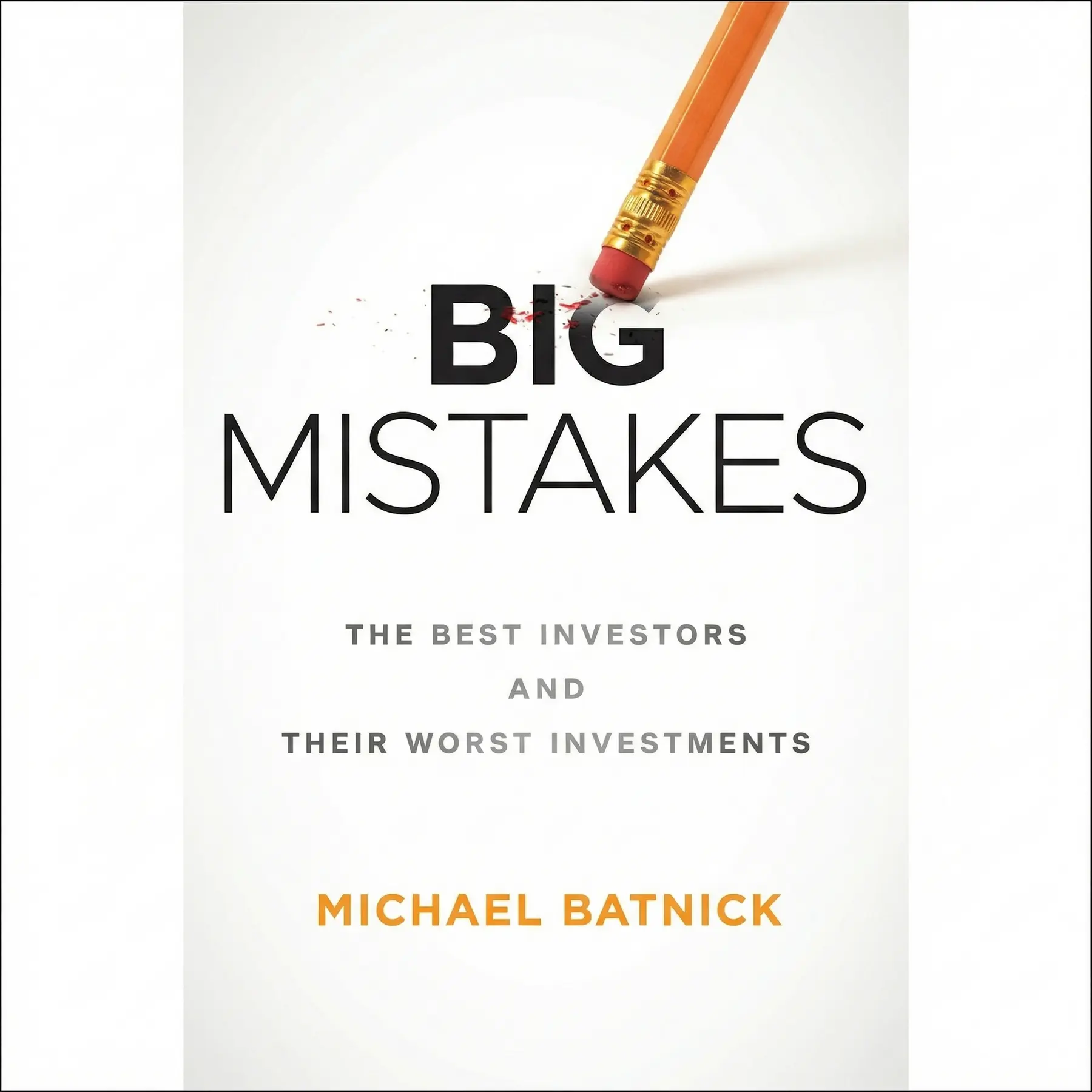
Big Mistakes: The Best Investors and Their Worst Investments
Big Mistakes explores the surprising failures of history’s most successful investors. Michael Batnick reveals how even financial legends lose fortunes, offering a guide to avoiding the psychological traps that lead to ruin.
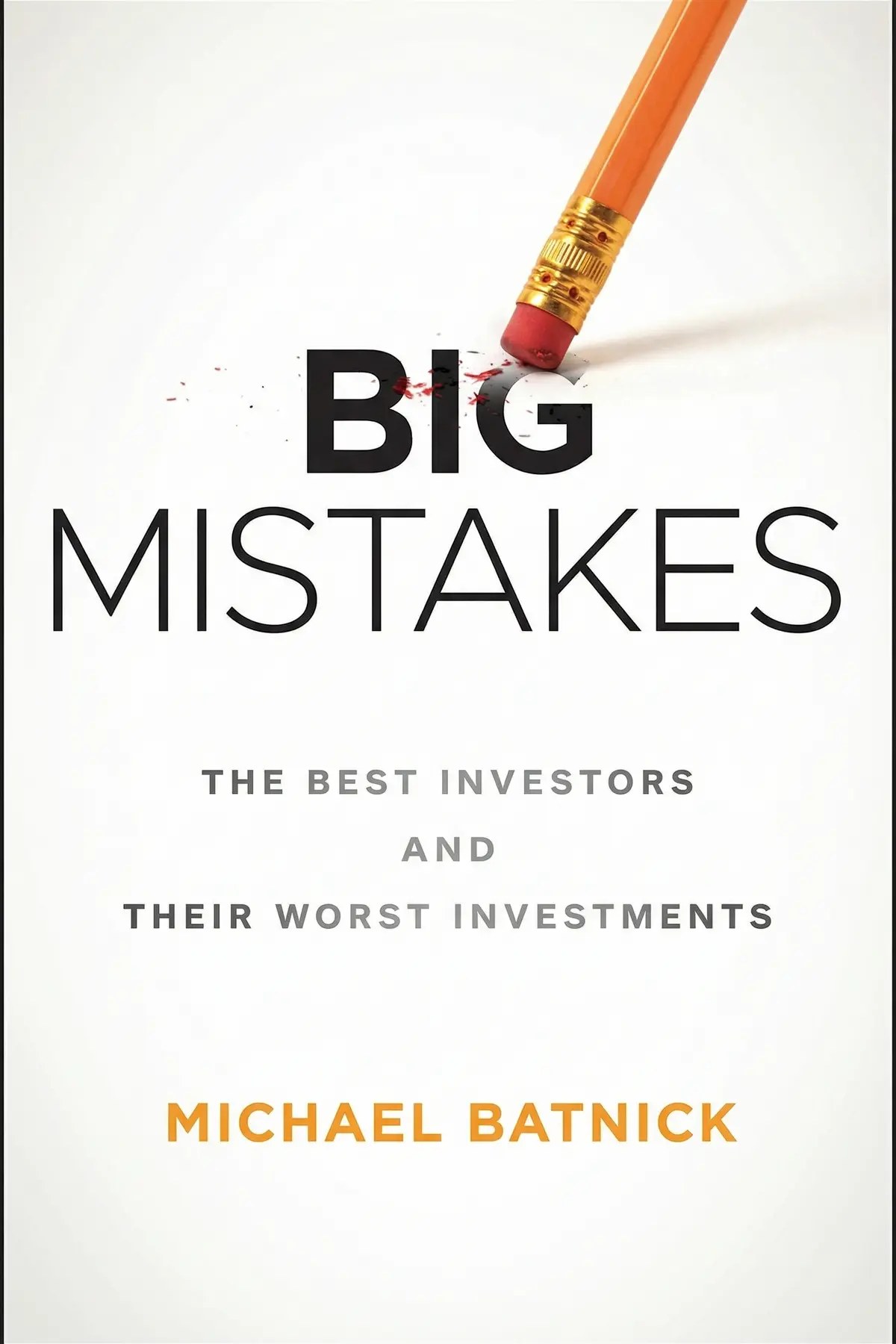
Table of Content
1. Introduction
1 min 53 sec
We often look at the world’s most successful investors as if they possess a supernatural ability to see the future. We see their massive portfolios, their sprawling estates, and their names on the spines of legendary textbooks, and we assume they must have some secret formula that the rest of us lack. We call them ‘oracles’ and ‘wizards,’ treating their every move like a masterstroke of genius. But there is a hidden side to these success stories—a side filled with red ink, sleepless nights, and staggering losses.
In this exploration of the financial world’s greatest blunders, we are going to peel back the curtain on the legends. We aren’t just looking at their wins; we are looking at their most humbling defeats. From the father of value investing himself to the modern titans like Warren Buffett, no one is immune to the occasional catastrophe. These aren’t just minor slips; we’re talking about losses that would bankrupt an entire town.
What makes this journey so valuable for us is the concept of ‘tuition.’ In the world of investing, every mistake is a lesson, but the price of that lesson can be incredibly high. By studying the specific ways these icons failed, we get to receive the benefits of their hard-won wisdom without having to pay the multi-million dollar bill ourselves. We can look at their psychological blind spots, their emotional reactions, and their moments of overconfidence to better understand our own relationship with money.
The central throughline of our discussion is that investing is as much a psychological game as it is a mathematical one. The numbers matter, of course, but the person holding the pen matters more. Throughout these chapters, we will see how even the most brilliant analytical minds can be undone by simple human traits like ego, envy, and the fear of missing out. As we walk through these stories, keep one question in mind: if these legends can lose it all, what can I do to make sure I don’t follow in their footsteps? Let’s begin our journey into the high-stakes world of financial errors.
2. The Fallibility of Financial Formulas
2 min 20 sec
Even the father of value investing learned that the market doesn’t always follow the rules. Discover why a brilliant formula couldn’t save Benjamin Graham from the Great Depression.
3. The High Price of Unmanaged Risk
2 min 00 sec
One of history’s most famous traders made billions but died in debt. Learn why failing to manage risk is the fastest way to erase a lifetime of success.
4. The Hidden Danger of Concentrated Bets
2 min 05 sec
Is it better to own a little of everything or a lot of one thing? The story of the Sequoia Fund reveals the catastrophic potential of high-conviction investing.
5. Why Passion and Logic Don't Always Mix
2 min 09 sec
Mark Twain was a literary genius, but his financial life was a series of disasters. See how emotional attachment to ‘the next big thing’ can blind you to reality.
6. Don't Mistake a Bull Market for Brains
2 min 01 sec
In the 1960s, Jerry Tsai was a financial superstar. But when the economy shifted, his ‘genius’ vanished. Discover the danger of overestimating your own abilities.
7. The Psychological Trap of the Endowment Effect
1 min 54 sec
Why is it so hard to sell a losing stock? Even Warren Buffett fell victim to overconfidence. Learn how ownership changes the way we see value.
8. Mastering the Game of Avoiding Errors
2 min 00 sec
Investing is often like a game of novice tennis: the winner is the one who makes the fewest mistakes. See how FOMO led a legend to a half-billion dollar loss.
9. The Power of Patience and Composure
2 min 04 sec
Charlie Munger survived a 50% drop in his portfolio to become a billionaire. Learn why the most important skill in investing isn’t math, but iron nerves.
10. Conclusion
1 min 51 sec
As we look back at the stories of these financial giants, a clear pattern emerges. The biggest mistakes weren’t caused by a lack of intelligence or a failure to understand the numbers. Instead, they were caused by the same human flaws that we all struggle with every day: overconfidence, emotional attachment, envy, and the fear of losing control. We have seen how Benjamin Graham’s formulas were humbled by a generational crash, how Jesse Livermore’s appetite for risk led to his ultimate ruin, and how even Warren Buffett was blinded by the simple pride of ownership.
The throughline that ties all of these lessons together is humility. The market is a massive, complex, and often irrational system that no single person can ever truly master. To survive and thrive in this environment, we have to recognize our own limitations. We have to build safety nets into our strategies, like diversification and risk management, to protect ourselves when our predictions inevitably turn out to be wrong.
If there is one actionable piece of advice to take away from this, it is to focus on reducing your ‘unforced errors.’ You don’t need to find the next Amazon or perfectly time the market to be a successful investor. Most of the time, simply avoiding the big catastrophes is enough. This means doing your homework before you buy, staying within your circle of competence, and refusing to let your emotions drive your decisions.
Remember the wisdom of treating your investment career like a punch card with only twenty slots. If you only had twenty trades to make in your entire life, you would be incredibly careful about each one. You wouldn’t chase every hot tip or panic at every market dip. You would wait for the high-quality opportunities and then have the patience to see them through. By studying the big mistakes of the greats, you have already taken a massive step toward securing your own financial future. The cost of their education was millions; the cost of yours was simply the time it took to listen and learn.
About this book
What is this book about?
Have you ever wondered how the most brilliant minds in finance can occasionally lose hundreds of millions of dollars? This exploration of financial failure dives into the portfolios of legends like Warren Buffett, Benjamin Graham, and Jack Bogle to uncover their most significant blunders. It turns out that market mastery isn't just about math and models; it is a constant battle against human nature, ego, and the unpredictable swings of the global economy. By examining these high-stakes errors, the book provides a roadmap for the everyday investor. It shifts the focus from chasing the next big win to the much more sustainable goal of avoiding the catastrophic losses that derail long-term wealth. You will learn about the dangers of overconcentration, the psychological weight of ownership, and why a rising market can often make a lucky investor feel like a genius. Ultimately, the promise of this summary is to provide you with a world-class financial education by letting you audit the expensive failures of the greats, helping you build a more resilient and humble approach to your own money.
Book Information
About the Author
Michael Batnick
Michael Batnick serves as the Director of Research at Ritholtz Wealth Management. Beyond his professional research, he is a prominent voice in the financial community through his widely read blog, The Irrelevant Investor. He also reaches a broad audience as the co-producer and co-host of the popular podcast Animal Spirits, where he discusses markets, investing, and the behavioral aspects of finance.
Ratings & Reviews
Ratings at a glance
What people think
Listeners find the writing both entertaining and high-quality, calling it an essential read for investors that provides intriguing anecdotes and a top-tier recap of market history. They value its supportive tone and brief format, with one listener mentioning how effectively it translates difficult topics. While some listeners think the purchase is justified, others disagree with the $20 price tag. Overall, the work gets varied reviews concerning the quality of its insights.
Top reviews
Joseph
Picked this up on a whim after seeing it on a 'must-read' list for new investors and I am so glad I did. Batnick has a real knack for taking complex financial history and boiling it down into these punchy, digestible narratives that don't make your eyes glaze over. It is fascinating to see how legends like Jack Bogle or even Mark Twain fell into the same psychological traps we all do, proving that high intelligence does not necessarily protect you from common human biases in the heat of a market crash. The writing is snappy and the tone is refreshingly humble compared to your typical dry finance tome. While some might argue the information is available online, having it curated this way offers a unique perspective on the 'behavior gap.' It's a quick read, but the lessons on surviving a bear market stick with you long after you close the cover. If you are looking for a deep technical manual, look elsewhere; this is about the human side of money.
Show moreRay
After hearing Michael on his podcast for years, I finally got around to reading his book and it was exactly what I hoped for. It definitely feels like an extension of his personality—accessible, witty, and deeply honest about his own failures as a young trader. The highlights for me were the sections on Stanley Druckenmiller and the housing market short by John Paulson. Batnick doesn't just list what happened; he explores the 'why' behind the mistakes, which is where the real value lies for anyone trying to build a portfolio. Some of the chapters felt a little brief, almost like a collection of high-quality blog posts, but the overarching theme of managing your own expectations is powerful. It’s not a $200 masterclass, but it’s an entertaining walk through market history that encourages you to stay disciplined. Perfect for a weekend read when you need a reminder that even the geniuses get humbled by the market.
Show moreBoss
The chapter on the author’s own career path is actually the most compelling part of the entire book and makes the price of admission worth it. Most finance authors want to sound like they have it all figured out, but Batnick’s willingness to share his '3x levered ETF' disasters makes him incredibly relatable. To be fair, if you have already read 'The Snowball' or 'Reminiscences of a Stock Operator,' a lot of the anecdotes about Buffett and Livermore will feel like a recap. I noticed a few spots where the editing felt a bit rushed, with some sentences feeling slightly disjointed or thrown together. Still, the core message about portfolios needing to survive the owner’s worst impulses is a vital lesson for retail traders. It’s a great starting point for beginners, though seasoned traders might find it a bit light on new data. I’d recommend it as a gift for someone just starting their first brokerage account.
Show moreNutnicha
Ever wonder how the smartest people in the room manage to lose billions of dollars in a single trade? Batnick explores this through a series of historical case studies ranging from Benjamin Graham’s value traps to Bill Ackman’s public battle with Herbalife. The storytelling is engaging, and it’s a relief to see a book that focuses on what not to do for a change. However, the price point for the paperback felt a bit steep considering how quickly you can breeze through the chapters. I finished the whole thing in under four hours during a rainy afternoon. It’s a great summary of market history, but it lacks the deep, granular analysis you might find in something like the 'Market Wizards' series. It’s a solid B+ read that serves as a necessary ego-check for anyone who thinks they can outsmart the indexes through sheer willpower. It makes complicated concepts accessible for the average person.
Show moreJackson
Wow, this was a surprisingly emotional read for a finance book and I did not expect that going in. While most of the text covers famous figures like Charlie Munger and John Keynes, the real heart of the book is the final section. Michael’s honesty about his early struggles in the industry and his 'illusion of control' is something every young professional needs to read before they start trading. Looking at the book as a whole, it’s a hodgepodge of anecdotes that serves as a cautionary tale against overconfidence. I did find some of the earlier chapters a bit repetitive, especially if you’re already familiar with the story of Long-Term Capital Management. Regardless, the writing style is conversational and far from dry. It makes the world of finance feel less like a math problem and more like a psychological battleground for investors. Definitely worth a look if you enjoy behavioral economics and want to learn from the greats.
Show moreAmelia
Finally got around to this one and I have mixed feelings about the depth versus the delivery. On one hand, Batnick is a great storyteller and the book is genuinely entertaining throughout. He makes the mistakes of people like Mark Twain feel current and relevant to today’s retail investors who are chasing the next big thing. On the other hand, it’s a very short read for the money, and much of the info is easily found with a quick search on 'famous trading losses.' I enjoyed the perspective on 'value investing not being a panacea' because it challenges the usual dogmas. But I wanted more technical meat to chew on—maybe some deeper data on the 'Value at Risk' models that failed LTCM. It’s a good book to spark interest in financial history, but it shouldn't be your only resource. If you want something that covers similar ground with more grit, you might prefer the 'Chat with Traders' podcast. Four stars for the effort and the great writing style.
Show moreKomsan
This book serves as a solid introduction to the pitfalls of the stock market, though it doesn't always go deep enough for my taste. The summaries of figures like Jesse Livermore and his struggle to cut losses are classic, but they have been told better in their original biographies. Frankly, the value here is in the aggregation; it’s convenient to have all these 'anti-success' stories in one place to see the common threads. My main gripe is that it occasionally feels like a series of rewritten articles rather than a cohesive narrative. Some of the conclusions drawn at the end of each chapter are pretty basic, like 'don't trade too much' or 'know when you are wrong.' If you have been in the industry for five years, you won't find much incremental value here. However, for an amateur who is first getting introduced to the concept of a 'moat,' this is a goldmine. It's an easy-to-read, high-level overview that keeps things light and moving.
Show moreErn
Frankly, I expected more depth given the hype surrounding this title in the finance community lately. While the book is well-written and the tone is pleasant, it feels like it’s skimming the surface of history without offering new insights. Each chapter follows a predictable pattern: a brief bio, the big mistake, and a quick moral of the story. It reminds me of a high school essay in terms of structure—it gets the job done but lacks the 'aha!' moment I was hoping for. The specific examples like Buffett’s Dexter Shoes or Paulson’s gold bet are common knowledge if you follow the financial media even casually. I didn't feel like my time was wasted, but I also didn't feel like I learned anything I couldn't have found on a blog. It’s a decent coffee table book for a casual investor, but not an essential addition to a serious library. It is resourceful but just a bit too basic for my needs.
Show moreJom
Not what I expected, but still a decent addition to my shelf for the historical context it provides. Most investing books are about the path to riches, but Batnick focuses on the 'disappearing acts of wealth' that happen when ego takes over. The way he frames Bill Ackman’s Herbalife short as a reputational trap rather than just a financial one was a great insight into activist investing. It’s a very accessible read, though I agree with others that it feels a bit 'bloggy' at times with its short, punchy chapters. Sentence lengths vary enough to keep the pace moving, and the tone never feels condescending to the reader. My only real complaint is that some of the legends, like Michael Steinhardt, get much less space than others. I would have loved to see even more focus on modern-day mistakes rather than re-hashing Graham and Munger again. Still, it’s a helpful reminder that 'concentrating to get rich' is a double-edged sword.
Show morePrinya
Look, I'm going to be honest here: this was a disappointment. It reads like a collection of previously published stories that haven't been analyzed thoroughly or given fresh life by the author. The writing is fine, but the content is extremely thin for a book at this price point. I finished it in one sitting and realized I could have just read the author's Twitter feed or blog for the same information. It’s a 'me-too' book in a category that already has giants like 'Market Wizards.' There’s almost no original research here; it's a rehash of Alice Schroeder’s 'Snowball' and other famous biographies. Unless you have absolutely no experience in the stock market and need a very basic primer on who the 'gurus' are, you should probably skip this. It’s just too steeply priced for something that offers zero incremental value to a seasoned reader. Save your money and buy a copy of 'The Intelligent Investor' instead. It’s basically a summary of other better books.
Show moreReaders also enjoyed
AUDIO SUMMARY AVAILABLE
Listen to Big Mistakes in 15 minutes
Get the key ideas from Big Mistakes by Michael Batnick, plus 5,000+ more titles in English and Thai.
- 5,000+ titles
- Listen as much as you want
- 7-day free trial
- Cancel anytime







