
18 min 56 sec
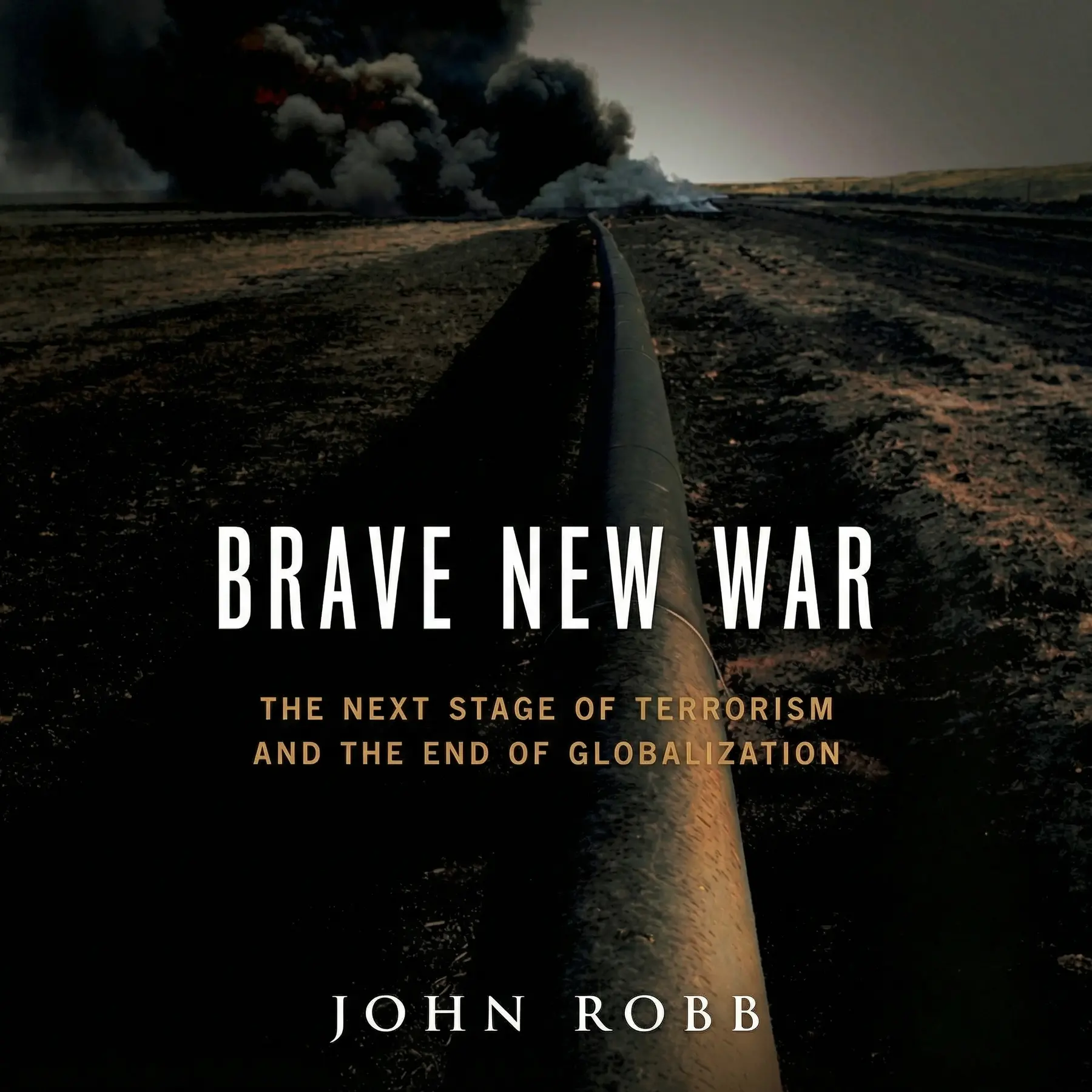
Brave New War: The Next Stage of Terrorism and the End of Globalization
By John Robb
Explore how small, decentralized groups leverage technology and systems disruption to challenge the world's most powerful nations, demanding a radical shift in how we approach global security and societal resilience.
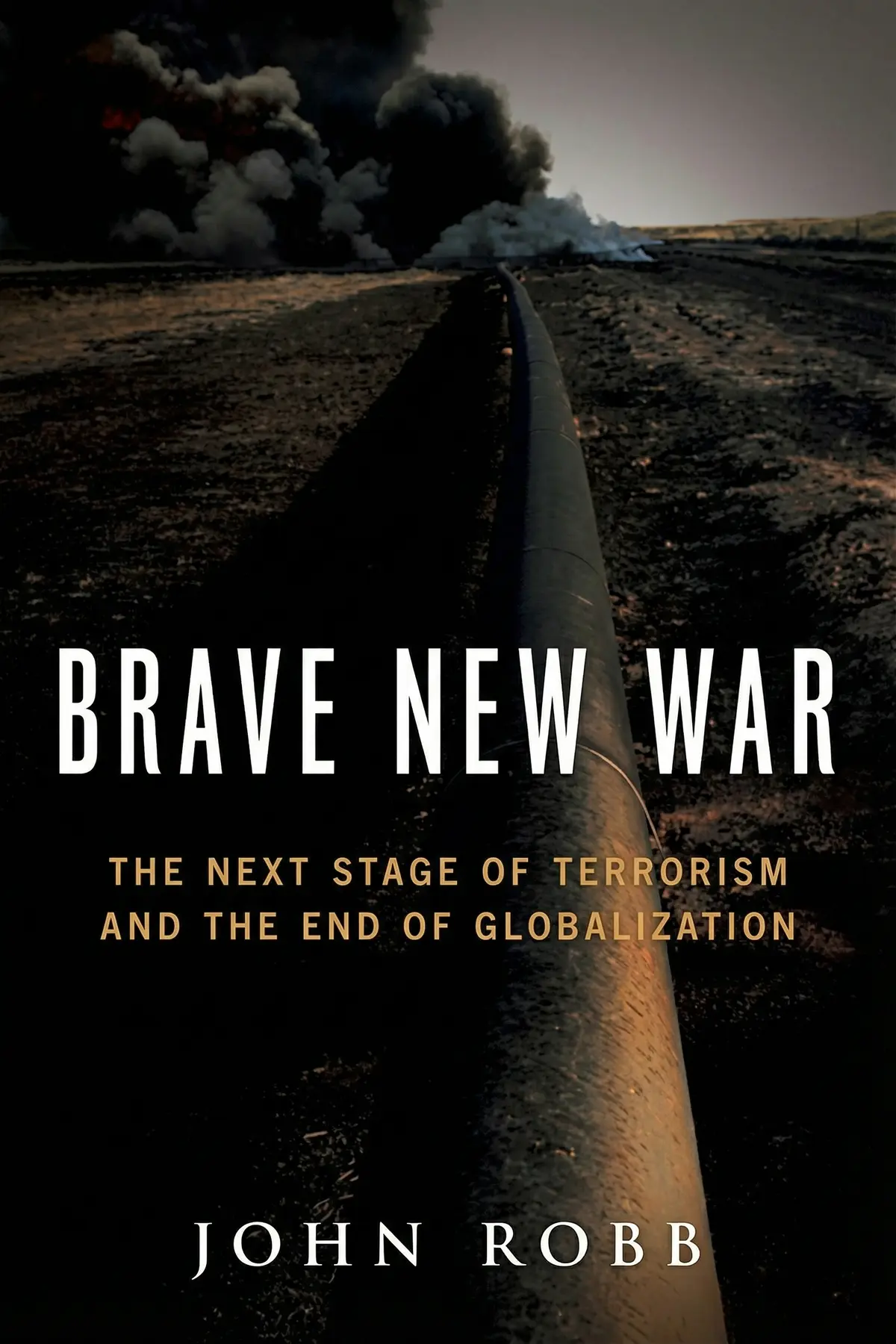
Table of Content
1. Introduction
1 min 39 sec
Have you ever wondered why, despite spending trillions of dollars on the most advanced military hardware in history, the world’s most powerful nations still struggle to defeat small groups of insurgents? It’s a paradox that defines our current era. We live in a time when a handful of individuals with a laptop and a few thousand dollars can effectively stall the gears of a global superpower. This is the central mystery we are exploring today: the realization that our supposedly safe and pleasant lives are built upon a foundation far more fragile than we care to admit.
In this exploration of contemporary conflict, we will look at how the nature of power has shifted. For centuries, the recipe for safety was simple: build a bigger army, control more territory, and centralize your resources. But that old manual is being torn up. We are entering a period where the very systems that make our lives comfortable—our electricity grids, our communication networks, and our global trade routes—are also our greatest vulnerabilities.
The throughline of our discussion is this: the era of the nation-state as the undisputed master of security is ending. In its place, we see the rise of decentralized ‘global guerrillas’ who don’t want to conquer us, but rather want to see our systems fail. To survive this shift, we can’t just build higher walls or trade away our privacy for a false sense of protection. Instead, we have to rethink the way our society is wired. We need to move from a model of centralized defense to one of decentralized resilience. Over the next several sections, we’ll break down exactly how this transformation happened and what it means for the future of humanity.
2. The Twilight of Conventional Warfare
2 min 18 sec
Traditional military dominance is fading as nuclear deterrence and economic ties make large-scale battles between nations nearly impossible, giving rise to persistent guerrilla tactics.
3. Digital Erasure of State Control
1 min 56 sec
Technological advancements, particularly the internet, are stripping nation-states of their traditional power to regulate information, commerce, and internal security.
4. The Strategic Goal of State Failure
1 min 56 sec
Modern guerrilla groups aren’t looking to seize power; instead, they thrive by intentionally creating chaos and dismantling the functional infrastructure of nations.
5. Systems Disruption and the High ROI of Terror
1 min 57 sec
By targeting ‘systempunkts’—critical nodes in a nation’s infrastructure—small groups can trigger cascading failures that cause massive economic damage at a minimal cost.
6. Open-Source Warfare and Hyper-Evolving Tactics
1 min 53 sec
Like community-driven software, modern warfare has become open-source, allowing decentralized groups to share and refine lethal strategies across the globe without central leadership.
7. The Long Tail of Modern Insurgency
1 min 50 sec
The internet has fragmented the landscape of conflict, creating a ‘long tail’ where dozens of small, niche groups collectively pose a greater threat than any single large organization.
8. The Ineffectiveness of the Police State
1 min 52 sec
Centralized security efforts and the erosion of civil liberties often fail to prevent attacks and instead damage the state’s legitimacy, playing into the hands of insurgents.
9. The Solution of Decentralized Resilience
1 min 54 sec
To survive an era of systems disruption, societies must move away from fragile, centralized networks and toward modular, producer-driven platforms like local solar grids.
10. Conclusion
1 min 41 sec
As we have seen, the landscape of global conflict has shifted beneath our feet. The traditional nation-state, once the ultimate guarantor of safety, is find itself increasingly outmatched by the decentralized, open-source tactics of global guerrillas. We live in an era where our greatest strengths—our interconnectedness and our complex systems—are also our most profound weaknesses. The old ways of maintaining security through centralized control and massive military force are no longer sufficient to protect us from the cascading failures of systems disruption.
But this realization isn’t a cause for despair; it’s a call to action. To thrive in this ‘Brave New War,’ we must adapt. We have to become as fluid and autonomous as the threats we face. This means embracing decentralization in our infrastructure, our economies, and our mindset. We need to move away from a reliance on fragile, top-down systems and toward robust, bottom-up networks where every node is capable of standing on its own.
On an individual level, there are two things you can do immediately. First, be mindful of where your money goes. The global black market fuels the very groups that seek to disrupt our lives; participating in it, even in small ways, has real-world consequences. Second, stop taking our vital systems for granted. Whether it’s having a backup power source or building local community networks, preparing for disruption is the first step toward resilience. The future will be defined by those who can survive and thrive without a centralized safety net. It’s time to stop waiting for the state to protect us and start building a world that can protect itself.
About this book
What is this book about?
This summary explores the profound shift in modern conflict, where massive national militaries are increasingly outmatched by agile, decentralized networks. It explains why traditional warfare is becoming obsolete in an era of nuclear deterrence and global economic integration, and how a new breed of 'global guerrillas' uses the internet and open-source collaboration to wage war. You will learn about the concept of 'systems disruption,' where small-scale attacks on critical infrastructure—like power grids or pipelines—can cause a cascading failure that cripples a nation. The promise of this analysis is not just a diagnosis of our current vulnerabilities, but a blueprint for a more resilient future. By moving away from rigid, centralized security and toward decentralized, autonomous systems, societies can survive and thrive in an age of unpredictable threats. This is a journey into the heart of 21st-century insecurity and the necessary evolution required to protect our way of life.
Book Information
About the Author
John Robb
John Robb is a military analyst and high-tech entrepreneur who provides expert advice to corporations and governments regarding future terrorist threats. He has authored numerous articles focusing on war and military strategy and maintains a well-regarded blog known as Global Guerrillas.
Ratings & Reviews
Ratings at a glance
What people think
Listeners find the book highly engaging and accessible, with one remarking that it is a must-read for today's world. The writing style is straightforward and the narrative moves at a brisk pace. They value the subject matter, as one person describes it as the first real text on next generation warfare. Furthermore, the work earns praise for its depth, with one listener highlighting how it touches on the growing impact of technology.
Top reviews
Pia
Finally got around to reading Brave New War, and I’m struck by how Robb managed to turn complex military theory into such a fast-moving narrative. This feels like the first real text that accurately maps out next-generation warfare, specifically how small, networked groups use technology to paralyze massive nation-states. Frankly, the writing style is remarkably clear for a subject that usually gets bogged down in dense academic jargon. I found the sections on systems sabotage particularly unnerving because they highlight just how fragile our modern infrastructure really is in the face of decentralized threats. While some of the specific examples feel like artifacts of the mid-2000s, the underlying logic remains incredibly relevant to today’s geopolitical climate. It’s a must-read for anyone trying to understand why conventional militaries keep struggling against asymmetric enemies.
Show moreMai
This book should be required reading for anyone who thinks our current defense strategies are sufficient for the modern world. Robb captures the terrifying reality of how easily a few devoted individuals can carry out a catastrophic attack on our power grids. I’ve been looking for a text that explains the shift from traditional territory-based war to these decentralized insurgencies, and this is it. Not gonna lie, the realization of how fragile our global trade networks are made it hard to sleep after finishing the chapter on systems sabotage. Even if some of the geopolitical context has shifted since 2007, the logic of the 'swarm' is undeniable. It’s a brilliant, fast-paced wake-up call that everyone needs to hear, especially given how technology has only become more pervasive since it was written.
Show moreSaovapa
Robb provides a stark, necessary critique of the centralized military complex and its failure to adapt to the new reality of networked threats. The chapters on 'systemic sabotage' are the absolute highlight here, showing how small groups can disrupt massive oil facilities for a tiny fraction of the cost. Gotta say, his comparison between the Internet's structure and modern terrorist organizations is a very helpful way to visualize the current security landscape. While he is a bit light on the reality of state-on-state conventional war, his focus on the 'contest of wills' is spot on. The prose is clear and accessible, which is rare for a book that tackles such heavy topics like the collapse of national legitimacy. It’s an insightful read that definitely makes you look at the daily news through a much more cynical lens.
Show moreHassan
Wow, talk about a punchy wake-up call that hits even harder today than it probably did when it was first published. This is the first real text I’ve found that treats next-generation warfare as a technological and social shift rather than just a military one. Seriously, Robb’s writing is incredibly clear, and he manages to explain complex ideas like 'returns on investment' for sabotage in a way that anyone can grasp. I loved how the book challenges the idea that a centralized command is always superior to a decentralized network of motivated individuals. It’s a short, engaging read that refuses to pull its punches about the fragility of the modern nation-state and our globalized trade systems. If you want to understand why the world feels like it's fracturing into smaller units, you absolutely need this on your shelf. Simply brilliant.
Show moreJob
The core thesis here is fascinating, even if the text repeats its primary points a few too many times across the chapters. Truth is, Robb presents a compelling argument that we have entered a postmodern era where territory can't be held permanently by traditional means. To be fair, his insights into how Nigerian guerrillas or Baloch tribesmen achieve massive returns on investment through infrastructure attacks are genuinely eye-opening. The book is highly readable and moves at a clip that keeps you engaged, despite some of the analysis feeling a bit dated in the current decade. I appreciated the focus on 'swarm intelligence' and how it bypasses centralized command structures. It’s a solid addition to any security professional's shelf, providing a clear framework for understanding the growing impact of technology on global instability.
Show moreIsabelle
As someone who follows defense blogs and global security trends, I found Robb’s examination of Fourth Generation Warfare to be incredibly engaging and sharp. He does a superb job analyzing the flaws in conventional military thought, particularly regarding the failure of centralized hierarchies to deal with networked insurgencies. Personally, I liked how he connects the dots between social organization and technology to show why we are now in an era of permanent conflict. My only real gripe is that he pays mere lip service to the social contract, offering a vision of security that seems reserved only for those with deep pockets. Despite that, the book is a clear-eyed look at the future of conflict. The pacing is excellent, and it avoids the fluff that usually plagues this genre.
Show moreHarper
Picked this up after hearing it mentioned in a discussion about decentralized networks, and it's certainly a fast-moving, engaging piece of futurism. Robb sees a breakdown in global trade because of terrorist activities and argues that nation-states are losing their power to 'swarm intelligence' structures. To be fair, his analysis of why the Bush doctrine failed is quite self-evident now, but it was likely very provocative when first released. I found his look at how Nigerian guerrillas operate to be one of the more grounded parts of the book. While the writing is clear, the author sometimes makes light of the security reality of highly armed states threatening their neighbors via conventional means. Still, it’s a great primer on the growing impact of technology on warfare and a must-read for those interested in the future of the state.
Show moreSven
Seeing where the predictions landed years after publication made this a very informative, if somewhat lopsided, reading experience. Robb is at his best when describing the vulnerabilities of our centralized infrastructure, but he falls short when proposing a purely capitalist solution to security. In my experience, his vision of self-sufficient enclaves sounds less like a viable solution and more like a recipe for a global police state that abandons the poor. While his dunking on the Bush administration’s misunderstanding of terrorism is satisfying, some of his projections for 2016 simply didn't pan out. Real power hasn't dissolved quite as locally as he theorized, and national governments have proven surprisingly resilient. It’s an interesting look at the technology of war, but the conclusions feel a bit rushed and are largely unproven by subsequent global events.
Show moreCherry
Not what I expected from a book that is frequently cited as a 'must-read' in certain circles. While the analysis of military flaws is occasionally superb, the author’s misunderstanding of basic non-US concepts makes the whole work feel a bit provincial and dated. He portrays the 'swarm' as an unstoppable force, yet history has shown that states can be remarkably resilient when they commit resources to winning hearts and minds. In my view, the book feels more like a collection of blog posts than a cohesive argument, leading to a lot of jarring transitions and repetitive points. I also found it frustrating that he ignores the looming impact of peak oil on the very networks he describes. It's an interesting look at the technology of war, but the conclusions feel rushed and largely unproven by the events of the last decade.
Show morePaiboon
I felt this book kept spinning its wheels and really struggled to justify its existence as a full-length book rather than a short journal article. It's only about 180 pages, yet I still found myself bored because the same three or four concepts are recycled over and over again. To be blunt, the examples feel stuck in a specific moment of the Iraq war and ignore the real security gains made by states in the years since. I didn't even finish the last thirty pages because I just couldn't handle the repetitive phrasing and the lack of deep evidence. It’s a classic case of an interesting idea stretched way too thin to satisfy a publisher's requirements. Large mistakes regarding basic concepts outside the US make it hard to take the author's broader conclusions seriously.
Show moreReaders also enjoyed
Age of Anger: A History of the Present
Pankaj Mishra

A Different Kind of Power: A Memoir
Jacinda Ardern
Age of Propaganda: The Everyday Use and Abuse of Persuasion
Anthony Pratkanis
A Higher Loyalty: Truth, Lies and Leadership
James Comey



A Promised Land
Barack Obama
AUDIO SUMMARY AVAILABLE
Listen to Brave New War in 15 minutes
Get the key ideas from Brave New War by John Robb, plus 5,000+ more titles in English and Thai.
- 5,000+ titles
- Listen as much as you want
- 7-day free trial
- Cancel anytime







