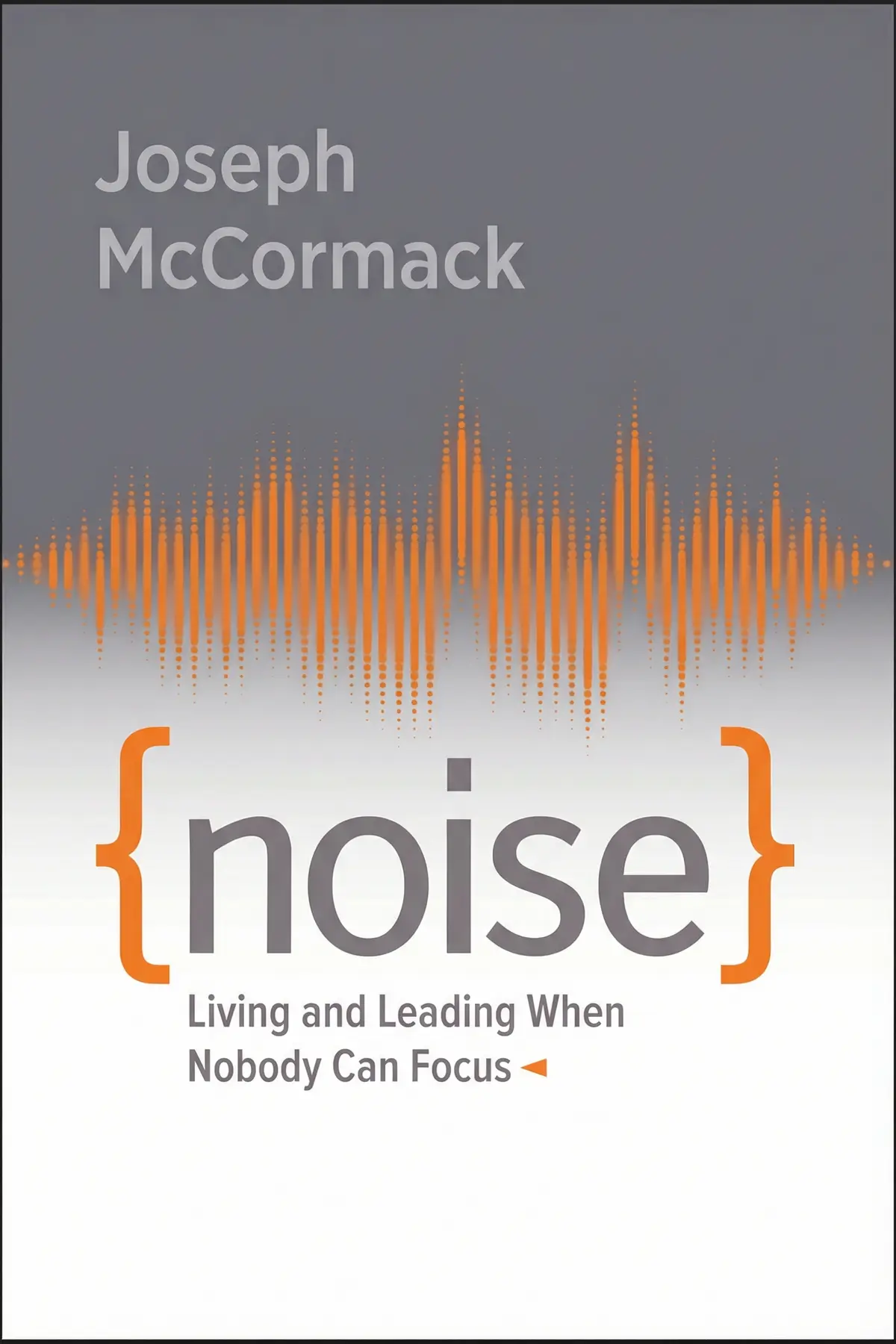
Noise: Living and Leading When Nobody Can Focus
Joseph McCormack
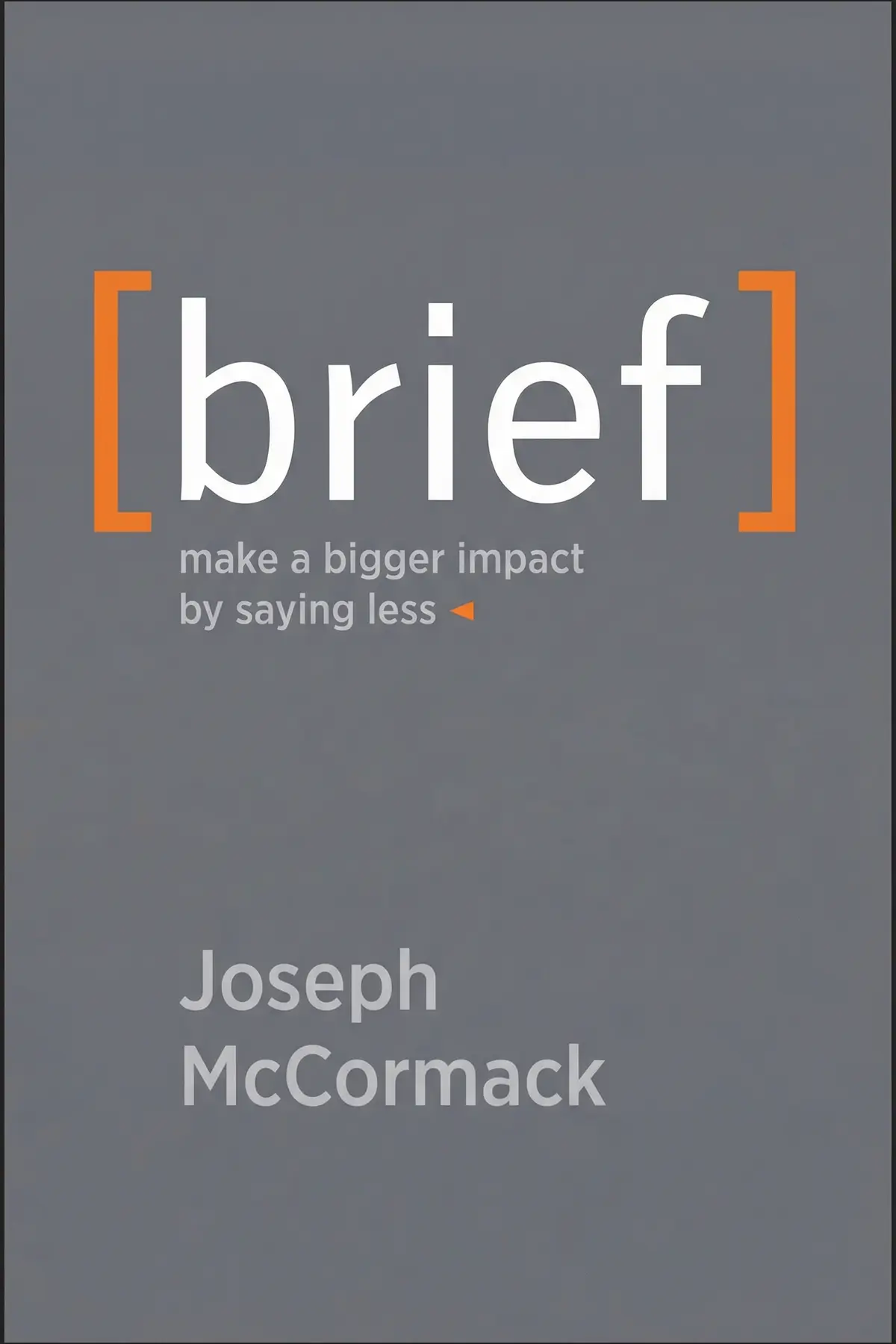
In an era of constant digital distractions, Brief offers a strategic framework for concise communication. Learn how to capture attention, respect others' time, and deliver high-impact messages that actually get heard.
1 min 34 sec
In our modern work environment, we are constantly bombarded. Between the ping of a new email, the vibration of a smartphone, and the endless stream of notifications, our cognitive space is under siege. We have more tools than ever to connect, yet we seem to be getting worse at actually communicating. Have you ever sat through a presentation that felt like a marathon, only to realize at the end that you couldn’t remember the speaker’s main point? Or perhaps you’ve opened an email that looked like a wall of text and immediately hit ‘delete’ because you didn’t have the time to decipher it. This is the reality of the ‘attention economy,’ where the most valuable currency is no longer just information, but the focus of the person you are talking to.
Brief, by Joseph McCormack, is a response to this crisis of clarity. The core philosophy here is simple: in a world where everyone is shouting, the person who speaks most effectively is the one who can get to the point fastest. Brevity isn’t just about being short or blunt; it’s about being precise. It’s about respecting your audience enough to do the hard work of editing your thoughts before you open your mouth. Throughout this exploration, we will dive into why we struggle to be succinct and, more importantly, how we can rewire our communication habits to be more impactful.
We will look at how to structure your thoughts using visual tools, how to turn boring corporate updates into engaging narratives, and why listening is actually the secret weapon of the most concise speakers. By the end, you’ll see that being brief isn’t a limitation—it’s a competitive advantage that can elevate your professional reputation and ensure your ideas finally get the attention they deserve.
2 min 20 sec
Discover how the modern flood of data has fundamentally changed the way our brains process information and why your old communication habits are failing.
2 min 15 sec
Explore the hidden reasons why we talk too much, from the trap of expertise to the dangers of being too comfortable in our surroundings.
2 min 13 sec
Learn a visual method for organizing your thoughts before you speak, ensuring your message is structured, logical, and undeniably concise.
2 min 12 sec
Discover why a simple image or chart can communicate more than a thousand words and how to use visuals to bypass the brain’s filters.
2 min 08 sec
Learn how to use narrative mapping to turn dry facts into a compelling journey, using the same techniques that made Steve Jobs a master communicator.
2 min 02 sec
Brevity isn’t just about how you speak; it’s about how you listen. Learn the TALC method to keep your conversations focused and productive.
2 min 11 sec
Understand why being concise is the ultimate form of workplace etiquette and how it can transform your meetings, emails, and even your small talk.
1 min 29 sec
In a world that never stops talking, the ability to be quiet and concise is a superpower. We have explored how the deluge of modern information has made brevity an essential skill for anyone who wants to be heard. We’ve looked at the psychological barriers that lead us to over-explain and the visual and narrative tools that can help us cut through the clutter.
Remember that brevity is not about cutting corners; it’s about cutting the noise. It requires the courage to prioritize and the discipline to prepare. When you use BRIEF mind maps or narrative structures, you are doing the cognitive heavy lifting for your audience, making it easy for them to say ‘yes’ to your ideas. You are transitioning from being someone who simply transmits data to someone who provides real value.
As you head back into your daily routine, start with one small, actionable step. Prepare for the inevitable question: ‘How’s it going?’ We hear this from bosses and colleagues every day, and most of us give a vague or rambling answer. Instead, treat it as a micro-presentation. Have a one-sentence ‘headline’ ready that highlights a recent accomplishment or a specific piece of progress. If there’s nothing significant to report, a simple ‘Everything is on track’ is far better than a list of daily tasks. By mastering these small moments of brevity, you build the foundation for a more impactful and respected professional life. Start saying less, and watch as people start listening more.
We live in an age where information is infinite but attention is a finite resource. Brief addresses the modern epidemic of over-communication and provides a roadmap for professionals to become more effective by saying less. Joseph McCormack explores why we tend to ramble—from a lack of confidence to the 'expert's trap' of over-explaining—and provides practical tools like mind maps and narrative frameworks to fix it. The book promises to help you cut through the noise of the modern workplace. By mastering the art of brevity, you can gain a reputation as a clear thinker and a decisive leader. Whether you are leading a meeting, sending an email, or engaging in small talk, these strategies ensure your message is not just transmitted, but truly received and remembered. It is a guide to reclaiming time for yourself and your audience.
Joseph McCormack is a leading authority on corporate storytelling and the strategic transmission of complex information. With a career dedicated to helping leaders find their voice, he has served as a communications consultant for high-level military officials and top-tier executives at global brands, including SAP, MasterCard, and Harley-Davidson.
Joseph McCormack
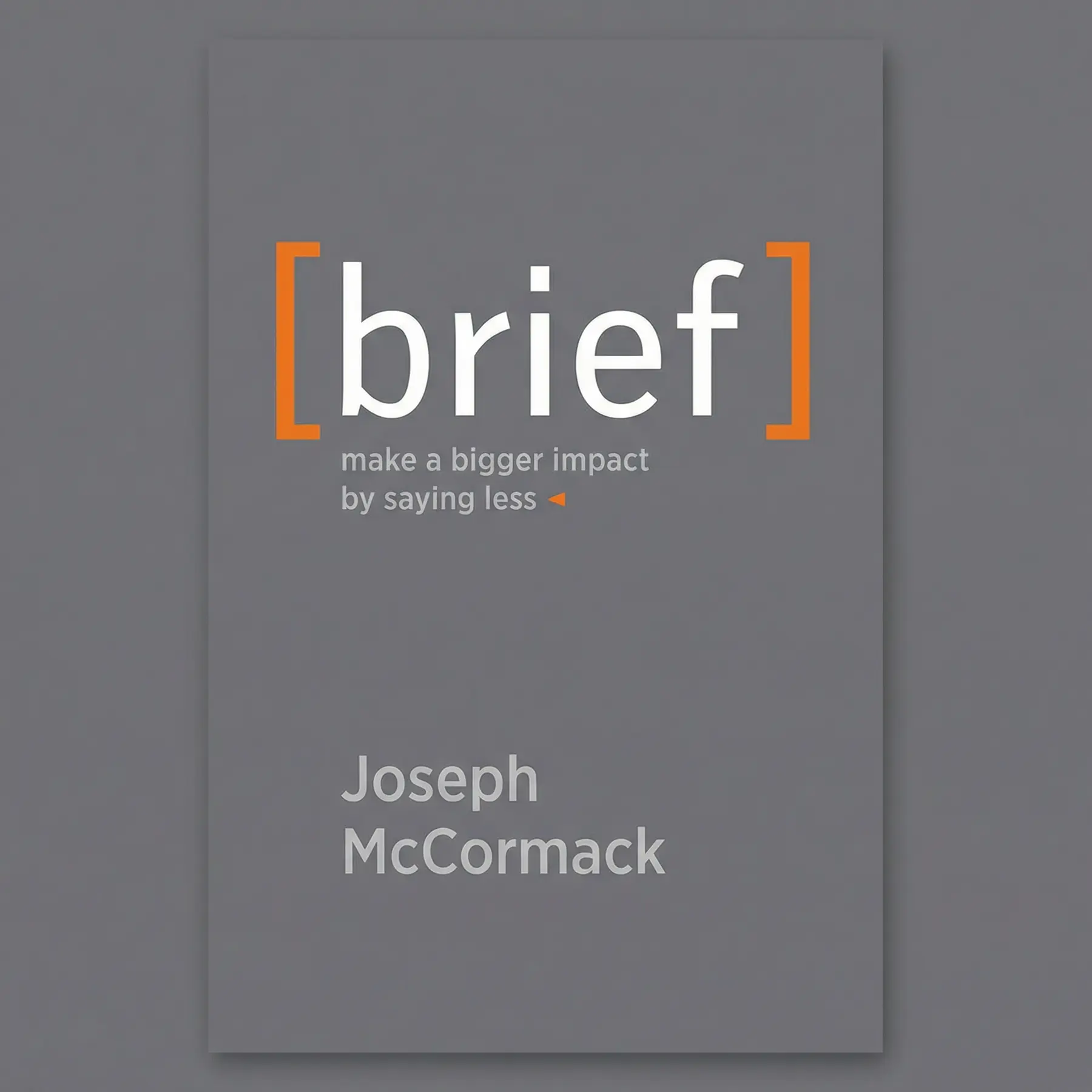
Listeners find the guide very accessible and value its succinct prose and actionable advice for communicating efficiently. Furthermore, the content meaningfully influences their ability to achieve outcomes, and one listener highlights how it strengthens their skills in delivering presentations. Nevertheless, views on the book's length and narrative style vary; while some consider it brief, others feel it is too long, and while some enjoy the stories, others perceive them as rambling.
Finally got around to reading this for a work project, and it's a total game-changer for my presentations. As a director, my time is constantly sliced into thin slivers, and this book taught me how to respect the time of my peers too. The BRIEF map—Background, Relevance, Information, Ending, Follow-up—is a framework I’ve started using for every high-stakes email. It works. Frankly, the most impactful part was learning to 'speak in headlines.' We often ramble because we’re afraid of missing a detail, but McCormack shows that brevity actually invites more meaningful, controlled conversations. While some people might find the layout a bit busy with all the call-out boxes, I found them easy to navigate. This is practical guidance that yields immediate results in a corporate setting. My meetings are shorter, my points are clearer, and my team actually knows what I need from them now. Worth every penny.
Show moreWow, I didn't realize how much noise I was adding to my emails until I read through the section on headlines. This book is an essential tool for anyone who needs to influence decision-makers. In my experience, executives have zero patience for 'fluff,' and McCormack provides a concrete way to cut through it. The BRIEF map is a brilliant way to structure thoughts before you even open your mouth. I loved the emphasis on visuals and stories, even if some critics think they ramble—I found them to be great examples of how to make a point stick. It’s not just about saying less; it’s about making a bigger impact with the words you choose. This isn't just for business either; it's helped me be more direct and clear in my personal life too. Common sense isn't always common practice, and this book serves as a fantastic, much-needed reminder to value other people's time.
Show moreEvery manager needs to read Chapter 23 at the very least. This book provides the perfect antidote to the information overload that defines our current work culture. Joseph McCormack has spent his career helping people think before they speak, and that expertise shines through on every page. Not gonna lie, I was skeptical about a whole book on this topic, but the techniques for using visuals and structured maps are incredibly helpful. It’s about building a reputation for being the person who doesn't waste anyone's time. When you have something to say, people actually listen because they know you’ll be quick. The book is neatly arranged, making it a breeze to navigate. Whether you're trying to sell a product or just trying to get your point across in a family dinner, the principles of being clear and compelling apply. It’s a short-term investment of reading time for a long-term gain in communication efficiency. Highly recommended for busy professionals.
Show moreAs someone who spends half their day in pointless meetings, McCormack’s advice felt like a breath of fresh air. He makes a compelling case for why being concise is a competitive advantage in the modern workplace. The truth is, people just don't have the attention span for hour-long slide decks anymore. I particularly appreciated the section on 'active listening' and how it allows you to gauge what your audience already knows so you don't repeat yourself. There are a few sections that feel a bit repetitive, and some of the stories are a little too focused on the military or high-level executives, but the core principles remain solid. You learn to control yourself in the conversation rather than trying to dominate it with data. It’s a disciplined approach to talking that I think every young professional should master early in their career. It’s not just about saving time; it's about making your words count.
Show moreLook, the core message of this book could have been a long-form article, but the repetition actually helps the habits stick. Picked this up because I have a habit of over-explaining everything, especially when I’m delivering bad news. McCormack’s advice on 'flagging'—telling the audience exactly how many points you’re going to cover—has been a lifesaver. It keeps me on track and keeps the listener engaged because they know there is an end in sight. The book is very easy to read and the layout, though a bit textbook-ish, allows for quick referencing later on. I do agree with other reviewers that some of the 'case studies' are forgettable and feel like filler, but the actual BRIEF framework is gold. It’s about being clear and compelling without choking your audience with data. If you struggle to get to the point, this provides the mental discipline you need to change your habits.
Show moreDoes a 200-plus page book on being brief make sense? It sounds like a joke at first, but McCormack actually builds a solid system here. He treats brevity as a professional discipline that requires constant practice. I particularly liked the concept of 'controlled conversations.' Instead of dumping information on people, you give them just enough to invite a question. This shifts the dynamic from a lecture to a dialogue. I will admit that the Wiley-style formatting with the sidebars and boxes can be a bit much, making it feel more like a manual than a narrative. But for a business book, that might actually be a benefit. It’s easy to flip to a specific chapter and get a refresher on something like the BRIEF map or how to handle interruptions. It's helped me trim the fat from my weekly reports, and my boss has definitely noticed the difference in my clarity.
Show moreIn my experience, communication training usually feels like a waste of time, but this one actually stuck with me. The author knows his stuff and provides very practical, actionable advice that you can use the same day you read it. I’ve started using 'headlines' in my internal Slack messages and the response time from my team has improved significantly. They get the gist immediately. The book does have some repetitive parts, and I wasn't a huge fan of every single case study, but the overall framework is incredibly sturdy. It teaches you to respect the 'suffocating noise' everyone is dealing with. The chapter on the BRIEF map alone is worth the price of the book. It’s a very quick read, ironic length notwithstanding, because the writing style is so accessible. If you’re in sales or management, this is definitely a must-have for your professional shelf. It helps you develop that essential 'mental muscle memory' for efficiency.
Show moreAfter hearing a lot of hype about this in my industry, I decided to give it a go. There are definitely some strong points here, especially the idea that brevity is a sign of expertise. If you can’t explain it simply, you don’t know it well enough. However, the book itself fails to follow its own primary directive. It is far from brief. The constant text box interruptions and 'Brief Bits' felt like they were trying too hard to be modern and 'snackable,' but they just ended up being distracting. I found the chapter on firing people and delivering bad news to be the most practical part of the whole thing. It reminds you that over-explaining is often just an attempt to comfort yourself, not the other person. Overall, it's a decent professional development read, but you could honestly get 90% of the value by just reading a summary of the BRIEF map online. It’s okay, just not revolutionary.
Show moreThe irony is palpable throughout this entire reading experience. Joseph McCormack argues that we are drowning in information clutter, yet he chooses to fill his own book with 'Brief Bits'—distracting text boxes that interrupt the narrative flow every few pages. To be fair, some of the kernels of advice regarding 'mental muscle memory' are helpful for professional communication. However, it feels like a textbook produced by a publisher who didn't quite trust the author’s core message of simplicity. I found myself skimming through long-winded case studies about people I don't know just to find the actual tools. It’s a 250-page book that desperately needed its own editor to take a pair of shears to the fluff. If you want the highlights, just read the summary at the end and save yourself several hours of circular reading. It’s not that the advice is bad, it’s just buried under the very noise it claims to fight.
Show moreNot what I expected from a book that preaches brevity. It felt like an overpriced textbook that repeats the same three ideas for over two hundred pages. I was baffled by the author's claim that only an arrogant writer expects you to read a book cover-to-cover; if that’s the case, why write a book at all? Just send a tweet. The 'Brief Bits' are incredibly annoying interruptions that make it impossible to get into a reading rhythm. Personally, I found the tone to be a bit condescending toward the reader’s intelligence. It relies heavily on shallow anecdotes rather than actual behavioral science or psychology. If you’re a creative person or someone who enjoys the nuance of language, this will likely frustrate you. It feels like it was written for a very specific type of corporate drone who has forgotten how to have a real human interaction without a PowerPoint slide. Truly unimpressed by the execution here.
Show more
AUDIO SUMMARY AVAILABLE
Get the key ideas from Brief by Joseph McCormack, plus 5,000+ more titles in English and Thai.