

59 Seconds: Change Your Life in Under a Minute
Richard Wiseman
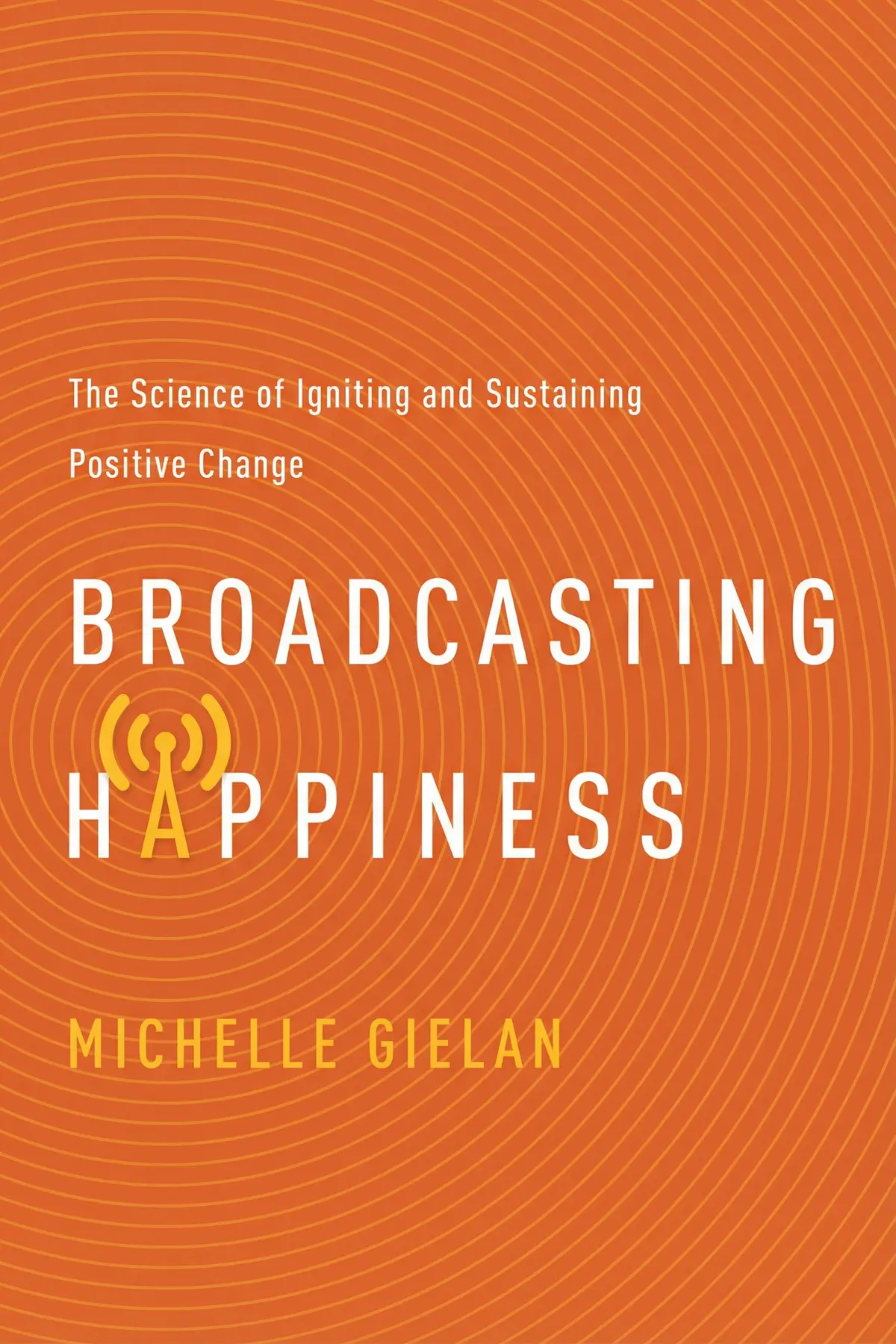
Broadcasting Happiness reveals how we can use the science of positive communication to transform our personal and professional lives. By intentionally shifting the messages we send, we can boost productivity and strengthen relationships.
1 min 29 sec
Think back to the last time you walked into a room where everyone seemed tense and frustrated. You could probably feel that heavy energy immediately, couldn’t you? Now, contrast that with a moment when you were surrounded by people who were enthusiastic and solution-oriented. The difference isn’t just a matter of luck or personality; it’s a matter of broadcasting.
In the traditional world of media, broadcasting refers to sending out a signal from a central station to thousands of receivers. But as Michelle Gielan points out in her work, every single one of us is our own personal broadcasting tower. Every time you speak to a colleague, send an email, or even just walk into a meeting, you are transmitting a message. The question is: what kind of signal are you sending? Are you broadcasting stress and limitation, or are you broadcasting happiness and possibility?
This isn’t just about ‘thinking positive’ in a shallow way. It’s about a scientifically grounded approach to communication that can literally rewire the brains of the people around you. When we change our broadcast, we change the way people respond to us, the way our teams function, and even our own physical health. Throughout this summary, we are going to explore how to harness this power. We’ll look at how your memories dictate your future, why storytelling has the power to heal the body, and how you can deliver even the most difficult news in a way that creates a path forward. By the end, you’ll have a new set of tools to ensure that your personal broadcast is one that sustains positive change for yourself and everyone in your orbit.
2 min 13 sec
Our reactions to daily challenges are often dictated by hidden mental snapshots. Discover how rewriting these internal archives can fundamentally change your path to success.
2 min 02 sec
Could the stories you tell actually make you younger? Learn about the fascinating link between the narratives we share and our physical health.
1 min 41 sec
Optimism is often a quiet force in the workplace, but it is incredibly contagious. Learn how to bring these hidden voices to the forefront.
1 min 47 sec
The words we use today determine the performance of tomorrow. Explore how subtle linguistic cues can boost intelligence and cooperation.
1 min 45 sec
Positivity doesn’t mean ignoring reality. Discover the four essential steps for sharing bad news in a way that builds trust and resilience.
1 min 35 sec
As we reach the end of our journey through the science of positive communication, the central takeaway is clear: you are not just a passive observer of your reality. You are an active participant in creating it through every message you send. Whether you are leading a corporation or just sitting down at the dinner table with your family, the ‘frequency’ you choose to broadcast has a tangible impact on the success, health, and happiness of everyone around you.
We’ve seen how our flash memories act as the lens through which we view the future, and how we have the power to polish that lens by focusing on our successes. We’ve learned that the stories we tell don’t just entertain us—they have the power to physically change our bodies and revitalize our communities. We’ve explored the importance of speaking up as an optimist and the subtle but powerful way that priming our language can unlock the potential in others. Finally, we’ve learned that even in the face of bad news, we can maintain a positive broadcast by leading with compassion and commitment.
If you want to start ‘broadcasting happiness’ today, try this simple exercise: Think of a major goal or area of your life, like your career. Write down the first three words that come to mind. These are your flash memories. If they are negative, consciously look for three examples from your past that prove the opposite. By deliberately choosing to broadcast these positive experiences to yourself and others, you begin the process of rewiring your world. The tower is yours—it’s time to start sending out a signal of hope, resilience, and success.
Have you ever considered that you are a walking, talking broadcast station? In Broadcasting Happiness, Michelle Gielan explores the profound impact that our daily communication has on the people around us and our own internal mindset. Drawing on her background as a CBS news anchor and a researcher in positive psychology, Gielan argues that we are constantly transmitting signals to our coworkers, friends, and family. These signals—whether they are pessimistic or optimistic—shape the reality we live in. The book provides a roadmap for shifting from negative broadcasting to a more positive, solution-oriented approach. It promises that by making small but significant changes in how we tell stories, share news, and react to challenges, we can trigger a ripple effect of success. This isn't about ignoring the difficulties of life; it’s about learning how to process and transmit information in a way that empowers others to take action and find meaning in their work and life.
Michelle Gielan is a bestselling author and an expert in the field of positive psychology. Before her research career, she served as a national news anchor for CBS, where she reported on the 2008 financial crisis. This experience led her to explore how information affects human behavior and well-being. Gielan has also been featured as a professor in Oprah’s Happiness course and is the founder of the Institute for Applied Positive Research.
Listeners find this book to be functional and simple to digest, offering happiness to individuals and professional teams alike. They also value the novel insights into positive psychology, with one listener calling it a great addition to the canon. The text provides quality anecdotes, and one listener remarks that the advice is highly applicable to everyday life.
Michelle Gielan brings a really unique perspective to positive psychology, drawing heavily on her background as a CBS news reporter. This isn't just a collection of 'feel good' quotes; it is a science-backed manual for changing the narrative of your life. I was particularly struck by the concept of the 'Power Lead' and how starting conversations with a positive hit can shift the entire mood of a room. In my experience, these small shifts in how we communicate lead to massive changes in social capital and team cohesion. While the author does share a lot of her own success stories, I found them more inspiring than boastful. This book is a must-read for anyone who feels stuck in a cycle of negativity at work. It offers a practical roadmap to becoming a more effective, optimistic leader by simply changing what you broadcast to the world.
Show moreFinally got around to reading this and it’s an absolute game changer for anyone in leadership. I love how Michelle Gielan uses her journalism background to explain how we can control the 'news' we share with others. The book is packed with practical tips that are easily implementable in daily life, especially the idea of the 2-minute positive email. I’ve started doing this every morning and have already noticed a shift in my team’s morale and my own stress levels. It’s rare to find a book that combines scientific research with such an engaging, emotional narrative. Even if the author’s tone is a bit enthusiastic at times, the results speak for themselves. This is a powerful, impactful, and smart book that I will be recommending to all my colleagues and friends.
Show moreThis book acts like a slow sunrise for your professional mindset. Gielan has managed to take complex neuroscience and turn it into something genuinely practical for the average person. I loved the emphasis on how we are all 'broadcasters' in our daily lives, influencing everyone from our kids to our coworkers. The stories are engaging and help illustrate the 31% increase in productivity that positive communication can bring. It’s a fresh perspective that doesn't just promise millions, but focuses on real, sustainable success through shifting our mental frames. Each chapter felt important and useful to my current situation. I am passing this one along to my entire department because I think everyone can benefit from these strategies. It’s easily one of the best additions to the positive psychology canon I've read in years.
Show moreI picked this up hoping for some actionable advice for my management team, and Gielan definitely delivered. The book is incredibly easy to read and focuses on how broadcasting happiness can lead to a 31% increase in productivity. Truth is, most business books are dry, but the stories here are engaging and help illustrate the neuroscience without getting bogged down in jargon. I did find some of the terminology, like 'Social Capital,' a bit buzzword-heavy, which occasionally gave off a corporate retreat vibe. However, the strategies for delivering bad news and neutralizing negative influencers are too good to ignore. It is a fresh perspective on the 'happiness advantage' that you can actually implement tomorrow morning. Even if you are a skeptic, the data presented makes a very compelling case for trying these techniques out in a professional setting.
Show moreEver wonder why some people just seem to radiate success while others constantly struggle with a fear-based mindset? This book dives deep into the neuroscience of why our brains perform better when we are positive. Gielan argues that we are all broadcasters, and our internal frequency affects everyone around us. I appreciated the practical tips for turning around a negative conversation and the research showing how optimism lowers stress. Personally, I think the writing style is very accessible, though I can see why some might find it a bit like an infomercial for the author's consulting firm. That said, the 'Power Lead' technique has already helped me have better interactions with my kids and my boss. It’s a solid addition to the positive psychology canon that offers real value beyond just the usual self-help platitudes.
Show moreThe chapter on 'strategic retreat' was a major eye-opener for me and worth the price of the book alone. It’s a very practical look at when to engage with negativity and when to step back to preserve your own mental health. As someone who works in a high-stress office, I found Gielan’s advice on neutralizing 'toxic broadcasters' to be extremely relevant. The book is well-paced and full of implementable advice that doesn't require a total life overhaul. My only minor gripe is that some of the 'Success' stories felt a bit too perfect, making the results seem almost too easy to achieve. Regardless, the core message about taking responsibility for the energy you bring into a room is powerful. It’s a great tool for anyone looking to improve their professional relationships and overall outlook.
Show moreTo be fair, there is a lot of solid research buried in these pages, but I struggled with the delivery. Gielan has a lot of great stories from her time in news, but at times the book felt a little like a long-form marketing brochure for her brand. She uses a lot of fancy terminology to describe things that most of us would consider common sense, like being kind or starting a meeting on a high note. I wanted to love it because I’m so exhausted by the negativity in the world today. While I did find the sections on 'Social Capital' interesting, the overall tone felt a bit forced and artificial to me. It’s not a bad book, and the science is definitely there, but it didn’t quite resonate with me the way I hoped it would.
Show moreAs someone who has survived multiple toxic work environments, a lot of these tips felt like things I had already learned the hard way. The book is a quick, easy read and the focus on neuroscience is a nice touch that adds some much-needed credibility. However, I couldn't get past the feeling that I was being sold a lifestyle brand rather than just reading a helpful book. The constant use of buzzwords like 'Broadcasting' and 'Power Leads' got a bit repetitive after the first few chapters. If you are new to the world of positive psychology, you will likely find this very inspiring and fresh. For veterans of the genre, it might feel like a repackaging of existing ideas with a new coat of professional paint. It’s a decent read, but not necessarily a groundbreaking one for me.
Show moreLook, the core message here is undeniably positive, but I couldn't shake the feeling of being in a corporate infomercial. Gielan uses her background as a CBS news reporter to bridge the gap between media influence and personal psychology, which is quite clever. However, the heavy use of terms like 'Social Capital' and 'Power Lead' felt more like branding exercises than revolutionary science. To be clear, the tips provided are highly practical and easily implementable, especially the advice on delivering bad news. I just wish the tone was a little less like a company retreat and a bit more grounded. If you can get past the buzzwords, there’s a lot of value here for team leaders, but it might feel a bit repetitive if you already read a lot of business psychology.
Show moreNot what I expected from a book on happiness, and frankly, I struggled to finish it. While the science behind positive psychology is fascinating, the way it’s applied here feels incredibly artificial. It seems the author is primarily concerned with using happiness as a tool to boost TV ratings or increase corporate productivity, which takes the joy out of the concept for me. The stories often felt a bit contrived, almost as if they were designed to serve a specific 'humblebrag' narrative for the author’s brand. I found it difficult to connect with her style of writing, which felt a bit self-important at times. There are some okay tips for managing stress, but I’d rather find a more authentic source for mental well-being than a manual for manufacturing positivity just for the sake of ROI.
Show moreRichard Wiseman



William B. Irvine

Andrew D. Thompson


Deepak Chopra
AUDIO SUMMARY AVAILABLE
Get the key ideas from Broadcasting Happiness by Michelle Gielan, plus 5,000+ more titles in English and Thai.







