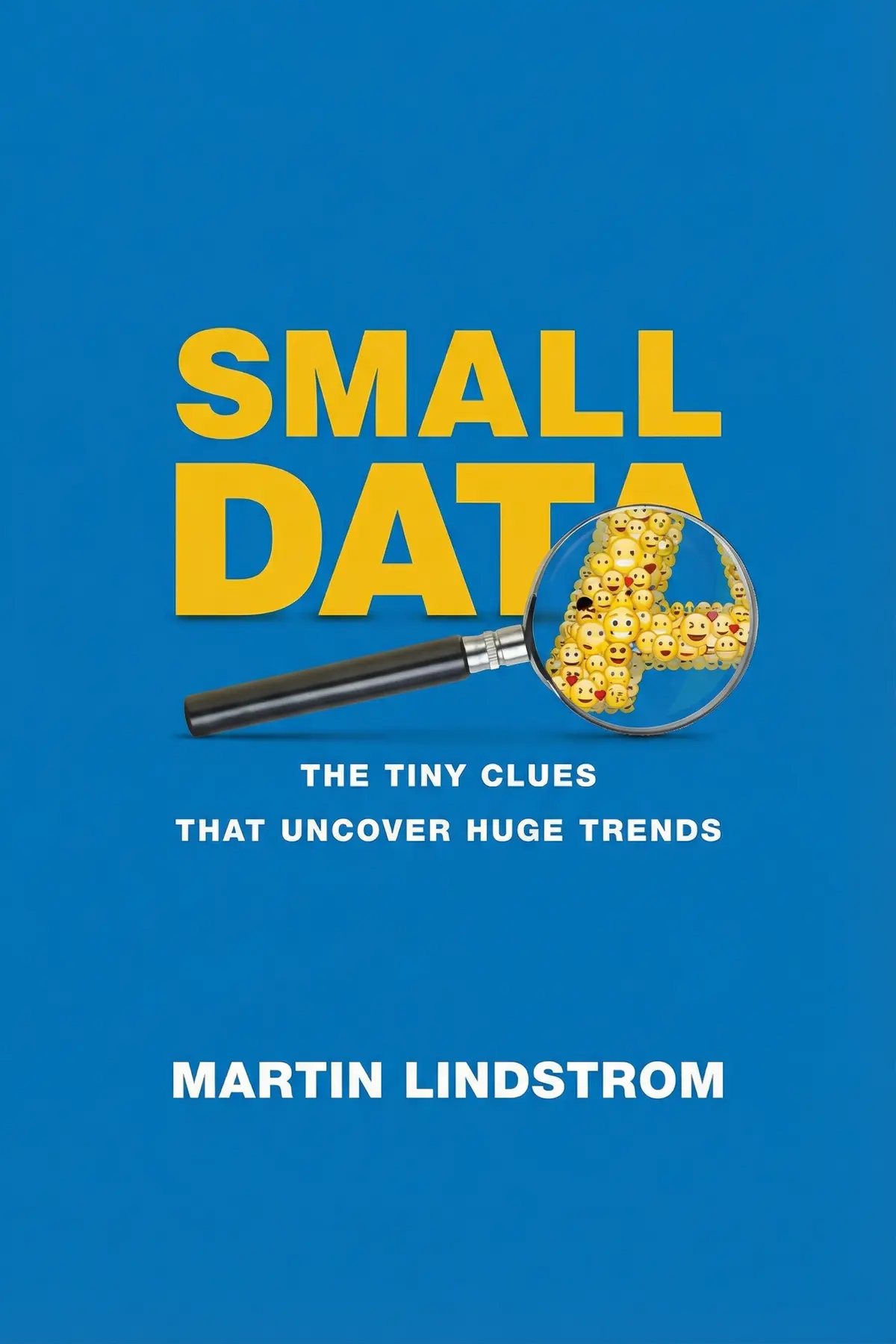
Small Data: The Tiny Clues That Uncover Huge Trends
Martin Lindstrom
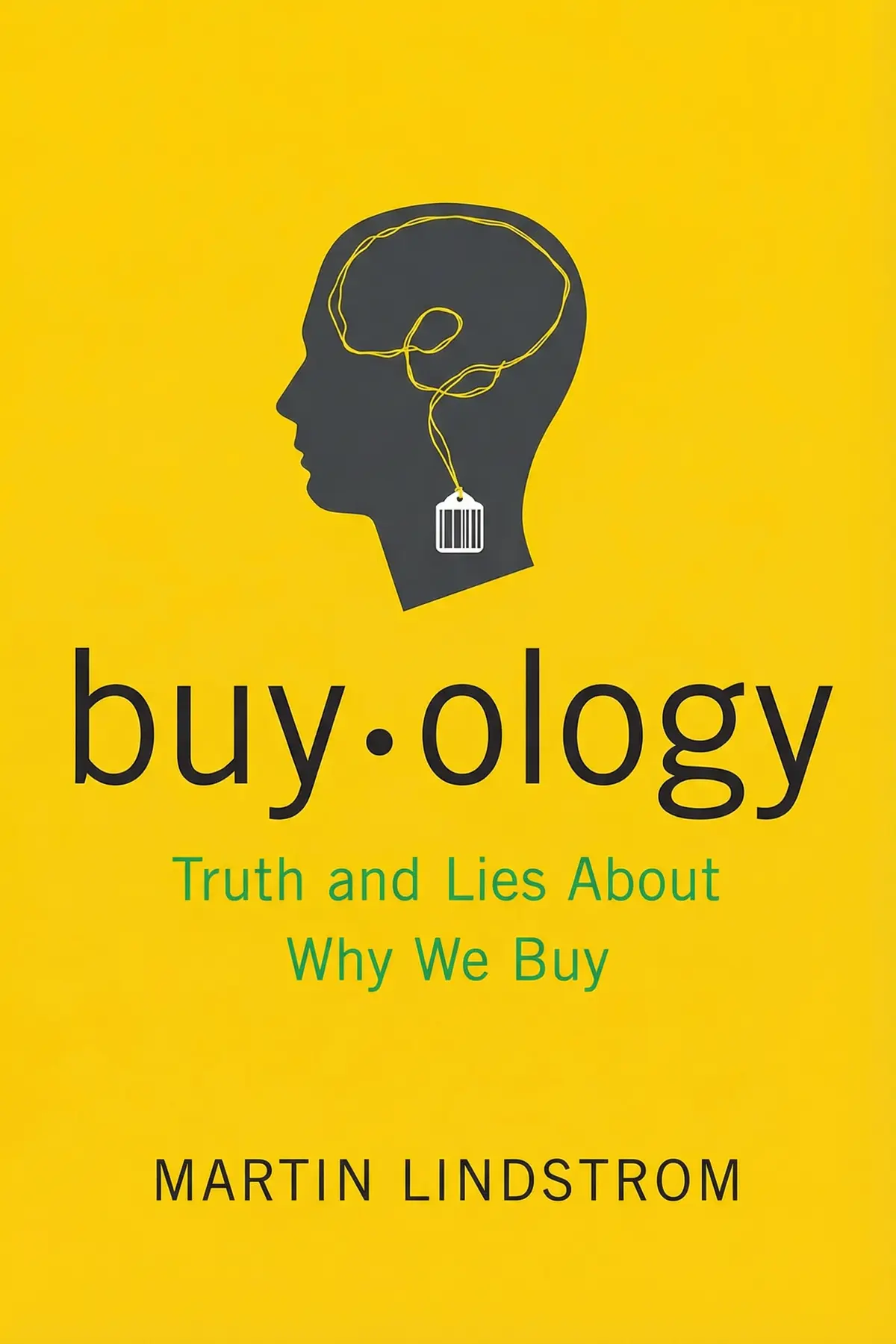
Martin Lindstrom explores the hidden neural triggers behind our shopping habits. By studying brain activity, he reveals why traditional market research fails and how subconscious associations truly drive our commercial choices.
1 min 58 sec
Think about the last time you went to the store. Maybe you just needed a simple carton of milk or a bag of coffee. But then, something happened. You found yourself standing in front of the shelf, looking at ten different brands that all looked more or less the same. You reached out, grabbed one, and tossed it in your cart without a second thought. If someone had stopped you and asked why you chose that specific brand, what would you have said? Maybe you’d claim it tastes better, or that the price was right. But the truth is, you probably didn’t have a rational answer. Most of us like to believe we are sensible, logical people who make calculated decisions based on facts and figures. We tell ourselves we buy products because of their quality or their utility.
However, the reality of our shopping habits is far more mysterious. In the world of commerce, there is a hidden force at play—a hidden ‘buyology’—that dictates our behavior in ways our conscious minds can’t quite grasp. This isn’t just about clever slogans or flashy colors; it’s about what is happening deep inside the folds of our gray matter. For years, companies have relied on surveys and focus groups to figure out what we want. But there’s a major problem with that approach: what we say we want and what our brains actually desire are often two completely different things.
This is where neuromarketing comes in. By using advanced medical technology to peer into the human brain, researchers are finally uncovering the real reasons we open our wallets. Over the next few minutes, we’re going to explore the neurological triggers that advertisers use to bypass our logic and speak directly to our instincts. We’ll look at why certain brands feel like a religion, why some of the most famous marketing rules are actually wrong, and how our evolution has wired us to be consumers. It’s time to look under the hood of the human mind and discover the truth and lies about why we buy.
2 min 10 sec
Discover how your brain is hardwired to mimic the actions and emotions of others, turning a simple image of a happy consumer into an irresistible urge to buy.
2 min 10 sec
Your brain uses a lifetime of hidden associations to make split-second decisions, creating powerful shortcuts that dictate your brand preferences before you even realize it.
1 min 58 sec
Explore how negative emotions can be more persuasive than positive ones, and why our brains are wired to find comfort in consumerism when we feel threatened.
2 min 02 sec
Beyond the conscious eye, subtle smells, sounds, and symbols are constantly nudging us toward specific brands without us ever noticing the influence.
1 min 59 sec
Learn why the graphic health warnings on cigarette packs might actually be doing the exact opposite of what they intend, and why logic fails to stop addiction.
1 min 56 sec
Discover the startling neurological similarities between how we feel about our favorite brands and how we experience spiritual devotion.
2 min 07 sec
It is a common belief that ‘sex sells,’ but research reveals a phenomenon called the Vampire Effect that might be making these ads a waste of money.
2 min 00 sec
Your brain can actually change its physical experience of a product based on nothing more than the price tag, proving that value is often an illusion.
1 min 47 sec
As we have seen, the world of shopping is far more complex than a simple exchange of money for goods. It is a deeply psychological and neurological battlefield where our primal instincts, evolutionary history, and cultural associations collide. The old ways of understanding consumers—asking them what they want through questionnaires—are becoming obsolete. We now know that we are often the last people to understand why we make the choices we do. Our brains are responding to mirror neurons, somatic markers, hidden sensory cues, and the powerful lure of ritual, all while our conscious minds make up logical stories to justify the purchase.
Understanding these ‘buyology’ principles isn’t just for marketers who want to sell more products; it’s also for us as consumers. When we recognize that a graphic warning label might actually be triggering a craving, or that a high price tag is literally tricking our brain into feeling more pleasure, we gain a small measure of control. We can start to see the strings that advertisers are pulling and make more informed, truly conscious decisions.
In the end, the science of neuromarketing reminds us that we are emotional, irrational creatures who are constantly seeking connection, status, and security. Brands that succeed are those that understand how to speak to those deep-seated human needs. As technology continues to advance, the line between marketing and neuroscience will only become more blurred. By paying attention to what our brains are telling us, we can navigate this commercial landscape with a bit more wisdom, recognizing the truth and the lies about why we buy.
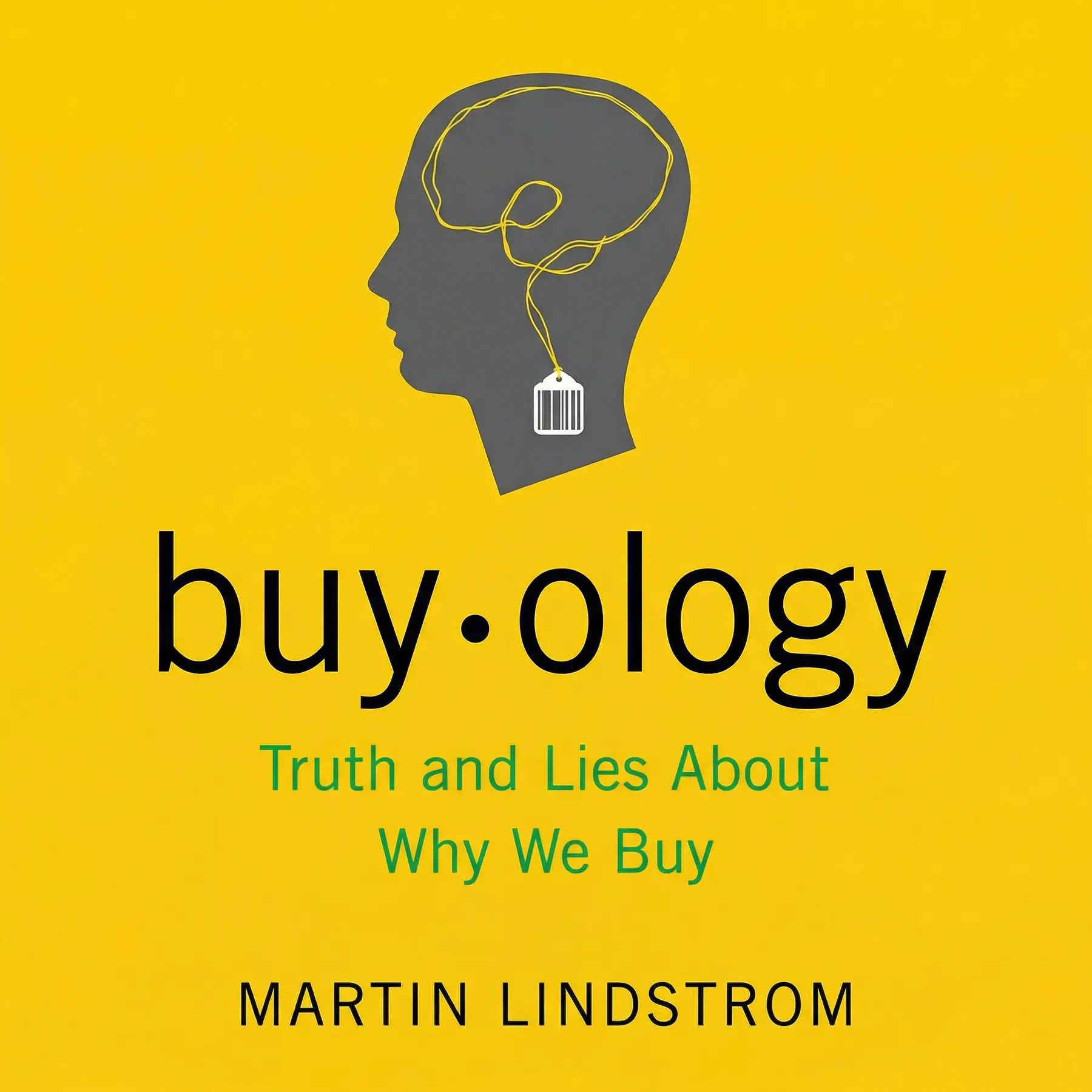
Ever wondered why you reach for one brand over another, even when they seem identical? This summary dives into the world of neuromarketing to explain the irrational forces guiding our wallets. It uncovers how our brains react to advertising in ways we aren't even aware of, from the mirror neurons that make us mimic others to the somatic markers that create instant, lifelong brand loyalties. Through a massive study involving thousands of volunteers, the book dismantles long-held marketing myths. You’ll discover why graphic cigarette warnings might actually encourage smoking, why sex doesn’t always sell, and how top brands use the same psychological tactics as world religions to foster fanatic loyalty. By looking at the intersection of neuroscience and advertising, this is an exploration of the buyology inside us all—the truth and lies about why we buy and how our unconscious mind is the true driver behind our spending.
Martin Lindstrom is a Danish author and an authority on branding. In 2009, he was honored as one of the 100 most influential people by TIME magazine. He consults for leading global companies and contributes frequently to major outlets like TIME and FAST Company. He has authored several bestselling books focused on consumer behavior and the psychology of the marketplace.
Martin Lindstrom
Listeners find the work both engaging and educational, highlighting its profound exploration of neuromarketing alongside compelling real-world examples. Reactions to the prose are varied; while some find the writing effective, others feel the text is excessively wordy. Listeners view the material as functional and beneficial, with one mentioning its specific utility for research purposes. Perspectives on the book’s overall value are split, as several listeners suggest it does not justify the price tag.
The chapter on tobacco advertising and the 'hidden' cues used by brands like Marlboro blew my mind. Lindstrom explains the mechanics of how our brains react to stimuli in a way that is both engaging and terrifyingly accurate. I loved the concept of 'buy-ology' and the idea that our verbal responses in surveys are often the exact opposite of what our brain actually wants. It’s an incredibly informative look at the power of the subconscious. While some critics argue it’s too commercial, I found the fast-paced, anecdotal style perfect for a non-academic reader. If you’ve ever wondered why you bought that expensive gadget you didn’t need, this book has the answer.
Show moreEver wonder why you’re drawn to certain brands like a moth to a flame? Buyology provides a fascinating, almost voyeuristic look into the brain’s response to various marketing stimuli. I particularly enjoyed the section on how our senses—smell and sound—are manipulated to trigger memories and buying impulses. It’s written in a way that feels more like a fast-paced thriller than a dry business book. In my experience, most marketing books are dated within a year, but the psychological principles here feel quite timeless. Yes, there’s a bit of self-aggrandizement, but when the content is this engaging, it’s easy to look past the author's vanity and focus on the deep insights into neuromarketing.
Show moreAfter hearing the buzz about neuromarketing for years, I finally picked this up and was absolutely blown away by the core concepts. The discussion on how logos are actually losing their power in favor of 'smashable' sensory branding—where you can recognize a brand by its shape or sound alone—was a total revelation. Lindstrom’s writing is incredibly accessible and fast-paced, making it a joy to read despite the heavy subject matter. I found the specific case studies, especially the deep dive into the failure of the New Coke, to be the strongest and most informative parts of the book. It’s an essential guide for anyone who wants to understand the invisible psychology behind our daily choices. Truly worth every penny for the real-life examples.
Show morePick this up if you want to understand the invisible strings that move the modern consumer. Buyology is an incredibly informative book that bridges the gap between high-level neuroscience and everyday shopping habits. The data on mirror neurons was particularly striking, explaining why we feel a compulsion to buy something just because we see someone else using it. I found the book to be worth every penny for the way it recontextualizes our relationship with advertising. It’s not just for marketers; it’s for anyone who wants to be a more conscious human in a world designed to make us consume. Truly a fascinating and insightful read from start to finish.
Show moreFinally got around to reading Buyology, and it’s a fascinating, if somewhat flawed, deep dive into the lizard brain of the modern consumer. Lindstrom does a stellar job of illustrating how our subconscious drives our spending habits, even when we swear we’re being rational. The sections on 'smashable' brands and why certain logos stick while others fade were particularly insightful for my own research. To be fair, the author’s tone can lean a bit heavily into self-promotion, which occasionally distracts from the actual data. I found the real-life examples of failed product launches incredibly practical for anyone in the marketing space. It’s an entertaining read that makes you question every purchase you’ve made in the last month.
Show moreLook, I’m generally skeptical of 'neuro' buzzwords, but this book really delivers on its promise to explain the hidden triggers of our brains. Lindstrom takes us through the $7 million fMRI research that shows how our subconscious reacts to branding in ways we would never admit to in a focus group. To be fair, the ethical debate around using this technology is brushed aside a bit too easily with a weak hammer analogy. However, the data on how religious rituals mirror brand loyalty was absolutely fascinating and worth the price of the book alone. It’s a quick, engaging read that offers a lot of 'aha!' moments for anyone interested in psychology. While it’s a bit wordy in places, the practical insights make it a valuable addition to any marketer's shelf.
Show moreAs someone who works in branding, I found the insights into product placement surprisingly useful. Lindstrom proves that just sticking a logo in a movie doesn't work unless the product is essential to the plot, which is a lesson many advertisers still haven't learned. The book is written in an intriguing and entertaining manner, though it does get a bit bogged down in Lindstrom’s personal travelogues and 'glamour shots' of his research. I appreciated the practical takeaway regarding the 'smashability' of bottles and packaging. It’s not a perfect scientific treatise, but it’s definitely worth the price for the real-world marketing examples alone.
Show moreGotta say, the insights here are buried under a lot of self-promotion and unnecessary filler. Lindstrom has some genuinely fascinating points about neuromarketing, but the book often feels like a long-winded commercial for his own consulting firm. To be fair, the data regarding brain scans and sensory triggers is incredibly informative for anyone in the industry. However, the repetitive 'coming up next' structure makes it feel like you're reading a television script rather than a scientific study. It’s worth a look if you can get it on sale, but it’s definitely not the revolutionary masterpiece the author claims it to be. There’s a good 50-page book hidden inside this 200-page one, if you have the patience to find the nuggets of wisdom.
Show moreThis book is structured like a flashy reality TV show where the 'recap' takes up more space than the actual content. Lindstrom seems obsessed with his own importance, constantly reminding the reader that he’s about to reveal something world-changing before actually getting to the point. Frankly, the writing style is awfully wordy and repetitive, often burying a single interesting nugget of info under pages of fluff. I was interested in the fMRI studies, but the constant chest-thumping about 'the new science of desire' felt like a cheap marketing trick itself. There’s some value here regarding how tobacco companies use subliminal cues, but you have to sift through a lot of rubbish to find it.
Show moreLindstrom's hammer analogy is the pinnacle of intellectual dishonesty in this book. He argues that since a hammer can both build a house and be used as a weapon, it’s a neutral tool—therefore, fMRI technology in the hands of corporations is also neutral. Truth is, your average person can afford a hammer, but they can't afford a multi-million dollar brain scanner to defend themselves against predatory advertising. The author’s ego is present on every page, and his 'scientific' findings are often just excuses for companies to exploit the reptilian portions of our brains. It’s a glorified sales pitch for his own consulting services. Honestly, don’t waste your time or money on this one.
Show moreAUDIO SUMMARY AVAILABLE
Get the key ideas from Buyology by Martin Lindstrom, plus 5,000+ more titles in English and Thai.