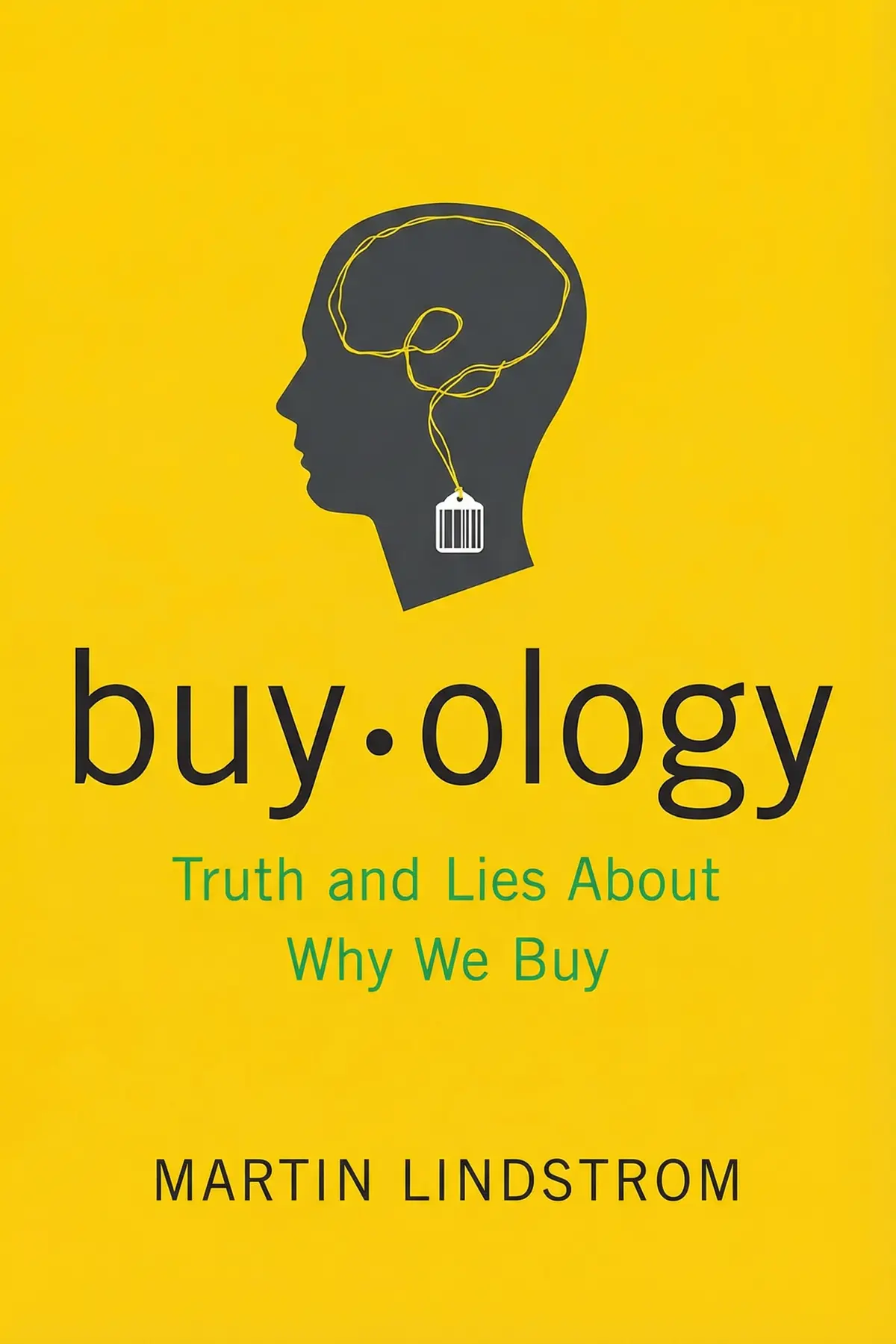
Buyology: Truth and Lies About Why We Buy
Martin Lindstrom
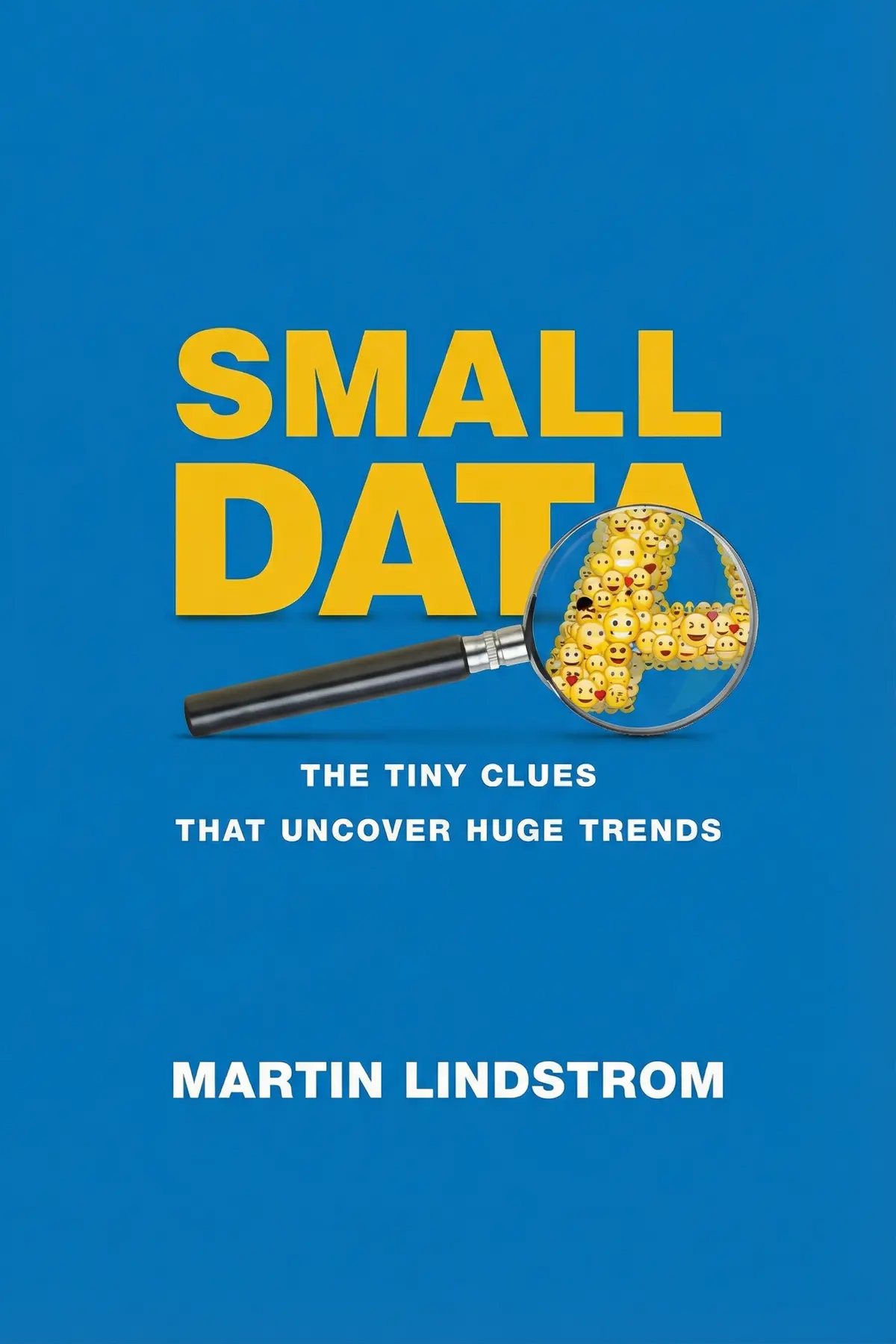
Small Data reveals how tiny, overlooked habits and household items offer more profound consumer insights than massive datasets, helping brands build deeper emotional connections with their customers by uncovering hidden human desires.
1 min 58 sec
In the modern business landscape, there is a pervasive myth that if you collect enough numbers, you will eventually find the truth. We are living in the age of Big Data, where companies like Google and Amazon track every click, every purchase, and every second of our attention. The assumption is that by analyzing these massive piles of digital footprints, we can predict exactly what people want and how they will behave. But if that were true, why do so many product launches fail? Why do brands that seem perfect on paper often struggle to connect with real people?
This is the central mystery that Martin Lindstrom explores in Small Data. He suggests that while Big Data is excellent at showing us the ‘what’ and the ‘how,’ it is almost entirely blind to the ‘why.’ Big Data can tell you that a customer bought a specific brand of cereal at 8:00 AM on a Tuesday, but it can’t tell you that they did so because they were feeling a deep sense of nostalgia for their childhood. It can’t see the emotion, the insecurity, or the secret aspirations that truly drive our decisions.
Lindstrom’s approach is different. He acts as a kind of branding detective, traveling the world to sit in people’s living rooms, peer into their refrigerators, and look through their trash. He is looking for ‘Small Data’—those tiny, seemingly insignificant clues that reveal the hidden desires and emotional imbalances in our lives. In this summary, we will follow Lindstrom’s journey across continents to see how a collection of beer bottles in Brazil or the way a teenager takes a selfie can lead to multi-million dollar business breakthroughs. We’ll learn how to look at the world with fresh eyes, moving past the cold logic of algorithms to find the warm, messy, and deeply human stories that define who we really are. By the end, you’ll see that the next big idea isn’t hidden in a server farm; it’s likely hiding in plain sight, right in your own kitchen drawer.
1 min 48 sec
Algorithms can track your every move, but they struggle to feel what you feel. Discover why digital patterns often fail to capture the nuances of human empathy and brand desire.
2 min 03 sec
Your living room is a curated exhibition of who you want to be. Learn how the tiniest details in our private spaces reveal the gap between our public personas and our private needs.
1 min 58 sec
To see what everyone else misses, you have to step outside the culture. Learn why the most profound insights often come from the eyes of an outsider.
2 min 01 sec
What if a vacuum cleaner’s success depended on its ability to be a friend? Explore how the Roomba’s decline was reversed by bringing back its ‘personality’.
1 min 58 sec
For a teenager, an outfit isn’t just clothing; it’s a bid for acceptance. Discover how one brand used the ‘selfie’ to revolutionize the shopping experience.
1 min 59 sec
Can a grocery store replace a town square? See how subtle changes in atmosphere and staff behavior turned a supermarket into a home away from home.
2 min 01 sec
Why do we eat differently at the zoo or a fast-food joint? Learn how ‘Permission Zones’ allow customers to break their own rules and indulge their desires.
1 min 29 sec
The journey through the world of small data brings us back to a simple but profound truth: business is, and always will be, about people. While the allure of Big Data and its promise of total certainty is tempting, it often leads us away from the very human connections that make a brand successful. As we have seen, the most powerful marketing concepts don’t come from crunching numbers in a dark room; they come from stepping out into the light and observing the world as it really is.
By looking for the small things—the fridge magnets, the ‘oops’ sounds, the 17 selfies, and the two-handed handoffs—we can identify the emotional imbalances that drive human behavior. These imbalances are where desire is born. When a brand identifies what is missing in a customer’s life, whether it’s a sense of community, a feeling of self-worth, or a simple moment of companionship, and then creates a product that authentically fills that void, the result is more than just a transaction. It is a relationship.
As you move forward in your own work or life, try to adopt the mindset of the Small Data detective. Look at your surroundings with the eyes of a ‘local foreigner.’ Ask ‘why’ when you see a quirk or a ritual. Remember that behind every data point is a person with a dream, a fear, or an unfulfilled wish. If you can find that wish and honor it, you won’t just build a better brand—you’ll create a more meaningful connection with the world around you. The tiny clues are all there, waiting for you to notice them.
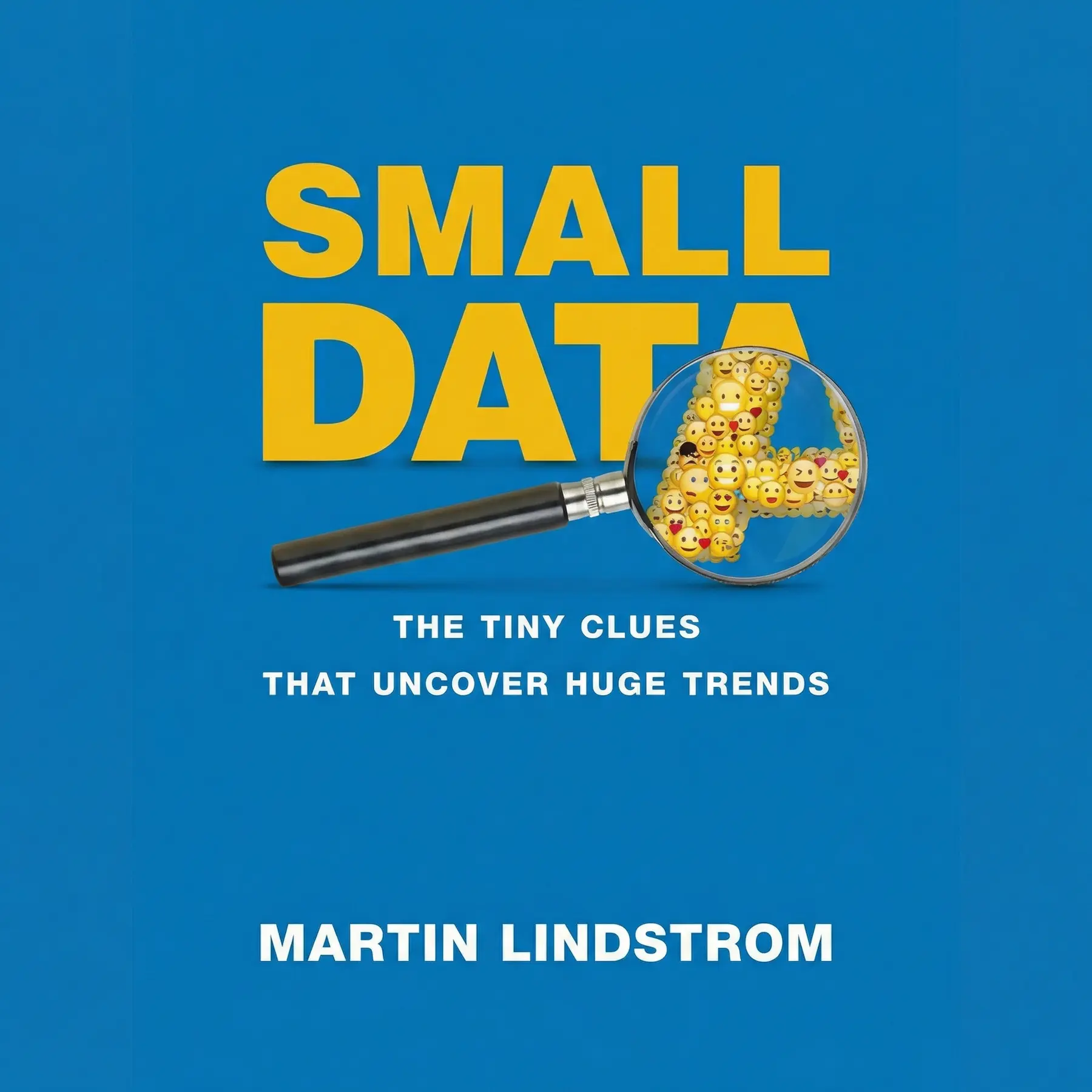
While the modern business world is obsessed with the power of Big Data and massive algorithms, Martin Lindstrom argues that we have lost sight of the most important element: the human being. This book takes listeners on a global journey of observation, showing how a single sneaker, a fridge magnet, or the way someone hangs a towel can reveal more about their true needs than a billion data points. Through various case studies ranging from the redesign of supermarket chains to the revitalization of iconic toy brands, Lindstrom explains his methodology for uncovering small data. He promises to show how brands can move beyond cold statistics to identify the emotional imbalances in their customers' lives. By finding these gaps and filling them with meaningful products and experiences, companies can create intense loyalty and lasting success. It is a guide for anyone looking to understand the 'why' behind human behavior in an increasingly digital world.
Martin Lindstrom is a world-renowned marketing and brand-building expert, and he has been an advisor to the likes of Walt Disney, Pepsi and Red Bull. A study of 30,000 marketers named him the number one brand-building expert of 2015, while Thinkers 50 named him the world’s 18th-best business thinker.
Martin Lindstrom
Listeners find the work enthralling and mentally stimulating, offering excellent perspectives that serve as a crucial prompt to awaken our senses. They value the fascinating subject and strong storytelling, and one listener points out that it exceeds the scope of standard trend analysis. Feedback is divided on the pacing, language, and literary quality, with some finding it exceptionally well written while others believe it is poorly composed.
Ever wonder why certain brands just 'get' you while others feel like robotic corporations? This book dives deep into the subtle cues that Big Data misses entirely. Lindstrom’s work with brands like Lego and Pepsi shows that the 'why' behind human behavior is often hidden in the tiniest details of our daily lives. I loved the section on the 'Counterclockwise Test' and how our environments can literally influence our health and perception of age. Truth is, we are so focused on spreadsheets that we’ve forgotten how to observe. While some of his cultural generalizations are admittedly sweeping, the core message is vital for any modern marketer. It’s a captivating read that genuinely makes you want to open your eyes and actually see the people around you.
Show moreWow, this book really forces you to step away from the computer screen and actually look at the world. Lindstrom captures the essence of human longing—the desire to belong, the need for community, and the secret ways we express our 'Twin Selves.' The way he connects a specific sound of a car door to a man's sense of masculinity in China was fascinating. I found it extremely well written and much more engaging than your typical dry business book. Sure, he’s a bit full of himself, but when you’ve worked with Disney and Pepsi, I guess you earned some bragging rights. It’s a provocative read that serves as a wake-up call for anyone lost in the digital fog.
Show moreAfter hearing so much about Big Data, it was refreshing to see someone championing the 'human' element of business. Small Data is about the things we do when we think no one is watching—the way we arrange our shoes or the specific posters we put on our walls. Lindstrom is a master at finding these 'clues.' The 'Irony of Destiny' film reference in the Russia chapter was a great touch and showed he does occasionally hit the nail on the head regarding cultural psyche. This book isn't a manual; it’s an inspiration to be more curious. I’ve started looking at my own neighborhood with fresh eyes since finishing it. Highly recommended for anyone in a creative field.
Show moreAs someone who works in retail, Lindstrom’s journey through living rooms and grocery stores felt incredibly validating. We spend so much time looking at clicks and conversion rates that we forget people are emotional beings with weird habits. The stories about investigating kitchen cupboards in Russia or looking at car dashboards in China are genuinely thought-provoking. I’ll admit, some of his conclusions feel like a stretch. Does a five-minute-fast clock really indicate a specific cultural terror? Maybe, maybe not. But the point isn't that he's always 100% right; it's that he's looking for the 'desire' that data can't track. It’s an easy, breezy read that will change how you look at a box of cereal or a hotel window forever.
Show moreMartin Lindstrom is a fascinating character, though I found his tendency to paint entire cultures with a single brush stroke a bit jarring. He claims to be an expert observer, but then he says things about Russia or North Carolina that locals would immediately dispute. For instance, his description of Winston-Salem as a series of gated communities is just inaccurate. It makes me wonder how much he’s exaggerating his findings in places I’ve never visited. That being said, the book is a necessary reminder to engage our senses. The concept that a foreigner sees what a local misses is a great insight, even if Lindstrom’s specific interpretations are sometimes off the mark. A mixed bag, but certainly worth a look for the case studies.
Show moreThe chapter on the Saudi Arabian mall was probably the highlight for me. Seeing how Lindstrom navigated the strict cultural norms to find a 'liberated' space for women was eye-opening. However, I have to agree with other reviewers who pointed out the factual errors. When he talks about Russia lacking color or Americans constantly talking in elevators, it damages his credibility. It’s like he has a pre-conceived narrative and finds the 'small data' to fit it, rather than letting the data lead the way. Despite these flaws, the book is captivating. It’s a good reminder that human behavior isn't always rational. I’d recommend it to marketers, but stay skeptical about his grand conclusions.
Show moreI picked this up because the idea of 'Small Data' versus the obsession with algorithms sounded revolutionary. While the field trips to different countries make for engaging storytelling, Lindstrom frequently makes massive leaps in logic. He’ll see a toothbrush positioned a certain way and suddenly declare he understands the entire psyche of a nation. It feels a bit self-aggrandizing at times, especially when his 'observations' about the US—like the weird claim that Americans always chit-chat in elevators—are just plain wrong. To be fair, the writing is snappy and the pace never drags. However, the lack of actual evidence makes it hard to take his grand conclusions seriously. If you want a collection of fun, slightly exaggerated marketing anecdotes, you’ll enjoy it. Just don’t expect a work of social science.
Show moreTo be fair, this isn't exactly a rigorous academic study of human psychology. Lindstrom is a branding consultant, and his tone reflects that—he’s selling a vision. I found the 'creepy' side of his work hard to ignore, specifically how he views himself as a replacement for the role religion used to play in people’s lives. That's a heavy claim to make while you’re just trying to sell more soda. However, his ability to triangulate small observations into a cohesive marketing strategy is impressive. The writing quality varies, sometimes feeling a bit repetitive, but the anecdotes kept me turning the pages. It’s a 3-star read for me: interesting as a curiosity, but I’d take his 'universal truths' with a massive grain of salt.
Show moreFinally got around to reading this, and I'm left with very mixed feelings about the author's methodology. On one hand, the premise is brilliant. We are drowning in Big Data and starving for meaning. On the other hand, Lindstrom often portrays himself as a Sherlock Holmes figure who can solve a company's bankruptcy just by looking at a teenager's sneakers. It’s a bit much. I specifically struggled with his chapter on India; some of his comments about 'mummyjis' felt superficial and didn't resonate with my experience at all. He’s a talented storyteller, and the book moves at a fast pace, but the lack of supporting evidence for his 'technique' is glaring. It’s more of a memoir about his travels than a business guidebook.
Show moreFrankly, some of the observations about Russia felt like they were pulled straight from a 1980s spy novel rather than modern reality. Claiming that Russian homes have no mirrors or that the country lost all its 'color' because casinos were banned is just bizarre. I live here, and I can tell you that’s simply not true. When an author is so confidently wrong about things you know firsthand, it’s impossible to trust his insights on anything else. He takes tiny, anecdotal moments and tries to turn them into universal laws of human nature. It feels less like data analysis and more like someone making up stories to sound impressive at a dinner party. Total waste of time for me.
Show moreAUDIO SUMMARY AVAILABLE
Get the key ideas from Small Data by Martin Lindstrom, plus 5,000+ more titles in English and Thai.