

7 Powers: The Foundations of Business Strategy
Hamilton Helmer
Discover the leadership philosophy and military career of Jim Mattis. This summary explores the evolution of American strategy from the Gulf War through the conflicts in Afghanistan and Iraq.
1 min 50 sec
The history of modern American warfare is often told through the lens of three major conflicts in the Middle East and Central Asia. Over the last thirty years, the United States has navigated a landscape of shifting alliances, evolving tactics, and complex political realities. The first of these, the campaign to liberate Kuwait in 1991, stands as a textbook example of a decisive and focused military operation. However, the subsequent invasions of Afghanistan in 2001 and Iraq in 2003 presented challenges that were far less straightforward, leading to years of protracted engagement and unintended consequences.
To understand how the military transitioned from the clear success of the early nineties to the messy complexities of the twenty-first century, we have to look through the eyes of someone who was on the front lines of every shift. Jim Mattis, a retired Marine General, provides that perspective. His journey is more than just a military memoir; it is a study of how leadership must adapt as the scale of responsibility grows. From leading a small group of Marines to overseeing entire theaters of war, Mattis’s career serves as a masterclass in the art of command.
In this summary, we will trace that career to uncover the thinking behind American military planning. We will explore how innovative tactics allowed the Marines to strike deep into landlocked territory and why certain political decisions, like the disbanding of the Iraqi army, created ripples of instability that lasted for decades. Most importantly, we will look at the throughline of Mattis’s philosophy: the idea that in the midst of chaos, a leader’s greatest tools are competence, care, and an unwavering commitment to their people. By the end, you’ll see how these principles were tested on the battlefield and what they can teach us about managing the most difficult challenges in any field of endeavor.
2 min 22 sec
Discover how a near-fatal accident on a snowy ridge transformed a free-spirited young man into one of America’s most dedicated military leaders.
2 min 24 sec
Learn the essential framework of competence, care, and conviction that allowed Mattis to lead through the turbulent transition to an all-volunteer military.
2 min 20 sec
Explore why the 1991 Gulf War remains a textbook example of military success, characterized by clear objectives and swift execution.
2 min 13 sec
See how Mattis challenged conventional military thinking to launch the deepest amphibious assault in history during the early days of the war in Afghanistan.
2 min 13 sec
Witness the frustration of a commander on the ground when political and high-level military caution allowed a key enemy to escape.
2 min 22 sec
Follow Mattis into the 2003 invasion of Iraq as he balances his personal doubts about the conflict’s necessity with his professional duty to lead.
2 min 21 sec
Analyze the catastrophic political decisions, like disbanding the Iraqi army, that turned a swift military victory into a long-term insurgency.
2 min 29 sec
See how Mattis used empathy and de-escalation to combat a rising insurgency, only to have his strategy interrupted by political demands for force.
2 min 36 sec
Examine the hard-won stability of the Anbar Awakening and why the subsequent withdrawal of troops led to the tragic rise of ISIS.
1 min 40 sec
The career of Jim Mattis offers a profound look at the intersection of military discipline and the complexities of modern geopolitics. Through his experiences, we see that successful leadership requires more than just a mastery of tactics; it demands a deep understanding of human nature and a commitment to clear, consistent principles. Whether it was his early realization of the value of duty during a near-fatal accident or his navigation of the strategic blunders in Iraq, Mattis’s journey emphasizes that in any high-stakes environment, the integrity of the leader is the only thing that can anchor a team amidst chaos.
The throughline of this narrative is the necessity of aligning military action with realistic political goals. The success of the 1991 Gulf War stood in stark contrast to the later conflicts in Afghanistan and Iraq, where the lack of clear objectives and the failure to plan for the post-war reality led to decades of instability. These lessons are not just for soldiers or policymakers; they are for anyone who leads people in a world where the only constant is change. By focusing on competence, care, and conviction, a leader can build an organization that is not only capable of winning but is also capable of creating a lasting, positive impact.
Ultimately, the legacy of these conflicts serves as a reminder that the decisions made in the safety of an office can have devastating consequences in the field. To lead effectively is to take responsibility for those consequences and to never lose sight of the people who are carrying out the mission. In the end, the art of leadership is about finding a way to bring order to chaos, not through brute force alone, but through the strength of character and the clarity of purpose.
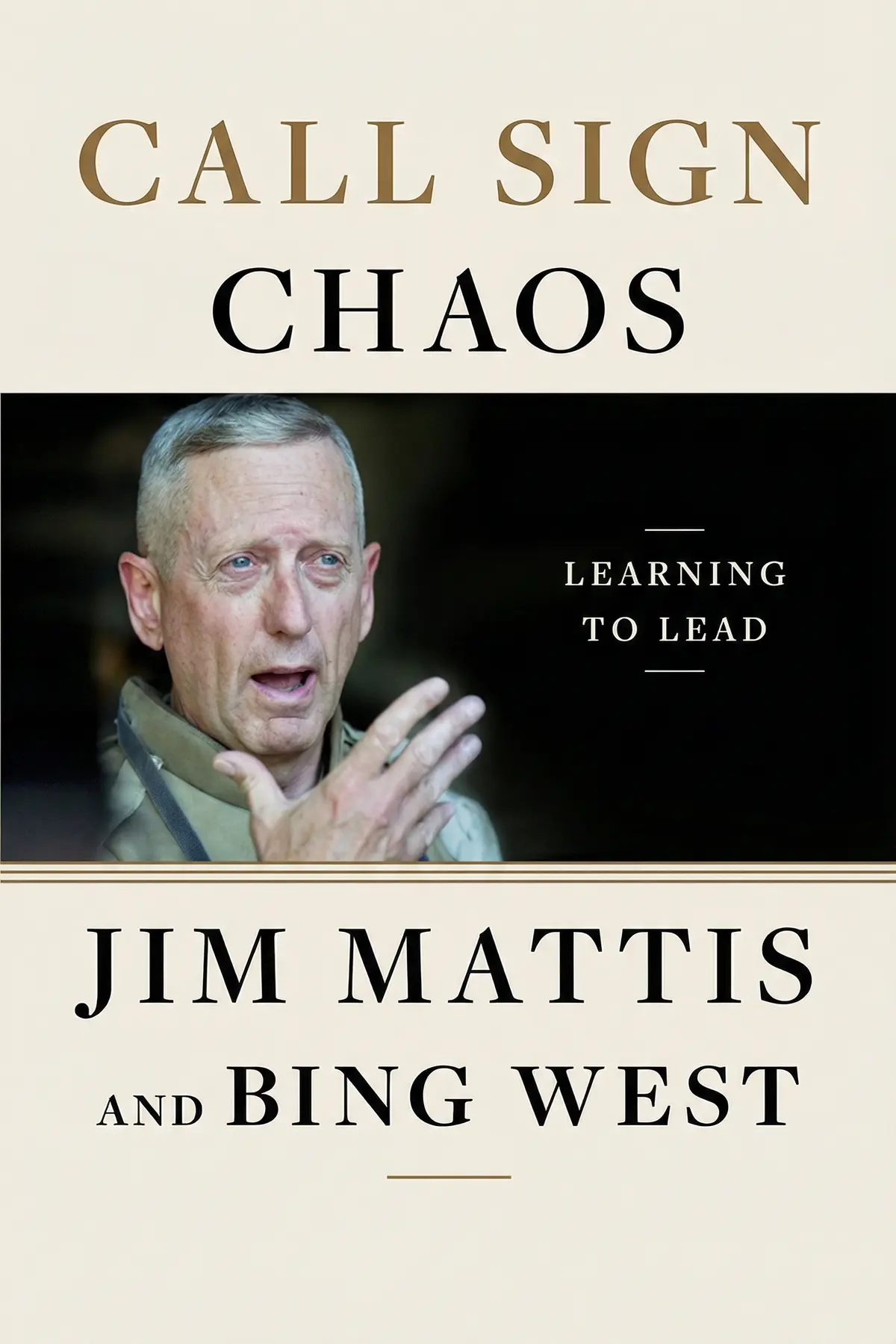
Call Sign Chaos is an exploration of leadership across three distinct levels: direct, operational, and strategic. Following the career of General Jim Mattis, it provides a firsthand account of the United States’ involvement in the Middle East over three decades. The narrative begins with Mattis’s early days as a Marine officer and moves through his command during the pivotal moments of the First Gulf War, the invasion of Afghanistan, and the complex insurgency in Iraq. Beyond simple battlefield maneuvers, the book promises a deep dive into the philosophy of command. It examines how a leader must balance the human needs of their subordinates with the rigid requirements of military discipline. It also offers a critical look at the friction between military strategy and political decision-making, illustrating how choices made in Washington can have long-lasting consequences on the ground. Through these experiences, the book provides a blueprint for navigating chaos and leading with integrity in the most high-stakes environments imaginable.
Jim Mattis is a native of the American Pacific Northwest with more than four decades of experience as a Marine officer. A highly respected general, he served as Commander of the US Joint Forces Command and the US Central Command. In 2017, he was appointed Secretary of Defense, a role he held for two years. He is currently a fellow at the Hoover Institution. Bing West is a retired Marine and former Assistant Secretary of Defense who has authored ten books on warfare and is a member of the Military History Working Group at the Hoover Institution.
Listeners consider this book a mandatory read for professionals, especially those in the military, and value its superb exploration of leadership, with one listener noting the way it categorizes different leadership phases. The autobiography is expertly written using personal anecdotes, and listeners describe the narrative as fast-moving and captivating, filled with insight and practical lessons. They find the content profoundly motivating, with one review specifically mentioning the author's dedication to teaching his troops about humanity.
This book is a masterclass in professional development, far beyond the typical corporate leadership manual you find at airport kiosks. Mattis breaks down his career into three distinct phases: direct, executive, and strategic leadership. It is fascinating to see how his approach evolved as the stakes grew higher and the organizations became more complex. The writing is incredibly punchy and avoids the jargon that usually bogs down military memoirs. I particularly loved the 'Warrior Poet' ethos that permeates every page. He doesn't just talk about winning battles; he talks about the intellectual preparation required to lead young men and women in the face of chaos. His emphasis on reading as a prerequisite for competence is a wake-up call for anyone in a position of authority. This isn't just for Marines—it’s for anyone who wants to understand the burden of command and the necessity of personal integrity.
Show moreAs someone who has never served in the armed forces, I found the General's emphasis on reading and intellectual preparation absolutely convicting and deeply inspiring. Mattis argues that if you haven't read hundreds of books, you are functionally illiterate in your field. That's a bold claim. But he backs it up with anecdotes from the battlefield where historical knowledge saved lives. The narrative moves at a fast pace, taking us from his early days as a lieutenant to the highest echelons of the Pentagon. I was especially moved by his commitment to instilling humanity in his troops, even when facing a brutal enemy. His refusal to use PowerPoint—calling it the scourge of critical thinking—made me want to stand up and cheer. This book is a rare glimpse into the mind of a man who actually lives by the virtues he preaches.
Show moreWow, the section on why PowerPoint destroys critical thinking should be mandatory reading for every office worker in America! I loved how Mattis prioritized verbal narrative and logic over flashy slides and fragmented data. The book is filled with these kinds of gems. It's a fast-paced, engaging narrative that feels like sitting down for a long dinner with a wise grandfather who also happens to be a legendary general. He treats the grunts with such respect, and it’s clear that his 'Chaos' call sign was earned through a willingness to embrace the messiness of war. I've already shared the reading list at the back of the book with my entire management team. It is rare to find a leader today who is this well-read and this humble about his own mistakes. Highly recommended for any professional looking to sharpen their edge.
Show morePicked this up for the war stories but stayed for the incredible wisdom on how to treat subordinates with dignity. Mattis manages to be both a tough-as-nails Marine and a sensitive intellectual at the same time. The way he describes his teenage years and his early career shows a man who was always searching for a higher purpose. His stories from the Persian Gulf and the invasion of Iraq provide a level of detail you just don't get from news reports. It is deeply inspiring to see a leader who takes the blame for failures but gives all the credit for success to his troops. The book is a fast-paced journey through four decades of American conflict. It left me with a profound respect for the sacrifices made by our military families. This is essential reading for anyone who cares about the future of American leadership.
Show moreLook, if you're in a position of authority, you need to hear Mattis's take on initiative and trust within an organization. He argues that you get the behavior you reward, which sounds simple but is so often ignored in practice. The anecdotes are legendary, from his interaction with reporters to his blunt assessments of the enemy's 'manhood.' It’s an authentic, gritty, and deeply intellectual look at what it means to be a patriot. I finished it in two sittings because the narrative flow is just that good. Whether you agree with his foreign policy views or not, you cannot deny the man's character and his devotion to his country. This is a brilliant book that will likely be studied in military academies and business schools for years to come. A total home run.
Show moreFinally got around to reading this, and while it isn't the political exposé many expected, it is a profound look at the Marine ethos. If you are looking for gossip about the Trump administration, you will be disappointed as Mattis stays true to his silent professional code. However, the tactical insights into the Iraq and Afghanistan invasions are worth the price of admission alone. To be fair, some of the middle chapters regarding NATO and CENTCOM can feel a bit dry compared to the frontline stories of the 'Chaos' days. Yet, the wisdom on building alliances and the importance of trust remains relevant today. He offers a very grounded perspective on the failures of policy in the Middle East, even if he is somewhat protective of his own legacy. It's a solid 4-star read for history buffs and aspiring leaders who value substance over sensationalism.
Show moreEver wonder what it takes to move from leading a small squad to commanding thousands in a global theater? This book answers that question through first-hand experiences that are both harrowing and enlightening. Mattis is a fantastic writer, or at least Bing West is, because the prose is much cleaner than your average general’s memoir. I appreciated the specific examples of how he handled underperforming subordinates—it was ruthless but fair. He makes a compelling case for why our allies are our greatest strength, a message that feels especially poignant in the current political climate. My only gripe is that the strategic section towards the end gets a little repetitive with the emphasis on 'strategic communication.' Still, the lessons on initiative and decentralized command are pure gold for anyone managing people. It’s a thoughtful look at a long, distinguished career.
Show moreTo be fair, the tactical descriptions of the Iraq invasion can get a bit dense if you aren't a history buff or a veteran. There were times when the acronyms started to blend together and I had to flip back to keep the units straight. However, once you get past the technical bits, the core message about 'Learning to Lead' is excellent. I liked his candidness about the mistakes made during the transition in Iraq and his critique of the lack of a post-war plan. He doesn't pull many punches when it comes to the civilian leadership's failures in both the Bush and Obama administrations. It provides a necessary perspective on why certain conflicts lingered as long as they did. It's an important book that requires a bit of patience in the middle, but the payoff is worth it.
Show moreNot what I expected given the media hype, as this reads more like a textbook on military management than a juicy memoir. The truth is, Mattis is a bit too disciplined for his own good when it comes to the writing. He glosses over some of the most controversial parts of his career, like his time on the board of Theranos, which feels like a major omission for a book about leadership. I also felt his critique of General Tommy Franks was a bit harsh and perhaps one-sided. While the leadership 'lessons' are solid, they often feel like platitudes we've heard before: be polite, be professional, and have a plan. It’s not a bad book, but it lacks the vulnerability that makes for a truly great autobiography. If you want a technical manual on Marine Corps culture, this is great, but as a life story, it feels somewhat incomplete and shielded.
Show moreFrankly, I struggled with the selective memory on display here, particularly the silence regarding the author's tenure as Secretary of Defense. While the military history is detailed, the lack of accountability regarding his time in the Trump administration feels like a missed opportunity for real leadership. He wonders why he was picked, yet ignores that his 'Mad Dog' nickname was exactly what a showman president wanted. Also, some of his 'insights' into the business world felt quite shallow and disconnected from reality. For a man who claims to value intellectual freedom and honesty, he seems to avoid the most difficult questions about his own role in modern political chaos. It's a polished piece of self-mythologizing that ignores the 'garbage' of real-world politics in favor of a sanitized version of the past. Disappointing given his reputation.
Show moreHamilton Helmer

Barack Obama

Margaret Heffernan

Masaji Ishikawa

Ben Macintyre
AUDIO SUMMARY AVAILABLE
Get the key ideas from Call Sign Chaos by Jim Mattis, plus 5,000+ more titles in English and Thai.







