
20 min 56 sec
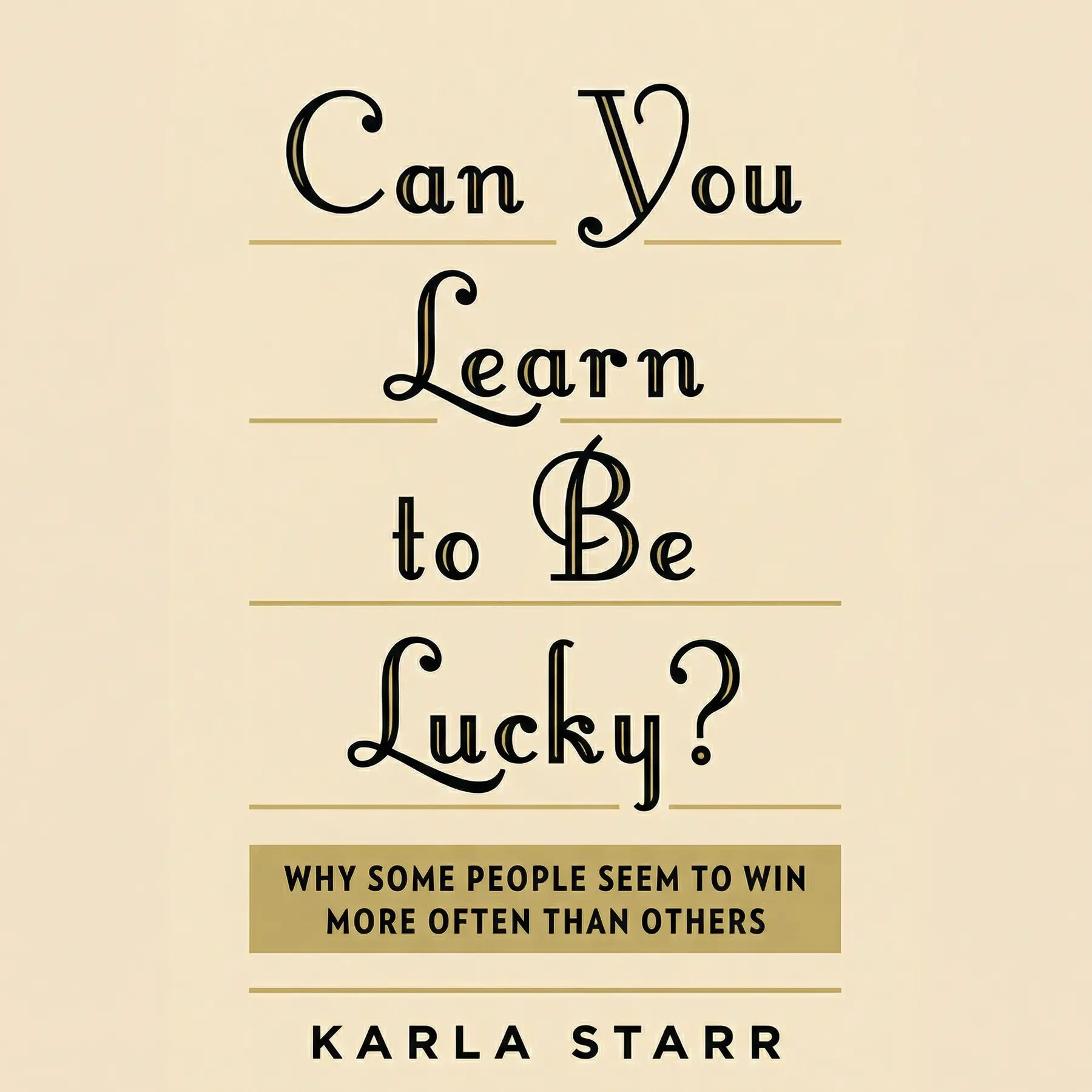
Can You Learn to be Lucky?: Why Some People Seem to Win More Often Than Others
By Karla Starr
Discover why fortune favors more than just the bold. This summary explores the hidden patterns of luck, revealing how small behavioral shifts, timing, and social dynamics can dramatically increase your chances of success.
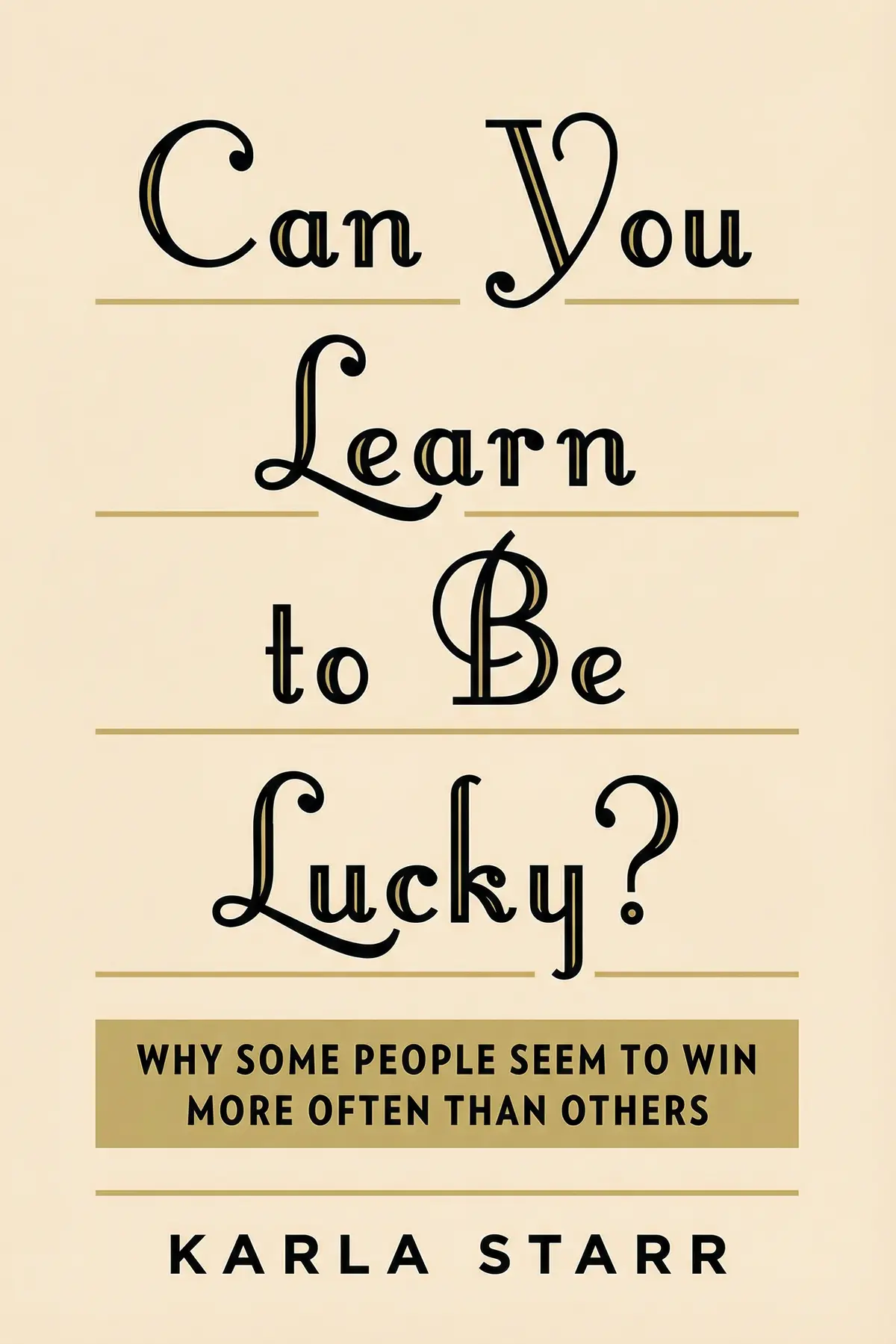
Table of Content
1. Introduction
1 min 56 sec
We have all witnessed those moments where life seems to pivot on a single, improbable event. Maybe it is the person who meets their future business partner while standing in line for a coffee, or the student who lands a dream internship because they happened to sit next to the right person in a crowded lecture hall. When we see these things happen, we often shrug our shoulders and call it ‘luck.’ We assume that some people are simply born under a luckier star than others, and that there is nothing the rest of us can do but watch from the sidelines.
But what if that perspective is entirely wrong? What if the things we call luck are actually the result of specific, repeatable behaviors and psychological triggers? In this exploration of the science of fortune, we are going to pull back the curtain on why some people seem to win more often than others. We will look at how human psychology, social structures, and even our biological instincts create the conditions for what we perceive as luck.
As it turns out, many ‘lucky’ breaks are remarkably predictable once you understand the mechanics behind them. For example, being outgoing is not just a personality trait; it is a way of increasing the surface area of your life so that more opportunities have a chance to hit you. Proximity is not just about where you stand; it is a predictor of who you will befriend and how your career will progress. While it is true that we cannot control every variable in the universe, we can certainly learn to tilt the playing field.
In the pages ahead, we will discover how your timing, your appearance, and even your curiosity levels dictate the amount of ‘good fortune’ you experience. We will see why the order in which you perform matters, why looking the part is half the battle, and how you can train your brain to stop fearing the unknown and start chasing the rewards. By the end of this journey, you will see that luck is not a mystery to be solved, but a skill to be practiced. Let’s begin by looking at how the clock itself can be your greatest ally or your quietest enemy.
2. The Power of Sequence and Timing
2 min 19 sec
Does the order in which you present yourself affect your chances of winning? Explore why being the final act often leads to the highest scores.
3. Familiarity and the Visual Advantage
2 min 09 sec
Discover why the human brain is hardwired to prefer the familiar and how simply ‘looking the part’ can open doors that talent alone cannot.
4. The Genetic and Social Bias of Beauty
2 min 10 sec
Explore the uncomfortable truth about how physical attractiveness influences luck and why ‘pretty’ often translates to ‘privileged’ in the eyes of others.
5. Confidence as a Catalyst for Opportunity
2 min 11 sec
Learn the neurological difference between people who take risks and those who play it safe, and how your social background shapes your ‘luck’ through confidence.
6. The Myth of Pure Effort
2 min 10 sec
Is hard work enough to guarantee success? Uncover why genes, geography, and timing are the silent partners in every ‘self-made’ success story.
7. Self-Discipline as a Luck Magnet
2 min 07 sec
Explore why ‘the harder I work, the luckier I get’ is more than just a saying, and how the ‘robot-like’ focus of top performers prepares them for chance encounters.
8. Expanding Your Social Surface Area
1 min 59 sec
Is it really ‘who you know’ that matters? Learn how successful people build vast networks that filter opportunities directly to them.
9. Curiosity and the Art of Saying Yes
2 min 01 sec
How a box of worms and a burger-flipping side hustle led to a billion-dollar empire. Discover why the ‘relentlessly curious’ always seem to find the best deals.
10. Conclusion
1 min 54 sec
As we have seen, luck is far less mysterious than it appears. While we often view it as a bolt of lightning that strikes at random, it is actually more like a garden that can be cultivated. By understanding the psychological and social forces at play—such as the advantage of timing, the power of first impressions, and the necessity of social connections—we can begin to take active steps to improve our own fortunes.
Success is rarely a straight line of pure merit. It is a complex dance between preparation and opportunity. You cannot control the genes you were born with or the economic conditions of the world, but you can control how you present yourself, how much you invest in your own skills, and how wide you cast your social net. You can choose to be the person who goes last in the interview, the person who dresses for the job they want, and the person who stays curious enough to try a dozen different things until one finally works.
The throughline of a ‘lucky’ life is the courage to move from a state of inhibition to a state of activation. It is the willingness to stop worrying about the risks of embarrassment or failure and start focusing on the potential rewards of taking a chance. Luck favors the person who is visible, prepared, and open-minded.
To put these ideas into practice, start small. Make a commitment to try one new thing every week, whether it is a new hobby, a different route to work, or a conversation with a stranger. Take a few minutes each day to remind yourself of your strengths to build that necessary reservoir of confidence. And finally, keep your eyes open. Luck is all around us, often disguised as a simple request for help or a random invitation. Your job is to be ready to say yes. The more you engage with the world with curiosity and discipline, the ‘luckier’ you will inevitably become.
About this book
What is this book about?
Have you ever wondered why some people seem to breeze through life, catching every green light and landing every big promotion, while others struggle despite their hard work? This book argues that luck is not a mystical force or a random roll of the dice. Instead, it is often the result of predictable psychological and social factors that we can influence. By examining research in psychology and sociology, the author reveals that 'lucky' individuals often share specific traits: they are more social, they understand the power of first impressions, and they possess the self-discipline to capitalize on random opportunities. This summary provides a roadmap for transforming from a passive observer of fate into an active architect of opportunity, teaching you how to nudge the world in your favor.
Book Information
About the Author
Karla Starr
Karla Starr is a dedicated writer and journalist who specializes in the intersection of popular science and the mechanics of luck. Her work has been featured in major publications including the Atlantic, Slate, the Guardian, and the Los Angeles Times. Her personal interest in the subject is deeply rooted in her own life story; fifteen years ago, she survived a life-threatening car accident, an event she considers a profound example of being lucky.
Ratings & Reviews
Ratings at a glance
What people think
Listeners find the work merges personal anecdotes with genuine research, creating an engaging experience. They value how useful the material is, with one listener highlighting the beneficial end notes included after every chapter.
Top reviews
Riley
Wow, this was a surprisingly deep dive into the mechanics of fortune. I’ve read a lot of self-help, but Starr stands out because she isn't selling a dream; she’s explaining a system. The way she connects things like physical proximity and the 'exposure effect' to career success is brilliant. I started changing where I sit at meetings immediately after reading the section on classroom center-seats! The book is packed with references, which I actually loved because it proves she’s not just making things up. It’s authentic, smart, and highly engaging. Personally, I found the advice on self-control and 'activation mode' to be life-changing. It’s about more than just 'working hard'—it’s about working on the right things and being visible while doing it. If you want a book that combines personal insight with real research, this is it. It’s a game-changer.
Show moreSomsri
Picked this up on a whim and I'm so glad I did! Starr has a wonderful writing style—it’s intelligent, funny, and deeply researched. I loved the "dozen memorable and fun insights" mentioned by other reviewers; they really stick with you. The core message that we can maximize our luck by being curious and trying new things is so empowering. Whether it’s learning a new language or just making eye contact and smiling more, the book gives you a roadmap to being 'fortunate.' I especially appreciated the end-of-chapter summaries because they distilled the complex data into quick wins. Not gonna lie, I was skeptical about whether luck could be 'learned,' but this book convinced me that it’s a skill like any other. It’s a fascinating, thought-provoking read that I’ll be recommending to everyone. Don't let the footnotes scare you away; they just add to the book's credibility.
Show moreSavannah
Frankly, this is the most useful book on success I've read in years. It debunks the myth that luck is just a random lightning bolt from the sky. Instead, Starr shows how it’s a combination of being in the right place, looking the part, and having the self-discipline to capitalize on moments when they happen. The insights into how we are hardwired to favor attractive and familiar people are eye-opening, even if they're a bit uncomfortable to face. Knowledge is power! Once you understand these biases, you can navigate them. I’ve already started applying the 'expressive interest' techniques in my networking, and the results are noticeable. This isn’t a long book, but every page is dense with value. It’s well-written, engaging, and provides a much-needed scientific lens on a topic that is usually treated with far too much mystery. Truly an unreserved recommendation.
Show moreNiramai
Finally got around to reading this after seeing it recommended by Chip Heath, and I can see why it gets professional praise. It is a refreshing departure from the 'manifestation' books that usually clutter this genre. Starr treats luck as a measurable outcome of behavior and environment. The insights into the 'exposure effect' and why we trust doctors in white coats more than those in suits were fascinating. Frankly, it makes you realize how many of our 'lucky' breaks are just us subconsciously following social cues. I loved the practical tips on increasing 'activation' over 'inhibition' to seize more rewards. My only gripe is that the book is quite short—the main content is under 200 pages—and it sometimes feels like a collection of research papers rather than a cohesive narrative. Nevertheless, it’s a smart, research-heavy look at success that provides plenty of 'aha' moments.
Show moreKasemsan
Ever wonder why some people just seem to fall into great opportunities? This book breaks down the science behind that phenomenon with a great deal of wit and self-deprecation. Karla Starr manages to take complex psychological concepts—like how the order in which we appear affects judgment—and makes them relatable to daily life. I particularly enjoyed the section on self-discipline and 'The Robot' Derek Sivers. It reminds us that what looks like a 'chance' encounter is usually the result of someone putting themselves in a position to be noticed. To be fair, the book is very data-driven, which might bore some readers, but I appreciated the rigor. It’s not just empty platitudes. You actually learn how to manipulate your environment to increase your 'surface area' for luck. While the emphasis on looks and genetics is a bit of a downer, it’s a reality that’s better understood than ignored.
Show moreSangduan
The chapter on why appearing last gives you an edge was worth the price of admission alone. It’s counterintuitive but makes perfect sense once Starr explains the cognitive load on judges and recruiters. This book is essentially a manual on human bias. I found the research on social ties in the New York art scene to be a brilliant illustration of how 'who you know' is a structural reality, not just a cynical phrase. By staying curious and sending friendly social signals, you can actually build a network that funnels opportunities toward you. In my experience, people overlook these small behavioral tweaks. My only criticism is the formatting; the footnotes are incredibly distracting and often take up a quarter of the page. If you can get past the academic layout, there is a wealth of actionable advice here. It’s a solid 4-star read for anyone interested in behavioral science.
Show moreAria
Is it possible to manufacture serendipity? Starr tries to bridge the gap between hard science and practical advice, but the result is a bit of a mixed bag. I appreciated the deep dive into how our brains prioritize familiarity—the 'exposure effect'—and how showing up last might actually help your odds in things like job interviews or house hunting. However, the book is incredibly short if you strip away the massive section of endnotes. Truth is, much of the advice boils down to things we already know: be likable, work hard, and try to stay curious. The chapter on self-control and Derek Sivers was a highlight, illustrating that 'luck' is often just the result of obsessive preparation. Still, the heavy emphasis on physical attractiveness being a prerequisite for luck felt a bit repetitive and discouraging. It’s a decent read for science nerds, but maybe too academic for the average reader.
Show moreIngrid
As someone who's always felt a bit unlucky, I picked this up hoping for a magic formula. What I found instead was a grounded, somewhat dry analysis of social psychology. The book explains that 'luck' is often just being in the center of the room—literally—because kids in the middle of a classroom make more friends. It’s a lot of common sense backed by heavy data. Look, I don't mind a few footnotes, but the sheer volume here makes it feel like a PhD thesis. I did find the section on 'social conditioning' and confidence quite eye-opening, especially the study about women imagining themselves as men to improve math scores. It shows that our mental state acts as a gatekeeper for opportunities. However, the writing style is quite dense and occasionally meanders into unrelated territory. It’s informative, but definitely not a 'page-turner' by any stretch of the imagination.
Show moreNatalie
Not what I expected at all given the title. Can you learn to be lucky? According to Karla Starr, the answer is mostly 'no' unless you happened to be born with the right genes, in the right city, to wealthy parents. The book spends a massive amount of time explaining how attractive people get better breaks and how our biological wiring dictates our success. While some of the psychology bits about 'exposure effects' and 'proximity' were interesting, it felt very fatalistic. To be fair, she does mention networking and curiosity, but these feel like tiny footnotes compared to the sheer weight of factors we can’t control. I found the tone quite clinical and the constant academic citations broke the flow of the narrative constantly. It’s more of a sociological study than a self-help book. If you lack the 'right' starting resources, this book basically tells you that you're out of luck.
Show moreRoydao
Rubbish. I thought this would be a fun, lighthearted exploration of how to catch a lucky break, but instead, I got buried in a mountain of boring data and scientific reports. It feels like every other sentence is a footnote or a reference to someone else's study rather than Starr having an original thought. There are literally pages where the citations take up a huge chunk of the space, making the reading experience feel like homework. The author seems more like a researcher compiling a journal than a writer telling a story. If you’re looking for actionable life advice, you'll be disappointed to find that 'luck' apparently mostly boils down to being pretty or having good genes. Save your time and just read the summary at the end of the chapters. The rest is just a slog through dry, unrelated graphs and academic jargon that left me more frustrated than fortunate. Luck remains elusive.
Show moreReaders also enjoyed
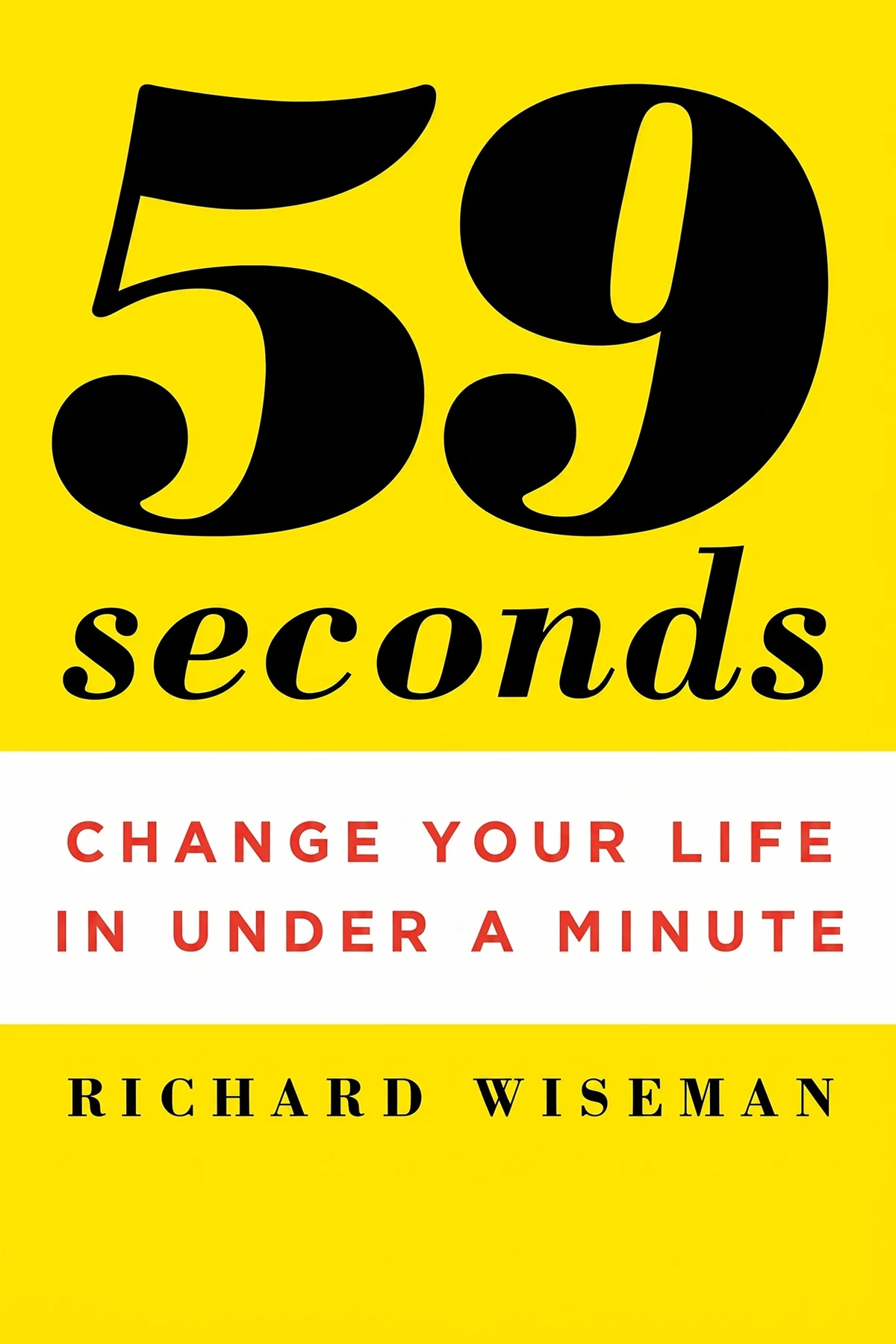
59 Seconds: Change Your Life in Under a Minute
Richard Wiseman
A Liberated Mind: How to Pivot Toward What Matters
Steven C. Hayes
Acting with Power: Why We Are More Powerful Than We Believe
Deborah Gruenfeld
AUDIO SUMMARY AVAILABLE
Listen to Can You Learn to be Lucky? in 15 minutes
Get the key ideas from Can You Learn to be Lucky? by Karla Starr, plus 5,000+ more titles in English and Thai.
- 5,000+ titles
- Listen as much as you want
- 7-day free trial
- Cancel anytime







