
17 min 03 sec
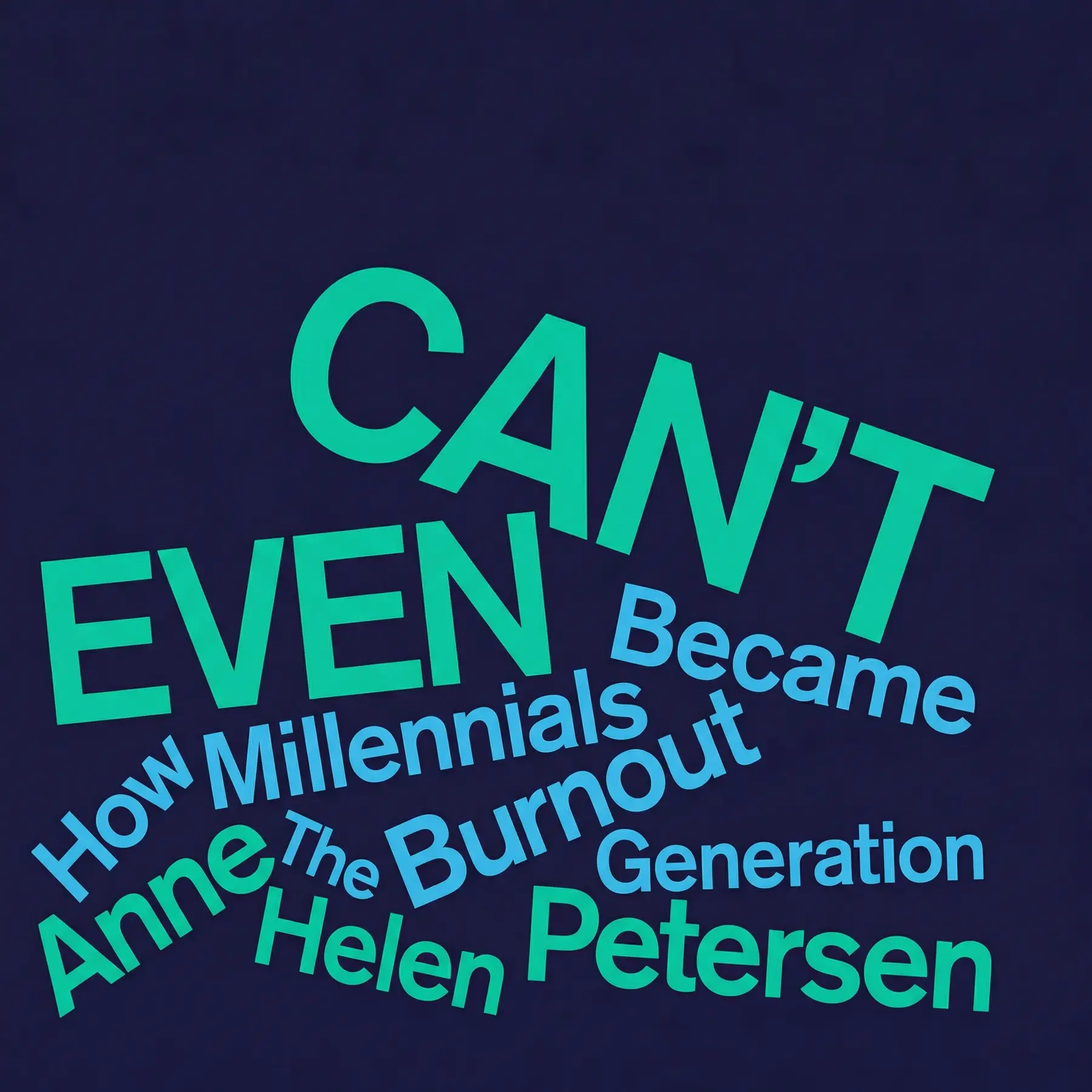
Can’t Even: How Millennials Became the Burnout Generation
Can't Even explores how systemic economic shifts and cultural pressures transformed the millennial generation into a workforce defined by constant burnout, offering a deep dive into the roots of modern exhaustion.
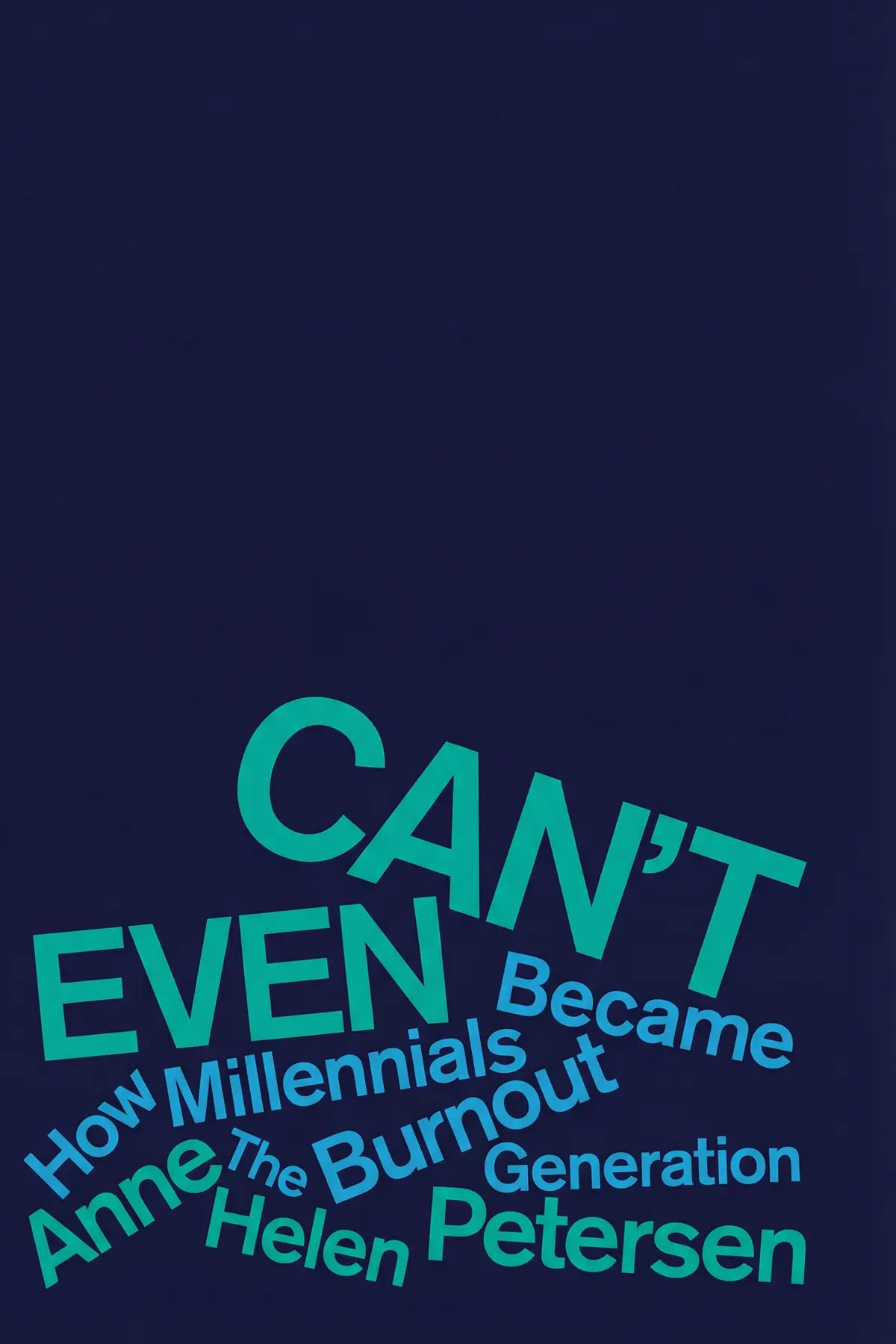
Table of Content
1. Introduction
1 min 51 sec
If you pay attention to the cultural conversation, you’ve likely seen the headlines. There is a persistent narrative about the millennial generation—those born roughly between 1981 and 1996. They are frequently painted as the ‘avocado toast’ generation, accused of being fragile, entitled, or simply unwilling to work as hard as their predecessors. The media often frames their financial struggles as a result of poor personal choices rather than systemic realities. But if we look closer at the lived experience of this group, a much more complex and troubling picture emerges. It isn’t a story of laziness; it is a story of profound, systemic exhaustion.
What if the frustration and fatigue so many young adults feel today isn’t a personal failing? What if it’s a logical response to a world that has become increasingly volatile, demanding, and precarious? This is the central inquiry we are embarking on. We’re going to peel back the layers of the millennial experience to understand how the very foundations of their lives—from the way they were raised to the way they work and communicate—have been engineered to produce burnout.
Throughout this exploration, we will move past the superficial critiques and look at the actual mechanics of modern life. We’ll examine how childhood changed from a time of play to a period of rigorous resume-building, why the once-guaranteed path of higher education turned into a debt trap for so many, and how the blurring of the line between our professional and personal lives has left us with no place to truly rest. This is a journey through the sociological and economic shifts that created the ‘Burnout Generation.’ It’s about understanding the ‘why’ behind the fatigue, and recognizing that the feeling of ‘I can’t even’ is more than a meme—it’s a cry for a different way of living.
2. The Evolution of Managed Childhood
2 min 17 sec
Explore how the shift from unstructured play to high-stakes scheduling in the late twentieth century prepared an entire generation for a lifetime of constant performance.
3. The False Promise of the Degree
2 min 18 sec
Discover why the universal push for higher education resulted in a credentials arms race that left many graduates with massive debt and diminishing returns.
4. The Trap of the Dream Job
2 min 11 sec
Learn how the cultural obsession with ‘finding your passion’ in work has allowed employers to prioritize enthusiasm over fair compensation and stability.
5. From Stability to the Precariat
2 min 11 sec
Examine the shift from the secure corporate structures of the past to the modern gig economy, where job security has been replaced by perpetual uncertainty.
6. The Illusion of Office Perks
2 min 13 sec
Uncover how modern workplace ‘benefits’ like free snacks and lounge areas are often designed to blur the boundaries between work and home.
7. Technology and the Performance of Leisure
2 min 17 sec
Explore how social media and the 24/7 news cycle have transformed our downtime into an exhausting second job of comparison and concern.
8. Conclusion
1 min 45 sec
As we look back at the various forces we’ve discussed, it becomes clear that millennial burnout isn’t a simple case of people working too hard or being too sensitive. It is the cumulative result of a multi-decade shift in how our society functions. It began with childhoods that were restructured around performance, continued through an educational system that traded stability for debt, and culminated in a labor market that values ‘passion’ and ‘flexibility’ over security and boundaries. When you add the relentless pressure of digital life and the erosion of the line between the office and the home, burnout isn’t just a possibility—it’s an inevitability.
The most important takeaway is that this is a systemic issue, not a personal failure. If you feel like you ‘can’t even’ handle basic tasks, it’s not because you are lazy or incompetent; it’s because you are operating within a system that is designed to extract as much as possible from you while giving as little back as it can. Understanding this is the first step toward any kind of solution.
Moving forward, the challenge is to stop trying to ‘optimize’ ourselves out of exhaustion. We cannot solve burnout with a better morning routine or a new productivity app. True change requires looking at the structures of work, the cost of education, and the way we value human life beyond its economic output. It involves reclaiming our right to rest, to be unproductive, and to exist as something more than just a worker or a brand. By recognizing the roots of this collective fatigue, we can start to demand a world that treats people as human beings rather than just resources to be used up. It’s time to stop blaming ourselves for being tired and start questioning the world that made us this way.
About this book
What is this book about?
This summary explores the complex landscape of millennial burnout, moving beyond stereotypes of laziness to reveal a generation struggling under the weight of precarious labor, massive debt, and hyper-competitive childhoods. It traces the transition from the stable employment models of the mid-twentieth century to the modern gig economy, where the boundaries between personal life and professional obligation have nearly vanished. Readers will learn how the promise of higher education became a financial burden and how the pursuit of 'dream jobs' often leads to exploitation. The narrative examines how technology and social media have turned leisure time into a space for performative comparison and how modern office perks are designed to keep workers tethered to their desks. Ultimately, it offers a clarifying look at why an entire generation feels perpetually exhausted and what systemic forces are truly to blame.
Book Information
About the Author
Anne Helen Petersen
Anne Helen Petersen is an American writer and journalist based in Missoula, Montana. A former senior culture writer for Buzzfeed, she has authored several books, including Scandals of Classic Hollywood and Too Fat, Too Slutty, Too Loud: The Rise and Reign of the Unruly Woman.
Ratings & Reviews
Ratings at a glance
What people think
Listeners find the writing accessible and engaging, noting its informal style and polished prose. They also value the thorough research and stimulating perspectives offered, with one listener emphasizing the discussion around leisure activities becoming side hustles. Furthermore, the work is lauded for its genuineness, and one listener pointed to the inclusion of credible sources as a highlight.
Top reviews
Cha
As someone who turns every hobby into a potential side hustle, the chapter on the commodification of leisure hit home. Petersen writes with a conversational flow that makes heavy economic history feel like a chat over coffee with a very smart friend. She backs up her claims with plenty of credible citations, moving beyond just her own life to look at systemic failures. It’s a thought-provoking look at why we feel like we’re running a race that has no finish line. Even if you aren't a millennial, the breakdown of how work has changed since the 1970s is incredibly eye-opening. This isn't a self-help book, and it’s better for it.
Show moreFah
Finally got around to reading this, and it’s basically a mirror for my entire adult life. Petersen argues that our exhaustion isn't a personal failure but a systemic byproduct of late-stage capitalism and the death of the traditional safety net. The research is robust and she uses a variety of sources to show that this isn't just 'whining'—it's a measurable social shift. I especially loved the discussion on how social media has turned our private lives into a performance for others. It’s not a self-help book with quick fixes, which some might find frustrating, but understanding the root cause is a crucial first step toward change.
Show moreBenjamin
Wow, this was an intense read that perfectly captures the 'mood' of our current cultural moment. Petersen’s conversational tone makes you feel like you’re talking to a very smart friend who has spent years researching why your life feels so frantic. She expertly connects the dots between Boomer parenting styles, the rise of the gig economy, and the way we use technology to constantly 'optimize' ourselves. It’s thought-provoking and, honestly, a bit haunting to realize how much of our identity is tied up in our productivity. This is essential reading for anyone who feels like they’re constantly treading water just to stay afloat. Absolutely five stars.
Show moreEvelyn
Ever wonder why you feel guilty whenever you aren't being productive? This book digs into the ways Boomer parenting and the constant drive for middle-class security shaped a generation’s collective psyche. While the author does lean heavily on her own experiences at times, the anecdotes from other millennials add a layer of authenticity that I appreciated. I found the section on 'cool jobs' at startups particularly relatable, as it perfectly captures the trap of trading a high salary for a trendy office culture. My only gripe is that it feels a bit centered on those with college degrees, sometimes leaving out the struggle of the working class.
Show moreMichael
After hearing so much buzz about this, I was surprised by how approachable and fun the writing actually was. Petersen breaks down complex economic trends from the last forty years without ever sounding like a dry, dusty textbook. The stories about adjunct professors and gig workers really highlight the insecurity that defines modern employment. To be fair, she does focus quite a bit on her own career path at Buzzfeed, which might be a turn-off for some readers seeking objective data. However, her core argument—that we are all running on empty because the system demands it—is hard to argue with. A solid four-star read.
Show moreVipawan
Picked this up during a particularly bad week at work, and it was the validation I didn't know I needed. The prose is well-written and flows naturally, making it easy to finish in just a couple of sittings despite the heavy subject matter. I was particularly struck by the analysis of 'lovable work' and how we’ve been conditioned to seek fulfillment in jobs that actually exploit our passion. While she could have spent more time on the lack of affordable healthcare, her points about the pressure of Instagram and curated lives are spot on. It’s an authentic look at the mental toll of the modern American economy.
Show moreFinn
Directly addressing the systemic roots of our collective exhaustion, this book is a powerful antidote to the idea that we just need better planners. The inclusion of credible sources and diverse interview snippets from real people adds a lot of weight to the central thesis. I appreciated how she explored the way even our leisure time has become a form of labor through side hustles and social media branding. Some parts do feel a bit repetitive, and the focus is definitely on the more privileged end of the millennial spectrum. Still, it’s a compelling and highly readable account of how we got to this point of total burnout.
Show moreChanon
Not what I expected, though I did find some of the historical data regarding labor laws quite fascinating. The truth is, the book spends an awful lot of time on the childhoods of middle-class kids and their piano lessons, which didn't resonate with my own upbringing. Petersen is a talented writer with a clear, engaging prose style, but the focus feels very narrow for a book claiming to represent a whole generation. She mentions student debt and the recession, but only through a lens of people striving for 'prestige' roles. If you're looking for a broad study of the entire generation, this might miss the mark, but as a deep dive into white-collar burnout, it succeeds.
Show moreRosa
The chapter on the history of labor was definitely the highlight for me because it provided much-needed context for our current mess. However, Petersen doesn't really offer any solutions, which left me feeling a bit more depressed by the end of the book than when I started. It’s a well-researched ethnography of the middle-class millennial experience, but it feels somewhat repetitive in the middle sections. Look, if you want to understand why you’re tired, this is great. If you want to know how to stop being tired, you won't find those answers here. It's a diagnosis without a prescription.
Show moreSuthida
This book is a mess of contradictions that fails to bridge the gap between different social classes. The author complains about the pressures of being 'gifted and talented' while largely ignoring the literal survival struggles many millennials faced during the 2008 crash. It’s hard to sympathize with forty pages of complaints about over-parenting when healthcare costs and medical bills are what’s actually bankrupting people my age. Frankly, it feels like an elitist take on a universal problem, written primarily for people who already have advanced degrees. I was hoping for a more inclusive, data-driven analysis rather than a collection of personal grievances about childhood piano lessons.
Show more
Readers also enjoyed
Abortion: Our Bodies, Their Lies, and the Truths We Use to
Jessica Valenti
Afropean: Notes From Black Europe
Johny Pitts
All About Love: New Visions
bell hooks
A Bigger Prize: How We Can Do Better Than the Competition
Margaret Heffernan
AUDIO SUMMARY AVAILABLE
Listen to Can’t Even in 15 minutes
Get the key ideas from Can’t Even by Anne Helen Petersen, plus 5,000+ more titles in English and Thai.
- 5,000+ titles
- Listen as much as you want
- 7-day free trial
- Cancel anytime







