
18 min 38 sec
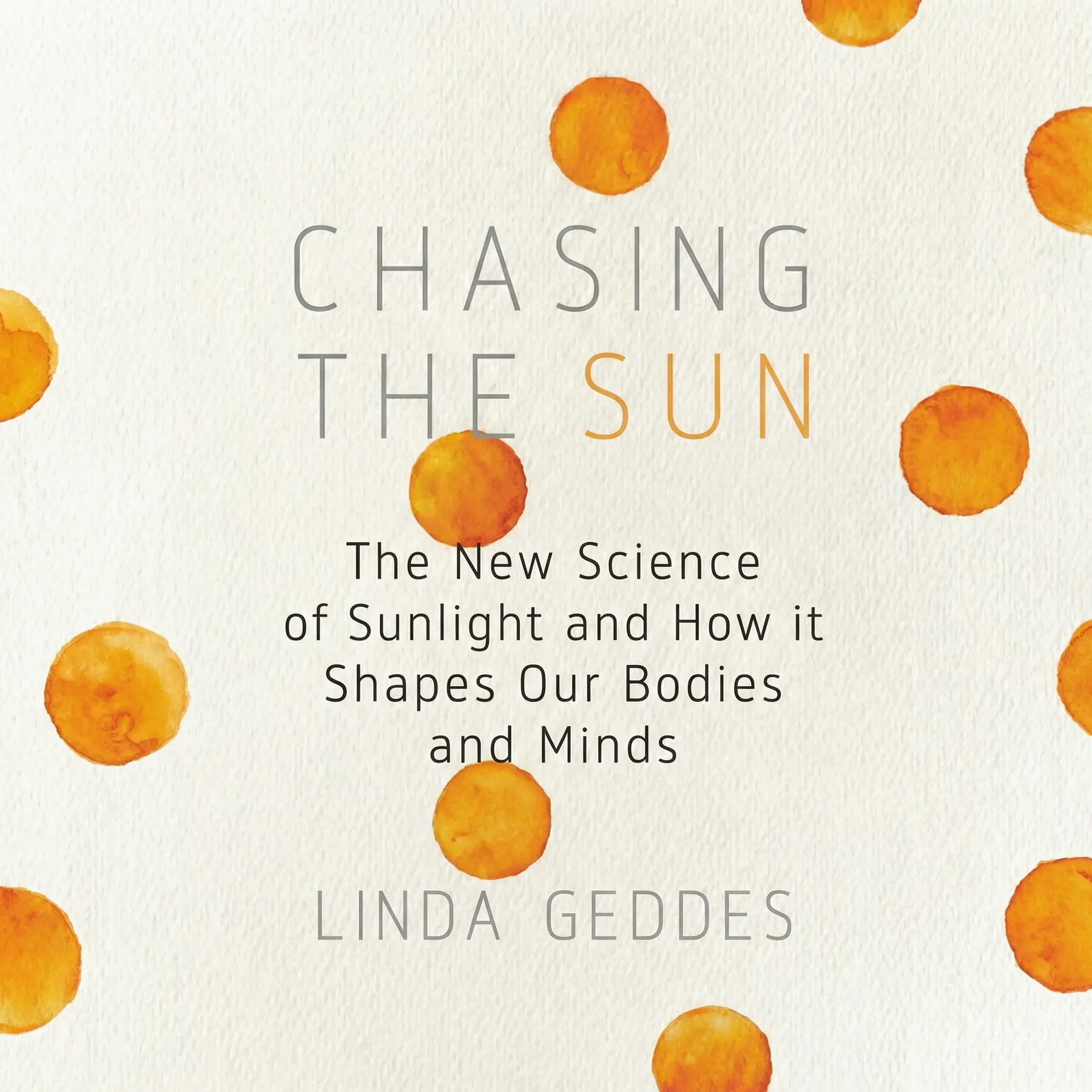
Chasing the Sun: The New Science of Sunlight and How it Shapes Our Bodies and Minds
By Linda Geddes
Chasing the Sun examines the profound biological impact of sunlight, revealing how solar rhythms dictate our sleep, health, and mental well-being, while offering strategies to reconnect with the natural world.
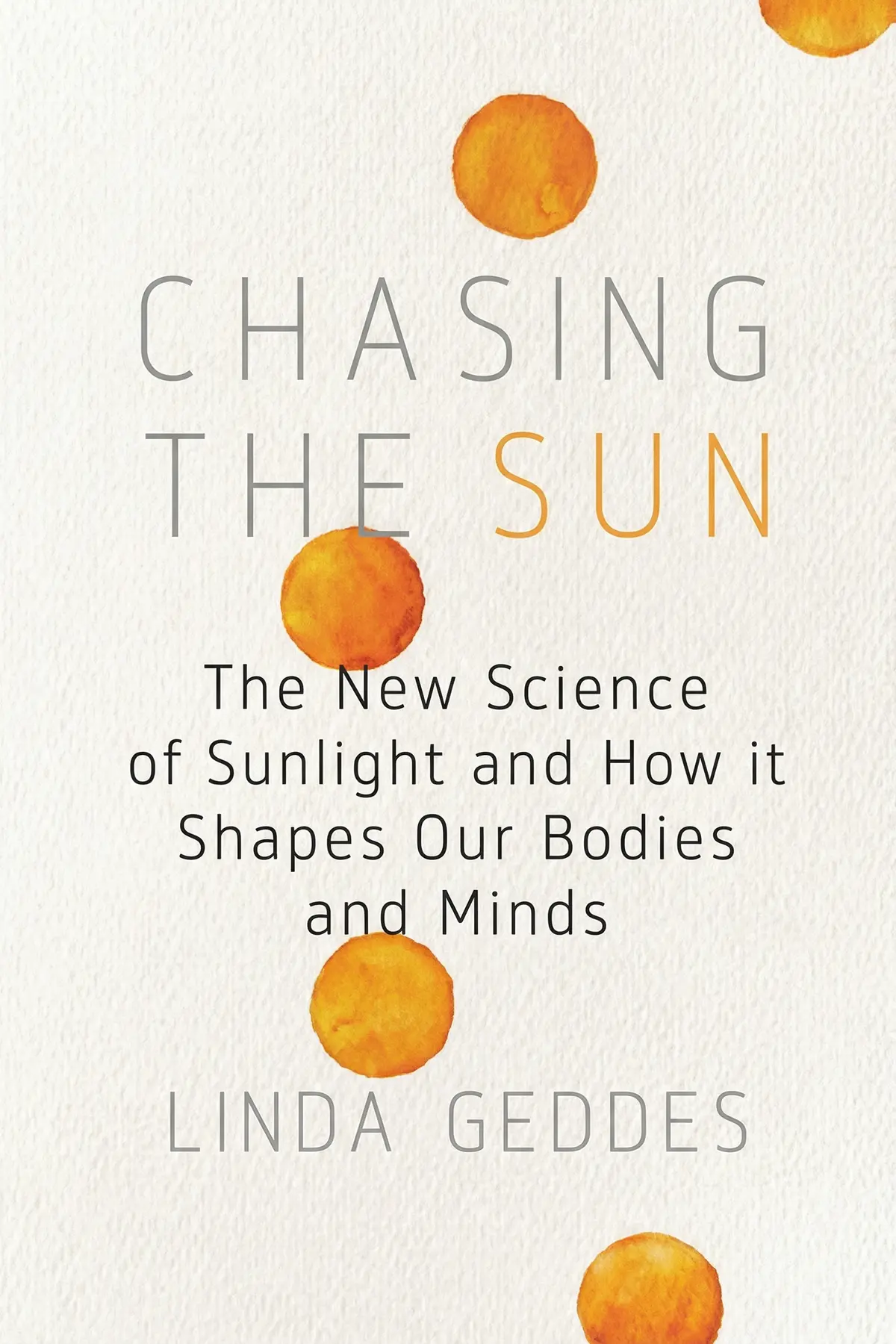
Table of Content
1. Introduction
1 min 55 sec
For as long as humans have existed, we have looked to the sky with a sense of reverence and necessity. If you were to walk through the ruins of ancient civilizations, you would find clear evidence of our ancestors’ devotion to the sun. From massive stone structures aligned with the solstices to elaborate rituals designed to welcome the morning, early cultures understood something fundamental: the sun is the primary engine of life on Earth. However, as we transitioned into the modern era, we began to distance ourselves from this solar source. We built roofs over our heads, swapped the campfire for the lightbulb, and moved our labor from the fields into windowless offices. We assumed that as long as we had enough food and shelter, we could ignore the solar cycle.
But as science has advanced, we’ve discovered that this assumption was a dangerous oversight. Our relationship with the sun isn’t just a matter of history or spiritual tradition; it is hardwired into our very DNA. In the following discussion, we will explore the cutting-edge science of sunlight and how it shapes every aspect of our physical and mental existence. We’ll look at the sophisticated internal mechanisms that keep us ticking and see how the absence of natural light can lead to a cascade of health problems, from weakened immunity to deep psychological distress.
Throughline: Modern society is currently suffering from a biological mismatch because we have decoupled our daily lives from the solar cycle. By understanding the science of our internal clocks and the healing power of light, we can reclaim our health, improve our sleep, and find a more harmonious way to live in the modern world. This journey will take us from the microscopic processes in our brain cells to the architectural mirrors of remote Norwegian towns, all to illustrate one simple truth: we are creatures of the light, and it’s time we started acting like it.
2. The Master Biological Clock
2 min 36 sec
Deep within your brain, a tiny cluster of cells acts as the conductor of your body’s complex orchestra, ensuring every biological process happens at the perfect moment.
3. The Healing Power of Sunlight through History
2 min 33 sec
Long before modern medicine, sunlight was a primary tool for healing, and today we’re rediscovering how it prevents debilitating bone diseases and supports early development.
4. The Disruptive Influence of Artificial Light
2 min 28 sec
Our modern obsession with screens and indoor lighting has created a world of perpetual twilight, confusing our brains and sabotaging our sleep quality.
5. The High Stakes of Circadian Disruption
2 min 33 sec
Disrupting our natural rhythms isn’t just a minor inconvenience; it can have severe consequences for our physical health and our mental stability.
6. Chronotherapy: Light as a Psychiatric Tool
2 min 29 sec
Innovative doctors are now using the science of light and timing to treat severe depression and bipolar disorder, often with results that rival traditional medication.
7. Redesigning Society for the Biological Clock
2 min 39 sec
From the timing of school bells to the debate over daylight saving, we are beginning to realize that our social structures need to respect our internal timing.
8. Conclusion
1 min 25 sec
As we have seen, the sun is far more than just a source of light in the sky; it is a vital conductor for the symphony of biological processes that happen within us every day. From the ancient healers who recognized its power to the modern neurologists who use it to treat depression, the message is clear: our health, our mood, and our very survival are intimately tied to the solar cycle. When we ignore our circadian rhythms, we do so at our own peril, risking chronic illness and mental fatigue.
However, the good news is that we have the power to fix this. Reconnecting with the sun doesn’t require a radical lifestyle change. It can be as simple as taking a walk in the morning light, choosing a seat near a window, or dimming the lights as evening approaches.
For a practical starting point, consider how you handle the disruption of travel. The next time you face jet lag, try using a small dose of melatonin at sunset in your new time zone. This helps to artificially signal the ‘night’ phase to your master clock, helping it reset more quickly. By taking these small steps to honor our internal timing, we can bridge the gap between our modern lives and our ancient biological needs. It is time to step out of the shadows and embrace the sun, not just as a part of nature, but as a fundamental part of ourselves.
About this book
What is this book about?
For millennia, humans lived in lockstep with the rising and setting sun, but modern life has moved us indoors into a world of artificial glow. Chasing the Sun explores the scientific consequences of this shift, detailing how our internal biological clocks—governed by the master regulator in our brains—require sunlight to function properly. When we lose this connection, we face a host of issues ranging from sleep disorders and seasonal depression to more serious metabolic and immune system failures. This exploration highlights the emerging science of chronobiology and the historical use of light as a healing tool. From the ancient Roman solaria to modern light boxes used to treat seasonal lethargy, the narrative shows that light is not just a background element of our environment but a vital nutrient for our cells. The promise of this book is a deeper understanding of our own biology, offering a path to better health by simply stepping outside and realigning our daily schedules with the natural cycles of day and night.
Book Information
About the Author
Linda Geddes
Linda Geddes is a journalist who specializes in the sciences of technology, biology, and medicine. She’s worked as both a writer and editor for New Scientist, and has been the recipient of the Best Investigative Journalism award from the Association of British Science Writers.
Ratings & Reviews
Ratings at a glance
What people think
Listeners find the book thoroughly researched, with one listener specifically noting the research into daily to annual rhythms. The title is praised for its readability. Feedback on the writing style is mixed, though some listeners find it to be well-crafted.
Top reviews
Aim
This book is a masterclass in science journalism, weaving together historical anecdotes with cutting-edge biology. From the ingenious mirrors in Rjukan, Norway, that bring light to a dark valley, to the way ancient Romans utilized solariums, Geddes illustrates how our ancestors respected the sun far more than we do today. It’s a wake-up call for the modern office worker. The author’s writing style is incredibly engaging and approachable, even when she’s diving into the complexities of chronobiology or the suprachiasmatic nucleus. I particularly enjoyed the sections on how sunlight exposure can mitigate the effects of seasonal affective disorder and improve general mental health. It’s a well-researched, thought-provoking look at the literal life-giver we often take for granted. After finishing this, I’ve started taking my morning coffee on the porch regardless of the temperature. Truly, everyone living in the modern world needs to understand these rhythms.
Show moreAudrey
Wow. I never realized how much our 'always-on' culture was truly messing with our internal chemistry until I read this. Linda Geddes does a fantastic job of explaining complex biological processes in a way that feels urgent and personal. I loved the chapters on the history of light as medicine, especially the 'solariums' used by the Romans to treat various illnesses. It’s fascinating to see how science is finally catching up to ancient wisdom. The book is exceptionally well-researched, but it never feels like a textbook because the author includes so many personal stories and interviews with experts. Her writing is fluid and the information is presented with a sense of wonder that kept me turning pages late into the night—ironic, I know. It’s an essential read for anyone interested in health, biology, or just living a more balanced life in harmony with nature.
Show moreArthit
Finally got around to finishing this, and I’ve already started changing my morning routine to get more direct exposure to the sky. It is a brilliant piece of science writing that manages to be both informative and deeply relatable. I was especially struck by the research on Vitamin D and how our skin has evolved to process light in ways we are only just beginning to understand. Geddes has a knack for making you care about things you never thought of, like the specific frequency of blue light emitted by our smartphones. The book is concise, readable, and packed with 'did you know?' moments that I kept sharing with my family. It’s one of those rare science books that is actually practical. I’ll be keeping this on my shelf to refer back to every time the seasons change or I have to travel across time zones.
Show moreGin
As someone who spends way too many hours under fluorescent lights, this was a necessary, if slightly convicting, read. Geddes makes a compelling case for how our disconnection from natural light is driving a variety of modern ailments, from rickets to chronic depression. I was fascinated by the practical experiments she conducted, especially her decision to live by candlelight for several weeks to reset her internal clock. The book is chock-full of facts that should be common sense but have been lost in our 24/7 culture. It’s not just about getting a tan; it’s about how light governs our digestion, blood pressure, and even when our hormones are released. My only minor gripe is that some of the science-heavy chapters toward the middle felt a bit dry compared to the vivid opening. Still, it is a highly readable and important contribution to the field of popular science.
Show moreYulia
Ever wonder why you feel like a total zombie during the winter months? Linda Geddes explores this and so much more in this insightful look at our relationship with the sun. She covers a vast range of topics, from the way the Amish handle light to the potential for 'chronotherapy' in treating mental health disorders. The research into how school start times affect teenage brain development was particularly eye-opening for me as a parent. Frankly, it’s frustrating to see how modern society ignores these biological truths just to fit an arbitrary work schedule. The book is well-written and moves at a brisk pace, though I found the ending a bit abrupt. It provides excellent actionable advice on managing jet lag with melatonin and sunlight, which I’ll definitely be using on my next international trip. A solid four stars for a book that will change how you look at your windows.
Show moreWitthaya
After hearing a lot about circadian rhythms recently, I wanted a book that went beyond the surface level, and 'Chasing the Sun' mostly delivered. Geddes is a great guide, traveling across the globe to talk to researchers who are rethinking everything from office lighting to the timing of chemotherapy. The connection between light exposure and drug effectiveness was one of the most surprising things I learned. It makes you realize how little we consider our bodies' natural timing in modern medicine. The book is easy to read and informative, though I did find some of the science history a little tedious in the middle sections. However, the practical takeaways are invaluable. Whether you're a shift worker or just someone who struggles with the winter blues, there is something in here for you. It’s a book that actually makes you want to change your habits immediately.
Show moreDen
Personally, I found the historical perspective of this book to be its strongest suit. Learning about how the ancients viewed the sun as a literal medicine was fascinating, and it makes our modern indoor lifestyle seem even more unnatural. Linda Geddes writes with a clear, journalistic voice that makes the science of circadian rhythms easy to digest for someone without a biology background. I was particularly interested in the discussion surrounding daylight savings time and the arguments for its abolition. While the book does lean heavily into sleep-related topics, the connections she draws between light and overall systemic health are well-supported. There were a few dry spots during the more technical explanations of cellular processes, but they were brief. Overall, it’s a very solid four-star read that offers a lot of food for thought regarding how we design our cities and our daily lives.
Show moreYam
Picked this up because I’ve been struggling with insomnia lately and hoped for some novel solutions. To be fair, Geddes provides a very solid overview of why we need sunlight, but I felt like I had heard a lot of this before in other health podcasts. The book felt like a 50/50 split between sleep science and sun science, and I wish there had been more on the latter. I was specifically hoping for more depth on skin conditions like eczema, which were teased in the introduction but barely touched upon later. The writing is clear and the history of heliotherapy was interesting, but the narrative felt a bit disjointed at times. It’s a decent enough primer for a beginner, but if you’ve already read 'Why We Sleep,' you might find a lot of the circadian rhythm information repetitive.
Show moreLiam
Truth is, I have mixed feelings about this one. On one hand, the information is vital and the author’s passion for the subject shines through in every chapter. On the other hand, the writing can be quite repetitive, often circling back to the same points about blue light and melatonin several times. I enjoyed the sections on how different cultures across history have worshipped or utilized the sun, but I found the modern-day anecdotes a bit hit-or-miss. Some of the experiments she mentions, like the mirrors in Norway, are incredible, while others felt like filler. I also agree with other reviewers who said it focused a bit too much on sleep patterns at the expense of other sunlight-related health topics. It’s a good book, don’t get me wrong, but it didn't quite reach the 'must-read' status I was hoping for based on the premise.
Show moreDimitri
The chapter on ancient Roman solariums started strong, but the rest of the book felt like a collection of data points without a unifying thesis. Look, I appreciate the research that went into this, but the depth just wasn't there for me. It felt more like a series of long-form magazine articles stitched together rather than a cohesive book. Geddes spends a lot of time on sleep, which is fine, but I wanted more on the 'Sun' specifically as promised by the title. The tone is a bit too 'bullet-point' heavy for my taste, and I found myself skimming through the parts about her camping trips and visits with the Druids. It lacks the rigorous scientific method approach I was expecting from a science journalist. If you want a quick summary of why the sun is good for you, a few blog posts would probably suffice. It wasn't for me.
Show moreFeatured in
Readers also enjoyed

Alien Earths: The New Science of Planet Hunting in the Cosmos
Lisa Kaltenegger
A Life Decoded: My Genome: My Life
J. Craig Venter
AUDIO SUMMARY AVAILABLE
Listen to Chasing the Sun in 15 minutes
Get the key ideas from Chasing the Sun by Linda Geddes, plus 5,000+ more titles in English and Thai.
- 5,000+ titles
- Listen as much as you want
- 7-day free trial
- Cancel anytime







