
1929: Inside the Greatest Crash in Wall Street History--and How It
Andrew Ross Sorkin
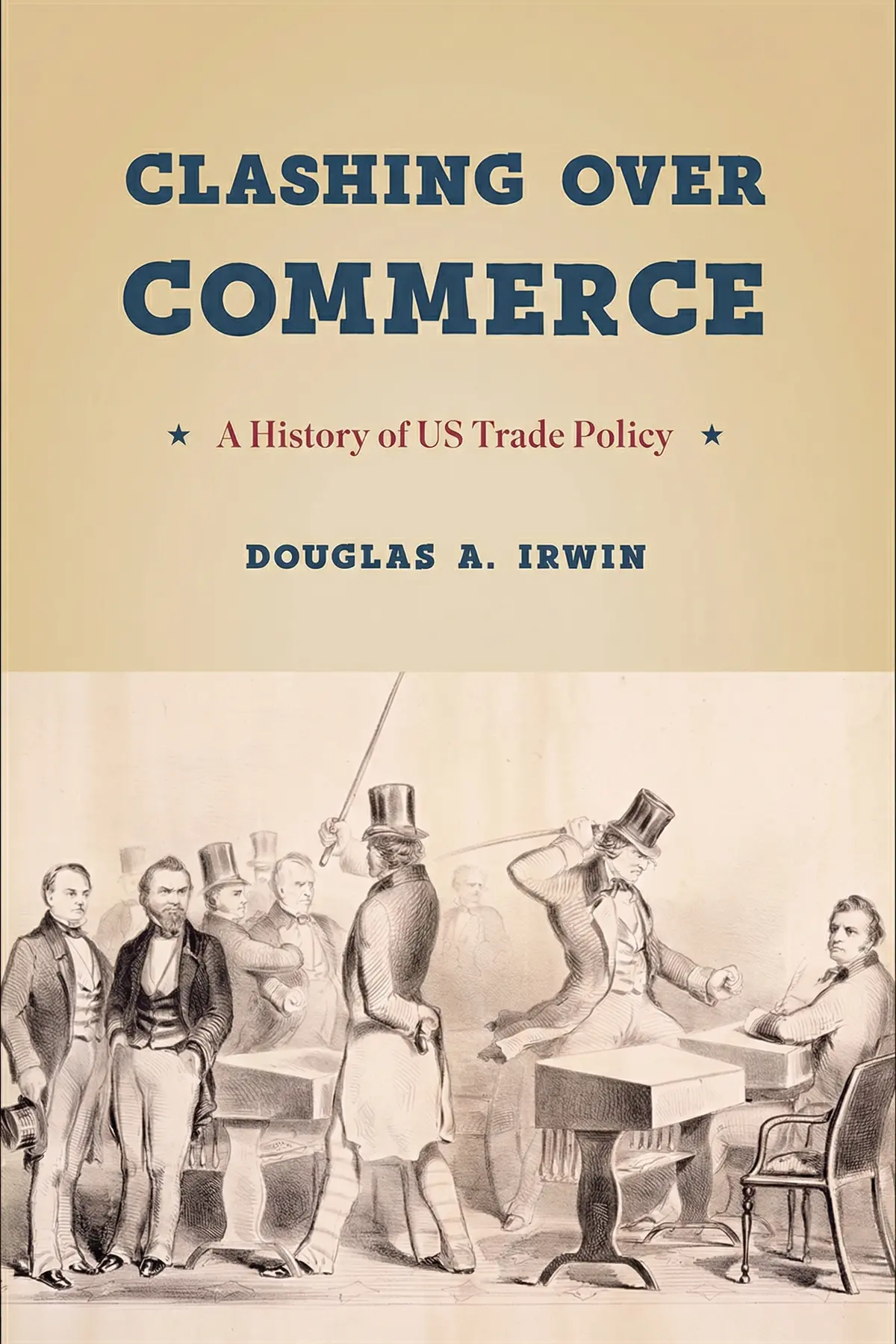
A comprehensive exploration of the historical battles over American trade policy, illustrating how tariffs, treaties, and global commerce have fundamentally shaped the nation’s political landscape from its founding to the present day.
1 min 34 sec
For as long as the United States has existed, it has been embroiled in a fierce debate over how it should interact with the rest of the world’s economy. This isn’t just a dry argument about numbers or logistics; it’s a fundamental conflict over the nation’s identity, its power, and its prosperity. From the very first sessions of Congress to the most recent election cycles, trade policy has been one of the most consistent and divisive forces in American life. It has determined who gets rich, which regions of the country thrive, and how the U.S. wields its influence abroad.
In this summary of Douglas A. Irwin’s comprehensive history, we are going to look at the three major pillars that have supported American trade strategy over more than two centuries. We’ll see how the nation used trade first to survive, then to build its industrial might, and finally to lead a global order. But we will also see the costs. Trade has always created winners and losers, and that reality has repeatedly sparked regional friction and political upheaval.
Through this historical lens, we can begin to see that today’s heated arguments about globalization and protectionism aren’t new. They are the latest chapter in a story that began before the Constitution was even written. By looking at how past generations navigated the clashing interests of merchants, farmers, and manufacturers, we gain a much clearer picture of why trade remains a lightning rod in modern politics. Let’s begin by looking at how the desire for commercial freedom actually helped give birth to the United States in the first place.
2 min 10 sec
Before the United States was a nation, its future was being shaped by colonial frustration over British control of the high seas and the profits of American commerce.
2 min 09 sec
In the aftermath of the Revolution, the new nation found itself economically adrift, lacking a unified strategy to handle foreign competition and internal rivalries.
2 min 00 sec
In its infancy, the United States relied on import taxes for more than just trade regulation; they were the primary engine keeping the government running.
2 min 07 sec
As the nineteenth century progressed, trade policy shifted from a financial tool to a weapon of regional conflict, nearly tearing the Union apart.
2 min 07 sec
Following the Civil War, the United States turned inward, building a massive industrial economy behind a fortress of high import duties.
1 min 59 sec
In a desperate attempt to save a failing economy, the U.S. hiked tariffs to historic highs, only to watch as the global trading system crumbled.
1 min 55 sec
Facing economic ruin, the U.S. fundamentally changed how it handled trade, transferring authority from a parochial Congress to the executive branch.
2 min 13 sec
In the wake of World War II, trade policy became a central pillar of American foreign policy, used to build alliances and contain the spread of communism.
2 min 12 sec
The move toward deep globalization in the late twentieth century brought new levels of prosperity but also exposed deep cracks in the American political consensus.
2 min 07 sec
In recent years, trade has moved from a technocratic policy concern to a primary symbol of the struggle over America’s economic future.
2 min 08 sec
As we have seen through the long history presented in Douglas A. Irwin’s work, trade policy is far more than a set of technical rules about imports and exports. It is a mirror reflecting the evolving state of the American union. Over more than two centuries, the United States has cycled through different philosophies of commerce, driven by the changing needs of its people and the shifting demands of the global stage.
We started as a fledgling nation using trade as a tool for independence and a source of revenue to keep the lights on. We then transitioned into an industrial powerhouse that shielded its growing factories behind high tariff walls, often at the cost of deep regional division. Finally, we emerged as a global leader that used trade to build a more stable and interconnected world. Each of these eras was defined by the dominant political interests of the time, and each eventually gave way when those interests no longer matched the reality of the world.
The throughline of this history is that trade always involves a trade-off. There is no policy that satisfies everyone. Every decision to lower a barrier helps one group and hurts another; every decision to raise a wall protects one industry while increasing costs for another. The political genius—and the political struggle—of the United States lies in how it manages these conflicting interests.
Today, as the country grapples with the complexities of a highly globalized world, it is easy to feel that we are in uncharted territory. But the history of clashing over commerce reminds us that we have been here before. We have navigated the collapse of trade systems, the rise of new competitors, and intense domestic polarization. By understanding the cycles of revenue, restriction, and reciprocity, we can better understand the forces at play in our own time. The debate over trade will never truly end because it is, at its heart, a debate about what kind of nation we want to be.
This summary provides a deep dive into the history of American trade policy as presented in Clashing over Commerce. It explores the perennial tug-of-war between those who favor protectionism and those who advocate for free trade, showing that these debates are as old as the republic itself. You will follow the evolution of trade through three primary eras: the early days when tariffs were the government's main source of revenue, the long period of industrial protectionism following the Civil War, and the modern shift toward global reciprocity that began during the Great Depression. The book illustrates how trade policy has never been just about economics; it is a reflection of regional power, political strategy, and America's changing role on the world stage. By examining the intersection of political interests and economic reality, this summary offers a perspective on how trade has fueled domestic conflict and international alliances. It explains the shift from congressional control to presidential negotiation and why trade has recently returned to the center of political polarization. Ultimately, it provides a historical framework for understanding the modern tensions surrounding globalization and American prosperity.
Douglas A. Irwin is a distinguished professor of economics at Dartmouth College and is widely recognized as a leading authority on international trade and economic history. His extensive research and influential writings, including notable works such as Free Trade Under Fire and Peddling Protectionism, have made him a frequent point of reference for those seeking to understand the complex interplay between politics and the global economy.
Listeners consider the work highly rewarding and value the writer's lucid and expert prose. The caliber of the content earns praise, as one listener points out that it offers a comprehensive review of U.S. tariff history.
This massive volume is the definitive account of American trade policy, and quite frankly, it’s a masterpiece of economic history. Irwin traces the evolution of the nation’s commercial strategy from the colonial boycotts against Britain to the modern debates over globalization with incredible precision. The way he frames the history through the 'Three R's'—revenue, restriction, and reciprocity—makes a complex subject surprisingly easy to follow. I was particularly impressed by how he balances the technical economic data with the human element of political maneuvering. It becomes clear that trade has never been a side issue; it has been central to the American project since 1776. The prose is clear and authoritative, avoiding the partisan traps that often plague this topic. While the sheer length might be intimidating, every page feels necessary to understand our current economic landscape. This is a brilliant, essential work for anyone interested in how policy actually gets made in Washington.
Show moreEver wonder why trade is so incredibly toxic in our current political climate? Douglas Irwin’s history provides the best answer I’ve found, tracing two centuries of 'clashing' interests that feel eerily similar to today’s headlines. The transition from using tariffs as a primary revenue source to using them as a shield for domestic industry is explained with remarkable clarity. I was particularly struck by how often short-term political maneuvering led to long-term economic consequences that took decades to undo. While the book is certainly a commitment in terms of time, the payoff is a much deeper understanding of the American identity. It’s not just a book for economists; it’s a book for anyone who cares about the intersection of power and prosperity. The maps and tables are actually helpful, not just filler, and they help ground the abstract concepts in real-world data. Highly recommended for the patient reader.
Show moreAs a student of economics, I found Irwin's deconstruction of the 'Hamilton as protectionist' myth particularly enlightening. Too often, Hamilton is used as a convenient mascot for modern trade barriers, but Irwin shows that his primary concern was actually government revenue and credit, not permanent industrial walls. This kind of nuance is what makes the book so valuable; it strips away the political talking points to reveal the messy reality of our history. The text moves methodically through the Civil War and the long period of Republican dominance, showing how the North and South were locked in a tug-of-war over imports and exports. It’s a dense read, and you definitely shouldn't expect to finish it in a weekend, but the depth of research is just staggering. The author’s ability to remain objective in such a politically charged field is perhaps his greatest achievement. This is economic history at its absolute best.
Show moreFinally got around to finishing this 800-page beast, and the clarity Irwin brings to the 'Three R's'—revenue, restriction, and reciprocity—is unparalleled. It’s easy to get lost in the weeds of 19th-century tariff schedules, but the author consistently pulls back to show the bigger picture of national development. I found the section on the post-WWII era particularly fascinating, as it explains how the U.S. used trade as a diplomatic tool to contain communism. The truth is, I expected this to be a dry academic exercise, but it reads more like a biography of the nation itself. There are moments where the detail on specific wool or iron duties gets a bit heavy, but the overall narrative arc is strong enough to keep you engaged. It’s an essential piece of scholarship that feels incredibly relevant to the debates we are having about trade agreements today.
Show moreWow. This is a staggering achievement that manages to make the history of the tariff genuinely compelling for the modern reader. Irwin shows us that trade has never been just about numbers; it’s always been a proxy for deeper arguments about what kind of nation we want to be. I was fascinated by the transition in the 1930s when the power to set trade policy shifted from a squabbling Congress to the executive branch. That change fundamentally altered our global standing and paved the way for the postwar prosperity we often take for granted. It's a long read, but every chapter feels essential for understanding how we ended up with the polarized trade politics of today. Truly authoritative and remarkably balanced throughout.
Show moreTo be fair, I didn't expect to walk away from an 800-page book on tariffs feeling inspired by a Secretary of State. But Irwin’s portrayal of Cordell Hull and his vision for a rules-based international system is one of the highlights of this work. The book does an amazing job of showing that our current 'free trade' consensus was never a given; it was a hard-won victory that emerged from the ashes of the Great Depression. The writing is authoritative and clear, even when handling the complex intersection of currency values and trade barriers. Some might find the level of detail regarding the 19th-century Whig and Democrat debates a bit much, but I found it provided necessary context for our modern partisan divide. It’s a comprehensive, objective, and deeply researched history that belongs on the shelf of any serious history buff.
Show moreNot what I expected from a book on trade policy, but Irwin manages to keep the narrative moving even when diving into the granular details of the Smoot-Hawley Act. Most people think of trade as a boring, technocratic subject, but this book reveals it as a high-stakes arena of political scheming and regional warfare. I loved the way the author highlighted the role of specific personalities, especially the transition of power from Congress to the President during the New Deal. The data presentation is also superb, with summary tables that make complex shifts in import duties easy to visualize across centuries. It's rare to find a book that is this academically rigorous while still being accessible to an informed layperson. This should be required reading for anyone in Washington right now, as it provides a much-needed long-term perspective on globalization.
Show moreThe chapter on the 1828 'Tariff of Abominations' reads like a political thriller, proving that trade has always been more about backroom deals than pure theory. It was fascinating to see how a bill designed by its opponents to fail ended up becoming law and nearly tearing the Union apart decades before the Civil War. Irwin has a real knack for explaining how regional alliances shifted over time, especially as the West became a swing vote between the industrial North and the agrarian South. My only gripe is that the book can be a bit repetitive in its structure, following the same pattern for almost every major tariff act. However, the summary tables at the end of each section are a lifesaver for keeping track of the data. It’s a bit of a marathon, but if you want to understand why trade remains such a volatile issue in American politics, this is the definitive source.
Show moreLook, if you still think the Civil War was primarily fought over tariffs rather than the preservation of slavery, you need to read this book immediately to correct that misconception. Irwin expertly debunks that narrative by showing that tariffs were actually at their lowest point in decades right before the South seceded. The book is divided into distinct eras that help organize what could have been a very chaotic timeline of legislative history. I particularly enjoyed the sections on how the Republican Party became the champion of the 'home market' and high duties for nearly seventy years. My only real complaint is that the writing style is occasionally workman-like and dry, lacking the narrative flair of more popular histories. Still, the historical charts and the analysis of how regional interests shaped national policy are top-notch and incredibly useful for anyone trying to understand modern trade debates.
Show moreI'll be blunt: this book is an absolute mountain of information that occasionally feels like a hike through waist-deep mud. While Irwin is clearly the leading authority on the subject, the prose is incredibly dense and the sheer volume of data tables can be overwhelming for anyone who isn't a professional economist. I appreciated the objective tone and the way he traces the shift from revenue-based tariffs to full-blown protectionism, but the middle sections felt like a repetitive cycle of Congressional vote-counting. If you have the patience for a 700-page deep dive, the insights into Smoot-Hawley and the Great Depression are invaluable. However, for a casual reader looking for a breezy history of the U.S. economy, this might be a bit too academic. It's an important book, certainly, but it’s a grueling marathon that requires a lot of coffee to get through.
Show moreAndrew Ross Sorkin

Philip Freeman

Ha-Joon Chang

Niall Kishtainy
Michael Axworthy
AUDIO SUMMARY AVAILABLE
Get the key ideas from Clashing over Commerce by Douglas A. Irwin, plus 5,000+ more titles in English and Thai.







