
19 min 31 sec
Click: The Forces Behind How We Fully Engage with People, Work, and Everything We Do
Discover the hidden social and psychological triggers that cause instant connections between people. Learn how vulnerability, proximity, and shared experiences create the magical synergy known as clicking in both personal and professional life.
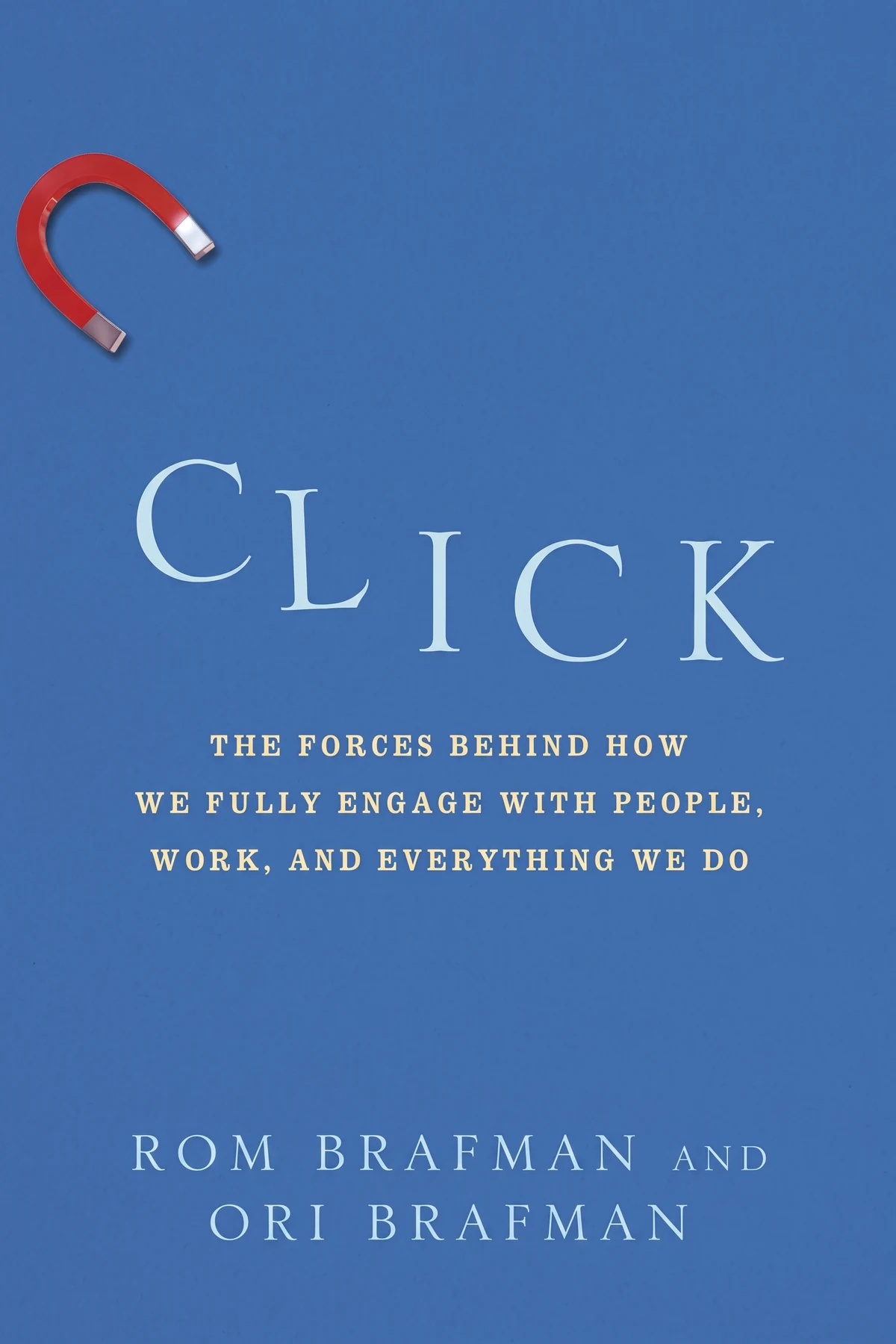
Table of Content
1. Introduction
1 min 52 sec
We have all experienced those rare, lightning-bolt moments where the world seems to align perfectly. You might be standing in a crowded room or sitting next to someone on a long flight, and within minutes, you feel as though you have known this person for a lifetime. There is a sense of ease, a shared rhythm, and a feeling that you are completely understood. This is what we call ‘clicking.’ It is that magical, almost electric connection that turns a stranger into a friend or a colleague into a lifelong partner in an instant.
But is this phenomenon just a stroke of luck? Is it simply a matter of being in the right place at the right time? In this summary of the work by brothers Ori and Rom Brafman, we are going to pull back the curtain on the science of these connections. We will explore what they call ‘quick-set intimacy’—the process by which bonds that usually take years to form are forged in a matter of seconds.
Understanding these dynamics is more than just a social curiosity. As we will see, clicking has profound implications for our mental health, our professional success, and the longevity of our most important relationships. We will look at why these moments trigger a sense of euphoria similar to a chemical high and why they are so vital for warding off feelings of isolation.
Throughout this journey, we will encounter diverse examples, from the high-stakes world of hostage negotiation to the competitive atmosphere of elite sports and the intricate world of professional music. We will learn that clicking is not just something that happens to us; it is something we can encourage and cultivate. By the end of this exploration, you will have a new perspective on how to foster these magical connections in your own life, making your interactions deeper, more productive, and infinitely more rewarding. Let’s dive into the fascinating world of human resonance and discover what it truly means to click.
2. The Neurobiology of Instant Connection
1 min 56 sec
Discover why clicking feels like a literal high and how your brain reacts to a magical meeting with a stranger.
3. The Lasting Power of the First Encounter
1 min 43 sec
Learn why the very first moments of a relationship can dictate its passion and success for decades to come.
4. How Connection Fuels Group Excellence
1 min 50 sec
Explore why the highest-performing teams aren’t always the most skilled, but rather the ones that click the best.
5. Vulnerability as a Bridge to Trust
1 min 45 sec
Discover the counterintuitive secret to building instant trust: revealing your own weaknesses and fears.
6. The Influence of Physical Proximity
1 min 31 sec
See how your physical environment and the simple act of being near someone can trigger a lifelong bond.
7. Syncing Through Flow and Mirroring
1 min 46 sec
Uncover the science of how performers and audiences ‘catch’ each other’s energy through brain-to-brain synchronization.
8. The Comfort of Shared Similarity
1 min 45 sec
Understand the ‘similarity bias’ and why we are naturally wired to click with people who remind us of ourselves.
9. Bonding Through Adversity and Community
1 min 38 sec
Explore why facing challenges together or belonging to a tight-knit group can forge unbreakable bonds.
10. The Traits of the Social Chameleon
1 min 42 sec
Learn the specific social skills that ‘natural clickers’ use to connect with almost anyone they meet.
11. Conclusion
2 min 03 sec
As we have seen, the phenomenon of ‘clicking’ is far from a random mystery. It is a complex interplay of biology, psychology, and environment. We have explored how the brain reacts to an instant bond with the same euphoria it might feel from a powerful drug, and how that initial spark can sustain a marriage or a partnership for decades. We have looked at how professional teams—from string quartets to MBA students—can achieve extraordinary heights when they move past individual talent and find a collective rhythm.
The throughline in all of these stories is that connection is a fundamental human need, and there are concrete ways to foster it. We learned that vulnerability is not a weakness, but a bridge; that physical proximity is a powerful, silent catalyst for friendship; and that our natural bias toward similarity can be used to build rapport. We also saw how shared struggle can forge bonds that are stronger than those made in times of ease, and how certain social skills can turn any of us into a more effective connector.
So, what can you do with this knowledge today? The most actionable advice is to look for the common ground. The next time you meet someone new, don’t just stick to the surface. Look for those shared traits, whether it’s a similar background, a common interest, or even a shared birthday. Use that similarity as a starting point. Furthermore, don’t be afraid to show a bit of your true self. By offering a small piece of your own vulnerability, you invite others to do the same, creating the opening for a true ‘click’ to occur.
Clicking makes our work more productive and our lives more meaningful. It is the invisible thread that weaves us into the fabric of a community. By understanding these ‘magical’ mechanics, we can move through the world with more intention, creating more of those electric moments that make life truly worth living. Whether in the boardroom or at a dinner party, the power to connect is within your reach. Start looking for the resonance, and you might find that you click with the world more often than you ever thought possible.
About this book
What is this book about?
Have you ever met a total stranger and felt an immediate, unexplainable bond? This book explores the fascinating science behind these 'click' moments. It moves beyond the idea of luck or fate to examine the specific social factors—like empathy, group dynamics, and vulnerability—that foster deep, instantaneous connections. The authors provide a compelling look at why we feel euphoric when we connect and how these moments can transform our lives. From the way hostage negotiators build trust to how basketball teams find their rhythm, this summary reveals the mechanics of quick-set intimacy and offers practical strategies for building stronger, more meaningful relationships in every area of your life.
Book Information
About the Author
Rom Brafman
Ori and Rom Brafman are brothers and the co-authors of several New York Times bestsellers, including Sway and Click. Ori Brafman is an organizational business consultant and a co-founder of a network dedicated to fostering global peace and development projects. Rom Brafman is a psychologist who has earned awards for excellence in teaching and promoting positive human growth; he currently maintains a private practice in Palo Alto, California.
Ratings & Reviews
Ratings at a glance
What people think
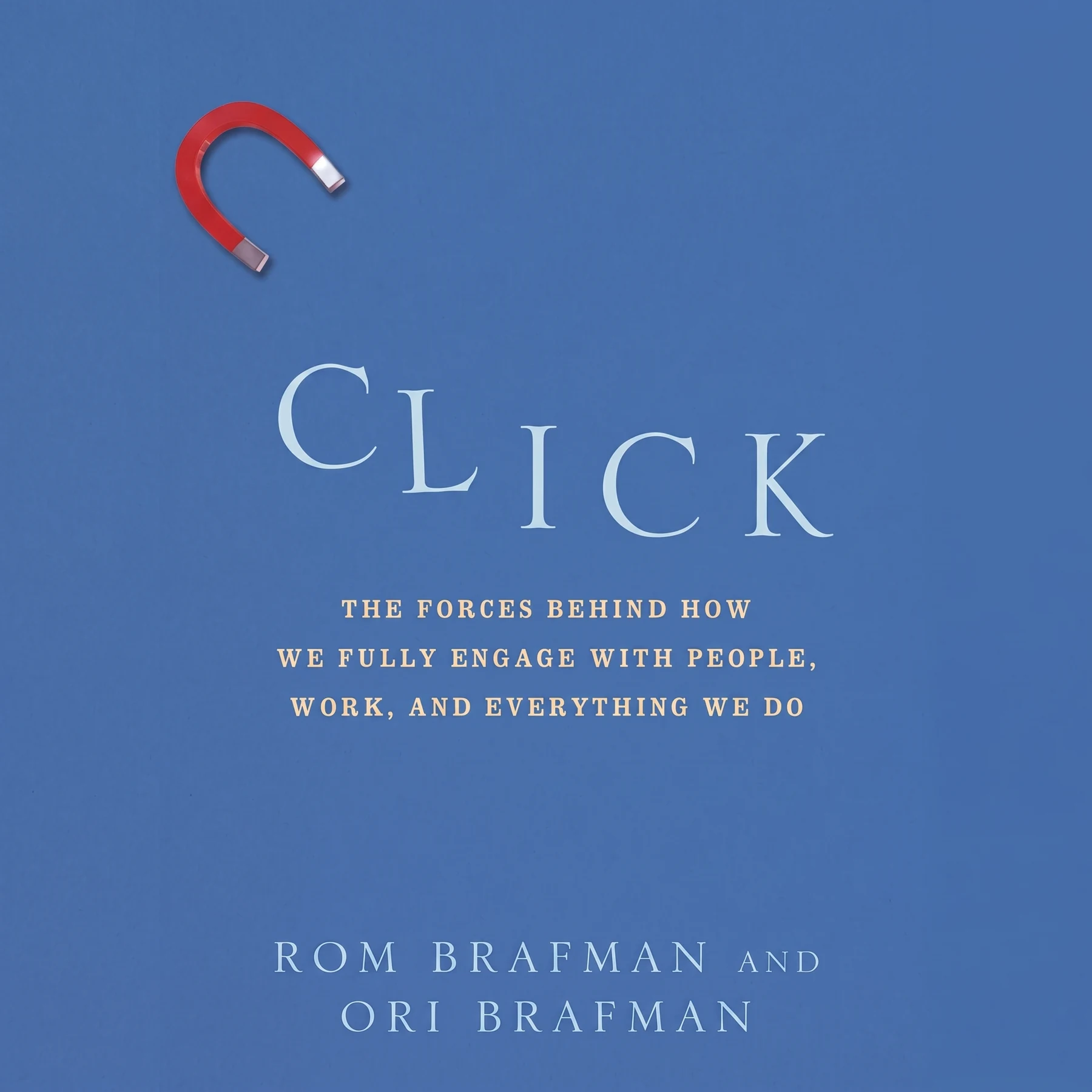
Listeners find the material accessible and value its educational substance, with one listener pointing out how the principles apply to everyday life. The book offers a fascinating examination of interpersonal bonds, and one listener emphasizes the varied anecdotes sourced from different sectors. The narrative quality earns favorable remarks, with one listener mentioning captivating short stories that illustrate how people function. Listeners are divided concerning the value for money.
Top reviews
Natnicha
Finally got around to reading "Click" and I’m genuinely impressed by how much it resonated with my own experiences. The authors break down the "magic" of connection into manageable pieces like physical proximity and shared vulnerability. I especially loved the story about the hostage negotiator because it shows how these principles work even in high-stakes, life-or-death situations. It’s not just about making friends; it’s about how human resonance can bridge massive divides. The flow charts at the beginning of each chapter were a nice touch for a visual learner like me. While some might say it’s a bit light on the science, I think the accessibility is its greatest strength. It makes complex social dynamics feel intuitive and actionable for the average person.
Show moreWatcharee
As someone who works in sales, I found the insights into "personal elevation" and authentic questioning incredibly useful for my day-to-day interactions. The authors suggest moving past weather talk to ask more probing, meaningful questions, and I’ve actually seen it work in real-time. This isn't just a dry textbook; it’s an exploration of what makes us human and how we find our "tribe." The stories are diverse, touching on everything from music to military leadership, which kept me engaged throughout. The tone is cohesive despite having two authors, and the writing is clear enough for a layperson to grasp immediately. It's rare to find a book that is both this informative and this genuinely entertaining to read.
Show moreRungtip
Gotta say, I wasn't sure if a book on "instant connections" could actually teach me anything I didn't already know, but I was pleasantly surprised. The focus on "flow" and being present in the moment is something we all need to be reminded of in the age of constant smartphone distractions. The writing style is almost like a stream-of-consciousness narrative, which makes the pages whiz by. I loved how they balanced the anecdotes with summaries, making it easy to revisit the core concepts later. It’s an accessible, heart-centered look at the chemistry between people. Even if you don't agree with every single "accelerator," the book provides a great vocabulary for describing the intangible feelings we have when we meet someone special.
Show moreSomkid
Wow, I didn't realize how much of our social life is governed by these hidden factors until I read this. The story of the hostage negotiator Sancier was worth the price of the book alone—the way he uses vulnerability to build trust is a masterclass in human interaction. The authors do a great job of showing how these "clicks" aren't just random accidents but can be encouraged by the right environment. I found the book to be incredibly positive and encouraging, focusing on our universal capacity for greatness and connection. It’s short, punchy, and hits all the right notes for a general reader. Highly recommended for anyone who wants to improve their social intelligence without wading through dense academic papers.
Show moreSiriporn
Ever wonder why you hit it off with a stranger while your best friend just stares blankly? The Brafman brothers tackle this phenomenon through what they call "accelerators." I found the section on vulnerability particularly striking because it flips the script on how we usually present ourselves in professional settings. Instead of a standard business manual, this feels like a collection of fascinating narratives ranging from hostage negotiations to basketball teams. It’s a very quick read, probably two days max, which makes it perfect for a weekend trip. Truth be told, it lacks the deep neuroscientific data I usually crave, but the storytelling is so smooth that you hardly notice the thinness of the actual research. It provides a decent framework for understanding those "lightning strike" social moments without getting bogged down in academic jargon.
Show moreMatteo
The chapter on "proximity" completely changed how I look at my office layout and daily routine. It turns out that just being physically near people and having repeated "incidental" encounters is one of the strongest drivers of new connections. The Brafmans write in a very conversational tone that avoids the stuffy academic vibe of most psychology books. I appreciated the brief summaries at the end of each section because they help crystallize the main points after all the storytelling. My only real gripe is that the conclusion felt a little rushed and didn't quite tie the room together. Still, for anyone who wants to understand why certain groups "click" while others struggle to communicate, this offers some very practical insights.
Show morePong
After hearing a lot of hype about the Brafman brothers, I went into this expecting a deep dive into biology. Instead, "Click" is more of a breezy survey of social anecdotes and "lite" psychology. It’s definitely engaging, and the prose is narrative in a way that makes it very easy to consume in a single sitting. However, the content feels a bit thin. They jump from one idea to the next without much of a connective thread, often leaving me with more questions than answers. Personally, I found the "accelerators" interesting to think about, but I’m not sure how much of it is actually within our control versus just being lucky enough to meet the right person at the right time. It’s a fun read but don't expect it to change your life or provide a scientific breakthrough.
Show moreMaria
Not what I expected given the comparisons to Malcolm Gladwell, but it was an okay way to spend an afternoon. The book starts abruptly without an introduction, which threw me for a loop, but once I got into the rhythm, I enjoyed the various case studies. It’s a very descriptive book rather than a self-help guide; it tells you why connections happen but doesn't necessarily teach you how to force them. One of the accelerators they mention is basically "being a born communicator," which isn't exactly helpful if you aren't one! Look, it’s a light, fun exploration of human behavior that would be great for a long flight. Just keep your expectations in check regarding the "science" part, as it relies heavily on secondary sources and narrative flair.
Show moreJom
This book falls squarely into the category of "MBA junk science" that seems designed for airport bookstores rather than serious study. While the concept of instant connection is fascinating, the Brafmans present a series of anecdotes that feel cherry-picked and overly simplified to fit their narrative. They use buzzy terms like "quick-set intimacy" to describe what most of us just call a good conversation. I was frustrated by how scattered the organization felt; they often promise to return to a point and then just... don't. To be fair, the prose is readable and the pages fly by, but there is very little substance here for anyone looking for hard-hitting psychological research. It’s basically a long introduction that never reaches a satisfying conclusion. If you’ve read "Sway," you’ll find this one even less impactful and significantly more repetitive.
Show moreChaiwat
Picked this up hoping for a neuroscientific analysis of social bonding, but what I got was a collection of stories that felt a bit "surface-level." The Brafmans have a habit of using invented vocabulary to make common-sense observations sound more profound than they actually are. Frankly, most of the advice boils down to "be nice and listen to people," which isn't exactly ground-breaking. The structure is also quite frustrating; the text is scattered and lacks a thorough organization of ideas. I felt like I was reading a series of magazine articles rather than a cohesive book. While the "click" moments they describe are definitely real, the authors fail to provide any hard-hitting evidence to back up their claims. It's a bit too elementary for anyone who has read even a little bit of social psychology.
Show moreFeatured in
Readers also enjoyed

Acting with Power: Why We Are More Powerful Than We Believe
Deborah Gruenfeld
Age of Propaganda: The Everyday Use and Abuse of Persuasion
Anthony Pratkanis
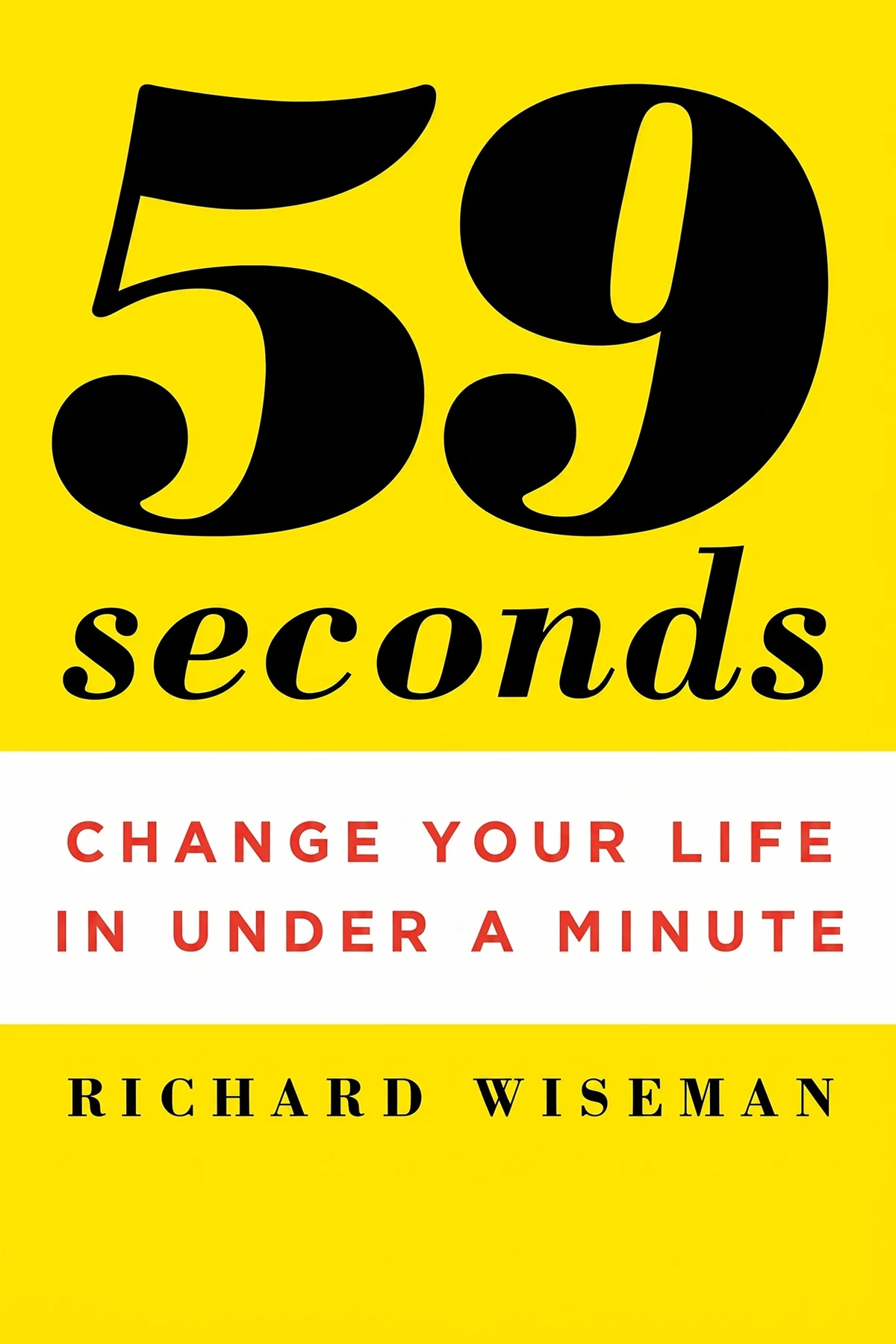
59 Seconds: Change Your Life in Under a Minute
Richard Wiseman
AUDIO SUMMARY AVAILABLE
Listen to Click in 15 minutes
Get the key ideas from Click by Rom Brafman, plus 5,000+ more titles in English and Thai.
- 5,000+ titles
- Listen as much as you want
- 7-day free trial
- Cancel anytime







