

16 min 48 sec
Cloudmoney: Cash, Cards, Crypto, and the War for Our Wallets
By Brett Scott
Cloudmoney examines the invisible struggle between physical cash and digital payment systems, revealing how the push toward a cashless society empowers major financial institutions and tech giants at the expense of privacy.
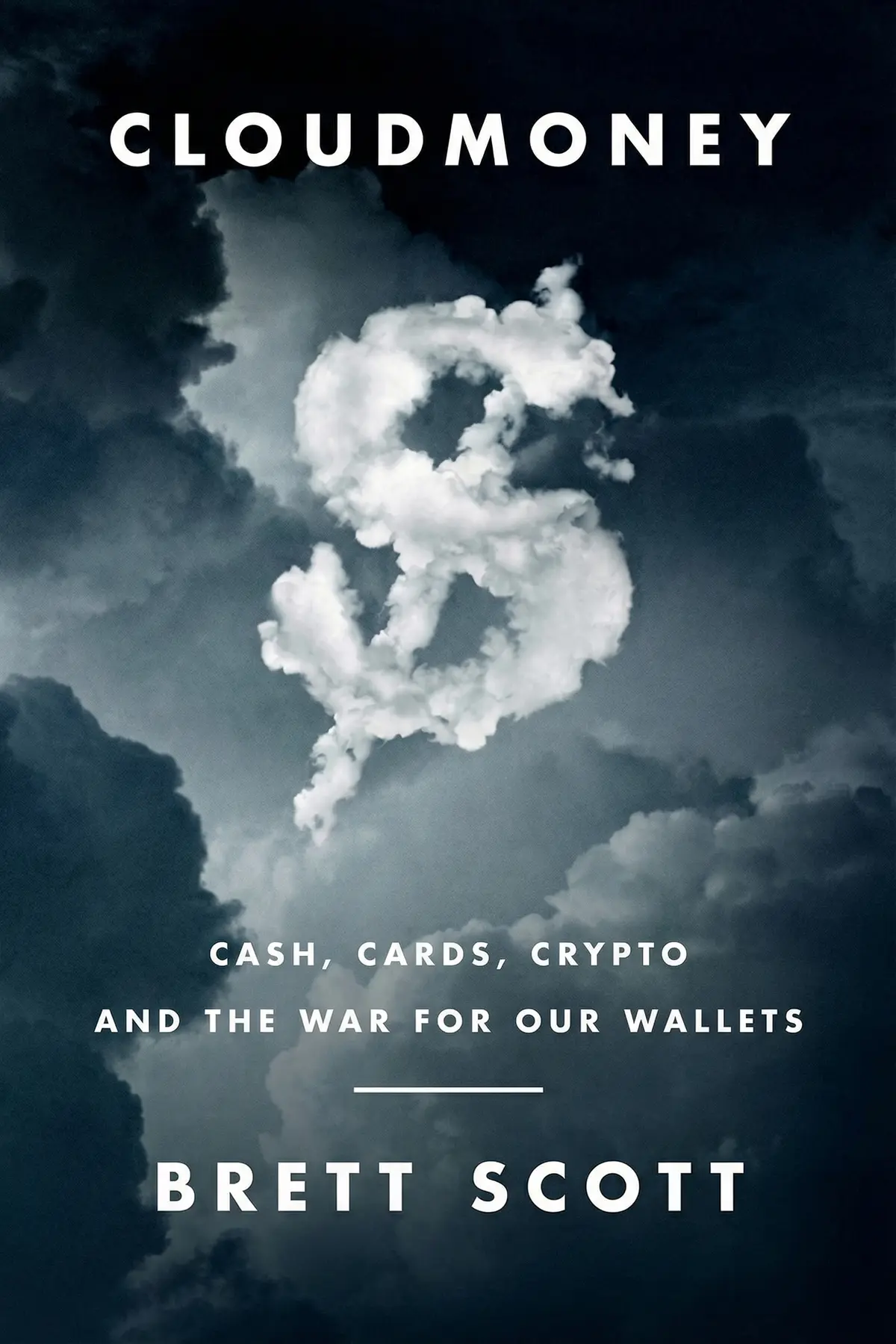
Table of Content
1. Introduction
1 min 45 sec
Every time you tap your phone against a payment terminal or click a ‘buy’ button online, you are participating in a massive, invisible transformation of the global economy. For most of us, these actions feel like small victories for convenience. We no longer have to fumble for coins or worry about having the right change. It feels like progress, an inevitable shift from the clunky physical world to the streamlined digital one. But what if this shift isn’t just about making our lives easier? What if the slow disappearance of the bills in your wallet is actually part of a deliberate strategy by the world’s most powerful entities?
In this exploration of Cloudmoney, we are going to look behind the slick interfaces of our banking apps and the promises of the tech revolution. We will uncover what is being called the ‘war on cash’—a campaign that stretches from the aftermath of the 2008 financial crisis to the modern era of high-tech surveillance. This isn’t just a story about money; it’s a story about power, privacy, and the subtle ways our choices are being shaped by the institutions that control our digital lives.
As we move through these ideas, you’ll see how the very technology that was supposed to liberate us from big banks has, in many ways, made us more dependent on them than ever. We’ll examine why the push for a cashless society might be more about profit and data than genuine public demand, and why physical cash remains one of the most resilient and important tools for human freedom. By the end, you’ll have a much clearer picture of what’s truly at stake every time you choose between paper and pixels.
2. The False Promise of Financial Disruption
2 min 10 sec
Discover how the tech revolution that aimed to dismantle big banks eventually became their most powerful ally, merging finance and technology into a single, dominant force.
3. The Top-Down Push for a Cashless World
1 min 55 sec
Uncover the reality behind the ‘cashless society’ narrative and why it’s a strategic move by institutions rather than a demand from the public.
4. The Hidden Taxes and Data Harvesting of Digital Payments
1 min 50 sec
Every ‘convenient’ tap of your card comes with a hidden price. Learn about the fees and the data surveillance that fund the digital payment industry.
5. The Resilience of the Financial Bicycle
1 min 47 sec
Is cash really as outdated as a horse and buggy? Explore a better metaphor that highlights why physical money is essential for safety and reliability.
6. Cash as a Shield for the Vulnerable and the Deviant
2 min 04 sec
Physical money is more than just a tool for trade; it’s a protector of privacy and a driver of social progress for those on the margins of society.
7. The Crypto Illusion and the Quest for Digital Cash
1 min 50 sec
Why did Bitcoin fail to become the ‘electronic cash’ it promised to be? Learn about the divide between digital gold and a real means of account.
8. The Rise of Central Bank Digital Currencies
1 min 54 sec
Explore the potential for state-run digital money to challenge commercial banks, while weighing the serious risks of government surveillance.
9. Conclusion
1 min 33 sec
As we look toward the future, it’s clear that the struggle for control over our wallets is only going to intensify. Big tech and big finance are unlikely to stop their campaign against cash because the rewards—total data visibility and a fee on every human interaction—are simply too great to ignore. They will continue to tell us that cash is a relic of the past, an obstacle to a faster and more ‘hygienic’ world. But now you know the truth: cash is a vital tool for resilience, privacy, and personal autonomy.
Preserving the role of physical money isn’t about being ‘anti-technology.’ It’s about ensuring that we have choices. It’s about making sure that the financial system remains a servant to humanity, rather than its master. We need to defend the infrastructure of cash—protecting ATMs and ensuring businesses continue to accept physical currency—while simultaneously demanding that any future digital currencies are designed with our privacy and freedom in mind.
The next time you reach into your pocket or look at your phone to pay, take a moment to consider the path that money is taking. Is it a direct, private exchange between you and another person? Or is it a data-harvesting event that empowers a global alliance of corporations? By staying informed and consciously choosing to use cash when we can, we can help ensure that our financial future remains in our own hands, rather than floating away into the clouds.
About this book
What is this book about?
The way we pay for things is changing faster than ever. From the tap of a smartphone to the swipe of a card, digital transactions have become the default for millions. On the surface, this looks like a natural evolution driven by our own desire for speed and convenience. However, as this exploration reveals, the transition away from physical currency is less of a grassroots movement and more of a coordinated effort by what can be called the 'anti-cash alliance.' Cloudmoney pulls back the curtain on the complex power dynamics involving big tech and big finance. It explains how the convenience of digital payments serves as a trojan horse for data harvesting, increased fees, and financial surveillance. By examining the resilience of cash, the shortcomings of cryptocurrency, and the potential future of central bank digital currencies, this summary offers a critical look at what we stand to lose in a completely digitized economy. It provides a roadmap for understanding why preserving physical money is essential for maintaining individual autonomy and social progress.
Book Information
About the Author
Brett Scott
Brett Scott is an experienced journalist, campaigner, and author who possesses an insider's view of the global financial system. Having previously worked as a broker, he brings technical expertise to his critiques of modern banking. Scott is a fellow at the Finance Innovation Lab and has authored other influential works on the intersection of money and society, including The Heretic’s Guide to Global Finance.
Ratings & Reviews
Ratings at a glance
What people think
Listeners find this work to be a reachable and enlightening manual on the intricate landscape of international finance and the ongoing "war on cash." While some feel the author's points are occasionally simplistic or skewed against the convenience of electronic transactions, they value the use of straightforward analogies to explain difficult topics such as surveillance capitalism and blockchain. Furthermore, they highlight that the writing offers a "lucid" and perceptive analysis of what drives large tech firms and financial institutions. The book is also praised for its teaching quality, as one listener points out it serves as a "really good intro book" for anyone wanting to grasp the concealed agendas within the fintech sector.
Top reviews
Pongpan
Finally, a book that pulls back the curtain on the 'frictionless' future the big banks keep promising us! Brett Scott’s storytelling is masterclass level, taking incredibly dense concepts like global transfer systems and making them feel intuitive. I was particularly struck by his breakdown of surveillance capitalism and how our money isn't really ours once it enters the 'cloud.' It is terrifying to realize how few corporations act as gatekeepers to our social participation. This isn't just a book about finance; it's a warning about humanity and the loss of autonomy in an age where every transaction is harvested for data. The way he describes the 2008 crisis as the catalyst for this 'fintech' revolution was eye-opening. If you care about privacy and the slow erosion of the public sphere, you need to read this. It’s a scary look at the world, but absolutely essential reading for the modern age.
Show moreRapee
Gotta say, this is the most important book I've read this year regarding the future of our society. Scott doesn't just talk about money; he talks about power. He brilliantly illustrates how we are sleepwalking into a world where our ability to buy food or participate in the economy is entirely dependent on the whims of private corporations and their digital rails. The concept that 'cash doesn't crash' is a powerful reminder of why we need to maintain physical alternatives in an increasingly unstable world. Whether it's a natural disaster or a banking collapse, having something offline is vital. The writing is punchy, the analogies are sharp, and the research into how organizations like USAID partner with tech giants to eliminate cash is eye-opening. This book won't soothe your nerves if you're already distrustful of big data, but it will give you the vocabulary to understand exactly what is happening to our financial freedom.
Show moreOrawan
After hearing about the 'war on cash' for years, I found Brett Scott's breakdown of the actual infrastructure behind our payments to be deeply insightful. He managed a very lucid rundown of the various kinds of money in the world, specifically the difference between state money and the 'chips' issued by private banks. It’s straight-up dystopian when you realize how much data Google and Facebook are harvesting from your morning coffee purchase. The truth is, 'cash doesn't crash,' and Scott’s argument for keeping physical money as a backup for when digital systems inevitably fail is hard to dispute. I did feel he ignored a lot of the positive aspects of digital systems—like fraud protection and ease of use—likely to serve his own agenda. Regardless, the frequent mentions of how these systems are implemented in places like Sweden are disturbingly accurate. Highly recommended for anyone who feels a bit distrustful of big tech's overreach.
Show moreAroon
The chapter on Central Bank Digital Currencies (CBDCs) alone is worth the price of admission here. Scott explains the difference between state money and commercial bank tokens with such clarity that even a financial novice can grasp the stakes of the current system. It’s fascinating—and a bit haunting—to read about the symbiosis between USAID, Visa, and Google in pushing digital payment rails into the developing world. He frames this as a form of global gentrification that standardizes corporate chains over traditional small businesses. While his 'leftist' perspective is clear, he raises points that would resonate across the political spectrum, especially regarding state surveillance and the loss of 'gray areas' in our economy. My only gripe is that he occasionally glosses over the reasons why people choose digital, like the safety of not carrying physical currency. It’s a bit one-sided, but the core argument about corporate enclosure is incredibly compelling and well-researched.
Show moreMind
This book will make you want to go straight to the nearest ATM and pull out every cent you have. The way Scott describes the 'war on cash' as a top-down push for data harvesting rather than a bottom-up demand for convenience is genuinely chilling. He uses great metaphors to explain how digital transfers aren't an 'upgrade' to cash, but a separate, private system that relies on cash for its very existence. It reminded me of the 'Surveillance Capitalism' thesis but applied specifically to my wallet. I loved the discussion on how cash enables social progress and 'creative deviance'—things like the early cannabis industry or grassroots activism that need a degree of anonymity. While the author is a bit reductive when discussing countries like Sweden, the overall message about the risks of cyber-hacking and system failures is spot on. If you value your privacy, this is a must-read, even if you don't agree with every one of the author's political conclusions.
Show moreNiramai
Brett Scott manages to turn a potentially dry subject like monetary theory into a narrative that feels like a techno-thriller at times. The book provides an eye-opening guide to the murky interests behind 'frictionless' payments. I particularly enjoyed the section on Bitcoin; he explains why it failed as a 'peer-to-peer electronic cash' and became a speculative digital asset instead. It’s a very accessible read that doesn't require a PhD in economics to follow. However, I did find it a bit frustrating that he completely ignores the accessibility benefits of digital money. For people with disabilities, apps can be a lifeline, yet he acts as if the physical nature of cash is inherently better for everyone. That minor blind spot aside, the book is a fantastic exploration of how big finance is trying to insert itself into every pixel of our daily lives. It’s a wake-up call that we all need to hear.
Show moreErn
Ever wonder why every bar you go to suddenly requires a QR code and an app just to buy a pint? Cloudmoney does a decent job explaining the corporate interests driving this shift, but the author is far too reductive in his analysis. For example, he lumps Sweden’s transition to cashless in with India’s demonetization without any of the necessary nuance regarding how those societies actually function. Living in a place like Sweden, you see the genuine value of networks like Swish for small merchants. Scott paints everything with a broad, 'anti-corporate' brush that occasionally misses the mark. To be fair, his metaphors—like comparing cash to a bicycle rather than an obsolete horse cart—are brilliant and help demystify the tech. However, the lack of depth in consumer regulation history left me wanting more. It is a good introductory text for the curious, but perhaps too biased for those already familiar with the fintech space.
Show moreMuk
As someone who works in finance, I appreciated the clear-eyed explanation of the 'double' monetary system, yet I couldn't ignore the author's ideological slant. Scott is clearly an economic anthropologist first and a broker second; his disdain for the fintech industry is palpable on every page. He makes a strong case for why we should be wary of a totally cashless world, particularly regarding surveillance. However, he treats the 'convenience' of digital payments as if it's a trick being played on the public rather than a genuine utility people value. Not everyone wants to keep stacks of bills under their mattress! To be fair, his explanation of how PayPal and other fintechs are just layers on top of traditional banking was excellent. It’s a really good intro book for those who know nothing about the plumbing of the financial system, but it lacks the balance needed for a truly objective analysis.
Show moreArnav
While the metaphors about bicycles and horse carts were clever, I found the author’s disdain for modern convenience a bit patronizing. Look, I get that surveillance is a problem, but Scott acts like the entire world is being tricked by a Visa marketing campaign. The reality is that many of us prefer the safety and tracking of digital payments. He mentions that cash is 'honest' because it’s tangible, but digital tools help me budget and save in ways a physical wallet never could. That said, his explanation of the technical side—how banks create money through loans and how CBDCs could change everything—was genuinely brilliant. It’s a bit of a mixed bag; the educational value is high, but the 'anti-tech' bias is so strong that it occasionally undermines the valid points he's making about corporate power. It is a solid 3-star read that sparked a lot of thoughts, even if I disagreed with half of them.
Show moreFinn
I really wanted to like this, but Scott's logic feels incredibly one-sided and frankly narrow-minded at times. He argues that cash is superior because it is tactile, completely ignoring how digital screen readers empower the visually impaired to manage their own finances without feeling vulnerable. Walking around with pockets full of physical bills isn't a safety net for everyone; for many, it's a liability. The author insists we are all being 'forced' into a cashless society by bank propaganda, yet he fails to acknowledge those of us who embraced digital banking for the sheer convenience and the granular data it provides for personal budgeting. He sets out with a predetermined opinion and refuses to deliver a fair argument for the other side. While the explanation of bank 'tokens' was interesting, the blatant disregard for the practical benefits of fintech made it very difficult for me to take his broader dystopian warnings seriously.
Show moreReaders also enjoyed

1929: Inside the Greatest Crash in Wall Street History--and How It
Andrew Ross Sorkin
23 Things They Don’t Tell You About Capitalism
Ha-Joon Chang

A Little History of Economics
Niall Kishtainy
AUDIO SUMMARY AVAILABLE
Listen to Cloudmoney in 15 minutes
Get the key ideas from Cloudmoney by Brett Scott, plus 5,000+ more titles in English and Thai.
- 5,000+ titles
- Listen as much as you want
- 7-day free trial
- Cancel anytime







