

13 min 55 sec
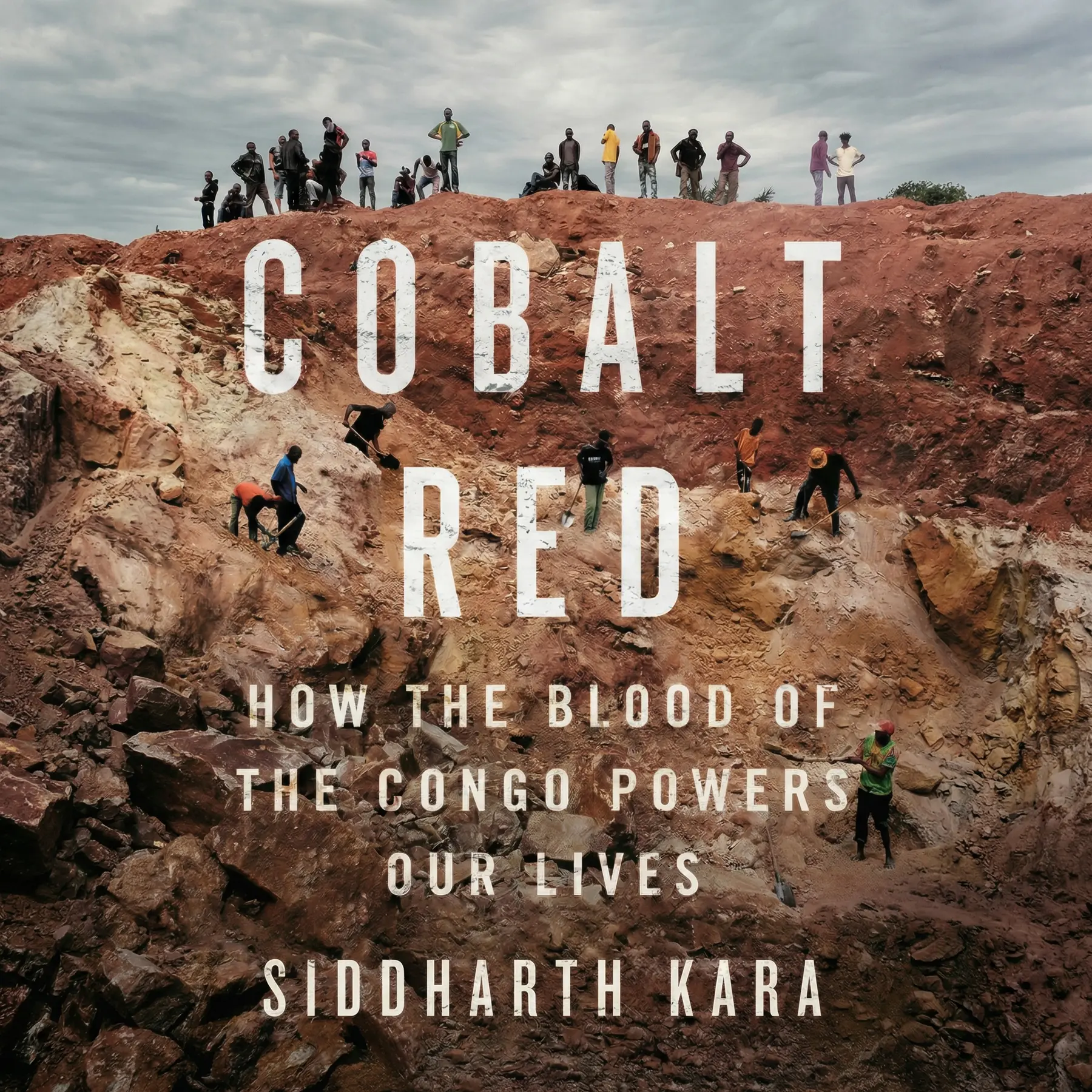
Cobalt Red: How the Blood of the Congo Powers Our Lives
Cobalt Red investigates the harrowing reality of cobalt mining in the Democratic Republic of Congo, exposing the modern slavery and environmental ruin required to power the world's high-tech devices.
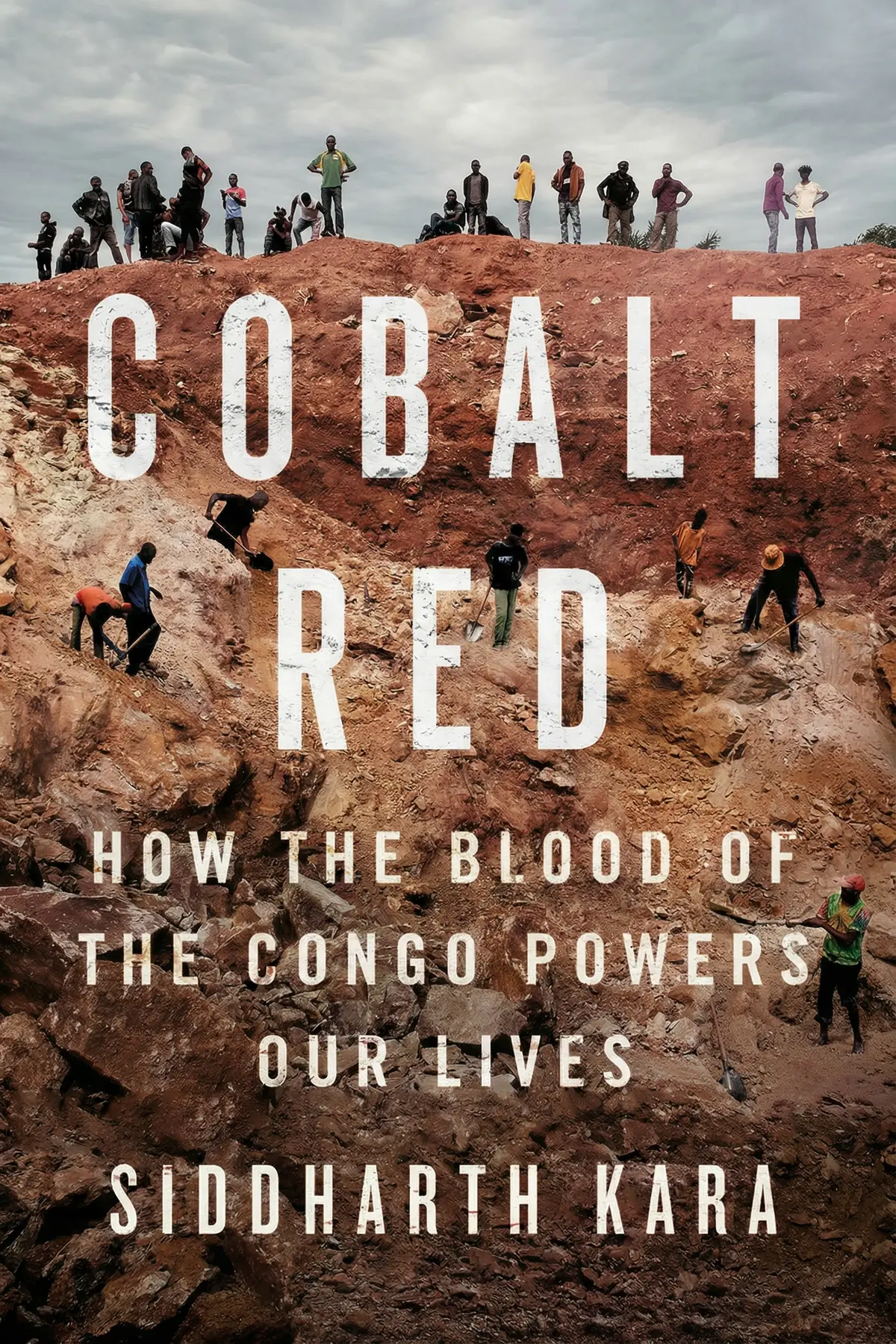
Table of Content
1. Introduction
1 min 34 sec
Think about the device you might be using right now to listen to this. Whether it’s a smartphone, a tablet, or the battery in an electric vehicle, there is a very high probability that its heart—the rechargeable lithium-ion battery—is powered by a mineral pulled from the earth under conditions that would resemble a horror story. We are talking about cobalt. This rare metal has become the most sought-after treasure of the twenty-first century, often referred to as the blue gold of the digital age.
In Cobalt Red, we are taken on an unflinching journey into the Democratic Republic of Congo, or the DRC, which holds more than half of the entire world’s cobalt reserves. This throughline is clear: our shiny, high-tech, “green” future is currently being built on a foundation of nineteenth-century-style exploitation. The book pulls back the veil on the massive disconnect between the trillion-dollar tech companies of Silicon Valley and the impoverished miners who risk their lives in hand-dug pits for a few dollars a day.
This isn’t just a story about mining; it is a story about the cost of progress. It challenges the narratives of corporate responsibility and ethical sourcing, revealing that the supply chain is far murkier than any marketing brochure would suggest. As we move through this summary, we will explore the historical context that set the stage for this crisis, the harrowing day-to-day reality for Congolese families, and the systemic failures that allow this cycle of suffering to continue. It is an invitation to look at our devices not just as tools of convenience, but as products of a complex and often tragic human narrative.
2. The Irony of the Green Revolution
2 min 15 sec
Explore the disturbing contradiction where the transition to clean energy and advanced technology relies on primitive labor and environmental destruction in the heart of Africa.
3. A Legacy of Systematic Plunder
2 min 14 sec
Trace the tragic history of the Congo to see how centuries of external exploitation have paved the way for the modern cobalt crisis.
4. The Human Cost in the Mining Belt
2 min 07 sec
Step into the hazardous reality of places like Kolwezi and Kasulo to hear the stories of those who risk everything for a handful of ore.
5. The Illusion of a Clean Supply Chain
2 min 02 sec
Uncover how the global market ‘launders’ cobalt from exploitative artisanal pits into the formal economy, providing corporations with plausible deniability.
6. A Stolen Future and the Path Forward
2 min 18 sec
Examine the devastating impact of the pandemic on mining conditions and the urgent need for consumers to demand a fundamental shift in corporate accountability.
7. Conclusion
1 min 25 sec
As we close this exploration of Cobalt Red, the central message is clear and unavoidable: our digital existence is inextricably linked to a humanitarian crisis of staggering proportions. The Democratic Republic of Congo provides the lifeblood for our most advanced technologies, yet the people providing that mineral are living in conditions that the rest of the world has supposedly moved past centuries ago. We have seen how the legacy of colonial plunder has evolved into a modern system of corporate exploitation that masks itself behind the language of green energy and ethical sourcing.
But this summary shouldn’t leave you in a state of mere despair. It is intended as a call to awareness and action. The first step toward change is the refusal to look away. By understanding the true cost of our devices, we can begin to hold the companies we support accountable for the entirety of their supply chains. We can support efforts that advocate for the dignity and safety of artisanal miners and push for a world where technological advancement does not require the sacrifice of human lives.
Ultimately, the story of cobalt in the Congo is a reminder that there is no such thing as a detached consumer. We are all part of this chain. The throughline of our shared humanity demands that we strive for a future where progress is defined not just by the speed of our processors or the range of our batteries, but by the justice and equity with which we treat those who make our modern world possible. Let this be the start of a more conscious relationship with the tools we use every day.
About this book
What is this book about?
Every time we charge a smartphone or drive an electric vehicle, we are connected to a world of profound suffering in the Democratic Republic of Congo. Cobalt Red serves as a devastating exposé of the cobalt mining industry, which provides the essential mineral for the lithium-ion batteries that define modern life. The book promises to reveal the truth behind the corporate marketing of "ethical sourcing" by documenting the actual conditions on the ground. Siddharth Kara takes listeners deep into the mining districts of the Congo, where thousands of people, including children, work in subhuman conditions for a pittance. By tracing the mineral from the red earth of artisanal pits to the global supply chains of the world’s most valuable companies, the narrative highlights a massive disconnect between technological progress and human rights. It is a haunting exploration of how a nation's vast natural wealth has become its greatest curse.
Book Information
About the Author
Siddharth Kara
Siddharth Kara is a New York Times best-selling author and Pulitzer Prize finalist who’s known for his work on modern slavery and human rights issues. He serves as a British Academy Global Professor and associate professor at the University of Nottingham and has also written Sex Trafficking, Bonded Labour, and Modern Slavery.
Ratings & Reviews
Ratings at a glance
What people think
Listeners find the book highly readable and thoroughly researched, characterizing it as a genuine piece of investigative journalism. They view it as an educational eye-opener, with one listener mentioning how the work sheds light on the plight of cobalt miners. The style of writing earns praise, as one listener likens the prose to that of a novel. The narrative draws varying responses; while some find the account engaging, others raise questions regarding its believability. The health care elements and the heartbreaking nature of the story receive mixed feedback, with one listener drawing attention to the terrible working conditions.
Top reviews
Rome
This is hands-down one of the most sobering books I have ever picked up. Siddharth Kara doesn’t just report on the cobalt trade; he drags you into the trenches of the DRC to witness the human cost of our digital lives. I was struck by the sheer investigative rigor on display here, as he navigates dangerous territories to interview 'artisanal' miners who are essentially modern-day slaves. The truth is, most of us want to believe our gadgets are sourced ethically, but this book shatters that illusion completely. To be fair, the descriptions of child labor and the total lack of safety equipment are incredibly difficult to read, but that’s exactly why this work is so necessary. It’s an eye-opener that makes you look at your smartphone or electric vehicle with a heavy sense of guilt. Every chapter feels like a gut punch, reminding us that a child in the Congo often dies just so we can stay plugged in.
Show moreWacharapol
Picked this up after hearing the author discuss his findings on a podcast, and the book is even more visceral than I expected. Kara has a unique writing style that feels almost like a novel, yet the horrors he describes are tragically real. The research is deep and clearly dangerous to obtain, highlighting how big tech and mining conglomerates hide behind layers of plausible deniability. I appreciated how he broke down the chemistry of lithium-ion batteries—specifically how cobalt holds the charge—before showing the misery required to get it. Some might find the travelogue format repetitive, but I think the repetition serves a purpose: it mirrors the relentless, daily grind of the miners. Personally, I found the narrative structure engaging and the prose very accessible for such a complex geopolitical issue. It is a haunting, essential piece of investigative journalism that should be mandatory reading for anyone living in the West.
Show moreJavier
Ever wonder what the true cost of your rechargeable batteries actually looks like? Cobalt Red provides a devastating answer that you won’t soon forget. Siddharth Kara’s prose is surprisingly poetic given the grim subject matter, making the medicine go down a bit easier even as your heart breaks for the families he profiles. I was particularly moved by the stories of mothers who have lost children in tunnel collapses, only for the mining companies to deny any responsibility. The book is well-researched and feels like a true investigative work rather than just a collection of anecdotes. Some reviewers mentioned the repetition, but look, when the horror is this widespread and systematic, the repetition is the point. It’s a call to action against the exploitation that fuels our luxury. If you care about human rights or environmental ethics, you simply cannot afford to skip this book.
Show moreEli
Wow, talk about a total gut punch of a book. I went into this expecting a dry academic text about mining, but what I got was a gripping, heart-wrenching journey through the dark side of the tech industry. The health care aspects Kara highlights—the toxic dust, the birth defects, the physical toll on the miners—are absolutely terrifying. He does an incredible job of showing how the Congo has been pillaged for centuries, first for rubber, then uranium, and now cobalt. Not gonna lie, I had to put the book down several times just to breathe because the descriptions of the 'creepers' (the children who work in the narrowest tunnels) were so vivid and upsetting. This is investigative reporting at its finest, exposing a global scandal that most of us are complicit in every time we pick up a device. It’s an eye-opener in the truest sense of the word.
Show moreStella
The chapter detailing the history of the Congo was a necessary foundation for everything that followed, even if I wished it went a bit deeper into the post-colonial era. This book is a masterpiece of advocacy journalism. Kara doesn’t hide his anger, and why should he? Seeing children mining for minerals that power trillion-dollar companies for pennies a day is enough to make anyone lose faith in the system. The book is easy to read despite the heavy subject matter, and the author’s dedication to getting these stories out is clear on every page. Personally, I think the 'travelogue' style works well here because it makes the reader feel like they are right there next to him, smelling the dust and feeling the heat. It’s a necessary wake-up call for the age of the electric vehicle. We need to do better, and this book shows us exactly why.
Show moreNong
Finally got around to finishing this today and I’m still sitting here in total silence. Cobalt Red is a haunting exploration of what happens when the world’s demand for a resource far outstrips our collective moral compass. Kara’s research into the working conditions and the systematic human rights abuses in the Congo is both thorough and deeply moving. He manages to weave together the technical needs of the battery industry with the agonizing reality of the people doing the actual labor. It’s a heartbreaking story, but it’s one that we all need to hear. I found the prose to be quite engaging, and while it is a difficult read emotionally, it flows very well. This is more than just a book; it’s a piece of evidence against a global system that treats human lives as disposable. If you use a phone or a laptop, you owe it to the people of the Congo to read this.
Show moreSebastian
As someone who follows global supply chains, I thought I knew about the DRC, but Kara goes much deeper into the actual pits. He exposes the lie of 'ethical sourcing' by showing how industrial mines and artisanal pits are inextricably linked. The descriptions of the working conditions are harrowing—thousands of people digging with bare hands for 1 or 2 dollars a day. My only minor gripe is that the historical context provided was a bit thin, only covering about 15 pages of the Congo’s very complex past. However, the investigative work in the present day is top-notch and feels very authentic. It’s an educational read that forces you to confront the reality of the green energy transition. We talk about saving the planet, but Kara shows us exactly who is being sacrificed to achieve that goal. Not a 'fun' read by any means, but a crucial one for the modern consumer.
Show moreJeeranan
Not many non-fiction books read like a thriller, but Siddharth Kara manages to pull it off while maintaining the gravity of the situation. The way he navigates the different mining regions of the DRC is both brave and illuminating, providing a first-hand look at a world most of us will never see. I appreciated the focus on the Chinese-owned mines and the complicated relationship between the local government and foreign corporations. My only real critique is that the ending felt a bit abrupt, with very few prescriptions for how to actually fix this mess. Still, the primary goal of this book is to bear witness, and in that, it succeeds brilliantly. The narrative is engaging and the stories of the individual miners are haunting. It’s a powerful reminder that our convenience often comes at the price of someone else's dignity and life.
Show moreFilm
While the subject matter is undeniably vital, the execution left me wanting much more in terms of depth. It’s a fascinating and tragic topic, yet the writing feels strangely basic, almost like a high-school report at times. I found myself frustrated by the constant repetition; it felt like every chapter followed the exact same formula of traveling to a mine, dodging security, and conducting a brief, tragic interview. Frankly, the book could have been a long-form article in the Atlantic and had the same impact without the filler. I also felt the author missed an opportunity to really characterize the Congolese people he met, often treating them as shallow silhouettes of suffering rather than fully realized individuals. To be fair, bringing awareness to this crisis is commendable, but the lack of concrete solutions until the very end was disappointing. It’s an important book for the facts it presents, but not necessarily for the way it’s written.
Show moreNoah
Frankly, I have mixed feelings about the way this narrative was structured. On one hand, the topic is of paramount importance and the author’s bravery in visiting these sites is unquestionable. On the other hand, the writing feels incredibly repetitive, almost as if it was padded to reach book length. After the third or fourth mine visit, the stories start to blend together because there isn’t enough characterization to distinguish the people Kara interviews. To be fair, the book is anti-imperialist and raises great points about the exploitation by foreign powers, but it also feels a bit one-note in its delivery. It’s a good introduction to the crisis for someone who knows nothing about it, but it lacks the analytical depth of a truly great piece of investigative literature. I’m glad I read it for the awareness it brings, but the execution was just average for me.
Show moreReaders also enjoyed

A Room of One’s Own
Virginia Woolf
Abolish Rent: How Tenants Can End the Housing Crisis
Tracy Rosenthal
Abortion: Our Bodies, Their Lies, and the Truths We Use to
Jessica Valenti


Afropean: Notes From Black Europe
Johny Pitts


All About Love: New Visions
bell hooks

AUDIO SUMMARY AVAILABLE
Listen to Cobalt Red in 15 minutes
Get the key ideas from Cobalt Red by Siddharth Kara, plus 5,000+ more titles in English and Thai.
- 5,000+ titles
- Listen as much as you want
- 7-day free trial
- Cancel anytime







