
15 min 12 sec
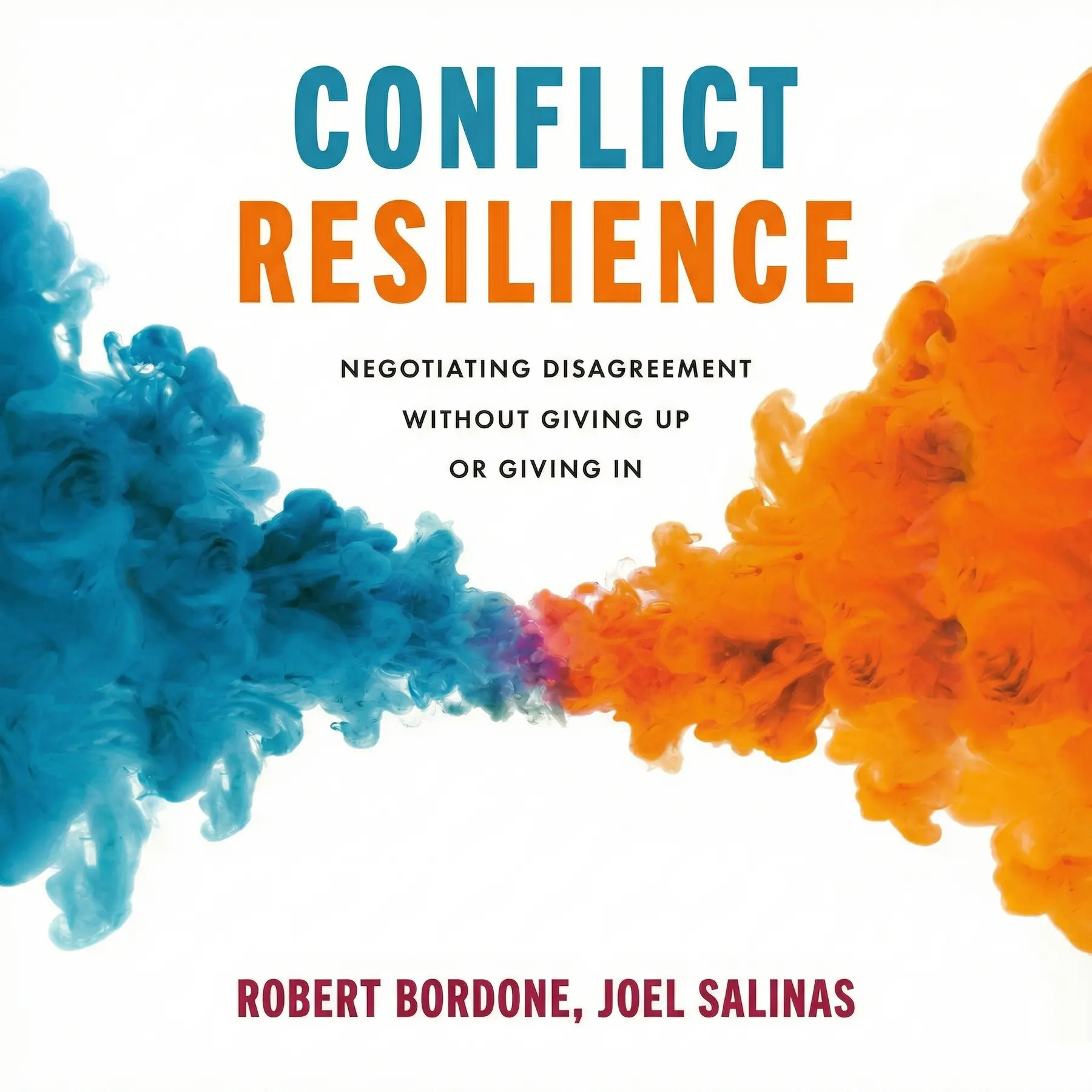
Conflict Resilience: Negotiating Disagreement Without Giving Up Or Giving in
Learn to transform heated disputes into opportunities for growth. This guide combines neuroscience and negotiation tactics to help you navigate disagreements with emotional intelligence, curiosity, and steadfast personal values.
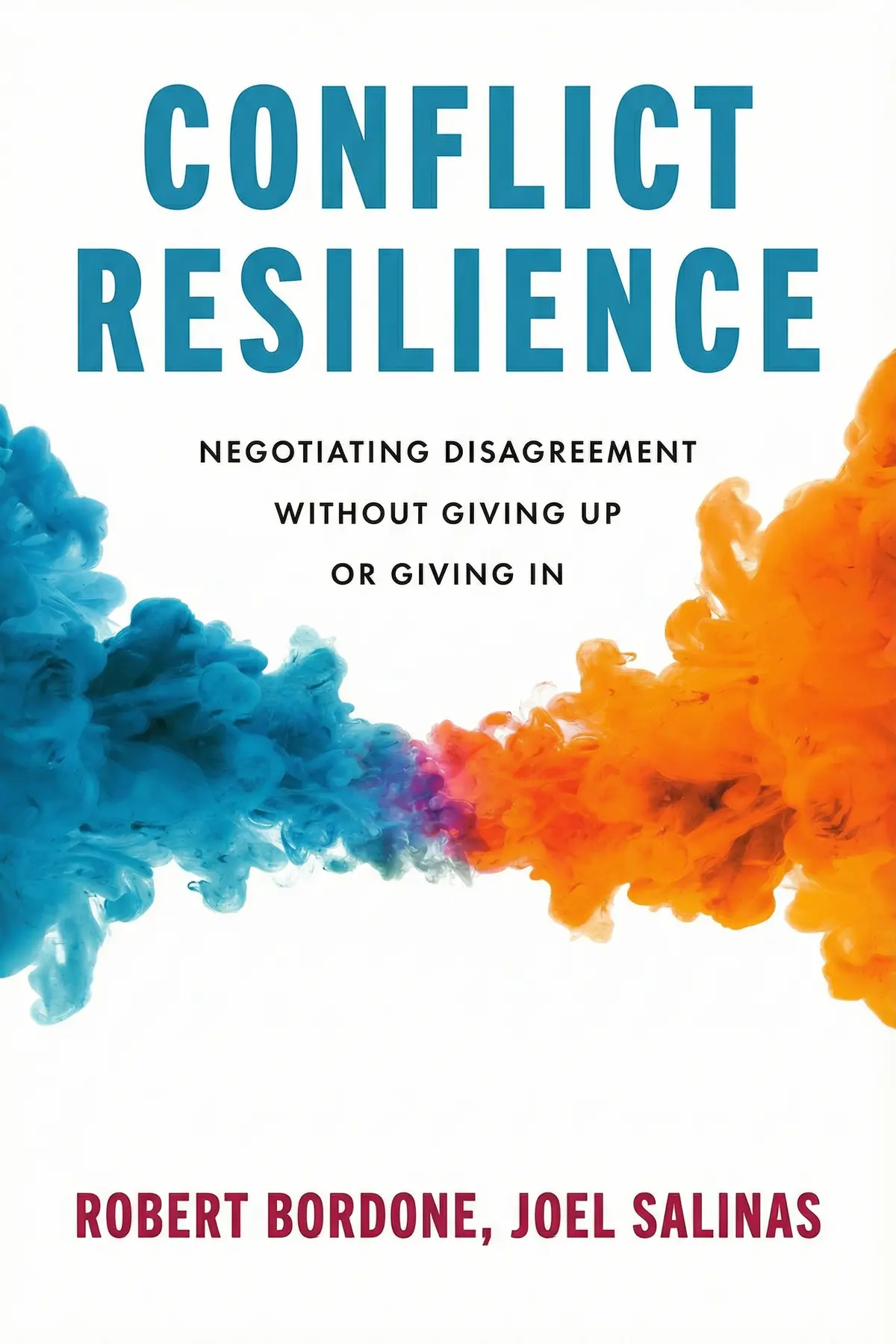
Table of Content
1. Introduction
1 min 50 sec
In our current era, it feels as though the world is pulling apart at the seams. Whether it is a family dinner ruined by political arguments, a workplace where coworkers refuse to speak to one another, or a global landscape defined by deep cultural divides, the evidence of our collective struggle with disagreement is everywhere. Most of us have a default reaction to these tensions: we avoid them. We bite our tongues, stay in our silos, and hope the discomfort will simply fade away. But as we see in our daily lives and the news, this strategy of avoidance doesn’t lead to peace. Instead, it leads to a slow build-up of resentment, fractured communities, and missed opportunities for real change.
This is where the concept of conflict resilience becomes essential. Rather than viewing a dispute as a disaster to be escaped, we can learn to see it as a demanding but manageable part of human interaction. This isn’t about simply being ‘nice’ or rolling over to keep others happy. In fact, true resilience often means standing firm in your values while still finding a way to stay in the room with someone who disagrees with you. It is about building the psychological and emotional stamina to handle friction without losing your cool or your sense of self.
In the following sections, we will explore a roadmap for navigating these choppy waters. We will look at the biological reasons why our brains often sabotage our best intentions during a fight, and we’ll discover practical tools to shift from a state of panic to a state of curiosity. From understanding your own internal emotional landscape to setting a physical table for a successful negotiation, this journey is about turning conflict into a constructive force. By the end, you’ll see that the goal isn’t to live in a world without disagreement, but to live in one where disagreement makes us stronger, more inclusive, and more connected.
2. Understanding the Biological Alarm System
2 min 38 sec
Discover why your brain treats a simple verbal disagreement like a physical threat and how your survival instincts might be hindering your relationships.
3. Developing Internal Clarity Through Metacognition
2 min 14 sec
Learn how the simple act of naming your emotions can physically calm your brain and open the door to more productive communication.
4. The Power of Chair Work for Emotional Complexity
2 min 10 sec
Explore a physical technique for unpacking the many conflicting voices inside you, allowing you to approach disputes with a clear and balanced mind.
5. Mastering Deep Listening and Open Inquiry
2 min 17 sec
Transform your conversations by shifting from a defensive stance to one of radical curiosity, using the art of active listening to find common ground.
6. Strategic Preparation and the Power of Alternatives
2 min 23 sec
Increase your confidence in any negotiation by carefully designing the environment and knowing your ‘BATNA’—the best path forward if no agreement is reached.
7. Conclusion
1 min 40 sec
As we wrap up our look at Conflict Resilience, it is important to remember that this is a journey, not a destination. You won’t become a master of every dispute overnight. There will still be moments when your heart races, your voice shakes, or you walk away wishing you had said something differently. But the goal isn’t perfection; it’s growth. Every time you choose to pause and name an emotion, every time you sit in a ‘chair’ to understand your own complexity, and every time you ask an open-ended question instead of making an accusation, you are building the muscle of resilience.
We have seen how our biology often pushes us toward avoidance or aggression, but we’ve also seen that we have the power to override those instincts with metacognition and deep listening. We’ve learned that by preparing our environment and knowing our alternatives, we can enter difficult spaces with a sense of calm and purpose. The ripple effects of this work are profound. When we stop running from conflict, we start building more honest relationships. We create workplaces where innovation is possible because people feel safe enough to disagree. We contribute to a society that can handle diversity of thought without falling into hatred.
The throughline of Robert Bordone and Joel Salinas’s work is that conflict is not a sign that something is broken; it is a sign that something is happening. It is a sign of engagement and a potential catalyst for a better future. By embracing the tools of resilience, you aren’t just solving arguments—you are becoming a more integrated, courageous, and connected human being. So the next time you feel that familiar surge of tension, don’t turn away. Take a breath, name the feeling, and stay in the room. You might be surprised at the common ground you find waiting for you there.
About this book
What is this book about?
Conflict Resilience explores the essential skill of engaging with disagreement rather than fleeing from it. In a world increasingly defined by sharp divides and social polarization, many individuals choose silence or avoidance to keep the peace. However, this book argues that such avoidance actually erodes relationships and prevents progress. By merging the worlds of high-stakes legal negotiation and behavioral neurology, the authors provide a framework for staying present and grounded when tensions rise. The promise of this work is not just the resolution of arguments, but the development of a more flexible and courageous mind. You will learn why your brain views a workplace disagreement as a life-threatening event and how to override that biological panic. Through specific exercises like chair work and deep listening, the book teaches you how to maintain your integrity without becoming defensive. Ultimately, it offers a path toward stronger communities and more honest personal connections by viewing conflict as a catalyst for deeper understanding and collaborative innovation.
Book Information
About the Author
Robert Bordone
Robert Bordone is a senior fellow at Harvard Law School and served for over twenty years as the Thaddeus R. Beal Clinical Professor of Law. He founded and directed the Harvard Negotiation and Mediation Clinical Program and is the Principal of The Cambridge Negotiation Institute. He has coauthored multiple books on dispute resolution. Joel Salinas is a behavioral neurologist and clinical professor of neurology at NYU. He is a researcher and speaker who formerly held a prestigious position at NYU as the Lulu P. and David J. Levidow Assistant Professor. He is the author of the bestseller Mirror Touch and has published extensively on how social factors influence brain health.
Ratings & Reviews
Ratings at a glance
What people think
Listeners describe the book as highly engaging and elegantly crafted, with one listener highlighting its role as an ideal resource for managing disagreements in challenging eras. They value its foundation in neurological research for resolving disputes and its deeply empathetic perspective.
Top reviews
Gabriel
Conflict is exhausting, and I’ve spent most of my life trying to outrun it. This book changed my perspective by reframing conflict not as a disaster to be avoided, but as an opportunity for growth and deeper connection. I found the sections on 'Emotional Approach Coping' to be incredibly practical for my day-to-day interactions with my spouse and coworkers. The authors write with a level of compassion that is rare in business-adjacent books. They acknowledge that sitting with others in their pain or anger is hard work. It's about 'conflict resilience' rather than just resolution, which feels much more honest and sustainable in our current social climate. I feel more equipped to handle the physiological spikes of adrenaline that used to shut me down. This is a beautiful, essential read for anyone living in these divided times.
Show moreAraya
Finally, a guide that doesn't just tell you to 'stay calm' but explains why your body is screaming at you during a fight. As someone who leans toward 'flight' or 'freeze' in tense moments, understanding the biology of my reactions was a total game-changer. The authors move beyond simple negotiation tactics and dive into the neuroscience that governs our survival instincts. I loved the focus on the difference between actual trauma and the mere discomfort of disagreement. We live in such a conflict-averse society now, and this book serves as a much-needed wake-up call for those who hide from hard talks. It’s beautifully written and feels very relevant to the polarization we see in the news every single day. I’ve already recommended it to several friends who struggle with setting boundaries. It’s a toolkit that I’ll be reaching for whenever I feel that familiar knot in my stomach.
Show moreNan
The chapter on 'chair work' was a revelation for me. It’s a simple exercise, but it helped me untangle a lot of the conflicting emotions I bring into my marriage when we argue about chores. I’ve always been someone who avoids conflict because I don't want to deal with the fallout, but this book taught me that avoiding it just makes things worse. The authors show how to sit with the discomfort and use it as a doorway to intimacy rather than a wall. It’s a very compassionate book, and you can tell the authors really care about helping people navigate these troubled times. I loved the 'metacognition' tools that help you observe your own thoughts without being hijacked by them. It feels like a therapy session and a negotiation workshop rolled into one. I’m definitely going to be trying these techniques out at my next family dinner!
Show moreBoy
Look, we’ve all been there—avoiding a difficult talk because it’s just easier to stay quiet and let the resentment build up. This book is the kick in the pants I needed to stop running away. The distinction between conflict resolution and conflict resilience is a vital one that I hadn't considered before. It’s not about winning or even finding a middle ground every time; it’s about having the strength to stay engaged. The brain science was fascinating and explained why I get so defensive even when I know I'm wrong. It’s a beautifully written book with a tone that feels both expert and deeply human. I’ve already started using the 'deep listening' techniques with my kids, and it’s actually making a difference. This is a must-read for anyone who wants to improve their relationships and stay grounded in a chaotic world.
Show moreJai
Picked this up during a particularly tense period at my workplace, and the timing could not have been better. Bordone and Salinas have created what feels like a comprehensive toolkit for anyone who feels paralyzed by disagreement. I specifically appreciated how they integrated the neurology of conflict, explaining that our brain's threat detection system isn't always our friend in a boardroom. The 'Ladder of Inference' was a highlight for me, though some of the personal anecdotes felt a bit long-winded at times. It’s a dense read, and you have to be willing to sit with the discomfort they describe. While the writing occasionally leans toward the academic side, the compassionate tone kept me engaged throughout. This isn’t a quick fix, but a deep dive into building actual resilience. If you're tired of the usual 'win-win' fluff, this is a solid, science-backed alternative for navigating our troubled times.
Show moreChan
As a mediator, I'm always looking for new frameworks, and the idea of 'negotiating disagreement without giving up or giving in' really resonated with me. The book provides a sophisticated look at how we can prepare ourselves mentally before even entering a room. I especially liked the section on BATNA (Best Alternative to a Negotiated Agreement), as it empowers people to stand their ground with clarity. The 'chair work' technique is also a fantastic addition to any practitioner’s repertoire for navigating internal emotional conflicts. My only minor gripe is that the book feels very centered on neurotypical experiences, occasionally missing the mark for different communication styles. Still, the emphasis on deep listening and curiosity is vital for anyone trying to bridge divides. It’s an intelligent, science-informed approach that moves beyond the superficial tips found in most leadership books. Definitely worth a spot on your professional shelf.
Show moreSophia
Ever wonder why a simple disagreement feels like a life-or-death situation? This book explains that your brain literally can't tell the difference between a mean email and a predator in the wild. I found the neurological perspective on conflict to be the most enlightening part of the entire work. It helped me realize that my 'fawn' response is just a biological glitch, not a character flaw. The writing is generally very accessible, though it does get a bit dense when discussing the specific neuron counts and chemical reactions. I appreciated the practical tips for 'staying in the moment' during high-stakes conversations. To be honest, I think every manager should read the chapter on 'The Neurology of Conflict' to better understand their team's reactions. It’s a compassionate look at human fragility in an increasingly angry world. A few parts felt repetitive, but the core message is incredibly strong.
Show moreJackson
In a world that feels increasingly polarized, Bordone and Salinas offer a much-needed bridge for those of us tired of the constant shouting. They tackle the difficult reality that facts rarely change minds when emotions are at the wheel. I was particularly struck by the discussion on 'trigger warnings' and how they might actually hinder our ability to develop resilience. It’s a bold take, but it’s backed by a deep understanding of psychology and growth. The book is eminently readable, though it does demand a certain level of focus to get through the more academic sections. I appreciated the specific examples of how to phrase responses that make the other person feel heard and seen. Some of the content about 'allistic' perspectives could have been more inclusive, but the general framework is very solid. It’s a powerful toolkit for navigating both personal and political disagreements with grace.
Show moreWichai
There’s a massive amount of potential here, but the execution felt a bit uneven to me. The concept of 'conflict resilience' is brilliant—the idea that we need to build the capacity to stay in the room rather than just fixing the problem. However, the book felt like it needed a much tighter edit to truly sing. At times, the two authors' voices felt distinct and disconnected, like two separate essays stapled together. I loved the science-heavy portions about the brain, yet I found myself skimming through some of the more repetitive personal examples. To be fair, the hidden gems are worth the effort, especially the 'chair work' exercise. It just felt like I had to do a lot of heavy lifting as a reader to get to the core message. It is a good book that could have been great with 30% less filler.
Show moreGoy
I really wanted to love this one because the premise of combining neurology with conflict management is exactly what I was looking for. Frankly, it was a slog. The book lacks a cohesive narrative voice, making it feel like a fragmented collection of different ideas rather than a unified strategy. One chapter is deeply scientific and fascinating, while the next feels like a standard, dry self-help book that drags on for way too many pages. I found myself frequently checking how much was left in the chapter, which is never a good sign. While the 'Ladder of Inference' content was helpful, I don't think it justified the 300+ pages of reading. It’s a shame because the authors clearly know their stuff, but the delivery just didn't land for me. If you have the patience to dig for the insights, go for it, but be prepared for some dry stretches.
Show moreReaders also enjoyed

AUDIO SUMMARY AVAILABLE
Listen to Conflict Resilience in 15 minutes
Get the key ideas from Conflict Resilience by Robert Bordone, plus 5,000+ more titles in English and Thai.
- 5,000+ titles
- Listen as much as you want
- 7-day free trial
- Cancel anytime







