
Alien Earths: The New Science of Planet Hunting in the Cosmos
Lisa Kaltenegger
Explore the profound mystery of awareness as Annaka Harris challenges our fundamental assumptions about the human mind, the nature of the self, and whether consciousness exists in the world around us.
1 min 36 sec
Every morning, you wake up and the world rushes in. There is the warmth of the sun through the window, the sound of a distant car, and the internal chatter of your thoughts. This simple state of being—the fact that there is a ‘you’ there to experience anything at all—is what we call consciousness. It is the most intimate part of our lives, yet it remains one of the greatest mysteries in all of science. We often go through our days assuming we know exactly what it is. We think of it as our ‘self,’ our decision-maker, and something that uniquely belongs to us as humans.
But what if those assumptions are leading us away from the truth? In this exploration of the mind, we are going to dive deep into the workings of awareness to see what is actually happening behind the curtain. We will move past the superficial definitions of self-awareness and complex thought to find a deeper, more universal meaning of what it means to be conscious.
The central throughline here is a challenge to our human-centric perspective. We tend to view the universe through the lens of our own capabilities, but as we’ll see, this might be a very narrow window. We are going to ask whether there is any objective evidence for our own consciousness, and if our awareness actually plays the role we think it does in our behavior. Along the way, we’ll look at the secret lives of plants, the strange results of brain surgeries, and a controversial theory that suggests the entire universe might be alive with feeling. By the end, the goal is to shift your perspective from seeing yourself as an isolated ego in a mechanical world to seeing yourself as a witness to a much more profound and interconnected reality.
2 min 27 sec
To truly define consciousness, we must move past our gut feelings and embrace a standard based on the simple existence of subjective experience, rather than just human-like intelligence.
2 min 28 sec
We often think of plants as passive, but their complex underground networks and survival strategies suggest that consciousness might not require a human-style brain at all.
2 min 21 sec
Our brains act long before our conscious minds are even aware of a decision, suggesting that we are more like passengers than drivers in our own lives.
2 min 16 sec
Through the lens of meditation and psychedelic experiences, we can see that our sense of a unified self is a mental construct that can easily be dissolved.
2 min 24 sec
The theory of panpsychism suggests that consciousness isn’t a magical gift that emerges from complex brains, but is instead an inherent quality of all physical matter.
2 min 11 sec
Fascinating studies on patients with severed brain connections reveal that multiple independent consciousnesses can inhabit a single body, changing how we view the unity of the mind.
1 min 44 sec
We have traveled from the familiar feeling of waking up in the morning to the strange, fragmented reality of split-brain patients and the vast, interconnected networks of the forest. Along the way, we have had to discard many of our most cherished beliefs. We’ve seen that being conscious isn’t necessarily about being smart, being human, or even having a sense of self. Instead, consciousness is simply the raw fact of experience—the ‘something it is like’ to exist.
When we strip away the illusions of the ego and the myth of the ‘commander-in-chief’ mind, we are left with a much larger and more mysterious picture of the universe. We find that our consciousness might be an inherent part of the physical world, no more or less special than the energy that fuels the stars. This realization isn’t meant to make us feel small; rather, it’s meant to open us up to a deeper sense of connection. If consciousness is a fundamental property of matter, then we are never truly alone, and the world around us is far more ‘alive’ than we ever dared to imagine.
The actionable takeaway from this journey is to start observing your own experience with a sense of curiosity rather than certainty. Notice the gap between a thought appearing and your awareness of it. Recognize the moments when your sense of self feels smaller or larger. By questioning the ‘I’ that we take for granted, we can begin to appreciate the pure, mysterious light of awareness that shines through us and everything else in the cosmos. The mystery of the mind may not be solved yet, but by opening our eyes to these possibilities, we are taking the first step toward a truly conscious existence.
What if our basic assumptions about the mind are completely wrong? This exploration into the fundamental nature of awareness peels back the layers of our everyday experience. It tackles the massive gap between the physical brain—the gray matter we can see and touch—and the subjective feeling of being alive. By investigating neuroscience, philosophy, and biology, the narrative challenges the idea that consciousness is a special prize reserved only for humans. Instead, it suggests that our sense of self might be an elaborate trick played by our brains, and that awareness itself might be a basic property of the universe. From the surprising social lives of trees to the strange reality of patients with divided brains, this summary provides a new lens through which to view existence. The promise is a radical shift in perspective: you will walk away questioning whether the 'you' in your head is really in control, or if you are simply a witness to a much larger, more mysterious process.
Annaka Harris is a prominent writer whose insights have reached a wide audience through features in the New York Times. Beyond her own writing, she serves as a vital consultant for other science authors, helping to bridge the gap between complex research and public understanding. Her commitment to mindfulness and education is evident in her role as a collaborator on the Mindful Games Activity Cards and her authorship of the children’s book I Wonder. Sharing a life focused on the mind, she has two children with the well-known neuroscientist and podcast host Sam Harris.
Listeners find the book thought-provoking, with one mentioning how it makes understanding the unconscious accessible to the unscientific mind. Furthermore, it serves as a useful popular introduction to the subject, and one listener highlights its fantastic job of posing deep questions. Listeners also value its readability, as it is an easy read for complex topics that doesn't bury the audience in too much detail, all while maintaining a concise, fast-paced style. They characterize it as an enjoyable, stimulating, and well-written introduction to the topic. However, the work’s length draws mixed reactions, with several listeners noting its brevity.
Annaka Harris manages to take a massive, terrifying subject and distill it into something truly digestible. She avoids the typical trap of burying her readers under dense academic jargon that usually plagues philosophy books. Instead, this text focuses on the sheer weirdness of our subjective experience. I was particularly struck by the sections on how our brains fabricate a sense of time and agency. The prose is clean and fast-paced, making it easy to finish in a single sitting. While it doesn't offer a final answer, the questions it poses about the 'hard problem' are deeply stimulating. It is an absolute must-read for anyone curious about the nature of reality.
Show moreWow, this little volume packs a serious punch for its size. I was fascinated by the descriptions of altered states, whether through meditation or pharmacological means, and how they challenge our sense of 'self.' Harris writes with a clarity that is rare in this field, posing deep questions without ever sounding pretentious. The way she explains 'binding' and how the brain synchronizes sensory input was a total revelation for me. Not gonna lie, I had to stop and stare at the wall for a few minutes after the chapter on panpsychism. It is a wonderfully stimulating introduction that doesn't overstay its welcome. This is exactly the kind of book I will be gifting to my more intellectually curious friends.
Show morePicking this up was the best decision I made for my morning commute this week. It is rare to find a science book that feels this poetic and accessible while still tackling the deepest mysteries of existence. The way Harris explains that our conscious self is often the last to know about our decisions is mind-blowing. I particularly loved the sections on how plants react to stimuli, which really challenged my biases about what qualifies as 'aware.' It is a short, punchy, and well-written exploration that leaves you with more questions than answers. Even if you don't agree with her conclusions, the journey is well worth the time. It really makes you appreciate the simple fact of being awake.
Show moreAfter hearing about this on several podcasts, I finally dove in and found the discussion on free will particularly jarring. Harris argues that our sense of agency might just be an illusion created by the brain after the fact. While that is a tough pill to swallow, her explanation of neuroscientific case studies makes a compelling, if unsettling, case. The book does a fantastic job of making the unscientific mind feel welcome in a very complex conversation. I appreciated the brief tour of panpsychism, even if the idea of a conscious thermostat still feels a bit like science fiction. My only gripe is that the ending felt somewhat abrupt. Still, it’s a thought-provoking journey through the biggest mystery in the universe.
Show moreThe chapter exploring panpsychism really shifted my perspective on what matter actually is. Harris suggests that consciousness might be a fundamental property of the universe, much like gravity or mass. It is a bold claim, but she presents it in a way that feels rational rather than mystical. Personally, I found the sections on how we perceive the color red versus the actual wavelengths of light to be very helpful. The book is concise and doesn't waste a single word, which I appreciated. Some might find it too short, but I think the brevity helps keep the focus on the big metaphysical questions. It’s a well-written, accessible bridge between hard science and philosophy.
Show moreEver wonder if your dog—or even a grain of sand—has some tiny glimmer of an inner life? This book dives straight into those types of questions without getting bogged down in dense academic history. Harris uses the 'lights turning on' metaphor to great effect, making the concept of qualia easy to grasp. I liked how she addressed the 'philosophical zombie' problem, which is genuinely unnerving once you think about it. The book is an easy read for such complex topics and serves as a great companion to the work of her husband, Sam Harris. It’s not a definitive textbook, but it is a fantastic conversation starter. I finished it in two hours and felt significantly more confused about reality, in a good way.
Show moreIs it possible for a book to be too concise? At barely one hundred pages, this felt more like a long-form magazine essay than a comprehensive guide to the mind. Harris touches on fascinating edge cases like split-brain patients and the potential consciousness of plants, yet she moves on before the implications truly sink in. To be fair, her writing is incredibly clear and accessible for those without a science background. I just wanted more depth and a few more competing viewpoints to balance out the narrative. It functions well as a very basic primer, but seasoned readers of neuroscience will likely find it a bit superficial. It’s an enjoyable read that unfortunately ends right as it starts getting good.
Show moreAs someone who has always been curious about why we feel like 'us,' this was a decent starting point. The book is very readable and provides a useful popular introduction to the hard problem of consciousness. However, the truth is that it relies quite heavily on citations from Aeon magazine and other non-academic sources. This made some of the more radical theories feel a bit less grounded than I would have preferred. I enjoyed the anecdotes about 'locked-in syndrome' and the way our brains process information unconsciously. It’s a fast-paced read that will definitely spark some interesting dinner party conversations. I just wish it had explored the actual mechanics of the brain in slightly more detail.
Show moreGotta say, I am a bit torn on this one. On one hand, the writing is beautiful and the examples of brain damage affecting personality are truly haunting. On the other hand, the author’s bias toward hard determinism is evident throughout the entire narrative. She dismisses the complexity of the free will debate a bit too quickly for my liking. The book is certainly thought-provoking, and I found the discussion on the 'remembered present' to be quite brilliant. It’s just that it feels more like a gateway drug to better books than a standalone masterpiece. If you are looking for a quick, fast-paced introduction, this will definitely satisfy your curiosity. Just be prepared to do a lot more follow-up reading.
Show moreFrankly, I found the leap from acknowledging the mystery of consciousness to declaring free will an illusion to be logically inconsistent. Harris admits we have no idea how subjective experience arises from matter, yet she insists it must follow rigid physical laws. This contradiction made it difficult for me to take her later arguments about panpsychism seriously. The total omission of philosophers like Daniel Dennett also felt like a major blind spot for a book claiming to be a guide. The writing style is certainly accessible and the pace is fast, but the content lacks the necessary nuance for such a heavy topic. If you want a rigorous philosophical debate, you should probably look elsewhere. It felt more like an advocacy piece for a specific worldview.
Show moreLisa Kaltenegger
William B. Irvine
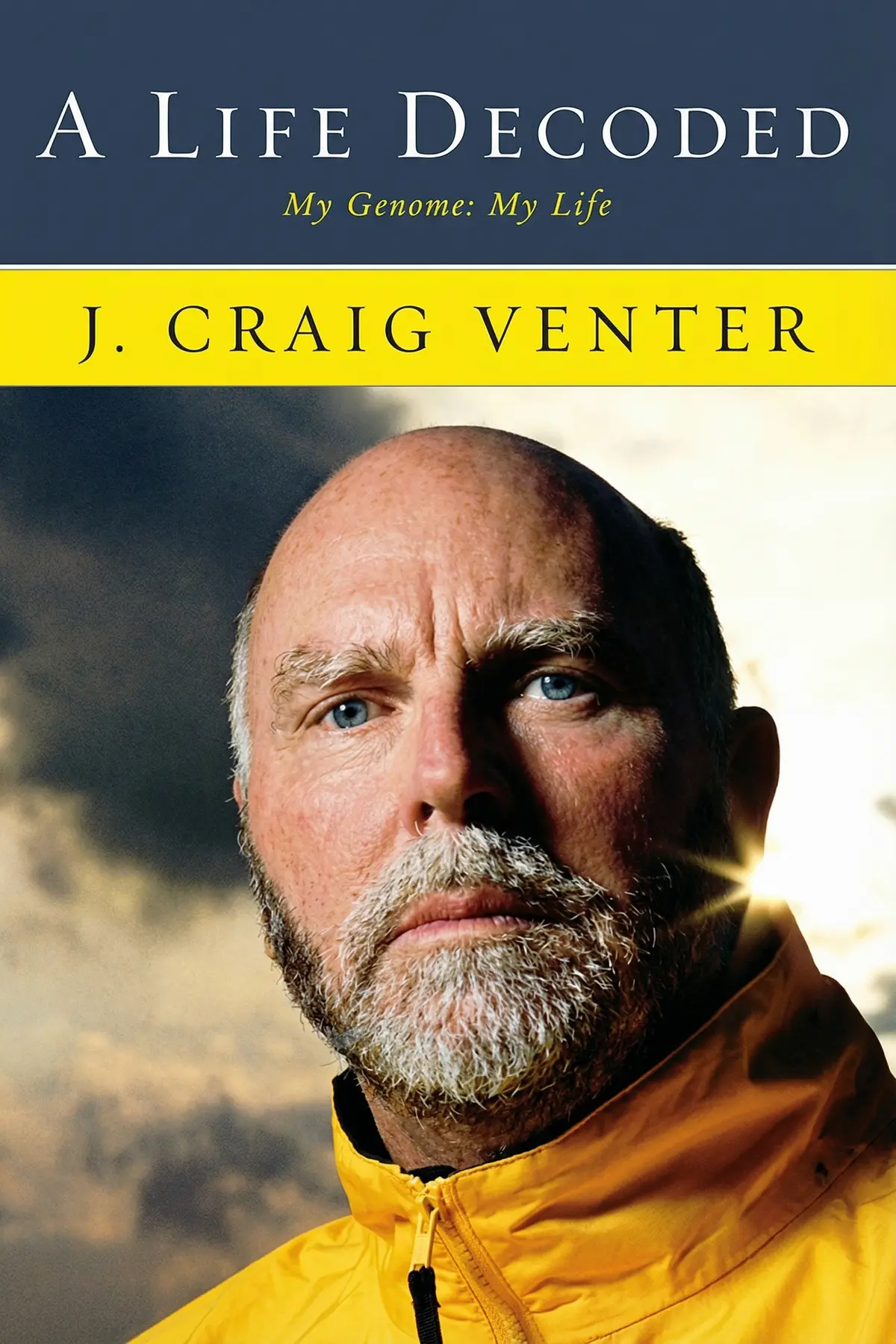
J. Craig Venter
Nigel Warburton
AUDIO SUMMARY AVAILABLE
Get the key ideas from Conscious by Annaka Harris, plus 5,000+ more titles in English and Thai.







