
15 min 38 sec
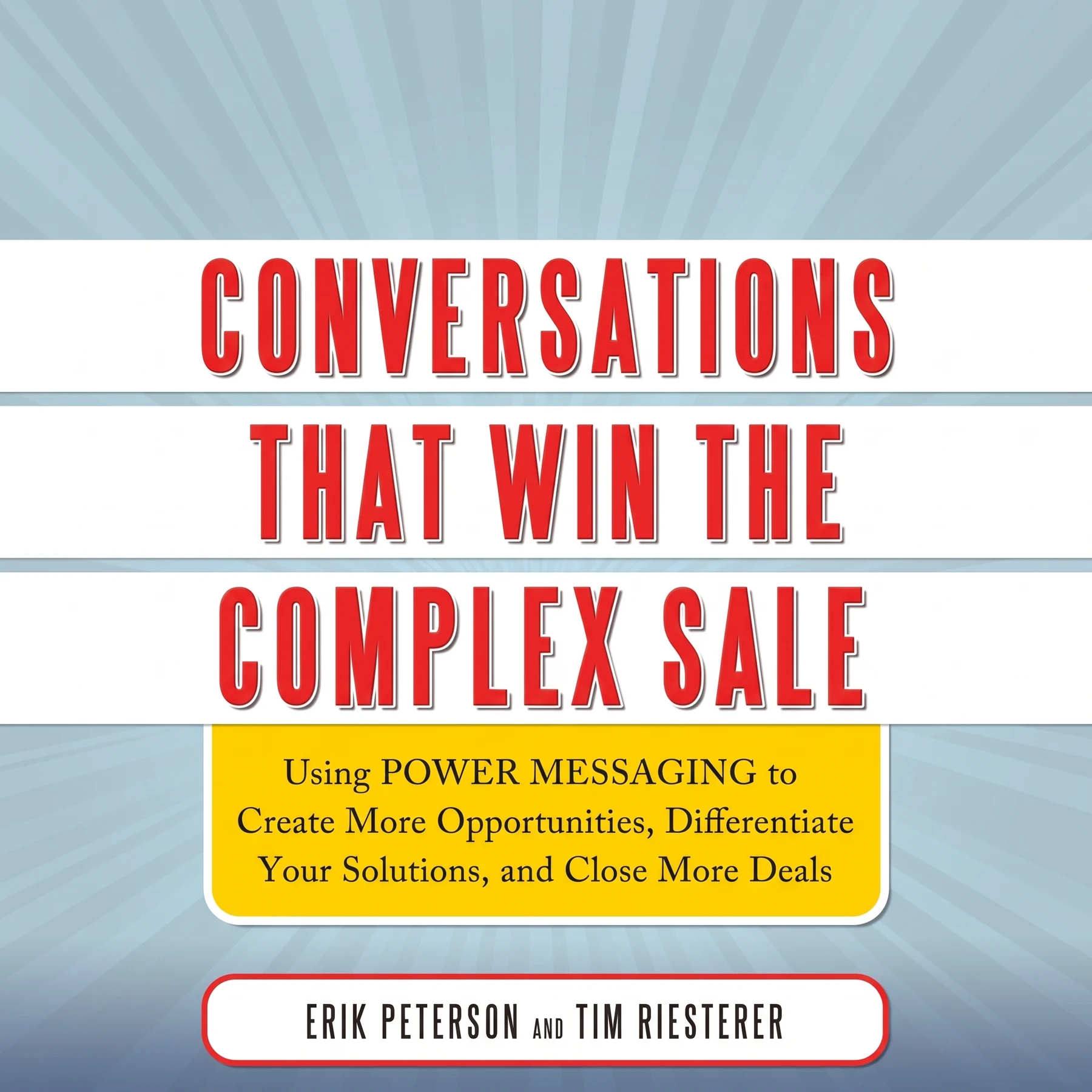
Conversations That Win the Complex Sale: Using Power Messaging to Create More Opportunities, Differentiate your Solutions, and Close More Deals
Discover how to bypass customer indecision and win high-stakes deals by utilizing narrative structures, psychological triggers, and visual storytelling that resonates with the brain’s primary decision-making center.
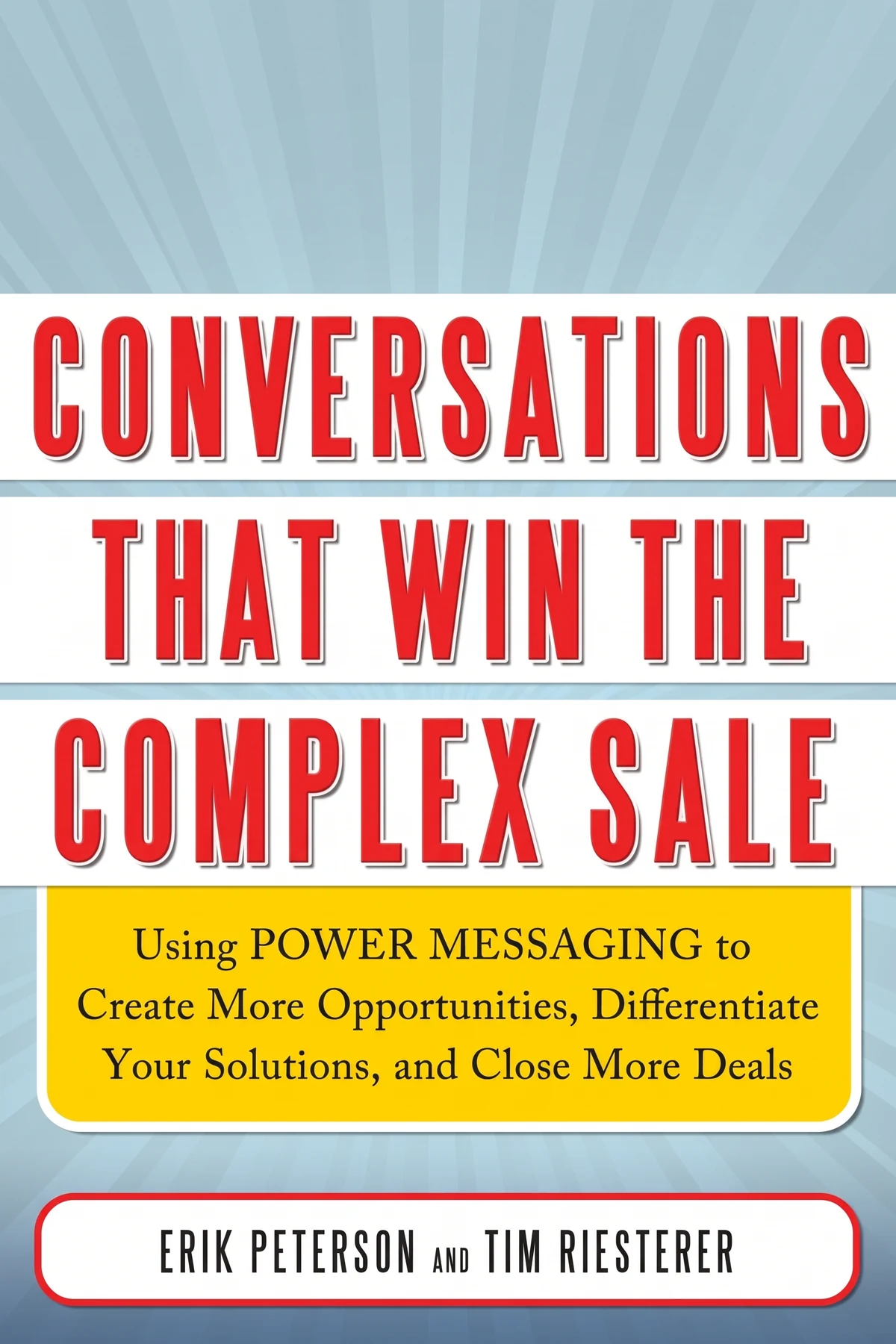
Table of Content
1. Introduction
1 min 42 sec
Imagine you are in a boardroom, delivering what you believe is the perfect pitch. You have the charts, the data points, and a clear list of advantages your company offers. Yet, as you look around the room, you see polite nods but no real fire. When the meeting ends, the lead says, ‘This looks great, let us think about it.’ Months pass, and nothing happens. They didn’t go with a competitor; they just did nothing at all. This is the reality of the complex sale: your biggest enemy isn’t the guy down the street undercutting your price—it’s the comfortable safety of the status quo.
In this summary of Conversations That Win the Complex Sale, we are going to look at why traditional sales conversations often fall flat and how to rebuild them from the ground up using psychology and storytelling. We will explore how to break through the fog of information overload that paralyzes modern buyers. You will learn to stop being a vendor and start being a provocateur—someone who doesn’t just ask about needs, but reveals problems the customer didn’t even know they had.
The throughline here is simple but profound: humans don’t make decisions based on logic alone; they make them based on the stories they tell themselves about risk, reward, and identity. By the end of this journey, you’ll have a toolkit for crafting a message that doesn’t just inform your audience but actually sticks in their minds and compels them to act. We’re going to walk through the mechanics of the ‘Value Wedge,’ the power of the ‘Hero’s Journey,’ and the biological secrets of the ‘Old Brain’ to show you how to win when the stakes are at their highest.
2. The Hidden Rivalry of the Status Quo
2 min 42 sec
Your most dangerous competitor isn’t another company; it’s the buyer’s tendency to remain exactly where they are, paralyzed by a lack of clear differentiation.
3. Framing the Narrative Around the Hero
2 min 30 sec
Discover why casting yourself as the savior of the story is a mistake, and how to reposition the customer as the true protagonist seeking a guide.
4. Breaking the Hammock of Forgettability
2 min 22 sec
Most presentations lose the audience right in the middle. Learn to use contrast and ‘grabbers’ to keep attention high from start to finish.
5. The Psychological Power of 'You-Phrasing'
2 min 16 sec
A simple shift in language can more than double your effectiveness by transferring ownership of the solution to the prospect.
6. Winning the Deciding Mind
2 min 41 sec
The primitive ‘Old Brain’ is the true decision-maker. Learn how to speak its language using simple visuals and concrete examples.
7. Conclusion
1 min 25 sec
The world of complex sales is often treated as a battle of features and functions, but as we’ve explored, the true battlefield is the human mind. To win, you must stop competing against other companies and start competing against the customer’s own inertia. By identifying your unique Value Wedge, you ensure that you aren’t just another voice in the crowd. By framing your conversation around the Hero’s Journey, you respect the customer’s perspective and position yourself as the essential guide they’ve been waiting for.
Remember that attention is a fragile resource. Use contrast to break the hammock of forgettability and keep your audience engaged. Shift your language to ‘You-Phrasing’ to help your prospect claim ownership of the solution before they’ve even signed the contract. And finally, never forget the ‘Old Brain.’ Keep your message simple, visual, and concrete.
The next time you prepare for a high-stakes meeting, don’t just ask yourself what you want to say. Ask yourself: Who is the hero of this story? What is the villain they are facing? And how can I draw a big picture that makes their victory feel like a certainty? If you can answer those questions and weave them into a provocative narrative, you won’t just be having a conversation—you’ll be winning the sale. Go out there, find your wedge, and start telling the stories that drive the world forward.
About this book
What is this book about?
Many sales professionals struggle not because they lack a good product, but because they fail to overcome the gravitational pull of the status quo. This summary explores the methodology behind shifting from a data-heavy pitch to a provocative, story-driven conversation. It identifies why logic often fails to move the needle and how to replace it with a narrative that creates a sense of urgency. By following this framework, you will learn to position your customer as the hero of their own journey while you act as the essential guide. You will discover how to identify your unique value wedge, leverage contrast to highlight your solution's impact, and use specific linguistic shifts to create a sense of ownership in the buyer's mind. The promise of this approach is a systematic way to differentiate your offering in a crowded market and compel buyers to move from paralysis to action.
Book Information
About the Author
Erik Peterson
Erik Peterson is the Vice President of Strategic Consulting at Corporate Visions. He has extensive experience in messaging, having led workshops for over 10,000 sales professionals and worked with global entities like GE and Oracle. Tim Riesterer serves as the Chief Marketing Officer and Senior Vice President at Corporate Visions. A thought leader in the field of sales messaging, he focuses on the intersection of marketing and sales to drive customer-centric dialogue. He is also the author of Customer Message Management.
Ratings & Reviews
Ratings at a glance
What people think
Listeners find the book an accessible and well-crafted read, containing impactful practical strategies that serve as a great addition to training. The quality of information receives high praise, with one listener highlighting the significance of stories and another valuing the examples provided for each concept. Additionally, listeners consider it a top-tier sales book that will transform their approach to new appointments, finding it worth every penny.
Top reviews
Nong
This book is a masterclass in communication that goes far beyond the typical "ABC" of selling. By focusing on the neuroscience of how prospects actually process information, Peterson and Riesterer provide a toolkit that feels both modern and incredibly intuitive. I particularly appreciated the emphasis on why simple feels safe for the buyer’s brain; it’s a concept that has completely changed how I structure my slide decks. While some might find the academic references a bit frequent, they provide a necessary foundation for the practical strategies shared throughout the chapters. It’s well-written, easy to digest, and serves as a perfect companion for anyone who already uses the Challenger Sale methodology in their daily workflow. It truly is a goldmine of information.
Show moreWichai
Wow, what a surprisingly good resource for anyone involved in high-stakes pitching and messaging! I’ll admit I had low expectations because the book was published back in 2011, but the principles regarding human psychology and subconscious reactions are absolutely timeless. The examples from huge players like SAP, Dell, and Oracle give the concepts immediate credibility and show how these frameworks work at scale. I took pages of notes on how to make an idea stick, specifically regarding the seven key things the brain reacts to subconsciously during a pitch. This isn't just about selling; it's about standing out in a crowded market where everyone else is just reciting features and benefits. Definitely in my top 10 sales books.
Show moreLogan
Not what I expected at all—in the best way possible—because this book is a brilliant combination of neuroscience and practical sales tactics. It reminds me of a mix between Brain Rules and Selling the Invisible, providing a much-needed bridge between how the mind works and how we should communicate value. The focus on the "Hero Model" and using personal analogies to build rapport is exactly what’s missing from most corporate sales training. It really changes how you approach new appointments, moving you away from being a vendor and toward being a trusted advisor who can actually tell a compelling story. It’s worth every penny for the shift in mindset alone, regardless of your industry.
Show moreFrida
Look, if you are serious about winning complex sales, you need to understand that your message is often more important than your product. This book is a masterclass in making your ideas stick and ensuring you stand out from the sea of competition that all sounds exactly the same. The emphasis on natural conversation over rigid "presenting" is a breath of fresh air in a world of robotic scripts and boring PowerPoint decks. I’ve read a lot of business books, and this easily makes it into my top 25 for its sheer practicality and clear examples. It is an essential read for anyone who wants to stop being a "pitchman" and start being a consultant who wins.
Show moreJirapat
Finally got around to finishing this for my work reading goals, and I have to say it’s a solid investment of time. The authors do a fantastic job of breaking down the "Attention Hammock" and showing how to keep a prospect engaged from start to finish. I found the section on personal analogies especially helpful for translating complex technical features into something a client can actually visualize. Truthfully, there were a few moments where the text felt a bit repetitive, and I noticed several references to "picking this up later" that never quite materialized as clearly as I hoped. Still, the core message about having a conversation rather than just presenting is powerful and very actionable for any complex B2B environment.
Show moreMaria
Ever wonder why your discovery calls feel like you're pulling teeth even when you have a superior product? This book tackles that head-on by teaching you how to facilitate a natural conversation rather than just "selling" to a person. The information quality is top-notch, and the authors provide concrete examples of each concept so you aren't left guessing how to apply them. I did find the structure slightly frustrating at times with the frequent "we will get to this later" tangents, but the payoff in the final chapters is worth the wait. It’s an excellent complement to any formal sales training you might be undergoing, offering a psychological edge that most traditional programs miss entirely.
Show moreRyan
After hearing about this book for years, I finally picked it up to help refine the messaging for my own startup. I love how it emphasizes that "simple feels safe" because we often overcomplicate our value propositions to the point of confusing the customer. The practical branding tips are a goldmine, and I’ve already restructured my introductory emails based on the subconscious triggers mentioned in the first half of the book. My only minor gripe is that some of the case studies feel a little dated now, but the underlying logic remains sound. It’s a very quick read that I will definitely be revisiting whenever I need to overhaul a client presentation or pitch deck.
Show moreManop
As someone who usually finds sales books a bit dry, I was impressed by how well-written and engaging this particular title turned out to be. It provides a great reminder of the basics while offering enough new frameworks to keep a veteran salesperson interested throughout the entire read. I particularly liked the "7 key things your brain reacts to" section, as it gave me a checklist to run my current pitches against. Frankly, the book could have been a bit shorter if they cut out some of the repetitive references to various academic studies, but that's a minor complaint. It’s a solid 4-star read that I’ll be recommending to my team for our next book club.
Show morePita
To be fair, much of the advice here covers the basics of storytelling that experienced reps might already know, but the new perspective is still worth considering. It is an easy read, but I was occasionally annoyed by the constant name-dropping of various professors and their studies for such a relatively short book. Some areas seemed a little simplistic for the "complex sale" promised in the title, and the flow was interrupted by promises of deeper dives in later chapters that felt a bit disjointed. That said, the "Hero Model" is a great framework that I’ve already started using to sharpen my own messaging for new appointments. It’s a decent refresher, though perhaps not the revolutionary text some of the marketing claims it to be.
Show moreAmy
The truth is, I found this book to be a bit of a letdown compared to the hype surrounding Corporate Visions’ consulting work. While the "Attention Hammock" is a neat concept, the rest of the book felt like a collection of ideas I’ve already seen in better-written volumes like Start With Why or Positioning. I was also bothered by the writing style, which felt overly academic in some spots while being strangely vague in others. It felt like a 200-page advertisement for their training services rather than a standalone guide. If you are brand new to sales messaging, you might find some value here, but seasoned professionals will likely find the content a bit too elementary and disjointed to be truly transformative.
Show moreFeatured in
Readers also enjoyed

AUDIO SUMMARY AVAILABLE
Listen to Conversations That Win the Complex Sale in 15 minutes
Get the key ideas from Conversations That Win the Complex Sale by Erik Peterson, plus 5,000+ more titles in English and Thai.
- 5,000+ titles
- Listen as much as you want
- 7-day free trial
- Cancel anytime







