
A Year with Peter Drucker: 52 Weeks of Coaching for Leadership Effectiveness
Joseph A. Maciariello
Discover how to transform your workplace by fostering a culture where every employee feels safe to innovate, share ideas, and solve problems without the fear of being shut down or ignored.
1 min 48 sec
Have you ever sat in a meeting where a problem was glaringly obvious, yet no one said a word? Or perhaps you’ve seen a colleague have a brilliant idea for a shortcut, only to keep it to themselves because they didn’t think anyone would care. This silence isn’t just a personal choice; it’s a symptom of a workplace culture that lacks the necessary infrastructure for courage. In many organizations, employees feel that the safest move is to keep their heads down and avoid the spotlight. While this might feel like a secure strategy for the individual in the short term, it is a slow poison for the company. It prevents growth, kills morale, and leaves vast amounts of human potential on the table.
To change this, we have to look deeper than simple motivational posters or occasional brainstorming sessions. We need to create what is known as a courageous culture. This is an environment where people feel genuinely supported and safe enough to share their insights, voice their concerns, and propose new ways of working. When people know that their voices matter, they don’t just work harder; they work smarter. They become invested in the collective success of the organization because they see themselves as active participants rather than just cogs in a machine.
In this summary, we are going to explore the mechanics of building such a culture. We’ll look at why human creativity is more important now than ever before, despite the rise of automation. We’ll identify the toxic behaviors that crush courage and learn how to replace them with a ‘courage oasis.’ We will also delve into practical strategies for balancing curiosity with clarity, and how to respond to ideas in a way that keeps the innovation pipeline flowing. By the end of this journey, you’ll understand how to transform your team into a powerhouse of problem solvers and customer advocates, ensuring your business thrives in a rapidly changing world.
2 min 16 sec
In a world dominated by automation and the gig economy, the unique human capacity for empathy and innovation has become a company’s most vital competitive advantage.
2 min 11 sec
Silence in the workplace is rarely a sign of agreement; it is often a defensive reaction to toxic behaviors that penalize honesty and innovation.
2 min 07 sec
Innovation requires a precise mix of open-ended questioning and clear organizational boundaries to ensure creative ideas remain productive.
2 min 03 sec
How a leader reacts to a suggestion—especially a bad one—determines whether the next great idea will ever be shared.
1 min 54 sec
Effective innovation doesn’t come from blind imitation; it comes from adapting core principles to fit the unique personality and needs of a specific team.
1 min 59 sec
Courage can be systematized by integrating it into the hiring process, training routines, and structural interactions of the company.
2 min 07 sec
Understanding the different psychological reasons behind why employees stay quiet allows managers to provide the specific support each person needs to speak up.
1 min 17 sec
Building a courageous culture is not a destination you reach and then forget; it is an ongoing commitment to valuing the human spirit within your organization. We have seen that in a world of increasing automation, the ability to innovate and connect is our most precious resource. By eliminating the ‘courage crushers’ and replacing them with a ‘courage oasis,’ you create a space where ideas can flourish. You’ve learned that balancing curiosity with clarity provides the necessary boundaries for that creativity to be productive, and that the way you respond to feedback determines the future of your team’s engagement.
As you move forward, keep the IDEA approach in mind as a practical tool for evaluating suggestions. Encourage your team to ask: Is it Interesting? Is it Doable? Is it Engaging? And finally, what are the specific Actions required? This framework helps transform vague thoughts into actionable plans, giving your employees the best chance of seeing their ideas come to life. When you invest in the courage of your people, you aren’t just improving your bottom line; you are building a workplace where people feel respected, challenged, and fulfilled. That is the true promise of a courageous culture—a place where everyone has the opportunity to contribute their best and truly make a difference.
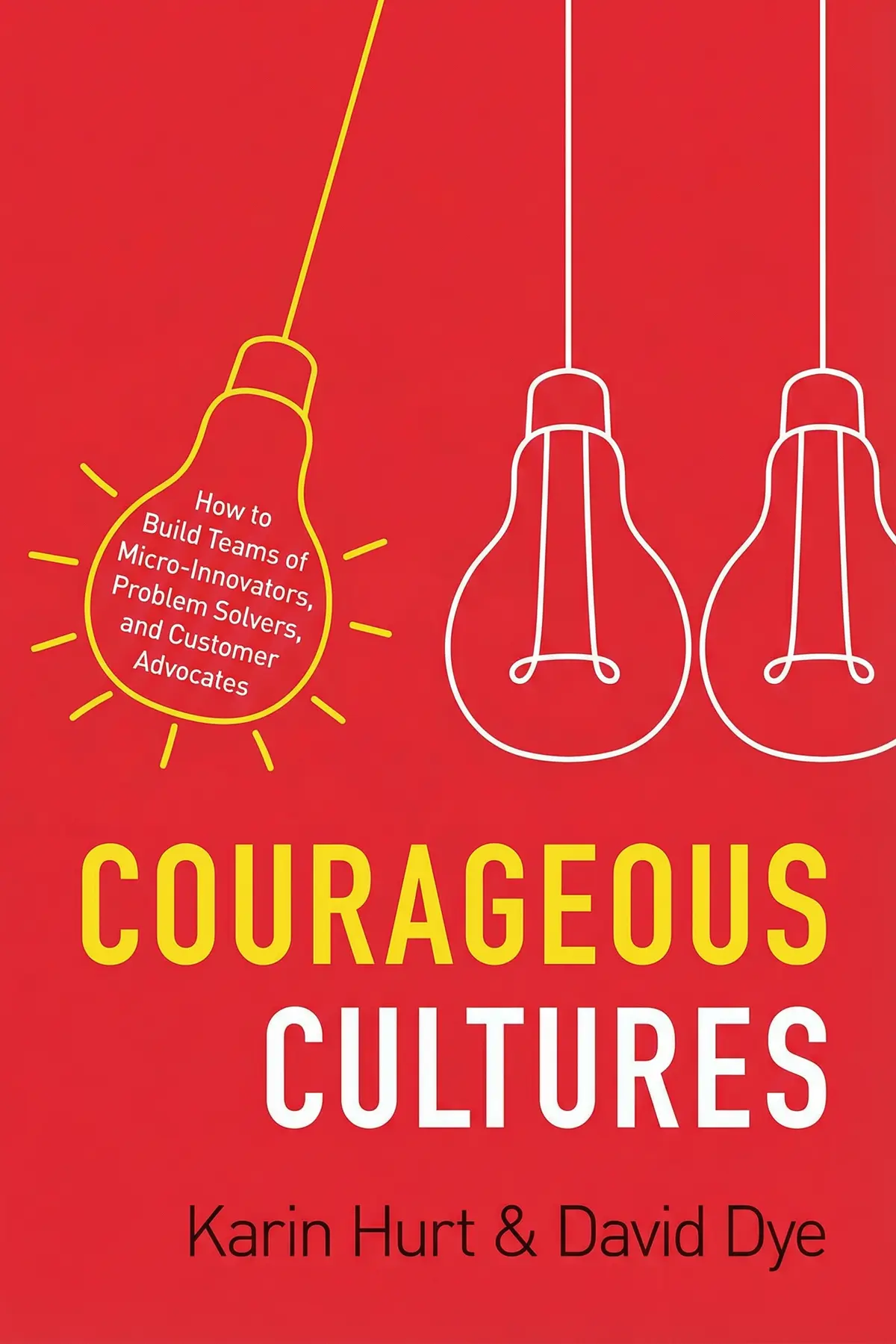
What does it take to make a company truly innovative? It isn’t just about having a few genius leaders at the top; it’s about unlocking the latent potential within every single employee. Courageous Cultures explores the reasons why so many workers choose to stay silent even when they see a better way of doing things. It identifies the 'courage crushers' that stifle growth and provides a roadmap for leaders to build an environment where speaking up is the norm, not the exception. This guide promises to show you how to move beyond a culture of compliance and toward one of contribution. You will learn how to balance the need for clear direction with the necessity of curious exploration. By implementing practical tools like the IDEA framework and learning how to coach different types of silent employees, you can turn your staff into micro-innovators and dedicated customer advocates. The book serves as a manual for any leader looking to build a more resilient, creative, and engaged team in an era where human ingenuity is the most valuable asset a business possesses.
Karin Hurt is a former executive at Verizon Wireless and a leadership speaker for Inc. magazine. She also produces the weekly blog Asking for a Friend. Her husband and co-author, David Dye, is the host of the Leadership Without Losing Your Soul podcast. Together, the couple has authored several books, including Overcoming an Imperfect Boss, Winning Well, and The Seven Things Your Team Needs to Hear You Say.
Listeners find the guide straightforward and simple to apply, with one listener calling it a functional roadmap for boosting company morale from the inside out. They also value its utility, as one listener draws attention to its actionable exercises and another cites its techniques for recognizing strengths. Additionally, the advice on leadership is well-regarded, with one listener labeling it a vital tool for those leading teams, and another commending its use of storytelling to stay compelling.
Finally, a leadership book that doesn't just preach from 30,000 feet but actually gives you the tools to change things on Monday morning. I’ve been struggling with what the authors call FOSU, or the fear of speaking up, within my own department for years. The story about Nate Brown and the 'magic button' for feedback was a lightbulb moment for me. It’s about creating a visible signal that you are actually open to hearing the truth from your staff. We’ve already started 'navigating our narratives' by building our own courage maps in our weekly huddles. The results in terms of employee loyalty and fresh ideas have been almost instantaneous. If you want to transform your culture from silent to vocal, this is your roadmap.
Show moreBuilding a 'courage map' was a total game-changer for our quarterly strategy meeting last month. This book provides a powerful and necessary framework for these times, especially as we navigate the complexities of hybrid work. I loved the emphasis on how a leader’s action—like David’s terse letter to the rude donor—can create a lasting culture of support. It’s about more than just being nice; it’s about being clear and transparent about the firm’s direction so people feel safe to speak. The practical guide for energizing companies from within is exactly what I needed to jumpstart our innovation pipeline. I can honestly say this is one of the most useful management books I've picked up in years.
Show moreThe IDEA approach alone is worth the price of admission for any manager struggling to filter through team feedback. By asking if a suggestion is Interesting, Doable, Engaging, and Actionable, we’ve finally stopped wasting time on pipe dreams and started focusing on real results. Hurt and Dye provide a very practical framework that helps move past the 'fear of speaking up' that plagues so many corporate environments. Personally, I appreciated how the book targets executives but remains accessible enough for frontline supervisors to implement immediately. Some sections did feel a bit repetitive, especially when the authors kept referencing what they would cover in later chapters. Despite the slightly choppy flow, the actionable strategies for identifying strengths and encouraging clarity are top-notch.
Show moreAs a middle manager struggling to keep my team engaged, I found the curiosity-clarity continuum incredibly eye-opening. We often think we want total innovation, but without the clarity of goals, curiosity just leads to a chaotic environment that confuses everyone. This book helps you find that sweet spot where employees feel safe to innovate within a clear framework. The anecdotes, specifically the one about David confronting a rude donor, really illustrated how standing up for your team builds immense dividends in loyalty. Frankly, I think many companies lose great people because they stifle the very potential this book teaches you to ignite. It’s an energizing read that provides practical steps to help talent bloom naturally.
Show moreEver wonder why your best employees suddenly go silent during brainstorming sessions? This book dives deep into the cultural barriers that prevent people from contributing their best observations and ideas. I found the section on 'navigating your narrative' particularly useful for personal growth and team bonding. The authors do a great job of explaining why clarity is just as important as creativity when building a courageous culture. While some of the mantras felt a little over-the-top, the actual exercises included at the end of the chapters are very effective. We have started using the IDEA acronym to vet new projects, and it has saved us hours of circular meetings. It's a must-have for team leaders who want to attract and retain top talent.
Show moreHurt and Dye have clearly leveled up from their previous work, shifting the focus toward a more comprehensive executive mindset. The transition from managing well to leading a courageous culture makes perfect sense for anyone looking to move into high-level leadership. They accurately describe the anxiety-inducing problems of toxic cultures, which gave me a few flashbacks to my old corporate job. However, the solutions they offer are so practical and achievable that they provide a real sense of hope. Tapping into the 'untapped potential' of your workforce isn't just a buzzword here; they give you a literal button to push to get started. My only gripe is the occasional repetitive mantra, but the core advice is too good to ignore.
Show moreThe 'magic button' story really hit home for me as someone who works in customer experience. Often, the frontline staff has all the answers, but they lack the mechanism to share them without fear of retribution. This book provides those mechanisms, from online polls to simple bulletin boards, to signal that leadership is actually listening. While I found the phrase 'micro-innovators' a bit cringey, the underlying strategy of encouraging small, daily improvements is brilliant. The authors find the right mix of storytelling and instruction, making it a very engaging read. It’s helped me realize that a courageous culture isn't built overnight, but through small, consistent acts of clarity and curiosity. Definitely worth a read for anyone leading a team.
Show moreTo be fair, the core message about workplace psychological safety is vital, though the delivery felt a bit inconsistent. Hurt and Dye have some great insights into the balance between curiosity and clarity, but I found the writing style somewhat jarring. Every time they would 'break the fourth wall' to tell me what was coming in Chapter 13, it pulled me out of the experience. It felt like reading a series of well-constructed blog posts rather than a cohesive, flowing book. That said, the strategies for fighting FOSU are solid and easy to implement if you have the patience to dig through the repetition. It is a decent guide for new managers, but seasoned leaders might find the concepts a bit elementary.
Show moreLook, I've gone through dozens of these business 'bibles' over the years, and this one sits somewhere in the middle of the pack. The authors definitely have the right intention, and I agree that FOSU is a major problem in modern offices. However, I felt the book lacked a certain level of scientific backing to really prove its points beyond just feel-good stories. The IDEA approach is a fine checklist, but it’s not exactly a revolution in management theory. I did appreciate the focus on how power should be used to empower others, which is a nice shift from their previous book, Winning Well. It’s a quick, easy read that will give you a few good ideas, but don't expect it to redefine your entire industry.
Show moreI really wanted to like this more, but the lack of rigorous research left me feeling skeptical throughout the entire read. While the authors clearly have good intentions, the book feels like a collection of anecdotal stories rather than a grounded theory of organizational behavior. Many of the concepts, like the IDEA approach, felt like a rehash of basic brainstorming techniques found in dozens of other management books. Truth is, if you've read any modern leadership literature, you won't find anything groundbreaking here. I found the constant use of corporate soundbites like 'micro-innovators' to be more distracting than helpful. It’s an easy enough read for a flight, but don't expect a deep dive into data-driven cultural transformation.
Show moreJoseph A. Maciariello


Deborah Gruenfeld
Mike Michalowicz
Hamilton Helmer
AUDIO SUMMARY AVAILABLE
Get the key ideas from Courageous Cultures by Karin Hurt, plus 5,000+ more titles in English and Thai.







