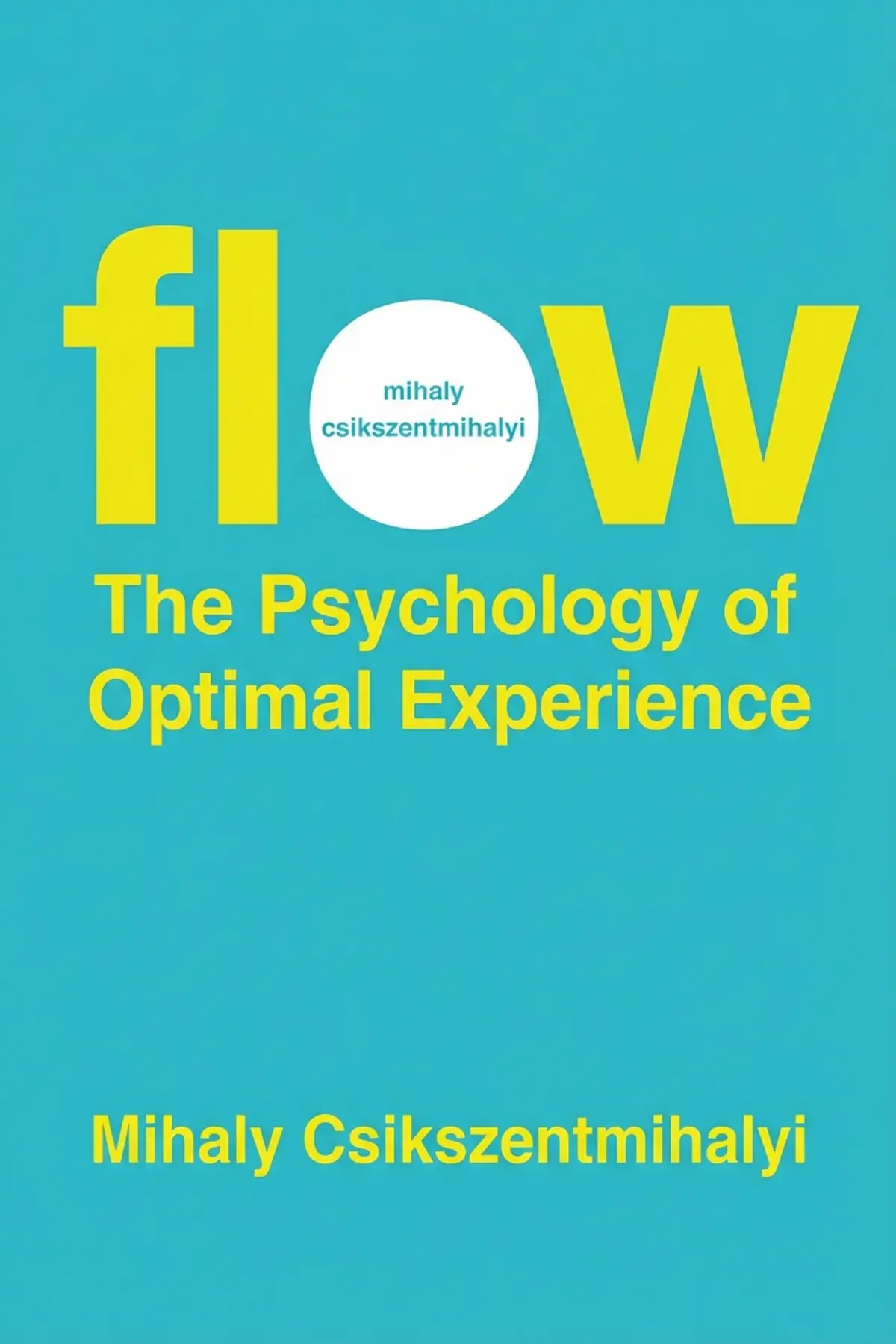
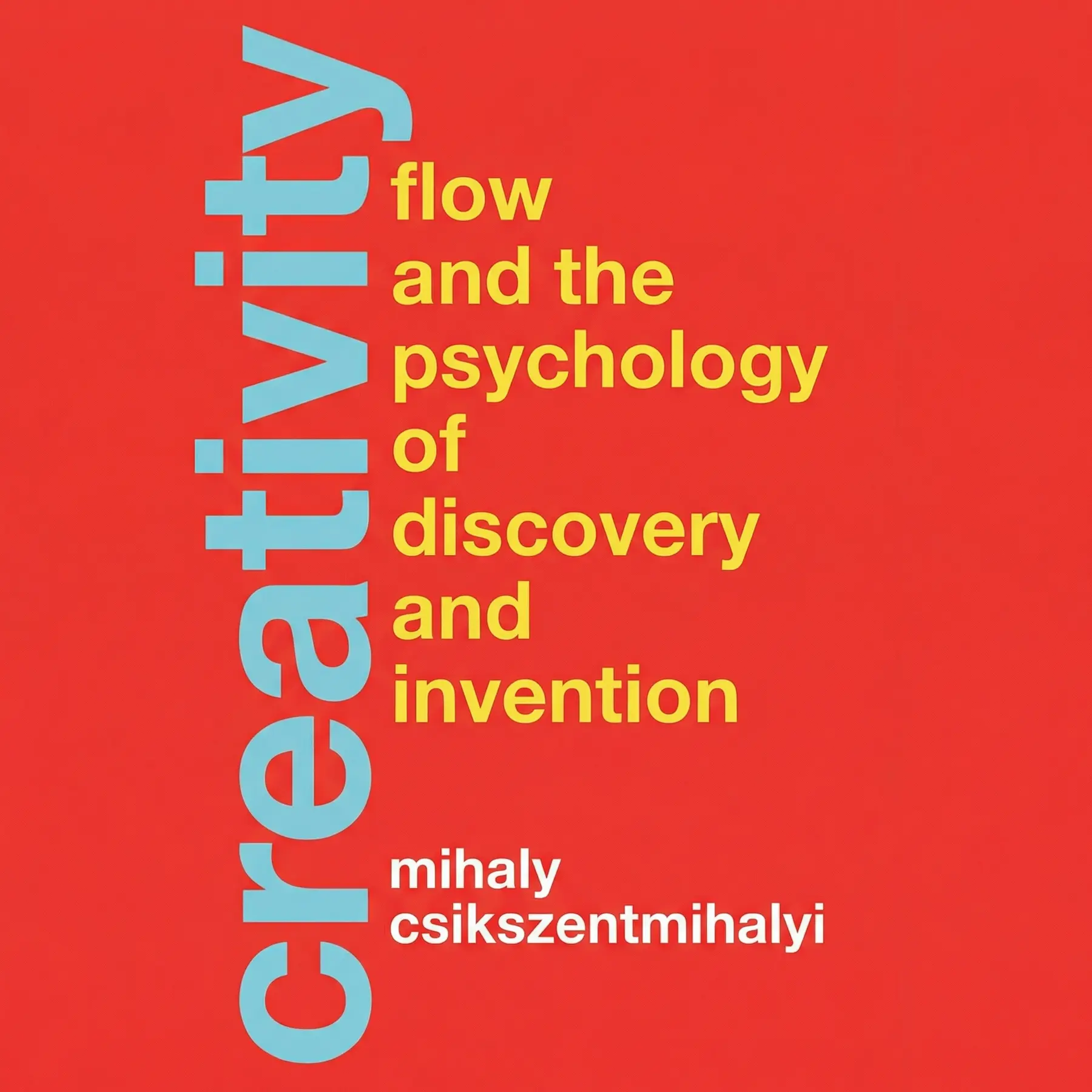
Flow: The Psychology of Optimal Experience
Mihaly Csikszentmihalyi
Explore the systemic nature of human innovation and the psychological conditions that foster it. This summary breaks down how individual talent, cultural domains, and social fields intersect to produce lasting creative breakthroughs.
1 min 43 sec
Most of us have experienced a moment where the world seems to fade away, and we are completely absorbed in what we are doing. In these rare instances, every movement feels perfectly calibrated, and ideas seem to arrive of their own accord, without the friction of conscious effort. This is the hallmark of the creative spirit in action. Yet, despite how intimate and personal these moments feel, creativity is rarely just a solitary event happening inside a single brain. It is something much larger, a complex dance between a person, their culture, and the society around them.
In this summary, we are going to explore the architecture of invention and discovery. We will look past the romanticized idea of the ‘tortured genius’ to see what actually allows new ideas to take root and change the world. We will uncover why certain places and times become legendary hubs of innovation, like the streets of Renaissance Florence or the laboratories of the modern era. We will also examine the specific personality traits that allow creative individuals to bridge the gap between imagination and reality—traits that often seem contradictory, such as being both highly disciplined and wildly playful.
Beyond just understanding how the greats did it, we will investigate how you can apply these principles to your own life. We’ll look at the specific stages of the creative process, from the initial immersion in a problem to the final ‘aha!’ moment and the hard work of execution. By the end, you’ll see why creativity isn’t just a luxury for artists and scientists, but a fundamental necessity for human progress and a primary source of meaning in our lives. Let’s begin by dismantling the myth of the lone creator and looking at the system that makes innovation possible.
2 min 27 sec
Innovation is not a solitary act but a collaborative interaction between three distinct forces: the individual, the domain, and the field.
2 min 05 sec
Creative individuals often possess complex, contradictory traits that allow them to navigate the tensions of original thought.
2 min 22 sec
From the first spark of interest to the final polish, the creative journey follows a predictable, though non-linear, path.
1 min 56 sec
True creative satisfaction comes from a state of total immersion where the challenge of the task perfectly matches the skill of the individual.
2 min 10 sec
Our physical and social environments act as powerful catalysts or inhibitors for the creative spirit.
1 min 57 sec
Child prodigies rarely become the most creative adults; true innovation is usually the result of long-term persistence and late-blooming talent.
2 min 16 sec
Innovation does not have an expiration date; the depth and complexity of our work can actually increase as we age.
2 min 13 sec
Creativity is more than personal expression; it is the fundamental mechanism through which human culture evolves and survives.
1 min 41 sec
As we reach the end of this journey into the creative mind, it’s clear that creativity is much more than a rare gift bestowed upon a lucky few. It is a systemic process that lives at the intersection of our personal passion, our cultural heritage, and our social connections. We have seen how the ‘flow’ state provides the internal fuel for this journey, and how a complex, paradoxical personality allows the innovator to navigate the difficult path from a wild idea to a concrete reality.
We’ve also debunked the idea that you have to be a child prodigy or a young rebel to change the world. Creativity is a lifelong endeavor that often rewards persistence and the deep wisdom that only comes with time. Whether you are at the beginning of your career or looking for a new spark in your later years, the potential for discovery remains open to you. The world is built on the ideas of those who dared to ask ‘what if?’ and had the discipline to find the answer.
To put these insights into practice, start by looking at your own daily rhythm. Identify the moments when you are most likely to find flow and protect those hours fiercely. Take control of your environment—find your center of action but also curate your quiet space for deep thought. Most importantly, never stop being curious. Every time you try something new, listen deeply to a colleague, or pursue a nagging question, you are feeding the system that makes innovation possible. Our survival and our fulfillment depend on this constant renewal of ideas. So, go out and find your own flow, master your domain, and don’t be afraid to challenge the gatekeepers. Your contribution is the next step in our collective story.
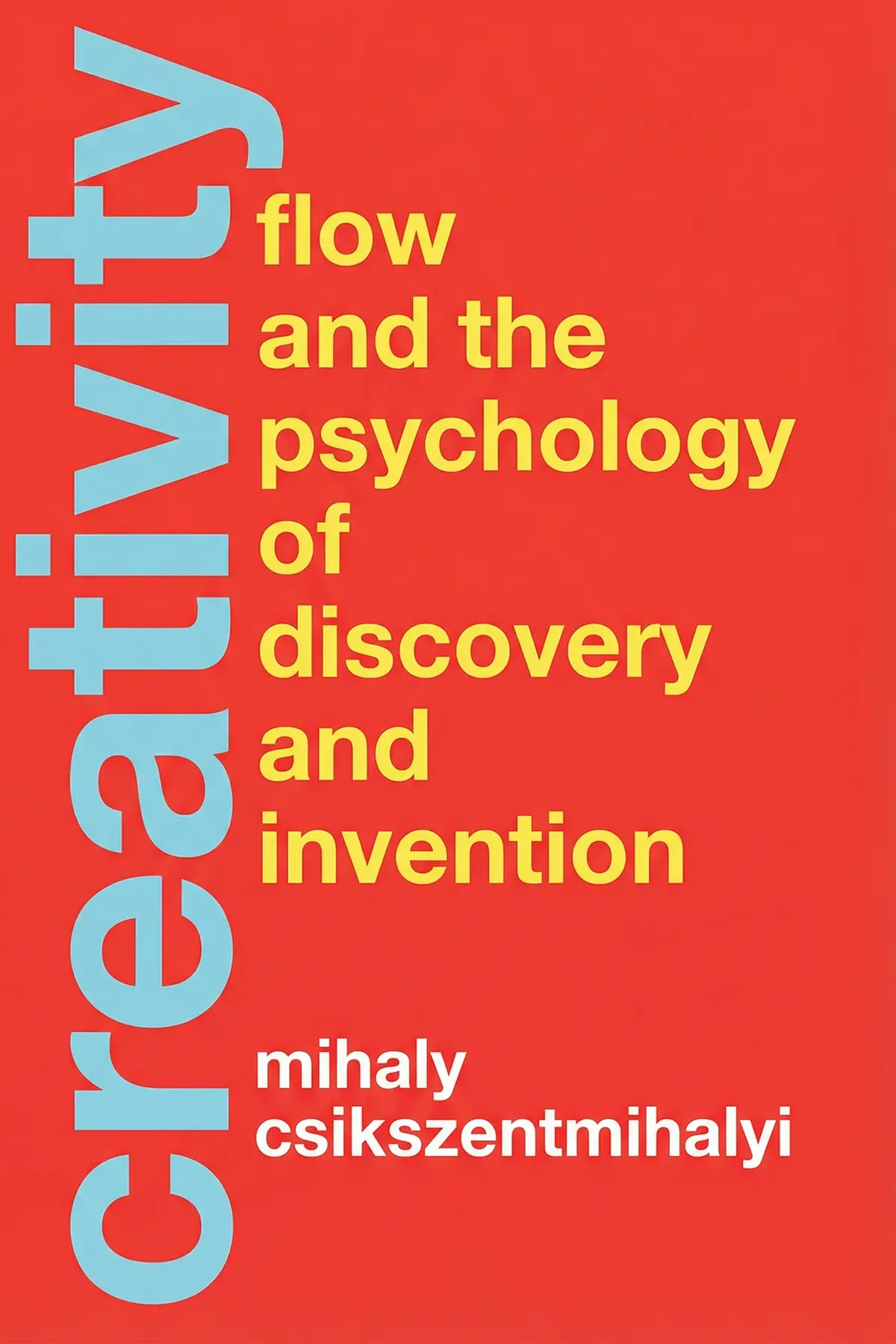
This exploration into the mechanics of genius moves beyond the myth of the solitary spark. It proposes that creativity is not just a personal trait, but a dynamic system involving three distinct elements: the individual, the cultural domain, and the expert field that acts as a gatekeeper. By examining the lives of over ninety exceptional individuals, it reveals the common threads of the creative process and the personality traits that facilitate discovery. The narrative also delves into the concept of 'flow'—that state of total immersion where time seems to vanish and effort becomes effortless. It offers a blueprint for cultivating this state in daily life, while also addressing how our physical and social environments shape our capacity for invention. Ultimately, it presents creativity as a vital force for human survival and cultural evolution, providing actionable insights for anyone looking to enhance their innovative potential.
Mihaly Csikszentmihalyi is a professor of Psychology and Management at Claremont Graduate University’s Drucker School of Management in Claremont, California. He is the acclaimed author of several books, including Beyond Boredom and Anxiety, The Evolving Self, and the seminal work Flow. His research and insights have also reached a broad audience through his contributions to publications like Psychology Today, the New York Times, and the Washington Post.
Mihaly Csikszentmihalyi
Listeners find this work to be a superb investigation into creativity, highlighting its extensive research, deep wisdom, and fascinating case studies of visionaries. The content is thorough, and listeners value the author’s style, with one noting it's not just for poets and painters. Nevertheless, the book's accessibility yields conflicting reports; some find it straightforward while others find it challenging. The author's skill also draws differing views, with some praising their distinguished background and others describing their thoughts as unhelpful.
Csikszentmihalyi’s work offers a rigorous, scholarly look at how innovation actually functions within a social context. Instead of focusing on the lone genius, he argues that true creativity requires a "systems approach" involving the domain, the field, and the individual. This perspective was a revelation because it explains why so many brilliant ideas never gain traction. The gatekeepers—those experts who decide what is included in the cultural matrix—are just as vital as the person generating the novelty. I appreciated the specific case studies of individuals like Jonas Salk and Freeman Dyson, which grounded the abstract theories in reality. However, the book is quite long, and the middle sections can feel like they are circling the same points. If you want a feel-good manual on how to paint better, look elsewhere. This is a deep, analytical dive into how humans change the world through symbolic rules.
Show moreIs creativity a solo act or a result of the environment? This book argues forcefully for the latter, dismantling the myth that you need a privileged childhood or constant high energy to succeed. I found the section on "complexity" in the creative personality to be the most relatable part of the entire text. It suggests that creative people aren't just one thing; they are both extroverted and introverted, playful yet disciplined. I gotta say, the qualitative interviews provide a rich tapestry of how different minds navigate their fields. The writing style is generally accessible, though the density of the research might intimidate casual readers looking for a quick self-help fix. It’s a substantial read that rewards those who take the time to sit with its heavy themes. This isn't just a book; it's a foundational study that changed how I view innovation.
Show moreAfter dipping my toes into “Flow” years ago, I was eager to see how those concepts applied to larger cultural shifts. This book did not disappoint in its depth, though it certainly requires a “prepared mind” to get through the denser chapters. I was particularly struck by the idea that being in the right place at the right time—the intersection of different cultures—is a prerequisite for major breakthroughs. The author doesn't just give you “New Age-y” fluff; he provides a scientific framework for how memes are transmitted and validated. One minor criticism is that the selection of creative individuals felt a bit narrow, focusing heavily on academics and scientists. I would have loved to see more representation from diverse spiritual backgrounds or less traditional fields. Still, the practical tips at the end for enhancing personal curiosity are genuinely useful if you apply them daily.
Show moreThis is a masterpiece of qualitative research that avoids the typical clichés found in modern productivity books. Csikszentmihalyi explores the lives of luminaries like E.O. Wilson and Oscar Peterson to identify the commonalities that lead to true cultural impact. He highlights how creative individuals often possess a “psychological androgyny,” allowing them to bypass rigid gender roles and access a wider range of human experience. I loved the breakdown of the creative process into five distinct steps, particularly the emphasis on the “incubation” period. It’s a reminder that sitting still and doing “nothing” is often when the most important connections are being made. The prose is sophisticated, which makes it an excellent study for anyone serious about understanding the mechanics of genius. Some might find the systems approach a bit cold, but I found it incredibly grounding and realistic.
Show morePicking this up felt like entering a laboratory of the mind where I could observe the inner workings of the world's greatest thinkers. The concept of “flow” is central here, but it’s expanded to show how passion and objectivity must coexist for an idea to survive. I was fascinated by the idea that a beautiful environment isn't a “silver bullet” but a catalyst for those who have already done the hard work. The author’s writing style is comprehensive and deeply insightful, even if it leans into academic jargon occasionally. One of my favorite takeaways was the importance of “problem finding” over just solving problems that are handed to us. It changes how you look at your daily work and your long-term career goals. My only gripe is that some of the interview protocols in the appendix felt like overkill. Overall, it’s a seminal work for any student of human potential.
Show moreMost books on this topic are fluff, but this is different because it treats creativity as an evolutionary process of cultural change. Csikszentmihalyi’s thesis is that creativity is a property of a system, not just an individual trait, which is a powerful shift in perspective. He explains that we must learn the rules of a “domain” before we can hope to change them, which emphasizes the need for discipline. This isn't a “how-to” book, but rather an exploration of how novelty survives the scrutiny of the “field.” I found the stories of the interviewees—especially the late journalist Jack Anderson—to be incredibly motivating and rich with detail. Not gonna lie, it’s a thick book that requires commitment, but the intellectual payoff is well worth the effort for those interested in the cultural matrix.
Show moreEver wonder why some ideas stick while others vanish into the void of history? This book provides the answer by looking at the interplay between the person, the field, and the domain. Csikszentmihalyi shows that luck and timing are often just as important as the individual’s talent or “flow.” I found the practical advice on enhancing personal creativity—like seeking to be surprised every day—to be a refreshing change from the theoretical chapters. The writing is generally clear, and the inclusion of various luminaries from different fields keeps the narrative moving forward. It’s a comprehensive look at how we, as a species, move the needle on human knowledge and culture. While some of the author’s conclusions might feel a bit elitist, his observations on “curiosity” as the primary driver of genius are spot on. This belongs on the shelf of anyone who values deep, research-based insights.
Show moreThe chapter on the creative process really highlights the distinction between simple problem-solving and true innovation. I was intrigued by the five steps: preparation, incubation, insight, evaluation, and elaboration. It’s a much more realistic framework than the “lightning bolt” theory of inspiration we usually see in movies. Personally, the section on “shaping your space” to allow for semiautomatic activity was the most practical part of the book for my own workflow. I’ve started taking more leisurely walks to let my mind make connections below the threshold of consciousness, and it actually works. To be fair, the book is quite repetitive in the later chapters and could have benefited from tighter editing. However, the qualitative Consideratiom of similarities between these geniuses is fascinating enough to keep you turning the pages. It’s a solid addition to the literature on human achievement.
Show moreWhile I respect the research that went into this volume, I found the readability to be quite a mixed bag. The first thirty pages lay out a brilliant thesis, but the remaining five hundred often felt like they were just treading water. Csikszentmihalyi is clearly a master of his field, yet some of his anecdotes about the interviewees felt repetitive after a while. I struggled with his definition of creativity as something that must change a domain to be valid. That feels slightly exclusionary to the millions of people who practice personal creativity for their own fulfillment. Truth is, I probably would have preferred a condensed version of this study. It's an important academic work, but it isn't always an engaging one for the layperson. Some of the practical tips at the end felt like they were just taking up space on the page.
Show moreMaybe my expectations were off, but I found this book to be an exhausting slog through 600 pages of academic navel-gazing. The central premise that creativity only counts if it leaves a trace in the “cultural matrix” felt incredibly narrow and elitist. Why should a board of experts or “gatekeepers” get to define what is creative for the rest of us? While I enjoyed a few stories from people like Madeleine L’Engle, the author's tone often felt detached and overly clinical. Look, the grouping of Bible study with addictive behaviors like internet cruising and betting on horses was quite bizarre and off-putting. If you're looking for inspiration, you might find this more discouraging than helpful. It’s an exhaustive study with a lot of data, but it lacks the human heart and accessibility I was looking for in a book about the creative spirit.
Show moreAUDIO SUMMARY AVAILABLE
Get the key ideas from Creativity by Mihaly Csikszentmihalyi, plus 5,000+ more titles in English and Thai.