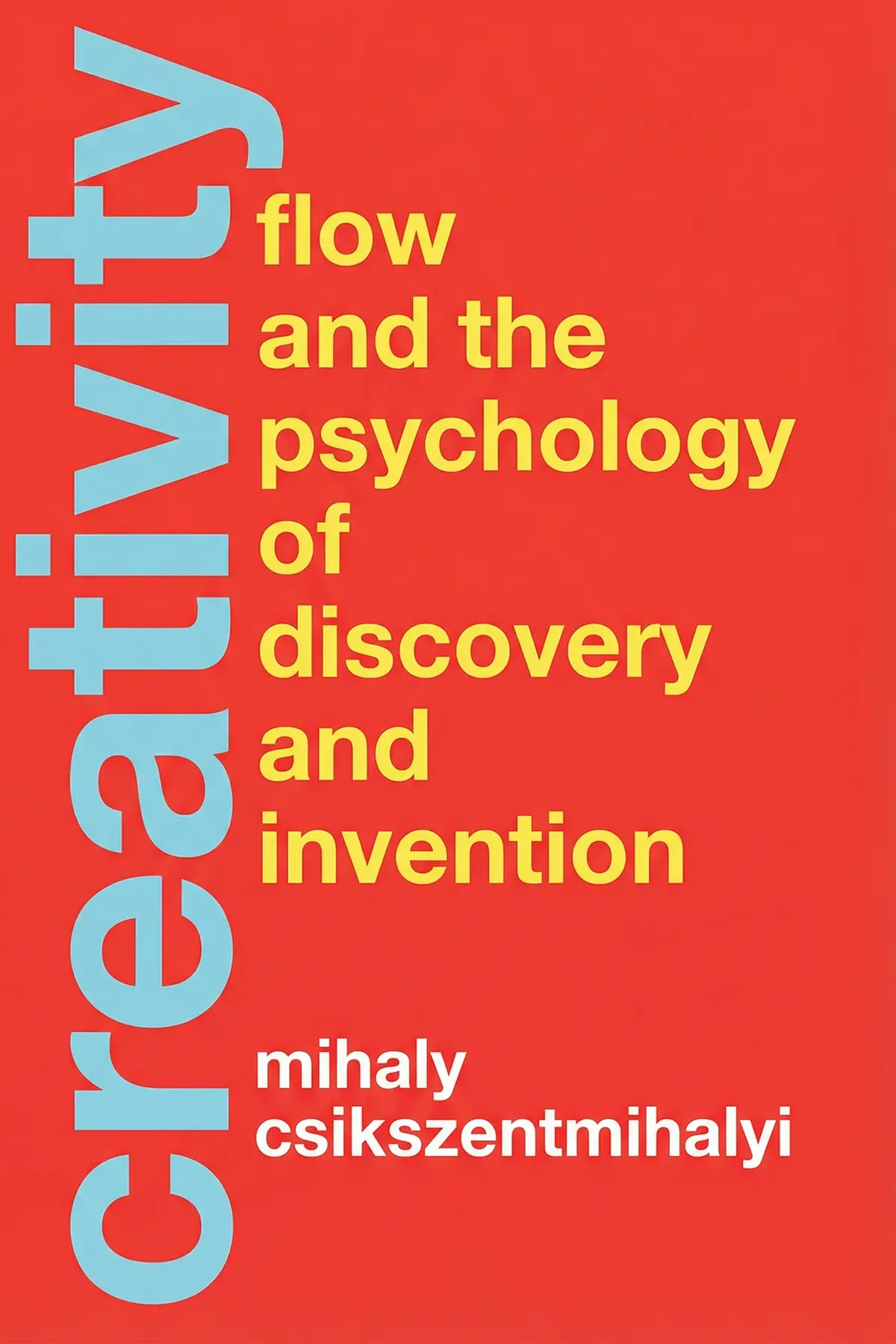
Creativity: The Psychology of Discovery and Invention
Mihaly Csikszentmihalyi
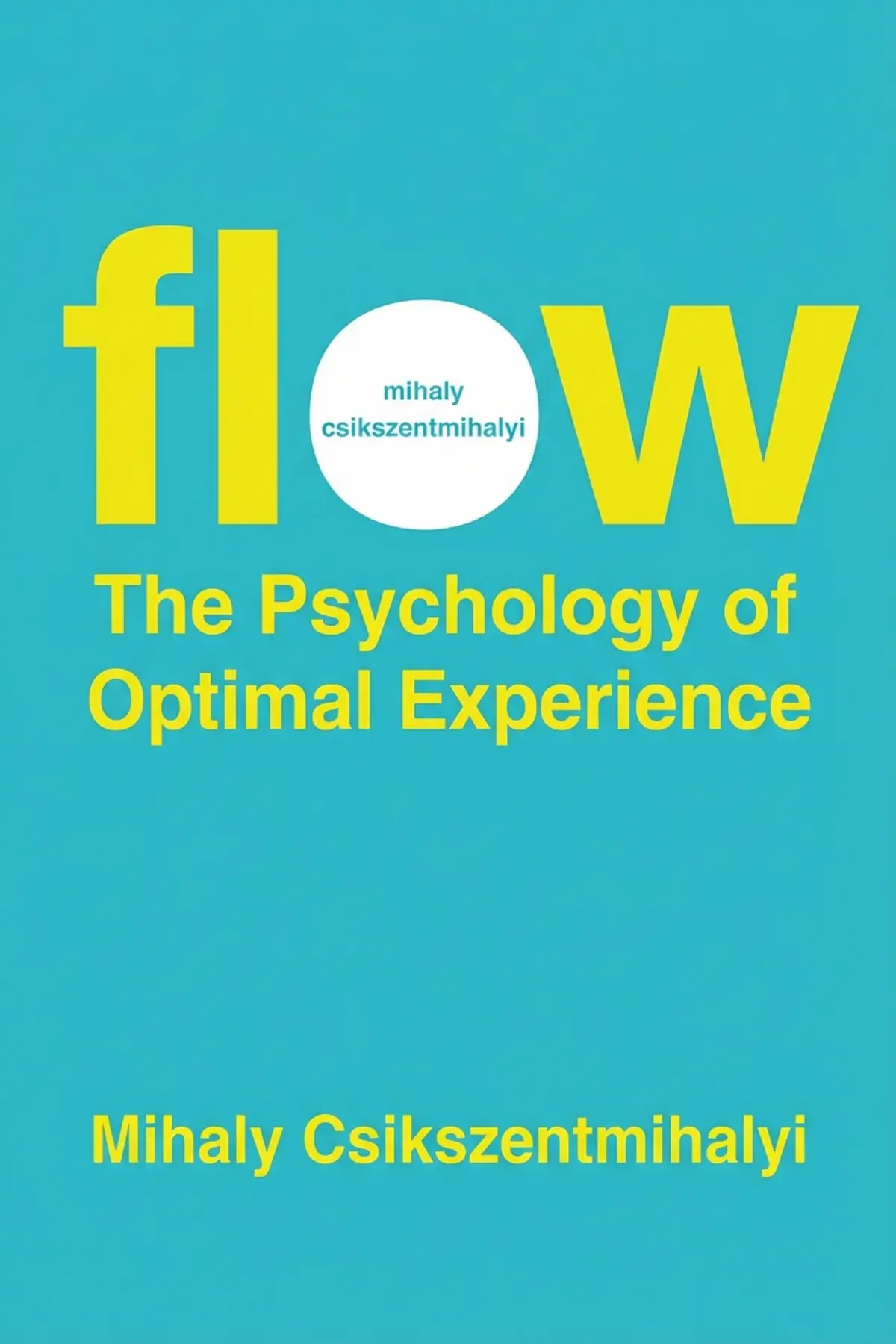
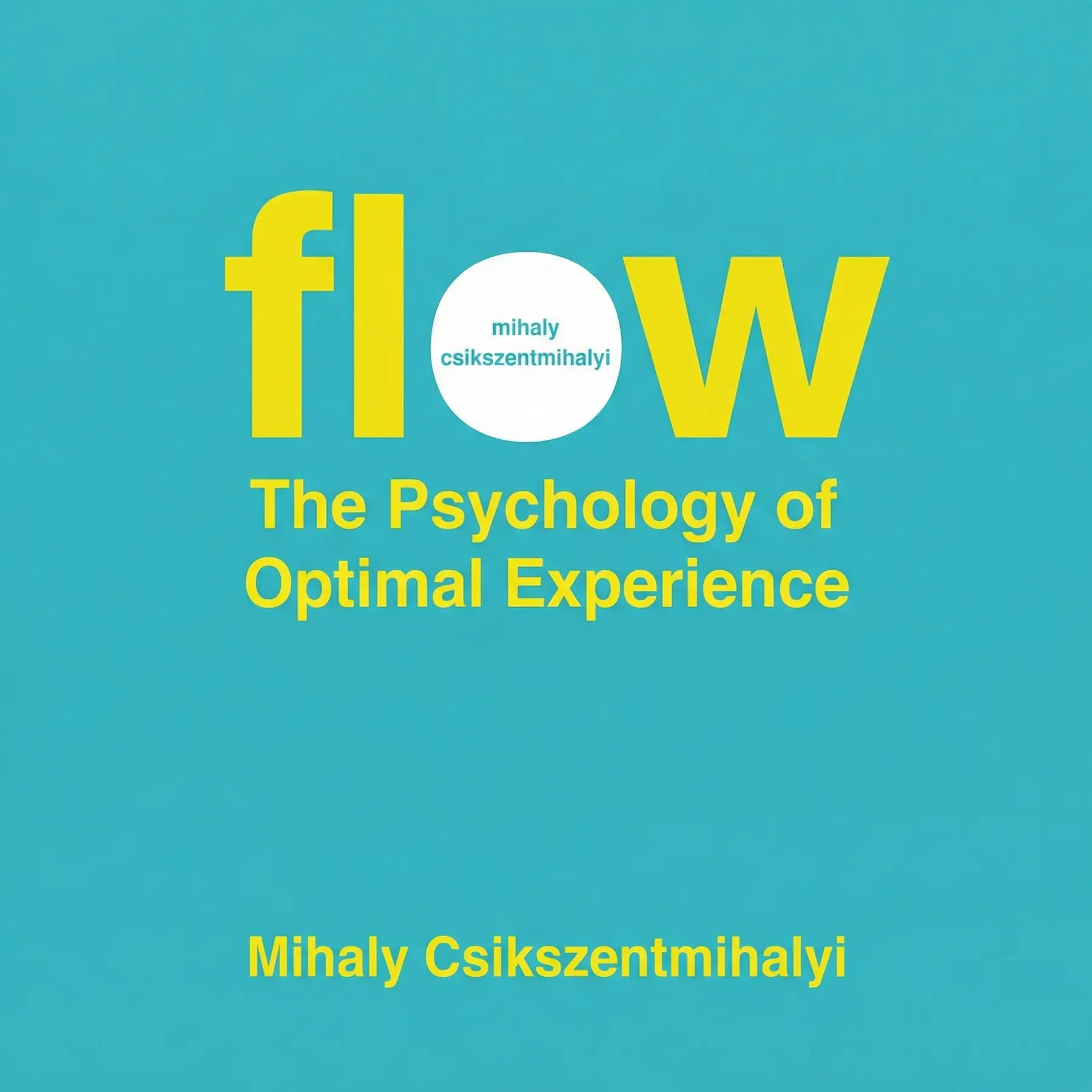
Explore the psychology of flow, a state of deep immersion where challenges meet skills. Discover how to reclaim your attention from distractions and find lasting satisfaction through intrinsic rewards and meaningful engagement.
1 min 36 sec
Why is it that some individuals seem to glide through life with a sense of vibrant purpose while others feel trapped in a cycle of boredom and frustration? We often assume that happiness is something that happens to us—a stroke of luck or the result of amassing wealth and comfort. However, the reality is far more empowering. True satisfaction doesn’t come from external rewards; it comes from the way we process our internal experiences.
In our modern world, we are constantly bombarded with distractions and pressures to compare ourselves to those around us. We chase after status, money, and the approval of others, only to find that these things don’t actually make us feel better in the long run. There is a different path, one that focuses on the concept of ‘flow.’ This is a state of total immersion where you are so deeply engaged in an activity that everything else falls away. In this state, you aren’t worried about what people think or what you’ll gain at the end; the reward is the activity itself.
Throughout this journey, we will explore the mechanics of this optimal experience. We’ll see why a factory worker might find more joy in their day than a bored millionaire, and how even the most dire circumstances—like being in prison—can be transformed into an opportunity for growth. We will look at how to use your body, your mind, and your relationships to enter the zone more frequently. By the end, you’ll understand that the key to a meaningful life isn’t about changing the world around you, but about changing the way you direct your attention within it. Let’s dive into the psychology of how to truly go with the flow.
2 min 23 sec
We often look to religion, wealth, or politics to provide a sense of meaning, yet these external structures frequently fail to address our internal restlessness.
2 min 11 sec
While our biology drives us toward easy pleasures, true growth only occurs when we invest effort into challenging and complex activities.
2 min 33 sec
Entering the ‘zone’ requires a precise alignment of clear goals, immediate feedback, and a balance between the difficulty of a task and your current abilities.
2 min 22 sec
Growth is not a static state; it is a continuous process of escalating challenges that prevent boredom and foster mastery.
2 min 16 sec
By shifting from automatic reactions to mindful observation, we can transform even the most mundane physical actions into sources of deep engagement.
2 min 16 sec
The mind is capable of creating its own flow states through memory games, intellectual curiosity, and the pursuit of knowledge for its own sake.
2 min 11 sec
Work does not have to be a grind; by setting personal challenges and seeking variety, we can find deep satisfaction in our daily labor.
2 min 26 sec
True mastery of flow culminates in the ability to maintain inner order even in the face of misfortune and to align one’s life around a unified theme.
1 min 49 sec
The journey toward an optimal life is not about finding a magic formula for happiness or waiting for the world to change. It is about taking radical responsibility for your own attention. As we have seen, the state of flow is available to everyone, regardless of their circumstances, provided they are willing to engage deeply with life’s challenges. The key is to move away from the pursuit of external rewards—the money, the fame, and the status that society tells us we need—and instead look for the intrinsic rewards that come from mastery and growth.
To live in flow is to be a lifelong learner. It means turning your work into a game, your body into a finely tuned instrument of perception, and your mind into a playground of ideas. It requires the discipline to turn off the distractions and the courage to face adversity with a sense of curiosity rather than fear. When you balance your skills with the right amount of challenge, you don’t just become more productive; you become more alive. The self-consciousness that usually plagues us disappears, and we find ourselves fully present in the only moment that truly matters: the one happening right now.
As you move forward, remember that the meaning of your life is yours to create. By establishing clear goals and maintaining the resolve to pursue them, you can build a life theme that is both complex and harmonious. Whether you are navigating the complexities of your career, nurturing your relationships, or simply taking a walk, the opportunity for an optimal experience is always there. Don’t settle for the passive comforts of a mundane existence. Instead, seek out the challenges that push you to grow, and in doing so, you will find that the secret to a happy life is simply to get lost in the flow.
Have you ever been so caught up in a task that the rest of the world seemed to vanish? This experience is known as flow, a psychological state where we are at our most creative, productive, and fulfilled. In this exploration of optimal experience, we look at why modern life often leaves us feeling empty despite our material wealth. We often try to fill the void with passive pleasures or external rewards like fame and money, but these rarely provide lasting happiness. The promise of this work is that anyone can learn to access this state of flow by balancing the difficulty of a task with their personal skill level. By transforming our work into a game, cultivating our physical and mental senses, and finding purpose in the face of adversity, we can take control of our inner lives. This summary provides a roadmap for moving beyond mere survival or comfort, showing you how to build a life centered around growth, complex challenges, and a unified sense of purpose.
Mihaly Csikszentmihalyi was a distinguished professor of psychology who earned his PhD from the University of Chicago. Recognized as a preeminent global authority in the study of positive psychology, his research focused heavily on the mechanics of motivation and creativity. Beyond his seminal work on optimal experience, he authored several influential books including Creativity: Flow and the Psychology of Discovery and Invention as well as Finding Flow: The Psychology of Engagement with Everyday Life.
Mihaly Csikszentmihalyi
Listeners find this work highly accessible and regard it as mandatory reading for creative professionals, as it offers significant insights into human thought. The concept of flow is met with enthusiasm; one listener depicts it as a beautiful portrayal of the theory, and listeners value the way it clarifies the nature of happiness and improving life quality. Furthermore, the prose is appreciated for being approachable, with listeners noting it's not written like scientific literature. However, reactions to the book's entertainment value are divided, with some calling it engrossing while others find it a chore. Perspectives on the clarity of the material are also split, as some commend the explanations while others suggest they are over-simplified.
This book should be required reading for anyone in a creative or high-performance field. Csikszentmihalyi manages to articulate that elusive 'in the zone' feeling with surgical precision, shifting the conversation from vague luck to a controllable psychological state. I particularly resonated with the idea of the 'autotelic personality'—the notion that we can transform even the most mundane chores into rewarding experiences by setting micro-goals and seeking immediate feedback. The writing isn't overly academic or bogged down by jargon, making it surprisingly accessible for a foundational text in positive psychology. While the examples of 'John' and 'Katie' can feel a bit repetitive, the underlying framework of balancing challenge against skill is a total game-changer. It’s essentially a roadmap for reclaiming your attention from the 'psychic entropy' of modern life. If you feel like your days are slipping away in a blur of passive consumption, this is the wake-up call you need.
Show moreAs someone who works in a creative field, I found the descriptions of 'losing oneself' in a task to be incredibly validating. This isn't just a book about being happy; it's a manual on how to actually live a complex, meaningful life. The author’s research into how people from different cultures and professions achieve this state—from surgeons to assembly line workers—is eye-opening. I loved the distinction between 'pleasure,' which is fleeting and passive, and 'enjoyment,' which requires effort and leads to growth. Not gonna lie, the book demands some concentration, but that ironically puts you into a bit of a flow state while reading it! It helped me understand why my most difficult projects are often the ones I remember most fondly. While it might skip over some of the socioeconomic realities of life, its focus on the 'inner life' provides a sense of agency that I found very empowering.
Show moreWow, what a deep dive into the mechanics of human satisfaction. I was worried this would be another fluffy self-help book, but it’s actually a rigorous psychological study that borders on philosophy. The way it describes the loss of self-consciousness during high-level tasks is exactly how I feel when I’m deep in a coding project. It’s about the joy of the process rather than the reward at the end. I found the sections on transforming adversity particularly moving, even if some of the examples (like the POWs) were a bit extreme. It makes you realize that our quality of life is determined by where we choose to point our attention. If you can get past the somewhat dated tone and the lack of modern citations, there is a wealth of wisdom here about what it means to lead a good life.
Show moreThe chapter on the body and flow was a standout for me, especially the discussion on how even simple acts like walking or eating can be elevated to art forms. This book is a beautiful description of what makes life worth living. It’s not about easy happiness; it’s about the satisfaction of struggle and growth. I loved the idea that goals are just excuses to engage in the process—the 'effort justifies the goal.' While the author’s occasional swipes at organized religion and modern music felt unnecessary and a bit grumpy, they didn't ruin the experience for me. The 'autotelic' framework has helped me reframe my most stressful work days as 'games' to be played rather than burdens to be endured. It’s one of those rare books that actually changes the way you see the world once you put it down.
Show moreEver wonder why time vanishes when you're deeply engaged in a hobby? This book provides the most comprehensive answer I've found yet. It’s a fascinating exploration of how we can order our consciousness to fight off the chaos of daily life. I loved the breakdown of the eight elements of enjoyment, especially the concept that flow occurs in that sweet spot between boredom and anxiety. In my experience, the comparison to Vygotsky’s Zone of Proximal Development is spot on—it's all about that incremental challenge. To be fair, some sections feel like a rambling lecture from a well-meaning but long-winded uncle, and I didn't appreciate the condescending attitude toward watching TV or listening to music. However, the core thesis is robust enough to survive the occasional patronizing tone. It’s not a quick self-help fix, but a serious look at how to find intrinsic value in our work and relationships.
Show moreFinally got around to finishing this classic, and I can see why it’s held in such high regard despite its flaws. The truth is, most of us are terrible at using our free time, and Csikszentmihalyi’s critique of 'passive leisure' really hit home for me. We spend all day wishing for the weekend only to waste it on things that leave us feeling hollow. The book offers a structured way to look at 'optimal experience' through clear goals and deep involvement. I did find the middle chapters a bit tedious as they hammered the same points home using different hobbies like knitting or yoga, but the overall philosophy is sound. Some of the psychological insights into how we process time and self-consciousness are genuinely profound. It’s a bit of a dense read, and you have to ignore some of the more outdated social commentary, but the central idea of the autotelic experience is worth the effort.
Show moreThe concept of the autotelic self is brilliant, even if the delivery is a bit hit-or-miss. I picked this up hoping for a practical guide, and while it’s more philosophical than 'how-to,' the logic is hard to argue with. The book basically posits that we are happiest when we are pushed to the edge of our abilities. I particularly liked the section on how to create a 'flow' environment for children by providing clarity and choice. On the downside, the author can be quite dismissive of anything he deems 'low-brow,' like watching television, which felt a bit elitist. Also, the repetition is real—you’ll hear about 'Miranda the knitter' or 'Sarah the climber' more than you probably want to. Still, the breakdown of the four kinds of play (agon, alea, etc.) was a highlight for me. It’s a foundational text that definitely changed how I view my work-life balance.
Show moreAfter hearing about 'flow' for years in various TED talks and podcasts, it was great to finally read the source material. The writing is clear and avoids the dry, sterile tone of most scientific literature, which I appreciated. It’s essentially a handbook on how to find purpose in the 'now.' I found the chapters on the flow of thought and the 'work as flow' particularly relevant to my own life. To be fair, the author’s tendency to blame the individual for their lack of happiness is a bit much at times, and he certainly has a bone to pick with passive entertainment. However, the central thesis—that we need to take active control of our consciousness to be happy—is hard to ignore. It’s a thought-provoking read that definitely makes you rethink your relationship with your phone and your free time.
Show moreLook, the core message here is life-changing, but the book itself is a total slog. It’s a classic case of a great 30-page paper being inflated into a 300-page book. The author makes his point in the first two chapters and then just repeats it ad nauseam with an endless parade of case studies. It’s also very much a product of its time; the gender roles are frustratingly stereotypical, and the author’s refusal to acknowledge systemic privilege is a major blind spot. He constantly suggests that your environment doesn't matter as long as you have 'inner control,' which feels like a very privileged take. That said, I can't deny that the 'flow' framework is useful for understanding motivation. I find myself using the 'challenge vs. skill' quadrant almost daily to diagnose why I'm feeling restless or overwhelmed. Great ideas, mediocre execution.
Show moreFrankly, I found this incredibly dated and frustratingly narrow in its worldview. The author spends hundreds of pages cycling through repetitive anecdotes about mountain climbers and chess players to prove a point that could have been a long essay. What bothered me most was the total lack of social context; he argues that happiness is purely an internal struggle, even using prisoners and factory workers as proof that you can be 'happy' in any hellscape if you just focus hard enough. It feels incredibly tone-deaf to ignore systemic issues like poverty or toxic work environments while essentially telling the reader that their unhappiness is a personal failure. Plus, the gendered language is straight out of the 1950s—the 'boy hunts' and the 'girl receives.' Oh, and the weird, vague defense of Adolf Eichmann’s 'flow state' on page 270? Absolutely bizarre. There are some decent nuggets about structuring free time, but the elitism and repetition make it a real chore to finish.
Show more
Richard Wiseman
Steven C. Hayes
Deborah Gruenfeld
AUDIO SUMMARY AVAILABLE
Get the key ideas from Flow by Mihaly Csikszentmihalyi, plus 5,000+ more titles in English and Thai.