
14 min 29 sec
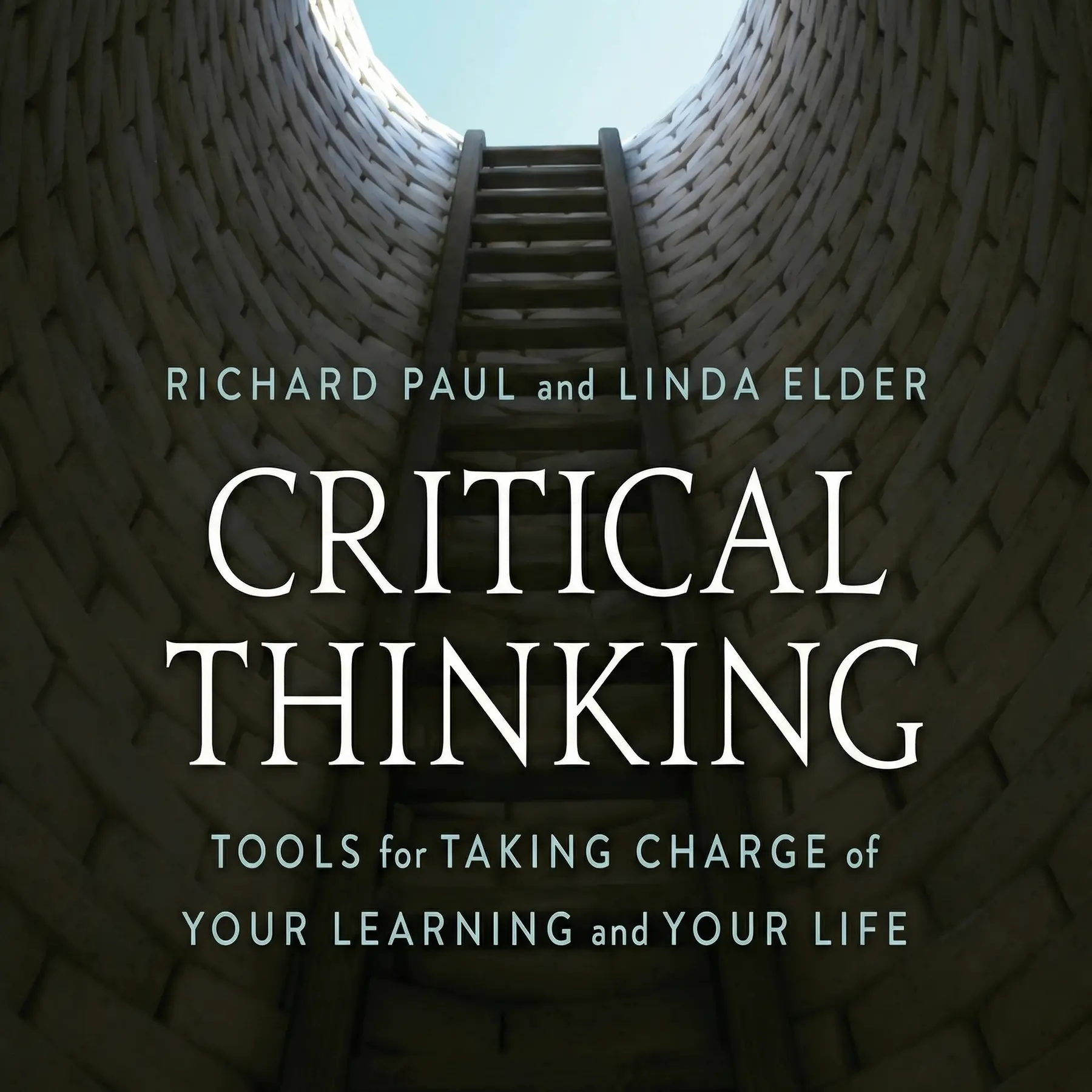
Critical Thinking: Tools for Taking Charge of Your Learning and Your Life
Explore the foundational mechanics of your own mind. This guide provides a comprehensive framework for sharpening logic, overcoming personal biases, and developing the intellectual character necessary for clear decision-making in an complex world.
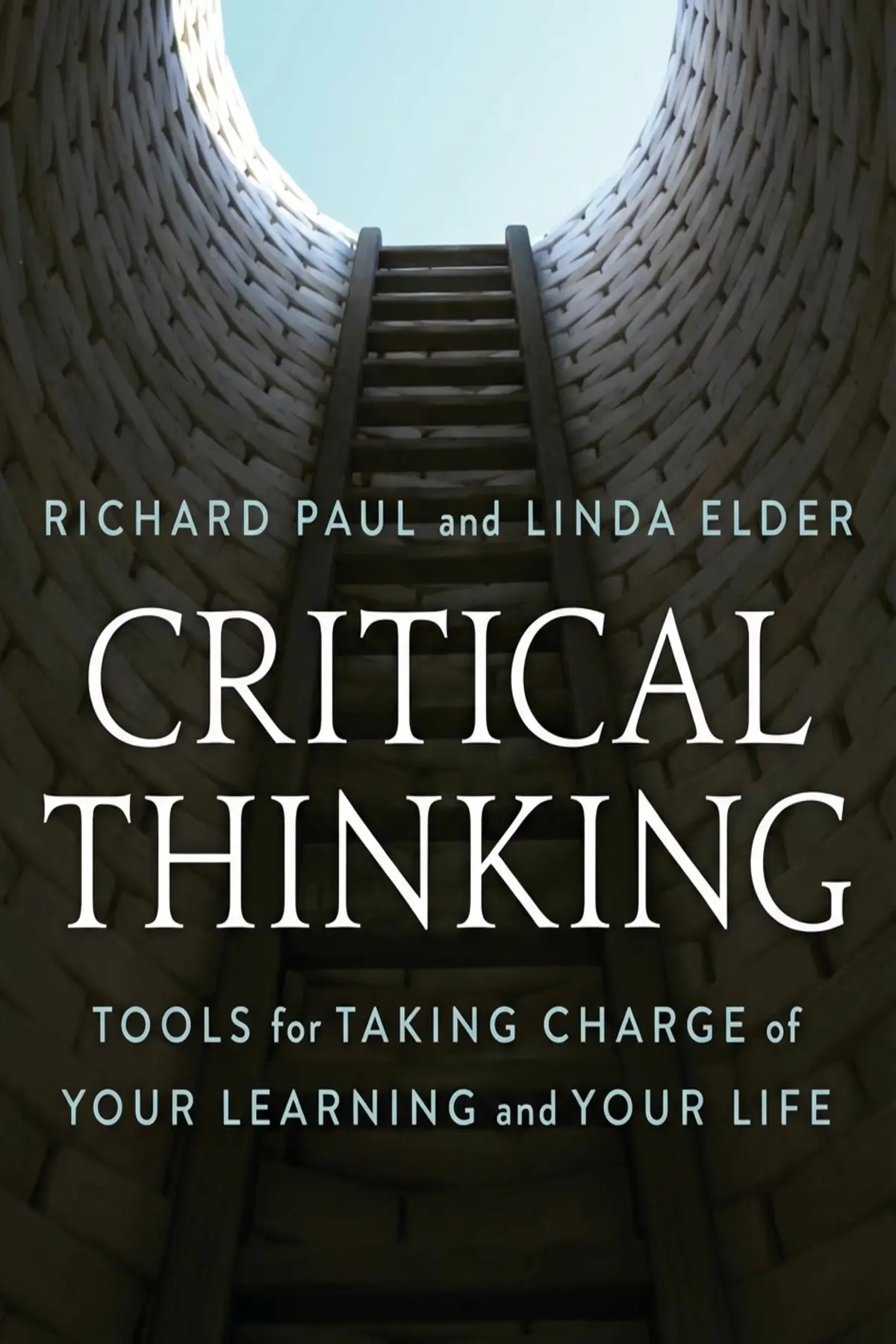
Table of Content
1. Introduction
1 min 40 sec
Every day, we are bombarded by a relentless stream of data, opinions, and choices. We tend to believe that because we have been thinking since childhood, we are naturally good at it. But if you stop to consider the state of our personal lives and our broader world, it becomes clear that much of our reasoning is biased, fragmented, or based on hidden prejudices. We are like pilots flying through a storm without ever having checked our instruments. This is where the discipline of critical thinking enters the picture.
In this exploration of the work by Richard Paul and Linda Elder, we are going to look at thinking not as a natural reflex, but as a deliberate craft. The goal is to move beyond mere intelligence and toward a state of genuine rationality. This isn’t just about winning debates or solving puzzles; it’s about taking total charge of the internal processes that determine the quality of your life. Throughout this journey, we will uncover how to monitor our own mental habits, identify the stages of cognitive growth, and recognize the social and emotional forces that often lead our logic astray.
By the end of this session, you will have a new perspective on what it means to be a thinker. You will see that the path to clarity requires more than just facts—it requires a specific kind of character. We are going to examine how to break down the complex structures of our thoughts and rebuild them on a foundation of integrity and fair-mindedness. Let’s begin by looking at why thinking is a skill that demands constant, intentional practice.
2. Thinking as a Deliberate Skill
2 min 37 sec
Most of us treat thinking as a natural reflex, yet it is actually a craft that requires constant refinement and precise conceptual clarity to master.
3. The Ethical Dimension of Reason
2 min 55 sec
True critical thinking isn’t just about being smart; it requires a set of intellectual virtues that ensure our logic is fair, humble, and honest.
4. Navigating the Stages of Development
2 min 51 sec
Improving your thinking is a lifelong journey that moves through distinct levels, from complete lack of awareness to disciplined, habitual mastery.
5. Breaking the Chains of Ego and Groupthink
2 min 45 sec
The greatest obstacles to clear thinking are our innate tendencies toward self-centeredness and our unconscious desire to conform to the groups we belong to.
6. Conclusion
1 min 41 sec
As we conclude this journey into the art of critical thinking, it’s worth reflecting on the throughline that connects everything we’ve discussed. Thinking is not a static trait you are born with; it is a dynamic process that you must actively manage. We have seen that clarity requires more than just logic—it requires a profound level of honesty with oneself. It requires the humility to admit when we are wrong, the courage to face ideas that scare us, and the discipline to apply high standards to our own mental outputs.
The path from an unreflective thinker to a master of one’s own mind is not an easy one. It demands that we wrestle with our own egos and resist the powerful pull of group conformity. It asks us to look at the words we use and the assumptions we make with a magnifying glass. But the rewards for this effort are immeasurable. When you take charge of your thinking, you take charge of your life. You become better equipped to handle the complexities of your career, the nuances of your relationships, and the challenges of being a citizen in a complex society.
Your next step is simple but profound: pick one of the intellectual standards we discussed—perhaps clarity or fairness—and apply it to a single decision you make today. Watch how your perspective shifts when you stop reacting and start reasoning. Remember, the goal isn’t to be perfect, but to be better than you were yesterday. By committing to this lifelong practice, you aren’t just improving your mind; you are expanding your potential as a human being. Thank you for spending this time with us to cultivate the most important tool you possess.
About this book
What is this book about?
Have you ever wondered why even the smartest people make profoundly poor decisions? Or why it is so difficult to change someone’s mind once it is set? This summary dives into the core of human cognition to reveal that thinking is not a passive activity, but a skill that must be cultivated with the same rigor as an Olympic sport. By exploring the work of Richard Paul and Linda Elder, we uncover a roadmap for intellectual transformation. The promise here is not just better logic, but a total overhaul of how you interact with information, emotions, and social pressures. You will learn to identify the invisible scripts that run your life, from the ego-driven desires of the individual to the blind conformity of the group. Through the lens of intellectual virtues and rigorous standards like clarity and accuracy, this guide offers the tools to take full command of your mental life, leading to more rational choices, deeper empathy, and a more purposeful existence.
Book Information
About the Author
Richard Paul
Richard Paul was a leading expert in the field of critical thinking, authoring nine books and more than 200 articles exploring the nuances of human reason. His influential work earned recognition in major media outlets such as the New York Times and Newsweek. Linda Elder is a prominent educational psychologist and a frequent speaker on the development of the mind. Her research focuses heavily on the intricate interplay between human cognition and our emotional lives, helping learners bridge the gap between thinking and feeling.
Ratings & Reviews
Ratings at a glance
What people think
Listeners find that this work provides enduring wisdom and actionable methods for enhancing reasoning and handling daily choices. They also value the way the material establishes a distinct structure for self-assessment and assists in spotting egocentric patterns. Although views differ regarding the heavy and occasionally high-flown writing style, listeners still consider the central principles about intellectual standards to be incredibly helpful. Furthermore, they highlight the benefit of keeping the book as a permanent guide, with one listener remarking that it needs to be "chewed and digested" at a slow pace to fully gain the strategic mindset it fosters.
Top reviews
June
The chapter on egocentric thinking was a total game-changer for my personal development. I never realized how much my own biases were clouding my everyday decision-making until I sat down with this text. It provides a very clear framework for self-critique that feels timeless, even if the writing gets a bit dry in the middle sections. You really have to treat this like a reference manual rather than a quick weekend read to get the full value. I found myself highlighting almost every other page because the standards of thought are so applicable to modern life. If you are willing to put in the work, the strategic thinking abilities you gain are well worth the effort.
Show moreAkosua
As someone who constantly struggles with letting emotions override logic, this book was exactly what I needed. It offers timeless insights into the human mind and provides a structured way to evaluate our own thought processes. I loved how it breaks down the parts of thinking into manageable pieces that can be applied to daily problems. It’s a bit of a difficult read because you have to take it real slow to appreciate the depth of the material. This isn't just a book you read once; it’s a tool for life-long self-improvement and ethical reasoning. Truly a must-read for anyone seeking a more disciplined mind.
Show moreAiden
It is rare to find a book that offers such a comprehensive framework for redesigning your internal life. Paul and Elder have created a masterpiece that guides you through the messy process of understanding how you actually think. By highlighting the irrational tendencies we all share, they make it possible to take charge of our decisions in a way that feels empowering. I especially appreciated the focus on ethical reasoning and how it integrates with logical standards. This is a text that must be chewed slowly, allowing the concepts to sink in over time. It has fundamentally changed how I approach problems.
Show moreAroon
Finally got around to finishing this for my philosophy course and it was quite the journey. To be fair, some parts feel a bit pretentious and self-aggrandizing, which makes the initial chapters a bit of a slog to get through. However, once you move past the tone, the actual substance regarding logical structures is incredibly practical. It isn’t just academic theory; it’s about how to actually manage your irrational tendencies in real-world scenarios. I plan on keeping this on my shelf to revisit whenever I feel my logic is getting shadowed by pure emotion. It’s definitely a book that needs to be chewed and digested over several months.
Show morePairot
Pick this up if you are tired of making impulsive decisions based on half-baked ideas or gut feelings. The authors provide exceptional techniques to help deal with egocentric tendencies that we all have but rarely acknowledge. I found the section on the standards of thought to be the most useful part of the entire text. My only real complaint is that the writing can feel a bit self-important at times, which might turn some people off. Still, the strategic thinking abilities it helps you develop are far more valuable than the price of the book. It’s a slow-burn experience that pays off if you stay patient.
Show morePrasarn
Look, I’m not gonna lie, this book is heavy and requires a serious time commitment to finish. It’s one of those rare texts that stays with you long after you close the back cover because it touches on universal truths. I particularly liked the outline of the four levels of development and how they relate to becoming a more fair-minded thinker. It helps you identify those moments when your brain tries to take shortcuts or hide from the truth. While the prose is definitely academic and sometimes a bit dense, the practical techniques for improving logic are top-tier. It works best if you use it as a long-term reference.
Show moreWit
Frankly, the prose in this book is quite a challenge, but the payoff is worth the struggle. It provides a level of depth regarding the parts of thinking that you just won't find in most pop-psychology books. I have been using it as a reference whenever I feel like my perspective is getting too narrow or biased. It’s not a perfect read—there is definitely a sense of self-aggrandizement in the writing style—but the logic is sound. If you can push through the dense academic language, you will find a wealth of practical advice for improving your intellect. Highly recommended for those who are serious about self-improvement.
Show moreCherry
While the concepts presented by Paul and Elder are undeniably spot on, the delivery often leaves much to be desired. The authors preach about fair-mindedness and avoiding bias, yet their own biases seem to flare up quite often in their examples. It is a dense read that feels over-stuffed at times, making it difficult to maintain focus for more than a few pages. I appreciate the focus on the four levels of development, but the prose is so thick it borders on being inaccessible for a casual reader. I’ll give it three stars because the core ideas are great, but the execution is frustratingly clunky.
Show moreTong
Ever wonder why it’s so hard to stay objective during a heated argument? This book tries to answer that by breaking down the mechanics of the human mind. The insights are definitely timeless, but I found the authors' style to be a bit too textbook-heavy for my personal taste. It often feels like it's going in circles, repeating the same points about egocentrism and standards without moving the needle forward. I do think the core message is important, especially the parts about self-critique and identifying bias. However, I wish it were written in a more conversational and less pretentious manner to reach a wider audience.
Show moreSomporn
This over-stuffed textbook is honestly one of the most frustrating things I have ever had to read for a class. I passed my final with flying colors, but I’m just relieved to be done with the pretentious tone that permeates every single chapter. The authors spend so much time talking about how great their system is that they forget to make it engaging for the student. Truth is, you could probably summarize the entire book into a twenty-page pamphlet and not lose any of the actual information. It feels like it was written to sound important rather than to actually teach students how to think clearly.
Show moreReaders also enjoyed
A Guide to the Good Life: The Ancient Art of Stoic Joy
William B. Irvine
A Little History of Philosophy
Nigel Warburton
A Theory of Justice
John Rawls
AUDIO SUMMARY AVAILABLE
Listen to Critical Thinking in 15 minutes
Get the key ideas from Critical Thinking by Richard Paul, plus 5,000+ more titles in English and Thai.
- 5,000+ titles
- Listen as much as you want
- 7-day free trial
- Cancel anytime







