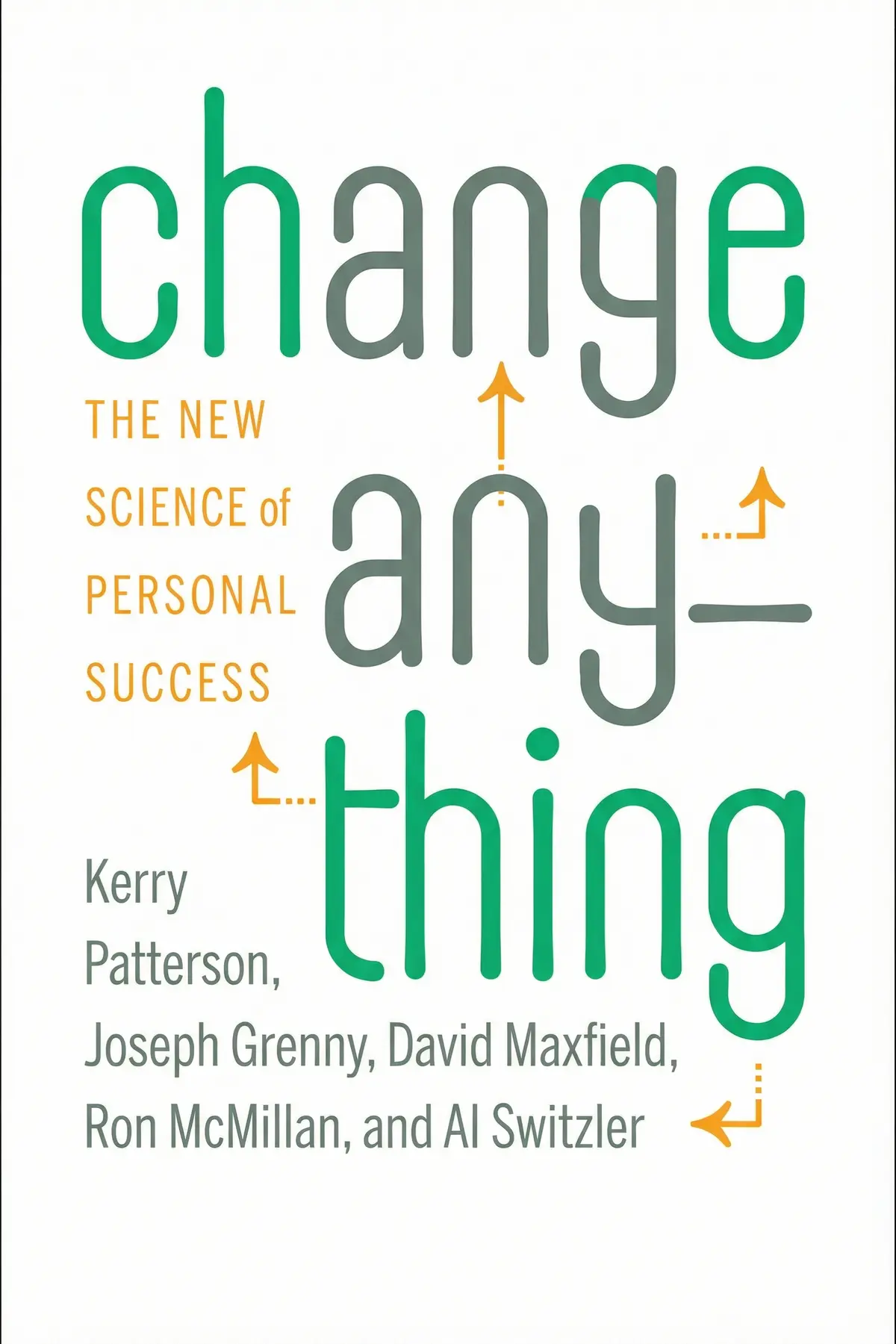
Change Anything: The New Science of Personal Success
Kerry Patterson
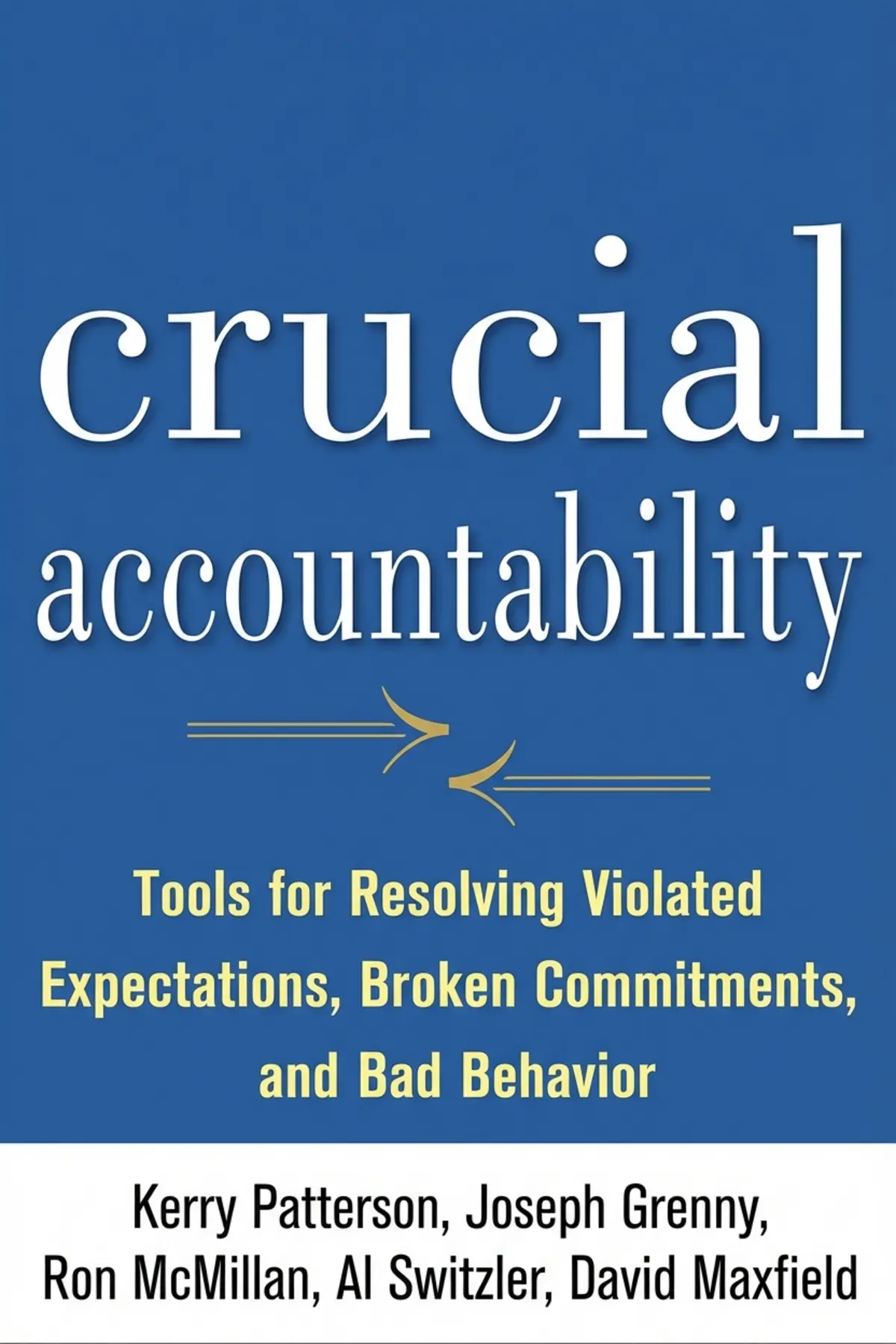
Master the art of holding others accountable without damaging relationships. This guide provides actionable frameworks for addressing broken promises, unmet expectations, and problematic behavior in both professional and personal settings.
1 min 56 sec
We have all been there. You are sitting in a meeting, and a colleague casually mentions that the project you were counting on isn’t quite ready yet. Or perhaps you are at home, and for the third time this week, your partner has forgotten a chore they promised to handle. In these moments, a heavy silence usually falls. You are disappointed, maybe even a little angry, but you aren’t sure how to bring it up. Do you speak up and risk a confrontation, or do you stay silent and let the frustration simmer? Most of us choose the latter, hoping the problem will magically fix itself. Unfortunately, it rarely does.
This gap between what we expect and what we actually get is what we call an accountability gap. When we ignore these gaps, we don’t just lose productivity; we lose trust. Relationships begin to fray, and organizational cultures start to rot. But why is it so hard to hold someone accountable? Usually, it’s because we lack a clear framework for how to do it. We worry that we will sound like a nag, or worse, a bully. We fear that the other person will get defensive, or that the conversation will spiral out of control.
That is where the insights from today’s summary come into play. We are going to explore a set of tools designed to help you navigate these high-stakes moments with grace and effectiveness. We will look at how to pinpoint the exact problem you need to solve, how to avoid the mental traps that lead to anger, and how to create a space where the other person feels safe enough to be honest. This isn’t about winning an argument or asserting dominance; it’s about moving toward a solution where expectations are clear and commitments are honored. By the end of this journey, you’ll understand that accountability isn’t a form of punishment—it’s actually the highest form of respect you can show to yourself and others. Let’s dive into how you can transform your approach to broken promises and build a world where people actually do what they say they are going to do.
2 min 35 sec
Before you can fix a broken commitment, you must ensure you are talking about the right issue. Discover how to move beyond symptoms to the root cause.
2 min 17 sec
Our brains are wired to jump to conclusions about why people fail us. Learn how to dismantle these negative narratives to keep conversations productive.
2 min 29 sec
Discover the techniques used to keep others from getting defensive, even when the topic is difficult or uncomfortable.
2 min 20 sec
Forget threats and power plays. Learn how to use the ripple effects of behavior to inspire genuine, long-term change.
2 min 21 sec
When motivation isn’t the issue, it’s usually an ability problem. Learn how to identify and remove the obstacles standing in the way of success.
2 min 12 sec
Even the best-planned conversations can go off the rails. Learn how to stay flexible and address new, urgent problems as they arise.
2 min 37 sec
A conversation without a plan is just a chat. Discover the specific elements of a rock-solid action plan that ensures commitments are kept.
1 min 40 sec
As we reach the end of our exploration into accountability, it is worth reflecting on the core message: accountability is not about being a stern disciplinarian. It is about closing the gap between the promises we make and the actions we take. It is the practice of living and working with integrity. When we avoid these difficult conversations, we aren’t being ‘nice’—we are allowing mediocrity to take root and letting our relationships suffer from unspoken resentments.
We’ve learned that the secret to holding others accountable lies in the preparation. It’s about choosing the right issue—whether it’s a single event, a pattern, or a relationship problem. It’s about checking our own internal stories and avoiding the trap of the Fundamental Attribution Error. We’ve seen that creating a safe environment through respect and mutual purpose is the only way to keep a dialogue open. We’ve explored how to motivate through natural consequences rather than threats, and how to bridge the ability gap by becoming a joint problem-solver. And finally, we’ve seen the importance of finishing with a concrete plan that specifies who does what by when.
If you take one thing away from this, let it be the idea that you have the power to change the culture around you. You don’t have to accept broken promises as a fact of life. By using these tools, you can turn every unmet expectation into an opportunity for growth, learning, and connection. Start small. The next time you feel that familiar pang of disappointment when someone lets you down, don’t retreat into silence. Take a breath, remember the CPR model, and step into the gap. You might just find that being held accountable—and holding others accountable—is exactly what your relationships and your career need to truly thrive.
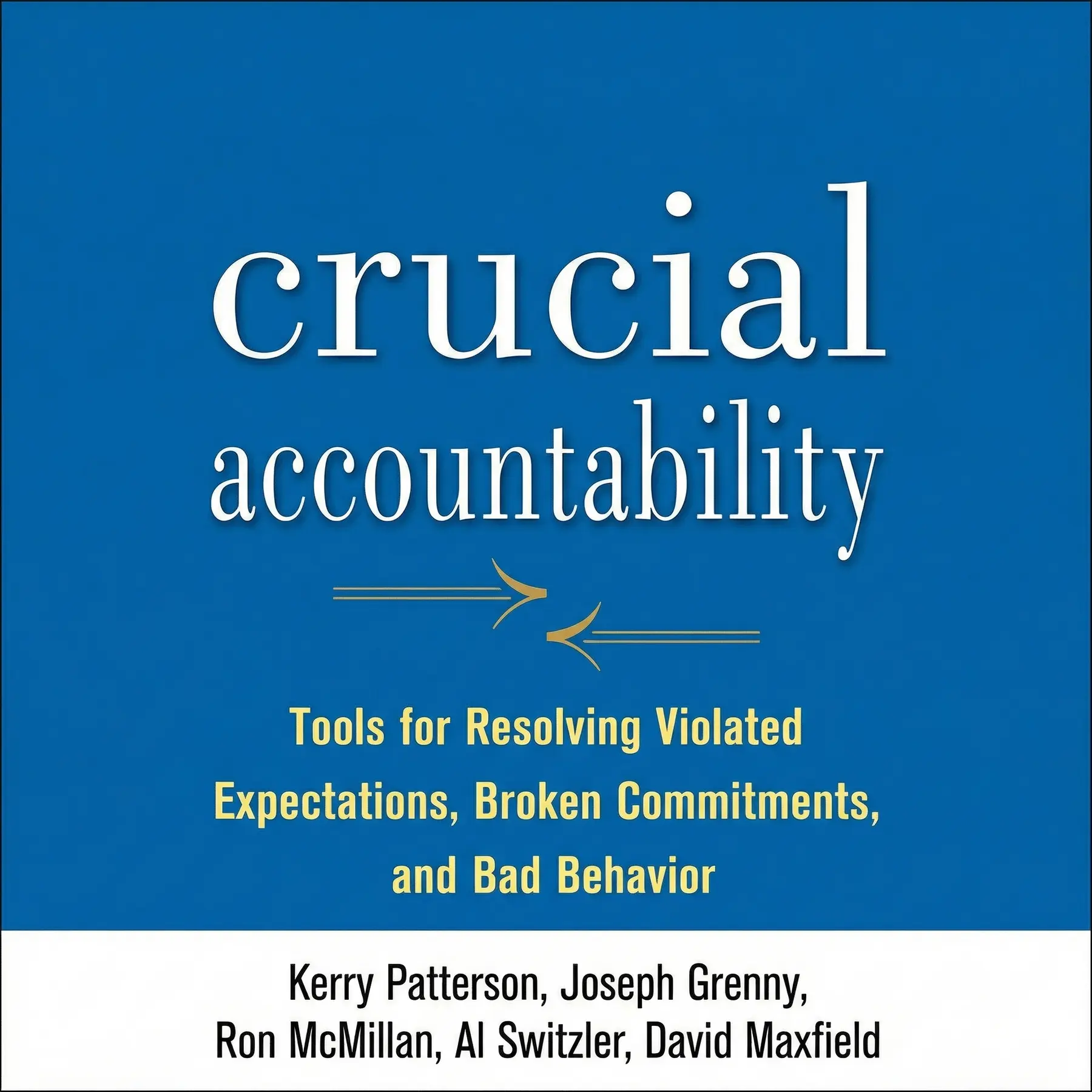
Have you ever struggled with a colleague who consistently misses deadlines or a family member who fails to follow through on commitments? Crucial Accountability addresses these common frustrations by providing a systematic approach to handling broken promises. The book moves beyond mere communication skills, offering a deep dive into the psychology of why people fail to meet expectations and how to address those failures effectively. The authors provide a roadmap for navigating the delicate balance between being too soft and being too harsh. You will learn how to identify the real issue at hand, create a safe environment for difficult conversations, and motivate others without relying on threats or power plays. By the end, you will have the tools to foster a culture of reliability and respect, ensuring that commitments are not just made but kept.
Kerry Patterson, Joseph Grenny, Ron McMillan, Al Switzler, and David Maxfield are the minds behind VitalSmarts, a leader in corporate training and performance. Patterson and Switzler are experts in communication and organizational behavior. Grenny is a social scientist focused on business performance, while McMillan specializes in corporate culture and change. Maxfield is a researcher in interpersonal skill development with a doctorate from Stanford University. Together, they also co-authored the bestseller Crucial Conversations.
Kerry Patterson
Joseph Grenny
Listeners find this guide easy to digest and skillfully authored, praising its hands-on strategies for accountability and resolving conflicts. They appreciate the many practical illustrations and view it as required reading for managers, as one listener points out its particular value for small business owners with employees. Listeners appreciate the direction provided, while one review notes how effectively it develops the concepts from the first book in the series.
Finally got around to reading this after struggling with a difficult hire in my small business. For anyone who owns a shop or manages a tiny team, the struggle with accountability feels personal and exhausting. This book offers a step-by-step roadmap for those awkward moments when someone misses a deadline or ignores a policy. I found the concepts much easier to apply than I expected, mainly because the real-life examples felt so grounded in actual office politics. It’s not just corporate fluff; it’s about having a spine while staying respectful. Frankly, it changed how I approach my Monday morning meetings. I no longer feel like a tyrant when I ask for results, and my employees seem to appreciate the clarity. If you've been avoiding a hard talk, this is your sign to stop waiting.
Show moreThe chapter on identifying the "right" problem was the breakthrough I didn't know I needed. Most of the time, I get angry about a specific event, but I fail to realize that the real issue is the pattern of behavior. This book teaches you how to look past the surface-level mistake and address the underlying relationship strain. It’s riveting and so applicable to my current role as a project manager where I constantly deal with missed milestones. Not gonna lie, I used to just let things fester until I blew up, which is exactly what this book warns against. The authors provide numerous elegant options for holding people accountable without destroying their morale. It’s become a mandatory read for my leadership team. If you want to build a culture of high performance and trust, you need these tools.
Show moreWow. I wish I had read this ten years ago when I first started my small business. It would have saved me hundreds of hours of frustration and at least a dozen failed professional relationships. The authors explain that we can’t fix everyone else, but we can change how we approach the confrontation. It’s about moving from judge and executioner to a curious participant who wants to solve the problem together. The advice on explaining what you "do not" mean to prevent misunderstandings has already saved me from two major arguments this week. It’s practical, direct, and remarkably easy to digest. While some critics find it repetitive, I think the repetition helps cement the skills into your brain. This is a must-have on the shelf for every manager who wants to lead with integrity.
Show moreEver wonder why some teams thrive while others crumble under the weight of unspoken grievances? This book provides the answer. It’s not just about "talking"; it's about the specific art of holding someone accountable without being a demanding tyrant. I love how it emphasizes that people will give you a lot of leeway if they know you value them as a human being. It’s about building that foundation of respect first. The techniques for navigating broken promises are presented in a way that makes them feel accessible to anyone, regardless of their personality type. Whether you are dealing with a spouse who won't help with chores or an employee who is always late, the logic applies perfectly. It’s a riveting read that I’ve already recommended to my entire book discussion group.
Show moreAs someone who already appreciated Crucial Conversations, I was hesitant to dive into what looked like a redundant sequel. However, this volume stands on its own by focusing specifically on the aftermath of broken promises. The "humanizing question"—asking why a rational person would act that way—is a complete game-changer for my temper. It forces you to stop being the judge and jury and start being a collaborator. Truth is, there are some moments that feel slightly dated, like a few weirdly gendered examples, but they don't ruin the core message. The structure is clear-cut and well-organized, making it a quick reference for managers. I’m giving it four stars instead of five because it does rehash a bit of the first book’s DNA. Still, the new layers of strategy for navigating disappointment are worth every penny.
Show morePicked this up because I wanted to improve how I handle confrontations with my staff at the clinic. It’s a very reader-friendly guide that doesn't rely on heavy academic jargon, which I appreciated. The focus on creating "safety" before diving into a difficult topic is something I’ve started using immediately. My favorite part is the emphasis on being curious instead of "boiling mad" when someone fails to deliver. It’s amazing how much more cooperation you get when people don’t feel attacked. One minor gripe is that I wish there were even more practice exercises to hammer home the concepts. It’s easy to read but takes a lot of discipline to actually execute in the heat of the moment. Overall, it's a solid 4-star resource for anyone in a leadership position who hates conflict.
Show moreIn my experience, most business books are 200 pages of fluff surrounding one good idea, but this one actually delivers multiple actionable strategies. It serves as a fantastic follow-on to Crucial Conversations, though it does stand on its own if you haven't read the first one. I specifically liked the distinction between "ability" and "motivation" when analyzing why someone didn't follow through. It stops the blame game. Instead of assuming someone is lazy, you check if they actually had the resources they needed. Personally, I found the tone a bit dry in the middle chapters, but the payoff is worth the slog. The scripts provided for starting a conversation are incredibly helpful for those of us who get tongue-tied under pressure. It’s a solid addition to any professional library.
Show moreAfter hearing so many colleagues rave about this, I finally sat down with a highlighter and a notebook. The core message—that we should ask "Why would a decent person do this?"—is a radical way to defuse workplace anger. It forces a level of empathy that is often missing in high-stakes environments. I’m a supervisor at a manufacturing plant, and the "safety" techniques have helped me address safety violations without causing a revolt. The book is well-written and filled with real-world scenarios that actually feel like things that happen in a real office. To be fair, it’s a lot to take in at once, and I think I’ll need to re-read it to truly master the techniques. Four stars because I think it could have been trimmed down by about thirty pages.
Show moreTo be fair, the business communication ideas here are logically sound and potentially transformative if you can get past the writing style. I found the book a bit unorganized in certain sections, with a tendency to repeat the same points under different acronyms. It often feels more like a long appendix to the original Crucial Conversations rather than a necessary standalone work. While the "how-to" of addressing broken expectations is useful, the authors occasionally use examples that feel stuck in the 1950s. Using terms like "hussy" or describing domestic coercion as a communication mishap is jarring in a modern business context. I kept reading because the practical tools for resolving conflict are genuinely helpful for my role as a supervisor. It’s a bit of a mixed bag. You’ll find some gems, but you’ll have to sift through some outdated sludge.
Show moreLook, the ideas regarding "CPR" (Content, Pattern, Relationship) are actually quite brilliant, but I cannot ignore the blatant misogyny buried in the anecdotes. In one specific example, a woman is referred to as a "hussy," and in another, a husband’s coercive behavior is framed as a communication hurdle. These are not just "outdated" vibes; they are deeply inappropriate for a professional development book published in the 21st century. It’s a shame because the actual framework for accountability is better than almost anything else on the market. If the authors did a complete overhaul of the examples to reflect modern sensibilities, I’d rate it much higher. As it stands, it’s hard to recommend this to my female colleagues without a massive disclaimer. The good ideas are unfortunately lost in a patriarchal fog.
Show more
Joseph A. Maciariello

Deborah Gruenfeld
Mike Michalowicz
AUDIO SUMMARY AVAILABLE
Get the key ideas from Crucial Accountability by Kerry Patterson, plus 5,000+ more titles in English and Thai.