Change Anything: The New Science of Personal Success
Kerry Patterson
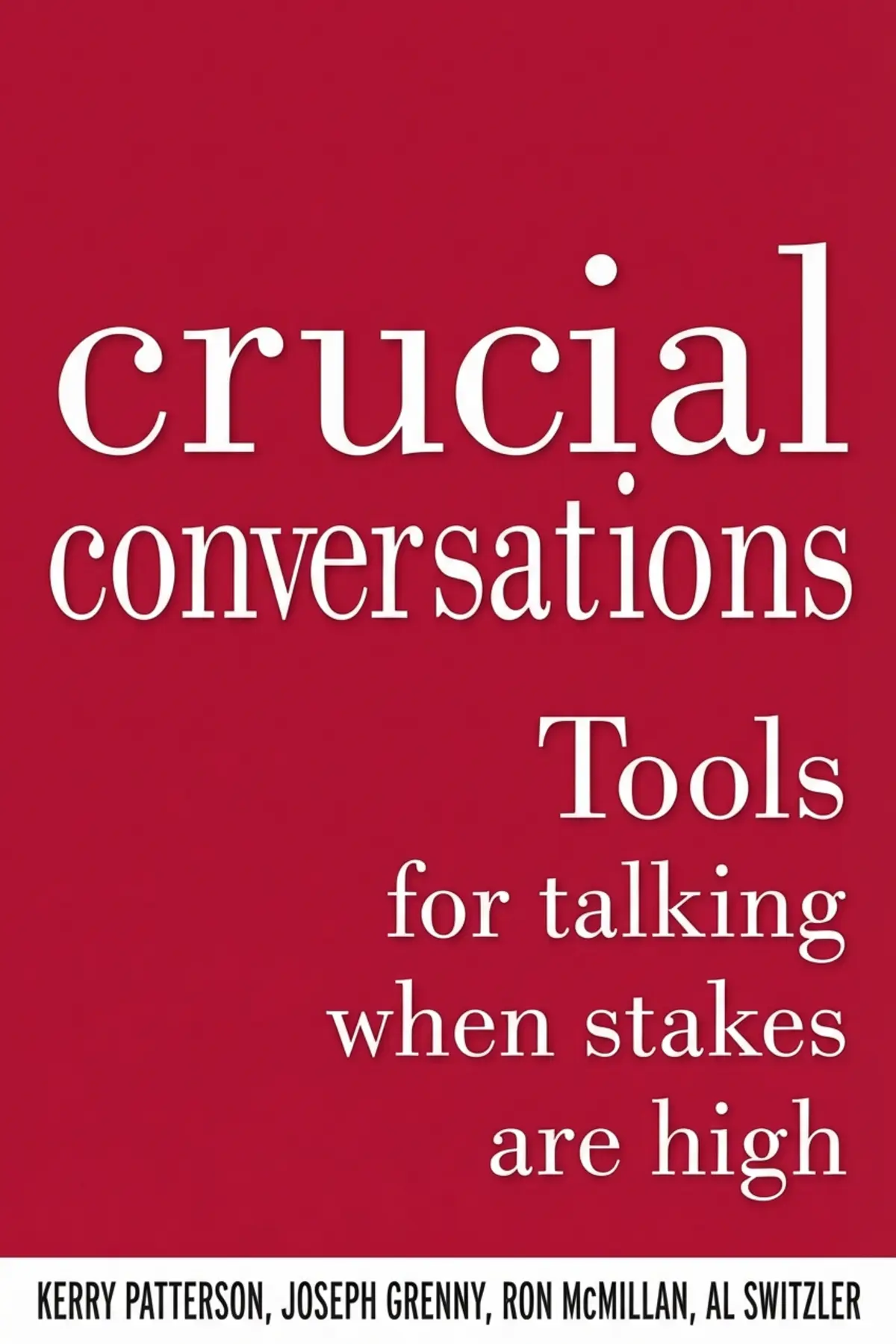
Crucial Conversations provides a transformative framework for handling high-stakes dialogues. Learn how to maintain safety, manage your emotions, and speak persuasively when opinions differ and emotions run strong in any environment.
1 min 43 sec
We’ve all experienced that sinking feeling in the pit of our stomach when a conversation begins to shift from a calm exchange of ideas into a heated confrontation. One moment, you’re discussing a project or a household chore; the next, voices are raised, faces are flushed, and it feels as though the ground is shifting beneath your feet. These are what we call crucial conversations. They are defined by three specific elements: high stakes, differing opinions, and strong emotions. When these three factors converge, our natural human instincts often lead us toward disaster rather than resolution.
In this summary of Crucial Conversations, we are going to explore why these moments are so difficult to navigate and, more importantly, how you can master them. The goal isn’t just to ‘get through’ these talks, but to use them as a bridge to better decisions and stronger relationships. Whether you’re dealing with a difficult boss, a struggling relationship, or a sensitive family matter, the tools provided here are designed to help you stay in dialogue when your body is screaming at you to run away or fight back.
The throughline of our journey today is the concept of ‘safety.’ When people feel safe, they can talk about almost anything. When they feel threatened, they stop sharing information, and the quality of the outcome suffers. We will look at how to monitor the atmosphere of a room, how to keep your own emotions from hijacking your brain, and how to move from a tense standoff to a collaborative action plan. By the end of this session, you’ll have a new perspective on how to broach even the most delicate topics without triggering a defensive explosion. Let’s dive into the mechanics of high-stakes communication and see how we can turn our most challenging interactions into our greatest opportunities for growth.
2 min 05 sec
Discover why our bodies are hardwired to fail us during important discussions and how physiological responses can override our ability to think clearly.
1 min 44 sec
Understand why the free flow of information is the secret ingredient to successful decision-making and group commitment.
1 min 46 sec
Learn the vital questions you must ask yourself to stay on track and prevent your emotions from derailing your goals.
1 min 44 sec
Recognize the two primary ways people react when they feel threatened, and learn to identify them before a conversation is lost.
1 min 41 sec
Explore the two essential conditions for a safe environment and how to restore them when they start to crumble.
1 min 47 sec
Learn to deconstruct your emotional reactions by distinguishing between what actually happened and the narrative you created about it.
1 min 49 sec
Discover techniques to help others open up and feel safe, even when the topic is incredibly difficult or personal.
1 min 59 sec
Ensure your hard-won progress isn’t lost by mastering the final steps of decision-making and accountability.
1 min 30 sec
As we wrap up our exploration of Crucial Conversations, it’s worth reflecting on the immense impact these skills can have on your life. We have seen that while our biology might push us toward conflict or withdrawal, we have the power to consciously override those instincts. By focusing on our true goals, maintaining a safe environment of mutual respect and purpose, and distinguishing between facts and the stories we tell ourselves, we can navigate even the most treacherous interpersonal waters.
The throughline of everything we’ve discussed is the importance of the ‘pool of shared meaning.’ When you make it safe for everyone to contribute, you don’t just avoid arguments—you uncover better ideas and foster deeper commitment. Whether you are aiming to improve your standing at work or seeking to save a struggling relationship, these tools offer a path forward.
Your first step after today is simple: start by noticing. Notice when you or someone else moves toward silence or violence. Notice when your heart rate starts to climb. By simply becoming an observer of your own conversations, you begin to gain the distance necessary to apply these tools. Don’t worry about being perfect; just focus on making the conversation a little bit safer for yourself and the other person. Over time, these practices will become second nature, and you’ll find that there is no topic too sensitive and no stake too high for a constructive, crucial conversation. Thank you for listening, and here’s to more productive, honest, and safe dialogues in your future.
Crucial Conversations explores why some discussions spiral into arguments while others lead to breakthroughs. At its core, the book addresses the 'crucial' moments where stakes are high, opinions vary, and emotions are intense. Most people react to these moments by either withdrawing into silence or exploding into verbal violence. This summary provides a roadmap for a third way: open, honest, and safe dialogue. The authors offer practical tools to help you identify when a conversation is turning south, how to bring it back to a place of mutual respect, and how to stay focused on your true goals. By mastering these techniques, you can improve your professional standing and strengthen your personal relationships. The promise is simple but profound: you can learn to talk about anything with anyone, no matter how sensitive the topic.
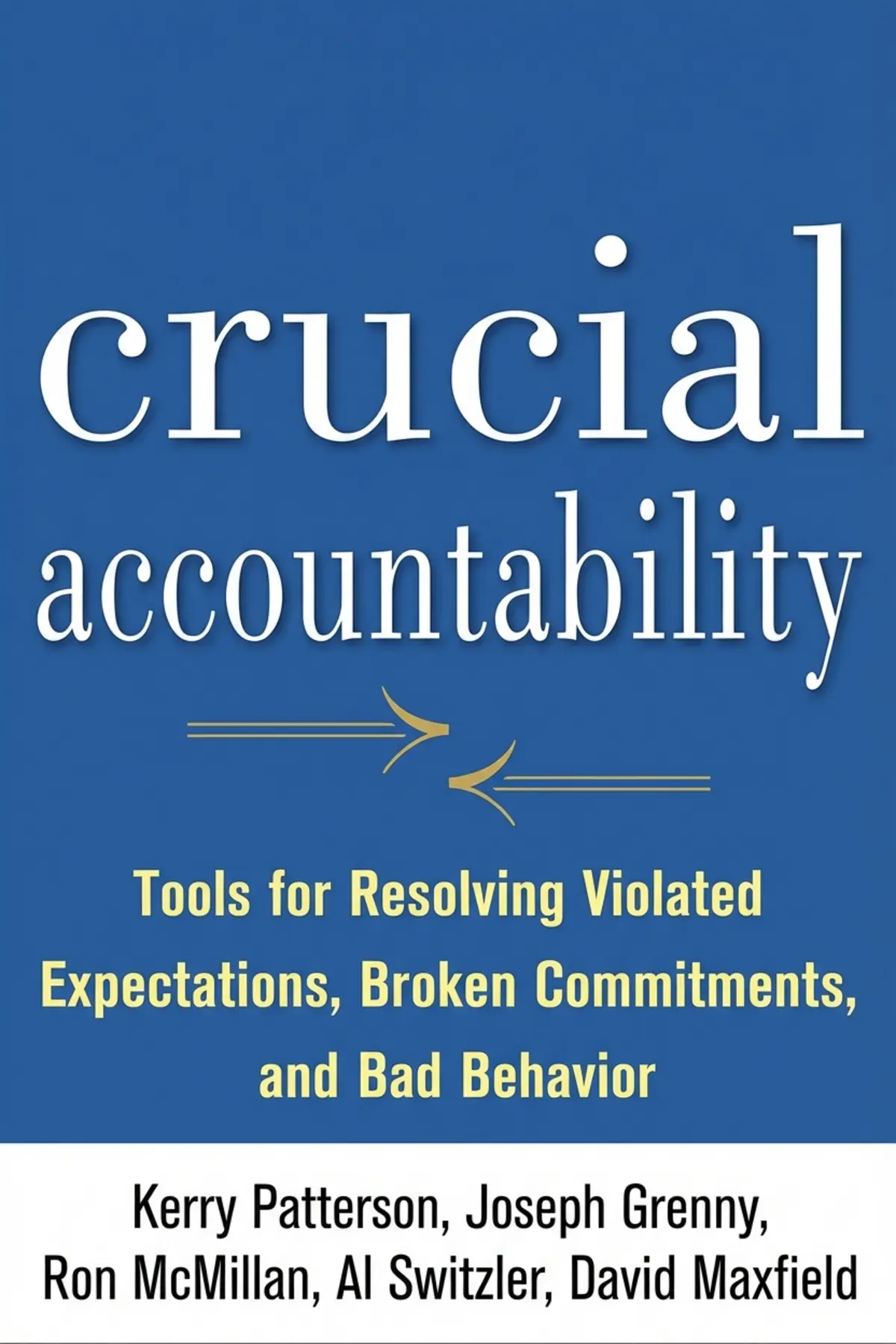
The authors, Kerry Patterson, Joseph Grenny, Ron McMillan, and Al Switzler, are the co-founders of VitalSmarts. This consulting firm specializes in organizational performance and corporate training. Following the success of Crucial Conversations, they expanded their toolkit for managing human interactions by writing Crucial Confrontations, later revised and retitled Crucial Accountability, focusing on resolving unmet expectations and addressing behavioral issues in the workplace.
Listeners find this book an accessible guide that offers actionable techniques for improving communication skills, especially within work and private life. Furthermore, it is packed with hands-on tips that improve high-stakes discussions, and listeners value the profound, reflective insights provided. The standard of information also earns praise, with one listener highlighting the inclusion of anecdotes and cases to illustrate key ideas.
Crucial Conversations is a masterclass in navigating the tricky waters of interpersonal conflict without losing your cool. I appreciated how the authors didn’t just give vague advice but provided concrete frameworks like 'STATE my path' to guide your wording. The focus on establishing safety before diving into the heavy stuff really resonated with my current family dynamics. While some of the corporate anecdotes feel a bit dated, the psychological underpinnings of why we react defensively are spot on. It’s a fast read, though you’ll likely want to go back and highlight specific sections for later reference. In my experience, applying even one of these tactics can shift the entire energy of a room. This is the kind of book you keep on your shelf and revisit whenever you know a difficult talk is looming on the horizon.
Show moreEver wonder why certain discussions always end in a shouting match despite your best intentions? This book explains the mechanics of those failures and, more importantly, provides the tools to prevent them from happening again. I loved the deep dive into 'Mutual Purpose' and how to rebuild safety when a conversation starts to turn south. It’s not just for the office; I’ve found these techniques incredibly useful for navigating disagreements with my spouse and kids. The stories and examples used to demonstrate the concepts made the theory much easier to visualize in real life. Frankly, the thought-provoking content about checking your own motives before speaking has already saved me from several major arguments. It is an easy read that manages to be both practical and emotionally intelligent. Truly a staple for anyone looking to improve their soft skills.
Show moreThe chapter on 'starting with the heart' was a total game-changer for me and changed how I view every disagreement. Crucial Conversations provides a brilliant framework for identifying when a talk is turning 'crucial' and how to pull it back from the brink. Most of us just react instinctively, but this book gives you the pause button needed to choose a more productive path. The stories and examples are relatable, even if some of the dialogue feels a bit scripted and perfect for the sake of the lesson. Personally, I think this should be mandatory reading for anyone in a leadership position or anyone who works in a team environment. It’s full of very practical advice that enhances strategic dialogue and builds actual trust. It’s rare to find a self-improvement book that provides such immediate value after just a few chapters.
Show moreFinally got around to finishing this, and I can see why it’s a staple in HR circles across the globe. It offers a clear, step-by-step process for handling those 'make or break' moments in our lives where a few wrong words can ruin a relationship. I especially liked the focus on 'mutual respect' and how to maintain it even when you fundamentally disagree with the other person. The writing is accessible and the chapters are short enough to digest during a morning commute. It’s an insightful book that breaks down all the guiding points to a productive conversation even when emotions are high. Even if you think you’re a good communicator, this will make you realize how many 'fool's choices' you make on a daily basis. It's a deep, thought-provoking read that I’ll definitely be recommending to my entire team.
Show moreAfter hearing my manager rave about this for months, I finally dived in and found it surprisingly actionable for a business book. The authors break down those terrifying moments when stakes are high and opinions differ, offering a roadmap to keep things productive. Truth is, I used to be the person who either exploded or went totally silent when I felt threatened in a meeting. This book helped me recognize the 'fool's choice' of thinking I had to be either honest or kind, rather than both. My only gripe is that it can feel a bit repetitive, hammering the same points home through multiple chapters. Still, the quality of the information is high, and the emphasis on strategic dialogue is something every professional should study. It’s definitely improved how I approach my one-on-ones.
Show moreTo be fair, the core principles here are rock solid and could probably change the world if everyone actually followed them. However, the writing style itself is a bit of a jumbled mess that bounces between too many authors and forced examples. I found the 'motel charge' story particularly unrealistic, as if complex human emotions could always be solved by one clever conversation. While the mnemonics are intended to be helpful, there are so many of them that they start to blur together after a while. I caught myself skimming through the parts that felt like a sales pitch for their expensive corporate seminars. If you can get past the fluff and the marketing, there is a very useful 50-page essay buried inside this 250-page book. It's helpful, just a bit repetitive at times.
Show morePicked this up during a particularly rocky transition at my firm where emotions were running high and communication had completely broken down. The authors provide a very specific set of conversational tools that go beyond simple 'active listening' fluff. I particularly appreciated the section on 'starting with the heart,' which forces you to examine your own role in a conflict. While the tone is a bit 'corporate-speak' at times, the underlying strategy for handling high-stakes dialogue is undeniably effective. I did find the structure a bit repetitive, but maybe that’s necessary to make these habits stick in your brain during a crisis. It's a solid 4-star read for anyone who wants to become a more effective communicator in their professional life. Just be prepared for a lot of acronyms and some slightly dated workplace scenarios.
Show moreNot what I expected from a standard business text, as it actually gets into the nitty-gritty of human psychology and emotional triggers. The authors do a great job illustrating how our brains often hijack our logic when we feel threatened, leading to 'silence or violence.' I found the advice on how to 'contrast' to fix misunderstandings to be the most useful takeaway for my day-to-day interactions. Gotta say, the book is a bit longer than it needs to be, and it sometimes feels like a watered-down textbook. However, the quality of the information is undeniable, and the summary tables at the end are excellent for quick reference. It has encouraged me to think more deeply about how I express myself when I’m feeling frustrated. Definitely worth the time if you're looking to level up your interpersonal relationships.
Show morePersonally, I found the concepts in this book to be useful, but the presentation left a lot to be desired. The authors seem to have a 'Suck it up, Buttercup' attitude toward emotional responses that felt a bit dismissive at times. While I understand the goal is to remain objective, humans aren't robots, and some of the advice feels a bit mechanical. Also, the constant self-promotion of their website and seminars was a major distraction from the actual content. That being said, the 'Safe' concept and the 'ABCs' of dialogue are genuinely helpful tools for someone who has never studied communication before. It’s a decent introductory guide to soft skills, but it doesn’t quite live up to the hype of being a life-changing masterpiece. I’d recommend it with reservations, mainly as a starting point rather than a definitive authority.
Show moreLook, I really wanted to like this book, but the delivery felt like a late-night infomercial for the authors' training company. Every other page seemed to mention a 'super-exclusive' link that turned out to be a giant lead-capture form for their corporate consulting services. The advice is basically common sense—don't be a jerk, listen more, and be clear about what you want. Do we really need 200 pages to tell adults to act like civilized humans? Some of the workplace harassment examples were also incredibly tone-deaf and seemed to downplay serious issues by suggesting a simple chat fixes everything. It's a 'skip' for me, especially when better books like 'Thanks for the Feedback' exist without the constant upselling. Unless you're forced to read this by HR, you're better off finding a summary online and saving your money.
Show more
AUDIO SUMMARY AVAILABLE
Get the key ideas from Crucial Conversations by Kerry Patterson, plus 5,000+ more titles in English and Thai.