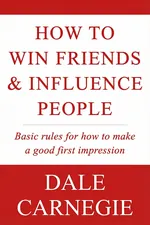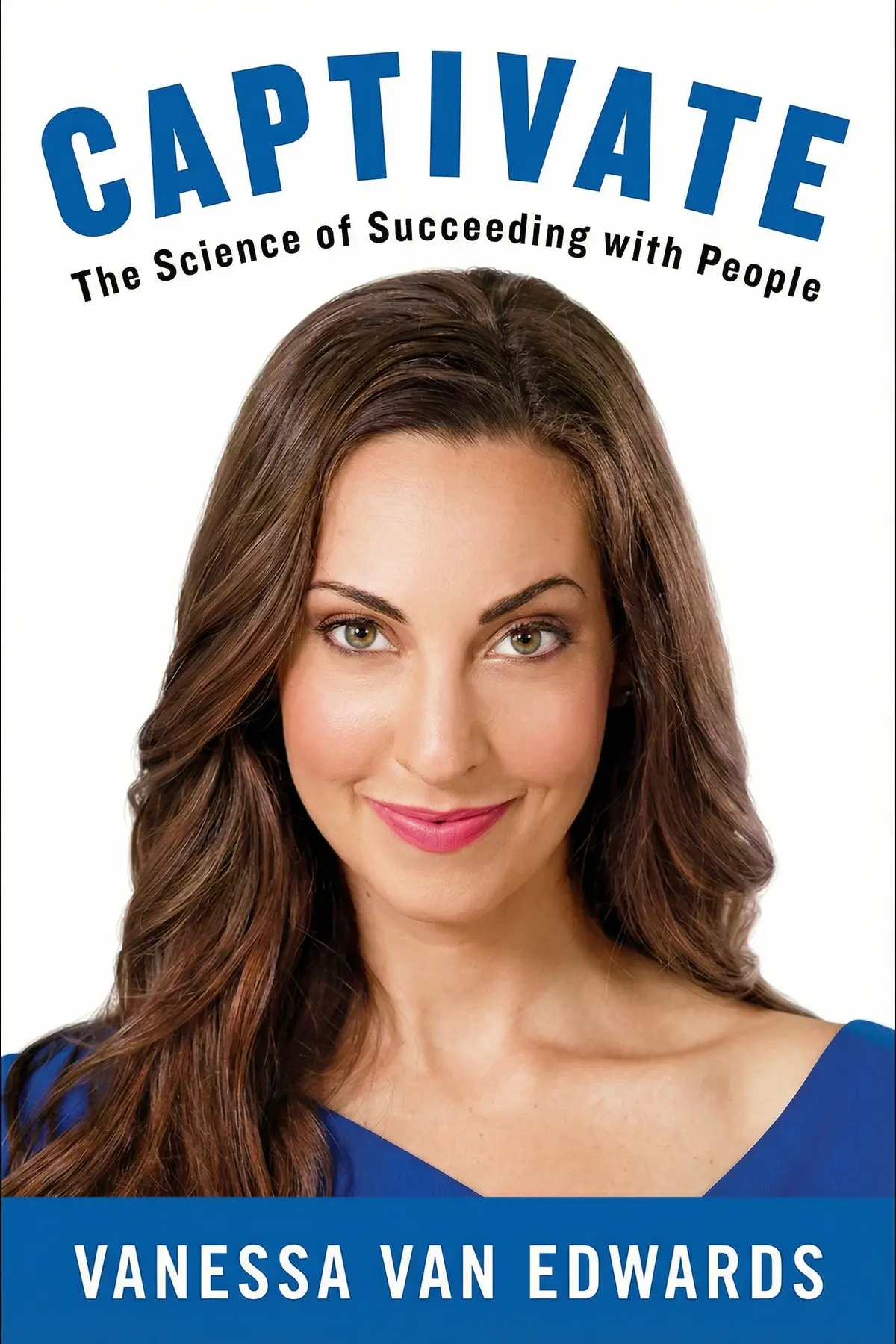
Captivate: The Science of Succeeding with People
Vanessa Van Edwards
Master the hidden language of social signals. This guide reveals how nonverbal cues, vocal patterns, and visual branding can transform your professional influence and build lasting trust through charisma.
1 min 15 sec
Every time you walk into a room, you are broadcasting a silent frequency. Before you even open your mouth to say hello, the people around you have already begun to form a detailed impression of your reliability, your intelligence, and your friendliness. We often spend hours meticulously polishing our resumes or rehearsing our sales pitches, but we rarely stop to consider the hidden signals we are sending through our posture, our gestures, and our tone of voice. This is the world of cues—the tiny, often unconscious signals that dictate the success or failure of our social and professional lives.
In this summary of Vanessa Van Edwards’ work, we are going to explore how to decode this invisible language. The core throughline of this journey is the concept of charisma, which isn’t a magical gift you’re born with, but a skill you can cultivate. Charisma is the precise intersection of two qualities: warmth and competence. If you have too much of one and not enough of the other, your message gets skewed. We will look at how to master your body language, refine your vocal delivery, and choose your words with intention. By the end, you’ll understand how to align your internal intentions with your external signals so that you can navigate any interaction with confidence and clarity.
2 min 06 sec
Discover the two essential traits that form the foundation of trust and influence, and learn what happens when your social signals become unbalanced.
2 min 04 sec
Small shifts in your physical posture can dramatically change how others perceive your interest level and your reliability during a conversation.
1 min 41 sec
Learn to spot the hidden ‘blocking’ behaviors that reveal when someone is feeling anxious, overwhelmed, or even untruthful in a social setting.
1 min 54 sec
Your voice carries more than just words; it carries your level of conviction. Learn how pitch and inflection can make or break your professional credibility.
1 min 51 sec
Word choice isn’t just about grammar—it’s about intentionality. Learn how to swap ‘boring’ corporate speak for words that trigger warmth and competence.
2 min 04 sec
Your physical appearance and environment are constant cues. Explore how intentional visual choices can shape your brand and help you overcome unconscious bias.
1 min 33 sec
In the end, mastering cues is about more than just ‘acting’ a certain way; it is about becoming a more aware and intentional version of yourself. We’ve seen how the simple balance of warmth and competence forms the bedrock of charisma and how our body language, our voices, and our words all play a part in maintaining that balance. Whether it’s leaning in to show you care, dropping your pitch to show you’re sure, or choosing words that spark interest, these small adjustments have a massive cumulative effect on your life and career.
The most important takeaway is that communication is a two-way street. By learning to decode the cues of others, you become a better listener, a better leader, and a more empathetic friend. You start to see the hidden emotions behind the ‘blocking’ gestures and the unspoken questions behind the vocal inflections. This awareness gives you the power to respond with kindness and clarity, turning potential misunderstandings into opportunities for connection.
As you move forward, start small. Pick one cue to focus on this week—maybe it’s eliminating the question tone from your statements or being more intentional about leaning in during meetings. As you become more fluent in this silent language, you’ll find that people respond to you differently. You won’t just be heard; you’ll be understood. You won’t just be present; you’ll be impactful. Charisma is within your reach, one cue at a time.
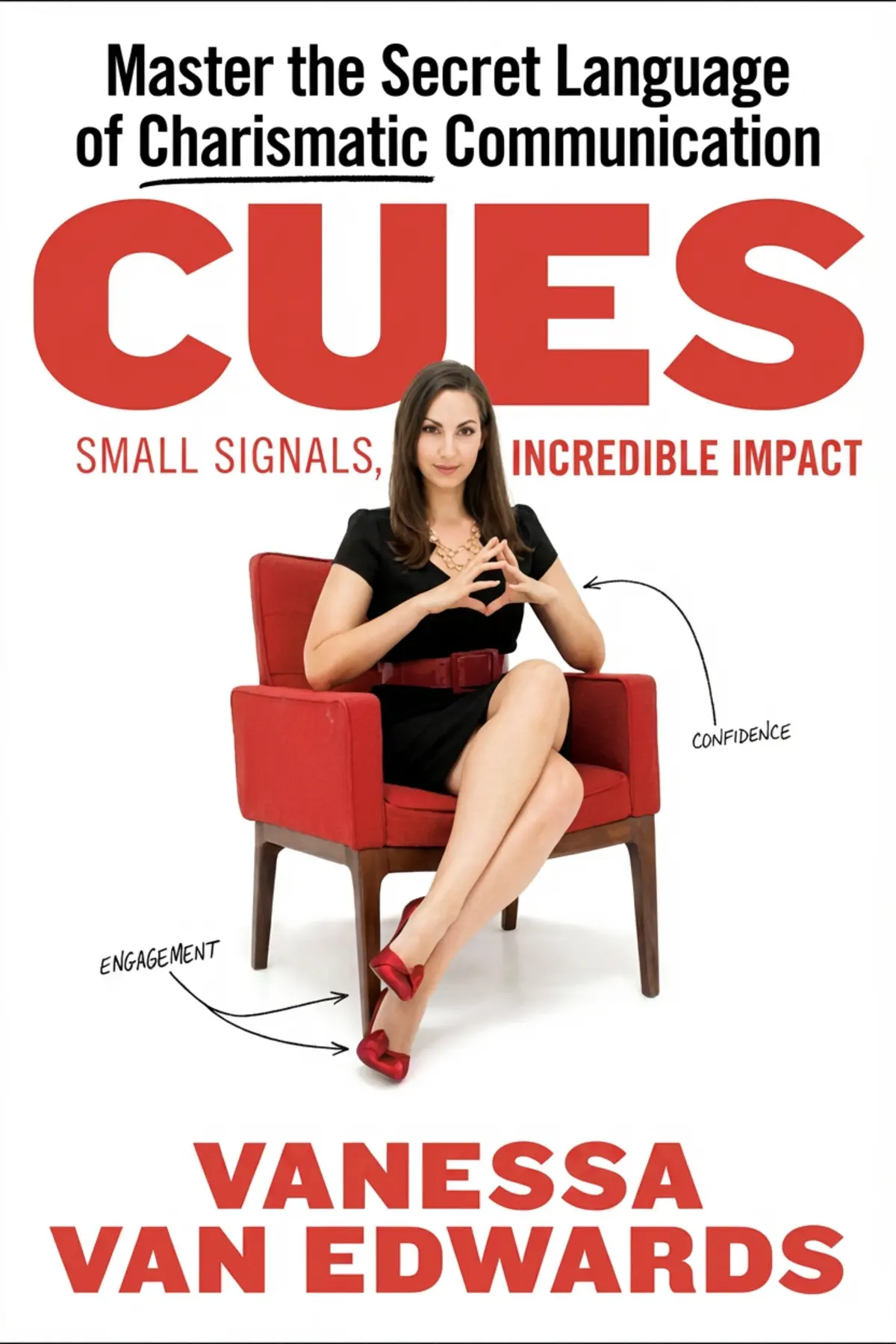
Have you ever felt like you were saying all the right things, yet somehow failed to land the deal or get the promotion? Cues explores the invisible layer of communication that often matters more than the words themselves. It breaks down the science of charisma into two essential pillars: warmth and competence. When these two traits are in balance, you project a level of magnetism that builds instant rapport and commands respect. This summary provides a deep dive into the subtle signals we send through our body language, vocal inflections, and even our choice of words. It offers a roadmap for becoming a more effective communicator by teaching you how to read the hidden emotions of others and how to intentionally project confidence in every interaction. Whether you are navigating a high-stakes boardroom or a casual networking event, these insights promise to help you align your nonverbal signals with your professional goals, ensuring your true message is never lost in translation.
Vanessa Van Edwards is the national best-selling author of Captivate and Cues. She is an international speaker and founder of Science of People, where she teaches science-based strategies for reaching professional goals.
Vanessa Van Edwards
Listeners find the work deeply perceptive and grounded in research, offering actionable techniques for command of interpersonal signals. They value how it reshapes their conversational abilities through accessible information and authentic real-world scenarios. Listeners commend the writing and view the guide as a masterclass on the nuances of human interaction.
This book is a game-changer for anyone who feels slightly out of sync in professional settings. Vanessa Van Edwards breaks down the invisible language of charisma into two manageable pillars: warmth and competence. I loved the "detail by detail workshops" because they make the abstract concepts feel tangible and immediately applicable to real life. Some might find the advice on hand gestures a bit basic, but the way she frames it through the lens of evolutionary psychology makes it stick. To be fair, some sections felt a little repetitive, yet the overall impact on my confidence was undeniable. I've already started tweaking my pitch for work, and the response from my colleagues has been noticeably more positive. It’s a science-backed roadmap for anyone wanting to navigate social hierarchies without feeling like they’re faking a new personality.
Show moreWow. This is a highly practical guide to human interaction that I've encountered recently. The breakdown of the 1960 Nixon-Kennedy debate was a total eye-opener regarding how visual cues can completely override the actual words being spoken. I also found the analysis of Shark Tank pitches to be incredibly helpful for understanding why certain entrepreneurs succeed despite having less-than-perfect business plans. Vanessa manages to make the science of "vocal power" feel like a fun workshop rather than a dry academic lecture. Every chapter is filled with actionable tips that you can test out the very next time you’re in a meeting or on a Zoom call. It’s rare to find a book that is this entertaining while still being a legitimate masterclass on social influence.
Show moreThe chapter on vocal cues changed the way I think about my own speech patterns entirely. I never realized how much my "question inflection" at the end of sentences was undermining my authority during presentations. Vanessa Van Edwards provides a science-backed exploration of how we can master our inner state to project the message we actually want others to receive. It isn't just about "faking it"; it’s about aligning your external signals with your internal goals to build better rapport. I bought copies for my entire management team because the strategies for gaining trust are so easy to implement across different departments. Being a leader is exhausting, but having a toolkit of specific signals to use makes the "people" side of the job much more manageable.
Show moreLook, if you want to get better at reading people, you aren't going to find a more accessible guide than this. The author defines charisma as the perfect intersection of warmth and competence, then shows you exactly how to dial those two knobs up or down depending on the situation. I particularly loved the "flubs" she highlighted from successful entrepreneurs; it’s comforting to see that even unicorn-builders struggle with social cues sometimes. The book is very visual, which I appreciated, as it’s much easier to see a gesture than to just read a description of one. It’s a super quick read that manages to feel like a high-level coaching session. Whether you’re an introvert or an extrovert, there are definitely a few "gold nuggets" here that will improve your social game.
Show moreAfter hearing Vanessa on a podcast, I knew I had to check out the full book to see if the insights held up. While some of the psychological studies are definitely on the lighter side, the practical application of these cues is where the book truly shines. It’s a masterclass in human interaction that teaches you how to convey influence and build trust without saying a single word. I’ve started using the "hand gesture" tips during my lectures, and I’ve noticed a significant increase in student engagement almost immediately. My only real complaint is that the writing can be a bit repetitive, as she circles back to the same few themes frequently. Regardless, it’s a brilliant resource for anyone who wants to polish their professional image and communicate with more intention.
Show moreEver wonder why some people walk into a room and instantly command attention while others just fade into the background? "Cues" attempts to answer that by deconstructing the specific signals we send through our body language and tone. As a self-described "recovering awkward person," the author’s voice is relatable, making the dense research feel much more approachable for the average reader. The book is packed with visuals and graphs that help illustrate exactly what a "charismatic" stance looks like compared to one that signals insecurity. Truth is, I didn't agree with every single suggestion—some of the advice on digital communication felt a bit forced and over-the-top. However, the core message about balancing friendliness with authority is something I’ll be thinking about for a long time.
Show moreFinally got around to reading this after seeing it all over my LinkedIn feed, and it mostly lived up to the hype. The section on "digital cues" was the standout for me, specifically the advice on how to phrase emails to project both approachability and power. Little things like adding "Anything I can do to help?" might seem obvious, but seeing the data behind why those phrases work was enlightening. I do think the book could have been about fifty pages shorter if she didn't repeat the "warmth and competence" mantra quite so often. Still, the visual examples and bolded key points make it an exceptionally easy text to skim when you need a quick refresher. It’s a solid addition to the library of any aspiring leader or public speaker.
Show morePersonally, I found this to be a fascinating deep dive into the tiny habits that define our social success. I’ve followed the author's YouTube channel for a while, but having all this information organized into a cohesive framework is much more effective. The "never pick up the phone in a bad mood" tip sounds simple, but once she explains the vocal science behind it, it makes total sense why people react the way they do. Some of the advice on how to dress to increase "competence ratings" felt a bit dated and perhaps a little culturally tone-deaf in parts. Despite that, the majority of the book is filled with practical strategies that actually work in the real world. It’s a must-read if you want to understand the "hidden language" happening beneath every conversation.
Show moreAs someone who works in human resources, I picked this up hoping for deep insights into employee engagement and interview dynamics. While there are definitely some gold nuggets here regarding non-verbal communication, the "hustle culture" tone throughout the book was a bit off-putting for me. Vanessa Van Edwards is clearly very smart, but at times the advice borders on manipulation rather than genuine connection. I also found myself questioning some of the research cited, as some of these psychological studies have famously struggled with replication in recent years. It’s a quick read with some useful email templates, but you have to take the "science" with a massive grain of salt. If you’re looking for a superficial boost in your professional image, this works, but it lacks the depth I was truly craving.
Show moreNot what I expected at all, and frankly, I’m surprised by the sheer number of five-star ratings. This book reeks of the kind of self-help hucksterism that tries to sell common sense as "groundbreaking scientific breakthroughs." Most of the "cues" she discusses—like smiling or using hand gestures—are things we learn in elementary school, yet they’re packaged here like secret ancient wisdom. The writing style is breezy but shallow, and the author spends way too much time talking about how smart she is for "cracking the code" of human behavior. More concerning is the way she overstates the validity of questionable research that hasn't been properly replicated. It’s essentially a long-form YouTube script that could have been summarized in a single blog post. Save your money and just watch a five-minute video on body language instead.
Show more
Robin Ryan
William Vanderbloemen
AUDIO SUMMARY AVAILABLE
Get the key ideas from Cues by Vanessa Van Edwards, plus 5,000+ more titles in English and Thai.