
20 min 14 sec
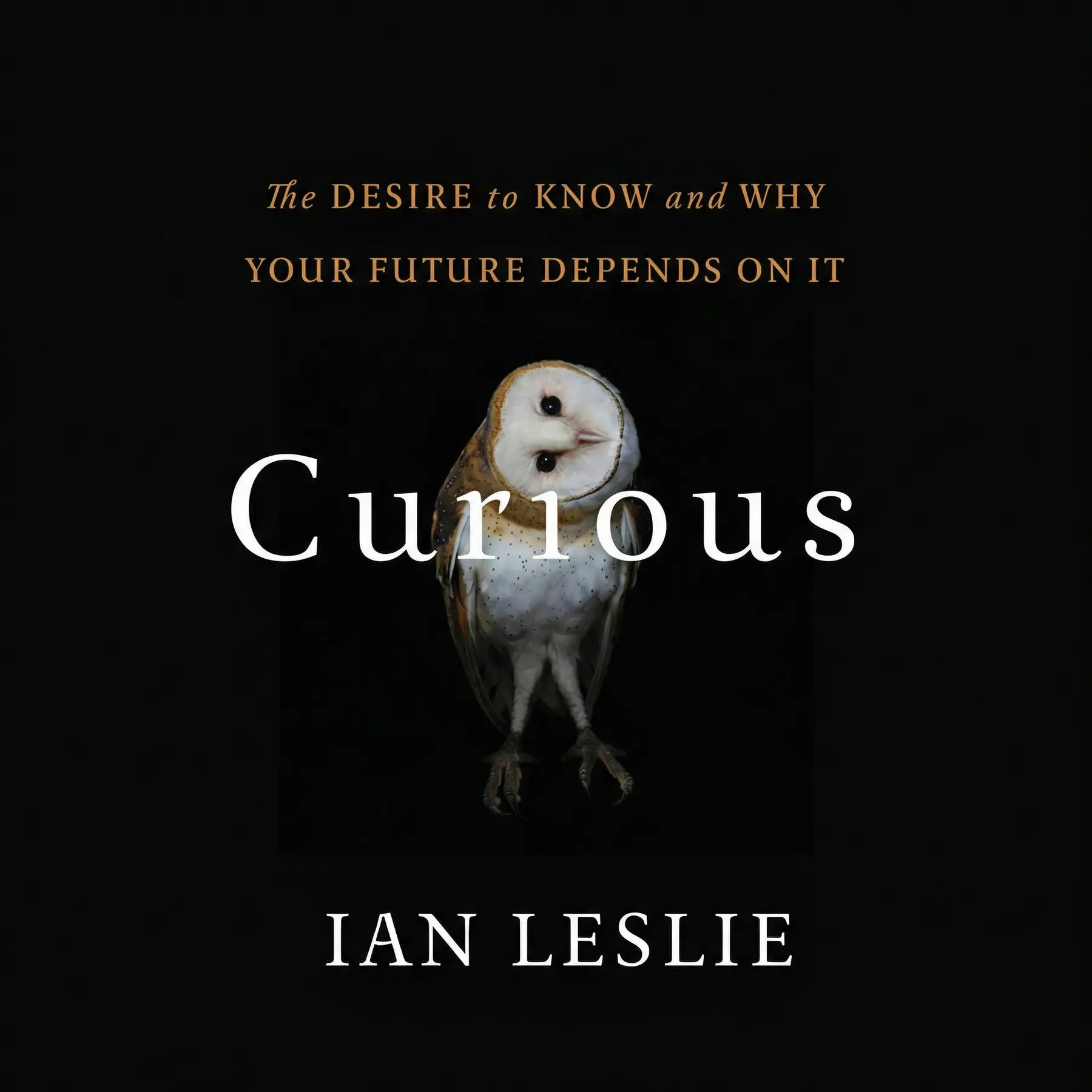
Curious: The Desire to Know and Why Your Future Depends on It
By Ian Leslie
Curious investigates the mechanics of human wonder, explaining why we seek knowledge and how we can keep our minds sharp. It explores the vital link between information, creativity, and lifelong success.
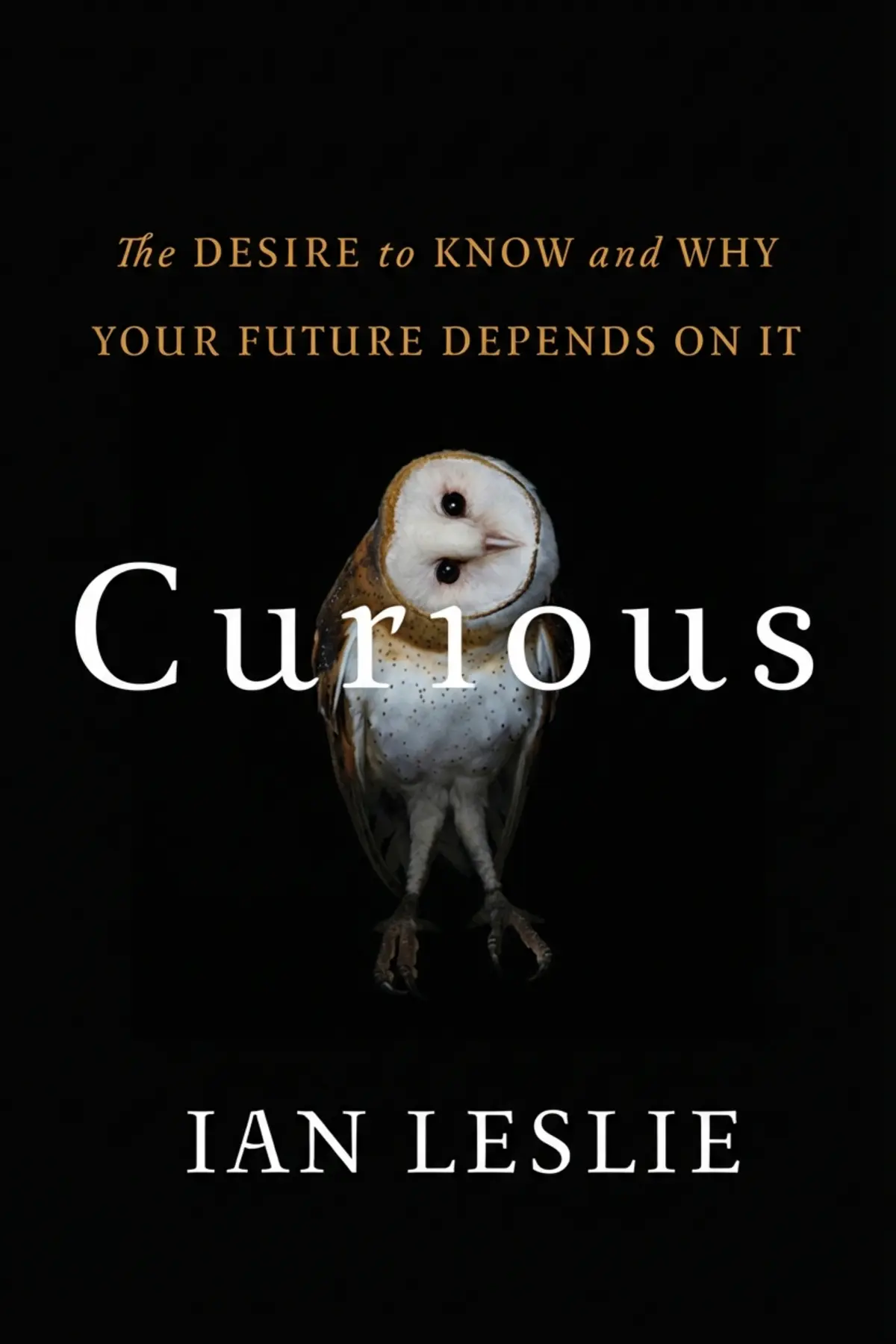
Table of Content
1. Introduction
1 min 51 sec
Have you ever found yourself completely lost in a topic, losing track of time as you chased one answer after another? Or perhaps you’ve wondered why some people seem to have a bottomless well of creativity while others feel stuck in their routines? The answer lies in a uniquely human trait: our ability to ask the word “why.” This simple three-letter word is the engine of our progress, the spark for our art, and the foundation of our civilization.
Humans are the only creatures on the planet capable of wondering about things beyond our immediate survival. We don’t just want to find food; we want to understand how the soil works. We don’t just seek shelter; we want to know why the stars move across the night sky. Each of us is born with this intense fire to investigate the world around us. In fact, if you’ve ever spent time with a toddler, you know this firsthand. Children between three and five are like professional interrogators, asking hundreds of questions every single day.
However, as we transition into adulthood, something often happens to that fire. We start to rely on what we already know. We operate on autopilot, assuming we have the world figured out. We stop looking for the “why” and settle for the “how it’s always been.” This isn’t just a loss of wonder; it’s a risk to our professional and personal potential. In a world that is changing faster than ever, curiosity isn’t a luxury—it’s a survival skill.
In this exploration of Ian Leslie’s work, we are going to dive deep into the mechanics of wonder. We will look at why the internet can be a bridge for some and a wall for others. We will see why intentional boredom can actually be a gateway to genius, and why having a broad base of “useless” facts is actually the secret to being highly creative. The throughline of this journey is simple: curiosity is a muscle. If you don’t use it, it withers. But if you learn how to feed it, there is no limit to what you can achieve.
2. The Psychology of Information Gaps
2 min 03 sec
Discover why our brains are hardwired to finish puzzles and how a small amount of missing data can trigger an unstoppable urge to learn.
3. Distinguishing Between Novelty and Depth
2 min 09 sec
Explore the vital difference between the superficial urge to click on cat videos and the disciplined focus required for true mastery.
4. The Lifecycle of Wonder
1 min 49 sec
Learn how our environment in early childhood dictates our future inquisitiveness and why adults often fall into the trap of overconfidence.
5. The Internet and the Cognitive Divide
1 min 56 sec
Uncover the surprising ways the digital age is widening the gap between the curious and the incurious, creating a new kind of social inequality.
6. The Hidden Cost of Instant Answers
1 min 48 sec
Why the ease of Google might be weakening our long-term memory and preventing the ‘creative collisions’ necessary for innovation.
7. The Vital Skill of Inquiry
1 min 48 sec
Explore why asking the right questions is a high-stakes skill and how refusing to ask ‘why’ can lead to global disasters.
8. Knowledge as the Engine of Imagination
1 min 45 sec
Debunk the myth that facts stifle creativity and see how a ‘database of the mind’ provided the foundation for history’s greatest works.
9. Becoming a Hybrid Thinker
1 min 48 sec
Why the modern world rewards those who can balance deep expertise with broad, ‘fox-like’ curiosity across multiple disciplines.
10. The End of Boredom
1 min 45 sec
How shifting your perspective can turn the most mundane objects into sources of endless fascination and artistic inspiration.
11. Conclusion
1 min 32 sec
As we reach the end of our exploration into the world of curiosity, it’s clear that this isn’t just an academic topic. It is a fundamental part of what makes life worth living. We’ve seen that curiosity is triggered by the gaps in our knowledge, but it requires a foundation of facts to truly take root. We’ve learned that while the internet can provide instant answers, true creativity requires us to sit with our questions and build a deep, personal database of ideas.
The most important takeaway is that curiosity is not a fixed trait. It’s a habit, a muscle, and a choice. You can choose to be the person who clicks on the next distracting video, or you can be the person who dives deep into a new subject. You can choose to believe you already know everything, or you can choose to ask the ‘dumb’ questions that lead to real breakthroughs.
To keep your curiosity alive, start small. Next time you feel bored, don’t reach for your phone to escape. Instead, lean in. Pick an object in the room and ask how it was made. Next time you’re in a meeting and don’t understand a term, ask for an explanation. Feed your ‘fox-like’ instincts by reading a book on a subject you know nothing about. By intentionally narrowing the gap between what you know and what you want to discover, you aren’t just becoming smarter—you’re becoming more alive. In a world of constant change, the most valuable thing you can own is a mind that never stops wondering ‘why?’
About this book
What is this book about?
Curious explores the fundamental drive that defines the human experience: our need to know. Ian Leslie delves into the psychological and sociological aspects of curiosity, distinguishing between the fleeting desire for novelty and the disciplined pursuit of deep understanding. The book reveals that curiosity is not just a personality trait but a vital cognitive tool that requires intentional cultivation. By examining the way children learn, the impact of the digital age on our attention spans, and the connection between broad knowledge and breakthrough creativity, Leslie provides a roadmap for staying intellectually engaged. The promise of the book is that by understanding the 'information gaps' that trigger our interest, we can overcome adult overconfidence and build the 'mental muscles' necessary for a more fulfilling, creative, and successful life in a complex world.
Book Information
About the Author
Ian Leslie
Ian Leslie is a multi-talented professional who balances a career in advertising with his work as a writer. He contributes insightful commentary on culture and politics to prominent publications like The Guardian and The New Statesman. Leslie is also the author of the widely praised book Born Liars: Why We Can’t Live Without Deceit.
Ratings & Reviews
Ratings at a glance
What people think
Listeners find this to be an excellent and insightful work that clarifies various educational concepts while offering strategies to foster curiosity. They value the book's utility and think the concepts presented are outstanding. However, there is mixed feedback regarding the creativity and citation quality, as several listeners pointed out poor citations and one listener found it not very creative.
Top reviews
Nina
Ian Leslie has written a manifesto for the inquisitive mind that manages to be both deeply researched and surprisingly practical. He distinguishes between 'diversive curiosity,' which is that shallow itch to check your phone, and 'epistemic curiosity,' the disciplined effort to truly understand a subject. I found his defense of 'old-fashioned' fact-based education particularly refreshing in an era where we assume Google can replace memory. Frankly, the idea that knowledge is a prerequisite for more curiosity—rather than a hindrance to it—changed how I view my own learning habits. The book isn't just a collection of anecdotes; it's a roadmap for staying mentally sharp. While some might find the chapters on baby studies a bit dense, the payoff is worth the effort for any lifelong learner.
Show moreGrace
Picked this up on a whim and it completely changed how I look at my kids' education. Leslie argues convincingly that 'thinking skills' are useless without a foundation of hard facts, a point that goes against almost every modern educational trend. The book is filled with great ideas about how we can cultivate an environment of inquiry in our homes and workplaces. I loved the concept of 'empathic curiosity'—the desire to understand the internal lives of others—which is so often missing from these types of books. My only minor complaint is that he spends a lot of time on attachment theory and baby studies, which felt a bit like a detour. Overall, it is an incredibly meaningful look at why we should never stop asking questions.
Show moreAndrei
As someone who has always felt a bit scattered in my interests, this book felt like a personal validation of my habits. Leslie shows that being 'curious' isn't just a personality trait, but a survival strategy for a complex world. I was especially taken with the idea that we need to 'question our teaspoons'—to find the extraordinary in the mundane objects around us. The prose is beautiful, with sentences that really make you stop and think about your own mental habits. It’s not just an academic exercise; it’s a call to live a more vibrant, engaged life. While the section on baby studies was a bit long, it provided a necessary foundation for his later arguments. Truly a great read for anyone who identifies as a 'thinkerer.'
Show moreJoy
Finally got around to reading this after hearing it mentioned in a leadership seminar, and I’m glad I did. The concept of 'Need for Cognition' (NFC) as a predictor of success was a major takeaway for me. Leslie explains that in a world where information is cheap, the ability to ask the right questions is the most valuable skill we have. I appreciated the practical tips for stimulating curiosity in the workplace, like encouraging 'fox-hog' behavior. The book is a concise summary of why intellectual exploration matters for both personal fulfillment and professional growth. It’s a very useful tool for managers who want to build more innovative teams. Highly recommended for those who value deep understanding over quick answers.
Show morePrapaiwan
Ever wonder why children stop asking 'why' as they get older? This book dives deep into the mechanics of that shift and provides actual tips to stimulate that dormant spark. Ian Leslie does a great job explaining the 'information gap'—the uncomfortable feeling of not knowing something that actually drives us to learn. I particularly liked the section on 'puzzles versus mysteries,' which helped me realize I spend too much time on the former and not enough on the latter. The prose is clear, though some of the examples involving Steve Jobs and Ben Franklin felt a bit overused in this genre. Nevertheless, it's an insightful read for parents or teachers. Truth is, we need to stop thinking of curiosity as a gift and start seeing it as a muscle that requires constant exercise.
Show moreCarter
The divide between the curious and the incurious is the new digital divide, and Leslie explores this with sharp insight. He makes a compelling case that Google is a double-edged sword; while it gives us answers, it often kills the 'mystery' that leads to true discovery. I enjoyed his 'seven ways to stay curious' section, as it offered practical advice that I could implement immediately. The writing style is engaging and the chapters move quickly, even when he's discussing complex psychological theories. I did find the anti-tech sentiment a bit heavy-handed at times, as if the author thinks the library is the only place for 'real' research. Despite that, the book is a great read for anyone feeling like they’ve lost their intellectual edge.
Show moreYulia
Learning facts is often dismissed as 'old school' in the age of Wikipedia, but Leslie makes a compelling case for why we still need them. He explains that curiosity is a feedback loop: the more you know, the more you want to know. This 'T-shaped knowledge'—having deep expertise in one area and a broad interest in others—is what he suggests we should all strive for. The book is well-written, though it occasionally gets bogged down in repetitive anecdotes about historical figures. I found his analysis of how 'puzzles' have finite answers while 'mysteries' are open-ended to be a very helpful distinction. It’s an insightful book that provides plenty of food for thought for educators and lifelong learners alike.
Show moreJob
To be fair, the central premise of this book is absolutely vital for the modern age. We are losing our ability to focus, and Leslie’s warnings about 'diversive curiosity' are spot on. However, I found the book to be a bit of a shallow dive into the scientific literature. Much of what is presented here feels like a literature review of other popular science books rather than an original contribution. Some of the citations felt a bit thin, and the author name-drops everyone from Leonardo da Vinci to Walt Disney to make his points. It is a pleasant enough read, but if you’ve already read 'Grit' or anything by Malcolm Gladwell, much of this will feel like a retread. It’s useful as a summary, but perhaps not the groundbreaking work I was hoping for.
Show moreParichat
Look, the first half of this book is a solid five stars, but the second half drags significantly. The early chapters on the biological and evolutionary roots of curiosity were fascinating and gave me a lot of 'aha' moments. But once the author starts listing 'seven ways to stay curious,' it begins to feel like a generic business or self-help book. The citations are also a bit problematic, often relying on anecdotes rather than rigorous data for his more controversial claims about technology. It isn't very creative in its structure, but the core message is still worth hearing. If you want a quick primer on why curiosity matters, this is a decent choice, just don't expect a deep scientific treatise.
Show moreManika
Not what I expected from a book that claims to celebrate the spirit of inquiry. While I appreciate Leslie’s attempt to tackle an overlooked subject, the anti-tech rhetoric throughout the later chapters really soured the experience for me. He argues that the internet is making us 'stupid' because we no longer have to struggle for information, yet he ignores how tech allows us to follow our interests faster than ever before. It felt like a 'get off my lawn' lecture disguised as a psychological study. To be fair, the initial sections on diversive versus epistemic curiosity were interesting enough, but the book quickly devolved into a shallow literature review of studies I’ve already seen elsewhere. If you love your smartphone and the instant access to knowledge it provides, you’ll find his logic quite frustrating.
Show more
Readers also enjoyed
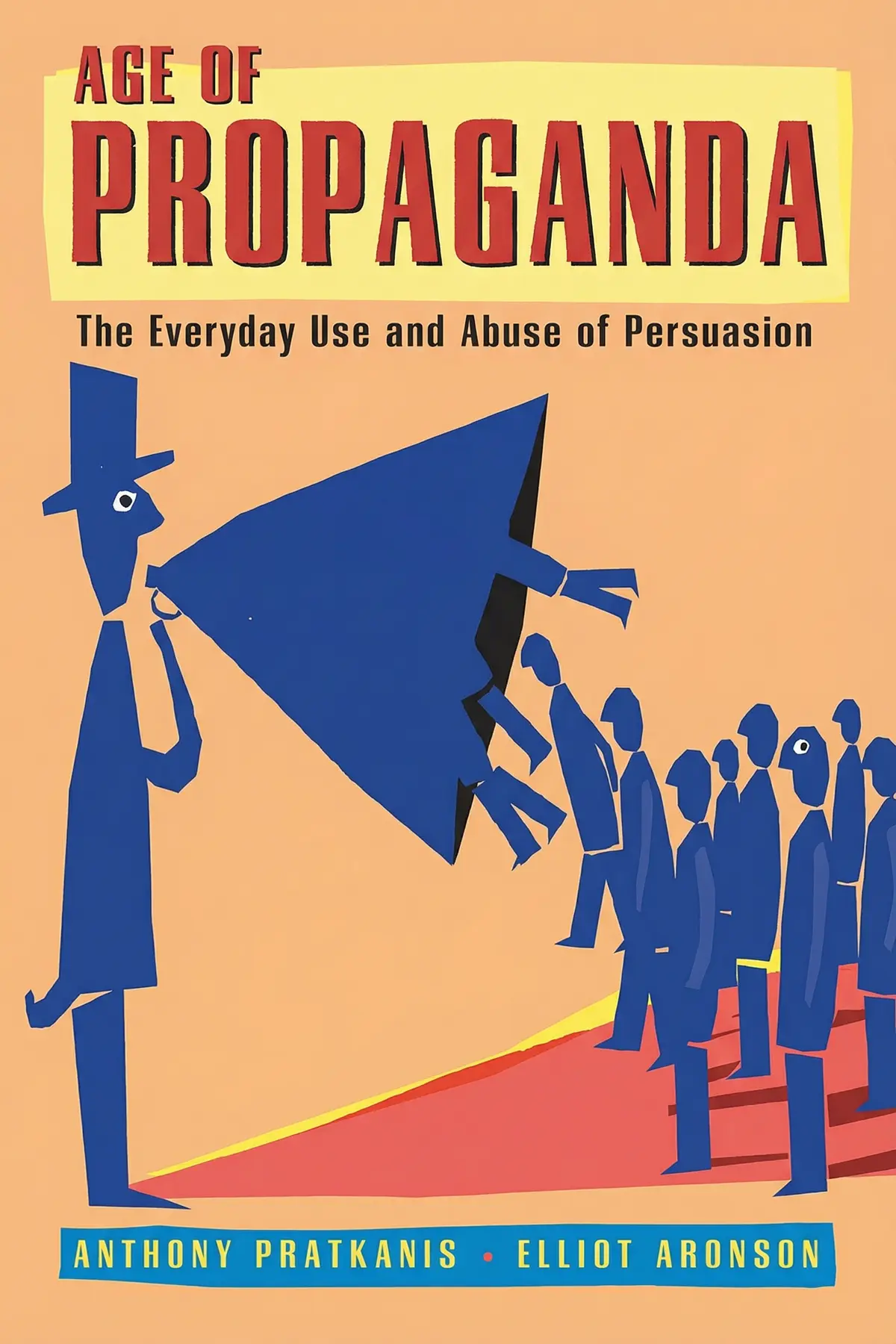
Age of Propaganda: The Everyday Use and Abuse of Persuasion
Anthony Pratkanis
59 Seconds: Change Your Life in Under a Minute
Richard Wiseman
AUDIO SUMMARY AVAILABLE
Listen to Curious in 15 minutes
Get the key ideas from Curious by Ian Leslie, plus 5,000+ more titles in English and Thai.
- 5,000+ titles
- Listen as much as you want
- 7-day free trial
- Cancel anytime







