


21 min 25 sec
Daily Rituals: How Artists Work
By Mason Currey
This look at the daily lives of history’s greatest creators reveals the specific routines, habits, and eccentricities that allowed world-renowned writers, artists, and thinkers to achieve their most profound work.
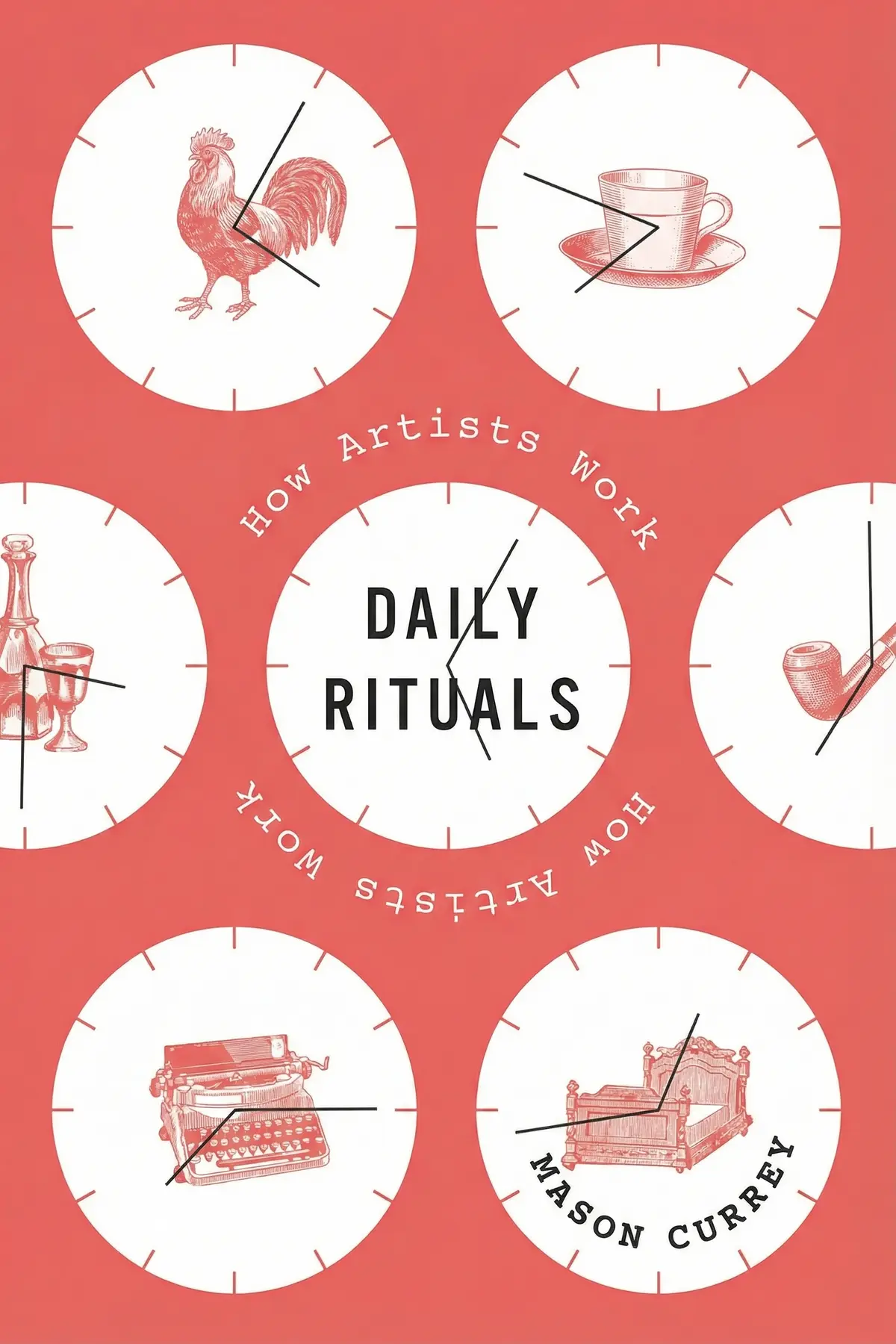
Table of Content
1. Introduction
1 min 38 sec
When we look at a masterpiece—whether it is a symphony, a novel, or a groundbreaking philosophical text—we often imagine it emerging from a sudden, lightning-bolt moment of inspiration. We picture the artist as a vessel for a divine muse, working in a feverish, effortless state of grace. But the reality of high-level creation is often far more mundane and much more disciplined. It isn’t just about the spark; it is about the stove that keeps the fire burning day after day.
What truly separates the prolific from the stagnant is often a set of deeply ingrained habits. These are the rituals that bridge the gap between having an idea and finishing a project. Some of the world’s most famous thinkers were obsessive about their schedules, while others were famously eccentric, needing very specific, sometimes bizarre conditions to function. This exploration into the lives of history’s greatest minds reveals that genius is frequently a matter of logistics.
In the following sections, we are going to pull back the curtain on the private lives of figures like Beethoven, Sartre, and Morrison. We will see how they managed their energy, how they dealt with the pressures of making a living, and how they utilized everything from stimulants to solitude to keep their minds sharp. By the end of this, you’ll see that there is no one-size-fits-all approach to brilliance. Whether you are a morning person or a night owl, a minimalist or a hedonist, there is a precedent for your path to success. Let’s dive into the fascinating, weird, and highly structured worlds of the people who shaped our culture, one daily habit at a time.
2. Mastering the Internal Clock
2 min 20 sec
Discover why some of history’s most brilliant minds chose to work when the rest of the world was asleep, and how they utilized specific times of day to fuel their focus.
3. Navigating the Economics of Creativity
2 min 21 sec
Your day job might be exactly what your creativity needs. Discover why financial stability and structure—not romantic poverty—are what actually unlock genius.
4. The Chemistry of Inspiration
2 min 18 sec
Your heroes had a secret weapon—and it wasn’t genius. Discover how the world’s greatest minds used chemistry, ritual, and sometimes dangerous extremes to unlock their creative potential.
5. The Influence of Environment and Space
2 min 09 sec
Your perfect creative space might look nothing like anyone else’s—and that’s exactly the point. Discover why some of history’s greatest minds needed isolation while others thrived in urban chaos, and how to find the environment that unlocks your own best work.
6. Finding a Creative Rhythm and Pace
2 min 24 sec
Your creative pace isn’t a flaw—it’s your fingerprint. Discover how to stop fighting your natural rhythm and start building unstoppable momentum instead.
7. Harnessing the Body to Free the Mind
2 min 14 sec
Your body isn’t a distraction from creative work—it’s the key to unlocking it. Discover how history’s greatest minds used movement, exercise, and unconventional rituals to break through mental blocks and fuel their best ideas.
8. The Role of Partnership and Social Connection
2 min 12 sec
Your creative genius isn’t a solo act—discover whether you need a devoted partner running interference, a stimulating friend challenging your thinking, or complete solitude to do your best work.
9. The Hidden Barriers of Gender and Duty
2 min 12 sec
Women writers didn’t get quiet studios—they got creaky doors and 4 a.m. wake-ups. Discover how history’s most brilliant female creators built unstoppable rituals within impossible constraints.
10. Conclusion
1 min 37 sec
As we look back at the diverse and often strange habits of history’s most creative minds, one thing becomes abundantly clear: there is no single path to genius. Some people need the quiet of the morning, while others need the fuel of caffeine and the silence of the night. Some need the structure of a day job, and others need the isolation of a remote lake house. The brilliance of the work they produced wasn’t caused by the ritual itself, but by the fact that they found a system that allowed them to show up, day after day, and do the hard work of creation.
The most important takeaway is that you have permission to experiment. If you’ve been told that you ‘must’ wake up at 5 a.m. to be productive, but you find your brain only wakes up at midnight, then listen to your own rhythm. If you find that you work best in short, intense bursts rather than long marathons, embrace that. The common thread among all these artists—from Beethoven to Toni Morrison—was a deep self-awareness. They knew what they needed to get the job done, and they weren’t afraid to be eccentric or rigid to protect that process.
So, take a page from these great thinkers. Start paying attention to when you feel most energized and what environments make you feel focused. Don’t be afraid to try something unusual—whether it’s a specific coffee ritual, a midday walk, or even a different way of sitting. The goal isn’t to copy someone else’s routine, but to discover your own. Creativity is a long game, and the best ritual is the one that keeps you in the game long enough to find your own masterpiece. Now, go out and find what gets your neurons firing.
About this book
What is this book about?
Have you ever wondered if there is a secret formula for creative success? Daily Rituals takes you into the private lives of the world’s most famous writers, painters, composers, and philosophers to see exactly how they managed their time. From the specific number of coffee beans Beethoven required for his morning brew to the naked morning walks of Benjamin Franklin, this summary explores the wide variety of ways brilliance is nurtured. The book promises to demystify the creative process. It moves away from the idea of the effortless genius and shows that even the most talented people in history relied on rigid schedules, peculiar stimulants, and specific environmental conditions to get their work done. By exploring these diverse approaches, you will see that there is no single right way to be productive. Instead, the promise of this journey is that by understanding the idiosyncratic habits of others, you can find the inspiration to build a routine that finally works for your own unique creative spirit.
Book Information
About the Author
Mason Currey
Mason Currey is a professional magazine editor and a freelance writer whose insights into the creative process have reached a broad audience. His written work has been featured in prestigious and widely-read publications, including The New York Times and Slate. Currey is recognized for his meticulous research into the lives of historical figures, specifically focusing on the intersection of daily discipline and artistic output.
Ratings & Reviews
Ratings at a glance
What people think
Listeners find this work a charming selection for nighttime reading, featuring thoroughly researched glimpses into the everyday habits of renowned artists. The narrative approach is captivating, and listeners value the wealth of information and anecdotes regarding these creative icons. It is seen as both amusing and motivating, with one listener mentioning that it offers suggestions for organizing their own daily schedule.
Top reviews
Astrid
This book completely changed how I view my morning hours and finally gave me the permission I needed to stop waiting for inspiration. I used to feel guilty about my rigid schedule, but seeing how icons like Haruki Murakami or Anthony Trollope treated their writing like a 9-to-5 job was incredibly validating. The author’s writing style is engaging and light, stripping away the myth of the 'tortured artist' and replacing it with the reality of daily grit. Since finishing this, I’ve actually started waking up at 5:00 am to get my own work done before the world starts shouting at me. It’s an absolute goldmine of inspiration for anyone who feels like they can't find the time to create. Truly, a must-read for any aspiring creator.
Show morePakinee
Absolute gold for anyone feeling stuck in a creative rut or wondering why their own process feels so messy. Not gonna lie, I felt a huge sense of relief seeing that even the most famous novelists in history struggled to get out of bed or spent hours staring at a blank wall. The entries are short and punchy, making it easy to digest a few stories during a lunch break or on the train. It’s a beautiful reminder that genius is often just the result of showing up at the same desk every single day, regardless of how you feel. The plentiful facts about their specific diets and weird superstitions make for a highly entertaining read that I've already recommended to three people this week.
Show moreOrawan
If you want a book that is both educational and light enough to read while you’re winding down for the night, this is it. I loved the variety of the rituals, from those who wrote entirely in bed like Proust to those who stood at a desk for hours on end. It’s a wonderful compilation of human eccentricity and dedication. The author’s ability to condense a person’s entire lifestyle into a few pithy paragraphs is impressive. I didn't find it chaotic at all; rather, it felt like browsing through a gallery of creative spirits. It’s inspired me to be more intentional with my own time and to stop making excuses about 'not being in the mood' to create. Highly recommended for fans of biography and self-improvement alike.
Show moreNarut
Picked this up on a whim after a friend mentioned it on her blog, and it has quickly become my favorite bedtime read. There is something deeply soothing about reading two or three pages of these bite-sized biographies before falling asleep. The author has clearly done his homework, pulling together obscure anecdotes and specific details that make these historical figures feel like real, breathing people. I loved learning about the specific ways they tricked themselves into working, whether it was through excessive coffee consumption or mandatory four-hour walks through the countryside. It isn't a book you need to devour in one sitting; it's much better as a companion you revisit when you need a little nudge to get back to your own desk.
Show moreGame
Learning about Beethoven pouring pitchers of ice water over his head while singing scales was worth the price of admission alone. Mason Currey has a real knack for finding the most humanizing, quirky facts about people we usually see as untouchable icons. I found myself frequently putting the book down to jot down ideas for my own schedule—especially the bits about long, contemplative walks. It’s fascinating to see patterns emerge, like the constant struggle to wake up early or the absolute necessity of a midday nap for so many of these thinkers. My only real complaint is that I wanted more! I heard there is a sequel focusing on women, which I’ll definitely be grabbing to get a more balanced view.
Show moreRoydao
As someone who struggles to balance a creative side-hustle with a demanding day job, I found this collection deeply validating and even a little bit funny. We often think of 'artists' as people who have all day to chase their muse, but so many of these figures had to steal time wherever they could. Joseph Heller’s quote about television driving him back to his novel was a personal highlight for me. The writing is brisk and doesn't get bogged down in academic jargon, which I appreciated. While it does lean heavily on white male subjects, the glimpse into the domestic realities of these people—the coffee, the tobacco, the precise number of words written per day—is endlessly interesting. It’s a great tool for anyone looking to build their own discipline.
Show moreTippawan
Ever wonder if drinking 50 cups of black coffee a day is actually the secret to finishing a masterpiece? According to some of the entries in this book, it certainly didn't hurt Balzac, though his heart might have disagreed. This is an entertaining collection, but I found the tone a bit inconsistent and the organization felt somewhat chaotic. One moment you're reading about a philosopher's strict morning regimen, and the next you're hearing about a painter who only worked in frantic, drug-fueled bursts. It’s a great resource for trivia lovers, but don't expect a cohesive narrative or deep analysis. It serves as a reminder that there is no 'right' way to be creative, though a staggering number of these geniuses seemed to rely heavily on tobacco and isolation.
Show moreDivya
The structure here is a bit of a mess, truth be told, but the individual stories are still quite fascinating to wade through. I appreciated the inclusion of a few women like Virginia Woolf and Colette, but as other reviewers have noted, their 'rituals' often had to be squeezed between housework and childcare, which is a depressing contrast to the men who had everything handled for them. The book is well-researched, but I wish there had been more commentary connecting these lives rather than just a series of entries. It’s more of a reference book than a cover-to-cover read. If you’re looking for a specific blueprint for success, you won’t find it here because every single person’s routine contradicts the next person’s.
Show moreGin
Is it really too much to ask for some variety in a collection about creativity? While the premise is undeniably catchy, I found the execution to be incredibly narrow. It feels like a catalog of how white Western men from the last century managed to work while their wives did everything else in the background. To be fair, Currey is just reporting the facts of their lives, but the lack of POC and the minimal inclusion of women makes for a very skewed perspective on what 'artistic genius' looks like. I was hoping for more diverse voices and less of a focus on which famous man drank the most gin before noon. It started to feel repetitive halfway through, and I eventually just skimmed the rest looking for a name I didn't recognize.
Show moreFatou
Frankly, I’m exhausted just reading about these people and their various dependencies. I expected a book about productivity, but instead, I got a long list of artists who were basically non-functional without Benzedrine, alcohol, or a wife to manage their entire existence. It’s well-written enough, but the romanticization of these unhealthy habits felt a bit dated to me. Not to mention, the lack of diversity is glaring. It’s almost exclusively a Western-centric look at the 'greats.' If you want to know what time Hemingway woke up to start drinking, this is your book. If you want practical, modern advice on how to structure a creative life in the 21st century, you should probably look elsewhere. I struggled to finish it.
Show moreReaders also enjoyed
AUDIO SUMMARY AVAILABLE
Listen to Daily Rituals in 15 minutes
Get the key ideas from Daily Rituals by Mason Currey, plus 5,000+ more titles in English and Thai.
- 5,000+ titles
- Listen as much as you want
- 7-day free trial
- Cancel anytime







