
A Life Decoded: My Genome: My Life
J. Craig Venter
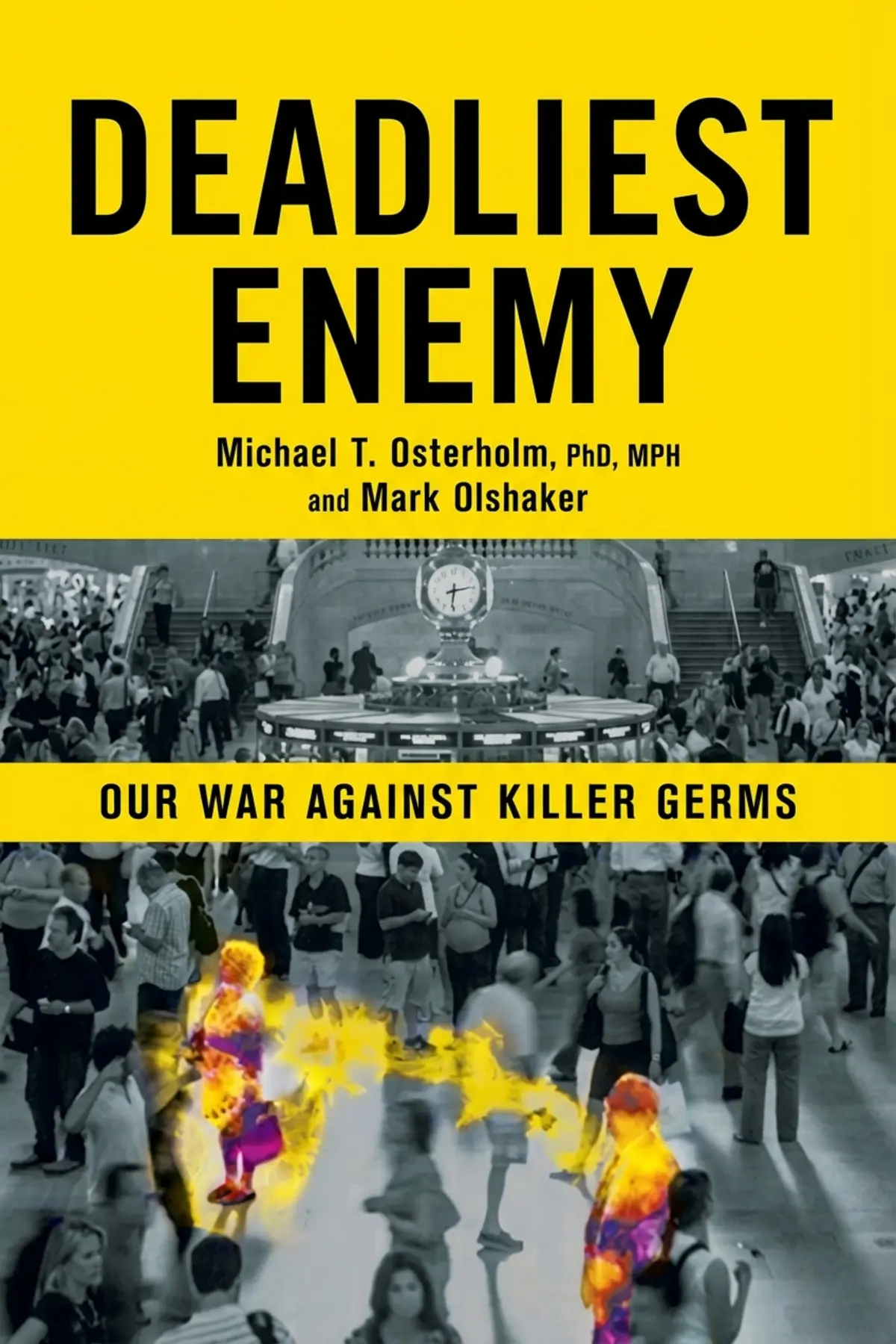
Deadliest Enemy provides an expert analysis of the most significant biological threats facing our globalized world. It outlines the history of major outbreaks and offers a strategic roadmap for future pandemic prevention.
1 min 55 sec
In the modern age, we tend to believe that our technology and medicine have made us invincible. We look at the great plagues of history as distant relics of a less-civilized time. However, as recent global events have demonstrated, the microscopic world still holds the power to bring our sophisticated global economy and social order to a complete standstill. The reality is that we are in a constant, invisible war with pathogens that evolve faster than we can track them.
In this summary of Deadliest Enemy, we are going to look at the landscape of infectious diseases from the perspective of the front-line experts who track them. This isn’t just a history of what has happened before; it’s a manual for what is happening now and a forecast of the threats on the horizon. We’ll explore why the way we live today—from the way we travel to the way we raise our food—has created a perfect environment for new, deadly illnesses to emerge.
Through the eyes of Dr. Michael Osterholm, a veteran in the field of epidemiology, we will see how disease tracking is part science and part detective work. We’ll examine the complexities of past crises like the HIV epidemic and the strange case of Toxic Shock Syndrome to understand how we identify new enemies. More importantly, we will look at the specific threats that keep public health experts awake at night, including the terrifying potential of lab-created viruses and the slow-motion disaster of antibiotic resistance.
By the end of this journey, you’ll have a clearer understanding of the throughline that connects every major health crisis: the need for aggressive, collective action. We’ll discuss the roadmap for how governments and citizens can move from a reactive stance to a proactive one. The goal isn’t to spread fear, but to build a foundation of knowledge that can serve as our best defense in the ongoing battle against our deadliest enemies.
2 min 33 sec
Discover how specialists piece together the clues of an emerging crisis by examining the mystery that surrounded the arrival of HIV in the early 1980s.
2 min 35 sec
See how a frightening rise in Toxic Shock Syndrome revealed that the sources of an epidemic can be found in the most mundane everyday products.
2 min 55 sec
Explore why a global health crisis is statistically more likely to disrupt human civilization than more dramatic events like nuclear war or asteroids.
2 min 48 sec
Learn why our modern way of life has inadvertently created the perfect conditions for a repeat of the devastating 1918 flu pandemic.
2 min 44 sec
Examine the chilling possibilities of dual-use research, where life-saving genetic tools could be misused to engineer the next great plague.
2 min 46 sec
Analyze why recent outbreaks didn’t become global disasters and what these ‘near misses’ tell us about our future survival.
2 min 45 sec
Understand how a warming planet and modern waste are expanding the reach of deadly diseases like Zika and Yellow Fever.
2 min 30 sec
See why the ‘miracle drugs’ of the 20th century are losing their power and what happens when common infections become untreatable again.
2 min 36 sec
Explore why the seasonal flu is just the tip of the iceberg and how a new, highly lethal strain could overwhelm the world’s hospitals.
2 min 37 sec
Learn the concrete steps we must take, from massive research funding to international cooperation, to secure our future against germ warfare.
1 min 47 sec
As we conclude this exploration of the invisible threats that surround us, the primary takeaway is that the biological world is not something we have ‘conquered.’ It is a dynamic, evolving force that we must engage with every single day. We have seen how the detective work of epidemiology can identify new threats like HIV, but we have also seen how the speed and connectivity of our modern world have given those threats a terrifying new advantage.
The throughline of this journey is clear: we are living in a period of unprecedented risk, but we also possess unprecedented tools. The near misses of Ebola and MERS, the rising danger of antibiotic resistance, and the constant shadow of the next great flu pandemic all point to the same conclusion. We cannot afford to be reactive. We cannot wait for the disaster to happen before we decide to fund the research and build the systems we need.
True safety comes from collective action. It requires us to bridge the gaps between national governments, to rethink our relationship with the animals we raise for food, and to invest in the scientific breakthroughs that can neutralize threats before they become catastrophes. The roadmap is there—a universal flu vaccine, better surveillance, and a ‘One Health’ approach. What remains is the question of whether we will choose to act while we still have the time. Our deadliest enemies are microscopic, but our greatest strength is our ability to think ahead, work together, and prepare for the battle that never truly ends. Let this be the moment we commit to that preparation, ensuring that the next great plague remains a story that never has to be told.
In this urgent and deeply informed exploration, the narrative looks at the microscopic threats that pose the greatest risk to modern civilization. While we often worry about nuclear conflict or environmental collapse, the book argues that our lack of preparation for infectious diseases—like influenza, Ebola, and antibiotic-resistant bacteria—is our most dangerous blind spot. Through the lens of epidemiology, the text walks listeners through the detective work required to stop outbreaks and the modern factors that make us more vulnerable than ever. It doesn't just present the problems; it offers a high-stakes promise: by understanding the mechanics of how germs spread and investing in the right technologies and global systems, we can protect humanity from its deadliest enemies.
Dr. Michael Osterholm is a world-renowned epidemiologist and the founding director of the Center for Infectious Disease Research and Policy (CIDRAP) at the University of Minnesota. He also serves as the McKnight Presidential Endowed Chair in Public Health. Mark Olshaker is a New York Times bestselling author of both fiction and non-fiction, whose writing on criminal psychology became the basis for the hit series Mindhunter.
Listeners find the material thoroughly researched and enlightening, delivering a balanced level of scientific detail to clarify vital questions while investigating present and future threats. Furthermore, they value its superb assessment of epidemiological risks and effective overview of public health challenges, with one listener specifically pointing out its foresight. The prose is captivating, and listeners view the work as incredibly pertinent, with one stating it should be mandatory for political figures. Still, the level of fear it provokes results in differing views among listeners.
Rarely do you find a book that feels like it was written using a crystal ball, but Osterholm’s work from 2017 is hauntingly accurate. In my experience, most popular science books shy away from the gritty logistics of global crises, yet this one dives straight into the vulnerabilities of our medical supply chains. The chapter on SARS and MERS as 'harbingers' felt particularly chilling given our current reality. He doesn't just explain the biology of viruses; he exposes the fragility of our political and economic systems. While some might find the tone a bit stark, it is a necessary wake-up call for anyone who thinks we are naturally safe. It’s a dense but readable roadmap through the landscape of infectious disease that managed to keep me gripped from the first page. The emphasis on how we are virtually guaranteed to face another flu pandemic is something I can't stop thinking about. This is high-level epidemiology made accessible for the masses.
Show moreWow, this was a difficult but necessary pill to swallow. Gotta say, the way the authors describe Mother Nature as the 'greatest bioterrorist' really puts our human conflicts into perspective. I was particularly struck by the discussion on how the free market fails to incentivize vaccine development. It’s frustrating to realize we could have had a SARS vaccine years ago if the financial structures were different. This book doesn't just scare you; it demands better from our leaders and our institutions. The scenarios at the end of the book are so close to what we’ve lived through recently that it’s almost sickening. It’s an emotional roller coaster that moves from clinical facts to deep, existential dread about our collective future. If you want to understand the intersection of science and realpolitiks, this is the book. It’s stark, instructive, and absolutely vital for our current era.
Show moreEvery politician and policy maker needs a copy of this on their desk immediately. Looking back at this book from a post-2020 perspective, Osterholm’s insights on the lack of international cooperation are nothing short of prophetic. He accurately predicted the shortages of protective gear and the chaos that ensues when supply chains are disrupted by overseas manufacturing. It’s a masterclass in risk assessment. Some might call the tone 'smug,' but honestly, when you’ve been right this often, you probably deserve to be a little bit arrogant. The book provides a clear-eyed look at the biological reality of our existence on a crowded planet. It’s not about if the next disaster happens, but when, and how much we are willing to spend to mitigate the damage. This is a brilliant, frightening, and incredibly well-written piece of non-fiction that everyone should read.
Show moreAfter hearing the Joe Rogan interview, I knew I had to dive into the full text, and I wasn't disappointed. It is a strange, strange world when a book written years ago can describe our current headlines with such precision. The most valuable takeaway for me was the discussion on how we don't make rational distinctions between what is actually likely to kill us versus what just scares us. We focus on the wrong threats while the 'deadliest enemy'—the flu—is constantly mutating right under our noses. Osterholm writes with a sense of mission that is contagious. Even though the subject is grim, there’s a weird kind of comfort in finally understanding the mechanics of how these outbreaks happen. It’s well-researched, deeply informative, and provides just enough science to make you feel like you’ve learned something without needing a PhD to get through it.
Show moreThe discussion on how global trade and climate change facilitate the spread of mosquitoes is eye-opening. We often think of diseases like Malaria or Yellow Fever as problems for 'somewhere else,' but this book shows how quickly those borders are dissolving. Truth is, we are more connected than ever, and that connectivity is our biggest weakness. Osterholm’s analysis of the 2001 anthrax attacks as a 'taste' of what’s possible with bio-terrorism was particularly unsettling. I appreciate how he moves from the microscopic level of gene editing to the macro level of global economics. It’s a very holistic view of public health. The writing is punchy, the sentences are often short and impactful, and the message is clear: we are outmatched by pathogens. We have to outsmart them because we certainly can’t outrun them. This book should be required reading for anyone interested in the future of the human race.
Show moreMother Nature is the ultimate bioterrorist, and this book is her terrifying manifesto. I found the sections on the ferret meat markets and the origins of coronaviruses to be incredibly relevant. It’s a bit depressing to realize how many warnings we ignored, but the book also offers a glimmer of hope through the idea of a universal vaccine. The authors don't just point out problems; they offer concrete, albeit expensive, solutions. The tone is definitely serious and at times ominous, but given the stakes, I think that’s appropriate. It reminded me a lot of 'Silent Spring' in its attempt to wake up a sleeping public. Whether or not we listen this time remains to be seen, but you can't say we weren't warned. This is an excellent review of epidemiological concerns that feels more like a thriller than a science textbook. I couldn't put it down, even when it made me want to hide under the covers.
Show morePicked this up after the world turned upside down in 2020, and it’s a fascinating, albeit terrifying, deep dive. The authors do an incredible job breaking down complex public health issues into concepts that a non-scientist can actually grasp. I found the sections on antibiotic resistance to be the most sobering part of the whole book. We often worry about the 'big' viruses, but the idea of a simple rose-bush scratch becoming lethal because our drugs no longer work is a different kind of horror. My only real gripe is that the book can feel a bit repetitive when discussing policy solutions. However, the sheer amount of research and the way it connects global warming to mosquito-borne diseases like Zika and Yellow Fever is brilliant. It isn't exactly light reading for a beach day, but it’s essential for understanding why our world is so vulnerable right now. It definitely changed the way I look at global trade.
Show moreAs a student of public health, I found the chapters on antibiotic resistance and the universal flu vaccine particularly compelling. Osterholm manages to bridge the gap between hard science and policy in a way that feels urgent without being purely alarmist. The truth is, we’ve been lulled into a false sense of security by modern medicine, and this book effectively shatters that illusion. I liked how he didn't just focus on the 'glamour' diseases like Ebola, but also talked about the mundane logistics of masks and ventilators. The writing style is engaging, even when the subject matter is dry. My only criticism is that some of the historical anecdotes felt a bit stretched to fit his narrative. Still, it’s a top-tier overview of why we are failing to prepare for the 'inevitable' next pandemic. The focus on the 1918 Spanish Flu provides a necessary historical anchor for his modern predictions.
Show moreTo be fair, Osterholm doesn't exactly lack for confidence in his own assessments, and the tone frequently veers into self-congratulatory territory. He mentions his proximity to figures like Tony Fauci quite often, which can start to feel a bit like name-dropping after a few chapters. While the information on pandemic preparedness is clearly well-researched, I was disappointed by the lack of visual data—no charts or diagrams to help visualize the transmission rates he discusses. There were also moments where his dismissal of 'gain-of-function' research felt more like an appeal to fear than a nuanced scientific debate. Is it informative? Absolutely. But you have to wade through a lot of 'I told you so' moments to get to the actual substance. It's a decent overview of the threats we face, but the delivery is marred by an arrogant 'Cassandra' complex that makes it hard to stay engaged for long stretches.
Show moreFrankly, I struggled with the presentation of facts here. While Osterholm is clearly an expert, the book lacks the rigorous citations I expect from a work that makes such sweeping, catastrophic claims. He makes several statements about the history of human epidemics that seem to contradict basic anthropology, especially regarding the size of populations needed for a virus to thrive. I also found the constant references to his own previous predictions to be incredibly grating and hard to verify. It feels more like a memoir of a man who wants to be seen as a prophet rather than a balanced scientific text. Without charts, photographs, or a deep bibliography, it’s hard to take some of his more extreme 'exponential estimations' at face value. It’s okay if you want a quick, scary read, but don't expect it to serve as a reliable academic resource for infectious disease.
Show moreJ. Craig Venter
Carl Zimmer
Bill Bryson
Jeff Hawkins
Lisa Kaltenegger
AUDIO SUMMARY AVAILABLE
Get the key ideas from Deadliest Enemy by Michael T. Osterholm, plus 5,000+ more titles in English and Thai.







