
27 min 47 sec
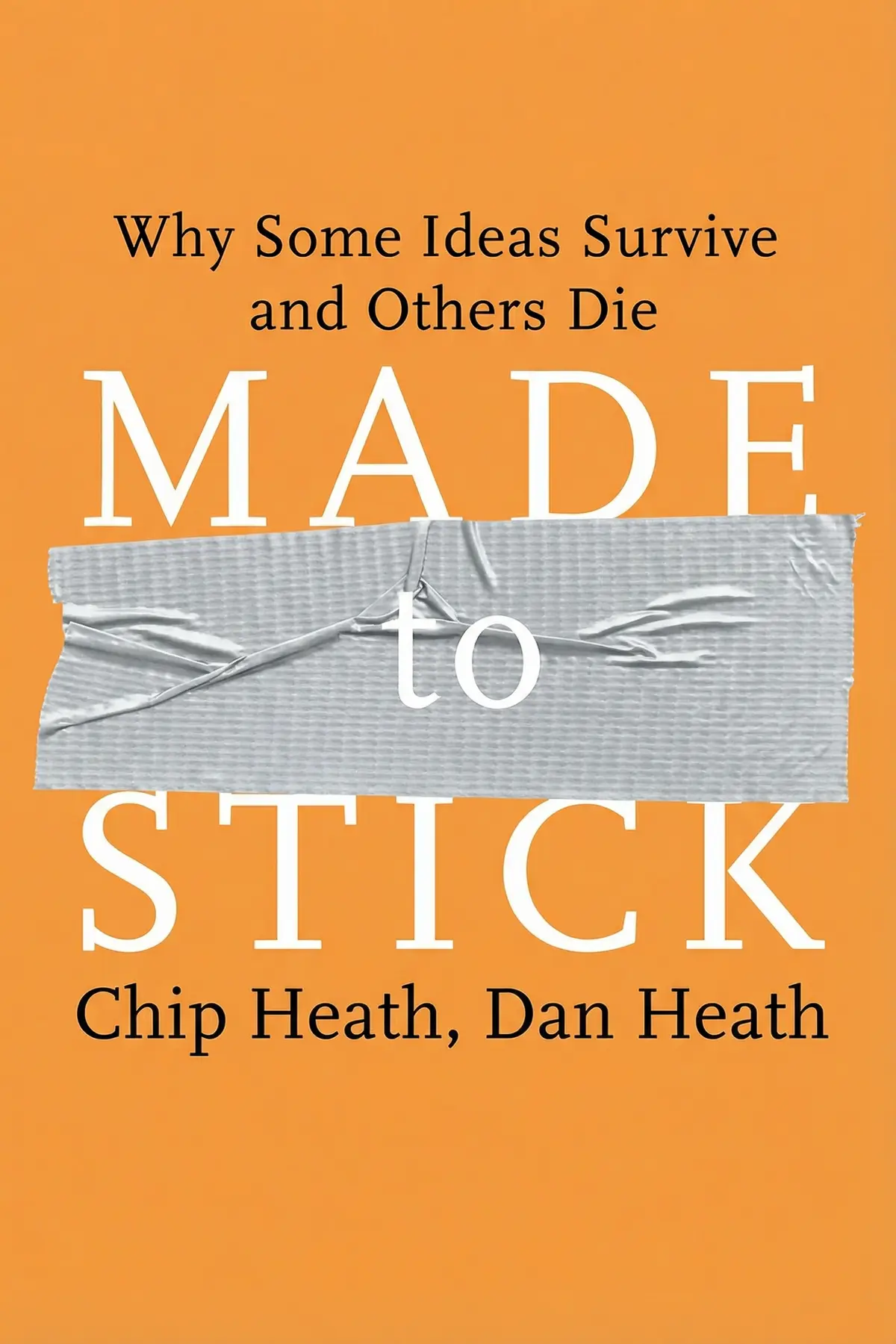
Decisive: How to Make Better Choices in Life and Work
By Chip Heath, Dan Heath
Decisive explores a four-step framework to overcome cognitive biases, widen your perspective, and make better choices by reality-testing assumptions and preparing for various future outcomes in life and work.
Table of Content
1. Introduction
2 min 25 sec
Every morning, we wake up to a world of choices. Some are trivial, like choosing between a cappuccino or a latte at the local café. Others carry much heavier weight, like selecting a romantic partner, accepting a new job offer, or deciding whether a company should pivot its entire strategy. We like to think of ourselves as rational beings, but the truth is that our decision-making process is often deeply flawed. We are frequently blinded by our own biases, distracted by temporary emotions, and prone to an overconfidence that leads us to believe we can predict the future with far more accuracy than we actually can.
In this exploration of the book Decisive, authors Chip and Dan Heath dive into why we get stuck and how we can do better. They argue that our brains are naturally wired to focus on a very narrow slice of information. We tend to frame our choices as simple ‘yes or no’ questions, completely ignoring the vast landscape of other possibilities. This narrow-mindedness, combined with the way we seek out information that only supports our existing beliefs, creates a recipe for poor outcomes.
To illustrate the stakes of indecision and bad planning, the authors point to the story of Kodak. For decades, Kodak was the undisputed titan of the photography industry. As early as 1981, the company’s leadership was aware that digital technology was on the horizon and would likely replace traditional film. Yet, they remained trapped in a state of indecision. They couldn’t commit to a new path, and by the time they realized that digital sales had overtaken analog ones in 2002, they had been left in the dust. Their story serves as a powerful reminder of what happens when we fail to act or when our decisions are rooted in the past rather than the future.
Throughout this summary, we will break down the four essential steps to making better choices. You will learn how to uncover alternative options you didn’t know existed, how to stop your ego and preferences from leading you astray, and how to find the emotional distance necessary to see a problem for what it truly is. We will also look at practical ways to prepare for the consequences of your choices, whether they turn out exactly as you hoped or take a surprising turn for the worse. By the end, you’ll have a systematic way to move from uncertainty to action, ensuring that your next big decision is based on logic and evidence rather than just gut feeling.
2. Breaking the Binary Trap
2 min 36 sec
Are you really choosing between two things, or are you just stuck in a yes-or-no loop? Learn why expanding your options is the first step to clarity.
3. The Power of Multitracking
2 min 18 sec
Discover why working on several ideas at once isn’t a waste of time, but a shortcut to finding the highest quality results.
4. Finding Solutions in Others
2 min 33 sec
You don’t always have to reinvent the wheel. Learn how to look at competitors and unrelated fields to solve your biggest challenges.
5. The Art of Reality-Testing
2 min 18 sec
Our brains are masters of self-deception. Learn how to use ‘disconfirming questions’ and devil’s advocates to find the truth.
6. Taking the Outside View
2 min 18 sec
Your situation feels unique, but the data says otherwise. Learn how to use ‘base rates’ to predict your chances of success.
7. Ooching: Test Before You Leap
2 min 17 sec
Don’t bet everything on a guess. Discover how small-scale experiments can save you from massive mistakes.
8. Attaining Emotional Distance
2 min 14 sec
Learn how to quiet the noise of temporary emotions and see your decisions through the lens of your future self.
9. Honoring Your Core Priorities
2 min 07 sec
When your values clash, you need a tie-breaker. Discover how to identify and protect what matters most to you.
10. Preparing for the Worst and the Best
2 min 30 sec
The future isn’t a single point; it’s a range. Learn how to build safety margins into your plans for ultimate resilience.
11. Using Tripwires to Break Habits
2 min 24 sec
Don’t let your decisions drift on autopilot. Learn how to set ‘tripwires’ that force you to re-evaluate before it’s too late.
12. Conclusion
1 min 47 sec
In the end, making better decisions isn’t about having a crystal ball or being a genius. It’s about having a reliable process that protects you from the natural flaws of the human mind. The WRAP framework—Widen your options, Reality-test your assumptions, Attain distance, and Prepare to be wrong—provides a roadmap for navigating the complexities of both life and work. By moving away from binary ‘yes or no’ choices and looking for a range of possibilities, you open yourself up to far more successful outcomes.
Remember that your gut feeling is a great starting point, but a terrible finishing point. It needs to be tested against data, challenged by opposing viewpoints, and filtered through your long-term values. When you find yourself getting emotional or overwhelmed, use tools like the 10/10/10 rule or the ‘friend test’ to regain your perspective. And as you move forward, don’t assume your plan is perfect. Build in safety margins and set tripwires so that you can pivot when the world inevitably throws you a curveball.
As an immediate action step, take a look at a decision you are currently facing. Is it framed as a ‘whether or not’ choice? If so, challenge yourself to find at least two more viable alternatives. Even if you don’t end up picking them, the act of looking for them will give you a much clearer sense of the value of your original choice. Decision-making is a skill that can be practiced and perfected. With each choice you make using these tools, you are not just reaching a better conclusion; you are building a more intentional and resilient life. Now, take that next step with confidence, knowing you have a system to back you up.
About this book
What is this book about?
Every day, we are faced with a barrage of choices, ranging from the mundane to the life-altering. Yet, despite the frequency of our decisions, most of us rely on a flawed process that is heavily influenced by short-term emotions, narrow perspectives, and overconfidence. Decisive addresses these pitfalls by introducing the WRAP framework—a sequence of four steps designed to improve our decision-making success rate. Authors Chip and Dan Heath explain that better choices don't come from just thinking harder; they come from following a better process. The book promises to help you break out of binary thinking, find hidden options, and distance yourself from the emotional noise that often clouds judgment. By learning how to test your assumptions in the real world and prepare for both success and failure, you can move forward with more confidence and less regret. Whether you are leading a corporation or managing your personal life, this summary provides the tools to navigate uncertainty with a clearer, more objective mind.
Book Information
About the Author
Chip Heath
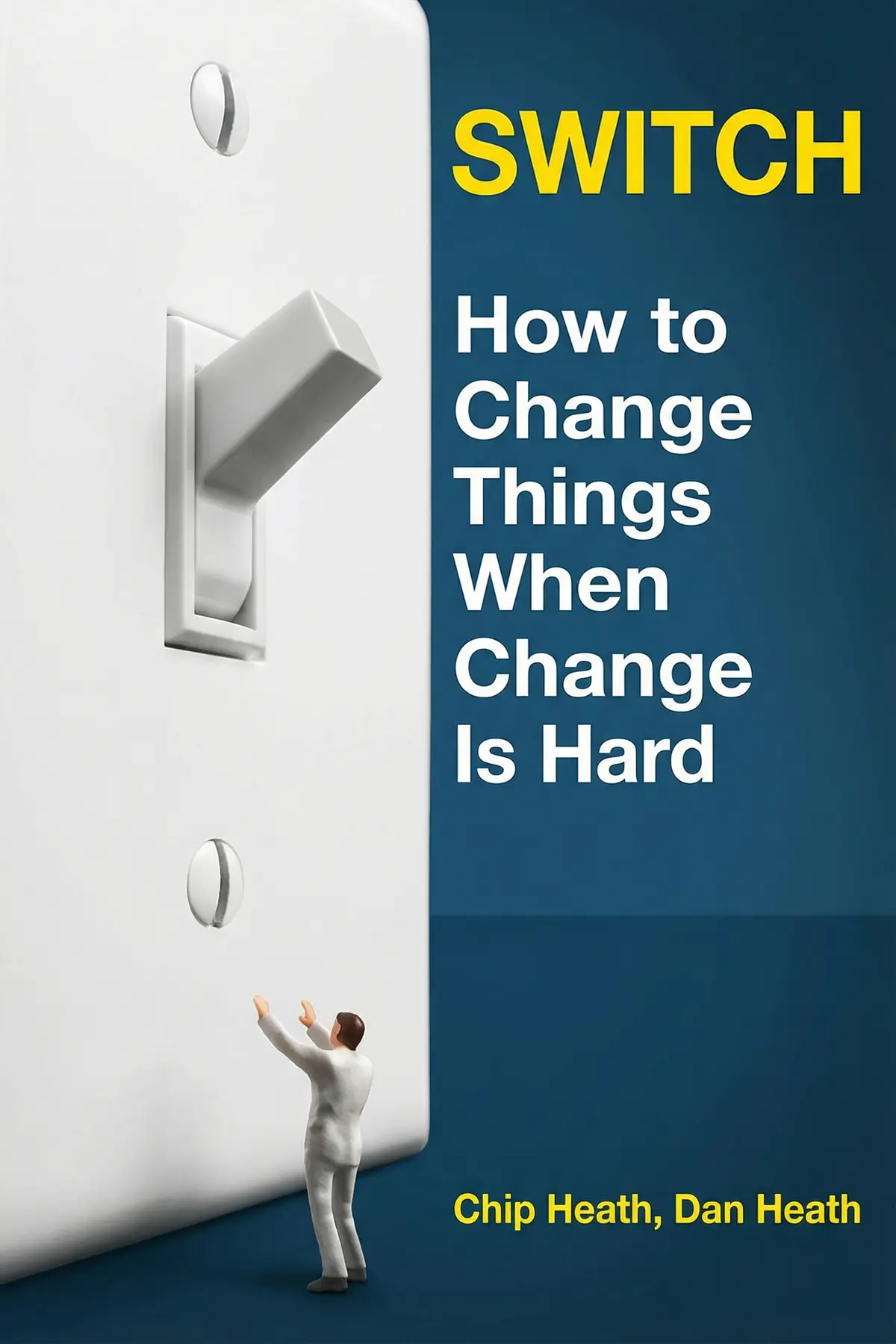
Chip and Dan Heath are a powerhouse writing duo known for their ability to break down complex psychological and organizational concepts into actionable advice. Chip Heath serves as a professor at Stanford University's Graduate School of Business, while Dan Heath is a Senior Fellow at Duke University, where he focuses on supporting social entrepreneurs. Together, they have authored several international bestsellers, including Switch and Made to Stick, which explore the mechanics of change and communication.
Ratings & Reviews
Ratings at a glance
What people think
Listeners find this a vital resource for the decision-making process, highlighting its functional blend of data and beneficial real-world scenarios. This guide delivers a systematic method for navigating and reviewing choices, allowing for quick comprehension and instant life application. Listeners also enjoy the immersive storytelling format, which utilizes compelling tales to clarify major ideas.
Top reviews
Narumon
The 10/10/10 rule alone is worth the price of admission. It’s a simple shift in perspective that forces you to look past immediate emotional turbulence. Most of us get stuck in "narrow framing," obsessing over a binary choice like whether to quit or stay. Wow. Chip and Dan Heath provide a blueprint to break that cycle. The concept of "ooching" or running small experiments was eye-opening for me. Instead of making a massive life change on a whim, you test the waters. The stories, like the one about Kaiser Permanente or the Intel memory business, make the abstract concepts concrete. It's not just for CEOs; it's for anyone who struggles with everyday dilemmas. It replaces the flawed pro/con list with a much more robust framework. You make thousands of choices a year, so why not have a process that actually works?
Show moreYuki
Picked this up because I was stuck on a business pivot, and it provided immediate clarity. The "successor" question—asking what a new CEO would do if I were fired—is a brutal but necessary reality check. It removes the ego and history that cloud our judgment. I also appreciated the "best friend" question for personal matters. It’s funny how we give great advice to others but struggle to see the obvious for ourselves. This book is less about theory and more about action. It’s a manual for getting unstuck. The writing is clear and the "laddering up" concept for finding solutions is a great way to look outside your immediate circle. If you are a business owner, stop what you are doing and read the chapter on core priorities right now.
Show moreYongyut
In my experience, most business books are 20 pages of ideas stretched into 300 pages of filler. Decisive is a rare exception. It provides a comprehensive toolkit for fighting short-term emotion and overconfidence. I was particularly struck by the "vaccination effect" mentioned in the section on realistic job previews. Giving people the "unvarnished truth" about a role actually increases satisfaction because they aren't shocked by difficulties. That’s counterintuitive but makes total sense. I’ve already started using the "10/10/10" method for small daily stresses, and it works. The book is engaging, the examples are varied, and the "WRAP" framework provides a great structure for group decisions. Highly recommended for anyone who feels overwhelmed by choices. This should be required reading in high school.
Show morePick
If you’ve ever felt paralyzed by a major life decision, this book is a godsend. I loved the idea of "ooching." The authors suggest that instead of enrolling in a multi-year graduate program, you should shadow a professional for a week. They use the example of a pharmacy student, and it’s so logical it hurts. Why do we bet thousands of dollars on jobs we’ve never even tried? The Heaths argue that our decision-making process matters more than the analysis itself. They cite a study showing process is six times more important than analysis for success. That’s a staggering figure. It changed how I view my career choices. It’s practical, slightly conversational, and deeply impactful. I wish I had read this before choosing my major ten years ago.
Show moreEllie
Look, the "vanishing options" test alone makes this book a necessary read for anyone in management. We often get stuck in binary thinking: "Should I hire this person or not?" Instead, the Heaths challenge us to ask, "What else could we do with this budget?" This prevents narrow framing, which is the first villain of decision-making. The book is filled with these "aha!" moments. I also liked the section on "multitracking," where designers who worked on multiple ads at once actually produced better results. It keeps your ego from getting too attached to a single idea. It’s a very tactical book. It doesn't just tell you that you're biased; it tells you exactly how to fight those biases with a repeatable process. Highly relevant for modern teams.
Show moreOat
Ever wonder why some projects just seem to fizzle out despite a great start? The chapter on "tripwires" explains it perfectly. We need deadlines to focus our mental spotlight, or we just dither and delay. The Heaths use the example of New Year’s resolutions to show how easily we break our own rules without a trigger for action. I also found the "devil's advocate" section fascinating, particularly the history of the Catholic Church's "promoter of the faith." It’s a great reminder that seeking disconfirming information is a strength, not a weakness. While the book is very practical, I wish it dived a bit deeper into the psychology behind confirmation bias. Still, it’s a very solid 4-star resource for anyone looking to improve their daily logic.
Show moreHang
After reading about the concept of "procedural justice," I realized why so many of our team decisions were failing. It’s not just about the outcome; it's about the process. People need to feel that their perspective was truly heard, even if their plan wasn't chosen. The tip about "stating the other side's position better than they could" is a game-changer for conflict resolution. It builds trust instantly. The Heaths have a way of taking complex psychological research—like the stuff from Kahneman or Ariely—and making it usable for the average person. It’s a fast-paced read with lots of practical takeaways. I’ll be keeping this on my desk for reference. If you want to be a more confident leader, you need this framework in your arsenal.
Show moreKevin
To be fair, the WRAP mnemonic felt a little forced and corporate-speak for my taste. Widen, Reality-test, Attain distance, Prepare—it’s a lot to keep track of when you’re just trying to decide on a new car. However, once you look past the branding, the actual advice is solid. I particularly liked the "vanishing options" test. It forces you to stop asking "Should I do this or that?" and instead ask what you'd do if neither choice existed. That’s a powerful mental exercise. The writing is approachable, though some of the case studies felt a bit long-winded. It's a book that offers high utility if you actually apply the steps. The logic is sound, even if the acronym is a bit cheesy. Not a classic, but helpful.
Show moreWanphen
Frankly, I found the book a bit hit-or-miss. The statistics about lawyers and teachers quitting were sobering, but the narrative often drags. The Heaths spend a significant amount of time detailing real-world examples that could have been summarized in half the space. I found myself skimming the stories to get to the "premortem" and "tripwire" concepts. A "premortem" is brilliant—assuming a project has already failed and working backward to find the cause. That’s a great tool for any team. But the "WRAP" framing felt unnecessary to me. It’s a 3-star read because the signal-to-noise ratio is a bit off, even if the signal itself is quite strong. Good ideas, but the delivery could have been much tighter.
Show moreEnd
This book isn't exactly a literary masterpiece, and the writing is a bit so-so in places. The "WRAP" acronym is one of those things that sounds good in a boardroom but feels a bit contrived on the page. To be honest, I felt the Heaths over-relied on anecdotes to prove points that were already clear from the data. However, the advice on "base rates" is invaluable. We often think we’re the exception to the rule, whether it’s starting a restaurant or a second marriage. Using objective data instead of "blind optimism" is a hard lesson to learn, but a necessary one. It’s a decent book for those who need a structured process, but it could have been tighter. I'd recommend it as a reference guide rather than a cover-to-cover read.
Show more
Readers also enjoyed
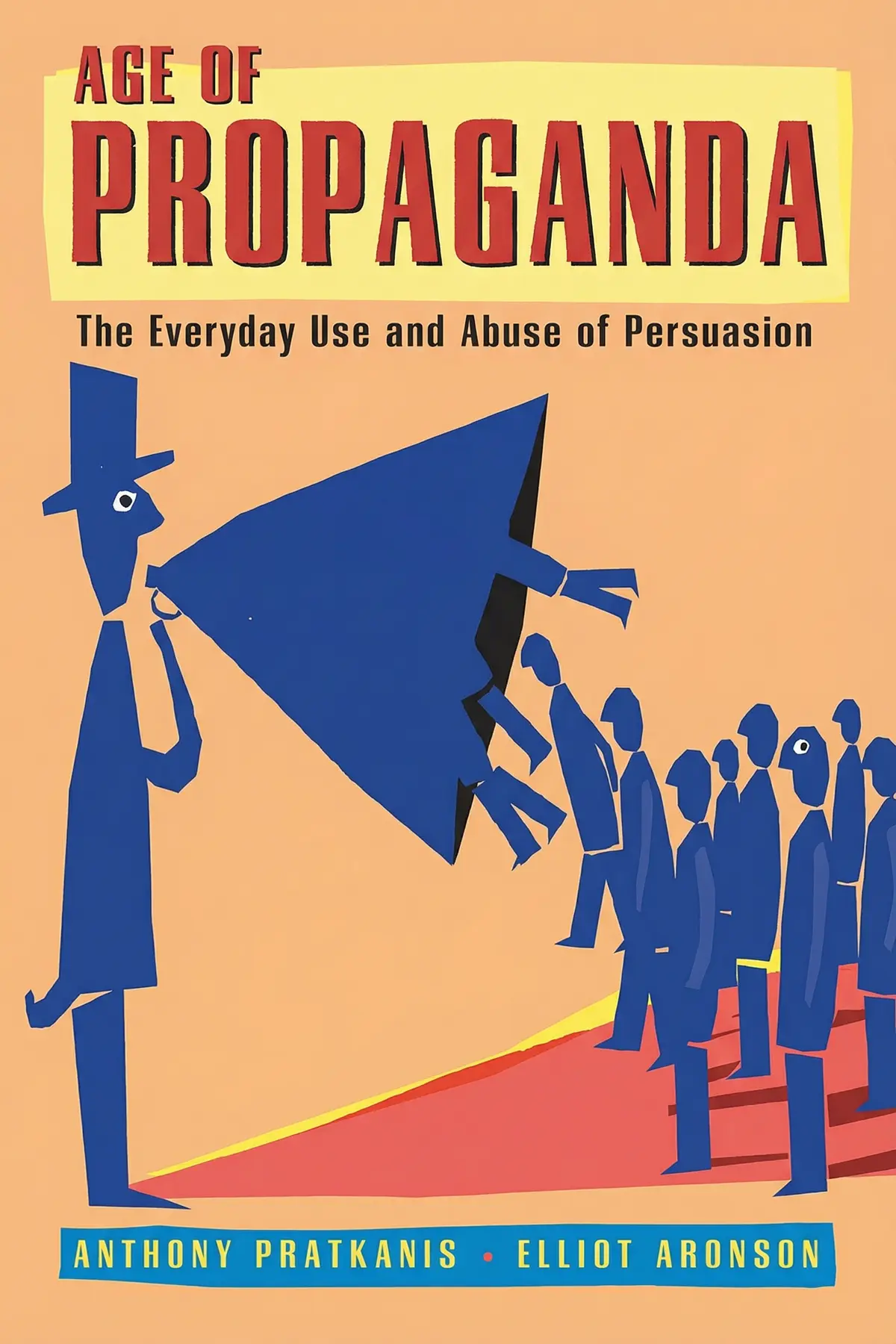
Age of Propaganda: The Everyday Use and Abuse of Persuasion
Anthony Pratkanis
A Guide to the Good Life: The Ancient Art of Stoic Joy
William B. Irvine
A High-Performing Mind: Strengthen Your Mind and Live Your Best Life
Andrew D. Thompson
Abundance: The Inner Path to Wealth
Deepak Chopra
AUDIO SUMMARY AVAILABLE
Listen to Decisive in 15 minutes
Get the key ideas from Decisive by Chip Heath, plus 5,000+ more titles in English and Thai.
- 5,000+ titles
- Listen as much as you want
- 7-day free trial
- Cancel anytime







