
22 min 11 sec
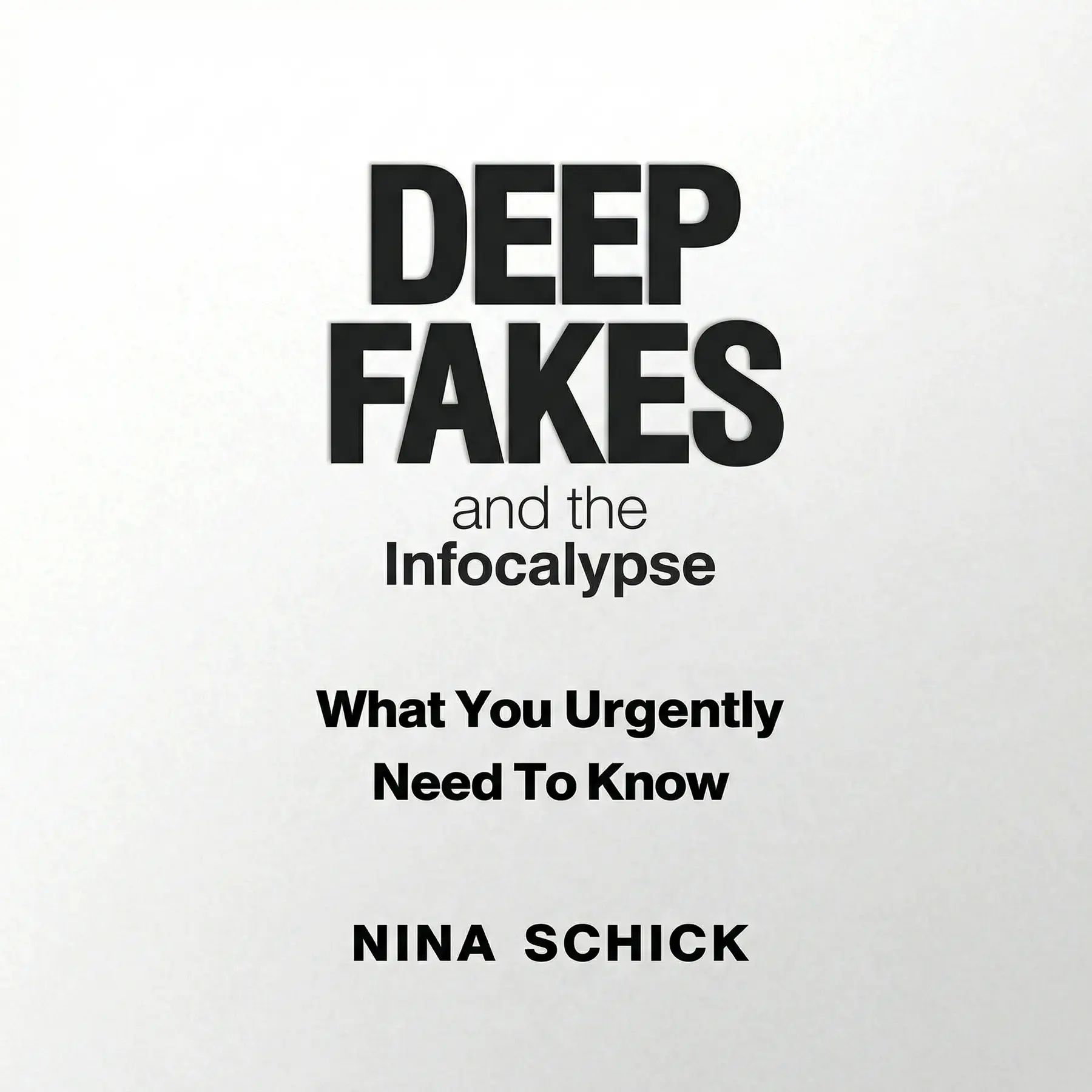
Deepfakes and the Infocalypse: What You Urgently Need To Know
By Nina Schick
Explore the rise of AI-generated synthetic media and its threat to truth. This summary examines how deepfakes fuel a global information crisis, impacting politics, national security, and our shared reality.
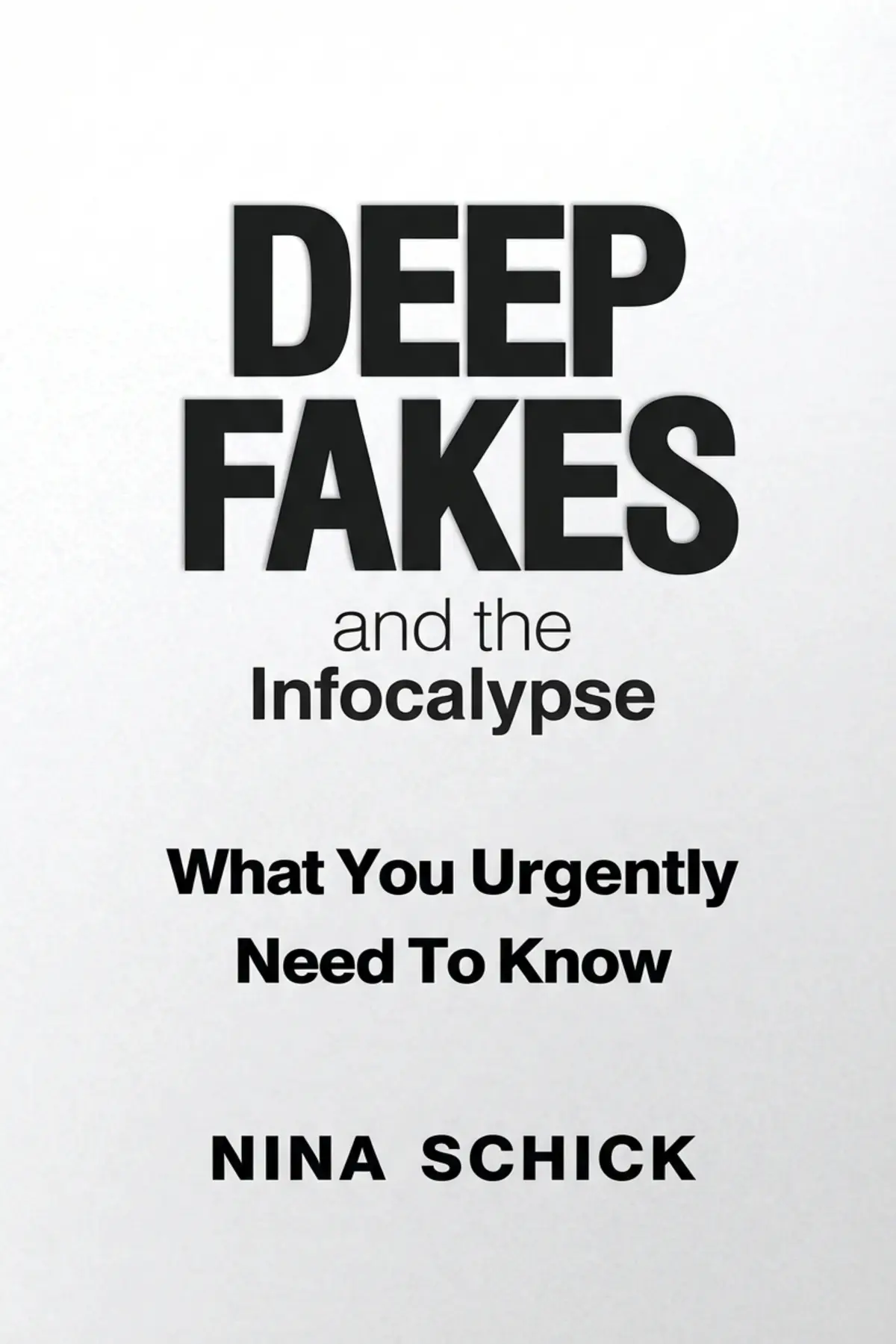
Table of Content
1. Introduction
1 min 55 sec
Imagine watching a high-definition video of a world leader making a shocking, world-altering announcement from the comfort of the Oval Office. The lighting is perfect, the voice is unmistakable, and the facial tics are exactly as you remember them. But there is a terrifying catch: that person never said those words, and the video was created by an algorithm. This isn’t a scene from a science-fiction movie; it is our current reality. We have entered a period Nina Schick calls the Infocalypse—an era characterized by a catastrophic breakdown in our information ecosystem, where the line between what is real and what is synthetic has been permanently blurred.
At the heart of this crisis is the deepfake, a sophisticated form of media manipulation powered by artificial intelligence. While humans have been altering images for as long as cameras have existed, the jump to AI-generated video and audio represents a paradigm shift. It is no longer just about editing reality; it is about synthesizing it from scratch. This technology is becoming more accessible and more convincing by the day, and its implications for our democracy, our safety, and our basic trust in one another are profound.
In this exploration, we will look at the origins of this technology and how it has already been used to silence critics and spread chaos. We will examine the ways in which state actors utilize disinformation as a tool of modern warfare and how our own political leaders have exploited the confusion for their own ends. More importantly, we will look at the human cost—from the destruction of individual lives to the incitement of mass violence. By understanding the mechanisms of the Infocalypse, we can begin to build the defenses necessary to survive it. This is a journey into the shadows of the digital age, where the truth is under siege, and the weapons are lines of code.
2. The Evolution of Digital Deception
2 min 37 sec
Discover how the transition from manual photo editing to autonomous artificial intelligence created the deepfake, moving manipulation from the hands of experts to anyone with a computer.
3. Russia’s Mastery of Disinformation
2 min 38 sec
Examine the long history of state-sponsored information warfare, from Cold War bioweapon myths to modern digital interference aimed at dividing Western societies.
4. The Erosion of Trust and the Liar’s Dividend
2 min 35 sec
Learn how the mere existence of deepfakes allows politicians to dismiss uncomfortable truths, creating a ‘liar’s dividend’ that threatens the foundation of democratic accountability.
5. Deadly Consequences in Fragile Regions
2 min 39 sec
See the devastating real-world impact of disinformation in countries with limited free speech, where synthetic media is used to incite violence and silence political dissent.
6. Deepfakes as a Tool for Financial and Personal Fraud
3 min 02 sec
Explore the burgeoning world of AI-enabled crime, where scammers use synthetic voices and digital masks to infiltrate businesses and defraud individuals of millions.
7. The Global Infodemic and the Pandemic
2 min 34 sec
Analyze how the COVID-19 crisis became a flashpoint for disinformation, as nations like Russia and China used the confusion to advance their own geopolitical agendas.
8. Strategies for Survival in a Post-Truth World
2 min 28 sec
Explore the dual approach needed to combat the Infocalypse, combining individual skepticism and fact-checking with proactive, national-level cyberdefense strategies.
9. Conclusion
1 min 43 sec
The rise of deepfakes and the onset of the Infocalypse represent one of the most significant challenges of our time. We have reached a point where the tools of creation have outpaced our tools of verification, leaving us vulnerable to a new and pervasive form of deception. As we have seen, this technology isn’t just a gimmick for funny internet videos; it is a powerful instrument for political destabilization, personal ruin, and the erosion of the trust that holds our societies together. From the hallways of the Kremlin to the screens of our smartphones, the battle for the truth is being waged every single day.
However, the story of the Infocalypse doesn’t have to end in a ‘fucked-up dystopia,’ as the fake Obama video warned. By recognizing the patterns of disinformation, understanding the psychological traps like the ‘liar’s dividend,’ and learning from the resilience of nations like Estonia, we can begin to push back the tide of falsehood. The truth is fragile, but it is not yet extinct. It requires our active participation and our refusal to succumb to cynicism.
As you move forward, remember that your attention is a precious resource and the most targeted prize in the Infocalypse. Be skeptical, but not nihilistic. Seek out sources that prioritize accountability and transparency. Most importantly, share your knowledge of these technologies with others. The more people who understand how deepfakes work, the less power those fakes have over us. We may be living in an era of unprecedented deception, but our commitment to the truth is the ultimate defense. The Infocalypse is here, but its outcome is still in our hands.
About this book
What is this book about?
Deepfakes and the Infocalypse examines the terrifying evolution of artificial intelligence and its ability to create hyper-realistic fake content. Nina Schick details the emergence of the Infocalypse—a state where our information ecosystem is so saturated with manipulated media that truth becomes indistinguishable from fiction. Through various lenses, the book explores how this technology is used as a weapon for political interference, personal harassment, and financial fraud. From Russian disinformation campaigns to the non-consensual use of AI in the adult industry, the promise of the book is to alert readers to the crumbling foundations of our shared reality and provide a roadmap for navigating a world where seeing is no longer believing.
Book Information
About the Author
Nina Schick
Nina Schick is a political consultant, broadcaster, and author who focuses on the intersection between technology and politics. Formerly, she served as the Communications Director of Open Europe – a think tank dedicated to EU reform. Schick is a contributor to Bloomberg, Sky, CNN, and the BBC, and her work has been published by CNN, the Times, and the Sunday Telegraph.
Ratings & Reviews
Ratings at a glance
What people think
Listeners consider this work a relevant and approachable primer on the "infocalypse" and the swift growth of synthetic content. They value the educational explanation of how machine learning powers deepfakes, with one listener pointing out the intriguing case study focused on Estonia’s strategies against disinformation. Though perspectives differ regarding the level of detailed analysis, listeners often find the reporting-style prose captivating and well-suited for general audiences. Furthermore, they state that the book serves as a pressing alert about the outlook for our collective reality. They also remark on the usefulness of practical examples, as another listener notes the insightful discussion of the COVID-19 pandemic.
Top reviews
William
As someone who isn't a tech expert, I found this breakdown of synthetic media incredibly accessible and terrifyingly relevant. The author does a brilliant job of explaining how AI learns to mimic human features, making the 'infocalypse' feel like an inevitable tide. I was particularly struck by the sections on COVID-19 misinformation; it perfectly illustrates how fragile our shared reality has become when facts are treated as optional. This isn't just a book about technology; it’s a warning about the survival of democracy itself. Honestly, the chapter on psychological defenses in Estonia should be mandatory reading for every politician and educator today. It is a quick read, but the implications of what she discusses will stay with you long after you close the back cover. Highly recommended for anyone trying to make sense of the modern information war.
Show moreSakura
Wow, this is a terrifyingly necessary look at how AI is dismantling our shared reality. The speed at which synthetic media is improving is mind-boggling, and Schick captures that sense of impending chaos perfectly. I spent most of the time reading this with my jaw dropped, especially during the description of the website 'thispersondoesnotexist.com' and how it generates hauntingly real faces. The book manages to be both a tech primer and a geopolitical thriller. It really highlights the cat-and-mouse game between those creating fakes and the fact-checkers trying to catch them. Even if you think you understand the internet, this book will show you just how vulnerable we all are to the coming wave of disinformation. Truly an essential wake-up call for the digital age.
Show moreAim
Nina Schick has written a wake-up call that feels more like a siren blaring in a crowded room. As technology races ahead, our ability to distinguish truth from synthetic fabrication is collapsing, a phenomenon she aptly labels the 'infocalypse.' The journalistic style makes the complex world of machine learning and generative AI accessible for a general audience without getting bogged down in dense jargon. I found the case study on Estonia’s digital resilience particularly fascinating because it offers a rare glimmer of hope in an otherwise bleak landscape. While the book is undoubtedly timely, some chapters felt a bit like a compilation of recent news reports rather than deep original research. Truth is, we are already living in the world she describes, and this serves as an essential, if slightly brief, primer on our new reality.
Show moreSven
Finally got around to reading this, and frankly, the section on Estonia's digital defense was the highlight for me. Schick articulates the 'infocalypse' as a total breakdown of our information ecosystem, where the mere existence of deepfakes makes us doubt everything. The book explores the dark origins of this tech on Reddit and its rapid evolution into a tool for geopolitical subversion. Her writing is direct and punchy, which helps move the heavy subject matter along quite quickly. Look, it’s not a deep technical manual, and it doesn't pretend to be. It's a broad, urgent survey of a world where 'seeing is believing' is a dead philosophy. A few more original case studies would have been nice, but the examples provided are enough to make you change all your passwords and question every viral video.
Show morePong
After hearing Nina Schick on a podcast, I wanted to dive deeper into her research on information ecosystems and the 'infocalypse.' The book is a concise and urgent summary of how machine learning allows amateurs to create hyper-realistic fakes that can ruin reputations or swing elections. She handles the sensitive topic of non-consensual deepfake porn with the gravity it deserves while showing how that same tech is now being used by state actors. My only real gripe is that it feels a bit dated already because the technology is moving so fast. However, the core message about our dwindling trust in media is more relevant than ever. It's a sobering look at the digital landscape that will make you rethink every video you see on your feed.
Show moreChokdee
Ever wonder how long it will take before we can't believe anything we see on a screen? This book dives into that exact anxiety, tracing the rise of deepfakes from obscure Reddit forums to global political threats. Schick provides a solid overview of how non-consensual AI porn paved the way for more dangerous applications, like the attempted coup in Gabon. However, I found the analysis a bit superficial in places, often jumping from one anecdote to another without providing a concrete roadmap for a solution. It’s an informative read for someone who is totally new to the topic, but seasoned tech enthusiasts might find it a bit basic. The writing is snappy and engaging, but it occasionally prioritizes alarmism over nuanced debate.
Show moreWatcharee
The term 'infocalypse' is catchy, yet the book sometimes prioritizes style over substance in a way that left me wanting more. It starts strong by recounting the disturbing rise of AI-assisted revenge porn—a stat noting 96% of deepfakes are used this way was truly eye-opening. Schick transition from these niche origins to the broader threat of disinformation during the pandemic is a logical path, but the transitions feel clunky. I appreciated the mention of Samantha Cole’s reporting, though much of the book feels like a summary of other people's work rather than a new perspective. It’s a good introductory text for older generations or those who haven't followed the tech news closely. Just don't expect a deep philosophical dive into the epistemic nature of truth.
Show moreSienna
Not what I expected in terms of solutions, though the problem description is vivid and well-researched. The author paints a picture of a world where trust has evaporated, but she offers very little in the way of concrete steps for individuals to protect themselves beyond 'support credible journalism.' The journalistic tone is engaging, making it a very fast read, yet it lacks the analytical depth I was hoping for regarding the future of AI regulation. I did find the brief mention of the Gabon coup attempt to be a chilling example of how even 'cheap fakes' can have massive real-world consequences. It’s a decent starting point for a conversation about the ethics of AI, even if it feels a bit like an extended long-form article rather than a definitive book on the subject.
Show moreKob
Picked this up because the concept of an 'infocalypse' sounded like sci-fi, but it's very much our current reality. The writing is accessible and clearly aimed at a general audience, which is great for spreading awareness about the dangers of synthetic media. That said, I found the tone to be a bit repetitive, hammering home the same fears without offering much new insight after the first few chapters. The Estonia example was great, and the breakdown of fact-checking resources like Snopes and the BBC was helpful, but I wanted more on the actual AI development side. It’s a solid 3-star read—informative enough to be worth your time, but perhaps too superficial for anyone already working in tech or media studies.
Show moreThongchai
To be fair, the technical explanations of how machine learning drives deepfakes are quite solid, but the rest of the book felt like a rushed opinion piece. It seems like it was written in a hurry to capitalize on the COVID-19 headlines, leading to a narrative that is more journalistic than academic. I was disappointed by the heavy political bias, where the author spends a significant amount of time discrediting specific countries like Russia and China while ignoring how these tools are used globally. I was expecting a more diverse selection of case studies beyond what you can find in a standard Google search. If you’ve spent more than an hour reading about AI online, you won't find much new information here. For the facts alone, it’s decent, but the delivery is underwhelming and far too vague on actual solutions.
Show moreFeatured in
Readers also enjoyed

Age of Anger: A History of the Present
Pankaj Mishra

A Different Kind of Power: A Memoir
Jacinda Ardern
Age of Propaganda: The Everyday Use and Abuse of Persuasion
Anthony Pratkanis

A Higher Loyalty: Truth, Lies and Leadership
James Comey



A Promised Land
Barack Obama
AUDIO SUMMARY AVAILABLE
Listen to Deepfakes and the Infocalypse in 15 minutes
Get the key ideas from Deepfakes and the Infocalypse by Nina Schick, plus 5,000+ more titles in English and Thai.
- 5,000+ titles
- Listen as much as you want
- 7-day free trial
- Cancel anytime







